Page 447 of 773
1 445 446 447 448 449 773

China proporciona ayuda educativa a refugiados sirios en Líbano

China/15 de Mayo de 2017/Spanish

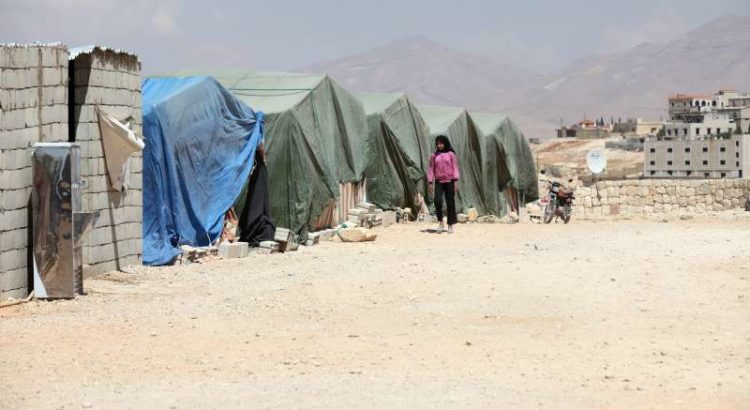
El embajador de China en Líbano, Wang Kejian, entregó hoy suministros escolares con valor de un millón de dólares para ayudar a los estudiantes sirios refugiados en Líbano.

«Como parte de la promesa de China en la Asamblea General de la ONU del año pasado de ayudar a la causa humanitaria con 100 millones de dólares, los suministros serán distribuidos por el Fondo de la ONU para la Infancia (Unicef) para ayudar a los estudiantes refugiados a superar su difícil situación», dijo Wang al hacer la entrega en la localidad de Saadnayel en Bekaa.

Los suministros incluyen papelería que permitirá a los estudiantes volver tan pronto como sea posible a la escuela y los ayudará a mitigar los efectos negativos de la guerra, dijo Wang.

Luciano Calestino, representante adjunto de Unicef en el país, dijo que «estamos extremadamente contentos de que China se haya unido a la ayuda de los niños refugiados porque es una labor que tiene que continuar no sólo en los próximos meses, sino en los próximos años».

Manal Absi, maestra libanesa que trabaja con Unicef, habló del sentido de solidaridad y de la manera en que los pueblos del mundo se pueden ayudar.

«Esto demuestra que las crisis unen a las personas. Esto es lo que tenemos que buscar y lo que Unicef está buscando», agregó. «Esta ayuda influirá en los estudiantes y la retroalimentación sobre su aprecio por China se verá en el futuro».

Fuente: http://spanish.peopledaily.com.cn/n3/2017/0513/c31621-9214692.html

Comparte este contenido:

Irán: Raisi promete ‘justicia educativa’ para todos

Irán/15 de Mayo de 2017/Hispan TV

Seyed Ebrahim Raisi, candidato a la Presidencia de Irán, promete justicia educativa para todos, en particular para los más necesitados.

“Justicia educativa requiere que las personas no sean privadas de la enseñanza estándar debido a vivir en zonas desfavorecidas”, ha dicho hoy jueves el aspirante conservador en un mitin electoral en Teherán (capital iraní).

El candidato que arengaba a los profesores y miembros del sector educativo, ha prometido ayudar en la creación de centros de enseñanza para los sectores más necesitados con el objetivo de que ellos no tengan ningún problema en el acceso a una educación de calidad.

Además, ha puesto énfasis en que es necesario dejar de proclamar los lemas y materializar el lema de “acción e implementación”, algo que busca hacer además de luchar contra el desempleo, la corrupción y la pobreza, como pretende, de ser elegido presidente.

Raisi, el administrador fiduciario de Astan Quds Razavi (en la ciudad nororiental de Mashad), también ha destacado el importante papel que juega el sector educativo del país persa en orientar a la sociedad.

Por otro lado, al destacar que la Revolución Islámica de Irán (1979) fue un gran paso para mostrar el rechazo a la tiranía y establecer una sociedad a base de la Constitución, ha hecho hincapié en que la nación iraní desempeña un destacado rol en elegir el destino del país.

El voto del pueblo no es un show, y el destino de todas la instituciones (en Irán) se determina con el voto de la gente”, ha afirmado el candidato a las XII elecciones presidenciales de Irán, que se celebrarán el próximo 19 de mayo.

Justicia educativa requiere que las personas no sean privadas de la enseñanza estándar debido a vivir en zonas desfavorecidas”, dice Seyed Ebrahim Raisi, candidato a la Presidencia de Irán.

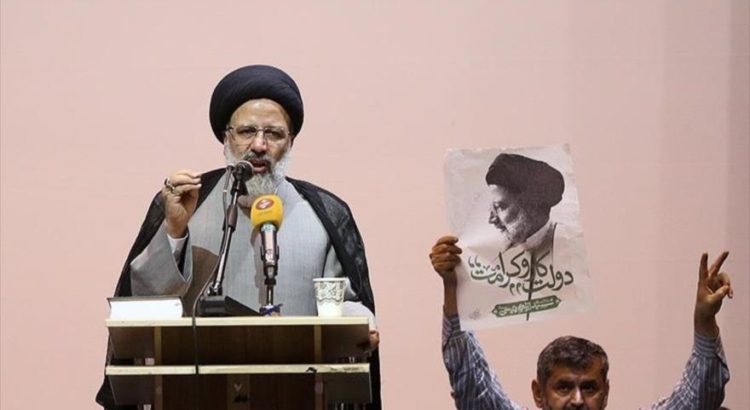
Seyed Ebrahim Raisi, candidato a la Presidencia de Irán, entre sus partidarios en un mitin electoral en Teherán, 11 de mayo de 2017.


Unos 57 millones de iraníes están habilitados para asistir a las urnas y elegir entre seis candidatos al nuevo presidente de la República Islámica de Irán.

Además de Raisi, los otros candidatos son: el actual presidente iraní, Hasan Rohani; el vicepresidente del país, Eshaq Yahanguir; el alcalde de Teherán (capital), Mohamad Baqer Qalibaf; el exvicepresidente para Educación Física, Mostafa Hashemi Taba; y el exministro de Cultura y Guía Islámica Mostafa Mir Salim.

Fuente: http://www.hispantv.com/noticias/politica/341185/presidenciales-iran-raisi-candidato

Comparte este contenido:

Taliban teachers: how militants are infiltrating Afghan schools

Por: The Guardian

When Afghan teachers are lobbied to give good marks to mediocre students, the pressure does not necessarily come from disgruntled parents. Often it comes from the Taliban.

In areas of eastern Afghanistan, militants intimidate teachers to let older boys who fight with the Taliban pass exams despite lacklustre performances, according to education experts working in the region.

They say insurgents also pressure teachers not to record the absence of students who spend much of their time on the frontline.

Not all teachers need coercing. Some are themselves active members of the Taliban, swapping chalk for Kalashnikovs after completing the day’s lessons. They take their salary from the Afghan government, whose armed forces they then fight on the battlefield.

“The Taliban are actively interfering in the education system,” said one educator who has trained teachers in Kunar province. In areas under heavy Taliban influence, he says, insurgents introduce their own members as teachers, threatening to close government schools if they do not comply.

Some of the teachers he trained were Taliban fighters, in effect on the government payroll, who turned up at school carrying weapons. “In the afternoon, they went back to fight the government,” the educator said.

The Taliban do not appear to issue their own curricula, but they inspect course material. In Logar province they have reportedly torn pages from books that portrayed historical figures in a light they disagreed with, casting progressive leaders as heroes and conservatives as foes.

Taliban teachers may also add bits to courses, particularly about holy war, said an education expert who works in the east. “They suspect the schools are teaching anti-Taliban propaganda,” he said.

 The infiltration of the educational system puts the Afghan government in a dilemma: see schools close or ensure that children receive some form of education. The Afghan ministry of education denied that any teachers on its payroll were affiliated with the Taliban.

Sayed Jamal, who heads the education department in Kunar, said: “It is up to the intelligence service to find out if any teachers are Taliban. So far, nobody has informed me that they are.” But there is no doubt that there are many complicated villages in Kunar, and some of them are out of the government’s control.

Accepting Taliban presence in schools has political consequences, making the Taliban de facto providers of a service funded by the Afghan government.

In Kohistanat district in the northern Sar-e Pul province, which has been under insurgent control for 18 months, Taliban officials head the education as well as health, religious study and security departments.

According to western security analysts, the officials, picked by the Taliban leadership in Pakistan, keep boys’ schools open, while inspecting curricula to comply with their values. Teacher salaries are collected monthly from the provincial capital. In addition, the insurgents tax salaries and harvests.

Girls at a government school in Kandahar.
Pinterest
Girls at a government school in Kandahar. Photograph: Kate Holt for the Guardian

As an organisation intent on showing capacity for governance, the Taliban have appointed shadow ministers, including for education, health, religion.

 “It has restructured itself as a shadow state. In that sense the Taliban needs to deliver a certain level of services in the areas they control,” said Timor Sharan, the Kabul-based analyst for the International Crisis Group.

Sharan said the Taliban’s outreach into daily life had “absolutely increased compared to previous years. That doesn’t mean they have control, but that people are afraid”.

The extent to which the insurgents garner public support from providing services is unclear.

The Taliban derive some authority from their role as mediators. In rural areas, the Taliban set up mobile courts. While Taliban legal rule is often harsher on women and doles out corporal punishment, it is sometimes seen as more accessible and less corrupt than the governmental justice system.

Yet most Afghans rally behind the Taliban out of fear, said the education expert. They curry favour and provide the insurgents with intelligence and money.

“They don’t stand up to the Taliban, they don’t open their mouth. And that gives the Taliban more space to influence,” he said.

This type of latent influence adds nuance to official statistics of the Taliban’s geographical strength. The US military claims the Taliban control only eight of Afghanistan’s roughly 400 districts, and “influence” another 25.

Some observers dispute those numbers as downplaying the Taliban’s reach. Either way, data mapping military control does not necessarily capture the wield of soft power.

Ultimately, it seems, students suffer. In districts under Taliban control girls are seldom allowed to attend school beyond sixth grade. Teachers whose merit for employment is affiliation with the Taliban are rarely actually qualified to teach, aside from Islamic subjects.

In addition, when teachers are intimidated into giving good marks to Taliban pupils, it frustrates other students, the education expert said. “They see that other boys do well because their father has links to the Taliban,” he said.

Since you’re here …

… we’ve got a small favour to ask. More people are reading the Guardian than ever, but far fewer are paying for it. Advertising revenues across the media are falling fast. And unlike many news organisations, we haven’t put up a paywall – we want to keep our journalism as open as we can. So you can see why we need to ask for your help. The Guardian’s independent, investigative journalism takes a lot of time, money and hard work to produce. But we do it because we believe our perspective matters – because it might well be your perspective, too.

If everyone who reads our reporting, who likes it, helps to support it, our future would be much more secure.

Fuente: https://www.theguardian.com/world/2017/may/09/taliban-teachers-militants-infiltrating-afghanistan-schools


Comparte este contenido:

Sancionaron a escuelas privadas en China por hacerles exámenes a los padres

China/15  de Mayo 2017/La Nueva

 Autoridades educativas de Shanghái sancionaron a 2 escuelas primarias privadas por realizar exámenes a los padres de los nenes que pedían ser admitidos.

   El castigo: que reduzcan su cuota de inscripción.

   Según el Comité de Educación de Shanghái, es «salvaguardar la equidad educativa».

   Varios padres denunciaron por las redes sociales que mientras sus hijos rendían los exámenes de admisión en la Escuela Primaria Yangpu y la Escuela Primaria de Lengua Extranjera Mundial Qingpu, ellos fueron sometidos a pruebas para calcular su cociente intelectual.

   A los padres se les hicieron también numerosas preguntas para que detallaran sus antecedentes familiares, algo que para las autoridades educativas viola los principios básicos para promover una educación justa y proteger los derechos educativos de los estudiantes, que están establecidos en la ley de educación obligatoria de China.

   Así, se ordenó a las escuelas que dejen de realizar las pruebas a los padres y se les pidió que emitan una disculpa pública.

¿Qué dijeron las escuelas?

   La escuela Qingpu ya ha publicó una disculpa en su sitio web, mientras que la de Yangpu declaró que el cuestionario y la prueba eran opcionales y se organizaron para que los padres pasaran el tiempo mientras esperaban a que sus hijos fueran entrevistados.

Fuente: http://www.lanueva.com/sociedad/902405/sancionaron-a-escuelas-privadas-en-china-por-hacerles-examenes-a-los-padres.html

Comparte este contenido:

The triage of reconstruction in Syria’s north, and the schools left behind

Siria/Mayo de 2017/Fuente: Syria:direct

Resumen: El gobierno sirio y sus aliados llevaron a cabo «24 ataques» en instalaciones médicas sólo en abril, «matando a 10 trabajadores de salud e hiriendo a 16», anunció la Sociedad Médica Americana Siria en un comunicado reciente. Una rutina familiar sigue a cada uno de estos ataques: Defensa Civil primera raza de rescate para rescatar a los supervivientes, el personal del hospital se apresuran a evacuar a los pacientes y rescatar equipos médicos costosos y funcionarios médicos locales comienzan a planificar el proceso de reconstrucción. Pero la reconstrucción es costosa, y la financiación es escasa, a menudo dejando a los consejos locales con escasez de dinero en territorio de oposición, y al noroeste de la provincia de Idlib en particular, incapaces de restaurar otras instalaciones públicas dañadas después de un ataque aéreo.

The Syrian government and its allies carried out “24 attacks” on medical facilities in April alone, “killing 10 health workers and injuring 16,” the Syrian American Medical Society announced in a recent statement.

A familiar routine follows each of these attacks: Civil Defense first responders race to rescue survivors, hospital staff scramble to evacuate patients and salvage expensive medical equipment and local medical officials begin planning the reconstruction process.

But rebuilding is expensive, and funding is scarce, often leaving cash-strapped local councils in opposition territory, and northwest Idlib province in particular, unable to restore other damaged public facilities in the wake of an airstrike.

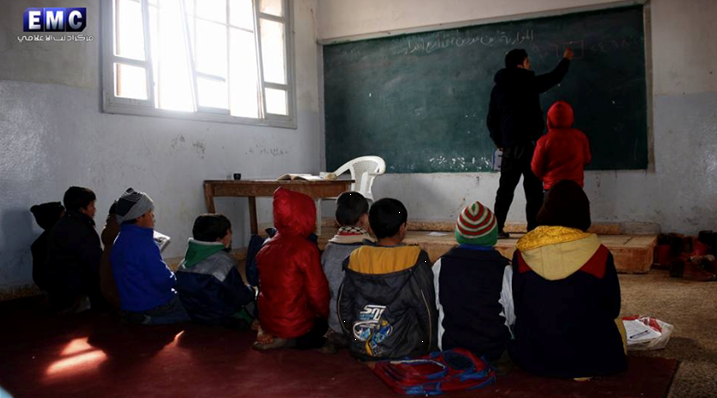
As a result of “continuous bombing,” Jamal a-Shahoud, Idlib province’s director of education, says more than 350 schools in Idlib are closed. Another 400 more are “40 to 50 percent destroyed;” still functioning but unable to be repaired. Syria’s northern Idlib province is the largest remaining bastion of rebel resistance and the focus of a months-long Russian and regime bombing campaign.

“We simply don’t have the financial resources for reconstruction,” the opposition official tells Syria Direct’s Bahira al-Zarier. “Hospitals take priority in light of the war.”

Q: When a hospital is bombed, it is more often than not rebuilt in a new facility. Why aren’t Idlib’s schools treated the same way?

We simply don’t have the financial resources for reconstruction. As you know, funding is given out by humanitarian organizations, and hospitals take priority in light of the war.

We have 1,446 schools in Idlib, while there are fewer than 50 hospitals in the province.

Q: Which costs are the Idlib Education Directorate able to defray in the aftermath of a school bombing?

Rebuilding efforts are limited to the essentials such as removing rubble. Otherwise, we’ll go on using the classrooms that were not bombed. We aren’t able to buy new supplies after a bombing.

We really do struggle financially after a bombing. Already, we don’t have the money to pay the wages of all of our teachers and staff; 50 percent of the educational staff work either for a small stipend or a food ration.

Q: The opposition’s interim government isn’t providing any funding?

They aren’t paying for salaries, not even for the provincial directors of education. Our organization—along with other directorates—hasreached out to major donor organizations to try to secure grants for monthly salaries, but we’ve only reached half of our requested amount.

Q: Describe what measures you do to take to keep schools safe amidst all of the bombardment.

The Education Directorate has a two-part plan in place when it comes to dealing with schools that could be targeted. First, we try to lessen the amount of time that students spend in the school by eliminating non-essential courses such as art and sports. Schools are in session for just four hours a day; it’s not enough, but students and teachers are all very cautious of any attack that may take place.

Second, we make sure that schools are located in either basements or shelters.

In the event that a school is bombed, students and teachers do not return until the attack ends. Afterwards, we try to restore whatever can be salvaged and bring the school back into operation. If there is a shortage in the number of rooms, then we’ll hold two sessions of schools hours. Essentially, one building serves as two schools.

It’s true that classes are periodically suspended, and as such, we’re adding an additional week of make-up classes. We also have a summer-school plan in place for children in elementary school.

Q: You mentioned that there are nearly 1,500 schools in Idlib. Are all of them currently active?

There are 1,080 schools that are operating in the province in varying degrees. I say “varying degrees” because we’ll cancel school if there is a bombing in the city, but we won’t close schools across the whole province. Of these, 400 schools are between 40 and 50 percent destroyed. There are nine schools that are operating out of private homes, in addition to schools based out of tents and caravans in the camps. Finally, there are 357 schools that are entirely destroyed.

Q: Can bombing kill education?

I want to be fully transparent here: Education has been severely damaged as a result of the continuous bombing of rebel-held areas. Parents are afraid to send their children to school. But despite all of these circumstances, more than 1,050 schools are still operating. This sends a powerful message to the world that we are a people who deserve life, who deserve respect. We will move beyond fear, danger and hunger to demand education.

Yes, the bombings are a major obstacle. But when school is in session, we are prepared to make the classroom better than it ever was before.

Fuente: http://syriadirect.org/news/the-triage-of-reconstruction-in-syria%E2%80%99s-north-and-the-schools-left-behind/

Comparte este contenido:

Japón: Liberating young minds with technology

Japón/Mayo de 2017/Autor: Michael Penn/Fuente: The Japan Times

Resumen: La educación en Japón, dentro del nexo de negocios, ciencia e internacionalización, está desarrollando iniciativas progresistas. Una de esas tendencias es trasladar la enseñanza universitaria de las aulas de ladrillo y mortero a la esfera en línea. Esto podría ser, en su forma más modesta, simplemente recursos suplementarios para la experiencia en el aula que los estudiantes pueden usar para estudiar mientras están en casa o viajando en el tren, pero potencialmente podría evolucionar a una forma más común de aprendizaje a distancia también. Los miembros del personal de las universidades japonesas de élite ya están desarrollando cursos en línea a gran escala a través de un proceso de ensayo y error. Jeffery Cross, profesor del Instituto Tecnológico de Tokio y uno de los líderes de este movimiento en Japón, dice que hay ventajas en el cambio a los cursos en línea. «Si un estudiante no puede llegar a clase, tienen ese material cuando quieren. Pueden controlar el contenido. Por ejemplo, puede reproducir los videos a dos o media velocidad «, explica. «También tenemos subtítulos, así que si su comprensión auditiva en inglés no es tan buena, pueden leer el texto y escuchar lo que se habla».

Education in Japan, within the nexus of business, science and internationalization, is currently developing progressive initiatives.

One such trend is to move university teaching out of brick-and-mortar classrooms and into the online sphere. This could be, in its more modest form, simply supplementary resources for the classroom experience that students can use to study while at home or commuting on the train, but potentially it could evolve into a more common form of long-distance learning as well. Staff members at elite Japanese universities are already developing full-scale online courses through a process of trial and error.

Jeffery Cross, a professor at the Tokyo Institute of Technology and one of those at the forefront of this movement in Japan, says there are advantages in the shift to online courses.

“If a student can’t get to class, they have that material whenever they want. They can control the content. For example, you can play the videos at twice or half speed,” he explains. “We also have captions, so if their English listening comprehension isn’t that good they can read the text as well as listen to the spoken.”

Cross’ team is not only developing course content, but also its own yuru-kyara (Japanese animated mascot character) — a cherry blossom-pink-haired young woman named Sakura Ookayama. Sakura helps to make the lessons more friendly to high school students and encourages them to be more inquisitive and to pay attention to how to use the content in the correct manner.

Of course, interaction with Sakura can never be the same as being in the same classroom as a human instructor, but Cross notes, “If you have 1,000 students in a class, there’s probably not that much interaction with a faculty member anyway.”

At present, only a minority of Japanese universities are involved in this shift to online teaching, but the number is expanding. If a system of cross-credit online courses were to develop, it could ultimately allow students to benefit from top-of-the-field professors even when those instructors are based at universities other than their own.

Beyond university studies, the Japanese company Coursebase looks to help manage the education of graduates. Traditionally, freshman entrants to Japanese companies undergo a substantial series of training sessions — whether it be to learn about their company’s products and those of their competitors; to understand manufacturing and sales techniques and legal compliance issues; or to prepare for further exams to gain official qualifications. Coursebase offers a “learning management system,” which helps companies keep track of which of their employees have completed what types of training.

Co-CEO John Martyn describes Coursebase as “content agnostic,” meaning that each company decides what it wants its employees to learn about. As an example, he cites a manufacturer that needs all of its 40,000 employees, who are spread across the country, to renew compliance training every six months. Instead of taking the enormous time and expense of transporting the employees to a brick-and-mortar classroom, online course material could be automatically managed and delivered via the Coursebase system, which can keep track of each individual employee and even send out reminders to those who are slow to respond.

“The human basically just watches the dashboard and exports reports,” Martyn says, “The whole process is automated.”

While this basic idea isn’t entirely new, Coursebase makes its system available on all internet browsers and it is optimized for mobile platforms to create a better user experience.

A more specific education technology company is Eigooo, which focuses on teaching the English language to Japanese students. The president of the company, Mizuki Nozue, explains that, for now, Eigooo’s program is based on a mobile-phone application that matches up Japanese students to English teachers, who then engage together in a chat.

“The truth is that most Japanese study English on their phone, like when they are on the train, or somewhere else where they can’t use their voices,” Nozue says.

There is no verbal communication with the Eigooo app, only the text chats. The objective is to build up the user’s English fluency by having them ask questions and give responses in real time. Teachers interact with the students and send them electronic feedback to improve their accuracy.

All of Eigooo’s English teachers are based outside of Japan; responding from many countries around the world, they are never in the same nation as their Eigooo students. The overall effect of the Eigooo system bears similarity to that of Tokyo Institute of Technology and Coursebase — collapsing physical distances by means of internet and mobile technologies, leaving institutions and individuals freer to accomplish other tasks wherever they may be, and to provide economic savings on travel, facilities and personnel.

Clearly, the possibilities of the new technologies are moving faster than the ability of the majority of the world to absorb and adapt. Japan is no exception in this regard, and the mainstream of its education system has barely begun to react. How most young people are being taught here is still more appropriate to a 20th-century industrial economy than to the developing 21st-century information technology society.

Nevertheless, there are some pioneers who are indeed preparing students to be technologically aware, innovative and responsible global citizens. Seisen International School in Tokyo’s Setagaya Ward is a particularly impressive example.

This school puts iPads in the hands of kindergarten students, and while teaching them about the four seasons it lets them do their coloring practices electronically. Use of such technology and the encouragement of teamwork and creativity blends seamlessly in small classes consisting of about half a dozen 5-year-olds. When the kindergarten students finish their assignments, they simply push a button to send their work to the teacher’s screen for review.

“We’re aiming to make possible a task that didn’t previously exist,” says David Towse, the information and communications technology integrator — the teacher — for the kindergarten students. “We really redefine and modify this task, which you just couldn’t do with pencil and paper.”

By the time these students are high school age, many of them will have become both proficient with technology and creative in their approaches to problems. They are clearly set to become leaders of the next generation.

Seisen International School’s current high school students are also encouraged to research their own science projects by looking into the latest academic journals online before actually building some of the devices that they themselves conceive. One such student summed up the trajectory of technology in education in her own words:

“I think that these days there’s so much technology around us, that simple facts can be obtained everywhere. There are so many things that before only people could do, but now computers and phones and all these other devices can do them for us.

“One of the only things I think that humans can do better than these things is to innovate and to be creative.”

Fuente: http://www.japantimes.co.jp/community/2017/05/14/issues/liberating-young-minds-technology/#.WRjZbbjau00
Comparte este contenido:

Urgen más esfuerzos para facilitar empleos a universitarios chinos

Asia/China/13 Mayo 2017/Fuente: Prensa Latina

El gobierno chino urgió más esfuerzos para ayudar a los graduados universitarios de esta nación a conseguir empleo o iniciar negocios, trascendió hoy.
Según un comunicado emitido aquí, una instrucción escrita del primer ministro Li Keqiang sobre el tema fue leída al concluir una teleconferencia nacional sobre empleo a la que asistieron los viceprimeros ministros Liu Yandong y Ma Kai.

Datos del Ministerio de Educación refieren que el empleo de titulados universitarios es importante para la estabilidad social de China, ya que un total de 7,95 millones de estudiantes se graduarán este año.

Al respecto, la administración central pidió a las autoridades locales y escuelas alentar a los estudiantes a trabajar a nivel de las bases y buscar empleos o iniciar negocios en sectores avanzados de manufactura, industrias emergentes estratégicas, servicios y agricultura.

En términos de empleo general, el gobierno subrayó el impulso de la capacitación profesional y de otros servicios públicos.

Para este año, China tiene establecida la meta de crear 11 millones de nuevos trabajos y registrar una tasa de desempleo urbano menor al 4,5 por ciento.

El gigante asiático creó un total de 3,34 millones de nuevos empleos durante el primer trimestre del año.

La cifra fue de 160 mil puestos laborales más que el número registrado en el mismo periodo del año anterior, indicó recientemente Mao Shengyong, portavoz del Buró Nacional de Estadísticas.

Detalló que la situación de ocupación en el país fue generalmente buena en el primer trimestre del 2017, con una tasa de desempleo en las 31 principales ciudades inferior al cinco por ciento al cierre de marzo último.

Esta nación sumó 13,14 millones de puestos laborales en 2016 y la tasa de desempleo urbano registrado se situó en el 4,02 por ciento al cierre del mismo año.

Fuente: http://prensa-latina.cu/index.php?o=rn&id=84875&SEO=urgen-mas-esfuerzos-para-facilitar-empleos-a-universitarios-chinos
Comparte este contenido:
Page 447 of 773
1 445 446 447 448 449 773