Page 454 of 774
1 452 453 454 455 456 774

Internacional de la Educación responde al informe del Banco Mundial sobre el Desarrollo Mundial de la Educación

Prensa Internacional de la Educación

Sobre la base de nuestro conocimiento de primera mano de los sistemas de educación en el mundo, las políticas y las prácticas a ello asociadas, Educación Internacional, junto con organizaciones miembros en las consultas regionales en todo el mundo han respondido al documento conceptual más reciente del Banco Mundial sobre el Desarrollo Mundial de la Educación (IDM).

“Si bien compartimos la preocupación manifestada por el Banco Mundial sobre la necesidad de mejorar los aprendizajes, nuestras preocupaciones son mucho más amplias”, declaró el secretario general de Educación Internacional, Fred Van Leeuwen. “«Décadas de reformas prescriptivas, basadas en pruebas estandarizadas y la consiguiente fatiga experimentada por los educadores en todo el mundo, demuestran que el simple uso y dependencia de la evaluación sumativa no es igual a calidad».

El IDM es un informe anual publicado desde 1978 por el Banco Mundial en el que cada año se ofrece un análisis en profundidad sobre un aspecto particular del desarrollo. El informe es influyente en la conformación de recomendaciones del Banco Mundial para el desarrollo de políticas a partir de las cuales asesora a los gobiernos, en particular a los ministros de Finanzas en el Hemisferio Sur y del Norte.

Después de 40 años de publicación, el Informe sobre el desarrollo mundial de este año (WDR) se centrará en educación, lo que se convierte en un documento clave para el desarrollo de la educación en el mundo dado que el Banco Mundial es un actor central en la conformación de las agendas de política educativa, ya que el mayor proveedor de fondos externos para el sector.

Leer respuesta completa de la IE aquí

Invertir en maestros capacitados, calificados, motivados y bien apoyado y personal de apoyo educativo

Mientras que el documento conceptual afirma que este informe será de unos “acertar la educación”, de décadas de esfuerzos de reforma educativa financiados por el Banco Mundial han minado el atractivo de una carrera en la educación. De hecho, mediante la imposición de las políticas de ajuste estructural que conducen a los límites salariales de los maestros y la reducción de la inversión en el sector público, el Banco Mundial ha contribuido en gran medida a la crisis existente en educación y por ende en los aprendizajes.

La inversión en la fuerza de trabajo en educación exige que se aborden los factores estructurales que impactan directamente en el trabajo de los profesores, tales como el tamaño de las clases, la falta de formación y el desarrollo profesional, así como los bajos salarios y los pagos irregulares al sector docente.

Asegurar el diálogo social y la consulta de los interesados ​​en la educación pertinentes para la reforma de educación significativa

Como se ha indicado correctamente en el documento conceptual del BM , es importante “orientar eficazmente la reforma.” Esto sólo puede lograrse a través del diálogo de políticas eficaces con las y los maestros y sus sindicatos. Los sindicatos de educación están equipados con información valiosa sobre la realidad sobre el terreno y pueden desempeñar un papel importante para garantizar el mejor uso de los recursos y el desarrollo de una política educación significativa.

El Banco Mundial está bien asesorado para hacer un mejor uso de la experiencia de los sindicatos de la educación y la sociedad civil durante el proceso de elaboración de este informe.

Para más información sobre la política del Banco Mundial sobre los profesores, leer el estudio de la IE El doble discurso del Banco Mundial sobre los maestros: Un análisis de los diez años de los préstamos y asesoramiento

Fuente: https://www.ei-ie.org/en/detail/15021/ei-responds-to-world-banks-framing-of-world-development-report-on-education

Comparte este contenido:

La agencia china Xinhua incorporó una reportera robot

China/Mayo de 2017/Autor: Epifanio Blanco/Fuente: Portinos

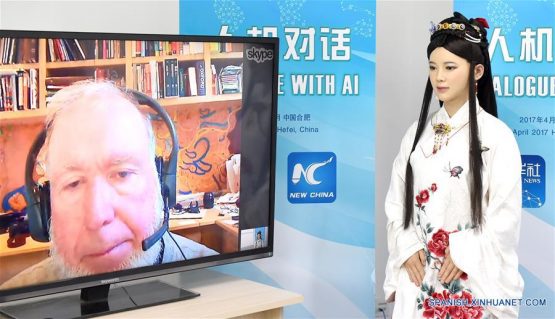
Jia Jia, una robot interactiva que parece una joven china real en ropa tradicional, conversa a través de internet con Kevin Kelly, fundador y editor ejecutivo de la revista Wired, en Hefei, capital de la provincia de Anhui, en el este de China, el lunes 24 de abril de 2017. Jia Jia fue invitada como una reportera especial de la Agencia de Noticias Xinhua para conducir el diálogo hombre-máquina con Kelly el lunes. Jia Jia fue presentada en 2016 por un equipo de investigación y desarrollo robótico en la Universidad de Ciencia y Tecnología de China en Hefei. Le tomó al equipo tres años investigar y desarrollar este robot interactivo de nueva generación, que puede hablar, mostrar microexpresiones, mover sus labios y mover su cuerpo e incluso bromear al responder.

Jia Jia hizo el lunes su primera entrevista en directo en inglés con Kevin Kelly, un célebre periodista estadounidense especializado en tecnología. Según han comentado varios expertos, el evento tiene “importancia simbólica” pues es la primera conversación interactiva entre un “reportero con inteligencia artificial” y un ser humano.

PRIMERA PERIODISTA CON INTELIGENCIA ARTIFICIAL

“Jia Jia, ¿pues cantar algo para mí o ponerme música?”, le preguntó Kelly, cofundador de la prestigiosa revista tecnológica Wired. “Tú mismo puedes hacerlo”, le respondió, ingeniosa la robot.

Vestida con un traje tradicional chino, Jia Jia tiene un aspecto asombrosamente realista e incluso parpadeó y sonrió durante toda la entrevista.

“¿Te gusto?”, preguntó Jia Jia.

“Sí”, respondió Kelly.

“Eso me parecía”, replicó la robot.

136235099_14931296516031n

Aquí una presentadora introduce a Jia Jia como una reportera especial de la Agencia de Noticias Xinhua para conducir el diálogo hombre-máquina con Kelly el lunes. Jia Jia fue presentada en 2016 por un equipo de investigación y desarrollo robótico en la Universidad de Ciencia y Tecnología de China en Hefei. Le tomó al equipo tres años investigar y desarrollar este robot interactivo de nueva generación, que puede hablar, mostrar microexpresiones, mover sus labios y mover su cuerpo. (Xinhua/Guo Chen)

La conversación se produjo a través de Skype desde la Universidad de Ciencia y Tecnología de China (USTC) en Hefei (en la provincia oriental de Anhui), y su contenido no estaba fijado de antemano.

Kelly ha seguido durante años el desarrollo de la inteligencia artificial (IA) y una de sus condiciones para hacer la entrevista con Jia Jia era que el diálogo no estuviese controlado en ningún aspecto.

“Es bueno que Jia Jia se haya enfrentado a semejante desafío”, afirmó el profesor Chen Xiaoping, director del Laboratorio de Robótica de la USTC y principal programador de la robot, que precisó que “le daría 70 puntos (de 100) por su desempeño”.

A su juicio, la entrevista de Jia Jia con Kelly es de gran importancia para la investigación y el desarrollo de los robots con inteligencia artificial.

“Hubo algunos retrasos y confusiones debido a la red (de Skype). Al margen de eso, creo que la conversación se saldó con éxito”, subrayó Chen, para quien las respuestas de Jia Jia a algunas preguntas fueron rápidas y satisfactorias.

Además, de Kelly, Jia Jia mantuvo también el lunes conversaciones con varios expertos en informática y representantes de medios, entre ellos Bart Selman, profesor del Departamento de Ciencias Informáticas de la Universidad Cornell.

“¿Cuántos años tienes?”, preguntó Selman a la robot, que respondió, en tono jocoso, que “la edad de una chica es un secreto”. Cuando le cuestionó sobre qué deseaba como robot, Jia Jia dijo: “Yo lo que estoy deseando es que llegue el viernes (mi día de paga)”.

En opinión de Selman, Jia Jia, la primera “reportera con inteligencia artificial” que conoce, podría ayudar a la gente a asomarse al futuro de la inteligencia artificial, que se desarrolla a un ritmo muy rápido.

136235099_14931296516471n

Jia Jia aparece aquí junto a Chen Xiaoping, director del equipo de investigación y desarrollo robótico que realizó esta robot periodista para la agencia Xinhua. “Es algo que nunca nos imaginamos”, dijo el creador de Jia Jia, el profesor Chen Xiaoping, director del Laboratorio de Robótica de la Universidad de Ciencia y Tecnología de China (UCTC) en Hefei, una ciudad de la provincia oriental china de Anhui. “Muchos elementos impredecibles durante el diálogo de la entrevista fueron un desafío para nosotros”, dijo Chen.

Además de Kelly, Jia Jia también entabló el lunes conversaciones interactivas con varios expertos en computadoras y representantes de los medios, incluyendo a Bart Selman, profesor del Departamento de Ciencias de la Computación de la Universidad de Cornell.

“Jia Jia es (un robot) de tercera generación. Jia Jia 3,5 saldrá pronto y Jia Jia 4,0 y Jia Jia 5,0 serán aún mejores”, dijo Chen.

En comparación con Jia Jia 1,0 y Jia Jia 2,0, Jia Jia 3,0 tiene expresiones y puede identificar el lenguaje y el semblante humanos, una mejora significativa que la vuelve más atractiva y más cordial en las conversaciones interactivas, dijo el principal desarrollador.

A pesar de las mejoras realizadas en su sistema de software, Jia Jia aún presenta muchos elementos impredecibles en el diálogo en inglés, admitió Chen, pero dijo que la inteligencia artificial y los robots serán universales en el futuro, lo que generará más conveniencia.

El profesor dijo que la serie “Kejia” de robots está diseñada para proporcionar servicios a las familias. Una vez disponibles en el mercado, los robots podrían cambiar el estilo de vida de las personas.

La necesidad de dar a los robots más tareas físicas nunca ha cesado, dijo Chen, quien agregó que los seres humanos deben empezar a pensar en lo que vendrá después de que los robots realicen su trabajo y se queden con su empleo.

El profesor también dijo que en el pasado, la investigación sobre robots se centró de manera importante en el cerebro, pero en el caso de Jia Jia, los científicos deben investigar tanto el cerebro como el corazón.

Chen describió como un desafío el cambio hacia la inclusión de emociones.

“Uno sabe que se trata de un robot, pero uno también siente que es muy parecida a un ser humano”, dijo. “Este sentimiento es muy bueno. Es maravilloso”.

Fuente: https://portinos.com/37635/la-agencia-china-xinhua-incorporo-una-reportera-robot

Comparte este contenido:

China compiles its own ‘Wikipedia,’ but public can’t edit it

China/Mayo de 2017/Fuente: Hindustan Times

Resumen: Será gratis. Será únicamente chino. Será una enciclopedia en línea para rivalizar con Wikipedia, pero sin la participación del público. Y no espere entradas en «Tiananmen Square 1989» o «Falun Gong grupo espiritual» para subir en sus búsquedas, tampoco. Estudiosos y expertos elegidos por Pekín para trabajar en el proyecto dicen que sólo podrán hacer entradas – el último ejemplo de los esfuerzos del gobierno chino para controlar la información disponible en Internet. Los eruditos dicen que la verdad es su luz de guía, y su proceso de edición y revisión es riguroso. Si hay una diferencia de opinión, un comité debe entenderlo, dijo Zhang Baichun, editor jefe de la historia de la ciencia y la sección de tecnología. «Por supuesto, la ciencia no proviene de los votos democráticos, para convencer a otros que usted tendrá que presentar la prueba más convincente», dijo a The Associated Press.

It’ll be free. It’ll be uniquely Chinese. It’ll be an online encyclopedia to rival Wikipedia — but without the participation of the public. And don’t expect entries on “Tiananmen Square 1989” or “Falun Gong spiritual group” to come up in your searches, either.

Scholars and experts hand-picked by Beijing to work on the project say only they will be able to make entries — the latest example of the Chinese government’s efforts to control information available on the internet.

The scholars say truth is their guiding light, and their editing and review process is a rigorous one. If there is a difference of opinion, a committee should figure it out, said Zhang Baichun, chief editor of the history of science and technology section.

“Of course, science does not come from democratic votes, to convince others you will have to present the most convincing proof,” he told The Associated Press.

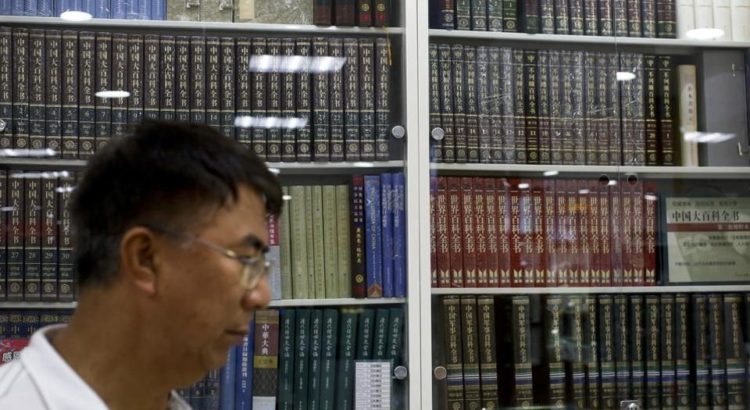
The effort to compile 300,000 entries that span science, literature, politics and history is being led by the ruling Communist Party’s central propaganda department, which guides public opinion through instructions to China’s media, internet companies and publishing industry as well as overseeing the education sector. They have instructed the Encyclopedia of China Publishing House, known for its offline Chinese Encyclopedia, to produce it.

The ruling party has struggled to manage public opinion in the internet age, when citizens can comment on news and topics of outrage and post photos of protests on social media — at least until such messages are scrubbed away or rendered unsearchable by censors. China also regularly blocks overseas sites including Facebook and Twitter, and has periodically blocked Wikipedia’s English and Chinese versions. Currently, the Chinese Wikipedia is inaccessible in the mainland.

Jiang Lijun, senior editor at the Encyclopedia of China Publishing House, said Thursday that they plan to have entries on political leaders, the history of the Communist Party, and subjects including virtual reality, artificial intelligence and the European Union.

The online Chinese Encyclopedia will focus primarily on entries that are less likely to change as opposed to recent events, and with academic value, “while also trying to strike a balance between that, being timely and what people are searching for,” she said. She declined to comment on how events that are politically sensitive in China, like the Cultural Revolution and the 1989 Tiananmen Square crackdown, would be treated.

Qiao Mu, an independent media analyst in Beijing, said the Chinese Encyclopedia would be “quite different” from Wikipedia because of the need to toe the line on political taboos.

“If it’s not blocked in China, the publisher must accept censorship, either self-censorship or censored by authorities,” he said.

He said the encyclopedia would likely present a single, official version of sensitive historical events, and exclude items like the Tiananmen crackdown and the outlawed Falun Gong spiritual group, which “never exist on the internet.”

The publishing house behind the Chinese Encyclopedia is paying 20,000 scholars and experts from universities and research institutes to write entries and it is slated to go online next year. Jiang said initially the encyclopedia will just be in Chinese, but they are also doing research to see how viable an English version would be.

Jiang said they met with a team from San Francisco-based Wikipedia to learn from their experience.

Wikipedia is edited and maintained by hundreds of thousands of volunteers around the world, and has more than 40 million articles encompassing nearly 300 languages. More than 900,000 entries are in Chinese, compared with more than 5 million in English.

“There is Chinese content on Wikipedia too, but sometimes it is not as accurate as it could be,” said Jiang.

Jiang said that as Wikipedia’s content is generated by users, they can create more entries faster. “But we try to eliminate self-promotion and inaccuracy as much as possible.”

Zhang, the professor of history of science and technology, said the online version will make it easier to reach more people, particularly young readers.

To create the history of science and technology entries, Zhang said professors from the Chinese Academy of Sciences’ Institute of Natural Sciences first hold meetings with veterans and young experts in their fields to form a committee. The committee will then find the most authoritative person on the topic to write the draft, including sometimes foreign experts, said Zhang, who is director of the institute.

The draft is reviewed by a section chief editor and then the committee.

“If there is a difference of opinion, all deputy and chief editors should participate in the discussion and figure it out together,” Zhang said. “We will reason things out with the author until we reach an agreement, or change the author.”

Fuente: http://www.hindustantimes.com/world-news/china-compiles-its-own-wikipedia-but-public-can-t-edit-it/story-oyJYv2NOI7ontPlgHLwrKO.html

Comparte este contenido:

Why Education Reform is so Important for Myanmar

Myanmar/Mayo de 2017/Autor: Brandon Aung Moe/Fuente: Irrawady

Resumen: Aunque las sanciones estadounidenses se levantaron el 7 de octubre de 2016, la economía de Myanmar todavía está luchando por despegar. Se prevé que la inversión extranjera para el año que termina el 31 de marzo de 2017 será 30 por ciento menor que la del año fiscal anterior. La inversión extranjera sigue centrándose en gran medida en las industrias extractivas como el petróleo y el gas. Un plan concreto para la diversificación no se ve en ninguna parte. La mayoría de estos problemas de infraestructura e inversión se pueden atribuir a una única raíz: la calidad de la educación. Todas las escuelas privadas, centros de idiomas y escuelas vocacionales contactadas por Consult-Myanmar para nuestra investigación sobre educación respondieron con la respuesta inequívoca de que el actual sistema educativo ya no es adecuado para apoyar el crecimiento de Myanmar en una economía industrializada y no puede ser Confiaron en reducir la dependencia de Myanmar de la exportación de recursos naturales que se están agotando cada día.

I was born in the small town of Kanyutkwin in Bago Division, Myanmar. I left the country in 2005 to further my education in Singapore. When I came back to Yangon to work as a research officer at Consult-Myanmar, a Myanmar-based research and consultancy firm, I noticed that the streets were more crowded, the traffic was worse, there were more high-rises in the downtown area and Yangon was teeming with foreigners. But I realized that some aspects of the country have never really changed. The persistence of poor quality education is one of them, leaving profound impacts on the development of Myanmar – both as a society and as an economy.

Although US sanctions were lifted on Oct. 7, 2016, Myanmar’s economy is still struggling to take off. Foreign investment for the year ending on March 31, 2017 is predicted to be 30 percent lower than that of the previous fiscal year. Foreign investment is still largely focused on extractive industries such as oil and gas. A concrete plan for diversification is nowhere to be seen.

After almost 50 years of economic mismanagement and under-investment, Myanmar’s infrastructure is creaking alone under the load of a growing population and increased foreign investment in factories and real estate – all of which demand even more power and a sound infrastructure.

Most of these problems in infrastructure and investment can be traced to one single root – quality of education. All of the private schools, language centers and vocational schools that were contacted by Consult-Myanmar for our research on education responded with the unequivocal answer that the current education system is no longer adequate to support the growth of Myanmar into an industrialized economy and cannot be relied upon to reduce Myanmar’s dependence on the export of natural resources which are being depleted every day.

The previous government did try to tackle the problem by embarking on education reforms such as allowing private schools to operate. But, more needs to be done and Myanmar cannot afford to drag and delay the implementation of comprehensive reforms in the education sector.

Notwithstanding some entrenched problems, Myanmar, as a latecomer, can leapfrog in education just as it did in telecommunications. The fact that mobile phone penetrationjumped from a mere 7 percent at the end of 2013 to 90 percent at the end of 2016 and that 4G is widely available in Yangon, Mandalay and Naypyidaw – in such a brief time – is nothing short of breath-taking, even if it was achieved mainly as a result of foreign investment and talent brought in by multinational telecommunications firms like Telenor and Ooredoo.

Where education is concerned, Myanmar need not look far for inspiration. Among Myanmar’s ASEAN neighbors, Singapore and Vietnam provide encouraging examples. Even though Singapore topped the PISA 2015 (Program for International Student Assessment) in all subjects, Vietnam was the surprise. As a lower-middle income country, its performance was expected to be in the same league as Indonesia, Kosovo, Moldova and Tunisia, as PISA performance is correlated to GDP per capita and how affluent the country is. However, Vietnam surprised everyone by coming ahead of advanced countries like Germany and Switzerland in science and ahead of the US in science and math.

Professor Paul Glewwe from the University of Minnesota found that the parents of the Vietnamese students taking part in the exam had a much lower educational background and less wealth than their peers in other countries. “The 10 percent of the most disadvantaged children in Vietnam – and they grow up in very poor households – those children do better than the average American child,” OECD Education Director Andreas Schleicher said, as cited by CNN. Vietnam shows that one does not need a developed economy to have a quality education, he said.

What many researchers found was that there were certain commonalities in the education systems of Singapore and Vietnam. One of them is curriculum. Their curricula are focused on both academic as well as practical skills. In other words, they are designed for students to gain deep understanding and knowledge of core theoretical concepts as well as the ability to apply them in real life situations. As a result, students love to inquire, learn and apply their knowledge.

Myanmar’s curriculum, on the other hand, is outdated and disconnected. Take high school math for example. Each chapter is treated as entirely separate from another and questions do not test students’ ability to use various concepts from different chapters to solve real-life problems.

English is the language of science and technology. It is also the language of the Internet. If you have a good command of English and a good Internet connection, you can educate yourself by using free education websites like Khan Academy, Coursera and so on. Google search and the worldwide web have allowed students to move away from mere memorization to focusing on query, learning, collaboration and application. However, the teaching of English in Myanmar schools leaves much to be desired.

To gauge the level of English literacy among Myanmar’s working youth, I surveyed job applicants at Consult-Myanmar in February. Ten out of 11 shortlisted applicants had attended at least one English course and were able to produce certificates of completion. They were also asked, before sitting for a simple English test, to rate their English language ability – only 1 chose ‘basic’; 6 ‘fair’; 3 ‘good’; and 1 ‘excellent’. The test results are not encouraging in spite of the candidates’ modest confidence. None of them was able to get a perfect score, even though the comprehension passage was fairly easy. They all stumbled over open-ended writing, being unable to write more than three to four sentences, not to mention that those sentences were full of grammatical mistakes.

I have always been skeptical of the quality of most private English courses in Myanmar that sprang up amid lack of government regulation of private schools and language centers. The test results reinforce my hypothesis that most Myanmar youths’ command of English is still basic despite what they say about how good their English is and how many external courses they take.

In addition, Vietnam and Singapore have also focused on STEM (Science, Technology, Engineering & Mathematics) in their push for industrialization and modernization and continue to do so. It is no different for Myanmar. Only STEM skills can push the country towards industrialization, modernization and improvements in the standard of living over a period of time. Qualified engineers must build all of the new towns, Special Economic Zones, power stations, bridges and roads that Myanmar desperately needs. Starved of a curriculum that can produce STEM-strong engineers, the country will not be able to build the foundation for economic growth.

Myanmar currently does not have this sort of curriculum. For example, my friend, a civil engineer graduate from a Myanmar university, was offered the position of site engineer in Singapore by a Japanese construction firm about three years ago. His joy of landing an overseas job was short-lived as he soon came to realize that the brick building techniques he learned in the Myanmar university cannot be applied to the steel structures that grace modern cities.

In my interview with Neelam Bhusal, the co-founder of Impact Skill Development Centre, which offers a variety of high quality English courses, she agreed that Myanmar needed to upgrade its provision of STEM skills. Only then will the country be able to rely upon its own skilled workforce needed in finance, construction, scientific research and many other job sectors as the economy grows, she said.

It is also to be noted that qualified and committed educators are to a good curriculum as wheels are to an engine. Well-trained teachers and a great curriculum are never mutually exclusive. In the case of Vietnam’s education reforms, the government regularly offers overseas scholarships to promising teachers who later return to assist in imparting knowledge and skills necessary to raise the standard of education in the country.

Myanmar should do likewise by asking for teaching scholarships from friendly countries supportive of reforms. The tendency of government scholars to not return home from overseas tenure can be resolved by a bond system which make the parents or guardians the guarantor. It is, after all, for the good of the country and not too stringent a term to ask. Most importantly, returning scholars must commit by going to rural areas and under-performing schools and working hard to close the gap between the ‘elite’ schools and the ‘poor’ man’s schools. That is the most towering achievement of both Singapore and Vietnam, where neighborhood or rural schools perform just as well as elite schools. One is a democratic country and the other is a socialist country. But, there is one thing that they agree upon: their education systems must serve the rich and the poor alike and provide everyone the same level of quality education, regardless of their class or religion.

Lastly, education reforms also entail educating the public – especially the poor – to change attitudes towards education. Phung Xuan Hua, Vietnam’s education minister,has said: “Vietnamese parents can sacrifice everything, sell their houses and land just to give their children an education.” I don’t doubt that many middle and lower-middle class families in Myanmar can do the same. But, the same attitude must seep in to the poor class.

But now, some poor families in Myanmar ask their children to work as indentured labor and collect in advance from business owners about six months of the child’s salary. As a result, children are seen as an economic unit that must be put to work to support families. Consequently, child labor is rampant. Scenes of kids working days and nights at the tea shops that dot the country are not uncommon. This is a practice that must be stopped and children must be enrolled in school. Otherwise, Myanmar will have a group of uneducated, unskilled workers who are not employable in the offices and factories of the future.

Even if all these suggested reforms are implemented, the country will not reap maximal benefits unless it addresses the problem of low morale and work ethics of its citizens. Thailand’s Institute for Promotion of Teaching and Science and Technology found thatthe work ethic of Vietnamese teachers is admirable. They rarely take time off. Whereas in Myanmar, citizens are still upset over the reduction of the New Year holidays from 10 to 5 days even though the total number of public holidays remains at 28 days a year, which is already one of the highest in the world.

Under the previous regime, the government provided the people with more holidays along with cheap liquor and cigarettes. Myanmar should now be more circumspect and improve morale slowly by weaning its citizens off those cheap drugs. Myanmar needs to look at how it can improve its citizens’ work ethic so that its workforce becomes more productive. It can become a mecca for manufacturers globally, only if endemic problem of low motivation to work hard is addressed.

In conclusion, Myanmar is at an inflection point after 50 years of a downward slide; it has the opportunity to turn its education and economy around with a government that is elected by the people. There will not be any shortcut or silver bullet that will make everything better overnight. However, what the educational success of Vietnam and Singapore has shown is that with a well-designed curriculum, qualified and committed teachers, self-sacrificing parents and industrious teachers and students alike, significant improvements can happen in Myanmar’s education sector, thereby paving the way for an economic miracle many Myanmar citizens are waiting for.

Fuente: https://www.irrawaddy.com/opinion/guest-column/education-reform-important-myanmar.html
Comparte este contenido:

Singapur: Education system should be aligned with needs of the economy: Ong Ye Kung

Singapur/Mayo de 2017/Fuente: The Strait Times

Resumen: El sistema educativo debe estar alineado con la estructura de la economía, para que la gente continúe armada con las habilidades necesarias para encontrar trabajo en la era actual, dijo el Ministro de Educación Ong Ye Kung e Jueves (4 de mayo). En Singapur, esto significa limitar la proporción de graduados en una cohorte de alrededor del 30 al 40 por ciento, mientras que la formación del resto debe destinarse para las vocaciones en diversas industrias. Este enfoque, añadió, asegura que no haya exceso de graduados en Singapur, y ma el desempleo graduado bajo, a diferencia de  algunos países asiáticos.

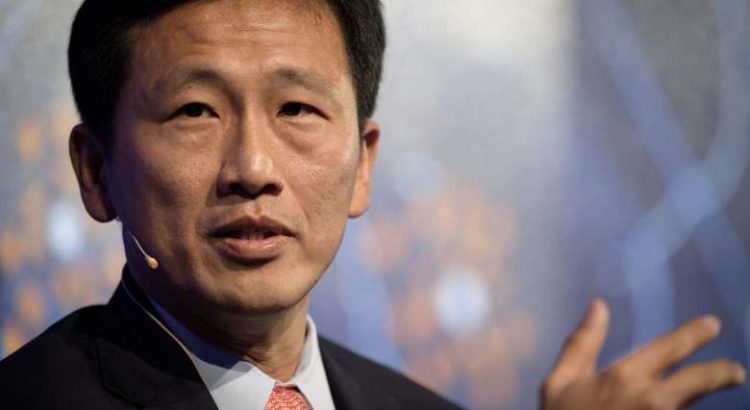
The education system needs to be aligned with the structure of the economy, so that people will continue to be armed with the required skills to find jobs in the current age of disruption, Minister for Education (Higher Education and Skills) Ong Ye Kung said on Thursday (May 4).

In Singapore, this means capping the proportion of graduates in a cohort at about 30 to 40 per cent, while training the rest for vocations in various industries.

This approach, he added, has ensured there was no glut of graduates in Singapore, and kept graduate unemployment low, unlike in some Asian countries.

Mr Ong was a member of a panel discussing politics and education in the age of disruption at the 47th St. Gallen Symposium in Switzerland.

Also on the panel were Mr Johann Schneider-Ammann, a federal councillor of Switzerland, and Mr Anders Samuelsen, Denmark’s Minister for Foreign Affairs.

During the discussion moderated by Al Jazeera English presenter Mehdi Hasan, Mr Ong said Singapore had an over-emphasis on academic qualifications in education.

But to successfully deal with disruption, the education system needed to shift and adopt a «dual-education track», in which young people can become craftsmen in a wide range of fields. In this, Singapore can learn from countries such as Switzerland, Denmark and Germany, Mr Ong added.

«Today there is a strong emphasis on skills, and there is a logic to that,» he said. «Information and knowledge are all on the Internet. You can Google everything in the world, but skills you get from experience, you can’t Google for skills.»

Mr Ong cited the SkillsFuture initiative as an example of what the Government was doing to encourage people to learn new skills.

An education system focusing on skills will help people find jobs and improve their lives, Mr Ong said.

In doing so, it will help governments address one of today’s key challenges: rebuilding the social compact between political elites and the masses.

Politics is about giving people a better life, he said, adding: «And that has to do with employment and education, (helping people find) a sense of self even in a very globalised world.»

Mr Schneider-Ammann said «one of the medicines» to disruption was maintaining a first-rate education system.

Panellists were also asked about political disruptions, such as Brexit and the Trump presidency, which have led both Britain and the United States to look inwards.

Mr Samuelsen said the problem the poor face in this age of disruption is not globalisation, but not being part of it. «That is a big problem because that is what’s keeping people in poverty,» he said.

The symposium is an annual conference attended by business and government leaders, as well as students and young professionals.

Mr Ong arrived in Switzerland on Tuesday for a four-day working visit. He also met Mr Schneider-Ammann, who heads Switzerland’s Federal Department of Economic Affairs, Education and Research, and visited various institutions of higher learning and companies.

Fuente: http://www.straitstimes.com/singapore/education-system-should-be-aligned-with-needs-of-the-economy-ong-ye-kung

Comparte este contenido:

Siria: Niños aprenden desde escuela qué hacer ante un bombardeo

Siria/04 mayo 2017/Fuente: El Comercio

Escolares aprenden a protegerse en caso de un bombardeo durante una clase de sensibilización dictada por la defensa civil de Siria, conocidos mundialmente como Los Cascos Blancos.

Esta iniciativa sobre la seguridad de la guerra,  se da como parte de una campaña dirigida por la defensa civil siria en la zona de Harasta, en las afueras del noreste de la capital Damasco.

Al menos 2.786 personas perdieron la vida por la violencia en Siria durante el mes de abril, una cifra ligeramente inferior a la de marzo, cuando hubo 2.826 muertos, según el recuento hecho por el Observatorio Sirio de Derechos Humanos.

De esos muertos, al menos 938 eran civiles, entre los que hay 291 menores y 151 mujeres.

Casi la mitad de los civiles -453- fallecieron por bombardeos de aviones rusos y sirios en distintas partes del país.

Otras causas de la muerte de ciudadanos en Siria fueron los disparos de facciones islámicas, fuego de la guardia fronteriza turca, explosiones de artefactos y minas, bombardeos de la coalición internacional y ataques de las Fuerzas de Siria Democrática (FSD) -una alianza armada liderada por milicias kurdas-, entre otras.

Asimismo, al menos 449 combatientes sirios de grupos rebeldes e islámicos y de las FSD perecieron durante el mes de abril; así como 833 milicianos, la mayoría extranjeros, de organizaciones extremistas como el Estado Islámico (EI), el Frente de la Conquista del Levante -ex filial de Al Qaeda- o el Ejército Islámico Túrquico.

En el bando gubernamental, al menos 215 efectivos de las fuerzas regulares murieron, además de 308 guerrilleros sirios de las Fuerzas de Defensa Nacional y de otras milicias leales al presidente Bashar al Assad. Entre ellos, cinco combatientes del grupo chií libanés Hizbulá y 23 milicianos chiíes de otras nacionalidades.

A estas víctimas mortales se suman quince personas, cuya identidad no se ha podido esclarecer.

Siria es desde marzo de 2011 escenario de un conflicto, que ha causado más de 321.000 muertos.

Fuente:http://elcomercio.pe/mundo/asia/siria-ninos-aprenden-desde-escuela-que-hacer-ante-bombardeo-noticia-1988495

Comparte este contenido:

China prepara una enciclopedia online para desafiar a Wikipedia

China/04 mayo 2017/Fuente: El Comercio

Más de 20 mil universitarios han sido reclutados para estar en el proyecto, que tendrá 300 mil entradas en su lanzamiento.

China prevé lanzar el próximo año una enciclopedia con el objetivo de guiar a la opinión pública frente a la influencia extranjera en general, explicó el principal promotor del proyecto, Yang Muzhi, en un artículo publicado el mes pasado en la página web de la Academia China de las Ciencias.

A diferencia de Wikipedia o su equivalente chino Baidu Baike, que recurren a los servicios de voluntarios y cuyos contenidos en línea son revisados permanentemente, el nuevo proyecto estará enteramente redactado por profesionales. Más de 20.000 universitarios ya han sido reclutados para participar en el proyecto, que tendrá más de 300.000 entradas en su lanzamiento el próximo año, según el mismo artículo.

 En otro artículo publicado el año pasado, Yang Muzhi presentó la futura enciclopedia como un rival de Wikipedia y de la enciclopedia Británica, retándose a adelantarlas.  El proyecto, bajo la supervisión del Grupo de Edición Chino, una empresa estatal, «tendrá características chinas», explicó.

La enciclopedia «será un símbolo del desarrollo cultural y tecnológico del país» que incrementa su influencia internacional.

Aunque Wikipedia está autorizada por China, el régimen comunista bloquea otras fuentes de información como Google, así como redes sociales entre las que se encuentran Facebook y Twitter. Además, Internet está escrupulosamente limpio de todo contenido políticamente sensible.

China cuenta con más de 700 millones de internautas pero según el centro de reflexión norteamericano Freedom House, en 2015 la de Pekín era la política más restrictiva sobre los contenidos en línea de los 65 países estudiados, entre ellos Irán y Siria.

Fuente: http://elcomercio.pe/tecnologia/actualidad/china-prepara-enciclopedia-online-desafiar-wikipedia-noticia-1988823

Comparte este contenido:
Page 454 of 774
1 452 453 454 455 456 774