Page 461 of 772
1 459 460 461 462 463 772

Profesora china expone su programa de apoyo psicológico en Foro Mundial de Educación y Habilidades

Asia/China/16 Abril 2016/Fuente: mba/Autor:Pueblo en Línea (China)

Yang Boya, la única profesora china clasificada entre los 10 mejores profesores del mundo por el Global Teacher Prize, dialogó con la audiencia global sobre sus programas de apoyo psicológico y sobre el sistema educativo de China.

Yang, de 28 años, es profesor de psicología de la Escuela Secundaria, afiliada a la Kunming Teachers College de la provincia de Yunnan. Ella ha establecido un centro donde los estudiantes pueden buscar orientación profesional a la hora de enfrentar los retos de la vida.

«Como psicóloga y maestra, desde hace cinco años desarrollé programas de apoyo para adolescentes», afirma Yang. «Hemos interactuado con muchos adolescentes de diferentes escuelas, tratando de entender sus problemas y aspiraciones».

Yang y su equipo se han dado cuenta que los valores de los adolescentes reflejan los valores de sus familias.

«Incluso cuando lograron mejorar dentro de nuestro programa, sus viejos hábitos regresaron tan pronto como volvieron a casa», asegura Yang.

Así que comienzaron a desarrollar un programa de entrenamiento dirigido a sus padres.

«Nuestro programa es altamente interactivo, utilizamos simulaciones, juegos de roles y otras actividades experimentales para ayudar a los padres a entender el desarrollo de un adolescente e irlos encaminando a lograr empatía con sus hijos para que logren caminar juntos por la vida».

De acuerdo a su estrategia, hay un triángulo fundamental para el éxito del programa de apoyo psicológico: los jóvenes, sus padres y el gobierno.

«Recibimos una llamada telefónica del gobierno local que quería colaborar para expandir y ampliar el programa. El apoyo gubernamental nos trajo más credibilidad, experiencia técnica y recursos, y también más especialistas dispuestos a colaborar”, enfatiza Yang.

Fuente de la noticia: http://mba.americaeconomia.com/articulos/notas/profesora-china-expone-su-programa-de-apoyo-psicologico-en-foro-mundial-de-educacion

Fuente de la imagen:

http://mba.americaeconomia.com/sites/mba.americaeconomia.com/files/styles/article_main_image/public/field/image/captura_de_pantalla_2017-04-14_a_las_12.00.27.png?itok=z0doK

Comparte este contenido:

ONU acusa a Turquía de violar derechos a empleo y educación

Europa /Suiza, 15  de abril de 2017/ Fuente: elnuevoherald

Un comité de Naciones Unidas formado por expertos en derechos humanos condenó el jueves a Turquía por violar los derechos al empleo y la educación a través de despidos masivos de funcionarios y maestros amparándose en el estado de emergencia.

Los expertos criticaron el despido de hasta 134.000 empleados públicos —entre ellos miles de profesores— sin los procesos debidos ni compensación. Las destituciones se justificaron por supuestos lazos con organizaciones que Turquía considera grupos terroristas.

Turquía introdujo el estado de emergencia tras un fallido intento de golpe de Estado en julio de 2016.

Los expertos del Consejo de Derechos Humanos de la ONU dijeron que los gobiernos deben respetar los derechos fundamentales incluso en un estado de emergencia, que debe ser de uso limitado en una sociedad democrática.

«Pero no ha habido ningún intento de demostrar que estas medidas generales, que han destruido las carreras y el sustento de decenas de miles de personas, cumplen estos criterios en cada caso», agregaron los expertos.

Los expertos también consideraron que el cierre de 200 medios de comunicación socavó la posibilidad de un debate informado antes del referéndum del domingo sobre si la ciudadanía ampliará de forma considerable las competencias del presidente.

Los ciudadanos turcos votan el domingo sobre propuestas de enmiendas constitucionales que darían al país un sistema presidencial de gobierno que según los críticos carece de controles y equilibrios.

Los expertos expresaron su preocupación porque los cambios propuestos permitirían al presidente turco, Recep Tayyip Erdogan, declarar unilateralmente futuros estados de emergencia y medidas relacionadas.

Señalando el carácter «arrasador» de los decretos de emergencia emitidos desde julio, los expertos advirtieron que «tales poderes podrían ser utilizados de una manera que exacerbe las violaciones importantes de los derechos económicos, sociales y culturales».

 Fuente noticia: http://www.elnuevoherald.com/noticias/mundo/article144335054.html
Comparte este contenido:

Estudiantes pobres en China tendrán más acceso a universidades

Beijing, 14 abr (PL) Las universidades de primer nivel de China admitirán a más estudiantes de las regiones rurales y pobres este año, publica hoy en una circular el Ministerio de Educación.
Bajo la nueva normativa, las universidades planean inscribir a un 10 por ciento más de educandos pobres o con escasos ingresos este año que los matriculados en 2016, a través de un programa especial regional.
Además, otro plan de escala nacional prevé que las instituciones de enseñanza superior recluten este año a 63 mil alumnos procedentes de distritos empobrecidos o que reciban subsidios contra la pobreza, así como de áreas de la región autónoma uygur de Xinjiang.
El nuevo designio insta de igual modo a la creación de un estricto sistema de exámenes para garantizar el nivel de los aspirantes.
A finales de 2015, China todavía tenía 55,75 millones de personas que vivían en la pobreza. El país planea rescatar a toda su población de ese flagelo para 2020.
Para garantizar el acceso de las personas empobrecidas a la educación, el gobierno ha adoptado medidas para promover el equilibrio en la educación obligatoria, salvar la brecha educativa entre las áreas urbanas y rurales, mejorar las infraestructuras formativas en las zonas empobrecidas y conceder subvenciones de subsistencia a los estudiantes.lam/dav

Fuente de la imagen:
http://5www.ecestaticos.com/imagestatic/clipping/54b/68c/54b68c9398c40fc850daeb42571b3296/el-examen-mas-duro-del-mundo-el-gaokao-o-selectividad-china.jpg?mtime=147670484
Comparte este contenido:

China: Inside the world’s largest higher education boom

Asia/China/Abril del 2017/Noticias/https://theconversation.com/

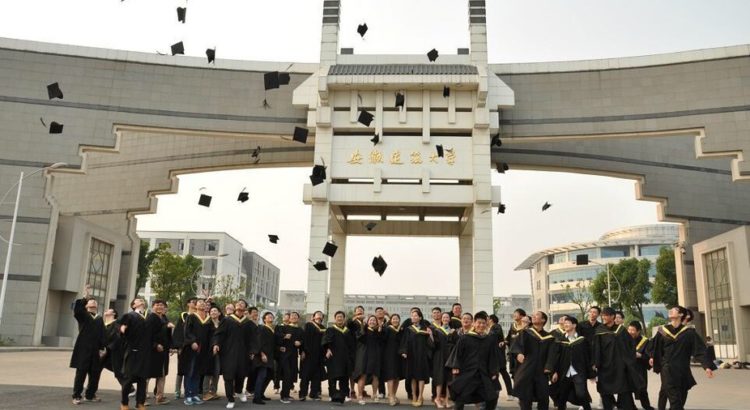
A record-breaking 8m students will graduate from Chinese universities in 2017. This figure is nearly ten times higher than it was in 1997 and is more than double the number of students who will graduate this year in the US.

Just two decades ago, higher education in China was a rare privilege enjoyed by a small, urban elite. But everything changed in 1999, when the government launched a program to massively expand university attendance. In that year alone university admissions increased by nearly 50% and this average annual growth rate persisted for the next 15 years, creating the largest influx of university educated workers into the labour market in history.

Annual enrolment of new students in higher education institutions. Author provided

Growth in the number of engineering students has been particularly explosive as part of the government’s push to develop a technical workforce which can drive innovation. But overall student numbers have increased in all subjects – even in the humanities and social sciences. New universities have sprung up and student enrolment numbers have rocketed. The second most popular subject major is in fact literature – and the fastest growing is law.

Underemployment

In 2013, Chinese citizens started blogging about the “hardest job hunting season in history” – and each year it seems to get harder for Chinese graduates. In 2017 there will be 1m more new graduates than there were in 2013. And yet, the graduate unemployment rate has remained relatively stable – according to MyCOS Research Institute, only 8% of students who graduated in 2015 were unemployed six months after graduating.

But if you delve a little deeper it’s clear that unemployment rates mask the more subtle issue of “underemployment”. While most graduates eventually find work, too many end up in part-time, low-paid jobs.

Six months after graduating, one in four Chinese university students have a salary that is below the average salary of a migrant worker, according to MyCOS data. History, law and literature have some of the lowest starting salaries, and also the lowest employment rates.

Graduation day. Xinxi Xu/flickr, CC BY

And for students who choose arts and humanities subjects in high school, the average starting salary after university is lower than that of their classmates who didn’t go to university, according to survey data. Of the 50 most common graduate occupations, 30% are low-skilled and don’t require a degree. For these students, low starting salaries and limited career progression call into question the value of their degree.

The high cost of living, particularly in big cities, has also forced millions of graduates into “ant tribes” of urban workers living in squalid conditions – often in basements – working long hours in low-paid jobs.

The big divide

But for a different group of graduates, the contrast is striking. Engineering, economics and science majors in China all enjoy high starting salaries and the top employment rates. These graduates fill the highest-paid entry positions in the most attractive employment sectors of IT, operations, real estate and finance. Chinese tech graduates do particularly well. In 2015 the top five highest paying graduate jobs were all IT related.

The government’s “Made in China 2025” strategy to become a global high-tech leader in industries such as advanced IT and robotics has created plenty of opportunities for graduates in these fields.

Top highest paying graduate jobs.

Not only are the starting salaries high, but long-term earnings follow a starkly different trajectory. Three years after graduating, the top 15% of engineering, economics and science graduates earn more than double the median salary for other graduates.

Wrong types of skills

Despite the rapid increase in the number of university graduates, Chinese companies complain of not being able to find the high-skilled graduates they need. The main deficit is in so-called “soft skills” such as strong communication, analytical and managerial skills. According to research by McKinsey, there is a short supply of graduates with these assets.

Chinese universities have a great track record of teaching students “hard skills”, but the test-focused education system has placed little emphasis on the development of anything else. So while graduates from technical or quantitative majors find employment because they have the necessary “hard skills”, graduates from less technical majors are hampered by their lack of both types of skills.

Two types of graduates

It seems then that the problem is not the rising number of students attending university, but that there is a mismatch between the skill composition of graduates and the skills employers need.

Demand for graduates with technical or quantitative skills has in fact risen faster than supply, resulting in attractive employment opportunities for graduates with these skills.

But for the rest, their education leaves them badly prepared for the jobs that are available. Until this changes, the polarisation in the graduate job market is likely to continue.

Fuente:

https://theconversation.com/inside-the-worlds-largest-higher-education-boom-74789

Fuente Imagen:

https://lh3.googleusercontent.com/SnXy9QvIlAhyEixOW7qDMfKl2XB2Q2pd7pZhh6_gTvM4zKnzvhYyBNpnOIA4w21qrsmU=s85


Comparte este contenido:

La ONU denuncia «más violencia» en Siria tras ataque de Estados Unidos

Abril del 2017/Noticias/http://www.2001.com.ve/


La ONU denunció hoy que tras el ataque de EE.UU. contra Siria de la semana pasada ha habido «más luchas y violencia» en el país, con nuevas denuncias de armas prohibidas que han castigado zonas habitadas por la población civil.

«Es hora para pensar con claridad», afirmó el enviado especial de la ONU para Siria, Staffan de Mistura, al presentar hoy un informe ante el Consejo de Seguridad de Naciones Unidas para hacer un repaso de la situación política en el conflicto de ese país.

El pasado jueves, Estados Unidos lanzó 59 misiles Tomahawk contra la base aérea siria de Shayrat para castigar al régimen de Bachar al Asad tras denuncias sobre el uso de armas químicas, dos días antes, en la localidad de Jan Shijún.

«Desde entonces hemos visto más lucha y violencia, con nuevas denuncias del uso de bombas de racimo y de barril en zonas habitadas, incluyendo las cercanías de Jan Shijún», dijo De Mistura, aludiendo a armas prohibidas por la legislación internacional.

De Mistura dijo que las acciones armadas en ese país se conocen en medio de un «frágil» proceso de diálogo político que se lleva a cabo en Ginebra, donde se han completado cinco rondas de consultas para buscar una solución política a la guerra siria.

El representante de la ONU insistió en que sólo una solución política puede poner fin a esa guerra, «y no una solución militar, a pesar de los que intentan hacer creer» que hay esa posibilidad.

La guerra en Siria, que ha causado más de 300.000 muertos y ha generado millones de desplazados y refugiados, estalló en 2011 primero como un movimiento político de oposición a Al Asad y posteriormente con un alzamiento armado.

Fuente:

http://www.2001.com.ve/en-el-mundo/157079/la-onu-denuncia–mas-violencia–en-siria-tras-ataque-de-estados-unidos.html

Fuente Imagen:

https://lh3.googleusercontent.com/Bg86IRoftw4BFYEP4PMh4p1jUvbA_SL34eoaR625Y4w18if6wnCfz1p2qTXSDy__B_VdDA=s85

Comparte este contenido:

Emiratos Arabes Unidos: Teachers from certain countries to be fast-tracked through UAE’s new education licensing scheme

Emiratos Arabes Unidos/Abril de 2017/Autora: Roberta Pennintong/Fuente: The National

RESUMEN: Los maestros con una licencia profesional de algunos países de habla inglesa tendrán acceso rápido a través del nuevo sistema de licencias. Los maestros, gerentes y directores licenciados de Australia, Canadá, Irlanda, Nueva Zelanda, Reino Unido, Estados Unidos y Sudáfrica pueden solicitar una exención del programa de Licenciatura de Maestros y Liderazgo Educativo. No tendrán que sentarse tras de los exámenes, saltando directamente a la etapa final de la concesión de licencias. «Sabemos que estos maestros son competentes, ya han aprobado sus licencias en un país que sabemos que tiene mucha integridad», dijo el Dr. Naji Al Mahdi, de la Autoridad de Conocimiento y Desarrollo Humano de Dubai. «Sabemos exactamente su sistema y ya hemos emparejado sus estándares con los nuestros», dijo el Dr. Al Mahdi, director de calificaciones de la autoridad. El sistema de licencias se extenderá a todo el país simultáneamente. Pero el Consejo de Educación de Abu Dhabi, que administra las escuelas públicas y regula las escuelas privadas del emirato, y el Ministerio de Educación, que supervisa las escuelas públicas de Dubai y todas las escuelas de los Emiratos del Norte, aún no han anunciado cómo se aplicará. Los maestros con calificaciones de los países seleccionados recibirán una licencia de enseñanza provisional que tendrá una validez de entre 12 y 18 meses.

Western Cape education MEC Debbie Schafer has been «disrespectful towards the rights of learners», said Judge Elizabeth Baartman in the Western Cape High Court on Tuesday, during arguments in the eviction case of the Grootkraal Primary School and church.

GroundUp reports that the new owner of the land, which is situated near the Cango Caves in Oudtshoorn, wants to evict the community from a portion of the farm that the community have, by their submission, used for some 185 years.

The school itself has been on the land for about 90 years. The community’s heads of argument asserts that the land that it uses «is the only place where the members of the community can get together as a group, it is the venue where all the community activities take place».

«The loss of the use of this land in effect will mean the loss of the Grootkraal community as an entity,» it states.

Baartman’s comments on the MEC’s response to the matter came after counsel for the school argued that the department failed to consult properly with the school about its possible relocation.

Both the community and the school are opposing the eviction. In a counter application to the eviction, the community is calling for the court to recognise its rights to the land, which the residents believe they have established through long standing use, or to develop the law itself to recognise these rights. Residents also want the court to register these rights against the title deed.

‘What if that was the NG Kerk?’

Advocate Anne-Marie De Vos, for the community – who are represented by Lawyers for Human Rights – said that she couldn’t find «real reason» why the owners opposed the community using the land.

«What if that was the NG Kerk? What if it were white children going to the school?» she asked, suggesting that if this was the case, the community would be allowed to continue using the land. She also called on the court to «recognise the injustices of the past».

The school wants the department to consider expropriating the land.

The department on the other hand, is not opposing the application for eviction. If the eviction is granted, the department wants to move to the school 17km away to land that currently houses a school in Oudtshoorn.

The Centre for Child Law is another respondent in the matter and also supports expropriation, as does the amicus curiae (friend of the court), Equal Education.

Problems began in 2010 when the land that the Grootkraal community had been using was sold and the school was granted a one year lease to continue operating.

When the lease expired, the department entered into negotiations with the owners of the land to extend the lease. After initially asking for rent of R32 000 a month from the department, they lowered this amount to R14 000. The department was only willing to pay R10 000.

Unable to reach an agreement, the owners sought an eviction order and the school was told that it was to close.

No engagement

Following this, the school interdicted the department from implementing the closure or relocating it without following proper consultations with the school, the governing body and the parents.

The department was also ordered to meaningfully engage with the owners to renegotiate a lease agreement.

Advocate Mushahida Adhikari, for the school and the school’s governing body, said that there is no evidence that the department complied with the order.

Adhikari highlighted the inability of the department to engage with the school about its future.

She said that the MEC needed to come to court to explain what the plan would be if the school was «relocated». She also pointed to the lack of action taken by the department while the case has been stalled over the past few years.

Responding to this, Baartman said that rural schoolchildren were the «stepchildren» of education. She said that the MEC seems to think that the court can order the relocation of the school and then the department will «make a plan».

«It is common sense, not a court in the land will do that,» a frustrated Baartman said.

‘Gross mischaracterisation’ of case

She questioned how the department came to their decision regarding the move.

«How did the department reach that decision? Was there any consultation with the school, [or] parents or was it just decided in a boardroom?» asked Baartman.

«With respect, it’s not business as usual,» she said.

Baartman said that the MEC had taken a «hands off approach». She also criticised the department for just «waiting for this case to finish» before it took action.

Advocate Ewald De Villiers-Jansen for the department, said that Adhikari’s version was a «gross mischaracterisation of the MEC’s case».

The department’s heads of argument state that following the owners’ application for eviction, the department erected a number of mobile classrooms on the grounds of the school that they were to be moved to and «undertook to provide the necessary transport» for the learners.

The department also says it upgraded the electricity and provided adequate ablution facilities.

Baartman said that in determining whether an eviction order is just and equitable she needs to know what the plans are for the children.

«I have evidence of a child getting up at 05:00. Does that mean child must get up at 04:00? [to get to the new school] What will this entail?» she asked.

Transport

She also pointed to the bad state of the roads and how negotiating these roads earlier when it is darker would be more difficult.

«What physically will happen on the ground, to say that it is just and equitable to evict these people?» she asked.

De Villiers-Jansen said that the department would provide transport for the children and that school could begin later so that children don’t need to wake up earlier.

As for the expropriation relief, he said that the court cannot compel the MEC to consider expropriation as this would be in breach of separation of powers. However, he said that the MEC may indeed consider this at a later date.

De Vos, for the community, said that given the facts, the owners are not entitled to an eviction order. She argued that the community had the right to use that land as they had used it for 185 years.

She said that there «cannot be one single person in this court in their heart that thinks it’s fair that the community must stop using that land».

De Vos insisted that the argument over exactly how big the piece of land that was used over the years or exactly what areas of the land were used, were «side issues». If need be, a surveyor could determine the extent of the land that they used.

Landless farmworkers

She said that it «shouldn’t be necessary for us to argue the justness of the community staying there». As a coloured farming community, like many others, they had used the land for years but had no rights, she said.

De Vos said that if the new owners of the land were prudent buyers they would have gone to the farm and inspected it themselves. There they would have seen signs for not just of a school, but also a church.

At this, Baartman said that the fact that there was a church on the land «should have made alarm bells go off» for the buyer. As for the suggestion that the owners wanted to bring wild animals onto the farm, De Vos said that a fence could be erected.

De Vos added that in all the farms in the Klein Karoo, there was not a single farmworker who was a landowner.

«It doesn’t exist. Why not?» she asked, saying that all the Grootkraal community was asking for was a church and a school.

The matter continues tomorrow.

Fuente: http://www.thenational.ae/uae/teachers-from-certain-countries-to-be-fast-tracked-through-uaes-new-education-licensing-scheme


Comparte este contenido:

Internet al servicio de la educación de niños en un desierto de sal en la India

India/13 abril 2017/Fuente: Los Tiempos

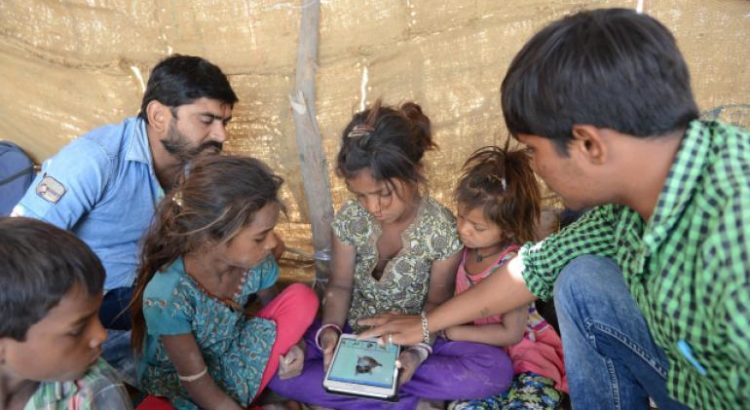
Bajo una carpa para protegerse del ardiente sol del desierto y a kilómetros de distancia de una carretera y de la red eléctrica, unos niños indios navegan por internet por primera vez en su vida.

La camioneta de una oenegé equipada con antena parabólica introduce el universo digital en las inhóspitas mesetas salinas de Gujarat, en el oeste de India, donde 10.000 familias trabajan ocho meses al año en condiciones extremas.

Este desierto de sal, conocido como Pequeño Rann de Kutch, está ubicado a 180 km al oeste de la capital regional, Ahmedabad. Sus habitantes viven sin electricidad, sin agua corriente y sin otras infraestructuras básicas.

Los niños van a la escuela. Las clases se imparten en cabañas rudimentarias desprovistas de material escolar, mientras los padres trabajan en los salares.

Varios voluntarios de la oenegé Heethrakshak Manch visitan una vez por semana las 14 escuelas de la región. Gracias a internet, dicen, los alumnos acceden a nuevos conocimientos.

Un grupo de jóvenes mira unos videos pedagógicos sobre matemáticas y ciencias.

«Internet y las tabletas hicieron que el aprendizaje sea más lúdico e interesante para estos niños. Ahora tienen mucho que aprender y que explorar», explica a la AFP Pankti Jog, miembro de la organización.

Para hacer llegar internet a este rincón perdido de la Tierra hubo que levantar una antena cerca del desierto con capacidad de emisión de hasta 60 km a la redonda.

Internet no es sólo útil para los jóvenes. Gracias a la conexión a wifi, sus padres, migrantes, tienen acceso rápido a los programas de subvenciones.

El equipo visita unas tres escuelas por día y pasa unas dos horas en cada una de ellas.

Fuente: http://www.lostiempos.com/tendencias/educacion/20170411/internet-al-servicio-educacion-ninos-desierto-sal-india

Comparte este contenido:
Page 461 of 772
1 459 460 461 462 463 772