Page 2662 of 6815
1 2.660 2.661 2.662 2.663 2.664 6.815

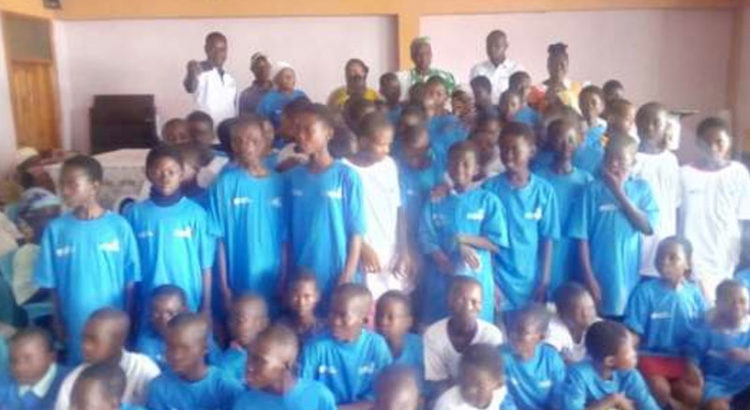
Afrikids Ghana mainstreams 98 street children into formal education

Africa/Ghana/10.10.2018/Source: www.businessghana.com.

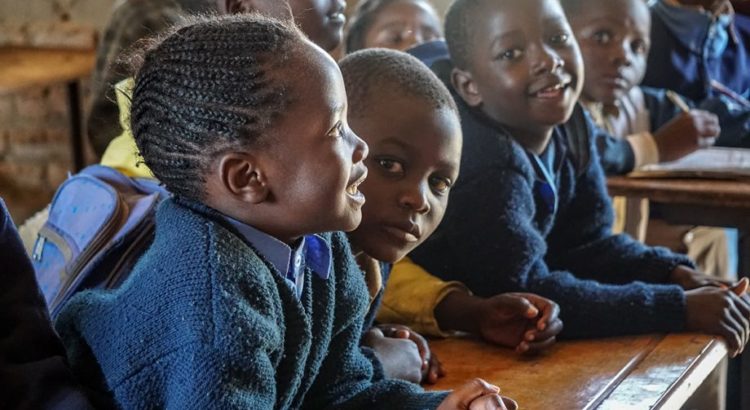
Afrikids Ghana, a Child Rights Non-Governmental Organization (NGO) has mainstreamed 98 street children in the Bolgatanga Municipality into formal Education for the current academic year.

The beneficiaries had received lessons in literacy, numeracy and life skills for a period of nine months and were given educational materials such as school uniforms, bags, exercise books, mathematical sets among others to start the process.

The NGO, which had further enrolled 10 other beneficiaries into vocational and technical skills programmes, had funding support from the Emerging Markets Foundation, another NGO based in the United States of America.

The programme was on the theme, “The School of Night Rabbits”.

Speaking at the graduation ceremony in Bolgatanga, Mr David Pwalua, the Director of Afrikids Ghana in charge of Programmes, said “these 10 beneficiaries will also be finishing their training next year, and transition, as the crop of new young entrepreneurs who will be able to earn their livelihood and live independently away from the streets”.

The Director indicated that Afrikids Ghana had over the years through the School of Nights Rabbits project trained and mainstreamed a number of such vulnerable street children into the formal schools who had completed their education and vocations and were in employment.

He stressed that his outfit viewed child protection and street children as very critical, hence, the initiation of the School of Nights Rabbits project to cater for such vulnerable children in society.

The Director admonished the beneficiaries who had been enrolled at the basic school levels to take their education seriously to enable them become responsible adults in future.

He further entreated all stakeholders including parents, teachers, traditional and religious leaders to play leading roles to help minimize “streetism” and to ensure that all children of school going age were all in school.

Mr Pwalua thanked the Ghana Private Road Transport Union, the Department of Social Welfare, the Anti-human trafficking, and Domestic Violence and Victims Support Unit both of the Ghana Police Service, the Ghana Education Service, Trade Groups such as the Weavers Association of Ghana, the Ghana Hair Dressers and Beauticians Association, and members of the Child Protection Committee established by the project, for supporting Afrikids Ghana to implement the project.

Some of the parents and caretakers of the beneficiaries thanked Afrikids Ghana and Afrikids UK as well as the Emerging Markets Foundation, for making it possible for the children who were out of school to be mainstreamed into the formal education system.

“We are very grateful for this support from Afrikids Ghana and the funding organizations. Most of these our children who have been sent to school would have ended up becoming pregnant, wayward and irresponsible in future”. Mrs Abigail Asongdekeya, a parent stressed.

Source of the notice: http://www.businessghana.com/site/news/General/173214/Afrikids-Ghana-mainstreams-98-street-children-into-formal-education

Comparte este contenido:

The 15.3% budget allocation for Education will transform the sector-Mabumba

Africa/Zambia/10.10.2018/Source: www.lusakatimes.com.


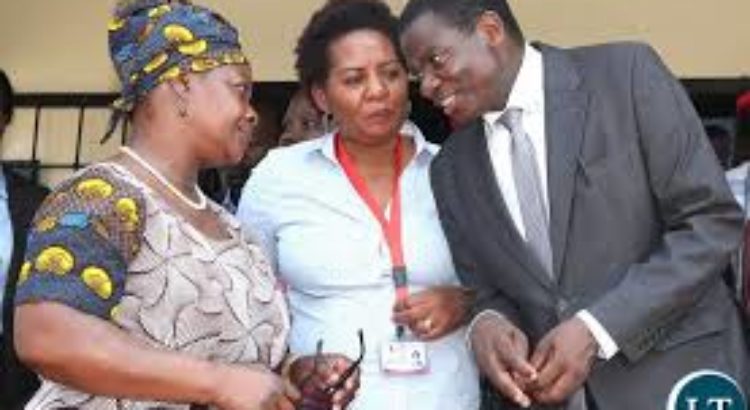
General Education Minister, David Mabumba says the 2019 national budget says the proposed 2019 national budget focuses on reforming and transforming key components in the education system.

Mr. Mabumba cited industrialization as one key component that the budget will help to transform by supporting the local production and purchase of school items such as uniforms, linen and furniture.

The Minister told ZANIS in an interview that recapitalisation of the Zambia Education and publishing House (ZEPH) is another milestone in ensuring that production of books for pupils is localised.

Mr. Mabumba further said the budget will promote the construction of new secondary schools and upgrading of some primary institutions.

He explained that the move will help to cushion on the demand for secondary education because there are more primary than secondary schools in the country.

Minister of Finance, Margaret Mwanakatwe presented the K86.8 billion 2019 National Budget under the theme ‘Delivering Fiscal Consolidation for Sustainable and Inclusive Growth’.

She proposed to spend K13.3 billion in 2019 which translates into 15.3 percent of the budget allocation on education and skills training development.

Source of the notice: https://www.lusakatimes.com/2018/10/01/the-15-3-budget-allocation-for-education-will-transform-the-sector-mabumba/

Comparte este contenido:

Education can help protect sawfishes in Mozambique and Madagascar

Africa/Madagascar/10-102018/Fuente: menafn.com.

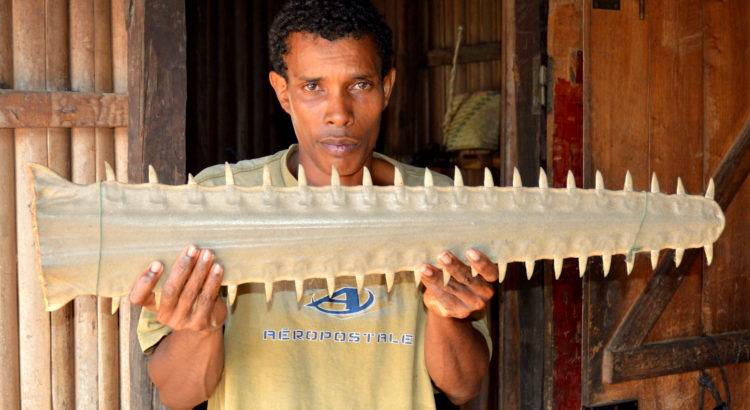
Of all sharks and rays worldwide, sawfishes – related to stingrays and manta rays – are considered to be the family at greatest risk of extinction . The long, toothed saw – which gives them their unique appearance – also makes them extremely vulnerable to entanglement in fishing nets. Their numbers have fallen because they are caught accidentally in industrial fishing nets. In addition to that, they are targeted by some fishermen because their fins can fetch high prices.

There are five species of sawfish globally. Two can reach around seven metres in total length (including the saw), making them the third largest members of the shark and ray family.

Sawfishes were formerly common along both the west and east coasts of Africa. Until a few years ago there was no knowledge of whether they still inhabited these waters, or if populations had plummeted as they have done elsewhere.

I set about addressing this gap six years ago. Since then, I have interviewed more than 500 fishers in six different African countries. I collected information on when and where people last caught sawfishes, how they used them and what their local value was. My research showed that sawfishes are now locally extinct from many parts of West Africa, but are still encountered – at least occasionally – by fishers in Madagascar and northern Mozambique .

Working in fishing communities and engaging in the lives of fishers has provided me with some insights into how sawfishes can best be protected in countries like Madagascar, as well as an understanding of the approaches that won’t work.

In the two developed countries where sizeable sawfish populations still exist – Australia and the US – an important step in preventing further declines of these endangered species is to declare them protected under national law and to prohibit activities that threaten them. So catching and killing of sawfishes is banned.

This is an effective approach in countries with the capacity and funding to enforce such laws. But in developing countries, a different approach is needed – a ‘bottom-up’ approach in which communities take the lead. And for that to happen, scientists need to convey the implications of their research to the people who rely directly on the natural resources around them, in relevant, easy-to-digest ways.

The challenge

Sawfishes are not legally protected in most African nations. And even if they were, legislation is rarely an effective approach in countries with little or no capacity to enforce species protection laws.

In addition, fishers who catch sawfishes value them as sources of income (through the sale of their fins, meat, and occasionally other parts) and food. Artisanal fishers along the coasts of Madagascar and Mozambique are some of the poorest communities in these countries; they often live in remote rural areas and have few alternatives to fishing as a way to make a living.

Unless fishers are provided with livelihood alternatives, any efforts to prevent sawfish mortality could be considered to compromise their immediate wellbeing. Fishers are unlikely to sign up to an approach which will mean more hardship for them.

What can be done

We need to reduce the number of sawfishes being caught in fisheries, and ensure that their habitats, especially coastal waters and mangroves, are protected. These two steps would have far-reaching and long-term benefits.

But in my view, the only way to achieve these goals is by encouraging communities to become caretakers of the natural resources they rely on for their own survival. And to achieve this, they first need to understand why these goals should matter to them.

The right educational tools can be used to explain that freshwater and marine ecosystems, fished responsibly, provide food and saleable goods, while mangroves protect coastal communities from storm surge and erosion. The communities themselves can then understand the trade-off between short-term, personal gain and longer-term, communal value, and can choose which path they wish to take.

My insight from working in fishing communities is that as a scientist, I have a duty to explain my findings, their implications and encourage communities to engage in developing strategies to address conservation issues. This benefits the communities as well as the species and habitats that need protection.

To this end I developed a short educational film and a story book . These both aim to convey the importance of sharks and sawfishes as part of healthy marine and freshwater ecosystems. They also point out the many ways in which communities stand to benefit from the sustainable use of sawfishes and other aquatic resources.

The film was made in multiple languages for both Mozambican and Malagasy audiences to ensure it could reach the widest possible audience. These resources have also given audiences beyond Africa insight into the lives of fisherfolk and the specific challenges facing sawfish conservation in these places.

The experience has taught me that we may be missing opportunities to use stories built around our work, to inspire interest and change where it is most needed: at community level. Armed with the right knowledge and understanding of why protecting mangroves, coastal waters and their inhabitants is important, communities can be the caretakers of these natural resources, both for their own benefit and for the planet’s.

Fuente de la noticia: https://menafn.com/1097445836/Education-can-help-protect-sawfishes-in-Mozambique-and-Madagascar

Comparte este contenido:

Education can help parents understand risks in sports

North America/United States/10.10.2018/Source: www.dailyitem.com.

Sports, of any kind and at any level, come with inherent risks of injury. No helmet or pad or repetitive training exercise can compensate for the unknown.

Despite this, sports are as popular as ever. According to the National Federal of High School Associations, more high school students participated in a scholastic sport during the 2017-18 school year than ever before.

Those kids take to the fields, pools and courts with the understanding the next play could be their last. No one thinks about it, but that is the reality.

The reality is that football, despite increases in concussion awareness, safer helmets and increased coaching tools to teach proper blocking and tackling, is a dangerous sport. It always will be.

So are soccer and basketball, where collisions are common place and knee ligaments can give out without warning. So is lacrosse, with players swinging sticks, and ice hockey with its checks. In baseball and softball, hard balls are thrown at high speed in all directions.

What we are learning as sports medicine advances is that these sports can become safer. As Tyler Hanson, athletic trainer for Evangelical Community Hospital and the Miller Center and part of Bloomsburg University’s concussion clinic said, we are just touching the surface of concussions.

“Ten to 20 years ago, the ACL was a career-ending injury,” Hanson said. But through years of study and medical advances, athletes are often back in less than a year. “What we learned then is that we needed more days of rest, more strengthening. We’re coming full circle now with concussions. We have to lower the impact rate, allow more time for rest.”

Today, the NFL, the NCAA and the Pennsylvania Interscholastic Athletic Association are all offering teaching tools to youth football programs in an attempt to make the game safer. The thought process makes sense: Teach kids the proper technique and coaches how to diagnose specific injuries, you can make the declining — numbers-wise — game of football safer.

Participation in collision sports like football, ice hockey and lacrosse must come with the understanding that an injury could occur at any moment.

Evaluating those risks needs to be part of conversations parents have with their children. Weighing all the options, both positive and negative, should be part of an honest dialogue.

There is little doubt sports represent positive life-building experiences. They can build confidence, camaraderie, life skills and friendships that will carry far off the field.

Do those positives outweigh the risks? That is the question we all need to answer.

Source of the notice: http://www.dailyitem.com/opinion/education-can-help-parents-understand-risks-in-sports/article_164951ce-dfe0-5f16-9a91-5ae0229f005f.html

Comparte este contenido:

Libro: Simón Rodríguez Obras Completas: Cartas de Simón Rodríguez 1824-1853

Autor (es): Rodríguez, Simón,
Tipo:Libro

Editor:Universidad Nacional Experimental Simón Rodríguez

Fecha:2016

Idioma:spa

Resumen: Nuestro maestro Simón Rodríguez fue y es, sin lugar a dudas, un maestro de la esperanza, un maestro para formar republicanos, un ser de pensamiento estratégico y complejo adelantado a su tiempo, que tuvo el honor de recibir esa denominación y responsabilidad ética, el de ser maestro, para iniciar la Escuela de las Primeras Letras a través del nombramiento otorgado por el Cabildo caraqueño aquel 23 de mayo de 1791; una responsabilidad inmensa teniendo en cuenta que ese espacio sería uno de los cimientos, uno de los nichos vitales para el pensar la transformación de una sociedad caracterizada por el orden colonial, esclavista y servil al imperio español.

Descargar: http://koha.cenamec.gob.ve/cgi-bin/koha/opac-retrieve-file.pl?id=c5c7ad693e721f2e9b196cd3587a2891

Comparte este contenido:

In Neighborhoods Without Public Schools, Zimbabwe’s Students Rely on Illegal Schools

Africa/ Zimbague/ 09.10.2018/ Fuente: globalpressjournal.com/africa/zimbabwe/neighborhoods.

It’s noon on a windy Friday in Caledonia, a neighborhood along Harare’s eastern edge. Children roam the schoolyard at Ngodza Primary School, excited for the weekend ahead.

This for-profit school has three classrooms. Together, those classrooms accommodate 118 children, who each pay $10 per month to attend. The school is not registered with the government. It operates illegally.

Teclar Chengedzai lives in Caledonia and says her 6-year-old must learn there because there are no government schools nearby.

This is a common problem as Harare expands far beyond its original boundaries. Unregistered schools now outnumber registered schools in the city, according to government data.

There were an estimated 1.48 million Harare residents in 2012, according to census data. It’s not clear how many schools operate in the city, but locals say the government doesn’t come close to meeting their education needs.

Children attend class at Ngodza Primary School, an unregistered school in Harare, Zimbabwe.

Gamuchirai Masiyiwa, GPJ Zimbabwe

As a result, unregistered schools, both primary and secondary, are opening in areas such as Caledonia, where there are no public schools. That’s a far cry from Zimbabwe’s educational heyday in the early 1980s, when a new government under Robert Mugabe abolished a long-standing system that favored the country’s white minority with high-quality schools while black students’ education was neglected. Under Mugabe’s leadership, Zimbabwe attained a literacy rate of nearly 100 percent and the government boasted of having the best school system on the continent. But over time, those gains dissolved under a corrupt and brutal regime, leaving Zimbabwean students with few options for quality education (See a timeline of Zimbabwe’s education system here.)

Now, some areas have more unregistered schools than government ones, says Christopher Chamunorwa Kateera, director of the Harare Provincial Education Office in the Ministry of Primary and Secondary Education, but the government can’t close the illegal schools because it would leave entire neighborhoods without options for education. An amendment to the country’s Education Act obliges the government to provide students in such areas with a formal alternative.

According to government data, there are 205 registered schools and 219 unregistered schools in Harare, Kateera says.

The government has closed some unregistered schools and enrolled their students in registered schools, but in other cases, officials seek to formalize unregistered schools, Kateera says.

“Wherever we identify unregistered colleges, we call them in and have meetings with them informing them of the procedures they should follow to regularize their establishments,” he says.

Parents say unregistered schools come with their own challenges. The school that Chengedzai’s child attends doesn’t provide textbooks. It also doesn’t offer grades six or seven because, unlike registered schools, it doesn’t have access to the exams required to attend secondary school.

“They want parents to buy these books, which are expensive to get as well,” Chengedzai says.

A teacher leads students at Ngodza Primary School in the Caledonia neighborhood of Harare, Zimbabwe.

Gamuchirai Masiyiwa, GPJ Zimbabwe

Another problem is that a student must be enrolled at a registered school in order to take standardized exams, which are required for entrance into university and also for many jobs.

Godfrey Hozo, the school’s headmaster, says the school opened in 2016. It’s difficult to keep teachers, he says, because of the school’s low pay. Right now, the school has four teachers, including himself.

“We end up having composite classes, because at times you might have five students for grade three and 16 students for grade four,” he says. “The teacher then has to plan what they teach for each level, but they will be in the same room.”

The school charges $10 per month for fees, he says. About 70 percent of the enrolled children are able to pay. Those who can’t pay the fees are eventually dismissed.

A major problem, he adds, is getting information from the national education ministry about the government-approved curriculum. Hozo says he asks teachers in government schools to help him access syllabi and textbooks.

Hozo says the government should relax what he calls the “stringent conditions” for school registration, so that institutions like his can fully engage in the nation’s educational system.

There’s no indication that the government will ease those conditions. Instead, Kateera says, unregistered schools need to improve their standards and formally register with the government.

Fuente de la noticia: https://globalpressjournal.com/africa/zimbabwe/neighborhoods-without-public-schools-zimbabwes-students-rely-illegal-schools/

Comparte este contenido:

Indonesia Needs to Educate on Natural Disasters

Asia/Indonesia/09.10.2018/Source: www.fairobserver.com.

fter another earthquake and tsunami in Indonesia, it is clear that people are not taught what to do in the event of natural disasters.

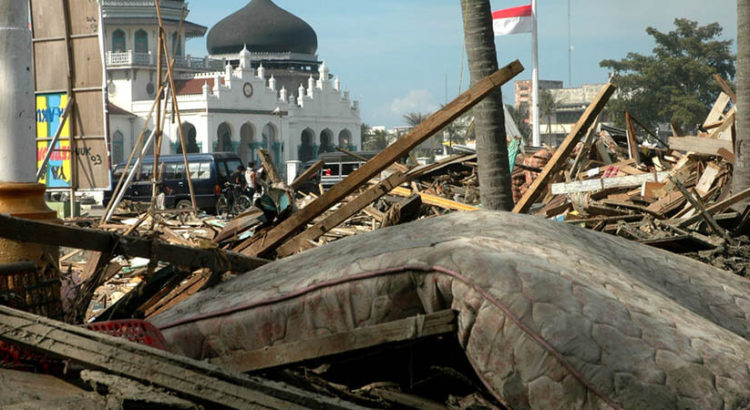
Indonesia has once again been hit by a natural disaster. On September 28, a 7.5-magnitude earthquake followed by a tsunami struck the cities of Palu and Donggala on the island of Sulawesi. At the time of publishing, at least 1,424 people died, with thousands more injured. With homes in ruin, tens of thousands have been forced to live in makeshift refugee camps.

According to Reuters, Indonesia’s geophysics agency, BMKG, lifted a tsunami warning too early, just before the waves hit the coast of Palu. It is also understood that buoys — which are connected to the seafloor to detect tsunamis — in Sulawesi have not worked for the past six years and had not been fixed due to a “lack of funding.” With poor planning in place, Indonesians were left with little notice of an imminent disaster.

As reported by The Guardian, Phil Cummins of the Australian National University and Adam Switzer of Nanyang Technological University in Singapore believe the earthquake and tsunami were not the result of a failure in technology, but rather due to the lack of education among the people.

In 2004, Southeast Asia was left devastated by an earthquake and tsunami that quickly spread across the Indian Ocean. Unlike that time, the wave that struck Sulawesi was not was prompted by an earthquake hundreds of miles out in sea. Instead, it was a localized tsunami resulting from an earthquake close to the coast. The tsunami waves hit Palu just 30 minutes after the quake which, according to Switzer, “should have been the early warning.”

Cummins added that to blame technology is “misguided.” Instead of relying on a warning system, he said, people should have sought “high ground immediately. They cannot afford to wait for a siren or a warning, they need to move instantly.” The issue is that Indonesians in Sulawesi did not really know they should have done that.

He added: “Either they didn’t know they needed to do that or they didn’t believe anything would happen, and in either case that says the people in Sulawesi were not educated about what they need to do in this situation. And that’s what killed people.”

THE NEED TO EDUCATE

The conditions in Palu should be a wake-up call about the need for education — especially for those living in earthquake-prone areas — not only about natural disasters in general, but what people must do to ensure their safety. It is indeed difficult to predict when a natural disaster will occur. But considering Indonesia is vulnerable to such situations, it needs a comprehensive plan so that citizens are educated in how to respond to earthquakes and tsunamis. Sufficient response plans would mean that every Indonesian has basic knowledge about what to do when disaster strikes.

In Indonesia, most elementary school textbooks in social studies contain a a lesson about natural disasters. These include that cutting down trees can cause landslides and trigger floods or about how earthquakes occur. But there is no lesson about what to do when an actual quake takes place. Presumably, mitigation in Indonesia has not become a serious issue just yet.

Records over the past 15 years show there have been two devastating earthquakes in the country, leading to thousands of casualties. The 2004 earthquake and tsunami in Aceh caused 230,000 deaths across 14 countries around the Indian Ocean — the majority of those in Indonesia. Another earthquake took place in Yogyakarta in 2006, which claimed the lives of 5,000 people.

Several years have passed, but Indonesians still do not understand what to do when an earthquake occurs, other than running out of a building or trying to protect themselves under a table. With the country situated in an active geological area, Indonesia must prepare itself for natural disasters.

EARTHQUAKES AND TSUNAMIS

It should be made clear that educating people about what to do when an earthquake takes place is as crucial as having advanced technology to predict when disasters may occur. According to the US Department of Homeland Security’s Ready website, when an earthquake shakes the ground and you are in a vehicle, you should immediately pull over and stop. If you’re in bed, you should stay there. If you are outdoors, you should stay outdoors. Such valuable information is often unknown to Indonesians and should be an example for authorities and nongovernmental organizations in helping to increase people’s readiness to face earthquakes.

There is also a need for disaster exercises such as practicingdrop, cover and holdAs per Ready, this involves dropping on the ground to your hands and knees; covering or protecting your head and neck with your arms; crawling to the extent needed to avoid falling or collapsing materials; and holding onto strong furniture or doorways in a building until an earthquake stops.

No less important is making an emergency communicationpattern with your family. In an earthquake-prone country like Indonesia that has the 2004 tsunami in its memory, this is necessary.

There are also reasons why you are advised not to run out of a room if there is an earthquake. Trying to run when an earthquake takes place is very dangerous due to potentially falling debris or broken glass. It is safer for people to stay at home and protect themselves by crouching under a table.

Earthquakes do not usually last for very long. It only takes tens of seconds for an earthquake to occur. However, when the the ground stops shaking, people must be aware of the possibility of a tsunami, especially if they live on the coast. Again, these things are not taught to the average Indonesian.

In 2004, the tsunami in Aceh was preceded by a 9.2-magnitude earthquake that lasted for an estimated 10 minutes. In such instances, it is important to educate fishermen who work at sea.

Nature will usually give a number of signs before a tsunami hits. When a tsunami approaches the coastline, water will usually spread toward dry land and cause the inside of the sea to be exposed, showing its contents, corals and fish in the sea itself. Because of the low tide, there are often many fish floundering on the beach. Due to a lack of understanding, fishermen may not always act immediately. They need to be aware that they should not pick up the fish and should instead seek high ground.

Tsunamis cause abnormal sea activities. The key sign is the presence of a wall of water with a great roar. Imagine a sound that resembles that of a train or jet.

PREPARING FOR NATURAL DISASTERS

The theory seems easy, but the practice is difficult. As natural disasters are hard to predict, humans can only anticipate them by preparing themselves. Therefore, there is a need to make sure that training is carried out in Indonesia.

There are many things that can be done to educate people about disaster avoidance efforts. Schools could conduct regular evacuation exercises for earthquakes. Posters can also spread awareness about what can be done during natural disasters. National media outlets can also be used to educate people, such as making earthquake alertness videos. Relevant institutions and government ministries also need to make more of an effort to ensure that those who live and work on the coast are sufficiently educated about the signs of natural disasters and what they need to do in such events.

What is clear is that, learning from Palu and previous natural disasters, more efforts are needed by both the Indonesian government and other relevant stakeholders to educate people not only about basic information concerning natural disasters, but also what they need to do to recognize signs and steps to be taken when those disasters occur. Doing so could save lives.

Source of the notice: https://www.fairobserver.com/region/asia_pacific/indonesia-earthquake-sulawesi-tsunami-natural-disasters-asia-news-today-24920/
Comparte este contenido:
Page 2662 of 6815
1 2.660 2.661 2.662 2.663 2.664 6.815