Page 2664 of 6815
1 2.662 2.663 2.664 2.665 2.666 6.815

GES suspends Tempane SHS Headmaster over Akamba’s video

By Ghana.web

The Ghana Education Service (GES) has suspended the headmaster of Tempane Senior High School in the Upper East region Dominic Ndegu Amolale.

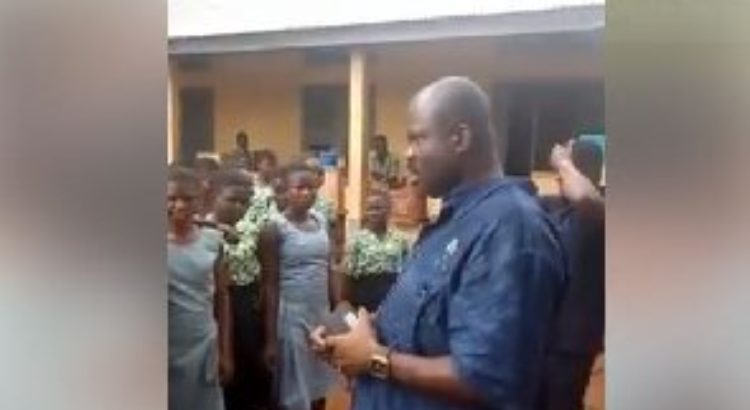
It follows a viral video of an aspiring National Organiser of the National Democratic Congress (NDC) Joshua Akamba inciting some students of the school against President Akufo-Addo over the challenges facing the implementation of the free SHS policy.

Ndegu Amolale received his suspension letter Saturday morning with an instruction to handover the management of the school to Upper East Regional GES Director to allow for investigations into the incident.

Speaking to Starr News’ Ibrahim Alhassan on this incident leading to his suspension, Ndegu Amolale said: “The letter is not asking me to any other thing but to step aside for investigations to be carried out.”

Addressing the content of the video, he said he did not of the presence of Akamba in the school, saying: “The day these people came I was not even on campus. I was in discussion with my regional director on the challenges the school is facing following the implementation of the double track system.”

“So that day I wasn’t on campus.”

The Ghana Education Service (GES) has suspended the headmaster of Tempane Senior High School in the Upper East region Dominic Ndegu Amolale.

It follows a viral video of an aspiring National Organiser of the National Democratic Congress (NDC) Joshua Akamba inciting some students of the school against President Akufo-Addo over the challenges facing the implementation of the free SHS policy.

Ndegu Amolale received his suspension letter Saturday morning with an instruction to handover the management of the school to Upper East Regional GES Director to allow for investigations into the incident.

Speaking to Starr News’ Ibrahim Alhassan on this incident leading to his suspension, Ndegu Amolale said: “The letter is not asking me to any other thing but to step aside for investigations to be carried out.”

Addressing the content of the video, he said he did not of the presence of Akamba in the school, saying: “The day these people came I was not even on campus. I was in discussion with my regional director on the challenges the school is facing following the implementation of the double track system.”

“So that day I wasn’t on campus.”

Source of the review: https://www.ghanaweb.com/GhanaHomePage/NewsArchive/GES-suspends-Tempane-SHS-Headmaster-over-Akamba-s-video-690703

Comparte este contenido:

Foreign students up 4,5 % in french tertiary institutions

Europe/ Francia/ 08.10.2018/ Source: thepienews.com.

There were 343,400 foreign students in the French higher education system, signalling a growth of 4.5% since 2016 according to figures released by the Ministry of Education.

The number of foreign students in tertiary education in France has grown 18% since 2012 and almost doubled between 2000 and 2017, the ministry document states.

“France presents an alternative to the [Anglophone] model of higher education”

“We are thrilled to see that French universities continue to attract many students coming from abroad and we hope that the trend will continue to grow,” Campus France’s director of communications Florent Bonaventure told The PIE News.

There are many factors behind the growth, Bonaventure explained. Beyond the quality of French higher education and its growing international reputation – and increased visibility in university rankings –  France has seen a rapid growth of English-taught programs and offers a cost-effective alternative to other destination countries, he said.

International students, Bonaventure explained, are treated the same as French or EU students, with the same fees, the same social security, and the same insurance regulations.

“France presents an alternative to the [Anglophone] model of higher education,” Bonaventure said.

“Education is of high quality, its research is known worldwide – see the Make our Planet Great Again program in natural science and climate change, for instance – and it is cheap for students as it is highly subsidised by the French state. France is also famous for its quality of life,”

According to the ministry figures, about half international students are from an African country, while 22% are from Europe ( 18% from the EU), 21% from the Asia-Pacific and 9% from the Americas.

All students who declared a nationality other than French are included in these figures, which include all foreign students already living in France, and also excludeS? exchange students.

Universities are by far the most popular institutions – that’s where over 70% of international students are enrolled, making up 14.6% of the student population.

The proportion of international students was shown to be varied across educational levels, though it was growing at postgraduate and doctorate level.

International students represent 11.6% of undergrad enrolments, 17% of master’s and 41% of doctorate level students.

The proportion of students who haven’t completed secondary education in France also grew: they make up 65.7% of international students at undergraduate level, 83% at postgraduate and 92% at doctorate level.

“[Along with EMI courses] Students have the opportunity to learn French while in France”

At university, the percentages of students from various countries vary only slightly: almost one international student in every five is from the EU (18.6%) and one from Asia (18.6%), while half are from Africa (49.9%).

Again, the proportion of students from a specific nationality varies across the study level. Asian students are overrepresented at PhD level, where they make up the 29.8% of all international students, and 55.3% of international students at master’s level are from Africa.

The most numerous nationality is Algeria, followed by Morocco and China – but while Algeria and Morocco register a strong growth from 2016, numbers from China are stagnating. There are slightly fewer students from Morocco and China in universities than in other tertiary education institutions.

Among European students, Italy is the most represented nationality, followed by Germany, Spain and Portugal.

In general, international students prefer literary disciplines (31.3%), followed by the sciences (29.1%) and economics (17.8%). Students from Africa show a slightly different trend, with most oriented towards the sciences (35.5%).

As for the future, Bonaventure said Campus France is planning on welcoming more students coming from Francophone countries, especially in Africa, and further promoting France as a study destination in non-Francophone countries, such as China, Vietnam, India, Brazil and African and Middle Eastern countries.

  1. “Universities have developed many English taught programs tailored for them and students have the opportunity to learn French while in France,” he said.

Source of the notice: https://thepienews.com/news/foreign-students-up-4-5-in-french-tertiary-institutions-figures-reveal/

Comparte este contenido:

Compuses adapt to rise in Southeast Asian students

Asia/Taiwan/08.10.2018/Source:

From Prayer rooms for Muslims to the diversity of food available at school cafeterias, university campuses in Taiwan have over the past few years been stepping up their efforts to accommodate an increasing number of Southeast Asian students.

The number of students from Southeast Asia and India enrolled in colleges and universities in Taiwan has tripled over the past decade, said Bi Tzu-an (畢祖安), director-general of the Department of International and Cross-strait Education Affairs at the Ministry of Education.

Ten years ago, the number of Indian and Southeast Asian students at universities in Taiwan was about 8,000. In 2016, 28,000 students from ASEAN member states were enrolled at tertiary institutions, a figure that rose to 38,000 last year, the ministry said.

The rising trend is expected to continue, Bi said, adding that Taiwan aims to increase student numbers from ASEAN countries to 58,000 by next year.

Taiwan has been focusing on not only nurturing local talent, but also forging ties with neighboring countries and attracting more students as part of its New Southbound Policy.

In 2016, Malaysian students comprised the majority of the ASEAN student population at 13,380, followed by Vietnam at 4,463 and Indonesia at 4,061.

Malaysia has always contributed the largest portion of ASEAN students in Taiwan because of the country’s large overseas Chinese population, said Chen Shang-mao (陳尚懋), a professor with Fo Guang University’s public affairs department, adding that they choose to study in Taiwan because of their knowledge of Mandarin.

Liu Kuo-wei (劉國偉), vice president for international affairs at Ming Chuan University, said that Vietnamese students come to Taiwan to experience the culture and, after their studies, return home to pursue careers at Vietnam-based Taiwanese firms.

The number of Indian students in Taiwan has also been increasing over the past few years.

National Tsing Hua University, for example, has been ramping up efforts to attract students from India after President Tsai Ing-wen (蔡英文) said the country was key to her administration’s New Southbound Policy.

In April last year, the Hsinchu school established its Center for India Studies — the first of its kind in Taiwan.

Center director Wang Wei-chung (王偉中) said that there were only 40 Indians studying at the university 10 years ago, but that figure has now surpassed 200.

They come to study at the university partly due to the cost, as it is cheaper compared with the US, which has traditionally been a major education destination for Indians, Wang said.

Source of the notice: http://www.taipeitimes.com/News/taiwan/archives/2018/10/07/2003701910


Comparte este contenido:

La educación es vía para vencer la pobreza, según joven indígena ecuatoriana

América del Sur/Ecuador/08.10.2018/Fuente: www.elcomercio.com.

La educación es la vía para superar situaciones de pobreza, discriminación o maltrato y romper estereotipos, según la joven abogada ecuatoriana Beliza Coro, que mañana inaugurará una campaña de la Embajada de Ecuador en España para prevenir la deserción escolar entre hijos de emigrantes.

«Tenemos que tener la valentía de romper los estereotipos y seguir hasta donde queramos, con la educación como elemento básico», declaró hoy, 5 de octubre del 2018, a Efe Coro.

Beliza Coro, una joven puruhá, llegó a ser la primera abogada indígena de su comunidad y la primera mujer de esa etnia graduada con honores en la Universidad de San Francisco, en Ecuador.

En la actualidad, además de completar su formación en España con un doctorado en la Universidad Carlos III, es asesora de la Fundación Telefónica, organismo que la sacó del trabajo infantil y del riesgo de maltrato y le facilitó una educación, gracias al proyecto Proniño.

«Cuando yo estudiaba, sabía cuales eran mis sueños y que era la única forma de salir de la realidad en la que estaba», afirma Beliza Coro, que pasó su infancia vendiendo en el mercado de Guayaquil, lejos de cualquier escuela.

Esta joven abogada destaca el papel importante que tienen tanto fundaciones privadas como organismos estatales para fomentar la importancia de la educación entre padres y profesores, convenciéndolos de que «los niños ganan más en su vida estudiando que trabajando en las calles».

También es una defensora activa de la igualdad entre hombres y mujeres y apuesta por el mérito personal, además de reclamar políticas que ayuden a fomentar esa equidad.

Coro transmitirá mañana su experiencia personal de superación a los jóvenes ecuatorianos que viven en España y los animará a que tengan la «valentía» de romper los estereotipos a través de la educación, gracias a «la superación, la disciplina y la perseverancia».

Su conferencia inaugurará una campaña organizada por la Embajada de Ecuador para prevenir la deserción escolar entre los hijos de emigrantes que viven en España.

«Estamos muy preocupados por atender todos los requerimientos de lo que denominamos la segunda generación, los hijos de los emigrantes. No queremos que se pierda ese hilo conductor que deben tener con Ecuador», dijo a Efe el embajador ecuatoriano en España, Cristóbal Roldán.

El embajador explicó que cada vez son más favorables las condiciones para el regreso de los emigrantes a Ecuador y consideró que una de las medidas para facilitar ese regreso es fomentar la formación de los jóvenes.

En España, según la embajada, hay 404.000 ecuatorianos, cifra que incluye a los emigrantes y a los hijos que ya nacieron en el país europeo.

Dentro de la campaña para prevenir la deserción escolar se incluye un ciclo de conferencias dirigidas por expertos en psicología en las que participarán jóvenes talentos como Beliza Coro, que compartirán sus experiencias personales.

También se realizará un taller para padres e hijos con expertos de la Fundación Psicología Sin Fronteras y la Embajada prevé además unas jornadas informativas para jóvenes de entre 16 y 18 años, donde se les incentivará a continuar con sus estudios de bachillerato y universitarios.

Esta campaña comienza en Madrid, pero está previsto que se extienda a los consulados que tiene Ecuador en España en las ciudades de Barcelona, Murcia, Valencia, Alicante y Almería.

Fuente de la noticia: https://www.elcomercio.com/actualidad/educacion-vence-pobreza-joven-puruha.html

Comparte este contenido:

Docentes paraguayos piden en Asunción mayor salario y presupuesto educativo

América del Sur/Paraguay/08.10.2018/Fuente: www.efe.com.

Varios centenares de docentes paraguayos, convocados por la Organización de Trabajadores de la Educación de Paraguay Auténtica (Otep-A), se manifestaron hoy en el centro de Asunción para exigir al Gobierno que aumente el monto destinado a la educación en los Presupuestos de 2019, así como una subida salarial.

Los maestros se concentraron inicialmente en una céntrica plaza de la capital paraguaya, desde donde marcharon hasta la sede del Ministerio de Educación y Ciencia, con una parada previa en la del de Hacienda, donde los dirigentes sindicales entregaron su propuesta de subida salarial y de aumento presupuestario.

Fuente de la noticia: https://www.efe.com/efe/cono-sur/sociedad/docentes-paraguayos-piden-en-asuncion-mayor-salario-y-presupuesto-educativo/50000760-3772429

Comparte este contenido:

México: La educación no es un privilegio, es un derecho de nuestro pueblo, afirma AMLO

América del Norte/México/08.10.2018/Fuente: www.cope.es.

El presidente electo aseguró que durante su sexenio se apoyará a los jóvenes con la consigna de «becarios sí, sicarios no»

En su gira de agradecimiento por San Luis Potosí, el presidente electo de México, Andrés Manuel López Obrador, aseguró que se cumplirán todos los compromisos realizados durante su campaña.

Les pido que hagamos de un lado la politiquería, ya pasó la campaña, tenemos que dedicarnos a gobernar a San Luis Potosí y a México.

Aseguró que durante su sexenio se apoyará a los jóvenes con la consigna de becarios sí, sicarios no.

Les puedo asegurar que no se quedará ningún joven sin oportunidad de trabajo (…) ya no habrá ninis, como despectivamente se les llama, afirmó.

Afirmó que en estado se van a construir dos nuevas universidades para que se tenga educación gratuita y de calidad.

La educación no es un privilegio, es un derecho de nuestro pueblo, expresó.

Fuente de la noticia: https://heraldodemexico.com.mx/pais/lopez-obrador-encabeza-mitin-del-agradecimiento-en-slp-en-vivo/

Comparte este contenido:

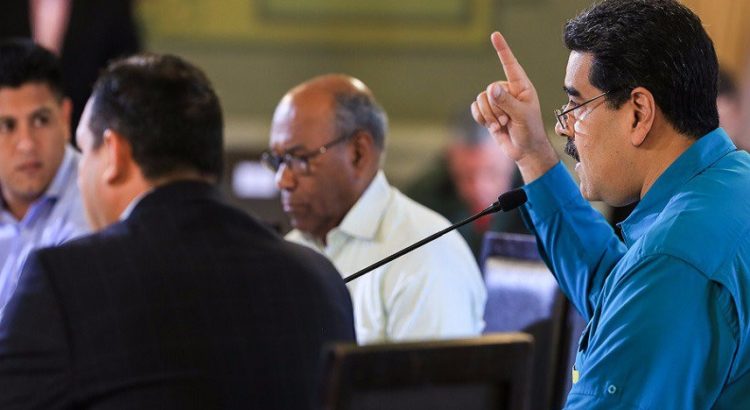
Venezuela: Educación es la forjadora del espíritu y valores de la sociedad

América del Sur/Venezuela/08.10.2018/Fuente: www.minci.gob.ve.

El Presidente Nicolás Maduro resaltó la premisa de la educación como forjadora del espírituconocimiento y valores de la sociedad, y recordó el inicio del año escolar 2018-2019, que comenzó este 1° de octubre.

Así lo dio a conocer, este martes, a través de su cuenta oficial en la red social Twitter, @NicolasMaduro, asimismo reafirmó la concepción robinsoniana, de aprender haciendo, que pone en práctica la Revolución Bolivariana.

“Dimos inicio al año escolar 2018-2019, evocando el principio robinsoniano de “aprender-haciendo”. Para el Gobierno Bolivariano, la educación es forjadora del espíritu, el conocimiento y los valores de la sociedad del futuro“.

Recordemos que el Jefe de Estado se refirió, en su discurso de inicio del año escolar, a la calidad de la educación venezolana, “humanística y científica para construir el patriotismo y los valores de la venezolanidad“.

Asimismo, indagó sobre la educación en otros países de la región que atacan a Venezuela, y contrastó la dura realidad de la crisis educativa latinoamericana con la educación nacional, pues en el país, se destina un 70% del presupuesto a la inversión social.

En este sentido, el Presidente Maduro fustigó que estos países acusan a Venezuela, mientras sus gobiernos reducen y eliminan el presupuesto destinado a la cultura y pedagogía, “para el capitalismo, solo estudia el que pueda pagar su educación”, deploró el Mandatario Nacional.

Recordemos que 2 millones 492 mil 874 estudiantes comenzaron clases, de los cuales 1 millón 958 mil 155 pertenecen al Sistema de Educación Pública, “tienen su cupo, estancia, derecho, libros y toda su educación garantizada”, señaló el Presidente Maduro.

Fuente de la noticia: http://www.minci.gob.ve/maduro-educacion-es-la-forjadora-del-espiritu-y-valores-de-la-sociedad/

Comparte este contenido:
Page 2664 of 6815
1 2.662 2.663 2.664 2.665 2.666 6.815