Page 2785 of 6792
1 2.783 2.784 2.785 2.786 2.787 6.792

Malaysia: Creative, critical thinking is key

By: www.nst.com.my/ Oswald Timothy Edward 

Minister Dr Maszlee Malik has given the assurance that the Malaysia Education Blueprint 2013-2025 and the Malaysia Education Blueprint 2015-2025 (Higher Education) are here to stay. This is a relief.

The Malaysia Education Blueprint 2015-2025 (Higher Education) incorporates elements to tackle the uncertainty of the Fourth Industrial Revolution (4IR). As such, the Higher Education Framework 4.0 has been established to address the issues and challenges of 4IR. The framework is more specific compared with the Malaysia Education Blueprint 2015-2025 (Higher Education).

Universities have been instructed to change their curriculum and delivery system to ensure that students have jobs upon graduation. One of the measures is to produce holistic, balanced and entrepreneurial graduates who can adapt and fill jobs.

To face the challenges of 4IR, with its complex environmental, social and economical pressures, young people need to be creative, innovative, enterprising and adaptable with the motivation, confidence and skills to use critical and creative thinking meaningfully.

Critical and creative thinking gets students to think broadly and deeply by using skills, behaviours and dispositions, such as reason, logic, resourcefulness, imagination and innovation, in learning, both on and off campus.

A thinking process that is productive, purposeful and intentional is at the centre of effective learning. By applying a sequence of thinking skills, students develop an increasingly sophisticated understanding of the processes they can use when they encounter problems, unfamiliar information and new ideas.

Critical thinking is at the core of most intellectual activity that involves students learning to recognise or develop an argument, use evidence in support of that argument, draw reasoned conclusions and use information to solve problems. Examples of critical thinking skills are interpreting, analysing, evaluating, explaining, sequencing, reasoning, comparing, questioning, inferring, hypothesising, appraising, testing and generalising.

Creative thinking involves students learning to generate and apply new ideas in specific contexts, view situations in a new way, identify alternative explanations, and see or make new links that generate a positive outcome. This includes combining parts to form something original, sifting and refining of ideas to discover possibilities, constructing theories and objects, and acting on intuition.

Critical and creative thinking involves communicative processes that develop flexibility and precision. Communication is integral to each of the thinking processes.

We should reflect whether our education system is steering children away from their passion by creating test-taking robots whom we think will become working stiffs rather than visionary thinkers, creators and innovators.

When an educator gives a test, he is trying to measure students’ ability to recall and apply information learnt over a period of time. The exams make it relatively straightforward: did the student get an answer right or wrong? Was mastery of skills demonstrated?

The process of teaching and learning has to change. Under Learning and Teaching 4.0, there are four aspects: learning spaces should be redesigned; different kinds of pedagogies are needed; curriculum must be fluid and organic; and, all the aspects should incorporate the latest learning and teaching technologies.

To face the challenges of 41R, educational services need to be radically improved. In particular, we need to inculcate creative and critical thinking, and drive greater innovation and competition in education.

A sound creative and critical thinking process is imperative to social progress.

It is with our thoughts that we shape the world — thinking creatively shapes social and cultural structures.

It affects the way blame is placed, the way ideas of right and wrong is developed, the way leaders are elected and the way we understand our place in the world as individuals and collectively.

OSWALD TIMOTHY EDWARD

Faculty of Business and Management, UiTM Johor

*Fuente: https://www.nst.com.my/opinion/letters/2018/07/392823/creative-critical-thinking-key

Comparte este contenido:

China: Students rally against UEC recognition

By: malaymail.com/Danial Dzulkifly

Some 400 students demonstrated in the city centre here today against the government’s possible move to recognise the Unified Examination Certificate (UEC) in Chinese independent schools.

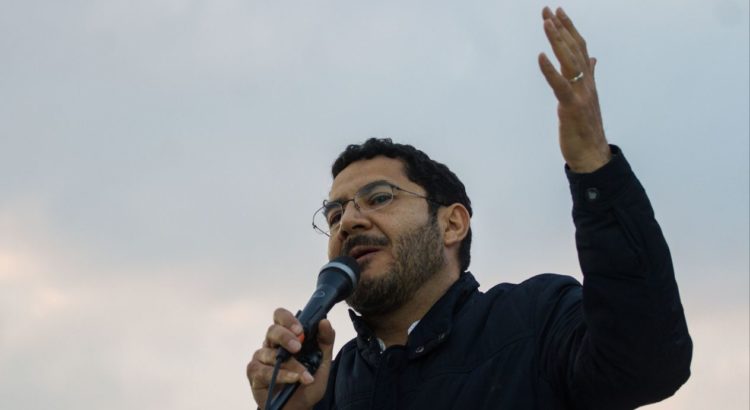
Gerakan Mahasiswa Islam Se-Malaysia (Gamis) president Mohd Faizzudin Mohd Zai, who organised the protest, claimed the recognition of the school-leaving certificate for entry into public universities and the civil service could fracture national unity.

“UEC could worsen national unity. The different use of language could lead to segregation among the races.

“As a people of different religions, views and culture, the use of the national language is what ties us together, he said.

Gamis deputy president Imran Baharuddin also voiced his concern about the recognition of UEC, claiming that it would further polarise the nation.

“We do not want to see Chinese students only mingle with Chinese students and Malay students only hang around with other Malay students. That is unhealthy for national unity,’’ he said.

The rally also aimed to show support to Education Minister Maszlee Malik, whom Faizzuddin said might have been pressured to recognise the UEC.

“We also want to show our support to the education minister. Don’t be afraid as we are with you, as well as 7,000 other students who have voiced their support for you,’’ said Faizzudin.

Faizzuddin said the protest went without a hitch, though there were a few incidents of protesters being forcefully pushed by unknown parties.

A special branch officer on the ground who observed the protest verified that there were some 400 protestors and no untoward incidents were recorded.

*Fuente: https://www.malaymail.com/s/1654609/students-rally-against-uec-recognition

Comparte este contenido:

Spirituality through holistic education

Por: dailypioneer.com/ Raunak Jain

Giving our children the gift of an education system that focuses on holistic development and is spiritually rich could be our best contribution to the world, writes RAUNAK JAIN

Holistic is a word that originates from ancient Greek and which means to encompass “an entire thing”. Ancient Greeks had created a civilization that is the bedrock of all western thought; they indeed had a holistic view of human beings. While today we know ancient Greeks mostly because of the many profound philosophical works of thinkers such as Socrates, Plato, and Aristotle; the ancient Greeks gave us much more than just inspiring philosophy. They were at the forefront of human thought more than 2,000 years ago. They also constructed beautiful buildings and theorised about how men should ideally live and be governed. So powerful was the impact of ancient Greece that works by the ancient thinkers, mathematicians, and philosophers were unequalled in the west for over two millennia.

Ancient Greeks were driven by holistic beliefs and thoughts, and viewed an individual who excelled in multiple activities to be far superior to one who excelled in only one task. For instance, it was not uncommon for a top mathematician from ancient Greece to also be a top bodybuilder and a top athlete. They believed that being especially skilled in only one narrow activity and in no other was actually a symptom of vulgarity. It should, therefore, be said that ancient Greeks believed in and practised holistic education.

Modern Education

Unfortunately, education today has grown rigid, narrow, and inflexible. Children studying in even the best schools in the country are forced to give up their passion after the 10th standard and to instead concentrate solely on a narrow stream of subjects that will allow them to earn a livelihood in the future. The ancient Greeks and some others today would call this vulgar. Holistic education emphasises that “the whole is greater than the sum of its parts”. In the context of learning, this means that a student is comprised of more than just a mind that should memorise. Rather, a student is believed to have a unique function in society and is known to be driven by unique feelings and emotions. The holistic form of education takes such additional considerations into account and allows students to reach their fullest potential by improving additional qualities that children possess.

Spirituality and Holistic Education

While the term spirituality usually seems connected to morality or religion and often excludes many who are outside a certain belief system, when it is applied to education it stands for “teaching authentically”. This can also mean teaching with the intention to teach rather than mechanically going through the motions of teaching.

A student is more than the sum of his parts; hence while a child may be a good sportsperson and excel at history or physics, he or she also has a self that is connected to a community. This connection is what gives a child an identity, meaning, and purpose. The same connections also give rise to genuine feelings of compassion and a desire for peace in the world. Hence, holistic education is meant to help an individual fulfil his or her true purpose as part of a community. Today, education in India stresses academic excellence, often at the expense of the development of other aspects of a student’s personality. Holistic education prepares an individual for life.

Helping Children Spiritually

Today, good formal education in India strives to make children learn, while holistic education also helps children “learn, how to learn”. Simply learning a subject may not be sufficient to navigate life; children must learn how they can learn. By “learning how to learn”, they acquire skills that make them not only more successful in life, but that also lead them to be happier and well-adapted members of society.

Teachers and Spirituality

While holistic education allows children to learn how to become lifelong learners, it also instils in them a curiosity for learning and wanting to know more. So, unlike the traditional model of education in India today, holistic education continues outside the classroom and well into adulthood, if not into old age. Becoming lifelong learners is more important today than ever before.

Learning spiritually means that students and their teachers share a deep connection with the subject they are learning. Such teachers do nothing less than inspiring their students by creating a lifelong bond with learning. Such students develop spiritually and carry forward a spark into any profession they choose to work in.

 Practical Outcomes of Holistic Education

By following the practice of holistic education, a student grows more confident and certain of his or her place in his society or community. Thus, a child develops social and communication skills. Such skills are essential for success in any leadership role today and will remain important for success well into the future.

Gifted Children

Every child is born gifted, it is the role of educators to bring out the child’s strengths. Once the child discovers his or her passion, he or she will learn and take part in related activities with enthusiasm and enjoy overcoming the challenges.

Wanting to Learn

One of the most important principles in teaching is linked to “positive association” which in education translates into “the more children enjoy learning, the more they will want to continue learning”. Positive association with learning creates adults who remain curious and open throughout their lives and who go on to be more innovative in the workplace.

Our Contribution  

The ideas that shape our modern world were formed by the ancient Greeks well over 2,000 years ago. We pride ourselves for living in a democracy, but the idea was first formed by ancient Greeks. By adopting  holistic education for our children, one can aspire to contribute as much to the future as the Greeks have to contributed to our world.

The writer is MD, Tula’s International School

*Fuente: https://www.dailypioneer.com/sunday-edition/agenda/spirituality/spirituality-through-holistic-education.html

Comparte este contenido:

Education program for inmates in South Africa honors Nelson Mandela’s legacy

by Julia Steers  /nbcnews.com

South Africa’s new  Pipeline program seeks to address recidivism by providing prisoners with access to public university-level education. 

Four months ago Morgan Makaluza, 37, walked out of Brandvlei Correctional Center after serving 13 years for armed robbery. It was his second time in prison. On Wednesday, Makaluza was back at Brandvlei — but this time he served as a motivation to the prisoners, not as an inmate.

Makaluza was at Brandvlei trading notes on coursework and sharing his story with inmates taking part in the launch of South Africa’s Prison to College Pipeline program (P2CP), a collaboration between American professor Dr. Baz Dreisinger, South Africa’s Stellenbosch University, and the South Africa Department of Correctional Services. The program seeks to address recidivism by providing prisoners with access to public university-level education.

Makaluza is the program’s first student in South Africa and credits civil rights icon Nelson Mandela with opening his eyes.

Correctional Services staff listen to speeches during the launch of the Prison to Pipeline program offering in person college courses in prison to facilitate re-entry, on the centennial of Nelson Mandela's Birthday at Brandvlei Correction Centre in Worce
Correctional Services staff listen to speeches during the launch of the Prison to Pipeline program on July 18.Sydelle Willow Smith / for NBC News

While in prison, Makaluza read Mandela’s book “Long Walk to Freedom,” which inspired him to enroll in a correspondence course to finish high school. Mandela, known affectionately as “Madiba,” spent 27 years in prison for trying to overthrow an apartheid government. Deeply familiar with the confines of a jailhouse, the human rights icon famouslypursued further education through UNISA while serving his sentence.

On Wednesday, people around the world celebrated Mandela Day, marking what would have been his 100th birthday. Famous figures including former President Barack Obama delivered speeches and called for global action to end poverty.

In the Cape Province of South Africa, Mandela’s home country, the day took on new meaning in an unexpectedly celebratory venue — behind bars. Prison guards and inmates, in civilian clothes for the day, took part in musical performances and motivational speeches.

“I grew up hearing about Mandela but there was one thing that stood out from the whole book,” Makaluza said. “He said, ‘Education is the most powerful weapon which you can use to change the world.’ I decided to do whatever I had to do to get educated.”
Correctional Services staff listen to performances by inmates celebrating Mandela Day during the launch of the Prison to Pipeline at Brandvlei Correction Centre on July 18.Sydelle Willow Smith / for NBC News

Mandela’s ethos motivated the organizers behind the Mandela Day launch of South Africa’s Prison to College Pipeline program. The program aims to highlight Mandela’s “legacy of education behind bars in South Africa,” Dreisinger said. It also facilitate inmates’ reentry into society and helps build better relationships with communities suffering from high crime rates.

Dreisinger, who launched a pilot prison-to-college program in the U.S. in collaboration with the New York State Department of Corrections and The City University of New York, said they had near immediate buy-in from university partners but faced obstacles in broader support for the program in South Africa.

“Given crime is a real crisis here, there isn’t an empathy to the incarcerated population as a whole … so you’re battling against that climate,” she said.

The celebratory tone of Mandela’s centennial belies a grave reality: South Africa has one of the world’s highest rates of violent crime. The cape region, home to Brandvlei prison, has the highest murder rate in South Africa. Communities here are ravaged by intergenerational cycles of gang violence.

Correctional Services staff listen to speeches during the launch of the Prison to Pipeline program offering in person college courses in prison to facilitate re-entry, on the centennial of Nelson Mandela's Birthday at Brandvlei Correction Centre in Worce
Correctional Services staff stand outside the Brandvlei Correction Centre.Sydelle Willow Smith / for NBC News

Dreisinger insists that giving inmates a second chance at freedom and what is often a first chance to become educated helps break this cycle for entire communities.

Makaluza — who grew up in an informal settlement or “township,” and lost his father at age 6 — said young people facing his circumstances have “zero options.” Without a high school education, he had turned to crime before the age of 13 to support his family, kicking off what felt like a hopeless cycle of jail time.

“I saw the same faces released … and then back in prison with me,” he said.

Dreisinger works with community-based partners to raise awareness of that reality. “It’s not just about sympathy or empathy,” she said, “it’s about giving people opportunity, which … creates public safety.”

Her work in South Africa has striking parallels to her work in the American prison system.

Members of the community listen to speeches during the launch of the Prison to Pipeline program offering in person college courses in prison to facilitate re-entry, on the centennial of Nelson Mandela's Birthday at Brandvlei Correction Centre in Worcester
Members of the community listen to speeches during the launch of the Prison to Pipeline program.Sydelle Willow Smith / for NBC News

“All of these students [enrolled in the Prison-to-College Pipeline program] are direct products of years of apartheid and rampant inequality in terms of class and race. Cape Town is still a vastly segregated, unequal place,” Dreisinger said. “The ‘colored’ population is among the most incarcerated population in the world per capita.”

More than 97 percent of the prison population in South Africa at the end of 2016 was listed as black or colored,according to Africa Check, anonprofit fact-checking organization.

“In my 13 years [in prison], I noticed the prison population is mostly black people, and what we have in common is that we’re uneducated,” he said. “Those with education were out there living their lives and uneducated people from disadvantaged backgrounds were busy filling up prisons.”

Data supports the link between education and staying out of prison: According to one study, incarcerated people who enroll in education programs are 43 percent less likely to go back to prison than those who do not have access to education.

Few know that connection better than the Prison-to-College Pipeline program’s global ambassador for higher education, Devon Simmons.

Professor Baz Dreisenger with her first graduate Devon Simmons of the Prison to Pipeline Program in America (to her left), and a South African recent graduate and ex-offender Morgan (to her left) during the launch of the first P2P program in South Africa,
Professor Baz Dreisenger with her first graduate Devon Simmons, left, and South African recent graduate and ex-offender Morgan Makaluza, right.Sydelle Willow Smith / for NBC News

Simmons began working toward his associate degree as part of the Prison-to-College Pipeline program, while serving a 15-year sentence in a New York State prison. In the years after his release, he graduated with honors from Hostos Community College in the Bronx, and, last May, he graduated summa cum laude from John Jay College.

As an ambassador for the program, he has traveled to work with incarcerated populations in the U.K., Jamaica, and South Africa. On Wednesday, he shared his story in a speech to the inmates at Brandvlei.

Dreisinger said Simmons’ dedication is an example of Mandela’s values.

“Being able to be that committed and focused and not wavering. Staying the course. We always talk about that. That’s Mandela. That’s what he’s about,” she said.

Now, Makaluza is in the precarious post-prison phase. He said he’s finding it difficult to get a job but is intent on finishing his college coursework. Makaluza is also focused on working with the Prison-to-College Pipeline program.

Mandela “just never lost hope. He was behind bars but he didn’t let his circumstances define who he was,” said Makaluza.

“I know I’ve done wrong in my past,” he said. “Those are things I’ve done, not me. I’m not letting my circumstance define who I am.”

*Fuente: https://www.nbcnews.com/news/world/education-program-inmates-south-africa-honors-nelson-mandela-s-legacy-n893166

Comparte este contenido:

Evalúan vías para garantizar educación de calidad en este de África

África/31.07.18/Fuente:

Los países miembros de la Autoridad Intergubernamental para el Desarrollo (IGAD), bloque de África del este, evalúan hoy estrategias para proporcionar educación de calidad al creciente número de refugiados en la región.


La IGAD incluye en sus deliberaciones al respecto consultas con políticos, expertos y otros actores interesados con el objetivo de crear sinergias en las estrategias de aprendizaje para esas comunidades.

Ello, subrayó el ente, está en línea con la Declaración y Plan de Acción de Djibouti sobre Educación de Refugiados, adoptados en diciembre de 2017.

Según un reciente informe de la ONU, Uganda, uno de los países miembros de la IGAD, es el hogar de más indocumentados en África con 1,4 millones, procedentes principalmente de su vecino Sudán del Sur.

En tanto, Etiopía, otra nación integrante del organismo, alberga a más de 900 mil personas viviendo bajo esa categorización, sobre todo sursudaneses, aunque también los hay provenientes de Somalia y Eritrea.

Se espera que los especialistas regionales, entre otras cuestiones, desarrollen un plan operativo conjunto y una hoja de ruta para la implementación a nivel nacional de la citada Declaración.

Al respecto, el ministro etíope de Educación, Mohamed Ahmedin, dijo que ‘impartir conocimientos en los refugiados, los desplazados internos y los repatriados, así como a las comunidades de acogida, contribuirán al logro de la paz y la estabilidad en todo el continente’.

‘El Parlamento de Etiopía aprobó un proyecto de ley que permite a esos residentes disfrutar del acceso a la escolarización, empleo y otras oportunidades de servicios sociales a la par de los nacionales’, agregó.

Fuente de la noticia: http://www.prensa-latina.cu/index.php?o=rn&id=197015&SEO=evaluan-vias-para-garantizar-educacion-de-calidad-en-este-de-africa

Comparte este contenido:

Uruguay: El MPP y la educación: “ni estamos en crisis ni se despilfarró dinero”

América del Sur/Uruguay/31.07.18/Fuente: ecos.la.

El sector cuestionó el “discurso fatalista de la derecha conservadora, de los medios y de algunas iglesias” sobre el estado de la enseñanza.

El Movimiento de Participación Popular (MPP) cuestionó a través de un documento el discurso “repetivivo y predominante” que “los partidos de oposición, los medios de comunicación y algunos sectores religiosos y académicos” tienen sobre el estado de la educación en el Uruguay.

“La educación está en crisis. Todo es un desastre. Gastan plata y no hay ningún resultado”, cuestiona ese sector sobre los análisis y las conclusiones que se han hecto sobre el tema, en un discurso que se ha tornado “predominante” en la opinión pública.

En ese sentido, el documento plantea el interrogante sobre si todo lo realizado desde 2005 fue equivocado y si, realmente, la educación uruguaya va hacia el precipicio. “Nos parece que no”, se aseguró.

Según el MPP, el primer gobierno del Frente Amplio debió poner énfasis en sumar recursos en un área que “la derecha” había abandonado. “Salarios miserables, falta de mantenimiento y abandono”, subraya el informe.

Un incremento presupuestal que, se sostuvo, permitió una serie de logros para nada menores. Junto a la mejora salarial y de condiciones de estudio, se contó la masificación de la educación inicial, con una cobertura histórica de casi el 100%.

Lo mismo que sucedió en Primaria, en donde entre otros aspectos lograron duplicarse las escuelas de tiempo completo.

En Educación Media se subrayó un aumento constante de la cobertura a todos los niveles, en tanto que la formación técnica pasa por su momento de mayor demanda.

“En todos los niveles de la educación ha mejorado la cobertura, la aprobación y la trayectoria educativa”, destacó el MPP. “Y al mismo tiempo, las brechas entre sectores económicos se han visto reducidas”.

El documento también aludió a la Universidad de la República, en donde el ingreso de estudiantes se multiplicó por tres y el egreso se duplicó, descentralizando y aumentando su oferta en todo el país, aumentando el número de carreras de grado y posgrado, y la llegada a todo el país, donde más de la mitad de los estudiantes provienen de familias que no habían accedido a la educación universitaria.

“La creación de la UTEC ha permitido llevar la formación técnica al interior del país, trasladando la formación al centro de la zona productiva. En sólo 6 años cuenta con una matrícula de 1400 estudiantes, inscriptos en 11 carreras y 5 programas especiales, contando ya con 100 egresados”, se destacó especialmente.

Un breve repaso de logros que, desde el sector, no implican que resten metas por cumplir, pero que demuestran que mucho se ha hecho.

“Ni estamos en crisis ni se ha despilfarrado el dinero, sino que se ha invertido en las necesidades más urgentes”, aseguró el documento.

El MPP se refirió a uno de los argumentos utlizados para “denostar” a la educación pública “al que se aferran muchos sectores y que repiten los medios de comunicación”, como los resultados de las pruebas internacionales, especialmente las PISA.

“Los datos derivados de estas pruebas se usan para golpear a nuestro Sistema Educativo y al gobierno, pero no se mencionan algunos elementos que se deben tener en cuenta”, alertó el informe.

En primer lugar, que dichos resultados ubican a Uruguay en el promedio de la región.

“En segundo lugar, los fatalistas denuncian lo lejos que estamos de los países desarrollados como el caso de Finlandia. Más allá de las valoraciones que podamos hacer sobre este tipo de evaluaciones estandarizadas, nada se dice sobre los niveles de inversión de un país y otro”, se advirtió.

Para el MPP la buena educación no depende exclusivamente del dinero que se invierte, pero sin dinero no hay buena educación. A modo de ejemplo, los países de la OCDE con mejores resultados destinan en el entorno de 8.000 dólares anuales por alumno, en Uruguay se invierten 2500 y sin embargo nunca se invirtió tanto, llegando al 5% del PBI.

El sector mayoritario del Frente Amplio también cuestionó que se diga que la formación privada es mejor.

“Solamente si tomamos en cuenta el parámetro de inversión por alumno, las instituciones privadas, en promedio, invierten 4.500 dólares por estudiante, casi dos veces más que en el sector público, y esta brecha se ha ido reduciendo en favor del sector público, fruto del esfuerzo de la sociedad”, aseguró el informe.

Es por eso que, “ante los discursos fatalistas de la derecha conservadora, de diversos sectores políticos, algunas iglesias y buena parte de los medios de comunicación) debemos defender la Educación Pública, reivindicando los logros alcanzados y teniendo en claro que aún queda mucho por hacer”, alertó.

“Juntos y juntas, profundizando la participación y fortaleciendo la democracia”, se señaló.

Fuente de la noticia: http://ecos.la/UY/9/actualidad/2018/07/29/25481/el-mpp-y-la-educacion-ni-estamos-en-crisis-ni-se-despilfarro-dinero/

Comparte este contenido:

México: Los libros perversos de la SEP

América del Norte/México/31.07.18/Fuente: www.elsiglodetorreon.com.mx.

De cuando en cuando, a los libros de la Secretaría de Educación Pública les da por convertirse en objeto de pública inquina. A veces es por el modo de contar la historia, a veces por los abundantes errores que llegan a contener, a veces por cumplir con lo marcado en la Constitución.

En este último caso se inscribe la más reciente polémica en torno a los volúmenes gratuitos para la formación de la infancia mexicana.

Los ataques incluyeron una demanda a la dependencia para que transparente cómo se alumbraron los libros de texto en los que se aborda el tema de la diversidad sexual. La exigencia provino de grupos como la Unión Cristiana Nacional, a través de su vocero, Isaac López.

La UCN y organismos similares consideran que el gobierno está muy equivocado al incluir tópicos erotizantes en las lecturas de nivel básico. Desde su óptica, la SEP debe realizar una consulta con los progenitores e informar sobre qué especialistas participaron en la elaboración de estos contenidos.

«Queremos mayor transparencia y mayor participación de los padres de familia y de organizaciones no gubernamentales que tengan inquietudes en estos temas y los hagan copartícipes para poner nuestro granito de arena e incidir en el tema, que no sea sólo unilateral y se presente así, sin análisis», dijo Issac López.

Se quejó de que en los libros «hay imágenes innecesarias, información que no corresponde a la edad de los niños». Esto podría resultar contraproducente, expuso, al generar «desorientación» en los menores.

El pastor cristiano reconoció que es importante impartir educación sexual, pero señaló que ésta debe corresponderse con la edad de los menores y con los padres de familia como copartícipes de su estudio.

/media/top5/edsexual06.jpgFoto: Asociación Mexicana para la Salud Sexual A.C.

En la Unión Cristiana Nacional aseguran que los contenidos están incompletos «porque no ofrecen una visión integral de la sexualidad, con las cuatro dimensiones de la sexualidad humana: la generativa, la cognitiva, la afectiva y la trascendente, se están enfocando al erotismo». La inclusión de esta temática, advierte, trastoca los valores inculcados a los estudiantes por sus familias.

La UCN llamó a defender la institución familiar, el núcleo de la sociedad. «Si se desintegra a la familia y los valores esenciales, pierde México», advirtió el pastor López.

También propuso incluir dentro de los textos gratuitos, en lugar de la diversidad sexual, párrafos sobre la violencia o la corrupción padecida en el país: «Me parece increíble que con otros temas tan importantes como la unidad, con tantos temas que están lacerando a México, nos enfoquemos en esto».

El objetivo de la organización religiosa es revisar las lecturas para que los papás aporten «su granito de arena». Pretenden arreglar lo ocurrido a raíz de una “decisión unilateral” en la que el gobierno sólo ha dado a conocer los contenidos sin previo análisis por parte de todos los interesados.

DEFENSA

Las lecturas aprobadas por la Secretaría de Educación implican que los alumnos de primero de secundaria aprenderán sobre la existencia de homosexuales, bisexuales y transexuales. Además, son puestos a disposición de los lectores conceptos como la cartilla de derechos sexuales y reproductivos de las personas. Otro asunto que ha causado alboroto es que se aborda la autoexploración como forma de conocer el cuerpo.

Ante el rechazo surgido hacia los volúmenes dirigidos a secundarianos de primer grado, en la materia de biología, la SEP defendió que se aprobaron 17 libros y el maestro puede optar por el que considere más adecuado. Todos incluyen apartados sobre sexualidad, con diferencias en el punto de vista y en el contexto de la lección, y todos responden a preceptos constitucionales y a los lineamientos de la Ley General de Educación.

Es decir, en la Secretaría aseguran que los títulos seleccionados garantizan el respeto a los derechos de infantes y jóvenes y cumplen el compromiso de brindarles educación sexual.

Se pretende que la información incida en la prevención de embarazos adolescentes, (México ocupa el primer lugar en este rubro entre los países de la Organización para la Cooperación y el Desarrollo Económicos), y enfermedades de transmisión sexual.

Fuente de la noticia: https://www.elsiglodetorreon.com.mx/noticia/1484368.los-libros-perversos-de-la-sep.html

Comparte este contenido:
Page 2785 of 6792
1 2.783 2.784 2.785 2.786 2.787 6.792