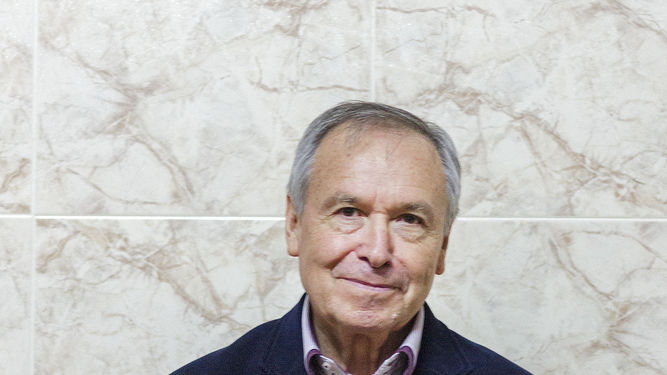
-Es usted mexicano. ¿Empezó allí su investigación en la educación?
-Allí me hice educador. Empecé muy joven, a los 19 años, y trabajé en todos los ámbitos, desde infantil hasta doctorados, pero mi formación fue en Estados Unidos, donde se trabaja más con la práctica que con la teoría. Eso me influyó.
LAS FAMILIAS TIENDEN A SATISFACER EN EL ADOLESCENTE SU PRINCIPIO DEL PLACER, QUE ES INSACIABLE»
-¿En qué consiste, cuál es la base de su teoría?
-El aprendizaje de los alumnos no depende tanto de su coeficiente intelectual sino de lo que cada uno es capaz de hacer con él.
-¿Cómo se hace eso?
-Enseñando al alumno a pensar. Toda mi investigación se encamina a crear ejercicios que desarrollen las habilidades de pensamiento de los escolares.
-En España lo ha puesto en práctica.
-Antes lo había experimentado en otros lugares. En los años 80 en Venezuela había un ministerio de la Inteligencia. Allí comprobé que funcionaba. En Madrid dirigí un centro privado en Las Rozas, el Balder. Allí quité los libros de texto, los uniformes y adiestré al profesorado para que siguiera la misma metodología.
-A los profesores no suele gustarles que les digan lo que tienen que hacer.
-En aquel caso no tenían más remedio. En poco tiempo nos convertimos en uno de los mejores colegios de España en todos los ranking. Al ver que la fórmula funciona, los profesores toman confianza.
-Pero lo de quitar los libros de texto…
-Los libros de texto llevan de la mano al alumno. Ahora son muy esquemáticos, con sus negritas, les dan todo el trabajo hecho. Yo trabajo dividiendo a los alumnos en grupos y ellos son los que tienen que investigar. Si alguien entraba en el aula, en la caja negra, parecía que el profesor no estaba dando clase. La pizarra dejaba de ser el centro del aula. El centro del aula era el grupo.
-Influiría en el éxito de aquella experiencia que se trataba de niños bien, de familias con dinero.
-Trabajé en México en un programa para 25.000 alumnos de zonas desfavorecidas, en lo que se llaman las escuelas de la Sierra. Sus condiciones de vida no existen en España, no hay nada comparable. El menor de los problemas es la Física y la Química. Son chicos con heridas en el alma. Dio resultados y se comprobó en un examen nacional que hay allí que equivaldría a lo que fue la reválida española. Pero no hubo continuidad. Cambió el Gobierno y se acabó el programa.
-Eso también ocurre aquí.
-Porque Latinoamérica y España, que comparten modelo educativo, tienen el mismo problema. La Educación no está en manos de educadores, sino de políticos y los sistemas educativos deben ir por otro camino, no tienen que depender de la política.
-Así funcionan la mayor parte de los países triunfadores en los informes PISA.
-Sí, pero hay que tener cuidado con el informe PISA. PISA ni lo mide todo ni mide lo más importante. Podemos extraer conclusiones de un sistema como el finlandés, donde los alumnos trabajan sin presión, sin tareas, muy relajados, pero no creo que nos pueda aportar nada sistemas educativos tan exigentes y crueles como el coreano, por muy buenas notas Pisa que tenga.
-¿Qué es lo fundamental que tenemos que coger de los finlandeses?
-Lo interesante es cómo todos los factores han logrado una conexión: alumnos, profesores, padres. En Finlandia no todo depende del profesor.
-Se centra mucho el problema de la educación en España en el profesorado.
-Depende. En Primaria creo que la educación española funciona muy bien, pero en Secundaria es donde llega el problema por la sencilla razón de que los profesores no son profesores profesionales y, en algunos casos carecen de herramientas para enfrentarse a un adolescente. Pocos químicos estudian Química para dedicarse a su enseñanza. Luego hay muchos que cogen la vocación y son magníficos profesores, pero la preparación no va enfocada a ello. En la mayor parte de los países de Europa se estudia siete años para ser eso, profesor.
-¿Qué papel juega la familia en España?
-Es muy combativa, lo que pasa es que no siempre combate en la dirección acertada. Educar a un adolescente es una tarea titánica en la que se tiende a satisfacer su principio del placer, que es insaciable. Como yo digo, a tus hijos, edúcalos o padécelos.
-Y ahora, a la mínima, les damos un chute de química. Le hablo de la epidemia de TDHA.
-Es lo más fácil: pensar que el niño es el problema. Ese trastorno ni es tan frecuente ni es tan grave. Nuestro cerebro está diseñado para la distracción por supervivencia, porque si no te comía la bestia y, entonces, no estabas distraído, estabas atento a que pasara una mosca. Pero esos mismos niños no se distraen con un videojuego. Eso se cambia con la alimentación y el tipo de trabajo. Cada niño es un mundo. Pero es más sencillo meter química. Ponle química al cerebro y hará lo que tú quieras que haga.
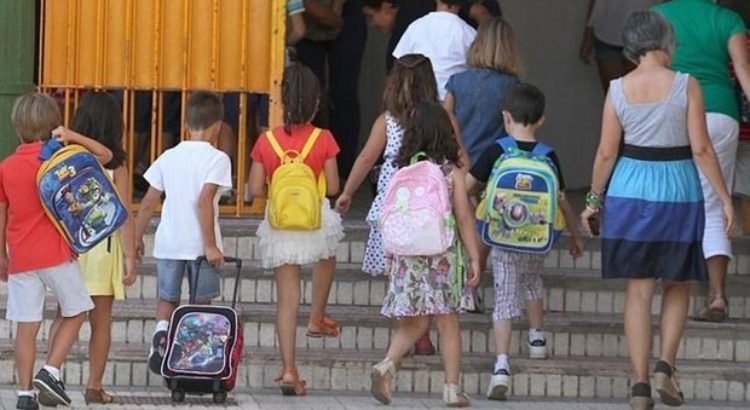
Un colegio de Oxfordshire (Reino Unido) ha prohibido a los niños usar pantalones cortos durante los calurosos meses de verano, y, si lo desean, les dieron la opción de usar faldas.
La Escuela Chiltern Edge, ubicada en Sonning Common introdujo recientemente una nueva política de uniformes más estricta que establece que los alumnos solo pueden usar pantalones largos o faldas, según informa «The Independent».
Cuando un padre preguntó si su hijo podría usar pantalones cortos para el verano, el personal del colegio respondió que «no», ya que los pantalones cortos no están permitidos, pero como el colegio tiene una política de género neutro, los niños podían optar por usar faldas.
El padre del niño, Alastair Vince-Porteous, dijo en declaraciones al «Daily Mail»: «Me dijeron que los pantalones cortos no son parte del uniforme. Es una lástima que no podamos ser más maduros al respecto, no estamos pidiendo jeans ajustados, solo pantalones cortos durante dos meses al año, no es gran cosa».
Algunos otros padres también criticaron el nuevo uniforme, que también introdujo americanas, ya que creen que la ropa no es apropiada para los meses más cálidos.
La política de vestimenta se introdujo en la escuela después de recibir una calificación «inadecuada» por los inspectores Ofsted en la primavera del año pasado.
«Los alumnos valoran su nuevo uniforme»
Pero la escuela parece estar progresando y la última inspección de supervisión Ofsted de noviembre de 2017, mejoró la valoración: «Los alumnos valoran su nuevo uniforme, son inteligentes y educados, y la mayoría se comporta bien».
La directora Moira Green, quien también introdujo horarios de enseñanza más largos desde que asumió el cargo, explicó que decidió eliminar los pantalones cortos del uniforme después de una consulta, ya que se decidió que era el atuendo más «profesional».
En un comunicado de 2017 Green explicó: «En septiembre de 2017, con el apoyo de los padres, Chiltern Edge tomó la decisión de pasar a un uniforme más formal y la decisión ha sido un éxito».
Agregó que seguían una política de uniformes «genérica», lo que significaba que se podía comprar desde cualquier lugar, y la única pieza de vestimenta de marca era un lazo escolar, que se entregaba a los estudiantes de forma gratuita. El problema, dijo, era simplemente que «los pantalones cortos no son ya parte del uniforme escolar principal».
On World Environment Day, there will be plenty of words spoken about the obvious damage being wreaked by climate change – the chaos of hurricanes, wild fires and melting polar ice caps is there for all to see.
But there’s another more hidden casualty of this new world of rising temperatures, drought, and increased natural disasters: the education of our young people.
At the simplest level, the wilder weather that we’re already seeing means children are prevented from getting to school. Hurricanes Irma and Harvey meant 1.7 million US students were temporarily unable to go to school last year – and officials in Puerto Rico have also recently announced plans to close over 280 schools following the devastation wrought by Hurricane Maria.
In wealthier nations, the damage caused by the increasing occurrence of extreme weather events more often than not tends to cause temporary disruption to children’s education.
But in poorer countries, the consequences can be far more long lasting.
Buildings and infrastructure can take months or years to rebuild, with devastating implications for learning. Girls are most likely to be taken out of school in the wake of climate-related shocks, as was found in studies in Pakistan and Uganda after natural disasters there.
So, indirectly, climate change is compounding educational inequalities that already exist.
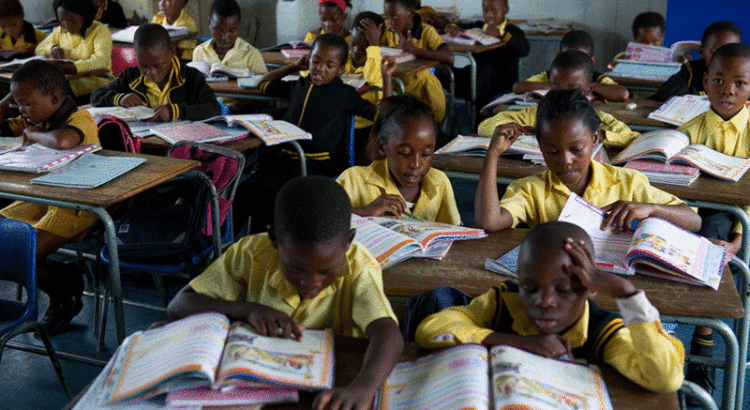
But the hardest hit parts of the world are those where universal education is still denied millions and Sub-Saharan Africa is on the front lines. Adult literacy rates are around 65%, compared to a global average of 86%. Here, over a fifth of children aged 6-11 are out of school, and a third of those aged 12-14.
In Rwanda, we know the devastating impact of being forced from one’s home can have on a child’s education.
But the big refugee crises of the future will not just be driven by war, but by the environment, with experts warning tens of millions are likely to be displaced in the next decade by droughts and crop failures brought about by climate change.
What’s more, rising temperatures are predicted to result in the spread of lethal diseases. It is thought that a 2°C rise in temperatures could lead to an additional 40-60 million people in Africa being exposed to malaria.
The disease is already one of the most significant factors in student absenteeism on the continent, with estimates ranging from 13 – 50%depending on the region.
Environmental changes are diminishing children’s education in other ways too. Malnourishment directly affects children’s ability to learn. The World Food Programme has identified hunger and malnutrition as one of the most significant impacts of climate change.
Poor maternal diet means the odds are stacked against a growing number of children even before they are born.
Food shortages and crop failures can also cause conflict and political extremism – which can also blight educational chances. In Mali, for example, where rainfall has dropped 30% since 1998, the instability has created an environment where poisonous anti-education ideologies can flourish.
Recent years have seen many tragic attacks on African schools, from Boko Haram in Nigeria to rebels in DR Congo. States weakened by the economic and social damage of climate change will be less able to counter these destructive forces.
If states start to fail, then precarious state funding for education – which is already being squeezed even before the impact of climate change is taken into consideration – will be at risk.
The percentage of trained primary school teachers in sub-Saharan Africa has already fallen by 27.5% in just 15 years, from 84.4% in 2000 to 61.23% in 2015, according to UNESCO data.
Meanwhile, teachers from Nigeria to Kenya frequently find themselves unpaid at the end of the month. This despite the chronically low levels of remuneration; UNESCO has found there has been a decline in teacher pay across Africa since 1975.
As states grapple with increasingly perilous priorities in the face of so many threats borne by climate change, education funding may be one of the first things to get cut.
It is vital that we understand the threat posed by climate change to education and act against it. That is why I support the Dubai Declaration on Education and Climate Change made at the Varkey Foundation’s Global Education and Skills Forum in March. The declaration calls on the international community to take action in educating the next generation about the perils of climate change along six key principles: education is the responsibility of all; global interdependence and the imperative of planetary stewardship provide the critical context for education in the 21st Century; averting catastrophic climate change calls for improved climate literacy for all; education needs to foster a sense of global citizenship and ecological responsibility in all; and education reform and climate action should be pursued as mutually reinforcing objectives in public policy.
The Dubai Declaration is an important start in ensuring education does not become the forgotten casualty of climate change. But in the face of the multitudinous and multifaceted threats climate change poses to education right now, from children kept out of school due to extreme weather events to those forced to flee their communities by longer term climactic conditions, to conflicts, hunger and disease, governments must act urgently to ensure that every single child is given access to a good school and a well-trained and qualified teacher.
On this World Environment Day, ahead of the G7 Leaders meeting in Canada, it’s a timely reminder that climate change is doing immediate damage to the life chances of children all over the world who are being denied their birthright of a decent education.
The writer is the former Minister of Education of Rwanda and a member of the Atlantis Group of former Education Ministers around the world, an initiative of the Varkey Foundation since March 2017s.
Africa is in the midst of an education crisis. Despite pledges to improve access to education for all children by 2030, many African governments are failing to fund this ambitious component of the UN Sustainable Development Goals (SDGs). There is still time to address the financing shortfall, but only if new investment strategies are embraced with vigor.
Today, roughly half of the world’s young people, including some 400-million girls are not being educated to succeed in the workplace of the future. This challenge is most acute in Africa; although 75% of girls in Sub-Saharan Africa start school, only 8% complete secondary education. Sub-Saharan Africa is the only region where women still do not enroll in or graduate from tertiary education at thesame rates as men.
These problems are well known, if not always addressed. Less understood is the contradictory impact that Africa’s future growth will have on the availability of education funding.
By 2030, nearly 30 countries in Africa are expected to have reached lower middle-income status, defined by the World Bank as a per capita gross national income (GNI) between $1 026 and $4 035. As countries approach this level of development, new investments will be needed to pay for health and education upgrades, and mobilizing domestic tax revenue will become a critical component of budgeting strategies.
At the moment, however, estimated tax revenues in most countries will be insufficient to cover the costs associated with improving educational outcomes. As a result, an education-funding crisis threatens to dash hopes of sustained rapid growth and lasting prosperity.
Traditional forms of international aid will continue to play a role in the development of Africa’s education sector. And yet, owing to the projected increases in GNI, most lower-middle-income countries will no longer qualify for the grants and low- or zero-interest loans that are currently available. As a result, millions of young Africans will suffer the effects of a paradox in international development: countries will be too prosperous to qualify for the best funding options, but too poor to meet the educational needs of their citizens on their own.
By leveraging $2-billion in donor guarantees, we aim to deliver about $10-billion in grant and concessional education funding to countries that need it most. But there is a catch: governments seeking to access these funds must first demonstrate an interest in and capacity for long-term educational reform.
This approach is designed to improve grants’ effectiveness and give countries the ability to strengthen their economic resilience with a better-educated workforce. Research shows that in lower-middle-income countries, every $1 spent on education increases the earning power of graduates by $4. In other words, our long-term goal is broader than building schools or teaching math; it is to create conditions for lasting social and economic change.
Similar funding strategies have already proved to be successful in the health-care sector. For example, the International Finance Facility for Immunisation was created to provide financing forGAVI, the vaccine alliance. Eventually, billions of dollars in new funding was mobilized to help vaccinate more than 640-million children and save over nine million lives. The economic returns were also dramatic; one study that surveyed outcomes in 73 countries found that every $1 spent on immunisations translated into $18 in healthcare-related savings. The education finance facility has the potential to produce a similar impact.
Millions of young people around the world, and particularly young girls in Africa, are failing to excel because they continue to be denied access to quality education. With just 12 years to go before the expiration of the SDGs, Africa’s education crisis must be moved to the top of the development agenda. Government leaders routinely claim that children are our future. If they truly believe it, programs like the International Finance Facility for Education must be given the priority they deserve.
By Richard D. Eddington/irishtechnews.ie/06-05-2018
The world is changing, and education must change with it. Many schools are aware of this fact and are trying to rebuild their activities in accordance with the opportunities offered by new technologies. Some universities borrow ideas from the business world, referring to the experience of successful start-ups in order to launch some new processes for themselves. Gradually, a paper routine leaves the schools, giving way to electronic means of working with data.
School as a Service
School as a service begins with the commitment of the state to each student as a digital student. When states reduce historical barriers, the transition to personal digital learning will mean a school service: access to quality courses and teachers from several providers.
Education SaaS changes the basic assumptions – it does not need to associate time and place. This does not mean that everything will become virtual – in the foreseeable future, at least 90 percent of families will benefit from local schools, but this requires new thinking, new staffing models, new budgeting strategies and new ways of communicating with students and families.
Mobile Learning
Mobile learning, also known as m-learning, is an educational system. Using portable computing devices (such as iPads, laptops, tablets, PDAs, and smartphones), wireless networks provide mobility and mobile training, which allows to teach and learn to expand beyond the traditional audience. Within the class, mobile training provides instructors and students with increased flexibility and new possibilities for interaction.
Gamification in Education
Gemification in education is sometimes described using other terms: game thinking, the principles of the game for learning, the design of motivation, the design of interaction, etc. This differs from game-based learning in that it doesn`t imply that students themselves play commercial video games. It works on the assumption that the kind of interaction that players encounter with games can be transformed into an educational context in order to facilitate learning and influence on students’ behavior. Because gamers voluntarily spend a lot of time for gaming, researchers and teachers are exploring ways to use the power of video games to motivate and apply it in the classroom.
Big Data
“Big Data” is a term that we are used to hearing in business, but it is also an important tool for education. Learning World explores this technological fashion word and talks with an expert on this topic: Kenneth Cuciere, co-author of “Learning with Big Data.”
Cukier sees “Big Data” as an opportunity to adapt learning to the individual needs of students and the learning process. Instead of avoiding this, teachers must accept changes that bring in large data, and use them to their advantage.
One example of the large data that occurs in education is the “Course Signals”, which allow professors to give feedback if there are early signs that students do not exercise or do not use class time.
Blended and Flipped Learning
Blended learning is a pedagogical method in which the learner learns, at least in part, by providing content and training through digital and online media using the student controls in time or place. This allows the student to create an individual and integrated approach to learning. Blended training is combined with a flipped class approach to learning.
The Flipped class is a pedagogical model in which the typical elements of the lecture and the homework of the course change to the opposite. Students watch short video lectures or other multimedia materials asynchronously before a class session. Then, class time is devoted to active learning, such as discussions, design or problem assignments, or laboratory exercises. This learning model allows teachers to guide the teaching of students by answering students’ questions and helping them apply the concepts of the course during classes.
Massive Online Open Courses
Nowadays MOOCs may not be so widespread as when they first attracted attention, and people no longer think that this is the answer to the problems of educational inequality. Nevertheless, MOOCs still deserve close attention, as it develops as an important part of education, and it offers its students many advantages if used well. Moreover, The New York Times called 2013 the “Year of the MOOC” because it attracted a lot of attention and money.
Personalized Learning
Personalized learning is a sort of adaptive learning that considers working with computers to make decisions, based on previous levels of learner understanding when interacting with a computer program. Learning analytics and artificial intelligence are the essence of individual learning because without them it would be impossible to easily adapt the instruction on the basis of immediate answers.
Personalized learning can seem like a dream in many schools, but it’s already happening more than we can imagine – and often behind the back of the teacher.
The universities realized that technology can be a catalyst for improving the learning process. If many people enjoy using gadgets, why not to make them an education tool?
Should people be able to take government funding for their own private parks, roads or police? It’s a rhetorical question frequently used against policies such as vouchers that enable people to choose private schools rather than have their tax dollars go only to public institutions. The answer opponents are typically looking for is, “No, they should not. Like all those things, public education is a public good.”
It is a weak analogy, but much worse, it dangerously downplays what education is: nothing less than the shaping of human minds.
On a technical note, as my colleague Corey DeAngelis recently explained, education does not meet the economic definition of a public good; something “nonexcludable” and “nonrivalrous in consumption.” Basically, a good that non-payers cannot be prevented from using, and that one person using does not prevent others from enjoying it equally. An example is a radio broadcast; anyone with a receiver can listen, and one person listening doesn’t prevent others from doing the same.
That said, what wielders of this rhetorical club are probably trying to hammer home is not that education is a public good as economists see it, but that to work it needs to be provided and controlled by government.
If the intent of establishing parks is to ensure that natural space is preserved for all to use, regardless of ability to pay, it seems reasonable that government must control park lands. To build an interstate, there will be lots of privately-held property on the best potential routes. Lest road creators be gouged, or highways forced to slalom along inefficiently circuitous paths, the power of eminent domain seems important. And the job of government is to keep people from forcibly imposing on each other—e.g., assault, theft—so giving government the power to stop the use of force and punish transgressors appears logical.
But education is fundamentally different from these things. For starters, there is no logical or demonstrated need for government to provide schools. Schools do not require great geographic space, education has been provided privately at significant scale, and there arenumerous private schools operating today despite users having to pay once for public schools, and a second time for private. And as Nobel laureate Milton Friedman observed, government can ensure people can access education without providing the schools.
Far more important, education is inherently about the shaping of minds, and that puts people’s intimately held values and identities—things that make them who they are—in the balance. Requiring all, diverse people to fund a single system of government schools thus forces conflict and, even worse, threatens to implant standardized thoughts in all people. Parks and roads aren’t close to comparable threats to basic freedom and diversity.
The reality of treating education like interstates has often been painful. In the beginning of the “common schooling” era, many Protestants objected to public schooling “father” Horace Mann’s essentially Unitarian vision of what religion the schools should inculcate. The arrival of millions of Roman Catholics led to decades of conflict—including the 1844 Philadelphia Bible Riots that killed and injured scores of people—over the Protestant character of many public schools. Numerous Catholics ultimately felt they had no choice but to forsake their tax dollars and start their own schools, which by their peak in 1965 enrolled roughly 5.5 million children. Many African-Americans, after finally being allowed into the public schools, have had to fight to have meaningful power in the schools to which their children are assigned. And they are not alone.
Today, battles over people’s cultures, ethnic identities, and values are widespread and perpetual. The Cato Institute’s Public Schooling Battle Map, which I maintain, includes nearly 2,000 such conflicts, and with its content drawn mainly from major media reports, there are likely many conflicts missing.
Parks, roads, even policing, don’t come close to the intensely and fundamentally personal—fundamentallyhuman—purpose of education. To assert that letting taxpaying families choose their schools is akin to letting them build private thoroughfares or parks with public dollars at best trivializes education, at worst threatens basic freedom. Indeed, far from calling for government control, the nature of education cries out for letting all people choose.
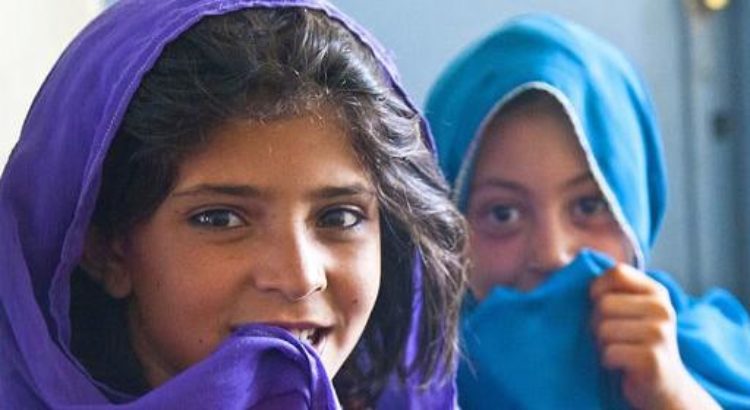
Unos 3,7 millones de niños de entre 7 y 17 años están privados de su derecho a la educación en Afganistán
Afganistán cuenta con una compleja historia, que ha quedado reflejada en su actual civilización, lenguajes y monumentos. Los afganos se muestran orgullosos de su país, su linaje y soberanía. Al estar en un cruce de caminos de múltiples rutas comerciales e imperios, la cultura afgana es rica y multilingüe, con herencias de todas las etnias y pueblos que arribaron a su territorio, donde el Islam tiene una importancia predominante, pero hay profundas influencias budistas y nómadas. La literatura afgana la componen básicamente poemas en lengua persa y pashto, según wp. Su música la componen instrumentos de cuerda tradicionales como el laúd dotar o el laúd tanbur, por influencias árabes y persas y el tambor tabla, influencia india.
Casi cuatro millones de escolares en Afganistán no pueden asistir a clase debido a problemas de seguridad y pobreza, así como por la discriminación contra las niñas existente en el país, ha revelado un nuevo informe de la Iniciativa Global para Niños No Escolarizados del Fondo de las Naciones Unidas para la Infancia (Unicef, por sus siglas en inglés), según rt.
El 60 % de los 3,7 millones de menores de entre 7 y 17 años privados de su derecho a la educación en el país son niñas que tienen «una desventaja particular» debida a la discriminación de género. La peor situación se registra actualmente en las provincias de Kandahar, Helmand, Wardak, Paktika, Zabul y Uruzgan, donde hasta el 85 % de las niñas no asisten a la escuela.
La falta de seguridad en las zonas de conflicto y el desplazamiento de familias debido a los combates se mencionaron como los principales motivos que contribuyeron al primer aumento en la tasa de desescolarización en Afganistán desde 2002, ha explicado Unicef. Las malas instalaciones educativas y la falta de maestras también generan preocupación. Los autores del informe han instado a las autoridades afganas a garantizar entornos de aprendizaje seguros, capacitar a más profesorado y mejorar la pedagogía, así como alentar la educación temprana y el aprendizaje a distancia.
Fuente de la noticia: http://www.periodistadigital.com/ciencia/educacion/2018/06/04/sabias-que-la-mitad-de-los-ninos-afganos-no-van-a-la-escuela-por-los-combates-y-la-discriminacion.shtml
OtrasVocesenEducacion.org existe gracias al esfuerzo voluntario e independiente de un pequeño grupo de docentes que decidimos soñar con un espacio abierto de intercambio y debate.
¡Ayúdanos a mantener abiertas las puertas de esta aula!




 Users Today : 60
 Total Users : 35508706
 Views Today : 67
 Total views : 3636186