Page 2976 of 6815
1 2.974 2.975 2.976 2.977 2.978 6.815

Pakistán lanza plan para promover la calidad en la educación

Pakistán/ 22 de mayo de 2018/Fuente: Prensa Latina

El gobierno de Pakistán instituyó hoy un nuevo plan de estudios y libros de texto con el objetivo de promover una educación de calidad.
El primer ministro paquistaní, Shahid Khaqan Abbasi, presentó 300 programas destinados a lograr el ciento por ciento de inscripción, retención y graduación en el área federal, difundió la emisora Radio Pakistán.

Abassi expresó la confianza de que la iniciativa demostrará ser un hito importante para cambiar el enfoque de la concentración a la promoción de habilidades analíticas y la generación de procesos de pensamiento entre los estudiantes.

El primer ministro elogió a la cartera de Educación por implementar el nuevo plan de estudios en la capital federal, desde la clase uno hasta la clase cinco. Dijo que en las siguientes fases, el plan de estudios será revisado hasta la escuela secundaria superior.

Afirmó Abbasi que ninguna nación puede progresar sin promover una educación de calidad y alfabetizar a su población, y aseveró que el gobierno federal en cooperación con los gobiernos provinciales se esfuerza en mejorar el nivel de educación.

arc/abm

Fuente de la Noticia:
http://www.prensa-latina.cu/index.php?o=rn&id=180415&SEO=pakistan-lanza-plan-para-promover-la-calidad-en-la-educacion
Comparte este contenido:

Perú: Educación Digital. Proyecto que enseña con tecnología llega a Piura

Perú/22 de mayo de 2018/Por: Christian Mestanza/Fuente: https://elcomercio.pe

Iniciativa de la Fundación Telefónica beneficiará a 80.847 escolares y 2.810 docentes de 107 escuelas urbanas y rurales de esa región.

La tecnología avanza a un ritmo acelerado. En pocos años hemos podido ver no solo cómo transforma el entorno, sino también cómo cambian los hábitos y costumbres de la sociedad. En definitiva, se ha convertido en una herramienta imprescindible que, desde donde nos encontremos, nos conecta con el mundo. Lamentablemente, en nuestro país no todos tienen la misma oportunidad de acceso a las nuevas tecnologías. En muchas regiones, por ejemplo, existen colegios que ni siquiera tiene conexión eléctrica, lo que los coloca en una gran desventaja.

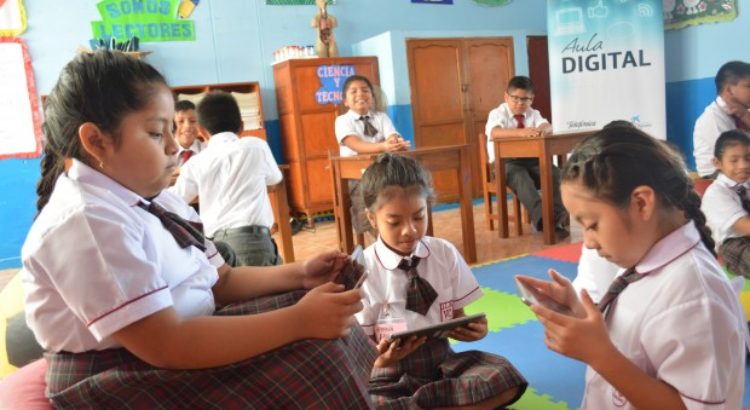
En ese contexto es que nace Educación Digital, proyecto internacional que imparte educación con tecnología a escolares que viven en pobreza, en entornos vulnerables, en aislamiento geográfico o con discapacidad.

Educación Digital

Educación Digital proporciona recursos tecnológica a escuelas (aula móvil con laptops, tablets, proyectores, entre otros equipos).

El programa desarrollado por la Fundación Telefónica y Fundación Bancaria La Caixa, que ya se ejecuta en diversas regiones de Perú, fue lanzado recientemente en Piura, donde beneficiará a 80.847 escolares y 2.810 docentes de 107 escuelas urbanas y rurales de las provincias de Castilla, La Unión, Morropón, Paita, Piura, Sechura y Sullana. También cuenta con el apoyo del Gobierno Regional de Piura y el Ministerio de Educación.

— Acortando la brecha digital —

La tecnología también ha cambiado el mercado laboral. Actualmente la mayoría de trabajos requiere de competencias digitales, pero en menos de 10 años, el 90% de empleos lo solicitarán. El 79% de niños de ocho años se desempeñarán en actividades laborales que hoy no existen. Por eso, la educación debe enfocarse en preparar alumnos aptos para las nuevas exigencias laborales, marcadas principalmente por los avances tecnológicos: robótica, impresión 3D, automatización y la inteligencia artificial.

En ese sentido, el objetivo de Educación Digital es acortar la brecha educativa y tecnológica. Se empodera y capacita en uso de metodologías innovadoras a los maestros, se mejoran los aprendizajes de los estudiantes y se promueven clases dinámicas con el uso de la tecnología, según precisa la Fundación Telefónica.

— El caso de Piura —

En Catacaos, a una media hora la ciudad de Piura, está el colegio I.E. Virgen del Carmen de Catacaos, donde ya se ha venido trabajando con los equipos digitales. Maria del Pilar Fernández, profesora de tercer grado de primaria, dicta la clase utilizando las tablets que brinda Educación Digital.

“La tablet es importante porque nos permite insertar este recurso digital en el desarrollo de las sesiones de aprendizaje. Es muy fácil de utilizar, tanto para los estudiantes como también para los maestros, y permite desarrollar las actividades de aprendizaje de manera interactiva y didáctica”, comenta la docente a El Comercio.

Educación Digital

Maria del Pilar Fernández, docente de tercer grado, dicta clases a sus alumnos. (Foto: Difusión)

“El niño se divierte y comprende lo que observa y escucha en los videos que se muestran en la tablet. El alumno no puede salirse de lo que nosotros como maestros hemos planificado. Si vamos a estudiar el sentido del gusto o el sistema óseo, en la Tablet solo encontrará las actividades relacionadas al tema. De esta manera, comprende que se trata de un recurso educativo”, agrega.

— Piura rural —

Sin embargo, a varios kilómetros de la vida urbana, en la zona rural de la región, la vida tiene un ritmo diferente.

Aquí, llevar la tecnología no ha sido una tarea sencilla. Primero había que solucionar algunos puntos básicos como la electrificación de algunos colegios, cambiar la idea equivocada de muchos padres de que las niñas no debían estudiar o, peor aún, luchar contra el ausentismo a clases provocado por el trabajo infantil, muchas veces bajo el consentimiento de los mismos padres, comenta a este Diariola Hna. Marleny Bardales Raymundo, directora del programa educativo rural fe y alegría 48, Malingas, Tambogrande.

No obstante, una vez iniciado el programa los buenos resultados no se hicieron esperar. «Los niños no han tenido miedo a la tecnología, en cambio los profesores temían dañar los equipos [computadoras] y se les dificultaba usar sus sistemas. Por eso, se pidió un especialista para que forme a los docentes», dice Marleny.

 «La plataforma de Educación Digital está enriquecida con temas que han sido sacados del currículo nacional, ofreciendo a los docentes una gran variedad de material didácticos que ayuda a los niños y adolescentes a entrar en procesos de lectura, reflexión, análisis, entre otros», añade.

Educación Digital

La Hna. Marleny Bardales Raymundo es directora del programa educativo rural fe y alegría 48, Malingas, Tambogrande. (Foto: Difusión)

— Dato —

Este proyecto tiene como objetivo, hacia el año 2020, favorecer a 10 millones de niños de Latinoamérica, África y Asia.

En el Perú, espera beneficiar a fines de 2018 a 815 mil niños y 32 mil docentes de más de mil escuelas, hospitales y albergues de 19 regiones: Áncash, Apurímac, Arequipa, Ayacucho, Callao, Cusco, Huancavelica, Huánuco, Ica, Junín, Lambayeque, La Libertad, Lima, Loreto, Madre de Dios, Piura, Puno, San Martín y Tacna.

Fuente de la Noticia:

https://elcomercio.pe/tecnologia/ciencias/educacion-digital-iniciativa-tecnologica-colegios-piura-noticia-521337

Comparte este contenido:

EEUU: Michigan’s floundering education system has left its children far behind

EEUU/May 22, 2018/Source: http://www.mlive.com

There’s no way around it: Michigan’s education system is floundering.

From early literacy to middle-school math, Michigan students are not keeping up with their peers in top-performing states.

Big changes are needed if Michigan wants to turn itself around, experts say.

«Michigan, if it thinks the status quo is going to be fine, we’ll have a race to the bottom, and we’re almost there right now,» said Grand Valley State University President Thomas Haas, who chaired Gov. Rick Snyder’s 21st Century Education Commission, a panel that developed recommendations to improve Michigan’s education system.

Perhaps no issue is more important for Michigan’s future: In a global economy, a well-educated workforce is critical – and an area where Michigan lags behind.

It starts with reaching and educating Michigan school children even earlier than kindergarten. That means providing more families with affordable access to high-quality early childhood education and funding K-12 schools based on student need, experts say.

It also means ensuring all children have access to top-notch teachers and boosting the number of residents with college degrees or certificates in areas such as the skilled trades.

The relatively low numbers of college graduates and people with post-secondary training mean good jobs here can go begging. The state’s fast-growing occupations are those that require post-secondary training. In 2016, 2 percent of Michigan adults with a bachelor’s degree were unemployed compared to 7 percent of those with only a high school diploma.

Low rates of educational attainment means stagnating wages and tax bases that stifle economic growth. It means Michigan is less competitive in recruiting new employers.  A major reason Detroit wasn’t a finalist in the new Amazon Headquarters was that the region didn’t have the talent pool needed for the jobs.

It hurts individuals. It hurts entire communities.

«It’s really about our vitality in every aspect for the future in our state,» said Amber Arellano, executive director of The Education Trust-Midwest, a nonpartisan education policy and research group. «It’s whether you want to stay here and raise your kids.»

In a series that began in April, MLive is taking a hard look at Michigan’s biggest challenges – our economy, education system and infrastructure – from the historical importance, to how we got where we are today, to possible solutions.

We’ll use the series to frame our discussion with candidates as we head into the 2018 midterm elections and choose Michigan’s newest leaders.

This month, we’re taking a deep dive into Michigan’s educational pipeline.

K-12 schools

Michigan students are below the national average in federal test scores, in graduating high school in four years and in college enrollment.

* Michigan ranked 36th in fourth-grade reading proficiency in the most round of the National Assessment of Educational Progress tests.

* About 80 percent of Michigan’s Class of 2017 graduated high school in four years compared to a national average of 84 percent.

*Not quite 32 percent of Michigan adults age 25 to 34 have a bachelor’s degree compared to 35 percent in that age group nationwide.

And that’s after Michigan has spent the past two decades rolling out various strategies to improve Michigan’s schools.

Use regions/landmarks to skip ahead to chart and navigate between data series.

Michigan has opened the door to school choice and charter schools. Rigorous high school graduation requirements have been implemented. High-stakes testing has been adopted. Teacher tenure laws have been reformed. And a now-defunct state-reform district was created.

Some of those efforts, such as high academic standards, are important and should stay in place, experts say. But overall, they have not pushed the needle in student achievement.

What’s needed, education leaders say, is transformational change.

That includes an overhaul of the school-funding formula, according to the School Finance Research Collaborative, a coalition of educators, nonprofits and philanthropic groups.

Michigan isn’t providing adequate funding for K-12 education, and policymakers must take into greater account the needs of each child, the collaborative said in a January 2018 report.

About half of Michigan students qualify for the subsidized lunch program, and there’s a huge academic achievement gap between those children and students from middle-class and affluent families.

Closing that gap requires more support services: more tutoring and specialized instruction, more after-school programs, more summer school. Michigan’s funding formula needs to reflect those costs, the collaborative says.

Another big issue: Getting more experienced, high-quality teachers in Michigan’s most troubled school districts.

Right now, Michigan’s best teachers tend to gravitate to more affluent districts where the pay tends to be much better and the public support is much greater.

But that shortchanges students in high-poverty communities most in need of skilled, experienced teachers.

Birth to age 5

Another recommendation of the governor’s commission: give more families access to high-quality, early childhood education.

That means offering all 4-year-olds access to state-funded preschool, and helping more families pay for quality childcare for children ages birth to three, educators and advocacy groups say.  Currently, slightly less than half of Michigan 3- and 4-year-olds attend a pre-K program, according to Census data.

«People can’t afford or don’t have access to quality child care in their communities,» said Matt Gillard, president and CEO of Michigan’s Children, which advocates for services for low-income families. «This is a huge challenge right now.»

Research shows that 90 percent of brain development occurs in the first five years of life, which means birth-to-5 services offer the best bang for the buck for improving academic outcomes.

Higher education

Investments are crucial in higher education, too.

By 2020, about two-thirds of jobs are expected to require training beyond high school, whether that be a college degree or an associate degree or certificate in areas such as advanced manufacturing or information technology.

Yet Michigan lags in the number of college graduates and people with post-secondary training. About 28 percent of Michigan adults age 25 and older have a bachelor’s degree, compared to a national average of 31 percent.

Boosting Michigan’s number is key if the state wants to lure employers to the state and ensure that residents have the skills needed to land good, high-paying jobs, said Lou Glazer, president of Michigan Future Inc., a nonprofit organization focused on improving the state’s economy.

«The choice is increase college attainment or permanently be one of the poorer states in the country,» Glazer said. «That’s the stakes.»

Over the course of the next several months, MLive will explore issues of economy, education and infrastructure, and what Michigan leaders need to do to create a better future. We’d love to hear from you, about your struggles and your wins, as you navigate Michigan’s economic landscape. We want to use your voice and your questions to frame the conversation with candidates as we head into midterm elections. Have a story to share, send us an email to michiganbeyond@mlive.com

Source:

http://www.mlive.com/news/index.ssf/2018/05/michigan_beyond_education.html
 

Comparte este contenido:

South Africa: Minister Suspends Equal Education Programmes

Western Cape Minister of Education Debbie Schäfer has instructed Equal Education (EE) to stop operating in the province’s schools by 22 May until her department holds a meeting with the organisation.

This follows allegations of sexual misconduct against former General Secretary Tshepo Motsepe, former Head of Organising Luyolo Mazwembe, and former Treasurer Doron Isaacs.

But in an email to GroundUp, Equal Education said the organisation has not yet received a letter from Schäfer. Although the minister has suggested that some of the allegations might be coming from school children, this is not true, said the organisation. None of the men accused of sexual harassment had any regular interaction with Western Cape school learners.

«None of the allegations relate to school children. Once we receive a letter from the MEC we will be in a position to consider her requests. We look forward to receiving it and will answer any questions posed to us in detail,» said Equal Education.

In a statement on Monday Minister Schäfer said that Equal Education works in schools across the province, and while at least some of the allegations appear to be from people within the staff of the organisation, it is not clear whether any learners are involved. «If the allegations are correct, this is hardly the type of person we need working in our schools.»

«I have therefore written to Equal Education requesting that they furnish me with the details regarding every interview or engagement conducted by Mr Motsepe, Mr Mazwembe or Mr Isaacs so far this year, with any female learner in the Western Cape. I have requested the names of learners, the school that the learners’ attend, the date of the interviews and who was present during the interviews. I require this information by this Friday, 25 May.»

«I have also demanded an undertaking by 5pm tomorrow, Tuesday 22 May, that they will cease operations in Western Cape schools until such time as we have had an opportunity to meet with them and discuss the way forward. Should we not receive such undertaking, we shall instruct our schools not to allow anybody from Equal Education, and who is not a learner at the school, onto school premises,» she said.

Schäfer also wanted to know whether Equal Education conducts background checks on their staff and if so, whether Motsepe, Mazwembe and Isaacs passed the checks.

«Sexual abuse against young female learners is prevalent in our communities, as raised by Equal Education on a number of occasions, and it is distressing that such allegations have been made against high ranking members of their own organisation.»

She has also requested that the Chief Director for Districts immediately investigate what measures are taken by NGOs working in schools to vet their members, and put necessary processes in place.

The organisation said, like the minister, Equal Education takes sexual harassment seriously. It said it had acted swiftly to address every allegation of misconduct that has been put before it. Equal Education has clear staff and volunteer policies and procedures that prohibit sexual harassment in the workplace, it said. Its policies prohibit relationships between staff or volunteers and learners. This offence leads to immediate dismissal. The organisation said it also has a clear sexual harassment policy and provides training on sexual harassment for members, volunteers and staff.

It said that this year it held a two day staff seminar titled «Gender, Power, and Consent», which it initiated and created together with the Tshisimani Centre for Activist Education. It also had follow up workshops on the drafting of staff values for a safe and welcoming workspace, and a review of its sexual harassment policy.

Equal Education said its youth facilitators are trained on sexual harassment and «informed on the severity of engaging in this misconduct».

«We remain resolute in our commitment to ensure that the actions of our members and staff reflect Equal Education’s values of respect, equity and accountability.»

Source:

http://allafrica.com/stories/201805210680.html

Comparte este contenido:

UK: Scottish government ‘committed to Catholic education tradition’

UK/ May 22, 2018/Source: https://www.secularism.org.uk

The National Secular Society has criticised the Scottish government’s «failure to stand up for children’s interests» after a minister gave an «absolute assurance» of its commitment to providing Catholic education.

In remarks reported on Friday by the Scottish Catholic Observer, Scotland’s deputy first minister recently praised «the Catholic education tradition» in a speech to the Catholic Headteachers Association Scotland (CHAS) conference.

John Swinney, who is also the cabinet secretary for education, said: «The Catholic tradition gives young people the foundations, the values and the attitudes to help work out what on earth five years in the future is going to look like and how they can relate to it based on deeply set personal and Christian values.

«I’m here to give you the absolute assurance of the commitment of the government to maintain the Catholic education tradition in the years to come.»

The CHAS conference brings together the headteachers of Scotland’s Catholic schools, church education agencies and senior figures in the clergy. At this year’s gathering the archbishop of Glasgow, Philip Tartaglia, told secondary headteachers to «prioritise the Catholic mission of your school over other considerations».

And Michael McMahon, a church representative who advises Catholic schools on sex education, said: «If the [sexual] act is not ordered towards creation, then it is not procreative and therefore it is not a legitimate expression of sexuality, as far as we are concerned.»

Swinney indicated that the first minister, Nicola Sturgeon, will also praise Catholic education when she delivers the rescheduled Cardinal Winning speech at the University of Glasgow on 2 June. He said Sturgeon would say more about «the significance that we attach to the Catholic education system and the protection of that system within Scottish education».

The Winning lecture was originally created by Scotland’s Catholic Church to honour Cardinal Thomas Winning, who called homosexual sex «perverted», campaigned against the repeal of Section 28 and was an outspoken critic of reproductive freedom.

NSS education and schools officer Alastair Lichten said: «John Swinney’s remarks suggest the Scottish government is failing to stand up for children’s interests because it is too keen to cultivate a cosy relationship with the Catholic Church.

«At this conference church officials made alarmingly uncompromising declarations on how ‘their’ schools should be run and the intolerant messages they should promote in sex education. Instead of calling this out ministers seem keen to indulge them.

«Organised religion already has far too much control in Scotland’s schools. The government should be rolling it back, not reinforcing it.»

A number of events will take place this year to mark the 100th anniversary of state-funded Catholic education in Scotland. Swinney said these would allow the government «to recognise publicly and openly the significant and valued contribution that Catholic education has made to the fabric of Scottish society».

After the speech Philip Tartaglia, the archbishop of Glasgow, said the church was «very gratified» by Swinney’s «supportive and appreciative comments».

Source:

https://www.secularism.org.uk/news/2018/05/scottish-government-committed-to-catholic-education-tradition

Comparte este contenido:

Juegos tradicionales para practicar gramática y vocabulario en inglés

¿Es posible favorecer el aprendizaje a través de juegos tradicionales como el pañuelo, el “pilla-pilla” o el “teje”?

Sí. Nos lo cuenta Luis Anes, maestro de Primaria en el CEIP San Jorge Palos de La Frontera (Huelva).

Si hay una palabra que defina la infancia y su esencia, ésta es el juego. El valor de la experiencia, el “hacer”. Con la experiencia comienza el aprendizaje, en la experiencia se afianza y en la experiencia se vuelca. Práctica, experiencia, investigación, reflexión, creación, invención… ¿Método científico? ¿Acaso no es así la propia vida? ¿Acaso no es así el juego? ¡El juego es vida!
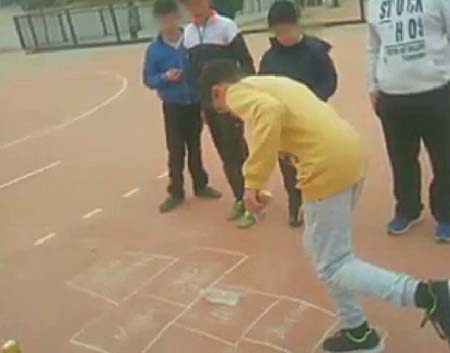
Como docente tengo una gran premisa: si se puede hacer, mejor hacerlo antes que decirlo. Ya sea creándolo, ya sea recreándolo, con experimentos… ¡Jugando! No se trata de “jugar sí o jugar no”. Se trata de cuántas variables de juego podemos ofrecerles para aprovechar ese aprendizaje natural. Y en ese aspecto, los juegos tradicionales son un magnífico recurso. Juegos con los que han disfrutado tantas generaciones que no pueden faltar nunca, porque además son un éxito asegurado. Solo hace falta relacionarlos con nuestros objetivos y aprendizajes que perseguimos.

No olvidemos además que los chavales son seres sociales, deben interactuar con los demás. Es necesario dotarles de herramientas sociales y destrezas para comprender el mundo que les rodea. Les ayudará a desarrollar valores y las distintas inteligencias para su inclusión en el entorno. Porque portarse bien no significa estar callado e inmóvil en clase… El camino fácil para un docente es tener al alumnado cual 26 estatuas… ¿Es eso control y orden? ¡Noooo! Control y orden es tener una clase activa y participativa mientras sabes que no se te irá de las manos. Además, es necesario dotarles de herramientas sociales como son la comunicación oral y corporal.
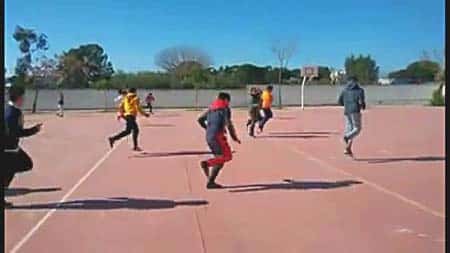
Juegos propuestos

Rompe la monotonía e intenta usar distintos espacios. Utiliza el poder del juego. Toda asignatura tiene el potencial de ser atractiva, activa, vivencial, dinámica y divertida para el alumno.
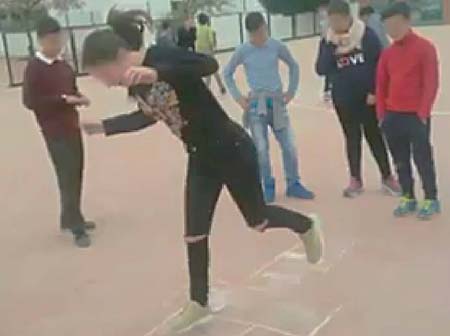
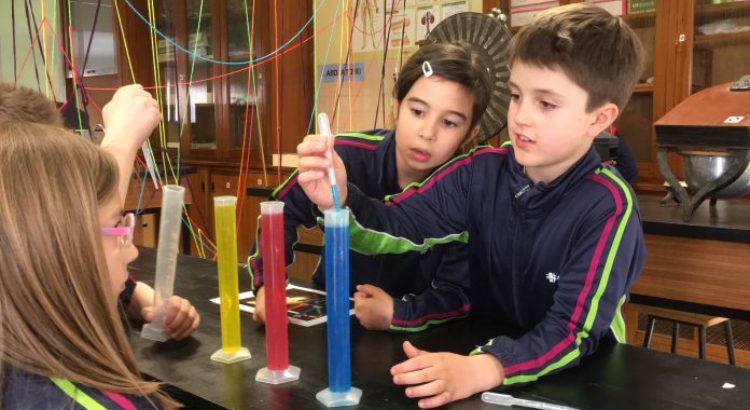
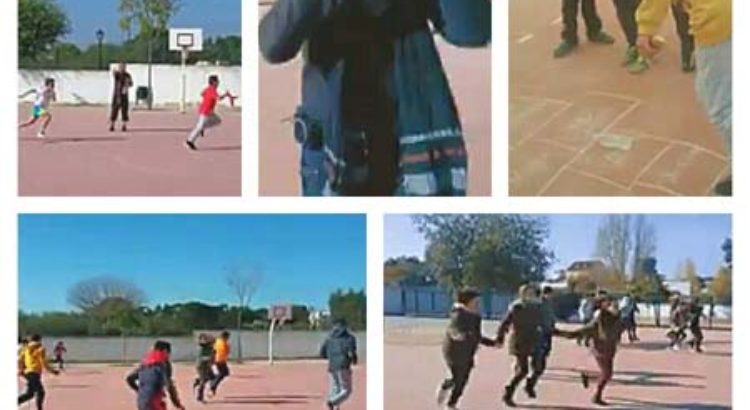
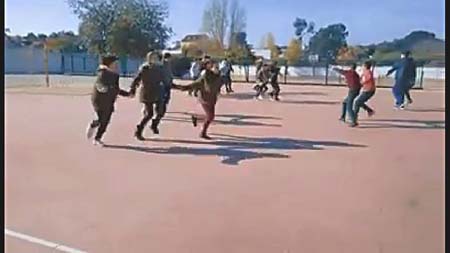
El juego del pañuelo en una clase de inglés. Toda asignatura tiene el potencial de ser atractiva, activa, vivencial, dinámica y divertida para el alumno. ¿Alguien diría que no estamos repasando la gramática de la unidad a nivel oral?

El juego del “pilla – pilla”. Podemos también llamarle cómo practicar oralmente hasta 150 estructuras gramaticales en media hora sin que se den cuenta. Además, realizamos ejercicio físico y mejoramos la psicomotricidad.

El juego del “teje”. Hemos sustituido los números por vocabulario de la familia. Para poder avanzar deben saber decirlos todos. Para cambiar la cara a una asignatura no hace falta mucho. Cambiamos de espacio, fomentamos buenas relaciones sociales, repasamos jugando… Todo con una tiza.

El aprendizaje por placer, eso es el juego. Que estemos dando pasos hacia una nueva escuela y otras formas de afrontar los aprendizajes no es ni ser más condescendiente ni más severo. Es un cambio de mentalidad necesario en una escuela para el siglo XXI. El docente debe utilizar todas las herramientas a su alcance para no ‘el aprobado’ sino que el aprendizaje sea efectivo. Salgamos de nuestra zona de confort.


Fuente reseña: https://www.educaciontrespuntocero.com/experiencias/juegos-tradicionales-para-practicar-gramatica-y-vocabulario-en-ingles/49723.htm

Comparte este contenido:

Escape room en educación: la tendencia que arrasa en las aulas

¿Qué es más motivador: resolver una multiplicación como parte de los deberes o hacerlo para encontrar un tesoro o huir de la clase antes de que —figuradamente, eso sí— explote? Es lo que se consigue con los escape room en educación, una técnica de gamificación que aumenta la motivación y fomenta el trabajo colaborativo.

Conceptos trabajados en clase

Escape room en educación que arrasa en las aulas

Una extraña enfermedad que convierte a los profesores en animales se ha extendido por el colegio y la única solución para salvarles es dar con un antídoto oculto en el laboratorio. Pero al entrar, ¡los alumnos también se han contagiado! Tienen sólo 45 minutos para encontrar la cura y salir de allí, para lo que deben resolver enigmas, juegos, rompecabezas o acertijos relacionados con los conceptos estudiados en clase. ¿Conseguirán el antídoto y la llave que les conduzca a la libertad?

Esta experiencia de gamificación, que tuvo lugar en el colegio Nuestra Señora del Carmen de Zaragoza, sirve como ejemplo práctico de lo que es un escape room o una habitación de escape. Se trata de una dinámica muy popular en entornos de ocio que proviene de los videojuegos on line, se transformó en experiencias en vivo —en los países asiáticos es todo un fenómeno social, con convocatorias que llenan estadios— e, incluso, está disponible a través de juegos de mesa.

En los últimos tiempos esta técnica se está extendiendo rápidamente en las aulas gracias al boca a boca y a su sencillo planteamiento: se introduce a un grupo de personas en una sala de la que deben escapar empleando todas sus capacidades intelectuales, creativas y de razonamiento deductivo. Para ello, es necesario que trabajen en equipo y resuelvan las pistas y problemas que se les plantean en un tiempo determinado.

Contenidos curriculares

Los escape room adquieren su valor educativo cuando las pruebas que hay que superar están relacionadas con los contenidos curriculares que se han trabajado o se van a trabajar en el aula. De hecho, los expertos consultados coinciden al afirmar que se puede emplear con éxito con independencia de la materia (Matemáticas, Ciencias Naturales, Ciencias Sociales, Lengua, Educación Física…) y en cualquier nivel educativo.

Esto es un pequeño extracto del reportaje de 14 páginas publicado en el nº 30 de la Revista Educación 3.0 impresa, correspondiente a primavera 2018.

Escape Room en educación

A continuación puedes el avance de contenidos de la revista impresa:

Fuente de la reseña: https://www.educaciontrespuntocero.com/noticias/escape-room-en-educacion/77954.htm

Comparte este contenido:
Page 2976 of 6815
1 2.974 2.975 2.976 2.977 2.978 6.815