España / 21 de enero de 2018 / Autor: L. Chaparro / Fuente: El Día de Córdoba
El 52% de los profesores y maestros cordobeses afirma que, de media, en sus centros se están produciendo casos de acoso escolar; la cifra se eleva hasta el 69% en los ciclos de Educación Secundaria.
Estos son los datos de una encuesta realizada por el sector de enseñanza de CSIF, que desvela también que las agresiones son más frecuentes entre el alumnado son de tipo verbal, con un 70% de los casos, seguidos de los de tipo físico, con un 13%. El acoso de tipo psicológico, por su parte, agrupa un 9% de los casos.
La responsable del área de enseñanza de CSIF, Elena García, ha dado a conocer estos resultados durante la presentación de las jornadas Súmate contra el Acoso Escolar. Ciberacoso en el aula. Una perspectiva finlandesa. Responsabilidad Jurídica, que tendrán lugar el 14 y el 15 de febrero en el Rectorado de la Universidad de Córdoba (UCO) y en las que se analizarán este problema desde distintas vertientes.
Las jornadas contarán con la participación de importantes expertos en la materia de reconocido prestigio nacional e internacional, entre los que se encuentran la directora del Programa Anti-acoso de Finlandia, Tiina, Mäkelä, el presidente de la Asociación Nacional para la Protección de los Menores en Internet, Carlos Represa, o el productor y director de cine y documentales, Miguel Ángel Tobías, entre otros.
México / 21 de enero de 2018 / Autor: Luis Ignacion / Fuente: NVINoticias
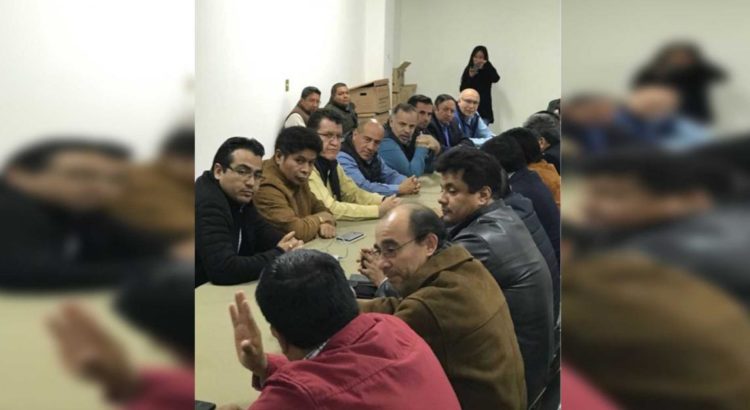
El nuevo director del Instituto Estatal de Educación Pública de Oaxaca, Francisco Ángel Villarreal, prometió “diálogo hasta la muerte” a los profesores de la sección 22 del Sindicato Nacional de Trabajadores de la Educación y todos los sectores de área educativa.
Momentos después de anunciarse su designación, expresó que su gestión seguirá una política de diálogo con todos los sectores del nivel educativo, pero bajo el esquema que plantea la reforma educativa.
“El gobernador Alejandro Murat Hinojosa tiene todo el interés de que el diálogo e interacción se hagan en un marco de respeto, a fin de mejorar el sistema educativo en la entidad; pero tiene que hacerse como lo marca la reforma educativa”.
-¿No se va doblegar ante la Sección 22 del Sindicato Nacional de Trabajadores de la Educación?
-Bueno no quisiera aventurar este tipo de comentarios en este momento, es muy pronto todavía, pero el planteamiento es muy claro.
-¿Cuál será su actitud ante la organización sindical?
-El diálogo es la base, siempre será diálogo, diálogo, hasta que el tiempo nos lo permita y como me dijo alguna vez un maestro: hay que dialogar hasta morir, entonces vamos a dialogar mucho, mucho, con todos los sectores.
-¿Cuál es su preocupación en el cargo?
-Lo primero es reunirme con el director saliente para retomar la agenda y, obviamente, coordinarme con las dependencias del gobierno del estado que transitan en esta relación, como lo es la Secretaría General de Gobierno.
-¿Permitirá la presión magisterial?
-Bueno somos oaxaqueños, yo tengo la posibilidad de conocer el sector público de Oaxaca desde hace más de 30 años y creo que siempre ha estado en la vista de toda la sociedad el papel que debe de jugar el gobierno con los profesores; reitero: es diálogo, tenemos que acordar y, obviamente, seguirá transitando en un mecanismo de permanente acuerdo con todos los sectores que tienen que ver con el área educativa, padres de familia, sección 22, profesores de la CNTE; tiene que haber un diálogo permanente con todos los sectores que tienen que ver con la educación de nuestros hijos.
Oportunos los cambios: magisterio
La gremial, consideró oportunos los cambios en el organismo educativo, toda vez que Cervantes Ayala representaba uno de los mayores obstáculos para avanzar en acuerdos y logros pactados entre el gobierno estatal con la Sección 22.
«Vemos que Francisco Ángel Villarreal ya hizo su primera declaración en el sentido de mantener esa relación y esta reconociendo a la Sección 22 como un sindicato capaz de defender a los trabajadores de la educación y en ese termino muestra que la reforma educa no avanzará aquí en el estado de Oaxaca», señaló el vocero del magisterio disidente.
Cuba / 21 de enero de 2018 / Autor: Oscar Figueredo Reinaldo / Fuente: Cuba Debate
El inicio del actual curso escolar estuvo marcado por el paso del potente Huracán Irma, un evento meteorológico que afectó a más de dos mil 260 instituciones docentes a lo largo de todo el país, pero que no detuvo a alumnos y profesores en su empeño de lograr un periodo lectivo de calidad. Sobre cómo se recupera el sector y cuáles son las principales metas a alcanzar en el presente año se conversó en la Mesa Redonda.
Al iniciar su intervención en el programa radio-televisivo, el M. Sc. Francisco Navarro Gouraige, Director Nacional de Inversiones del Ministerio de Educación dijo que las mayores afectaciones se concentraron en las cubiertas ligeras, la carpintería, el impermeable de cubierta, las estructuras a causa del derribo de árboles y la contaminación del agua de cisternas.
Agregó que las provincias más afectadas fueron Ciego de Ávila con el 75.3% de las instituciones dañadas, Villa Clara con el 65.6%, La Habana con el 41.8%, Camagüey con el 40.6% y Sancti Spíritus con el 30.6%; aunque resaltó que no se reportaron pérdidas de equipos de computación y audiovisuales y la afectación a la base material de estudio fue mínima.
Más adelante el panelista detalló que entre septiembre y los primeros días del año 2018 se han logrado concluir 2 025 instituciones, el 89.4% de las que fueron dañadas al paso del huracán.
“El inicio de la reconstrucción de las instituciones educacionales afectadas no se hizo esperar. La mayoría de las escuelas recuperadas, si la comparamos con el estado que mostraban antes del paso del huracán, tienen una mejor situación constructiva; pues precisamente la indicación de nuestra dirección política y administrativa fue la de intervenir integralmente los sistemas dañados”, comentó.
Añadió que durante la recuperación ha sido un factor decisivo la prioridad otorgada al sector por la máxima dirección del país, el Consejo de Defensa Nacional a través de las Zonas Estratégicas en cada región, los Consejos de Defensa Provinciales y Municipales y el Ministerio de Educación.
“Debemos resaltar además el papel jugado por los trabajadores y los cuadros del sector a todos los niveles de dirección; la participación activa de estudiantes y profesores de las especialidades de la construcción de la ETP; las brigadas de constructores de las Empresas Provinciales de Abastecimiento y Servicios a la Educación de las provincias menos afectadas; las brigadas del Minint, el Minfar, el Micons, el Minagri, de los Consejos de la Administración Provinciales y municipales y de las nuevas formas de gestión no estatal; además de las familias y la comunidad”, subrayó Navarro Gouraige.
Expuso además que para que se tenga una idea de cuánto hace el estado en aras de lograr que el 100% de las instalaciones recuperen su valor de uso, “es importante destacar que el pasado año se dispuso de recursos humanos, materiales y financieros para reparar 4 042 instituciones y al cierre del mes de noviembre se había intervenido en 3 600, resultado de la fusión del plan de mantenimiento y reparación, del financiamiento procedente de la contribución territorial y de las acciones para recuperar los daños ocasionados por el huracán Irma. Este esfuerzo permitió que de las 2 532 instituciones evaluadas de regular y mal por su estado constructivo al inicio del año 2017, más de 488 instituciones obtuvieran la categoría de bien”, concluyó.
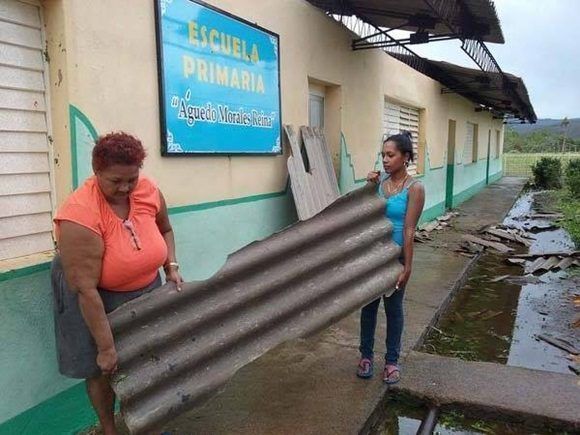
Alumnos y profesores apoyaron en la recuperación de las instalaciones docentes. Foto: Germán Veloz, Radio Ciudad.
Historias de Camagüey
Mercedes Escudero Olazabal, directora de Educación de la provincia de Camagüey enumeró los daños en las localidades del norte de la tierra agramontina.
“Las principales afectaciones las tuvimos del municipio Esmeralda en especial en la comunidad Jaronú, actual patrimonio nacional. Además en el resto de los territorios del norte como son Sierra de Cubitas, Minas y Nuevitas, y en menor escala, las instituciones de Florida y Camagüey.
Escudero Olazabal destacó además las 95 escuelas que funcionaron como receptores de evacuados y la labor destacada de los maestros, quienes se mantuvieron en los centros aun teniendo problemas con sus viviendas.
“Recuerdo en el policlínico ´Dagoberto Rojas´ del Consejo Popular ´Brasil´ cómo la primera medida que adoptaron los trabajadores docentes de allí fue hacer un diagnóstico de los niños evacuados para saber cómo estaban en cuanto a sus pertenecias y recursos escolares para reponérselos y que pudieran incorporarse lo antes posible”, relató la directora de Educación en la provincia oriental.
Mercedes Escudero comentó lo gratificante de la solidaridad brindada por todos los sectores de la sociedad camagüeyana en conjunto con el sistema educacional: “Luego de las imágenes desoladoras tras el paso del huracán, el consejo popular de ´Brasil´, recibió otro huracán de personas tratando de restablecer las condiciones de vida. Todo Camagüey se mudó para allá”.
En otro momento del programa, la funcionaria destacó que las escuelas fueron reparadas capitalmente y la intervención no fue solamente en las áreas afectadas, sino en otras áreas docentes, deportivas, residencias estudiantiles.
La directora de educación agramontina recalcó en la decisión del consejo de defensa provincial de priorizar a los maestros en la ficha técnica de sus viviendas, para que se pudieran incorporar al horario docente y no hubiera pérdida de clases una vez que les llegaran sus recursos.
Casi al concluir su intervención aseguró que se trabajó para recuperar lo perdido y al mismo tiempo atender los procesos sustantivos en el desarrollo educacional, entre ellos el duodécimo grado, para que perdieran el menor tiempo posible de clases pues son estudiantes que se preparan para las pruebas estatales y de ingreso a la educación superior.
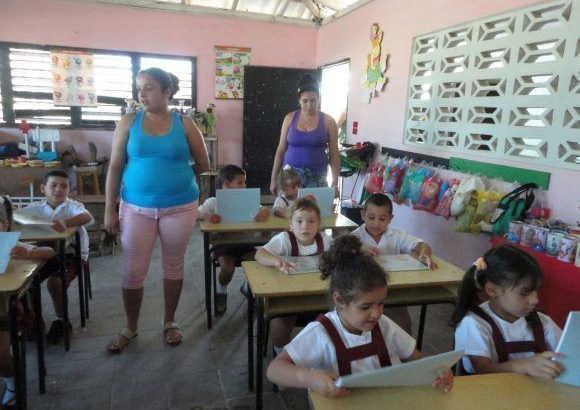
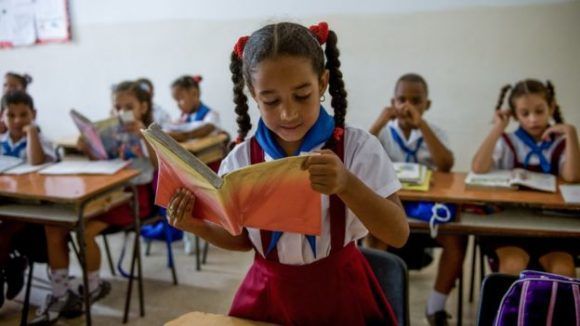
El acceso a una educación gratuita es uno de los grandes logros en Cuba en materia de derechos humanos. Foto: Archivo.
Modificaciones en algunas disciplinas
“Como es de esperar el ejército de maestros cubanos no se detiene”, así afirmó la Doctora Silvia María Navarro Quintero Directora general del Instituto Central de Ciencias Pedagógicas del MINED, quien además aseguró que todas las instituciones están comprometidas en el Tercer proceso de perfeccionamiento del Sistema Nacional de educación y han cumplido con el cronograma que esto exige.
Existen diferentes disciplinas que a través de los grados de enseñanza están siendo modificadas en cuanto a su enfoque y profundización, una de ellas es la Educación para la vida ciudadana o educación cívica que ha cambiado en cuanto a la manera en que se tratan los contenidos y el sistema de actividades y ejercicios que se ponderan para los comportamientos sociales de los jóvenes.
En Historia se aborda un enfoque de demostración de las tradiciones, historia de emancipación, relaciones entre hechos consecuencias, menos dirigida hacia las figuras y más hacia el contexto: “Historia de Cuba pondera el orden cronológico de las tradiciones de lucha, por qué la lucha armada ha tenido el protagonismo en nuestras batallas por la independencia, el papel de los líderes y la conservación de la memoria histórica. Todo con un enfoque de proceso”, aclaró.
María Navarro se refirió también a las asignaturas Lengua y Literatura para la primaria, Español y Literatura, en la secundaria, y Literatura y Lengua para la preuniversitaria, donde las posibilidades no van solo a la teoría, sino hacia un enfoque cronológico de las obras, con autores vivos, y mayor profundidad de los géneros literarios. Además, se añade un Compendio de gramática española y apuntes para la redacción, junto a normas de ortografía homogéneas.
De la disciplina inglesa se prioriza el enfoque comunicativo sin obviar el gramatical con el marco de referencia común europeo y en la informática el concepto computadora se amplía por los nuevos medios técnicos que existen, y dan la posibilidad de gestionar el conocimiento, a través de animaciones y presentaciones para recrear lo aprendido. Asimismo, se añaden desde temprano nociones fundamentales de programación.
El modelo educativo de Cuba es siempre un referente mundial.
Educación primaria: De cara al Cuarto Estudio Regional Comparativo Explicativo (ERCE 2 019)
Odalis García Figueroa, directora nacional de primaria del Ministerio de Educación (MINED) afirmó que la educación primaria fue la más afectada tras el paso del huracán Irma; no obstante, se trabaja por la preparación de los docentes para elevar la calidad de los estudiantes de 3ero y 6to grado, con el objetivo de la participación de Cuba en el Cuarto Estudio Regional Comparativo Explicativo (ERCE 2 019), definido por el Laboratorio Latinoamericano de Evaluación de la Calidad de la Educación (LLECE), de acuerdo con los compromisos establecidos en la Agenda de Educación 2 030 (UNESCO).
García Figueroa comentó que la mayor de las Antillas es fundadora del (LLECE),y ha obtenido resultados relevantes en su primer estudio (PERCE-1997) y en el Segundo Estudio Regional (SERCE-2006). La funcionaria del MINED aclaró que Cuba no participó en el tercero de los estudios (TERCE- 2013), pero se prepara para estar presente en el cuarto estudio a aplicarse en mayo de 2019.
En correspondencia con la Agenda Educativa 2030 y los Objetivos de Desarrollo Sostenible, en esta ocasión se realizarán pruebas académicas, cuestionarios a estudiantes, maestros, directivos y familias y se aplicarán, además, instrumentos de evaluación referidos a la educación cívica, las habilidades socio-emocionales y la inclusión social.
Odalis García puntualizó que el Ministerio de Educación tiene dos pilares fundamentales: fortalecer el trabajo metodológico de los docentes y, en segundo lugar, afianzar el trabajo dirigido a la familia como ente fundamental de la enseñanza, de manera que no se limite la participación de los padres solo a las reuniones convocadas por las escuelas.
España / 21 de enero de 2018 / Autor: Redacción / Fuente: EuropaPress
La Consejería de Educación de la Junta de Andalucía ha autorizado al CEIP San Jorge de Palos de la Frontera (Huelva) para la impartición del ajedrez como asignatura o área curricular en este curso escolar, tras la presentación de un proyecto por parte del centro sobre las ventajas formativas de esta disciplina en el desarrollo madurativo de los más jóvenes.
Tras la medida, el alumnado de tercero y cuarto de Primaria de este colegio tiene un horario específico semanal dedicado a la práctica de esta disciplina, fruto de una cuidada planificación curricular y programación didáctica, ha informado la Junta en una nota.
Para ello, el equipo docente del centro ha desarrollado una labor previa de investigación, estudio y documentación, paralelamente a la exitosa ejercitación del juego como actividad complementaria desde el año 2014 a través de la apertura de la ‘Chess Room’, así como la organización de campeonatos escolares organizados junto a la Federación Onubense de Ajedrez.
Actualmente está abierta la posibilidad de ampliar estas enseñanzas en el primer ciclo, dado el grado de desarrollo de las competencias básicas y destrezas en el alumnado. Esta iniciativa se enmarca en AulaDjaque, un proyecto ofertado por la Consejería de Educación, con la finalidad de dar a conocer los beneficios de la práctica y enseñanza del ajedrez en el ámbito escolar.
En las últimas décadas y en distintos lugares, el ajedrez se ha revelado como un recurso eficaz de innovación educativa, lúdico, transversal e interdisciplinar, con repercusión directa en la mejora del rendimiento académico. El presente programa nace con el objetivo de formar y capacitar al profesorado en este ámbito y facilitar a los estudiantes recursos para desarrollar sus habilidades cognitivas y socio- afectivas. Así, aulaDjaque se espera que contribuya a que los alumnos conozcan las múltiples manifestaciones que el noble juego ha tenido y tiene en el arte, la ciencia, la literatura o la inteligencia artificial.
El ajedrez es considerado mucho más que un juego al desarrollar en sus practicantes, un espíritu critico a través del análisis, la reflexión y el intercambio de opiniones. En 2015, el Congreso de los Diputados, a través de la Comisión de Educación y Deporte, aprobó por unanimidad, una Proposición no de Ley, que insta al Gobierno, en colaboración con las comunidades autónomas, a promover que las administraciones educativas y los centros incluyan la práctica del ajedrez en su oferta educativa.
En la provincia de Huelva, 31 centros docentes que imparten Educación Primaria y Secundaria se han inscrito para desarrollar un programa que tiene incidencia en la formación de más de 3.000 alumnos y se sustenta principalmente en el trabajo en Red del profesorado interesado a través de la plataforma COLABOR@, la planificación de actuaciones formativas dirigidas al profesorado de los centros implicados para apoyar el proceso metodológico y un programa de actividades complementarias a lo largo del curso.
AULASDJAQUE EN HUELVA
Los colegios son Manuel Siurot y Nuestra Señora del Carmen de La Palma del Condado, Dunas de Doñana de Matalascañas, Manuel Pérez y Las Viñas de Bollullos del Condado, Enebral de Punta Umbría, José Nogales de Aracena, La Rábida de El Campillo, Juan Ramón Jiménez de Cartaya, Hermanos Arellano de Galaroza, Príncipe de España, Cristo Sacerdote, y Virgen del Rocío de Huelva. Miguel de Cervantes de Lucena del Puerto, Miguel Hernández de Manzanilla, San Jorge de Palos de la Frontera y Alcalde J.J. Rebollo de San Juan del Puerto.
De los institutos participan el IES Diego Macías de Calañas, Odiel de Gibraleón, Cuenca Minera de Minas de Riotinto, San Blas de Aracena, Fuente Juncal de Aljaraque, Juan Antonio Pérez Mercader de Corrales, Tres Molinos de Villanueva de los Castillejos, La Arboleda de Lepe, Delgado Hernández de Bollullos del Condado, Vázquez Díaz de Nerva, Bitácora de Punta Umbría y Escuela de Arte León Ortega de la capital.
España / 21 de enero de 2018 / Autor: María Luz Rodríguez Palmero / Fuente: Books Google
La Teoría del Aprendizaje Significativo es uno de los posibles acercamientos que, guiado por la psicología cognitiva, se plantea qué es lo que ocurre cuando un individuo procesa información y la convierte en conocimiento. Esta obra analiza algunas de las teorías más relevantes que tratan los procesos implicados en la cognición: la Teoría de los Modelos Mentales (Johnson-Laird), la Teoría de los Campos Conceptuales (Vergnaud) y la Teoría del Aprendizaje Significativo (Ausubel). Las dos primeras son aproximaciones teóricas que pueden constituir un marco de referencia cognitivo, más actual, de los principios expuestos por Ausubel, en los que se centra esta obra. En resumen, el objetivo de estos ensayos es procurar una visión conjunta de todos estos constructos teóricos para facilitar su comprensión y aplicación, una relectura e interpretación cognitiva contemporánea de una etiqueta tan usada y manida como es la del aprendizaje significativo, que favorezca su uso coherente tanto en el aula como en la investigación en educación.
Asia-África-Latinoamérica / 21 de enero de 2018 / Autor: Redacción / Fuente: El Economista
El objetivo para 2018 es que 7,7 millones de niños se hayan beneficiado.
«Si se aprovecha de la manera correcta y es accesible a escala universal, la tecnología digital puede cambiar la situación de los niños que han quedado atrás ya sea debido a la pobreza, el origen étnico, el género, la discapacidad, el desplazamiento o el aislamiento geográfico al conectarlos a numerosas oportunidades y dotarles de las aptitudes que necesitan para tener éxito en un mundo digital. Pero a menos que ampliemos el acceso, la tecnología digital puede crear nuevas brechas que impidan que los niños alcancen todo su potencial». Así arranca el último informe de Unicef sobre el «Estado Mundial de la Infancia 2017» publicado hace pocas semanas.
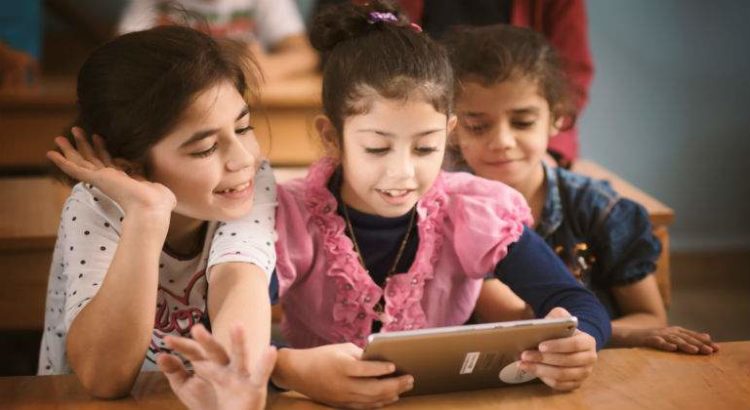
Contra estas brechas educativa y digital enfoca sus esfuerzos ProFuturo en 23 países de África, Asia y Latinoamérica desde julio de 2016. A cierre de 2017 son ya 5,6 millones los niños que están teniendo la oportunidad de usar herramientas y contenidos digitales para enriquecer su aprendizaje.
ProFuturo es uno de los proyectos de educación digital más grandes del mundo, que nace de un deseo compartido por Fundación Telefónica y Fundación Bancaria «la Caixa» de que todos los niños y niñas del mundo tengan las mismas oportunidades, y cuyo reto es reducir la brecha educativa proporcionando una enseñanza digital de calidad en entornos vulnerables. Con su labor, ProFuturo aspira a convertirse en un referente de la transformación e innovación educativa mejorando la enseñanza de millones de niños a través de la tecnología.
Tal y como recoge el último informe de UNICEF «Estado Mundial de la infancia 2017», el 29% de los jóvenes entre 15 y 24 años (346 millones de personas) no tienen acceso a Internet. Este dato se acentúa en el continente africano, donde un 60% de los jóvenes no puede conectarse a la Red, un porcentaje que en Europa se reduce hasta el 4%. Además, el 56% de los sitios web del mundo están en inglés, lo que provoca que los niños que solo hablen lenguas minoritarias, o sin recursos para aprender este segundo idioma, no puedan encontrar contenidos relevantes para su educación.
La propuesta educativa de ProFuturo tiene como sellos de identidad la calidad, la sostenibilidad a lo largo del tiempo y el acceso desde todos los rincones, ya sean zonas vulnerables, rurales, remotas o en situación de conflicto o crisis humanitaria. Para lograrlo, su solución educativa se modula y se adapta a cualquier entorno y contexto, disponga o no de conectividad, y está disponible en español, francés, inglés y portugués, las lenguas oficiales donde está presente el proyecto. Todo ello con el objetivo de proporcionar la mejor educación a 10 millones de niños, que actualmente están en riesgo de exclusión social, en 2020.
Según datos ofrecidos por Unicef y Unesco, el 12% de las personas más pobres (más de 170 millones) saldrían de su situación si todos los estudiantes de sus países tuvieran la escolarización básica. Además, un niño nacido de una madre que sabe leer, tiene un 50% más de posibilidades de sobrevivir pasados los 5 años.
El 4º de los Objetivos de Desarrollo Sostenible propone al mundo trabajar para garantizar una educación inclusiva, equitativa y de calidad y promover oportunidades de aprendizaje durante toda la vida para todos. En esta tarea César Alierta, presidente de ProFuturo y presidente de Fundación Telefónica, lidera este área de trabajo como Asesor Global del Fondo ODS para la Educación Digital y Desarrollo Sostenible de Naciones Unidas.
Es evidente que un cambio en la educación es hoy más que nunca una necesidad y, por este motivo, con su labor a través del ambicioso proyecto ProFuturo, Fundación Telefónica y Fundación Bancaria «la Caixa» ponen al servicio de esta causa su experiencia para transformar la educación en los entornos más vulnerables. Eligen hacerlo a través de la educación digital, por su experiencia con las nuevas tecnologías, y porque la tecnología permite llegar a más personas en menor tiempo adaptando y personalizando la enseñanza a cada entorno de aprendizaje.
Desde su nacimiento en 2016, casi 6 millones de niños de 23 países han podido acceder a un sistema educativo de calidad y adaptado a sus necesidades gracias a ProFuturo. El objetivo para 2018, es que 7,7 millones de niños se beneficien de esta iniciativa.
Argentina / 21 de enero de 2018 / Autor: Redacción / Fuente: El Destape
El jefe de Estado eliminó por decreto la discusión sobre el salario mínimo a nivel nacional. Qué decía en 2015.
Cuando estaba en campaña, Mauricio Macri alzaba la voz en defensa de las paritarias como una institución para que empleadores y empleados discutan las condiciones salariales. A poco más de dos años de aquella proclama, eliminó por decreto la paritaria nacional docente, a la cual tampoco había convocado en 2017.
«Tenemos que seguir por el camino del diálogo entre trabajadores, gobierno y empresas. Las paritarias son un instrumento que hay que cuidar», dijo Macri el 28 de septiembre de 2015 en una entrevista periodística y reproducida en su propia cuenta de Twitter.
«Tenemos que seguir por el camino del diálogo entre trabajadores, gobierno y empresas. Las paritarias son un instrumento que hay que cuidar»
Quien se expresaba en sentido similar es el hoy cuestionado Jorge Triaca. «Apoyamos las paritarias para que los trabajadores peleen por sus derechos y negocien lo que les corresponde», escribió quien hoy está en el ojo de la tormenta por tener una empleada en negro siendo ministro de Trabajo.
Apoyamos las paritarias para que los trabajadores peleen por sus derechos y negocien lo que les corresponde. #PropuestasCambiemos
Este miércoles, el Presidente firmó un decreto que elimina la discusión salarial a nivel nacional y la circunscribe exclusivamente a las provincias, empleadoras de los maestros. Además, fija el salario mínimo en un 20% por encima del salario mínimo, hoy establecido en 9.500 pesos para una jornada de 40 horas semanales.
OtrasVocesenEducacion.org existe gracias al esfuerzo voluntario e independiente de un pequeño grupo de docentes que decidimos soñar con un espacio abierto de intercambio y debate.
¡Ayúdanos a mantener abiertas las puertas de esta aula!






 Users Today : 0
 Total Users : 35490915
 Views Today :
  Total views : 3604348