Page 3508 of 6825
1 3.506 3.507 3.508 3.509 3.510 6.825

Japan: Education: Best investment for our future

Japan/November 28, 2017/By:  IKUKO TSUBOYA-NEWELL/ Source: https://www.japantimes.co.jp

Among the 34 nations in the Organisation for Economic Co-operation and Development, Japan has always been among the bottom three when it comes to public spending on education as a percentage of GDP. In 2011, Japan was the worst at 3.8 percent, followed by Slovakia and Italy — against the OECD average of 5.6 percent. Countries that come on top in this category are Denmark, Norway and New Zealand.

Of course, to be fair, the ratio of student numbers to the total population needs to be considered with respect to this data. Japan, in fact, has the second-lowest ratio at 15.5 percent, sitting between Chile, the lowest, and Italy. The OECD average is 22.2 percent.

Looking at the ratio of spending on education to total general government spending, the OECD average is 12.9 percent. Again Japan ranks low, coming in second to last at 9.1 percent, just above Italy at 8.6 percent. At the top is New Zealand with 21.6 percent.

In summary, Japan does not invest heavily in education. This creates financial pressure on households as they try to provide fundamental education to their children, particularly in the underfunded areas of preschool and higher education. Data show that when it comes to household expenditures for pre-elementary school education, the top five spenders are Japan, Australia, South Korea, the United States and Spain. For higher education they are Chile, South Korea, the United Kingdom, Japan and the U.S.

In all of these countries, a large number of households bear heavy financial burden for these two important stages of education.

In the case of Japan, we see that annual government spending per head is quite unevenly distributed — people in their 70s and 80s receive far more, for example, than newborns to 16-year-olds because of the heavy cost of welfare programs such as pensions, medical services and nursing care.

While this lopsided distribution has long been the case, the government is now seeking to shift resources more toward the younger generation. It plans to provide more public funding for preschool education, and Prime Minister Shinzo Abe’s Liberal Democratic Party is considering the introduction of a scheme to ease household costs for higher education similar to the HECS-HELP system in Australia, in which the government issues an interest-free loan on behalf of students to pay tuition fees directly to higher education providers. This loan is subject to indexation but charges no real interest. Students begin to repay the debt once their income is above a minimum threshold.

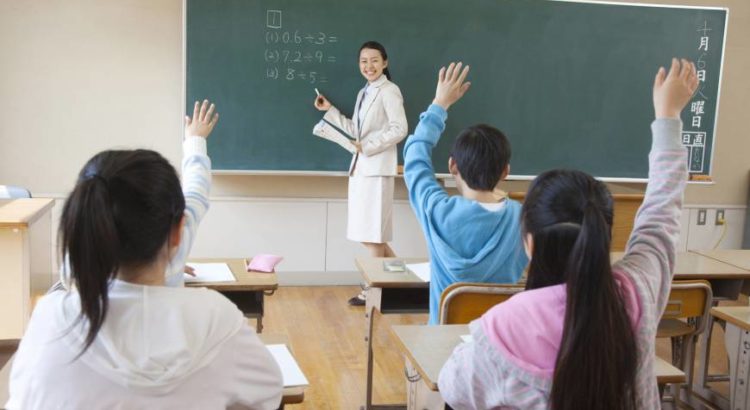
These are good initiatives, but are they enough? There are other factors that should be considered as well, and one very important issue is class size and diversity of students per class. As far as elementary schools are concerned, countries with the largest class sizes are Chile, with an average of 30.4 students, followed by Japan with 27.9 and Israel with 27.3. The OECD average is 21.2. For junior high schools, the average in South Korea is 34.0, while in Japan it is 32.7 and for Israel it is 28.7. The OECD average is 23.3 students per class.

It must be noted that the numbers for Japan include schools in severely depopulated areas. There can actually be up to 40 students per class in any public school (except for the first grade, where the maximum is set at 35). This means populated areas generally have classes with far more students than the average. This is particularly problematic because these are the areas in Japan where students are more likely to be socio-economically and academically at risk.

In Japan, there are 631,000 students identified as having developmental disabilities in the public elementary and junior high schools. This translates to 2.5 students out of the maximum class size of 40. One out of seven students comes from a household of relative poverty, or 5.7 out of every 40. Among public elementary school students, 13.4 percent, or 5.3 out of every 40, say classes are too easy and boring. Another 15 percent, or six out of every 40, say classes are too difficult and that they have difficulty understanding the content. There are 80,119 non-Japanese students in public or state schools, from elementary to high school, who need intensive Japanese lessons. This is a distribution of 0.3 students per class.

Overall, there is likely to be a considerable range of students in any one large class. Surely this must impact the likelihood of effective teaching.

Reducing class size to increase student achievement has been debated and analyzed for several decades. Smaller class sizes are generally welcomed for allowing teachers more time to spend with each student and less time on classroom management. This means the teacher can provide better teaching, tailored to each student’s individual needs, to ensure maximum success. In this respect, smaller class sizes may be viewed as an indicator of the quality of a school system.

An influential and credible study of the effects of reduced class size is the Student Teacher Achievement Ratio (STAR) study carried out in the U.S. state of Tennessee in the late 1980s. In this study, students and teachers were randomly assigned either to a small class, with an average of 15 students, or a regular class, with an average of 22 students. It was found that a smaller class size increased student achievement by an amount equivalent to about three additional months of schooling over four years. A long-term follow-up survey of participants into adulthood showed that they were about 2 percent more likely to be enrolled in college at the age of 20.

International studies also provide evidence of the positive effect of class-size reduction. Israel, just like Japan, has a limit of 40 students. Researchers there found positive effects from smaller fourth- and fifth-grade classes.

Why then, do we in Japan, continue to maintain a class size limit of 40 when in the U.S., U.K., France and Germany the limit is around 30? Of course, to some extent the answer is related to decisions about the careful use of taxpayer money and considerations that it be used most productively without undue waste. Perhaps, because of historical and cultural factors, it has been easier to have larger classes in Japan. For instance, a Confucian heritage means that teachers are highly respected and easily obeyed, and thus less affected by larger class sizes.

The OECD points out that data from the Program for International Student Assessment (PISA) suggests that high-performing education systems, such as those in Japan and South Korea, prioritize the quality of teachers rather than class size. Catherine Rampell, writing in the The New York Times, also points out that South Korea and Japan, which have some of the highest-achieving students in the world, also have the biggest class sizes. Both of these reports are right and we should be proud of our achievement and the high quality of our teachers. However, even with our Confucian roots, it is growing ever more difficult for a single teacher to meet students’ individual needs in today’s educational contexts.

As far as I am concerned, I would support having my tax contributions spent on providing better educational environments suited to student needs. Why not start by aiming to achieve the OECD’s average number of students per class by limiting class size to 30 students? I do not think I am alone in thinking that one of the best investments for the future is to invest in our children’s education.

Ikuko Tsuboya-Newell is the founder and chair of Tokyo International School. She serves as the International Baccalaureate Japan ambassador and as adviser on revitalization of education commissioned by the Ministry of Education, Culture, Sports, Science and Technology.

Source:

https://www.japantimes.co.jp/opinion/2017/11/26/commentary/japan-commentary/education-best-investment-future/#.Whuxz0qWY2w
Comparte este contenido:

China construye biblioteca con 1.2 millones de libros en su interior

China/28 de Noviembre 2017/Fuente: diariocorreo

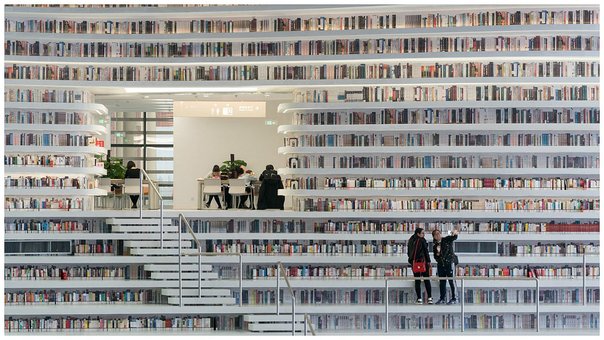
Como sacado de una película futurista, China tiene la primera biblioteca realizada con más de cinco ambientes dedicados a la lectura con 1.2 millones de libros. La compañía holandesa MVRDV, junto con el Instituto de Planificación y Diseño Urbano de Tianjin (TUPDI), han diseñado la futurista Biblioteca Tianjin Binhai como parte de proyecto que proporcione un distrito cultural para la ciudad.

El edificio no actua solo como centro educativo, sino también como un puente entre el parque que la rodea y el distrito cultura.

La planta subterránea es un conjunto de espacios para el almacenamiento de libros y un gran archivo, mientras que en la planta baja están las áreas de lectura, con accesos fáciles pensados para niños y ancianos.

Como se recuerda, China es considerado uno de los países con mayor potencia económica pero también lo es en la educación.

Fuente de la noticia: 

https://diariocorreo.pe/cultura/china-construye-biblioteca-con-12-millones-de-libros-788403/

Fuente de la imagen: 

https://diariocorreo.pe/media/thumbs/uploads/img/2017/11/25/china-construye-biblioteca-con-1-2-millones-de-l

Comparte este contenido:

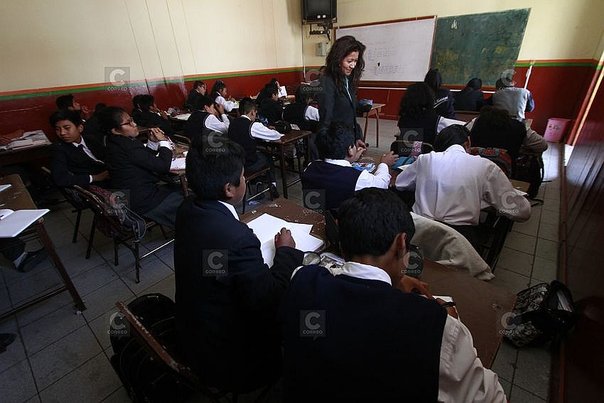
Perú: Incrementan horas de Educación Física en colegios para el 2018

Perú/Noviembre de 2017/Fuente: Correo

Al menos tres horas de educación física y deporte serán implementados para los colegios de primaria el 2018. Es decir, el 10% de las 30 horas académicas semanales serán destinadas para mejorar la salud de los niños donde sus maestros. La medida aplicada por el Ministerio de Educación (Minedu) permitirá fortalecer el Currículo Nacional de Educación Básica el próximo año.

En primaria para escuelas polidocentes se consideran las áreas curriculares de matemática, comunicación, inglés, personal social, arte y cultura, ciencia y tecnología, educación física, educación religiosa, y tutoría y orientación educativa.

Asimismo, en las escuelas de intercultural bilingüe se dedicarán de 4 a 5 horas semanales en la formación en comunicación en la lengua originaria del estudiante (quechua y aymara).

 En tanto, primaria y secundaria se potenciará el área de tutoría educativa, donde se potenciará la educación sexual, contarán con la participación de los padres de familia.

En cuanto a las matrículas, el Minedu precisó que la falta de documento de identidad no es impedimento para la matrícula escolar. Asimismo nose podrá condicionar la matricula al pago de cuotas ordinarias o aportes extraordinarias a las APAFA u otros conceptos, ni a la adquisición de uniforme escolar.

El Minedu estableció el inicio de las labores en las instituciones educativas públicas comenzarán el 12 de marzo y las vacaciones de medio año se programarán del 30 de julio al 12 de agosto.

Fuente: https://diariocorreo.pe/edicion/arequipa/incrementan-horas-de-educacion-fisica-en-colegios-para-el-2018-788521/

Comparte este contenido:

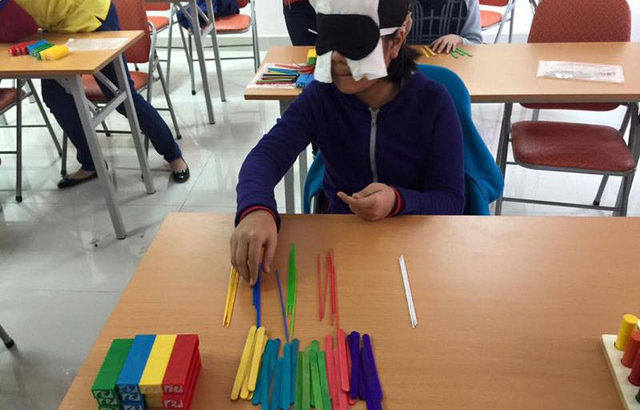
Vietnan: Shortage of teachers for children with disabilities

Vietnan/Noviembre de 2017/Fuente: Vietnan.net

Resumen: Dinh Thi Thu Huong, profesor de la escuela Nguyen Dinh Chieu, dijo: «Además de las clases regulares, también proporcionamos otras clases, como habilidades para la vida y movilidad para estudiantes con discapacidad visual, entre otros. Normarly para la materia de movilidad, un maestro se centrará en un estudiante, pero tenemos que enseñar a 20 estudiantes a la vez «. «Actualmente una clase dura solo una hora. Creo que sería mejor si los niños estudiaran a tiempo completo. Espero que haya más maestros para estudiantes con impedimentos visuales «, dijo Ta Thi Thu Huyen, padre de un alumno. A pesar de haber sido capacitados con cursos de capacitación en educación especial, la mayoría de los maestros reconocen que existen grandes brechas entre las teorías y la realidad para cada estudiante. Pham Thi Kim Nga, director de la escuela Nguyen Dinh Chieu de Hanoi, dijo: «Los profesores deben equiparse con conocimientos sobre la psicología de los estudiantes con discapacidad visual. También se les exige que conozcan Braille «.» Esperamos que en el futuro haya más cursos de capacitación para maestros «, agregó.

Dinh Thi Thu Huong, a teacher at Nguyen Dinh Chieu School said:”Besides regular classes, we also provide other classes such as living skills and mobility for visually impairedI students, among others. Normarly for the mobility subject, one teacher will focus on one student, but we have to teach 20 students at a time.”

“Currently a class lasts only one hour. I think it would be better if the children studied full-time. I hope there will more teachers for visually impaired student,” Ta Thi Thu Huyen, a pupil’s parent said.

Despite being trained with special education training courses, most of the teachers acknowledge that there are huge gaps between theories and reality for each student.

Pham Thi Kim Nga, Headmaster of Nguyen Dinh Chieu School, Hanoi said:”The teachers have to equip themselves with knowledge about the psychology of visually impaired students. They are also required to know Braille.” “We hope in the future there will be more training courses for teachers,” she added.

Vietnam has only two departments of the Hanoi National University of Education and the Ho Chi Minh University of Education that provide special education training programmes, though they have very limited training quotas.

Deputy Director of Special Education Centre under the Vietnam Institute of Educational Sciences Nguyen Thi Kim Hoa said:”In some advanced countries, they have many specialists and effective models to learn from, however, it’s very difficult to apply in Vietnam. To help disabled children integrate into society, it’s necessary to have stronger involvement of the community, and family.”

To date, Vietnam has only about 3,000 specially trained teachers for visually impaired children. A lack of human resources in the field has hamstrung the nation’s efforts to help 75 percent of disabled people integrate into society by 2020./.

Fuente: http://english.vietnamnet.vn/fms/education/190853/shortage-of-teachers-for-children-with-disabilities.html

Comparte este contenido:

Venezuela y Rusia afianzan lazos en materia de educación, agricultura, industria, tecnología y defensa

Venezuela/Noviembre de 2017/Fuente: Globovisión

El Ministro para la Educación Universitaria, Ciencia y Tecnología, Hugbel Roa sostuvo un encuentro con la delegación de Rusia en la XIII reunión de la Comisión Intergubernamental de Alto Nivel en Sochi, para fortalecer la relación bilateral en cuanto a Educación se trata.

En la comisión diplomática también participan los ministros Vladimir Padrino López Wilmar Castro Soteldo, titulares de la cartera de Defensa y Agricultura Productiva respectivamente, busca consolidar alianzas estratégicas de desarrollo integral en las áreas de agricultura, industria, ciencia, tecnología, minería defensa y salud, informó la Cancillería venezolana a través de su cuenta oficial en Twitter.

En ese sentido, Castro Soteldo informó que fueron presentados productos que son considerados para la exportación en el marco del encuentro de la Comisión Intergubernamental de Alto Nivel (CIAN) Rusia-Venezuela.

Fuente: http://globovision.com/article/venezuela-y-rusia-afianzan-lazos-en-materia-de-educacion-agricultura-industria-tecnologia-y-defensa

Comparte este contenido:

Nueva Zelanda: Free tertiary study with allowance increase: recipe for a rort, warns National

Nueva Zelanda/Noviembre de 2017/Fuente: Stuff

Resumen: El estudio terciario gratuito y un nuevo aumento de la asignación estudiantil podrían crear un «incentivo perverso» para que las personas se inscriban sin intención de estudiar, advierte National.

Eso se debió a que con un aumento de $ 50 por semana anunciado recientemente a la asignación de estudiantes, la asignación ya no estaba vinculada al beneficio de búsqueda de empleo, superando en un 23 por ciento.

Pero el Gobierno dice que ha llevado a cabo el trabajo y confía en que cualquier riesgo de que eso suceda «estará en los márgenes» y desaparecerá rápidamente, con consecuencias para cualquiera que lo haya probado.

Free tertiary study and a new increase to the student allowance could create a «perverse incentive» for people to enrol with no intention of studying, warns National.

That was because with a recently-announced $50 per week increase to the student allowance, the allowance was no longer pegged to the jobseeker benefit – outstripping it by 23 per cent.

But the Government says it’s carried out the work and is confident that any risk of that occurring would «be at the margins» and weeded out quickly, with consequences for anyone who tried it.

National's tertiary education spokesman Paul Goldsmith says the Government has left it's free tertiary study policy open ...

GETTY IMAGES

National’s tertiary education spokesman Paul Goldsmith says the Government has left it’s free tertiary study policy open for exploitation if it’s not careful. It needs to justify how it will protect public funds from being rorted.

From January 1, 2018, student allowance base rates and the maximum amount students can borrow for living costs will rise by a net $50 a week.

Where the allowance rate reflected the living costs of two adults, the increase would be $100 net a week. The Accommodation Benefit was also scheduled to rise by $20 a week in 2018, to a maximum of $60 a week.

National says Labour’s planned boost to the student allowance makes it vulnerable to exploitation by people on the jobseeker’s benefit. They’re warning that decoupling the allowance from benefit levels creates an incentive for beneficiaries to sign-up for tertiary education, even if they have no intention to study. But the New Zealand Union of Students’ Associations says this is incorrect, because comparing the student allowance to the jobseeker’s benefit doesn’t show the whole picture. National’s Tertiary Education spokesperson Paul Goldsmith joins me in the Auckland studio.

 The moves were part of the Government’s 100-Day Plan.

National tertiary education spokesman Paul Goldsmith said the increase, combined with free tertiary study, could leave the door open for the policy to be exploited by some who would see easy cash.

«While all Kiwis would like to see unemployed New Zealanders engaging in genuine study, decoupling student allowances from benefit levels opens the system to abuse.

Education Minister Chris Hipkins says students will not be to exploit the Government's free tertiary policy. If students ...

SIMON EDWARDS/FAIRFAX NZ

Education Minister Chris Hipkins says students will not be to exploit the Government’s free tertiary policy. If students don’t pass, they will be required to pay.

 «With all tertiary courses free from next year, what’s to stop any sensible beneficiary taking advantage and enrolling in study in order to pocket an extra $50 a week,» he said.

The $50 increase to the allowance, however, meant a person in this category would soon receive $262.45 – 23.5 per cent more than if they remained on the jobseeker benefit.

«Student allowances have previously been pegged to the jobseeker benefit so there wouldn’t be any perverse incentives for people to enrol in tertiary study even if they had no intention of studying,» said Goldsmith.

«But now that’s all changed, and the zero-fees policy will make it worse. It’s like having a new super jobseeker benefit with no strings attached.»

The Government had to explain the measures it would take to prevent that from happening.

Education Minister Chris Hipkins said it was an issue the Government had been careful to do its homework on.

«We looked at all of the different mitigations in place to ensure that people don’t switch and we’re pretty confident we’ve got enough safeguards in place that any kind of behaviour like that would be at the absolute margins.

«And it would frankly be a very foolish person who did that, because they would lose any eligibility for future support if they did that, and those were under the rules introduced by the National Government actually.»

Hipkins said they were «reasonably sensible» rules, ensuring students passed enough of their courses to retain their study benefits. A pass rate of 50 per cent was required.

«So if someone sets out to basically rort the system, they’ll be clamped down on pretty quick and then they’ll lose their ability to access the system any further.»

Another rule that applied – also introduced by the National Government – was that tertiary providers could lose funding for «non-completions».

«And I think that they would be very mindful of enrolling people who are not taking their education seriously,» said Hipkins.

«Because they’re not going to want to have that impacted upon their performance statistics.»

But if a «modest increase» in student support was what tipped people into furthering their education and coming off a jobseeker benefit, «that’s a good thing», said Hipkins.

Labour’s pre-election costings, which were verified by BERL, put the cost of the policy at $340m per year, along with $270m per year for the boosts to student support.

It plans to release the up-to-date costing of the plan this coming week. Student debt has surpassed $15 billion in New Zealand.

 Fuente: https://www.stuff.co.nz/national/politics/99251281/free-tertiary-study-with-allowance-increase-recipe-for-a-rort-warns-national

Comparte este contenido:

Panamá: Más de $5 millones adeuda el Gobierno a los docentes del país

Panamá/Noviembre de 2017/Autor: Adiel Bonilla/Fuente: Panamá América

El Gobierno Central y el Ministerio de Educación (Meduca) mantienen una «deuda millonaria con los docentes», incumpliendo abiertamente acuerdos pactados.

Así lo denunció a Panamá América, Diógenes Sánchez, vocero de la Asociación de Profesores de la República de Panamá (Asoprof).

Según el dirigente gremial, solamente a los docentes de premedia multigrado y de telebásica, se les adeuda más de 2 millones de dólares.

A esto habría que sumarle las deudas de viáticos a educadores de áreas de difícil acceso, el atraso en el pago de ascensos de categoría y de vigencias expiradas.

«Yo calculo que la deuda total debe estar por encima de los 5 millones de dólares», estimó el profesor Sánchez.

En medio de este panorama, el dirigente afirmó que existe indignación entre las bases de docentes, frente al discurso de las autoridades de Educación, que redundan en excusas para justificar el pago de la deuda.

«El Gobierno insiste en tratar de limpiar su imagen, pero en la práctica hay una gran inconformidad y descontento entre los docentes, que sienten que el Meduca ha incumplido con los compromisos», señaló.

«El asunto no es negociar y buscar acuerdos… porque eso ya lo hemos hecho. El punto es que el Gobierno y las autoridades educativas nos mienten y no cumplen la palabra empeñada», lamentó Sánchez.

Poca inversión

Otra promesa incumplida es el incremento del porcentaje del producto interno bruto (PIB) que se dedica a la educación en Panamá.

El año pasado, diversos gremios docentes exigieron al Gobierno que se cumpliera con el 6% del PIB en educación, como lo establece la legislatura vigente.

Pero, Asoprof denunció que un informe reciente del Banco Interamericano de Desarrollo revela que actualmente el Estado panameño solo invierte 3.3% del PIB en educación.

«Hay una tarea pendiente», reaccionó Héctor Cotes, presidente de la Asociación Panameña de Ejecutivos de Empresa (Apede), quien recordó que países de la región están invirtiendo arriba del 5%.

Y aunque el estudio señala que el Estado panameño está incrementando sus recursos para educación, agrega que es necesario garantizar que este esfuerzo se traduzca en mayor calidad y cobertura.

En este sentido, la organización Unidos por la Educación calificó como «inaceptable» la tasa de egreso de secundaria que hay en Panamá.

Según la agrupación, el país no va a progresar como debería, mientras tengamos solamente 9.5 años de escolaridad, en promedio.

Las cifras y las comparaciones son evidentes: el 30% más pobre cuenta solo con 5 años de escolaridad, mientras que el 10% más rico tiene 14 años.

Asoprof advirtió que de mantenerse este panorama, el inicio del próximo año escolar estará marcado por protestas y hasta una posible paralización de labores.

Visión País 2025

Informe

La Asociación Panameña de Ejecutivos de Empresa (Apede) publicó su segundo informe Visión País 2025, en el que  destaca que el pilar educativo en Panamá sigue mostrando deficiencias.

Tiempo de clases

En el ramo educativo, en el último quinquenio los “días clases” han aumentado a 42. Pero, para Apede esta cifra todavía sigue corta, si se toma en cuenta que el objetivo propuesto es llegar a 48 días.

Competitividad

La Visión País 2025 también se refiere al Índice de Competitividad Global del Foro Económico Mundial de 2016, en el que se muestra un retroceso en el “ranking” de Panamá, descendiendo 14 posiciones, con malas calificaciones para Matemáticas y Ciencia.

Fuente: http://www.panamaamerica.com.pa/nacion/mas-de-5-millones-adeuda-el-gobierno-los-docentes-del-pais-1089696

Comparte este contenido:
Page 3508 of 6825
1 3.506 3.507 3.508 3.509 3.510 6.825