Page 3569 of 6792
1 3.567 3.568 3.569 3.570 3.571 6.792

Panamá: Informe revela que en Panamá existen tres sistemas educativos

Panamá / 08 de noviembre de 2017 / Fuente: http://metrolibre.com/

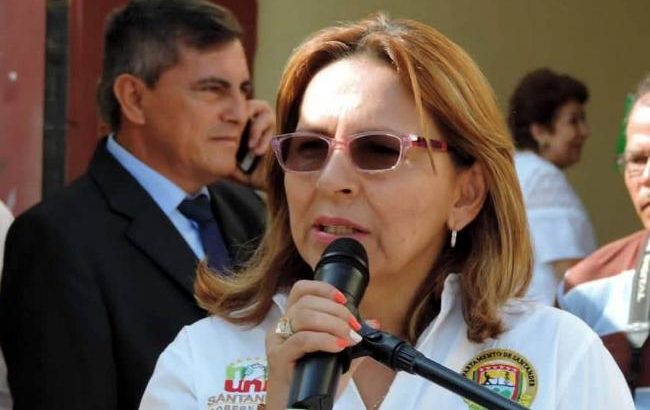
La especialista en educación Nivia Rossana Castrellón explicó que los resultados de la prueba censal de lectura comprensiva de los estudiantes de tercer grado revelaron que en Panamá existen tres sistemas educativos.

Datos del informe aseguran que el 89% de los estudiantes de escuelas públicas en tercer grado de las comarcas no cuentan con las competencias básicas de lectura comprensiva, que puede ir desde no saber leer hasta niveles de primer y segundo grado.

Mientras que a nivel nacional el 50% de los estudiantes no tiene los niveles apropiados en las escuelas oficiales, en comparación con el 20% de las escuelas particulares.

“Esto es preocupantes, porque al no saber leer es muy difícil que puedan tener trayectorias escolares exitosas, especialmente en las comarcas porque como sabemos allí está nuestras poblaciones más pobres, con mayor desafío y crecimiento demográfico de la República”, manifestó en declaraciones a Telemetro.

Para Castrellón la calidad de la educación de los niños, hoy, depende de donde naces (hogar, circunstancias socioeconómicas e índice sociocultural de la familia) lo que se vuelve más grave si se toma en cuenta que Panamá está entre los 10 país con mayor desigualdad. Otros resultados del informe, establece que el promedio de escolaridad de estudiantes panameños es del 9.5 años.

“Tenemos que aspirar a que todos nuestros niños se gradúen de sexto años para competir con otros países. Este fue uno de los acuerdos en el dialogo por la educación y estamos esperando que se cumpla porque ese compromiso de esos ocho sectores que nos sentamos y nos pusimos la camiseta de los panameños que queremos un mejor futuro para todos los niños de éste país. Estamos esperando que se haga mucho”, manifestó la empresaria miembro de la Fundación unidos por la Educación.

Fuente noticia: http://metrolibre.com/index.php/nacionales/106529-informe-revela-que-en-panama-existen-tres-sistemas-educativos

Comparte este contenido:

‘The failure to educate a child anywhere in the world risks instability for us all’

08 de noviembre de 2017 / Por: Vikas Pota / Fuente: https://www.tes.com/

As many as 175 million young people in poor countries can’t read a sentence – we need to prioritise the global education crisis, writes one charity chief executive

Unesco, the UN agency charged with improving global education, has recently been in the headlines for all the wrong reasons.

Rows over alleged anti-Israel bias following the admission of Palestine as a full member have led to the withdrawal of US and Israel from the organisation. Even the appointment of the former French culture minister, Audrey Azouley, as the new director-general was reported in terms of her family background and the voting machinations behind her appointment.

This white noise is distracting attention from the urgent mission of Unesco. It is the only global body, supported by most of the world’s governments, which can be mobilised to solve the global education crisis. During her tenure, Ms Azouley must avoid the political squalls that have dogged the organisation and communicate to the world the importance of education – which has fallen down the world’s priority list over the past decade.

The agency is losing a director-general in Irina Bokova, whose steady hand has helped guide the Sustainable Development Goals. She has supported international gatherings of education ministers where they can share expertise and priorities – including the Global Education & Skills Forum. Through incisive reporting, Unesco has also highlighted the gap between where global education is and where it needs to be in the coming years.

Addressing this gap will require all of Ms Azoulay’s reserves of creativity and energy. In the current media climate, dominated by explosive presidential tweets and a cacophony of shrill voices, important long-term issues are being drowned out. Ms Azoulay needs to be bold, framing the global education crisis in a compelling way to cut through in this world of short-attention spans, instant journalism and fake news.

Unesco must rally governments and build momentum, just as the UN did prior to the Paris climate talks in 2015.

The truth, which isn’t widely known, is that progress on improving education among the world’s poorest children has stalled. Up to 2011, the number of children out of primary school had been reduced to 57 million from a high of 102 million in 2000. By last year, this number had risen again to 61 million, with a total of 263 million altogether out of school.

Of these, 34 million live in Sub-Saharan Africa, where more than a fifth of primary-age children are out of school. However, the challenge is not just at the level of school coverage: in many countries, teachers are poorly trained and supported, meaning that learning outcomes are poor. The effect of this is that around 175 million young people in poor countries – equivalent to one quarter of the youth population – cannot read a sentence.

The decline in education aid funding

Changes are coming in the world economy that will hit developing countries hardest. As machines take over tasks from humans – in everything from textiles and agriculture to administration— the impact on current patterns of employment is likely to be devastating. A report from the Oxford Martin School estimates that a staggering 85 per cent of currently existing jobs in Ethiopia risk being lost to automation, along with 69 per cent in India and 77 per cent in China.

In order to stay in the game, countries must now begin to educate their citizens differently. As well as traditional academic skills, future labour market success will require creativity, communication skills and lateral thinking. The main obstacle is that many developing economies are currently ill-equipped to train their young people in these skills. Teacher numbers are falling annually in Ethiopia, Pakistan and Cambodia, and class sizes frequently reach 60 pupils. Unesco says we need 68.7 million extra primary and secondary school teachers in order to get all children into education by 2030, which will require $39 billion (£30 billion) every year to fill the funding gap.

This means Unesco needs to be even bolder in calling governments out on this issue. Tragically, there has been a decade-long decline in education aid at precisely the time at which it was most needed. One option would be to call on all governments to sign legally binding agreements to increase education aid for the next decade. World leaders, especially in the G7, must understand that there is only a short time in which the destructive impact of automation on the poorest countries can be avoided. Regrettably, education is still often thought of as something to be addressed only once poverty has been eradicated, hunger ended and healthcare improved. Yet, none of these problems can be fully remedied without reliable, quality education provision.

Changing attitudes requires some fearless advocacy from Unesco, which, representing the world, can still speak with a moral legitimacy that others lack. And yet, in recent years, it has ceded ground to other organisations that are doing important work but cannot speak with the kind of mandate that can shift the international community’s direction of travel. The millennium development goal of «universal primary education» was missed, despite progress. The sustainable development goal of an «inclusive and equitable quality education» will not be reached for generations if current trends continue. Ms Azouley’s most important duty in office is to persuade governments that are backsliding on their commitments to think again – either through calling them publicly out or behind-the-scenes diplomacy.

Ms Azouley must find ways of making the public understand that a failure to educate a child anywhere in the world will, in the end, create instability for us all – through irregular migration and the potential growth of extremism and conflict – whether we are in the developed or developing world. Unesco must rise above the political squabbles that have sometimes defined the organisation. Its duty is to avoid another generation facing the crushed ambitions and hopelessness that follow when any child is denied a decent education.

Vikas Pota is chief executive of the Varkey Foundation

Fuente noticia: https://www.tes.com/news/school-news/breaking-views/failure-educate-a-child-anywhere-world-risks-instability-us-all

Comparte este contenido:

Interview 3: Noam Chomsky and Robert Pollin: Breaking Through the Political Barriers to Free Education

Interview/ By C.J. Polychroniou, Truthout

In an increasingly unequal country, the stakes are high for debates over student debt and the prospect of free higher education. Driven by neoliberal politics, our current educational system is both a product of and a driver of deep social inequities. In this interview, world-renowned public intellectuals Noam Chomsky and Robert Pollin take on the question of who should pay for education — and how a radical reshaping of our educational system could be undertaken in the US.

This is the third part of a wide-ranging interview series with world-renowned public intellectuals Noam Chomsky and Robert Pollin. Read part one here and part two here.

C.J. Polychroniou: Noam, higher education in the US is a terribly expensive affair, and hundreds of billions are owed in student loans. First, do you think that a system of free higher education can coexist alongside tuition-charging universities? Secondly, what could and should be done about student debt?

Noam Chomsky: The educational system was a highly predictable victim of the neoliberal reaction, guided by the maxim of «private affluence and public squalor.» Funding for public education has sharply declined. Tuition has exploded, leading to a plague of unpayable student debt. As higher education is driven to a business model in accord with neoliberal doctrine, administrative bureaucracy has sharply increased at the expense of faculty and students, developments reviewed well by sociologist Benjamin Ginsburg. Cost-cutting dictated by the revered market principles naturally leads to hyper-exploitation of the more vulnerable, creating a new precariat of graduate students and adjuncts surviving on a bare pittance, replacing tenured faculty. All of this happens to be a good disciplinary technique, for obvious reasons.

For those with eyes open, much of what has happened was anticipated by the early ’70s, at the point of transition from regulated capitalism to incipient neoliberalism. At the time, there was mounting elite concern about the dangers posed by the democratizing and civilizing effects of 1960s activism, and particularly the role of young people during «the time of troubles.» The concerns were forcefully expressed at both ends of the political spectrum.

At the right end of the spectrum, the «Powell memorandum» sent by corporate lobbyist (later Supreme Court Justice) Lewis Powell to the Chamber of Commerce called upon the business community to rise up to defend itself against the assault on freedom led by Ralph Nader, Herbert Marcuse and other miscreants who had taken over the universities, the media and the government. The picture was, of course, ludicrous but it did reflect the perceptions of Powell’s audience, desperate about the slight diminution in their overwhelming power. The rhetoric is as interesting as the message, reminiscent of a spoiled three-year-old who has a piece of candy taken away. The memorandum was influential in circles that matter for policy formation.

At the other end of the spectrum, at about the same time, the liberal internationalists of the Trilateral Commission published their lament over «The Crisis of Democracy» that arose in the «terrible» ’60s, when previously apathetic and marginalized parts of the population — the great majority — began to try to enter the political arena to pursue their interests. That posed an intolerable burden on the state. Accordingly, the Trilateral scholars called for more «moderation in democracy,» a return to passivity and obedience. The American rapporteur, Harvard professor Samuel Huntington, reminisced nostalgically about the time when «Truman had been able to govern the country with the cooperation of a relatively small number of Wall Street lawyers and bankers,» so that true democracy flourished.

A particular concern of the Trilateral scholars was the failure of the institutions responsible for «the indoctrination of the young,» including the schools and universities. These had to be brought under control, along with the irresponsible media that were (occasionally) departing from subordination to «proper authority» — a precursor of concerns of the far-right Republican Party today.

There is no economic reason why free education cannot flourish from schools through colleges and university.

The right-liberal spectrum of concerns provided a good indication of what was to come.

The underfunding of public education, from K-12 through colleges and universities, has no plausible economic rationale, and in fact is harmful to the economy because of the losses that ensue. In other countries, rich and poor, education remains substantially free, with educational standards that rank high in global comparisons. Even in the US, higher education was almost free during the economically successful years before the neoliberal reaction — and it was, of course, a much poorer country then. The GI bill provided free education to huge numbers of people — white men overwhelmingly — who would probably never have gone to college, a great benefit to them personally and to the whole society. Tuition at private colleges was far below today’s exorbitant costs.

Student debt is structured to be a burden for life. The indebted cannot declare bankruptcy, unlike Trump. Current student debt is estimated to be over $1.45 trillion, [more than] $600 billion more than total credit card debt. Most is unpayable, and should be rescinded. There are ample resources for that simply from waste, including the bloated military and the enormous concentrated private wealth that has accumulated in the financial and general corporate sector under neoliberal policies.

There is no economic reason why free education cannot flourish from schools through colleges and university. The barriers are not economic but rather political decisions, skewed in the predictable direction under conditions of highly unequal wealth and power. Barriers that can be overcome, as often in the past.

Bob, what’s your own response to the question I posed above?

Robert Pollin: Student debt in the US has exploded in the past decade. In 2007, total student debt was $112 billion, equal to 0.8 percent of GDP. As of 2016, total student debt was [more than] $1 trillion, equal to 5.6 percent of GDP. Thus, as a share of GDP, student debt has risen approximately seven-fold. As of 2012, nearly 70 percent of students left college carrying student loans, and these loans averaged $26,300.

The rise in student debt reflects a combination of factors. The first is that the private costs of attending college have risen sharply, with public higher education funding having been cut sharply. Average public funding per student was 15 percent lower in 2015 than in 2008, and 20 percent lower than in 1990. The burden of the public funding cuts [has] been worsened by the stagnation of average family incomes. Thus, in 1990, average tuition, fees, room and board amounted to about 18 percent of the median household income. By 2014, this figure had nearly doubled, to 35 percent of median household income.

Despite these sharply rising costs, college enrollments have continued to rise. There are many good reasons for young people to go off to college, open their minds, develop their skills and enjoy themselves. But probably the major attraction is the fact that income disparities have increased sharply between those who go to college versus those who do not. This pattern corresponds with the stagnation of average wages since the early 1970s that we discussed [previously]. The reality under neoliberalism has been that, if you want to have a decent shot at a good-paying job with a chance for promotions and raises over time, the most important first step is to get a college education. The pressures to go to college would be much less intense if working-class jobs provided good pay and opportunities to advance, as was the pattern prior to the onset of neoliberalism.

Virtually all student debt in the US is now held by the federal government. It would therefore be a relatively simple matter to forgive some, if not all of it. This would enable young people to transition much more easily into creating their own households and families. At the same time, if the government is going to enact a major program of student debt forgiveness, it should be at least equally committed to relieving the heavy mortgage debt burdens still carried by tens of millions of non-affluent households in the aftermath of the 2007-09 financial crash and Great Recession. Similarly, the government should also be at least equally committed to both lowering the costs of college education in the first place, and [supporting] better wages and work opportunities for people who do not attend college.

The blueprint for a progressive US that the two of you have sketched out requires that a certain course of political action is carried out … which includes educating the masses in getting from here to there. How is this to be done, especially given not only the peculiarities of American political culture, but also the balkanization of progressive and left forces in the country?

Chomsky: The answer is both easy and hard. Easy to formulate (and familiar), and hard to execute (also familiar). The answer is education, organization [and] activism as appropriate to circumstances. Not easy, but often successful, and there’s no reason why it cannot be now. Popular engagement, though scattered, is at quite a high level, as is enthusiasm and concern. There are also important elements of unity, like the Left Forum, novel and promising. And the movements we’ve already mentioned. Significant efforts are underway, such as those alluded to briefly [before], and there’s no reason why they cannot be extended. While the left is famous for constant splits and internal disputes, I don’t think that’s more so now than in the past. And the general mood, particularly among young people, seems to me conducive to quite positive changes.

It is not idle romanticism to recognize the potential that can be awakened, or arise independently, in communities that free themselves from indoctrination and passive subordination.

I don’t feel that there is anything deep in the political culture that prevents «educating the masses.» I’m old enough to recall vividly the high level of culture, general and political, among first-generation working people during the Great Depression. Workers’ education was lively and effective, union-based — mostly the vigorous rising labor movement, reviving from the ashes of the 1920s. I’ve often seen independent and quite impressive initiatives in working-class and poor and deprived communities today. And there’s a long earlier history of lively working-class culture, from the early days of the industrial revolution. The most important radical democratic movement in American history, the populist movement (not today’s «populism»), was initiated and led by farmers in Texas and the Midwest, who may have had little formal education but understood very well the nature of their plight at the hands of the powerful banking and commercial sectors, and devised effective means to counter it….

I’ve been fortunate enough to have seen remarkable examples elsewhere. I recall vividly a visit to an extremely poor, almost inaccessible rural village in southern Colombia, in an area under attack from all sides, where I attended a village meeting that was concerned with protecting their resources, including irreplaceable water supplies, from predatory international mining corporations. And in particular. a young man, with very little formal education, who led a thoughtful and very informed discussion of sophisticated development plans that they intended to implement. I’ve seen the same in poor villages in West Bengal, with a handful of books in the tiny schoolroom, areas liberated from landlord rule by Communist party militancy. The opportunities and, of course, resources are vastly greater in rich societies like ours.

I don’t think it is idle romanticism to recognize the potential that can be awakened, or arise independently, in communities that free themselves from indoctrination and passive subordination. The opportunities I think are there, to be grasped and carried forward.

Pollin: I think it is inevitable that leftist forces in the US would be divided, if not balkanized, to some extent. Among the full range of people who are committed to social and economic equality and ecological [justice] — i.e. to some variant of a leftist vision of a decent society — it will always be the case that some will be more focused on egalitarian economic issues, others around the environment and climate change, others on US imperialism, militarism and foreign policy, others on race and gender equality, and still others on sexual identity.

I certainly do not have the formula for how to most effectively knit all these groups together. But I do think we can learn a lot from the major successes out there. The 2016 Bernie Sanders presidential campaign is a first obvious example. Another is the California Nurses Association/National Nurses United (CNA/NNU) that I mentioned [before]. This is a union, fighting first for the well-being of its members, who are overwhelmingly women, with a high proportion being women of color. At the same time, CNA/NNU has been in the forefront of campaigns for single-payer health care and even the Robin Hood Tax on speculative Wall Street trading.

There are other progressive organizations that have proven track records of success. One is the Los Angeles Alliance for a New Economy (LAANE), which has long been active around both living wage and other worker rights issues, as well as community economic development and environmental justice. A more recently formed coalition is NY Renews, which is comprised of 126 organizations in New York State who have come together to advance a serious program in the state to both dramatically reduce greenhouse gas emissions and expand good job opportunities. The Washington State Labor Council — part of the AFL-CIO — has also been committed and innovative in bringing together coalitions of labor and environmental groups.

The US left needs to learn and build from the achievements and ongoing work of these and similar groups. In fact, as Margaret Thatcher used to say, «there is no alternative» — if we are serious about successfully advancing a left alternative to the disasters caused by 40 years of neoliberal hegemony.

Source:

http://www.truth-out.org/opinion/item/42422-noam-chomsky-and-robert-pollin-breaking-through-the-political-barriers-to-free-education

Comparte este contenido:

España: Educación impulsa un nuevo plan de actuación para mejorar la calidad educativa en centros de atención preferente

España/08 de noviembre 2017/Por: EUROPA PRESS/Fuente: http://www.20minutos.es

La Comunidad trabaja en un plan de actuación para los centros de atención preferente, según ha anunciado la consejera de Educación, Juventud y Deportes, Adela Martínez-Cachá, durante la reunión que ha mantenido este lunes en el colegio ‘Los Rosales’ de El Palmar (Murcia) con los directores de estos centros.

Entre las medidas del nuevo Plan de actuación destinado a estos centros se incluye una partida adicional para los centros de atención preferente, que consiste en «una partida presupuestaria adicional de 30.000 euros para que los alumnos en situación de desventaja socioeducativa puedan realizar excursiones culturales y actividades extraescolares, entre otras medidas».

Esta partida se suma a la dotación económica prevista para este curso, por un importe de 110.000 euros, destinada a los centros de atención preferente para actividades dirigidas a compensar las posibles desigualdades, reducir el absentismo y garantizar el material escolar a todo el alumnado, entre otras.

Además, «en estos centros se ofrece al profesorado interino la posibilidad de continuar, de modo que este curso un total de 117 docentes permanecerán en sus centros», según ha explicado la consejera.

Por otro lado, la titular de Educación ha destacado el «compromiso del Gobierno regional para seguir impulsando medidas que impulsen la igualdad de oportunidades y la inclusión educativa de todo el alumnado».

La Comunidad ha bajado este curso la ratio en los 15 centros catalogados como de Atención Preferente, al pasar de 25 a 20 alumnos por clase en Primaria y de 30 a 25 en Secundaria, una medida que se ha aplicado también a otros cuatro centros que no tienen esta catalogación. De este modo, un total de 19 centros educativos cuentan con menos alumnos por clase.

Los citados cuatro centros son el CEIP San Cristóbal (Lorca), el Centro Rural Agrupado Alzabara de Cuevas de Reyllo (Fuente Álamo), el CEIP Cuatro Santos (Cartagena) y el CEIP Nuestra Señora de Cortes (Murcia).

La consejera ha indicado que el Gobierno regional «trabaja por la disminución de la ratio en todas las aulas» y ha recordado que este curso se ha incrementado el número de unidades en todas las enseñanzas, incluyendo educación Infantil a pesar de contar con menos alumnos, «lo que ha permitido un descenso significativo de alumnos por aula».

En total, la Región cuenta con 10.272 unidades, lo que supone un incremento de 142 aulas respecto al pasado curso, lo que repercute en la disminución de alumnos por aula en todos los niveles. Este curso se ha reducido la ratio media en más de dos puntos en educación Infantil, al pasar de 23,7 a 21,6 alumnos por aula, mientras que en Secundaria se ha reducido un punto, desde 29,1 a 28,3.

«Si uno de nuestros objetivos fundamentales es bajar la ratio en todas las aulas, sin duda hacemos un mayor esfuerzo con los alumnos que más lo necesitan», ha destacado Martínez-Cachá. Este tipo de medidas, como la creación de centros de Atención Preferente, «se incluyen en el ‘Plan para la mejora del éxito escolar’, en el que trabajamos para impulsar la calidad educativa y la igualdad de oportunidades».

CENTROS DE ATENCIÓN PREFERENTE

Los criterios que se tienen en cuenta para la catalogación de Centros de Atención Preferente son, entre otros, el porcentaje de alumnos que se benefician de becas, con necesidades de compensación educativa por integración tardía en el sistema educativo o derivadas de condiciones personales o historia escolar y el de profesorado sin destino definitivo.

Así, la Comunidad apoya a estos centros con medidas adicionales para mejorar los resultados académicos de aquellos alumnos con características socioeducativas especiales por diferentes motivos o por causas de origen social que se traducen en situaciones de desventaja.

Esta catalogación permite reforzar la calidad educativa a través de refuerzo en horario extraescolar, dotación de recursos y una mayor de estabilidad en la plantilla del profesorado, entre otros aspectos.

Fuente de la Noticia:

Ver más en: http://www.20minutos.es/noticia/3179557/0/educacion-impulsa-nuevo-plan-actuacion-para-mejorar-calidad-educativa-centros-atencion-preferente/#xtor=AD-15&xts=467263

Comparte este contenido:

Paraguay: Director del MEC califica de irracional el paro docente

Paraguay/8 noviembre de 2017/Fuente: http://www.ultimahora.com

El director de Relaciones de Gremios del Ministerio de Educación, Humberto Ayala, calificó como una medida irracional el paro de gremios docentes para exigir un incremento salarial. Dijo que el magisterio nacional se encuentra en una situación inmejorable.

Ayala lamentó que no se tenga la colaboración de los gremios de docentes para proyectar con fuerza los cambios que se están produciendo en el sistema educativo. Se mostró en contra del paro realizado por los maestros.

Sostuvo que con el Ministerio de Hacienda se acordó invertir USD 500 millones para mejorar la remuneración de los educadores. «Eso equivale a aumentar de G. 2 millones a G. 3 millones el salario mensual», refirió.

Si bien dijo que esa proyección está estipulada para los próximos cuatro años, resaltó que un educador, enseñando mañana y tarde, tendrá un sueldo de G. 6 millones, más los beneficios derivados de la antigüedad y capacitación.

«Fácilmente van a estar ganando arriba de los G. 7 millones, lo que nos coloca en un nivel salarial suficientemente representativo de la calidad y de la representación social que debe tener un docente», afirmó el funcionario a la emisora 1020 AM.

El director de Relaciones de Gremios del Ministerio de Educación también mencionó que tienen previstas medidas alternativas para minimizar la medida de fuerza y que los estudiantes no se vean afectados en época de exámenes.

«El paro es totalmente irracional, estamos hablando de aumentos reales, nunca se dio aumento reales. Los sindicatos siempre hablaban sobre recuperación del poder adquisitivo, ahora hablamos de aumento real más inflación», agregó.

PARO. Cuatro gremios docentes realizan este martes un paro en reclamo de un incremento del 8%, por sobre el 12% prometido por el Gobierno para el año que viene.

Los representantes de la Unión Nacional de Educadores (Une), Organización de Trabajadores de la Educación (Otep – Auténtica), la Otep – SN y la Federación de Educadores del Paraguay (FEP), indicaron que el 20% es necesario para que, supuestamente, el Ejecutivo cumpla con un acuerdo prometido el año pasado para lograr el salario básico profesional.

Este 8% implica G. 159.000 millones (USD 27 millones) más para el Presupuesto General del 2018, según datos de la FEP.

Fuente de la Noticia:

http://www.ultimahora.com/director-del-mec-califica-irracional-el-paro-docente-n1117781.html

Comparte este contenido:

Guatemala: La carrera de Magisterio aún no estará disponible

Centro América/Guatemala/08 Noviembre 2017/Fuente: Prensa Libre

Ministerio de Educación decidió no abrir las inscripciones para esta carrera, hasta que se conozca en definitiva el fallo de la Corte de Constitucionalidad, posición que ha sido criticada por varios sectores.

El Ministerio de Educación ha decidido no habilitar las inscripciones para la carrera de Magisterio hasta que se resuelva una apelación en la Corte de Constitucionalidad (CC), por el fallo de la Corte Suprema de Justicia (CSJ), que anuló de forma provisional los acuerdos con los que se creaban las carreras de Bachillerato en Educación.

Óscar Hugo López, ministro de Educación, confirmó que se apeló el fallo ante la CC la semana pasada y que esperan la resolución final, la que acatarán, sea cuál sea.

“No es una posición negativa en no querer abrir Magisterio; la idea es que se ha deteriorado mucho la formación de los estudiantes y la calidad de la educación a partir de la masificación que hubo de las escuelas Normales”, dijo López.

La CC no tiene plazo para resolver, lo que significa que mientras no lo haga, el Mineduc no inscribirá ningún estudiante ni para Bachillerato en Educación ni para Magisterio.

López agregó:  “que quede muy claro, ellos —los diputados— presentaron un recurso en contra de los acuerdos que daban vida al bachillerato,  el que está en discusión. Si al final abro el Magisterio, pero sigue el Bachillerato necesitaré maestros para los dos grupos y no tenemos los recursos”.

El ministro justificó que no puede abrir los códigos para el Magisterio “si se tiene en un impasse el Bachillerato”, porque “aunque digan que no tiene nada que ver, real y funcionalmente sí”.

Criterios divididos

Orlando Blanco, jefe de la bancada Unidad Nacional de la Esperanza (UNE), afirmó que ven que el ministro evade la habilitación del Magisterio.

“Básicamente porque está abrazando un discurso de querer deslegitimar al Magisterio como una opción en el marco de la formación educativa eficiente, contra un Bachillerato que supuestamente si responde a estas situaciones”, afirmó el legislador.

López sostiene que la situación es más compleja porque  se debe esperar la sentencia final y  “para abrir los códigos de Magisterio  serán los mismos profesores —del Bachillerato— los que se contraten”.

Blanco, por el contrario, afirmó que creen que sí es viable tener las dos carreras vigentes.

“Ambas deben ser abiertas y revisadas en su estructuración y de la misma forma entendemos que la profesionalización universitaria es indispensable para mejorar la calidad educativa, pero creemos que es un discurso falaz tratar de interponer una carrera a la otra, esta situación no abona al país”, dijo Blanco.

La Cámara Guatemalteca de Educación, en representación de los colegios, asegura que no está claro por qué el Ministerio no acata la orden del amparo que ya otorgó la CSJ y habilita la carrera.

Según Rafael Arriaga, presidente de la Cámara,  desde el Ministerio se  “distorsiona” el problema; porque ni la Cámara, ni las escuelas Normales se oponen a actualizar  el Magisterio.

Arriaga explicó que no se oponen a que el Magisterio siga junto al Bachillerato, “pero nadie ha dicho que el Ministerio tiene el derecho a decidir qué estudien los jóvenes, sino al contrario, la Constitución dice que son los padres los que tienen ese derecho”, puntualizó.

Fuente: http://www.prensalibre.com/guatemala/politica/la-carrera-de-magisterio-aun-no-estara-disponible

Comparte este contenido:

Más de 6,000 estudiantes ya han dejado Puerto Rico rumbo a EEUU tras el huracán María

Puerto Rico/08 noviembre 2017/Fuente: Univisión

La gran mayoría de alumnos se inscribieron en escuelas de Florida, Nueva York, Massachusetts y Pennsylvania, según un informe del Departamento de Educación.

Más de 6,000 estudiantes del sistema de educación pública de Puerto Rico se han marchado a Estados Unidos desde el paso del huracán María y se han inscrito en escuelas de al menos menos ocho estados distintos del país, según un informe del Departamento de Educación (DE) local.

El reporte está basado en las notificaciones de bajas recibidas por la agencia y solicitudes de transcripciones de crédito de los estudiantes que se están uniendo a escuelas fuera de la isla. La mayoría de los 6,405 estudiantes se han inscrito en escuelas de Florida, Nueva York, Massachusetts y Pennsylvania.

Las cifras ofrecidas por el DE representan malas noticias para el sistema de educación pública de la isla, que antes de los impactos de los huracanes Irma y María había sufrido la pérdida de 44,000 estudiantes, el cierre de 167 escuelas y fuertes recortes de presupuesto.

Entre lágrimas, esta niña puertorriqueña pide ayuda para su país Univision

“A pocos días del huracán, en el DE comenzamos a recibir notificaciones de bajas de manera oficial”, dijo en un comunicado de prensa la secretaria de Educación, Julia Keleher, quien la semana pasada había calculado que 14,000 estudiantes se habían ido del país, cifra ahora revisada a la baja.

“Reconocemos que sus padres, madres o encargados tomaron la decisión por la difícil situación que vive la isla tras el desastre natural y no los juzgamos, pero queremos dejar claro que los apoyaremos completamente en esta transición”, dijo Keleher.

La secretaria explicó que el DE está trabajando en un sistema para enviar las transcripciones de crédito de manera rápida a los estudiantes que las necesiten, mediante una página web a la que podrán acceder padres, madres o encargados de los estudiantes o la escuela que los pida.

Distribución de los estudiantes que se han ido de Puerto Rico a EEUU tra...
Distribución de los estudiantes que se han ido de Puerto Rico a EEUU tras el paso del huracán María.Departamento de Educación de Puerto Rico

Apenas 500 escuelas operando

Keleher no ha descartado el cierre de más escuelas debido a que el más reciente éxodo ha dejado, según ella, a casi 200 escuelas (20 por ciento del total de 1,113 escuelas) con menos de 150 alumnos.

Este martes, a 48 días del azote del ciclón, poco más de 500 escuelas de un total de 1,113estaban impartiendo clases a sus estudiantes; 200 no abrieron porque aún no tienen agua (requisito esencial para operar) y 44 no abrirán porque sufrieron daños severos por el ciclón.

Tras el paso del huracán María más de 100,000 personas abandonaron la isla, carente de servicios básicos como agua y electricidad. La gran mayoría se han marchado al estado de Florida, adonde han llegado 173,000 personas desde el pasado 3 de octubre.

Un estudio reciente de Hunter College, en Nueva York, indica que el éxodo de puertorriqueños hacia Estados Unidos provocado por el huracán María podría superar en los próximos dos años al de la década de los 1950, cuando más de 470,000 personas emigraron a ese país.

Otros expertos calculan que Puerto Rico podría perder entre 670,000 y un millón de habitantesen el corto y mediano plazo, con serias consecuencias demográficas y económicas sobre la isla.

Fuente noticia: http://www.univision.com/puerto-rico/wlii/noticias/educacion-publica/mas-de-6-000-estudiantes-ya-han-dejado-puerto-rico-rumbo-a-eeuu-tras-el-huracan-maria

Fuente imagen: https://cdn1.uvnimg.com/dims4/default/1bb5f85/2147483647/thumbnail/400×250>/quality/75/?url=https%3A%2F%2Fcdn4.uvnimg.com%2Fd4%2Fb1%2Fb2e2e042409b819c012ea87a0c4c%2Fpuerto-rico-maria-education-rnieves-univisionnet-2.jp

Comparte este contenido:
Page 3569 of 6792
1 3.567 3.568 3.569 3.570 3.571 6.792