Page 832 of 2546
1 830 831 832 833 834 2.546

Las 10 conductas de los padres que entorpecen la educación de los niños

Europa/España/17 Septiembre 2016/Autora: Mayte Rius/Fuente: La Vanguardia

La mayoría de los padres y madres concede mucha relevancia a los estudios de sus hijos y trata de implicarse en ellos. Pero maestros y psicólogos aseguran que no siempre tienen claro cuál es su papel en el aprendizaje escolar y a veces adoptan actitudes que acaban dañando la educación de los hijos.

ESTUDIAR CON ELLOS

Ser padre y maestro a la vez crea conflictos y dependencia

“Llegan los primeros deberes escolares y ahí están papá y mamá al lado; y los deberes son de la criatura, no de la familia; el deber de la familia es velar por que el niño tenga espacio y tiempo para hacer sus tareas y, si son muy pequeños, facilitar la organización del tiempo”, explica María Jesús Comellas, profesora de la UAB en la facultad de Ciencias de la Educación y psicóloga especializada en las relaciones familia-escuela.

Benjamí Montenegro, del Equip Psicològic del Desenvolupament de l’Individu, dice que el papel de los padres es el de auditores: “Han de controlar que el trabajo esté hecho, pero no entrar en el contenido porque se trata de que las tareas las hagan los niños y así trabajar su autonomía”. Eso no significa que si el niño plantea alguna duda no se le den pistas o herramientas para resolverla. Dicen los expertos que hacer de maestros y padres a la vez no trae más que problemas: crea conflictos familiares diarios y dependencia, porque los niños se acostumbran a que haya alguien encima de ellos para trabajar. Y si el crío tiene dificultades de aprendizaje o necesita refuerzo, el consejo es buscar un profesor particular.

RESOLVÉRSELO TODO

Solventar sus descuidos dificulta su maduración

“Los niños han de aprender a organizarse y a solventar sus problemas, a cualquier edad, y no hay que mandar a nadie corriendo a comprar tinta de impresora a última hora de la tarde porque al día siguiente ha de entregar un trabajo ni llevarle a la escuela el libro o el bocadillo olvidados; si los padres les resuelven todo ‘con tal de que estudien’, no maduran, no asumen sus responsabilidades ni aprenden a ser autónomos”, coinciden Comellas y Montenegro.

FOCALIZAR TODO EN EL ESTUDIO

Hacer de la formación el eje de la vida familiar daña la relación

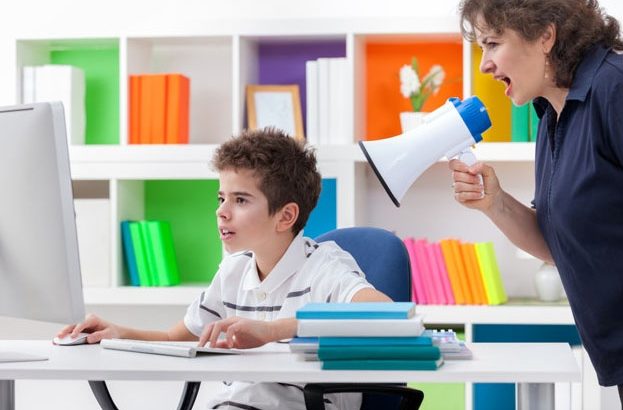
Los educadores aseguran que una frase muy reiterada de los estudiantes es “a mis padres sólo les interesa si estudio, lo demás no les importa nada”. “Cuando focalizas todo en los estudios, cuando lo primero que le preguntas a tu hijo en la puerta de la escuela es qué deberes tienes o qué nota te han puesto en vez de cómo te ha ido el día, o con quién te has relacionado, transmites que te interesa el aprendizaje, no la persona”, dice Comellas. Y agrega que lo mismo ocurre cuando al hijo universitario se le libera de tareas domésticas porque “su trabajo es estudiar”. “Esa persona tiene que vivir, ha de saber organizarse, tener habilidades domésticas y saber relacionarse, y de eso a veces no nos ocupamos, ni nos interesamos por su vida emocional y relacional”, enfatiza la psicóloga.

QUERER GENIOS

Sobreestimular a menudo provoca el efecto contrario

Los maestros explican que una práctica muy habitual en las familias es la de sobreestimular a los niños. “Todos quieren un hijo genio y les llenan la cuna de artilugios, abusan de juegos didácticos, se afanan porque aprendan muchas cosas y cuanto antes mejor, y esa sobreestimulación no sólo no influye en una evolución cognitiva más rápida, sino que a menudo tiene efectos contraproducentes en forma de problemas de atención o de falta de concentración”, explica Joan Domènech, maestro del colegio Fructuós Gelabert de Barcelona.

Esa impaciencia respecto al aprendizaje provoca, según los psicólogos, que los padres se desesperen ante las primeras dificultades en los estudios o vivan como un fracaso los primeros malos resultados, sin tener en cuenta que la educación es un proceso a largo plazo y que lo que los niños necesitan para aprender es paciencia y ánimo. “Los padres no deberían considerar los malos resultados como un fracaso porque ello reduce la autoestima de los hijos e incapacita cada vez más a unos y otros”, advierten.

PREMIAR LAS NOTAS

El estímulo material desvirtúa y puede aumentar la frustración

Las notas ni se han de premiar ni castigar; se han de elogiar y aplaudir, o analizar si es necesario dedicar más tiempo a estudiar, según los expertos. “El mejor estímulo es descubrir cosas nuevas y desarrollar tus intereses, si hace falta un estímulo material, es que algo no funciona”, apunta Domènech.

Montenegro advierte que los premios pueden causar una doble frustración, porque con frecuencia se ofrecen por notas poco realistas y si el chaval no triunfa a pesar de la recompensa prometida su sensación de fracaso y su malestar es doble: además de no alcanzar su meta escolar, se queda sin regalo.

DISFRAZAR LA VAGANCIA

Buscar trastornos detrás de los fracasos retrasa la madurez

Otra conducta recurrente que observan los educadores es la tendencia de los padres a buscar trastornos neurológicos detrás de los fracasos escolares de sus hijos. “Hay muchos niños que son incapaces de esforzarse en hacer los deberes o en estudiar porque son vagos, y eso es inmadurez, no un trastorno mental, y a veces se intenta disfrazar esa vagancia como intolerancia a la frustración o intolerancia al estrés, cuando lo que tienen es falta de autonomía”, comenta Montenegro. Comellas subraya que esta actitud tiene que ver con la actitud hiperprotectora de muchos padres que buscan la etiqueta del trastorno para el bajo rendimiento de sus hijos “porque en el momento en que se disfraza algo como trastorno se desculpabiliza a todo el mundo”.

EJERCER DE DETECTIVES

El control absoluto de sus tareas suscita desconfianza

Hay padres que rastrean los deberes, trabajos, las fecha de exámenes o los comentarios de sus hijos en clase a través de la agenda escolar, la web del centro, las redes sociales o implicando en sus indagaciones a los padres de otros niños de la clase, con quienes están en permanente contacto por WhatsApp. “Esa conducta provoca un boquete de desconfianza y no resuelve nada”, advierte Montenegro. En vez de ejercer este control absoluto aconseja realizar un acompañamiento lejano, revisar conjuntamente con el chaval la agenda de tareas pero dejándole que sea autónomo para realizarlas. Y para los padres que optan por preguntar la lección para saber si el niño ha preparado un examen, los expertos recomiendan ponerle tres o cuatro preguntas por escrito, porque normalmente no hay exámenes orales y de nada sirve que el niño se sepa la lección hablando si luego se expresa mal por escrito o comete muchas faltas de ortografía.

USAR EL ESTUDIO COMO PEAJE

Las tareas escolares acaban entendiéndose como un castigo

“Castigado a hacer los deberes” o “hasta que no acabes de leer no hay dibujos” son frases que utilizan algunos padres para incitar a sus hijos a hacer las tareas escolares. Pero los expertos aseguran que el tiempo de estudio debería ser siempre un tiempo de tranquilidad y sosiego, no de regañinas. El objetivo, explican, debe ser ayudar a los niños a descubrir el placer de la lectura o del aprendizaje, y eso no se consigue si se plantean las tareas escolares como un castigo o como un peaje necesario para poder disfrutar de actividades placenteras como salir con los amigos, ver la televisión o jugar con la consola.

Y a medida que crecen, han de entender la relación entre esfuerzo, dedicación y resultados, “y asumir que si han de estudiar más porque han tenido malas notas se trata de una inversión, no de un castigo”, indica Comellas.

PROYECTARSE EN LOS HIJOS

Las expectativas no siempre se adecúan a las capacidades

Los psicólogos consideran que en muchas familias pesan más las expectativas que tienen los padres sobre los estudios de los hijos que las preferencias o capacidades de estos, y muchos chavales son orientados a estudiar lo que quieren o les gusta a sus progenitores. “En este país confundimos inteligencia con título, continuamos desprestigiando la formación profesional y no valoramos la creatividad como un medio para vivir”, reflexiona Comelles.

NO RESPETAR LA LÍNEA ESCOLAR

El modelo de los padres no garantiza el éxito hoy

Muchos padres piensan que el modelo y los métodos educativos que les sirvieron a ellos les servirán a sus hijos, pero la escuela ha cambiado mucho y los niños también. “Lo que a ti te gustaba del colegio, lo que aprendías entonces o cómo lo aprendías no tiene por qué ser un modelo de éxito para tus hijos”, advierte Domènech. Y por eso considera un error que los padres traten de enseñar a los hijos a leer o a calcular por su cuenta o les pongan actividades de refuerzo en casa, sin considerar que quizá están interfiriendo en el ritmo o el método pedagógico que sigue la escuela. “Uno ha de plantearse a qué escuela lleva a su hijo, asegurarse de que comparte las mismas ideas, y luego acompañar al niño en el aprendizaje pero con respeto al proceso que siguen en la escuela, y no dar al niño mensajes diferentes”, reflexiona. Los educadores son especialmente críticos con los padres que muestran constantemente su desacuerdo con los profesores en presencia de los niños, porque estos aprovechan esa situación para manipular a unos y a otros.

Fuente: http://www.lavanguardia.com/vida/20160913/41268207060/conductas-padres-entorpecen-educacion-hijos.html

Comparte este contenido:

Alfabetización alcanza 81 por ciento de angoleños mayores de 15 años

África/Angola/17 Septiembre 2016/Fuente: Prensa Latina
La tasa de alfabetización en Angola alcanzará el 81 por ciento entre la población mayor de 15 años a finales de 2016, anunció el ministro de Educación Pinda Simão, citado  por medios periodísticos.

Teniendo como base datos del Censo de Población y Vivienda de 2014 y la cifra de personas que saben leer y escribir desde el 2015, Simão cree que el país puede cumplir con el Plan Nacional de Desarrollo de la Educación 2015/2025, respecto a la Agenda 2030, cuyo objetivo es erradicar el analfabetismo.

Reveló que entre 2014 y 2015 aproximadamente un millón 470 mil angoleños fueron instruidos, por los se cuenta con más de 10 millones 400 mil ciudadanos que saben leer y escribir.

Lo anterior correspondería ahora a una tasa del 76 por ciento de alfabetización.

Según estadísticas, otras 560 mil personas están siendo alfabetizadas en 2016, por lo que el canon debería subir hasta 81 por ciento a finales del ejercicio en curso.

Para Pinda, la alfabetización se concibió como un instrumento para potenciar a los individuos, a las familias y a la sociedad.

Refirió que hace 40 años el primer presidente de Angola, Agostinho Neto, en la fábrica de Textang II hizo una clara demostración de la preocupación gubernamental por luchar contra el analfabetismo y elevar el nivel general de educación de la población.

Desde entonces, los esfuerzos entre el Gobierno, la sociedad civil y el sector privado no cesan y pese a limitaciones causadas por conflictos armados y otros de orden económico y financiero, resultó posible reducir la tasa de analfabetismo de 85 por ciento en 1975 a menos del 34 en 2014, según el Censo de ese año.

‘En reconocimiento de este esfuerzo, Angola ha recibido varios premios y menciones honrosas de la Unesco y otras organizaciones internacionales, un factor que debe llenar de orgullo todos los angoleños’, afirmó el ministro.

Cerca del 20 por ciento de los hombres y 40 de las mujeres mayores de 15 años de edad aún no saben leer y escribir, lo que contribuye a empeorar los principales problemas a los que se enfrenta la sociedad angoleña: la pobreza y el comportamiento deplorable.

Recientemente el académico cubano Alfredo Díaz, asesor consultor del Ministerio angoleño de Educación, confirmó que predomina en la alfabetización nacional el método de enseñanza Yo, sí puedo, programa educacional de la isla caribeña.

Tal método se aplica desde el 2012 hasta la fecha, bajo coordinación de 42 asesores cubanos.

El plan se aplica en las 18 provincias del país y en solo 13 semanas la persona mayor de 15 años y hasta 65, aprende a leer y a escribir.

Díaz adelantó que este procedimiento debe terminar en el 2025, de manera que por calendario se alfabeticen aproximadamente de medio millón a un millón de iletrados.

El Gobierno angoleño quiere que el 85 por ciento de la población angolana se registre alfabetizada para el 2025, subrayó el pedagogo cubano, pero en el 2017 desea tener resultados alentadores y competitivos dentro de los Objetivos de Desarrollo del Milenio de las Naciones Unidas.

Fuente: http://www.prensa-latina.cu/index.php?o=rn&id=26090&SEO=alfabetizacion-alcanza-81-por-ciento-de-angolenos-mayores-de-15-anos
Comparte este contenido:

Francia: Anti-elitism algorithm to decide which secondary school Paris pupils attend

Europa/Francia/16 de Septiembre de 2016/Autor: Henry Samuel/Fuente: The Telegraph

RESUMEN: Un algoritmo decide qué escuela secundaria asisten los niños parisinos, en parte, basando su cálculo en su posición social en un intento de abordar el elitismo. Los críticos advierten la posibilidad que podría llevar a multitudes de parisinos a enviar a sus hijos a escuelas privadas. Hasta ahora, la zona de influencia de un alumno francés es el único criterio para decidir a qué escuela secundaria asistirá. Pero a partir de 2017, esta decisión se calculará a través de un algoritmo que también tendrá en cuenta si un niño es de una familia de bajos ingresos. Noticias del sistema informático se produjo días después de que Thomas Piketty, Economista francés estrella y autor del éxito de ventas de capital internacional en el siglo XXI, advirtió que «los alumnos desfavorecidos» están siendo excluidos de los establecimientos «socialmente SELECT» en Francia.

An algorithm is to decide which state secondary school Parisian children attend, in part basing its calculation on their social standing an attempt to tackle elitism.

Critics warn the chance could prompt droves of Parisians to send their children to private schools.

Until now, a French pupil’s catchment area is the sole criterion for deciding which secondary school he or she attends.

But from 2017, this decision will be calculated via an algorithm that will also factor in whether a child is from a low-income family.

News of the computerised system came days after Thomas Piketty star French economist and author of international bestseller Capital in the Twenty First Century warned that «disadvantaged pupils» are being shut out of «socially select» establishments in France.

«The level of social segregation seen in secondary schools is reaching unacceptable heights, notably in Paris,» he wrote in a blog post in Le Monde. The most upscale schools only had 0.3 per cent of its pupils from underprivileged backgrounds compared to 65 per cent on the other end of the scale.

The decision to use the algorithm by Paris’ education chief came just days after the French education minister, Najaf Vallaud-Belkacem, appeared to pour cold water on the idea.

«I think we should break away from the French myth of a global, uniform measurement, a political-technocratic revolution,» he told Le Monde. «I don’t think that an algorithm should be seen as a magic wand» to improve the social mix, he insisted.

Her words followed controversy over a similar computerised system that has been used since 2008 to decide which lycées French high school pupils should attend based on similar criteria.

While defenders of the system insist it has cut «the social segregation index» by 30 per cent, controversy struck in August when it transpired that 83 per cent of this year’s intake to a Paris lycée came from low-income pupils following an apparent glitch in the algorithm.

The lycée algorithm is based on pupils’ preferences, their marks and whether they receive grants for low income families and can send them to the other side of a large catchment area.

François Weil, Paris’ chief education officer, said the calculation would be different in secondary schools as younger children cannot be expected to travel too far from home.

Peep-Paris, a parents’ union, slammed the move, saying: «They want to correct the city’s (educational) policies by displacing children. But they shouldn’t be carrying the can. What I expect from the authorities is to make all state secondary schools attractive so that people want to go to them.»

Mr Piketty warned that the algorithm would only improve the social mix in Paris if it was also applied to Paris’ private secondary schools, which teach a third of the French capital’s pupils. Parents’ howls of protest were totally unjustified, he added, as such establishments all receive huge state subsidies.

Failure to do include them would see an even higher percentage of families send their children to private schools, he warned.

It was unclear on Wednesday whether private schools would be included.

Mr Weil’s office said: «(Private schools) will be included in different ways. We can agree on aims for social make-up, recruitment strategies.»

Le Monde said that suggested that the algorithm would likely not apply to them.

Fuente: http://www.telegraph.co.uk/news/2016/09/14/anti-elitism-algorithm-to-decide-which-secondary-school-paris-pu/

Comparte este contenido:

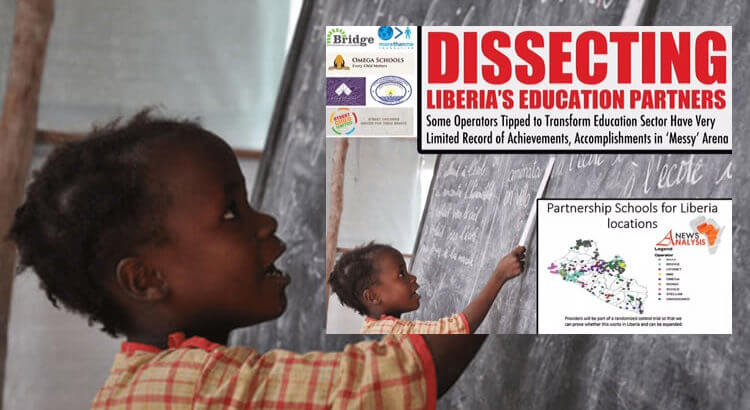
Liberia: Some Operators Tipped to Transform Sector Have Limited Achievements in ‘Messy’ Arena

África/Liberia/16 de Septiembre de 2016/Autor: Rodney D. Sieh/Fuente: Front Page Africa

RESUMEN: Liberia esta en medio de lo que algunos desearían, en una importante transformación de la educación, entre el  éxito o el fracaso, entre nadar o hundirse en el dilema de las carreras  contra el tiempo para rescatar lo que muchos, incluyendo a la presidenta Ellen Johnson-Sirleaf, han concluido como un escenario un tanto desordenado, humedeciendo las esperanzas de decenas de niños pequeños que se encuentran en las esquinas de las calles al lado del tráfico durante el horario escolar. El gobierno a través del Ministerio de Educación recientemente tomó la controvertida decisión de externalizar el sector de los operadores privados en lo que el Ministro George Werner anuncio con bombo y platillo como una oportunidad para que los niños aprendan. «Todos los niños merecen una gran educación – una que le permita seguir sus sueños y lograr su potencial. Y sin embargo, en Liberia estamos fallandole demasiado a nuestros hijos. Nuestros profesores, nuestras escuelas y nuestro sistema todos se enfrentan a desafíos profundos en incorporarlos. Por desgracia, es en las comunidades más pobres, donde los retos son mayores.»

Liberia is in the midst of what some hope would be a major education transformation, a make or break, sink or swim dilemma racing against time to rescue what many including President Ellen Johnson-Sirleaf have concluded is a somewhat messy arena, dampening the hopes of scores of young children found on the street corners and traffic sideways during school hours.

The government through the ministry of Education recently took the controversial decision to outsource the sector to private operators in what Minister George Werner trumpeted as an opportunity for children to learn.

“Every child deserves a great education – one that allows her to follow her dreams and achieve her potential. And yet in Liberia we are failing too many of our children. Our teachers, our schools and our system all face deep and embedded challenges. Unfortunately, it is in the poorest communities where those challenges are greatest.”

Werner’s gamble hopes to improve on the disturbing statistics that out of 1.5 million children enrolled in primary school, some 42 percent of primary age children remain out of school.

While Werner and the government have labeled the dilemma “an injustice that needs to be addressed, many remain unsure that the outsourcing of the sector to private operators is the best approach to buck the trend holding back Liberia’s future generation from derail.

At a recent Cabinet meeting, the Ellen Johnson-Sirleaf led government was briefed on the status of the Partnership Schools for Liberia (PSL) undertaken by the Ministry of Education in concert with private operators targeting some 185 schools in 13 counties across the country.

Much of the attention was initially pointed at Bridge International Academies, the sole partner announced by the MoE when the outsourcing plan was initially announced. The school trumpets itself as the most polarizing chain of private schools in Africa.

The partnership includes 185 schools, 92 randomly chosen as PSL schools and 93 forming a comparison group. The partnership would enable the following eight private operators to run, manage and operate selected schools.

The MoE has broken down the distribution as follows: BRAC – 20; Bridge International Academies– 23; Liberian Youth Network, LIYONET – 14; More than Me – 6; Omega – 19; Rising – 5; Stella Maris – 4 schools; Street Child – 12 schools.

Over the past few weeks, FrontPageAfrica has been dissecting the partners and made some rather peculiar discovery, that a lot the operators have very limited exposure to Liberia terrain.

Bridge International Academies

SCHOOLS ALLOCATED: 23

THEIR PITCH: BIA trumpets itself as the world’s largest education innovation company serving the 700 million families who live on less than $2 USD per day. “We strive to provide the highest quality education product to the more than 100,000 students who attend Bridge’s more than 400 nursery and primary schools across emerging markets in Africa and (soon to open) in Asia.”

BIA pitches itself as a data-driven and technology-enabled using smartphones, tablets, and “closed loop” Learning Lab to monitor teacher and student performance in real time and says it constantly reviews and revises to ensure that it offers a world class education that will prepare students for the 21st century. Outside of the classroom, BIA works with governments and civil society organizations to create customized teacher training modules, English Language Learning curricula, and “pop up” schools for refugees and other vulnerable populations.

THE MISSING LINK: BIA took a hit recently when the Ugandan government announced that it would shut down all schools operated by Bridge. Janet Museveni, Uganda’s minister of education and sports, announced last month that the government will close the 63 for-profit nursery and primary schools run by Bridge International in the country after deciding they fell short of standards on education, hygiene and sanitation.

In a statement to parliament, Museveni said that in Uganda the material used by Bridge “could not promote teacher-pupil interaction” and that the poor hygiene standards “put the life and safety of school children in danger”.

Bridge International has been funded by the World Bank, the UK’s Department for International Development, Bill Gates and others.

Like Liberia and Kenya, Uganda had turned to private providers to fill the gaps in infrastructure, teaching and other resources which have opened up under its universal primary and secondary education programmes.

In May 2015, over 100 organizations signed a statement critical of the privatization of education in Kenya and Uganda, which slammed Bridge International specifically for delivering poor quality education for too high a fee.

In its defense, Bridge International said it was sincerely concerned over Museveni’s statement to the Ugandan parliament, which it said threatened to force 12,000 children out of their schools and 800 Ugandans out of work.

“We are waiting to receive the report [into Bridge schools in Uganda] to review the ministry’s concerns,” said Michael Kaddu, head of corporate and public affairs for Bridge International Academies in Uganda.

“We have been working closely with the ministry to put the needs of the children first and come to a speedy resolution of any issues made known to us.

EXPECTATIONS: Despite the controversy, Bridge says recent results point to gains by its pupils in standard deviation on core reading skills, standard deviation on Math compared to their peers in neighboring schools, based on USAID-designed exams administered by an independent monitoring and Evaluation Company – this translated into over 250 additional days of learning.

LIYONET

SCHOOLS ALLOCATED: 14

THEIR PITCH: The Liberian Youth Network (LIYONET), is a registered non-governmental, non-political and non-for-profit organization committed to promoting children and youth participation in sustainable development and good leadership leading to bringing up a generation of children and young people who are responsible citizens of Liberia, through provision of socio-economic empowerment, integration, access to basic services (education and information), self-reliance, gender mainstreaming and civil and constitutional rights of communities-residents and vulnerable persons.

THE MISSING LINK: Until the partnership announcement very little information was available regarding the network. FrontPageAfrica has been unable to trace any previous engagement in education. The network has no website or record or trail of its work to education or working with kids.

EXPECTATIONS: LIYONNET has been allocated schools in Bong and Sinoe counties respectively, notably in the Fuamah, Panta-Kpaai and Zota Districts in Bong and the Tarjuwon District in Sinoe. With very little experience in education, the jury is out on how much reach and impact the organization will have on transforming education for the rural and mostly-poor constituents.

BANGLADESH RURAL ADVANCEMENT COMMITTEE (BRAC LIBERIA)

SCHOOLS ALLOCATED: 20

THEIR PITCH: BRAC launched operations in Liberia in 2008 and has been working for a better future for Liberians with programmes in microfinance, agriculture, poultry and livestock, health, and Empowerment and Livelihoods of Adolescents; programmes that benefit more than half a million people.

THE MISSING LINK: While much of the attention was focused on Bridge, many were puzzled as to how the organization got its foot in the door of Liberia’s education outsource – particularly when it has not demonstrated experience in the area in Liberia.

Ironically, the organization which has been in Liberia since 2008 did not prioritize education as it had in next door Sierra Leone, Uganda, South Sudan, Philippines, Haiti and Afghanistan.

More importantly, an internal BRAC report on its schools in Bangladesh found that students found much of the course work difficult, in part because the BRAC methodology which equates learning with memorization. Moreover, according to the report, many of the children found the materials completely new. It is unclear how BRAC intends to adapt its model to suit Liberia’s pressing needs.

The report concluded that the strict discipline and rigid lines of authority found throughout BRAC and its programs — can be discomfiting to western sensibilities.

“This characteristic of BRAC’s program functions as a two-edged sword. On the positive side, BRAC has succeeded in setting basic standards for its schools, including the number, age, and sex of students; the size, shape, and decorations of classrooms; the teacher and students arriving and leaving at the right time; and the holding of regular meetings of the parent and school committees.”

EXPECTATIONS: The organization trumpets its primary schools’ operations in Bangladesh where it has been non-formal education to disadvantaged and out-of-school children, particularly girls. It will be interesting to see how it performs in Liberia where it has made no inroads in education.

Where BRAC could come in handy is if it can put some of the experiences trumpeted from its work in Bangladesh where it has prepared students to sit for the government Shomaponi Examination, the equivalent of the WAEC. BRAC primary schools are free, and include textbooks, notebooks, and other educational materials.

There are currently over 22,000 BRAC primary schools operating throughout the world. Liberia expects a lot and BRAC must prove it has earned its stripes. Under the partnership, BRAC has been allocated schools in Lofa and Nimba counties, in Foya, Kolahun, Zorzor, Voinjama, Saclapea and Gbehlay Geh.

OMEGA (Ghana)

SCHOOLS ALLOCATED: 19

THEIR PITCH: Founded by Ken & Lisa Donkoh, and James Tooley in 2008, and backed by Pearson’s Affordable Learning Fund, Omega Schools is a social enterprise on a mission to deliver quality education at the lowest cost on a grand scale.

The model has proven to be extremely attractive to parents, enabling its schools to be full within 10 days of opening. Currently the chain has 38 schools educating over 20,000 students and seeking to double that number in a year.

 In Ghana, Omega Schools has responded to need for low-income schools with an innovative Pay-As-You-Learn model – a chain of low cost private schools with specialized curriculum, assessment, technology and management modules that are benefiting the poor and empowering aspirations of low income families and their communities.

THE MISSING LINK: While Omega has been given high marks for its work in Ghana, it is entering unfamiliar territory in a rural Liberia setting lacking stable electricity and in some cases, very limited internet facilities.

But more importantly, a working Paper by author Curtis Riep suggests that the Omega Chain of Private Schools in Ghana which claims to bring education to the poorest is instead delivering a high-burden cost for access.

Riep finds that Omega Schools’ impact on access is «negligible,» quality of education suffers as expenditures are driven down, and the cost of these schools actually represents a high percentage of household income.

He concludes that this model of privatization represents a «for-profiteering» endeavor, exploiting the poorest members of Ghanaian society and their basic right to education.

EXPECTATIONS: Omega has been assigned schools in Bong, Margibi, Montserrado and Nimba counties respectively. Omega is expected to improve performances in Salala, Suacoco, Zota, Gibi, Marshall, Greater Monrovia, Buu-Yao, Gbehlay-Geh and Saclepea.

 If Omega can do a quarter of what it has on paper in Ghana, the areas benefiting from its program could see vast improvements. Located in Kasoa, on the outskirts of Accra has been hailed for its all-inclusive and no-hidden-fee model.

MORE THAN ME ACADEMY (US-Liberia)

SCHOOLS ALLOCATED: 6

THEIR PITCH: The academy uses education as a catalyst for transformative social change for every girl in Liberia.

MISSING LINK: Bolstered by heavy international media attention at the height of Ebola, the academy was asked by the MoE to replicate its model and add capacity to the ministry to meet their priorities. While the academy says it remains committed to maintaining a center of excellence by scaling its successes into pilot government schools across the country, results so far has not been convincing.

The Academy was in 2014 dogged by allegations of rape when its recruiter was accused of having sexual relations with ten students, ages 12 to 16.

In court documents, the students claimed that the recruiter took advantage of the school’s free education program to use them as sex slaves. The stain from that episode continues to raise questions over MTN’s ability to transcend the larger realities of Liberia’s education dilemma.

EXPECTATIONS: MTM has been allocated six schools in Bomi, Montserrado and Gbarpolu with emphasis in the Klay, West Bank, Senjeh, Bopolu and Dewoin districts. Many are unsure whether MTN with only one school to its credit in less than five years has enough pedigree to now be ranked amongst the top-carrying partners selected for the partnership.

RISING ACADEMY (Sierra Leone)

SCHOOLS ALLOCATED: 5

THEIR PITCH: The academy created by a group of Canadian and British entrepreneurs to address Sierra Leone’s education dilemma, uses simple pillars: teach strong values, select and train teachers carefully, make the student the protagonist of the classroom, develop well-crafted and engaging class plans and create a feedback culture.

In Sierra Leone, the school charges a flat fee, with no extra charges, of 25,000 Leones (US$3.5) per week, with a possibility of a scholarship for students that cannot afford this rate.

“The wage bill is kept low by paying teachers the average salary of state schools—but with the benefit of guaranteeing on-time payment which is already a huge competitive advantage,” according to Francisco Guarisse, who has spent some time working with Rising.

Rising has grown from 1 school and 80 students to 8 schools and more than 1000 students. The academy made its mark at the height of the deadly Ebola virus outbreak by continuing to provide education despite schools being closed during the epidemic as teachers provided daily Ebola prevention and literacy classes.

The academy says it remains committed to rigorous, transparent, independent evaluation. What sets Rising apart is its partnership with Oxford University which monitors its performance. The academy says its students develop excellent literacy, numeracy and spoken English, as the foundation for success in further study, work and day-to-day life.

MISSING LINK: According to a baseline report dubbed a longitudinal Study of learning, progression, and personal growth in Sierra Leone, the Students in the Rising Academy Network achieved in mathematics an average scale Score of 475 Compared to those in other private schools (matched. In age and circumstance) who achieve an average score of 458 And those in government funded schools who achieve an average score of 450.

The report noted that only 5% Of Rising Academy Network Students achieved the benchmark at the start of the study (before Teaching began). 62% performed very poorly.

The scale of the challenge to improve mathematics outcomes is clear and the study will monitor the migration of students out of low performance bands as a measure of equity in performance standards. Students in the Rising Academy Network Achieve an average scale score of 193 compared to those in other private schools (matched

EXPECTATIONS: Rising has been allocated schools in Bomi and Montserrado Counties and will be expected to mirror its successes in Sierra Leone to parts of Liberia where basic education remains a challenge in Suehn Mecca, West Bank, Dewoin.

Around 1,300 schools were destroyed during the Civil War that lasted from 1991 to 2002. The academy has thrived under similar conditions like Liberia, in Sierra Leone where two thirds of children were out of school due to the war, it has made inroads.

STREET CHILD

SCHOOLS ALLOCATED: 12

THEIR PITCH: The UK registered charity helps to create opportunities through education for some of the most vulnerable children in the world. It expanded its reach to Liberia in 2008 looking to help out-of-school children, many of whom are living full-time on the streets, and offer them the chance to improve their lives by going to school and reuniting them with their families.

The charity says it works with communities to construct basic schools and promote the importance of education and identify members of the community to undertake distance teacher training.

The project has grown over the past 3and a half years to support almost 400 teachers and has a presence in a total of 127 communities across Sierra Leone. As a result, Street Child has now created first ever access to education for over 17,000 children in rural communities.

MISSING LINK: While the charity is doing some good for needy kids in Liberia, it’s education model remains suspect in the absence of a track record of deliverables toward education in Liberia.  

EXPECTATIONS: The charity has been allocated schools in Grand Cape Mount, Margibi and Montserado Counties with particular emphasis in Todee, Tewor, Tallah Tomb, Gibi, Marshall and Garwula districts.

Beyond the charitable aspects of looking out for the poor and needy, SC will be required to show Liberians that it deserves the twelve schools under its watch and is capable of bringing out the best of the kids and improving scores.

STELLA MARIS

SCHOOLS ALLOCATED: 4

THEIR PITCH: Stella Maris Polytechnic (SMP) is one of the successful institutions under the highly-rated Catholic schools’ system. Founded in 1988, the school is owned and operated by the Roman Catholic Archdiocese of Monrovia with approximately 2,000 students.

The school is recognized by Liberia’s National Commission on Higher Education as an approved baccalaureate granting school of higher learning, and is a member of the Association of African Universities.

The school traces its history back to the Arthur Barclay Vocational Institute that had its roots in a donation of land to the church in 1972. Eventually the planned school was renamed as the Arthur Barclay Technical Institute and first held classes in February 1979.

Catholic leaders then considered starting a Catholic college beginning in 1985, which eventually led to the establishment of Don Bosco Polytechnic.  That school included Arthur Barclay Technical Institute which then became the Arthur Barclay Technical Institute.

Stella Maris Polytechnic elementary school supports those who are in need in the wider community in Liberia.

MISSING LINK: Catholic schools in Liberia have a strong track record of discipline and academic performance but impact has been slowed due to funding issues in recent years. Nevertheless, the schools under the catholic umbrella remain a vibrant contributor to Liberia’s post-war resurgence.

EXPECTATION: The catholic-backed institution has been allocated schools in Dorbor and Trehn districts in Grand Kru and Karleway 2 and Sodoken districts in Maryland. Many expect that the model that has worked in the past will continue here despite insurmountable odds.

THE VERDICT

Werner may have been right in his conclusion that “Change is not easy” as he heralded his argument that the public system alone cannot address Liberia’s pressing education challenges singlehandedly.

According to Werner: “We have some great public schools in Liberia but we have far too few of them. And we already have a diverse set of school operators from government and non-government sectors in our education system.

We must work together and draw on the best of both sectors if we are to achieve the results we want to see. While the government will always remain responsible for ensuring every child’s right to education, we need to work far more collaboratively with others to strengthen our public schooling sector. This must happen fast.  We cannot risk failing another generation of children.”

Despite Werner’s lament, the jury is still out on the effectiveness of low-cost private schools. Various reports and assessments have been mixed regarding the level of impact on disadvantaged and poverty-stricken environments.

The bottom line is many remain unsure that these low-cost private schools work for communities at the bottom of the economic barrel, particularly in some communities in Liberia lacking electricity, internet access and the high-tech model a lot of the schools are trumpeting as part of the successes in other countries.

In the coming months, evaluation and testimony from students and families experimenting Liberia’s venture into the model could prove to be a deciding factor as to how far this could go in helping Liberia fix its messy education system.

Expectations are high but accomplishing much in so little time could prove to be a daunting dilemma for the Liberian experiment

Some experts project two years as an ideal time to begin growing and seeing which operators can pull it off and work in the most difficult and remote districts.

It will be critical to see how the monitory and evaluation of this partnership would be enforced or regulated. If privatization is on the table, some observers say, it would have been key to look at successful school systems operating in Liberia to either participate in the PSL program or obtain license learned from their model to replicate in the flailing public school system.

Also, questions are being raised as to how the MoE came up with the criteria for allotting schools per organization with some of the partners accepted having no or limited track record of education work in Liberia being allotted larger number of schools compared to others who have.

What many agree on is that reforming Liberia’s education system is a work in progress and a process likely to take a long time as private operators — for-profit companies and charitable organizations — embark on a quest to take charge of 120 government primary schools, in a one-year pilot project that could make or break Liberia’s venture into a nationwide charter school system.

Fuente: http://www.frontpageafricaonline.com/index.php/politics/1983-dissecting-liberia-s-education-partners-some-operators-tipped-to-transform-education-sector-have-very-limited-record-of-achievements-accomplishments-in-messy-arena
Comparte este contenido:

SEP: la reforma en riesgo

Por: Hugo Aboites 
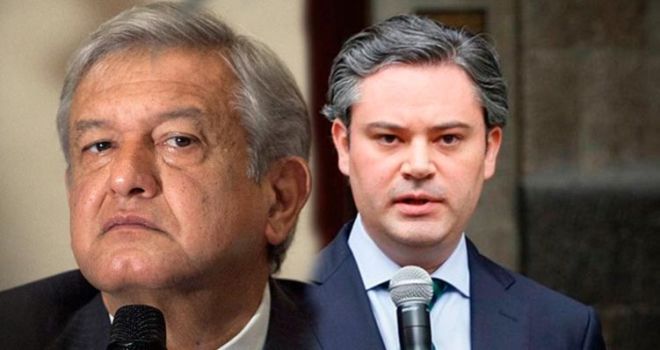
Apareció ya la primera y contundente admisión oficial respecto de la profunda fragilidad de la reforma de la educación en curso. Existe, dice el titular de la Secretaría de Educación Pública (SEP), el “riesgo de que la reforma no pueda continuar… un precandidato ha dicho… que la echaría abajo” ( La Jornada, 15/3/16, p. 3), en referencia evidente a López Obrador. Ya en junio de 2015 una evaluación tuvo que ser suspendida porque las protestas en torno a ella interferirían con las elecciones en varias entidades federativas, y el episodio echó abajo al entonces secretario Emilio Chuayffet. Pero ahora la situación es mucho más grave. Se trata de toda la reforma, como informa Aurelio Nuño, actual encargado del sector. Las cúpulas que dirigen al país saben muy bien que el problema no es que un precandidato haga una declaración contra la reforma. No, el punto es que gracias, precisamente, a que durante años los maestros han construido una resistencia organizada nacional inimaginable hasta hace apenas un decenio, si un candidato la reconoce genuinamente y retoma su demanda, puede ganar la Presidencia. Aun en términos sólo cuantitativos es posible estimar que un millón (de los más de un millón y medio) de maestros inconformes votaría en contra de una desprestigiada reforma y su evaluación. Habría que sumar luego a sus familias, amigos, padres de familia, organizaciones solidarias…, que pueden multiplicar esa cantidad. No es impensable, entonces, que haya condiciones de echar abajo la reforma, como anticipa la SEP, o más bien, como piensan muchos maestros, que exista la posibilidad de construir con la SEP una alternativa de reforma de la educación (y de evaluación) junto con el magisterio, comunidades, barrios y sectores sociales.

Se está construyendo así, frente a nuestros ojos, una situación inédita en la educación. Por un lado, la fragilidad de la clase política en este tema, pues después de haber aceptado el Pacto por México, y aprobado la reforma a la Constitución y las leyes secundarias en la educación, no puede desembarazarse de esa marca de origen, y le está dejando el campo libre a Morena. Por otro lado, está también la posición de debilidad en que se han colocado empresarios y gobierno al adoptar la línea dura como propuesta fundamental de operación de la reforma. La política de la militarización y los despidos han generado entre los maestros un profundo enojo y, además, una muy justificada desconfianza en una cúpula sindical del SNTE, que al aceptar la reforma se comprometió implícitamente a no defender a los profesores. La militarización, despidos, golpes, descalificaciones, y el intento de soborno mediante premios han hecho que muchos maestros vean con claridad que gobierno e iniciativa privada, y prácticamente todos los partidos, no están ni remotamente de su lado.

Por otro lado, está la fragilidad intrínseca de la reforma, que no ha logrado ni logrará colocarse en el escenario del país como una iniciativa de transformación de la educación, sino que permanecerá como la coercitiva y conflictiva aplicación de evaluaciones estandarizadas. Y eso persigue, castiga, silencia, pero no convoca. Y una reforma de la educación que no entusiasma participativamente a los maestros, estudiantes y comunidades queda entonces como un proceso burocrático centralizado y vertical y, por eso, sumamente frágil. Carente de raigambre social e institucional, al grado que la sola posibilidad de un relevo gubernamental distinto al esperado se considera un enorme peligro.

Ante este escenario se esperaría que los conductores de la reforma (gobierno-empresarios) decidieran tomar algunas medidas que modificaran el talante agresivo y de confrontación de la reforma. Porque finalmente, para ellos, una cosa es aceptar que la reforma cueste el despido a decenas de miles de profesores, pero tal vez se considere inadmisible que le cueste la Presidencia al partido político en el poder. Salvo, claro está, que la propia imagen que proyectan en los medios del éxito de la reforma y de su usual indiferencia impidan al sector dominante, el gran empresariado, ver con más cuidado las implicaciones políticas.

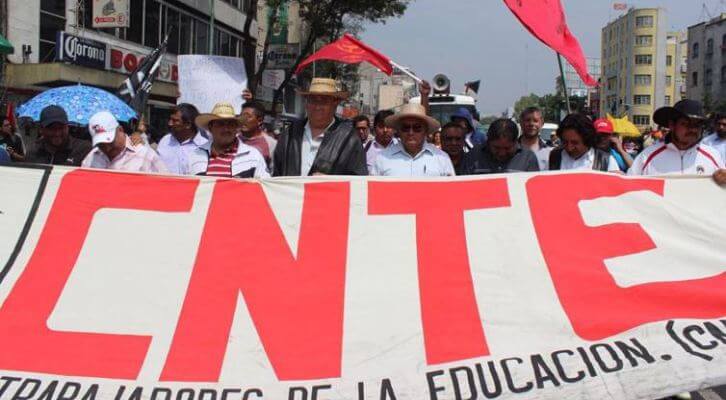
Desde otra perspectiva, el escenario que los maestros han contribuido a crear hace que cobren enorme importancia algunas de las actuales y futuras iniciativas magisteriales. El mantenerlas y fortalecerlas es la única garantía de que la lógica electoral no cobre factura y venga a dominar o subsumir luego al movimiento magisterial. Hablamos de las propuestas alternativas de evaluación y de educación que se ensayan en muy diversas escalas en todo el país; la iniciativa de un Diálogo Nacional por la Educación que está en curso, las propuestas de crear un movimiento amplio que incorpore a todos los maestros sean o no de la CNTE, coordinado con otras organizaciones. Si la coincidencia de elecciones presidenciales-movimientos sociales es, por sí sola, capaz de poner en riesgo proyectos como la de creación de una educación empresarializada, otras iniciativas igual de profundamente lesivas a la nación y a los mexicanos también podrían ser declaradas en riesgo por sus propios autores.

En Veracruz y Morelos está en juego el derecho a la educación de miles de jóvenes en una universidad pública y autónoma.

Fuente: http://www.jornada.unam.mx/2016/03/19/opinion/016a1pol

Fotografía: politico

Comparte este contenido:

Vietnam education ministry’s plan for multiple-choice math test sparks debate

Asia/Vietnan/16 de Septiembre de 2016/Fuente: Tuoitrenews

RESUMEN: Un plan para reemplazar el papel de matemáticas de la escuela nacional actual por un único examen de opción múltiple ha traído opiniones mezcladas entre eruditos locales y el público. El jueves pasado, el Ministerio de Educación y Formación de Vietnam (MoET) anunció el primer borrador de sus ajustes propuestos para el  examen nacional de la escuela secundaria del país, a entrar en vigor el próximo año. El examen fue introducido por primera vez en 2015 después de los exámenes de graduación de la escuela y de acceso a la universidad que antes estaban separados. Los ajustes propuestos por la MoET incluyen cambios sustanciales en los papeles de prueba del examen, incluyendo la sustitución de la tradicional prueba de matemáticas escrita por un documento de opción múltiple.

A plan to replace the current national high school math paper with a multiple-choice only exam has brought mixed opinions from both local scholars and the public.

Last Thursday, Vietnam’s Ministry of Education and Training (MoET) announced the first draft of its proposed adjustments to the country’s national high school exam, to take effect next year.

The exam was first introduced in 2015 after the previously separate high school graduation and university entrance exams were merged.

The proposed adjustments by the MoET include substantial changes to the exam’s test papers, including the replacement of the traditional written math test with a multiple-choice paper.

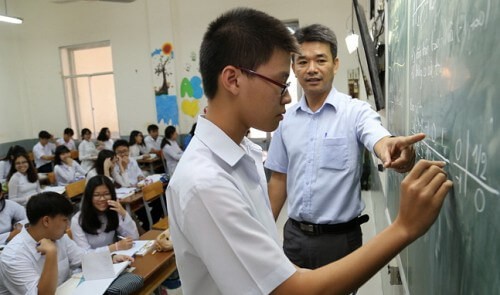
The current format features ten problems to which students are required to write their answers, including their step-by-step workings, before arriving at a solution.

The proposed new math paper will comprise of 50 problems, all in multiple-choice format, for which only one of four given answers is correct.

Questions for the test will be drawn at random by a computer from a standardized and updated question list, according to the ministry’s plan.

The proposal was quickly met with mixed reactions, some raising questions over the proposed formats effectiveness in testing students’ mathematical thinking, while others embraced the change as an effective countermeasure to cheating.

The Vietnam Mathematical Society (VMS) was one of the first and most vocal opponents of the plan, calling a press conference on Monday to publicly voice their objection to the proposed math paper.

According to VMS Secretary General-cum-Vice President, Prof. Dr. Phung Ho Hai, most members of the Society’s Executive Committee agreed that the change from a written math paper to multiple-choice question list was a hasty decision that would leave students and teachers unprepared.

The professor added that the effectiveness of multiple-choice math tests employed by the Vietnam National University Hanoi, upon which the new national math paper is based, had not been properly evaluated.

Therefore, Hai said, the new test format should not be applied until its academic credentials are proven.

“The Executive Committee of VMS strongly advises that the MoET retains the current written format for the math paper in the 2017 national high school exam,” Hai said.

The VMS further explained that employing multiple-choice questions in testing mathematical logic and thinking would completely eliminate students’ analytical and problem-solving skills by encouraging tips and tricks to skip to the final answer, rather than demonstrating a full understanding of the logical steps to arrive at a particular solution.

However, Assoc. Prof. Dr. Nguyen Hoi Nghia, deputy director at Vietnam National University-Ho Chi Minh City, offered a different view, saying that the benefits of multiple-choice tests have not been fully understood in Vietnam even by mathematicians and administrative officials.

According to professor Nghia, objective study is required before reaching any conclusion on whether or not to implement the format in Math papers.

Nghia said he expected the MoET to host national and international seminars on the issue and draw experience from the public and published international math experts.

“In my opinion, the current science of multiple-choice testing does not disqualify it from testing pure mathematical knowledge,” Nghia said.

“Of course a detailed route to its application should be outlined, so that students and teachers can be properly prepared for the transition.”

In addition to a change in the math paper, the MoET’s planned changes to the national high school exam include two new test papers; natural sciences and social sciences, each consisting of 60 multiple-choice questions.

The natural sciences paper tests students’ aptitude in physics, chemistry, and biology, while the social sciences paper is comprised of questions on history, geography, and ethics.

The two new papers will replace the current five separate tests on physics, chemistry, biology, history, and geography, a move the MoET said would reduce costs in organizing the national exam.

Fuente: http://tuoitrenews.vn/education/37041/education-ministrys-plan-for-multiplechoice-math-test-sparks-debate

Comparte este contenido:

México: Gobierno y CNTE acuerdan salida política. Titular de Sedesol ofreció no aplicar la reforma en Chiapas

América del Norte/México/16 de Septiembre de 2016/Fuente: ADN Sureste

Tras 122 días de conflicto, la Coordinadora Nacional de Trabajadores de la Educación (CNTE) en Chiapas busca una “salida política” para llegar a un acuerdo que permita terminar con el conflicto magisterial que incluye el paro de labores en las escuelas de educación básica de la entidad.

De acuerdo con líderes de la CNTE, ayer el secretario de Desarrollo Social, Enrique Miranda, supuestamente se reunió con representantes de la CNTE, el gobernador Manuel Velasco, el secretario de Educación estatal, Roberto Domínguez, y otros funcionarios estatales, para refrendar los 11 acuerdos a los que habían llegado la CNTE y el Gobierno federal cuando Miranda era subsecretario de Gobierno de la Secretaría de Gobernación. Asimismo, Roberto Domínguez, secretario de Educación en Chiapas, afirmó que uno de los acuerdos es que el próximo lunes los maestros disidentes inicien el ciclo escolar 2016-2017. “En el transcurso del día de hoy (ayer) se debe ya levantar el movimiento. Fue lo que platicamos. Están en fiestas patrias, días que no se trabajan”, dijo el titular de la SEP local en entrevista en medios. Según la Sección 7, entre los acuerdos también está la promesa de que la reforma educativa no se aplicará en Chiapas en lo que resta del sexenio de Enrique Peña Nieto. Esta propuesta generó expectativas entre el magisterio disidente, que convocó a una Asamblea Estatal ayer por la tarde, donde buscarían una salida política al conflicto para que regresen a clases en las tres mil 800 escuelas que seguían en paro. “La huelga nacional continúa, adoptando otra modalidad de lucha. Esta asamblea estatal determina darle una salida política a nuestro movimiento”, dice la convocatoria. Esta reunión entre líderes de la CNTE y maestros se da en el contexto del reforzamiento del plantón que los maestros mantienen en el centro de Tuxtla Gutiérrez y de que la noche del lunes detectaron movilización policiaca intensa, aparentemente para desalojarlos de la plaza que ocupan. Chiapas deja plantón de la Ciudadela La Sección 7 de la Coordinadora Nacional de Trabajadores de la Educación instruyó a sus agremiados a dejar el plantón en la Ciudadela de la Ciudad de México para regresar a Chiapas y así reforzar su campamento en la capital del estado. En los resolutivos de la Asamblea Estatal que dieron a conocer ayer por la madrugada, la Sección 7 indicó que el motivo de abandonar la capital del país es para continuar con la lucha política en Chiapas, con el objetivo de echar abajo la reforma educativa.

Fuente: http://adnsureste.info/gobierno-y-cnte-acuerdan-salida-politica-titular-de-sedesol-ofrecio-no-aplicar-la-reforma-en-chiapas-0930-h/

Comparte este contenido:
Page 832 of 2546
1 830 831 832 833 834 2.546