Page 53 of 206
1 51 52 53 54 55 206

Estados Unidos: Michigan test score gains worst in nation

Estados Unidos/Febrero de 2017/Fuente: The Detroits News

RESUMEN: Un nuevo análisis de los resultados de una prueba nacional de educación muestra a los estudiantes de Michigan, quienes continuamente han desmejorado las puntuaciones a nivel nacional desde 2003. El estudio, realizado por el profesor de la Universidad de Michigan Brian A. Jacob,  sobre las puntuaciones de la Evaluación Nacional del Progreso Educativo (NAEP) de los estudiantes de Michigan,  encontró que estaban en la parte inferior de la lista. Este análisis se produce en  menos de seis meses después de la publicación del informe Talent Crisis del Michigan por Education Trust-Midwest que encuentran que los estudiantes de Michigan están cayendo muy por detrás de sus compañeros de todo el país.

A new analysis of results of a national educational test shows Michigan students have continually made the least improvement nationally of scores since 2003.

The study, by University of Michigan professor Brian A. Jacob, of scores of the National Assessment of Education Progress (NAEP), also found that Michigan students were at the bottom of the list when it comes to proficiency growth in the four measures of the exam.

That analysis comes less than six months after the release of the Michigan’s Talent Crisis report by Education Trust-Midwest that found Michigan’s students are falling far behind their peers across the nation. The ETM report found that Michigan is in the bottom 10 states for key subjects and grades, including early literacy.

Both analyses looked at data from NAEP and rank states on their academic achievement and growth, said Sunil Joy, assistant director of policy and research at non-partisan Education Trust, in an email. “However, Jacobs’ analysis also incorporates factors like state size, population density, median household income and others.”

“Even when controlling for these factors, Michigan still fares poorly,” Joy added.

Michigan “makes the bottom 10 list on all four measures, and ranks dead last in terms of proficiency growth since 2003,” said Jacob, who prepared the study for the Brookings Institution.

According to the NAEP results, in 2015, the average math score of eighth-grade students in Michigan was 278 out of 500, compared to the national average score, 281. The average Michigan score has not significantly changed from 280 in 2013 and 277 in 2000.

In that year, the average reading scores of eight-grade students in Michigan matched the national average of 264 out of 500, while the science scores of eight-grade students in Michigan was slightly better at 154 out of 300 than the national average at 153.

Jacob’s analysis found that 29 percent of Michigan students performed at or about the “proficient level” on the NAEP exam in 2015. Those results were not significantly different from the 30 percent found in 2013 and the 28 percent recorded in 2000.

NAEP officials produce an annual Nation’s Report Card to inform the public about the academic achievement of elementary and secondary students in the United States. Sponsored by the U.S. Department of Education, NAEP assessments of reading, mathematics, science, writing, U.S. history, civics, geography, and other subjects have been conducted periodically since 1969.

The NAEP testing, which collects and reports academic achievement at the national level, began collecting some assessments at the state and district levels in 1969. The test’s results are a barometer of the condition and progress of education.

Education officials have compared the NAEP results with scores from Michigan’s Michigan Student Test of Educational Progress, or M-STEP, testing program, as one measure to the state’s students performances. The M-STEP testing last year found that with the exception of fifth-grade English and 11th-grade English, less than half of Michigan’s students reached proficiency in core subjects.

Jacob said the two tests are similar in content and format, though not identical.

“We should care about the NAEP because it is a very good exam that measures important knowledge and skills, and does so very well from a technical perspective,” he said. “And, more importantly, the NAEP is common across states, so it allows us to compare ourselves to other states, both at one point in time and in terms of change over time. The M-STEP does not.”

In his report to the Brookings Institute, Jacob wrote: “It is clear that several states stand out as having particularly weak performance as measured by the NAEP. Several poor, and historically low-performing states such as Alabama and West Virginia appear multiple times. But we also see historically higher-achieving states that have made little progress over the past decade, including Connecticut.”

Proficiency vs. spending

Jacob, a nonresident senior fellow at the Brookings Institute, said there is no single explanation of the Michigan rankings.

“I believe that there are a number of factors responsible for Michigan’s weak performance: a lack of adequate state and local funding for schools, the highly decentralized nature of governance that makes it difficult for the state Department of Education to develop coordinated reforms, the lack of regulation and accountability in the charter sector, and the economic and political instability that have plagued Detroit and other urban areas in the state,” he said.

“Another reason is the relatively decentralized nature of education in Michigan,” he added. “The long tradition of local control in the state has made it harder for the state Department of Education or others to establish coordinated policies.”

Jacob said those factors particularly affect Detroit. “The political and financial instability of Detroit over the past decade or two undoubtedly had a major impact on student performance in the city and surrounding areas,” he said.

Several education experts and government officials expressed alarm at the findings and offered several explanations.

State Rep. Tim Kelly, R-Saginaw Township, chairman of the House Education committee, dismissed arguments that lack of funding in the schools is a factor in the results.

“Michigan is one of the highest spending states in terms of educating students,” Kelly said Wednesday in a telephone interview. “If you look at local, federal and state, it’s about $10,000 or more per pupil.”

Kelly contends that there is “no direct correlation between proficiency and spending.”

“There is a silly correlation saying just because you throw money at the problem, things will get better,” he said.

Kelly pointed to several initiatives several state districts are implementing, including a focus on third-grade reading and early childhood investment. He said the solution is to focus on issues at the building level “with all hands on deck from the janitor to the principal.”

Seizing opportunities

Gov. Rick Snyder admits there is room for improvement in educating the state’s students, spokeswoman Anna Heaton said, “which is why he is continuing increased investments in K-12 education.”

Heaton added: “For the upcoming budget cycle, the governor recommended an additional $50-$100 per student, with $150 million additional for at-risk students. This would be the seventh consecutive year of increased funding.

“The governor also convened a 21st Century Education Commission to thoroughly assess our current educational system and make recommendations for improvement,” she added. “Their report is expected within the next month.”

A spokeswoman for the Michigan Department of Education said there is work to do.

“Because the NAEP is not aligned to Michigan’s content standards, the M-STEP is our benchmark of measuring Michigan’s success in improving education,” MDE spokesman William Disessa said. “We all have work to do to improve academic performance. The NAEP is one of the measures being identified in making Michigan a Top 10 state in 10 years. By improving outcomes on Michigan’s assessments, we expect that to be reflected on the NAEP, as well.”

While Detroit Public Schools Community District officials would not comment on the Brookings report, Madison Public Schools superintendent Randy Speck said further examination of the state’s education system is warranted.

“Michigan has lost opportunity after opportunity to be a leader in education because there has not been a concerted effort in funding, strategy and overall outcomes,” he said. “By pushing all districts to focus on college-ready, we lost the opportunity to be a national leader in training students for ready-made careers in advanced and modern manufacturing.”

By focusing on accountability scorecards, “we lost opportunities to blend in computer science and coding options for students,” Speck said.

“And because we were focused on penalizing the worst schools with the highest poverty and obstacles to overcome, we forgot there were real children with real needs who needed to be educated,” he said. “Although money in an equitable manner is desperately needed in Michigan, what is truly needed is the understanding that there is zero urgency.”

Fuente: http://www.detroitnews.com/story/news/local/michigan/2017/02/20/michigan-test-score-gains-worst-nation/98144368/
Comparte este contenido:

Canada: Provincial education funding announcement earns every public student in B.C. $50

Canadá/Febrero de 2017/Fuente: CBC News

RESUMEN: El gobierno a destinado algunos fondos para el sistema de educación de la provincia para ser utilizado por las escuelas. La donación para el aprendizaje de los estudiantes  proveerá $ de 29,4 millones de dólares a las escuelas públicas y privadas, en las próximas semanas. «Se requiere que las escuelas definan sus prioridades en la compra de suministros y recursos. Eso permite reducir costes y ayudar a los maestros a cumplir con el  nuevo plan de estudios,»  60 distritos escolares de la Provincia recibirá un total de $ el 27,4 millones en base a la cantidad de estudiantes en su distrito. Las escuelas independientes recibirá $ 2 millones.

The B.C. government has announced some one-time funding for the province’s education system to be used by schools for supplies.

The Student Learning Grant will provide $29.4 million dollars to both public and private schools in the coming weeks.

‘Reduce costs for parents’

«Schools will be required to put a priority on purchasing supplies and resources that reduce costs for parents and help teachers deliver B.C.’s new curriculum,» said the province in a release on Sunday.

The province’s 60 school districts will receive a total of $27.4 million based on the number of students in their district. Independent schools will receive $2 million.

«Thanks to our strong economy and fiscal management, we are finishing the year in a really good position,» said B.C. Education Minister Mike Bernier as part of the release.

«I can think of no better way to take advantage of the available year-end funding than by investing in our students and classrooms.»

Opposition education critic Rob Fleming calls the grant a, «random act of funding,» as the May 9 general election approaches and the Liberals prepare to release their 2017 budget on Tuesday.

B.C. NDP education critic Rob Fleming says under the provincial Liberal government, education in the province has gone from the second-best funded in Canada to the second worst. (CBC)

«B.C. Liberals having attacked the K-12 education system over the last 15 years,» said Fleming. «You know the last budget they tabled cut exactly the same amount from this ministry, $29 million, now they’re adding $29 million back.»

Fleming says the government is trying to reverse negative public perception over a  Supreme Court of Canada ruling that will require the province to spend up to $300 million to get staffing levels back to the way they were in 2002.

He also mentioned a fund the Liberals created to keep rural schools open in B.C. after making moves to close some.

«These are exactly the kind of costs that they’ve downloaded onto school districts the last ten years without any compensation that led to cuts and the loss of teaching positions and classroom resources for our kids,» he said.

The Student Learning Grant will fund new classroom supplies at a rate of about $50 per public school student.

Fuente: http://www.cbc.ca/news/canada/british-columbia/bc-student-learning-grant-for-supplies-1-time-29-4million-1.3990691

Comparte este contenido:

Cuba: Evalúan gestión de la formación pedagógica

Cuba/Febrero de 2017/Autora: Maira Benita Castro/Fuente: Radio Reloj

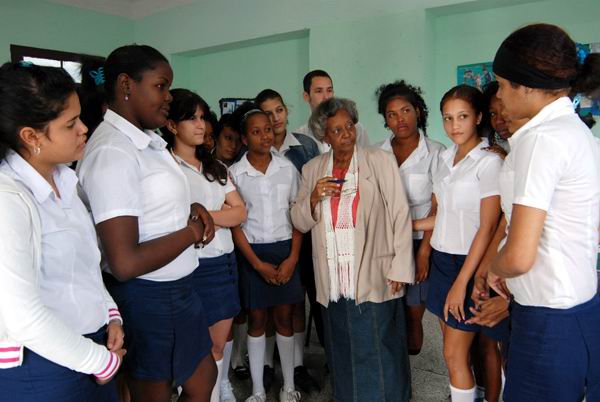
La ministra de Educación, Ena Elsa Velázquez Cobiella, solicitó en Las Tunas trabajar por más calidad en la formación integral del maestro, tras reconocer alentadores resultados en la escuela pedagógica Rita Longa.

La titular enfatizó que los docentes tienen en sus manos el futuro de la Revolución, y desde la ejemplaridad, la clase y la profesionalidad pueden reafirmar la vocación de los alumnos durante la carrera.

Se refirió además al seguimiento del egresado con tutoría de al menos dos años, contribuir a la preparación metodológica y lograr su ingreso a la licenciatura, lo cual ayudará a la permanencia en el sistema educacional.

Ena Elsa Velázquez intercambió sobre el trabajo del sistema para la formación vocacional en el magisterio desde la primaria, en secundaria básica y preuniversitario, como garantía de mantener en Las Tunas una favorable cobertura docente.

Fuente: http://www.radioreloj.cu/es/noticias-radio-reloj/educacion/evaluan-gestion-la-formacion-pedagogica/

Comparte este contenido:

Aprendizaje insuficiente, una forma de exclusión.

Por: Mexicanos Primeros.

El esfuerzo educativo no se puede reducir a toneladas de cemento para los centros escolares, el tiraje de los libros que se ponen a disposición de niñas y niños o el tamaño del gasto en la nómina de sus maestros.

En esas métricas México sobresale claramente sobre las naciones de la región por el volumen directo, los números absolutos; pero es especialmente grande en la dimensión relativa, pues haciendo los ajustes por ingreso o demografía casi no tenemos parangón.

Ninguna nación de Latinoamérica ha hecho en tan pocos años tantas escuelas como México, y menos en el empuje constructivo actual, para reajustar la infraestructura y que se cubran las carencias más extremas como bebederos, baños y pisos firmes. El transporte de materiales, los ritmos de edificación, los retos ante la ingente variedad de climas y terrenos desafía los promedios de una ingeniería de gabinete, o de las obras en una sola sede; es literalmente más complejo coordinar y concretar esa operación dispersa por miles de localidades de toda la geografía, que levantar presas enormes o largas carreteras.

Los libros de texto gratuitos, editados o seleccionados para nuestros alumnos de educación básica, son un despliegue de letra escrita con pocos paralelos en la historia. Literalmente se imprimieron, cortaron, revisaron, empaquetaron y distribuyeron más de 180 millones de libros sólo en 2016, en operaciones que hacen palidecer a las grandes editoriales, con un alcance que parece el sueño de una Biblioteca de Alejandría duplicándose como caleidoscopio, el delirio de un Borges sin confines que apila libros sobre cada ser humano de la siguiente generación en una inundación gozosa.

Ninguna nación de estos rumbos tiene un fondo nacional para pago a maestros como el nuestro: alrededor de 920 mil depósitos quincenales, identificando con precisión al destinatario (ahora no sólo con RFC y CURP, sino una buena parte con cuentas individualizadas de bancos) y moviéndose con el vertiginoso ritmo de cambios, que van desde licencias de maternidad hasta cambios de adscripción. Ya no digamos la complejidad de descuentos por faltas, o retenciones por créditos e impuestos; mucho hay que hablar de lo inconveniente de algunos de esos movimientos para la continuidad y el logro de las respectivas comunidades educativas, pero lo que no se puede escatimar es lo monumental del esfuerzo de administración y auditoría que representa este sistema.

Estos tres ejemplos de aspiración perseguida con ahínco (aula para todos, libro para todos, maestro para todos,) son de una épica que no se puede conocer y no admirar; un despliegue que ni toda la mezquindad política puede dejar de estimar. En los albores del siglo XX, contar con aula, libros y maestros estaba profundamente condicionado a la localidad en la que uno nació y al poder de compra de sus padres. Nacer fuera era estar prácticamente excluido de por vida de la escuela, y con ello ser condenado a la asimetría permanente de influencia y poder, de voz y de agencia. Era quedarse cementado a la condición de ser parte de la sociedad, pero no tomar parte en ella. Los tres esfuerzos descritos fueron -y son- una hazaña de equidad que no debemos olvidar. Incluir, año tras año, a 23 millones de niñas, niños y jóvenes en la escuela pública es para llenarse de orgullo.

La gran pregunta es: “y con todo esto, ¿aprendemos?”. No lo suficiente. No todos. Es más: la respuesta honesta es que muy pocos, el global, aprenden lo esperado; dejamos a muchos de los nuestros atrás. El aprendizaje es el para qué de la educación; es su finalidad y su incorruptible juez. Es el punto de llegada, el resultado que corona el esfuerzo. Y es el punto de partida para más y mejores resultados.

La gran tarea de nuestro tiempo es que pasemos de los medios a los fines; que superemos la acumulación de ingredientes, y revisemos la transformación que esperamos en el proceso. Nuestras niñas, niños y jóvenes pueden estar incluidos en la escuela, pero excluidos del aprendizaje.

Un dato que lo ilustra, sin opción a escaparse a su desafío: Al término de la educación secundaria, 2 de cada 3 estudiantes no han logrado adquirir los aprendizajes clave de Matemáticas (INEE, 2016. Planea, Resultados Nacionales 2015, Matemáticas. Fascículo 10, p.3). Efectivamente, 65.4% de quienes estaban concluyendo la educación básica hace dos años, cito de nuevo, …tienen limitaciones para resolver problemas que impliquen operaciones básicas con números decimales, fraccionarios y números con signo; el mínimo común múltiplo y el máximo común divisor…Tampoco pueden calcular perímetros y áreas, o resolver ecuaciones de primer grado..(ídem). Apenas uno de cada diez alumnos alcanzan los aprendizajes clave de manera satisfactoria o sobresaliente.

Así que la próxima vez que oiga, estimado lector, hablar de “exclusión educativa” no sólo piense en una silla de ruedas o en una etnia; piense en que se puede estar excluido de la finalidad de la educación. Hoy se impone que busquemos aprendizaje para todos.

Fuente: http://www.elfinanciero.com.mx/opinion/aprendizaje-insuficiente-una-forma-de-exclusion-i.html

Imagen: http://www.elfinanciero.com.mx/files/article_main/uploads/2016/08/31/57c76f722cf18.jpg

Comparte este contenido:

Nueva Zelanda: Think what early childhood education is worth, govt urged

Nueva Zelanda/Febrero de 2017/Autor: John Gerritsen/Fuente: RNZ

RESUMEN: Las previsiones del Gobierno estiman que el gasto en educación de la primera infancia se incrementaría en $ 102 millones de dólares, o un 5,5 por ciento este año y aproximadamente a la mitad de la figura que cada uno de los próximos tres años. Los incrementos se basan principalmente en el crecimiento de la matrícula ya que el gobierno empuja hacia las TIC objetivo del 98 por ciento de los niños que sufren la educación de la primera infancia antes de que comiencen la escuela. El gasto total de este año superaría $ 1.83 billones de dólares y el año pasado el Ministerio de Educación advirtió que el gobierno los aumentos proyectados de gasto «probablemente a superar a la asequibilidad de la Corona». Dijo que aussi Que la rentabilidad de la inversión para el gasto del gobierno se redujo en los altos subsidios para las personas que podían permitirse el lujo de pagar por la educación de la primera infancia a sí mismos de todos modos.

Government forecasts estimate spending on early childhood education would increase by $102 million dollars or 5.5 percent this year and by about half that figure in each of the next three years.

The increases were based mostly on growing enrolments as the government pushes toward its target of 98 percent of children experiencing early childhood education before they start school.

This year total spending would exceed $1.83 billion and last year the Ministry of Education warned the government that projected increases to spending were «likely to outstrip affordability to the Crown».

It also said that the return on investment for the government’s spending was reduced by high subsidies for people who could afford to pay for early childhood education themselves anyway.

The chief executive of the Early Childhood Council, Peter Reynolds, said the ministry needed to rethink that advice.

«We’re facing a pretty fundamental question and that’s the extent to which government has a role in subsidising early childhood education in New Zealand. This government is certainly trying to cut back and rebalance that equation.»

Mr Reynolds said increases in government spending were caused by increased enrolments, but the amount paid per child had barely increased at all in recent years, and that was putting early childhood centres under pressure.

Budget documents last year said cuts to the sector had saved $528 million since 2009, much of that through the abolition of higher funding rates for centres where more than 80 percent of staff were registered, qualified teachers.

Mr Reynolds said quality early childhood education had a big impact on a wide range of social harms and the government should be spending more, not less.

«There comes a point in time when the government’s got to come clean and have a very clear view about whether it sees this as an important area to invest in or not.»

The government is redesigning the early childhood funding system, but it was not yet clear whether that would result in less money per child or more.

The chief executive of Kindergartens New Zealand, Clare Wells, said parents were already paying a lot.

«While the government is actually subsidising the service as well through its grant, that effectively hasn’t increased for the payment for each child since 2011. There’s been a slight increase, a slight adjustment, but not significant,» she said.

«So centres have had to make up the shortfall and the way they actually make up the shortfall is through fees to parents.»

The chief executive of Early Childhood New Zealand, Kathy Wolfe, said the government was reluctant to fund early childhood education appropriately.

However, she said she had not seen any sign that further cuts were coming, and she was hoping the government would re-introduce higher subsidy rates for centres where 100 percent of staff were qualified, registered teachers.

The Educational Institute (NZEI) is campaigning for increased government funding for schools and early childhood centres.

The union’s president, Lynda Stuart, said the lack of increased funding on a per-child basis was undermining the quality of early childhood education.

«What we’ve got is a situation really where either parent fees go up or quality goes down.»

The Education Minister Hekia Parata said the ministry’s statement about affordability was intended to highlight the continuing growth in demand for funding.

She said total funding for early childhood education had doubled since 2007 and early childhood education was 33 percent more affordable for parents than it was ten years ago and more affordable than it was a year ago.

«Per-child ECE funding in New Zealand is among the highest in the OECD,» Ms Parata said.

«In the year to September 2016 the cost of childcare increased by 0.8 per cent and the QES average ordinary-time earnings increased by 1.7 per cent. So in the year to September 2016, the cost of childcare relative to earnings decreased by 0.9 per cent,» she said.

Fuente: http://www.radionz.co.nz/news/national/324880/think-what-early-childhood-education-is-worth,-govt-urged

Comparte este contenido:

Venezuela: Juventud y estudiantes zulianos elevaron su voz en respaldo a Tareck El Aissami

Venezuela/Febrero de 2017/Fuente: RNV

A través de una rueda de prensa la Juventud del Partido Socialista Unido de Venezuela (JPSUV), así como la comunidad de estudiantes universitarios de la Región dieron a conocer su respaldo irrestricto al Vicepresidente Tareck El Assami y todas las políticas que promueven el mejoramiento de la calidad de vida de los jóvenes en el país y la mejoría en las condiciones de estudio que fomenta el Gobierno Bolivariano del Presidente Nicolás Maduro protegiendo el legado del Comandante Chávez en materia de educación.

Dichas declaraciones, fueron emitidas por Gustavo Sánchez, Enlace Regional de la Juventud del Partido Socialista Unido de Venezuela (JPSUV) y Alexander González, Secretario de la Federación Venezolana de Estudiantes Universitarios en la entidad, desde las instalaciones del Comando del PSUV en la capital zuliana.

Sánchez, manifestó en nombre de la juventud socialista zuliana el apoyo rotunda al Vicepresidente Tareck El Aissami “Hoy nos hemos reunido para dar el respaldo rotundo a nuestro camarada Tareck El Aissami, Vicepresidente Ejecutivo de la República Bolivariana de Venezuela, quien en su juventud también luchó desde los espacios universitarios y ha venido trabajando en beneficio de nuestro país, desempeñándose de excelente forma como Gobernador del Estado Aragua, además de haber asumido responsabilidades dentro del Ministerio de Interior, Justicia y Paz con trabajos de inteligencia que permitieron la captura de más de cien capos de la droga en nuestro territorio Nacional”.

En este sentido indicó “nosotros para el día miércoles estaremos organizando una movilización a nivel Nacional donde se están convocando a todos los sectores de la educación, universitaria, media todos los sectores y desde el Zulia, tendremos una gran movilización, donde plasmaremos el respaldo al Vicepresidente y a la revolución Bolivariana, el respaldo a nuestras instituciones, que han querido someterlas a través de millones de operaciones psicológicas, las mismas que utilizaron con nuestro Comandante Hugo Chávez en su momento, con el fin de desmoralizar a nuestro pueblo”.

Por su parte, Alexander González aseguró que el Gobierno Bolivariano cuenta con el respaldo de toda la comunidad universitaria en protección de todos los logros alcanzados en revolución “En este día acompañamos a la juventud socialista del Zulia la Federación Venezolana de Estudiantes Universitarios 8FVEU) y los diferentes movimientos estudiantiles que se agrupan en esta misma federación, brindamos un respaldo absoluto a nuestro compañero Tareck El Aissami, quien viene de las filas del movimiento estudiantil y que hoy se pretende vulnerar, su integridad y credibilidad como líder de la Revolución en función de desestabilizar la armonía política que viene logrando nuestro Presidente Nicolás Maduro en los últimos días, por ellos como prueba de respaldo este miércoles la comunidad universitaria estaremos en las calles de la Ciudad de Caracas, defendiendo todas las políticas en materia de educación que día a día son prioridad para el Gobierno Nacional.

Fuente: http://rnv.gob.ve/juventud-y-estudiantes-zulianos-elevaron-su-voz-en-respaldo-a-tareck-el-aissami/

Comparte este contenido:

Nueva normativa educativa en China incentiva el espíritu emprendedor de los estudiantes

China/Febrero de 2017/Fuente: Entorno Inteligente

El Ministerio de Educación de China ha modificado los requisitos administrativos para los universitarios en un intento por incentivar la innovación y el espíritu emprendedor, pero al mismo tiempo fortalecer la integridad académica.

Los estudiantes de primer año podrán volver a matricularse si deciden decantarse por los negocios o la innovación primero, aquellos que ya estén cursando materias podrán, asimismo, suspender sus estudios para continuar con sus proyectos empresariales gracias a la simplificación del procedimiento correspondiente.

El ministerio señaló también que los esfuerzos de los alumnos por formar empresas, publicar tesis y crear patentes podrán convertirse en créditos académicos con posterioridad.

Los expertos en educación superior estiman que la nueva regulación ayudará a elaborar programas de aprendizaje flexibles y a estimular la creación de empleo.

La normativa incluye además un nuevo capítulo que requiere a los centros universitarios establecer un comité que gestione las quejas estudiantiles en cuanto a estatutos y regulaciones internas.

Educadores y consejeros legales podrán participar en dicho órgano como profesionales contratados, añadió el ministerio. Uno de sus funcionarios apuntó que la nueva reglamentación se enfoca más en los derechos e intereses de los universitarios.

La reforma busca además incrementar la integridad académica con un mayor énfasis en la ética del alumnado. Quienes se involucren en malas conductas como plagio, escritos fantasma o compra y venta de trabajos podrían ser expulsados del centro.

Fuente: http://www.entornointeligente.com/articulo/9650217/Rafa-Humberto-Jose-Ramirez-Venezuela–%7C%7C%7C–Nueva-normativa-educativa-en-China-incentiva-el-espiritu-emprendedor-de-los-estudiantes-20022017

Comparte este contenido:
Page 53 of 206
1 51 52 53 54 55 206