Page 29 of 37
1 27 28 29 30 31 37

Sudáfrica: Student protests only the start of greater pain

África/Sudáfrica/Septiembre de 2016/Autor: Greg Nicolson/Fuente: Daily Maverick

RESUMEN: Al anunciar la semana pasada su recomendación sobre los aumentos de tasas, el Ministro Blade Nzimande tuvo cuidado de enumerar los esfuerzos en la educación superior y la formación. A pesar de la difícil situación económica, el presupuesto de su departamento aumentaría de R42-millones en 2015/16 a R55-millones de dólares en 2018/19. El Gobierno pagó R1.9 mil millones del déficit R2.3 mil millones después del estado dijo que no pagarían los aumentos de tasas terciarias en 2016. Más de mil millones de R4.5-fue re-priorizado para el Plan Nacional de Ayuda Financiera para Estudiantes (NSFAS) este año. El Fondo Nacional de Habilidades ha facilitado casi R1.4 mil millones de dólares para el 2016.

Announcing his recommendation on fee increases last week, Minister Blade Nzimande was careful to list efforts in higher education and training. Despite the struggling economy, his department’s budget would rise from R42-billion in 2015/16 to R55-billion in 2018/19. Government paid R1.9-billion of the R2.3-billion shortfall after the state said no students would pay tertiary fee increases in 2016. More than R4.5-billion was re-prioritised to the National Student Financial Aid Scheme (NSFAS) this year. The National Skills Fund has allocated almost R1.4-billion for 2016.

“It is indeed a fine balancing act and we must all participate,” he said, “whether at the national level, in university administrations, or as student leaders – because it is the nature of balancing acts that if one falls, all fall.”

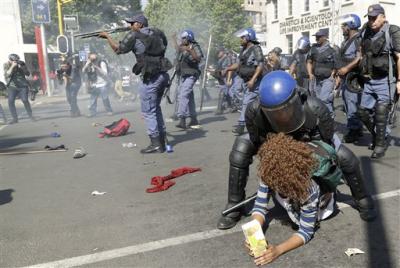
Two days later, students at the University of Witwatersrand edged towards police officers enforcing an interdict limiting student protests. We’re fighting for your children, they told the cops. Kill us like you killed people in Marikana. And, after the police set off stun grenades and fired rubber bullets, some students retaliated with rocks, saying: I hate White people.

The democratic government is spending billions to uplift the lives of the black majority, but those lives often exist on the bitter dregs of a society designed to exclude, with competing debts the state cannot pay and struggle to prioritise. The democratic hope for dignity has not been met, leading here, where change is a universal demand. The how and how fast is a national knot still unravelling.

Fees Must Fall is about how a democracy deals with a history of oppression. It’s about healing broken bones, about a generation’s phantom limbs and its children refusing amputation.

Only about half of the students who start primary school make it to matric, with failure rates higher in rural provinces. The number of matric students who qualify for university studies remains low. The number of black students at universities has risen, but as a proportion in comparison to other racial groups it still remains low. Statistics differ, with the statistician-general saying there are still far too few black graduates. Others have lauded the huge increase. Black graduate unemployment remains at about 9% compared to 3% for whites.

The education system, despite progress, is still stacked against black students, starting from primary school. If black students qualify for university, NSFAS still does not cover all deserving applicants and black families who do not qualify for funding will use a greater proportion of their income, or take on debt, to cover study costs. Unemployment for black South Africans is far higher than whites, they have far fewer private company executive positions, much less control of the country’s wealth, and own far less land. The democratic project’s achievements often come with reports of racism, as blacks start to enter white spaces, in high schools, universities and businesses.

Protesting university students have continually linked their cause to race. Speaking at the Wits medical campus on Monday, former SRC president Mcebo Dlamini spoke more about reports of racism at the institution than fees. “Decolonisation” is repeated at protests. Essentially, demonstrating students say universities don’t reflect the demographics or cultures of the black majority.

“We can’t breathe” is a phrase often cited by students. Black students have to struggle or be extremely lucky to get into university and face family financial pressures or be lumped with future debt. By their nature, universities reproduce past knowledge systems before they create new thoughts, meaning black students are not only usually taught by whites but taught White. To breathe, or to survive, under financial constraints and repeated cultural domination seems impossible, or at least only tolerable to pay back, pay forward, family investment.

This is the country’s DNA, where dignity is a luxury, but how many generations will be able to accept the virus? Protesting students have talked about historical debt, registration fees, issues of accommodation, campus security, racism and fees, which for the average student remain extremely high in relation to household income, and has risen with lower government subsidies. Revolution is the underlying message.

There was hope last year. Student protests culminated at the Union Buildings, with diverse South Africans turning out in their thousands under the banner of Fees Must Fall. Change, it felt, could be achieved. It was. President Jacob Zuma announced a zero-percent fee increase. But that was only after a small group of protesters started fires and battled police for hours in the gardens of the country’s highest office. The no-fee increase only slightly reduced the costs for struggling families; it didn’t scrap fees.

The short-term victory at the Union Buildings was diluted, an idealistic hope confronted with a violent reality. There’s violence on black bodies, violence in crime and violence in the streets. How would systemic violence against blacks not lead to more violence? How could this issue avoid the same fate as violent service delivery protests, where promises, police and protests repeat like a song stuck in your head?

Students, being students, know the promise of “radical economic transformation”. They know the ANC’s resolutions. They know how little has been delivered, or, at least, how slow the pace of delivery is.

A handful of student groups have made written submissions to the commission of inquiry on the feasibility of free higher education. A running theme was that this generation needs to achieve free higher education, at least for the poor, now or never. They propose new or increased taxes on the wealthy or budget changes. Clampdowns on wasteful and irregular government spending, as well as corruption, are often cited as sources for potential funding of free education, but reclaiming that cash is easier said than done. At least until the commission’s recommendations come out, the state seems cautious of introducing new taxes or committing to wholesale budget changes to fund free education.

Answers aren’t forthcoming. In the last few days, differences between students have been pointed out. There’s a growing acknowledgement of the “silent majority” who don’t want campuses closed. Nzimande has called on parents to take an active role in combating campus violence. The Democratic Alliance has started an online petition to open universities. Wits will poll its student body on a way forward. A number of organisations have called on students to isolate those causing violence. There appear to be many students who support change but don’t want their studies to be interrupted, or to risk further costs to their families. Black and white students are weighing their potential careers and ability to help their families against the long-term costs and benefits of university closure.

Protesting students appear united in their demand for free education, or at least steps towards it. They want it now. Past protests suggest mass demonstrations will end when most students accept they’ve made a point and need to continue their studies, ready to fight another day, or internal divisions lead to only a small group of protesters continuing. That could change depending on the response of universities, government and police.

Students, however, have held up society’s shackles for all to see. Even if the protests pause, they will resume again in future. Academic programmes and individuals might suffer. That’s the cost of living in an unequal society.

The balance can’t hold. The pain will be spread. The outcome is unknown.

Fuente: http://www.dailymaverick.co.za/article/2016-09-28-student-protests-only-the-start-of-greater-pain/#.V-yARRJGT_s

Comparte este contenido:

Canadá: Clarenville parents keep kids home to protest cramped school

América del Norte/Canadá/Septiembre de 2016/Fuente: CBC News

RESUMEN: Padres y representantes de la escuela primaria Riverside en Clarenville protestaron el dia viernes por considerar la escuela como un edificio de hacinamiento. «Esto no está bien. Los niños no merecen este entorno. Los profesores no se merecen este ambiente», dijo Jeanette Avery, una madre de dos hijas en Riverside. Avery ha estimado que la escuela tiene 735 estudiantes este año, pero sólo fue diseñado para sostener 550. Ella dijo que dos nuevos portátiles se han añadido este año escolar para hacer frente a la falta de espacio, después de una expansión prevista se canceló debido a los recortes presupuestarios. Ella dijo que el alto número de estudiantes que asisten a Riverside ha dado lugar a preocupaciones de seguridad. «Mi mayor temor sería una evacuación de incendios, o cualquier evacuación de verdad», dijo, añadiendo que nadie ha sido capaz de decirle a ella o a otros padres la capacidad máxima del edificio en el código de fuego.

Some Riverside Elementary students in Clarenville got Friday off school when their parents kept them home in protest over what they say is an overcrowded building.

«This is not right. The children don’t deserve this environment. The teachers don’t deserve this environment,» said Jeanette Avery, a mother of two daughters at Riverside.

Avery estimated the school has 735 students this year, but was only designed to hold 550. She said two new portables were added this school year to deal with the space crunch, on top of three others installed in 2015, after a planned expansion was cancelled due to budget cuts.

«In that expansion we were going to have a new gymnasium. The old gymnasium was going to be turned into a permanent lunchroom…and seven additional classrooms. So now that is not available to us,» she said.

Avery said her younger daughter has had a rocky start to the school year in a tightly packed Grade 4 classroom.

«She was actually having anxiety attacks because of the congestion,» Avery told CBC Radio’s the St. John’s Morning Show.

Safety concerns

Avery and many other parents and students turned out for a protest at 8:30 Friday morning outside the school. She estimated about 70 per cent of students were out of their classes.

She said the high number of students attending Riverside has led to safety concerns.

«My biggest fear would be a fire evacuation, or any evacuation really,» she said, adding no one has been able to tell her or other parents the building’s maximum capacity under the fire code.

While Avery has gotten face time with Education Minister Dale Kirby and officials at the school district, she’s unhappy with an overall lack of traction on her issues.

«I still feel like im being delayed… something needs to happen now,» she said, unhappy with any explanations offered up so far: «basically that this is not a Riverside issue, this is across the province.»

«My question is — so that’s OK?»

Earlier this week, Kirby told the CBC that while Avery and other parents have legitimate concerns, the province isn’t in a financial position to give the green light on the Riverside expansion project. He said teachers and staff are handling the large volume of students well, and the quality of education has been maintained.
School board responds

Meanwhile, the Newfoundland and Labrador English School District said in an email to CBC that 727 students are currently enrolled at the school.

According to the board, enrolment as 661 in 2011 when a major extension was completed.

«A variety of initiatives have been put in place this year to help to address concerns and reduce the number of students in a given area,» the board’s email read.

For example, there’s extra learning space for music due to the addition of three modular classrooms.

A letter from Riverside’s principal to parents said the school has gone from two lunch periods to three lunch periods.

The board said this will, «cut down on the number of students in the cafeteria or the playground at any given time.»

Fuente: http://www.cbc.ca/news/canada/newfoundland-labrador/riverside-elementary-parents-protest-in-clarenville-1.3775558

Comparte este contenido:

Uruguay: Educación privada: ¿Más de lo mismo?

Uruguay / elpais.com.uy / 28 de Septiembre de 2016

De los alumnos que cursan el ciclo básico en liceos públicos, uno de cada tres repite. Según un acceso a la información, en la enseñanza privada solo repite el 2,4%. Mientras en los públicos el filtro está en el ingreso a secundaria, en los privados es antes del bachillerato. ¿Es un reflejo de la calidad?

El 36% de los alumnos de Montevideo repite en el ciclo básico de la enseñanza pública. Este dato, junto a los magros resultados de las pruebas internacionales, pintó una imagen remachada hasta el hartazgo: la educación media en Uruguay es un barco a la deriva. Teniendo en cuenta estos mismos indicadores, los liceos privados parecen ser una nave muy segura de su timón. Solo el 2,4% de los estudiantes quedaron repetidores y en las pruebas PISA, si se mira a los de un mismo nivel de ingresos, obtuvieron 22 puntos más que sus pares del sistema público. Pero, ¿realmente la educación privada hace la diferencia?

La discusión suele redundar en argumentos de estilo futbolístico: «En Peñarol tenemos más logros», «En Nacional tenemos mejores jugadores», «En Danubio…», «En Defensor…». Sin embargo, poco se habla de los resultados porque, de hecho, tampoco se difunden. El País solicitó el acceso a esta información en enero, tras el anuncio del posible cierre del colegio José Pedro Varela. Siete meses después llegó la autorización y esos datos que pocos padres preguntan al momento de inscribir a sus hijos.

Zózima González no es vidente aunque se anticipa a la jugada. Sentada detrás de un vetusto escritorio de madera, de esos que no pueden faltar en la oficina de una directora de escuela, sabe que los padres que atenderá en la próxima entrevista contestarán que lo que más desean que su hijo sea feliz. Pero la experiencia le indica que tiene vetado mencionar que ese es el objetivo del colegio que dirige porque inexorablemente supondría una asociación fatal: el padre calcularía que el nivel académico es bajo.

Por eso González intenta escarbar en las verdaderas preocupaciones de los padres que eligen la educación privada. La más repetida, dice, es la búsqueda de una institución educativa en que el niño, o adolescente, esté al menos ocho horas del día. Los centros públicos ofrecen un turno en la mañana o en la tarde y las escuelas de tiempo completo están solo alojadas en contextos críticos. Le sigue el interés por un marco seguro, sin delincuencia o «malas juntas». Otros quieren una educación religiosa o con una filosofía concreta. Y hay quienes optan porque sus hijos vayan a un centro que les dé cierto status.

«Puede sonar a exclusión, pero un padre tiene el derecho a elegir una educación en que su hijo se relacione con compañeros de un mismo perfil (económico) pensando que eso le permitirá un mejor desempeño», dice González, quien además de ser la directora del colegio Jean Piaget es la presidenta de la Asociación de Institutos de Educación Privada (Aidep).

La propia búsqueda de capital social —los académicos llaman así a que los niños se relaciones con semejantes— hace que la repetición en los privados deba tomarse con pinzas, dice el sociólogo Tabaré Fernández. Es que la repetición «está socialmente estratificada» y se nota en los alumnos que no tuvieron acceso a los libros, cuyo lenguaje es pobre o que son hijos de adultos que no los acompañaron en el proceso educativo. Sin embargo, «en algunos centros privados hay una selección de ingreso o bien se expulsa a quien repite, haciendo muy difícil la comparación», indica el investigador de Udelar.

Aun así, los datos a los que accedió El País muestran que mientras en la enseñanza pública el filtro se da en primero de liceo —en algunos centros repite más del 50% de esa generación—, en los privados la repetición tiende a crecer previo al pasaje al bachillerato. Según la directora del colegio Leonardo Da Vinci, Graciela Zanini, uno de los cinco privados que en 2014 tuvo más porcentaje de repetición, «luego de los 15 años hay un quiebre en los estudiantes, fruto de la adolescencia, en que la deserción está más latente».

Los peores índices de repetición en privados se ubican entre el tercio mejor de los públicos. El colegio María Rosa Mística fue el liceo privado con mayor porcentaje de repetición en 2014 con el 16%. Desde la dirección del instituto explicaron que ese fue un año «excepcional» porque en tercero de liceo repitieron seis de 27 alumnos. Este colegio capta a estudiantes de Colón, una «zona humilde aunque no crítica», y parte de la repetición se explicó por «deserción por problemas familiares».

La economía de los hogares también explica que el liceo Francisco Espínola haya sido el tercero con peor índice de repetición (10,5%). La directora Marta Gomensoro cuenta que el colegio atiende a la población de Paso Carrasco, en Canelones, y que las familias «hacen un gran esfuerzo para pagarles a sus hijos una educación en la que estén más atendidos». Siete de cada 10 madres trabajan en el servicio doméstico, hay adolescentes de dos asentamientos y «un pueblo está becado».

En base a estas razones y a sus investigaciones, el sociólogo Fernández concluye que «no hay diferencias significativas en los resultados pedagógicos entre públicos y privados. Lo que incide es el tipo de hogar del que proviene el alumno».

Si bien el investigador Axel Rivas encontró diferencias entre los públicos y privados atendiendo el nivel socioeconómico en PISA 2012, la economista Andrea Doneschi dice que, según sus cálculos, la distancia es «poco significativa». Y cuenta que parte de la diferencia se debe a que el 97% de los estudiantes de 15 años que asistían a la educación privada en Uruguay habían pasado por el jardín de infantes y en los públicos bajaba a 82%.

Al menos en las asignaturas básicas, como lenguaje y matemáticas, el propio Rivas admite «que los sistemas educativos público y privado son casi idénticos». Los resultados de las últimas pruebas Terce, que se realizan en tercero y sexto de escuela, revelan que la distancia entre públicos y privados desaparece completamente si se tiene en cuenta el factor socioeconómico. Solo en lectura de sexto año hay 30 puntos de diferencia a favor de los privados.

«Los privados pueden hacer la diferencia en inglés o educación física, pero en el resto es comprensible que haya similitudes porque son los mismos docentes, egresados de los mismos institutos, y dando una currícula muy parecida», concluye el argentino Rivas.

Fuente: http://www.elpais.com.uy/que-pasa/educacion-privada-mas-mismo.html

Comparte este contenido:

Panamá: Padres pueden participar en decisión de costos de educación privada

Panamá/26 de Septiembre de 2016/ Prensa Latina

Acodeco señala que no debe ser un tema de absoluta discrecionalidad de los colegios, porque no iría de acuerdo con lo que dice la letra y el artículo 130 de la ley orgánica.

El aumento significativo del costo de la educación ha generado una discusión entre padres, colegios y autoridades, saliendo a relucir el principio de la libre empresa, sin embargo hoy el administrador de la Autoridad de Protección al Consumidor y Defensa de la Competencia (Acodeco), Oscar García,  enfatizó que la educación particular no está en estricto sentido sometida a una libre oferta y demanda pura.

Explicó que la ley orgánica en su artículo 130 plantea que los costos tienen que darse en  coordinación, entre el colegio, los padres de familia y el Ministerio de Educación (Meduca).

Esa coordinación, el año pasado, fue interpretada por Meduca y se desarrolló en el reglamento 601 como una especie de comunicación,  a través de una reunión con el padre de famlia, quien tiene  el derecho de presentar sus objeciones y luego de 10 días los colegios deben dar su opinión, detalló el funcionario en un medio local.

«Coordinar viene del latín que equivale a  coordenar u ordenar en conjunto o concertar». Pero para García lo complicado es  concertar con un colegio que quiere o siente la necesidad de incrementar los costos y con  padres de familia que se van a oponer, por esta razón  es fundamental el rol del Meduca como árbitro.No obstante, Acodeco señala que no debe ser un tema de absoluta discrecionalidad de los colegios, porque no iría de acuerdo con lo que dice la letra y el artículo 130, pero considera también  que darle esa decisión a los padres de familia puede ser contraproducente y quizás haya que buscar otra alternativa .

La entidad presenta como una estrategia, en primer lugar, que los contratos sean a largo plazo,   es decir no solo por un año;  pone como ejemplo el modelo que utilizan las promotoras de viviendas, empresas que desde el contrato de compraventa incluyen cierto porcentaje de aumento por posibles ajustes en los insumos u otros aspectos que inciden en el costo del proyecto, que se entrega, muchas veces,  hasta tres años despúes.

La disputa
Las declaraciones de García se dan luego que el diputado  Miguel Fanovich  presentara ante la Asamblea Nacional  el anteproyecto de ley 040, que establece que los costos de anualidad y matrícula de los colegios particulares a nivel nacional solo podrán ser elevados mediante una asamblea general de padres y acudientes, convocada por la dirección del plantel con la anuencia de la junta directiva de la Asociación de Padres de Familia.

La reacción de los empresarios ante esta iniciativa fue contundente. La Asociación Panameña de Ejecutivos de Empresa (Apede) , a través de un comunicado, expresó su preocupación asegurando que, en principio, la inscripción de los alumnos en centros de educación particular o público es una decisión de cada padre de familia.

El gremio señaló que los colegios particulares deben regirse por las normas mandatorias del Ministerio de Educación, en todo lo referente a la educación, sin que ello afecte el resto de los derechos privados de administración del negocio, que goza toda libre empresa y menos si se trata de supeditar decisiones que afecten la sostenibilidad del negocio.

Hizo referencia también a que los colegios particulares ofrecen una solución educativa para alrededor de 150 mil estudiantes y son estos centros de educación privada quienes aligeran la carga educativa del sector oficial, que inclusive no podría ser solventada por la falta de infraestructura y demás componentes.

La Unión Nacional de Centros Educativos Particulares (Uncep)  también se pronunció por la encuesta publicada por Acodeco, la cual reflejó la tendencia de los escuelas  particulares al alza de sus cotos y en detalle para el próximo año.

Uncep aseguró que la  muestra  de la encuesta no era representativa del sector, ya que únicamente, como la propia encuesta advirtió, se trató de “centros de enseñanza particulares en la Ciudad de Panamá”.

García explicó que envían las encuestas a una mayor muestra, pero son pocos los colegios que contestan a la entidad.

Sin embargo, los padres de familia año tras año continúa denunniando los aumentos descontrolados de los costos de matrículas y anualidades de las escuelas particulares.

Aumentos significativos

Desde 2012 a 2017, los costos de anualidad (total de mensualidad durante el año) de los centros de enseñanza particulares para el nivel de educación primaria aumentaron hasta 24% y los de bachillerato incluso alcanzaron un 33%.

Datos recolectados por la Autoridad de Protección al Consumidor y Defensa de la Competencia (Acodeco) evidencian que los aumentos en las anualidades, en la primaria, son de hasta $500 para el 2017, mientras que en 2015 alcanzaron los $350.

En el año 2014, el incremento también fue de $350, durante el 2013 se dio el mismo nivel de aumento ($350), en 2012 el alza máxima fue $250 y $200 en el año anterior.

La entidad identifica que el colegio que más aumentos realizó registró un monto de $1,650, es decir, que si un alumno entró a primer grado en 2012 y en el 2017 cursará el sexto (VI) grado, su acudiente tendrá que pagar hasta $1,650 más, solamente en concepto de anualidad, sin incluir matrícula, transporte y otros gastos.

Para los estudiantes de bachillerato, la situación es similar, ya que entre 2011 y 2017 su anualidad se ha incrementado hasta en $800.

Información de la Contraloría General sobre el Índice de Precios al Consumidor (IPC) arrojó un aumento de 2.7% en educación si se compara agosto de 2016 con su similar del 2015.

Fuente: http://www.panamaamerica.com.pa/economia/padres-pueden-participar-en-decision-de-costos-de-educacion-privada-1044259

Comparte este contenido:

Sudáfrica: Minister Condemns Violence in Varsity Protests

África/Sudáfrica/Septiembre de 2016/Fuente: All Africa

RESUMEN: Educación Superior y el Ministro de Formación Blade Nzimande dice que está preocupado por las protestas violentas en los campus universitarios. Los estudiantes continúan su llamado a la educación gratuita en las instituciones de educación superior. Durante un programa de llamadas en la radio comunitaria el miércoles, el Ministro hizo un llamado a todos los sudafricanos, incluidos los padres y liderazgo de los estudiantes, para condenar la destrucción de la propiedad. «Tenemos que recordar a todos los estudiantes que la destrucción de la propiedad y la interrupción del programa académico no se ocupa de las preocupaciones legítimas de los estudiantes, no voy a esperar en las líneas laterales por el mayor daño a la propiedad, lesiones a los estudiantes o en última instancia, la pérdida de vidas que se produzca antes de actuar contra la violencia en los campus.«El gobierno no puede y no va a tolerar la amenaza a la vida y la destrucción de la propiedad, y pide a las fuerzas del orden para ayudar en el mantenimiento de los estudiantes, el personal, los trabajadores y propiedad de la universidad», dijo el Ministro Nzimande.

Higher Education and Training Minister Blade Nzimande says he is concerned by violent protests at university campuses.

Students are continuing their call for free education at institutions of higher learning. During a community radio call-in programme on Wednesday, the Minister called on all South Africans, including parents and student leadership, to condemn the destruction of property.

«We need to remind all students that the destruction of property and the disruption of the academic programme does not address the legitimate concerns of students. As the Minister, I will not wait on the sidelines for any further damage to property, injuries to students or ultimately loss of life to occur before acting against violence on campuses.

«Government cannot and will not tolerate the threat to lives and destruction of property, and requests law enforcement agencies to assist with the safeguarding of students, staff, workers and university property,» Minister Nzimande said.

The Minister on Monday announced that universities will individually decide on the fee increases for the 2017 academic year. This follows the Council on Higher Education (CHE) report for 2017 fee adjustments, as well as the Minister’s ongoing consultations with key stakeholders. The recommendation, however, is that fee adjustments should not go above 8%.

Minister Nzimande said government is committed to finding the resources to support the children of all poor, working and middle class families with a household income of up to R600 000 per annum.

The Minister used the platform to call on parents who can afford to pay fees to do so.

«… Those who can afford to pay must pay, and the rich and the wealthy must also be able to pay,» said Minister Nzimande.

The Minister said the upward adjustment to fees was necessary to ensure that universities remain viable.

«(Universities) are [among] the biggest rate payers, and in fact, some municipalities are almost entirely depended on university rates. Electricity and water rates go up, and [the price of] food to feed students go up,» said the Minister.

He appealed to all students, parents and the higher education sector to give the Presidential Commission of Inquiry into Higher Education Funding a chance to do its work, so that it can find a permanent solution to make higher education accessible to the poor.

The Commission is expected to conclude its work in the 2017 academic year.

Fuente: http://allafrica.com/stories/201609230606.html

Imagen: http://www.americamagazine.org/content/dispatches/south-africa-faces-violent-protests-over-tuition-hikes

Comparte este contenido:

Sudáfrica: Free education is possible if moves beyond smoke and mirrors

África/Sudáfrica/Septiembre de 2016/Autores: Leigh-Ann Naidoo, Hlatshwayo y otros/Fuente: Mail & Guardian

RESUMEN: Universidades de Sudáfrica están una vez más en el tumulto. Educación Superior y el Ministro de Formación Blade Nzimande ha esbozado cómo la educación superior debe hacer frente a incrementos de tasas para el año 2017. El anuncio provocó la ira y una gran cantidad de confusión. Ni el humo de granadas de aturdimiento, ni  policías, ni edificios en llamas, ni el humo de la burocracia y espejos va a resolver el problema. Estamos sorprendidos de que muchos no anticipan las consecuencias de la declaración de Nzimande. Hay varias razones para la ira de los estudiantes hacia las gestiones estatales y universitarias. El más inmediato es  la declaración de Nzimande sobre el incremento de las  tarifas, pero dejó de lado la cuestión fundamental: una llamada en curso para que la educación superior sea gratuita para todos. Es claro que muy poco se resolverán sin hacer referencia a esta demanda crítica.

South Africa’s universities are once again in uproar. Higher Education and Training Minister Blade Nzimande has outlined how higher education should deal with fee increments for 2017. His announcement sparked anger and a great deal of confusion.

Neither smoke from police stun grenades, burning buildings nor officialdom’s smoke and mirrors will solve the problem.

We’re surprised that many didn’t anticipate the fallout from Nzimande’s statement. There are several reasons for students’ anger toward the state and university managements.

The most immediate is that Nzimande’s statement dealt with fee increments but sidestepped the fundamental issue: an ongoing call to make higher education free for all.

It is clear to us that very little will be resolved without reference to this critical demand. All the minister has done is to kick the can further down the road, deepening students’ disquiet and provoking conflict on campuses.

It is disingenuous to scold students for “protecting the rich” and “increasing inequality” through their demands for universal quality education. The state cannot merely exhort citizens to patiently await an increase in economic growth and its trickle downward, while blaming “selfish” students for taking resources allocated elsewhere.

There are revenue sources that can be examined carefully and accessed to fund free education for all, at all levels. This can happen while other social needs are simultaneously met. The most important of these sources is raising more tax from the super rich and stopping the illicit outflow of capital.

Confusion and omissions
Nzimande had insisted that a special presidential fees commission deal with the issue of free education. The commission, which began its work in January 2016, is widely viewed as sluggish and unfocused. Its completion date has been shifted and there have been complaints about its lack of transparency.

More importantly, the commission’s terms of reference are couched in the language of “feasibility”. Its mandate holds no clear and tangible commitment to exploring “fee free education”. In fact, how the commission’s mandate is understood is itself the subject of conflicting interpretations.

There were several other problems with Nzimande’s statement.

The missing middle: There’s little understanding of what the minister’s announcement actually means for this group of students. Their parents earn too much money to qualify for loans from the National Student Financial Aid Scheme (NSFAS), but not enough to afford university tuition without bank loans.

Some people interpreted Nzimande’s statement to mean that this group would be exempt from paying any fees. This is not true. They are merely exempt from the payment of any fee increases levied for 2017. They will continue to pay the same fees as they did in 2015 and 2016.

Student debt: There was no clarity on the question of student debt.

The approach he outlined for funding students appears to favour student loans from the financial sector. This amounts to a further entrenchment of debt-related financing and profiteering by banking and other financial institutions. Students are particularly disquieted by this element of the statement. They continue to be lent money – a far cry from any concept of free education.

The resource debate: Some commentators have argued that there simply isn’t any more money available for universities. They point out that there are many competing pressures on South Africa’s fiscus which must be balanced against students’ demands.

In fact, higher education in South Africa is chronically underfunded – the main reason why universities constantly increase fees. The country spends far less on this sector than many other developing countries. South Africa’s state budget for universities as a percentage of GDP is 0.75%. The Africa-wide average is 0.78%; the proportion of GDP for Senegal and Ghana is 1.4% and Cuba 4.5%.

South Africa’s higher education budget for the 2015/16 financial year is R30-billion. If the government were to spend 1% of GDP on higher education, this would amount to R41 billion. That’s almost four times the reported shortfall caused by 2016’s freeze on fee increases.

The argument about competing national demands can only be used if there’s an honest, open engagement around how and what public choices are made in the utilisation of resources. This includes examining wasteful and vanity projects as well as exploring how much is lost to malfeasance.

More importantly, it’s time for South Africans to have a serious, open discussion about the potential sources of such resources.

The super rich can pay
We are academics and researchers working at a range of South African universities. In our submission to the fees commission, we made it clear that one potential source is the super rich.

As we argued, a determined state should examine the structure of personal taxation which could be levied for the country’s top 10% of income earners.

This income bracket, together with high net worth individuals – those who have an annual income of more than R7-million or R70-million in accumulated wealth – could generate a substantial increase in available public revenue to fund higher education.

Such an approach, which concentrates on the structural aspects of inequality and uses tax revenues for the purpose of higher education funding, is preferable to the idea of a differentiated approach to the “rich” and “poor”. It supports the idea that those identified with the top net worth pay for their children’s education through taxation, and the distribution of public funds, rather than through an individually-based “wealthy user pays” model.

This is a more democratic model of public interest and public funding than individual philanthropy or subsidy, which is not sustainable.

We are also opposed to the idea of a graduate tax. That too will have racially differential impacts on graduates from vastly different class, gendered and social backgrounds. Some graduates also have more accumulated family and other responsibilities than others, making such a tax an enormous burden.

Road map to free education
We urge the ministry of higher education and training to immediately set in motion a process which will show its determination to meet the promise of “free education for all”.

It should set out the concrete time frames for its achievements, its immediate and further milestones as well as the mechanism by which this process will be monitored, especially by students and their accepted representatives. Without such a road map to universal free education, there is little prospect that the present conflict will abate.

The ministry, in setting up this road map, must engage fully with as broad an array of students as is possible. It needs to work beyond the extant formal structures of representation which are likely to be ineffective for the purpose.

We would also like to urge university vice chancellors, working together with students, to call public assemblies for engaging with institutions’ most affected communities. This will elicit greater public understanding and democratic dialogue.

Fuente: http://mg.co.za/article/2016-09-21-free-education-is-possible-if-south-africa-moves-beyond-smoke-and-mirrors

Comparte este contenido:

Nueva Zelanda: Teachers overwhelmingly oppose school funding changes

Oceanía/Nueva Zelanda/Septiembre de 2016/Autor: John Gerritsen/Fuente: RNZ

RESUMEN: Los maestros han votado abrumadoramente en contra de una propuesta de modificación del sistema de financiación de las escuelas, dicen los sindicatos. Los sindicatos tendrían ahora iniciar una campaña para hacer pivotar la opinión pública en contra de la propuesta, dijeron. Conocido como el «presupuesto global», la propuesta asignaría a las escuelas, una financiación basada en sus matrículas y luego dejar que las escuelas deciden qué parte de ella  asignara al personal docente. Las escuelas serán capaces de sacar provecho de la financiación del  maestro sin usar dinero para gastar en otros recursos. El gobierno está considerando uno de los siete cambios en los sistemas de financiación de la escuela y de la primera infancia. El Instituto para la Educación Nueva Zelanda (NZEI) y la Asociación de Docentes de Enseñanza Primaria Correos (PPTA) dijeron que después de dos semanas de reuniones con los miembros, los maestros se opusieron abrumadoramente a favor del cambio.

Teachers have overwhelmingly voted against a proposed change to the school funding system, unions say.

The unions would now start a campaign to swing public opinion against the suggestion, they said.

Known as the ‘global budget’, the proposal would allocate schools funding based on their enrolments and then let schools decide how much of it to allocate to teaching staff.

Schools will be able to cash in unused teacher funding for money to spend on other resources. It is one of seven funding changes to the school and early childhood funding systems the government is considering.

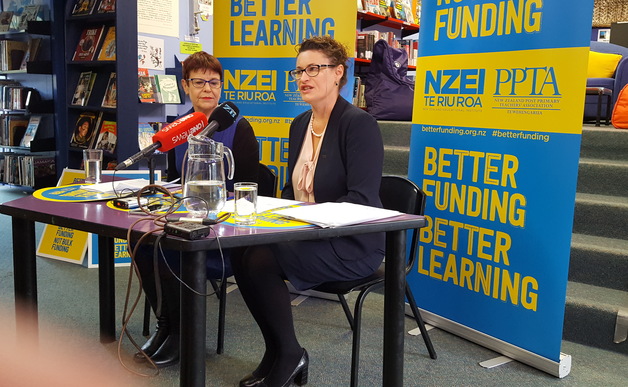
The New Zealand Educational Institute (NZEI) and the Post Primary Teachers’ Association (PPTA) said after two weeks of meetings with members, teachers were overwhelmingly opposed to the change.

The Education Ministry has said the proposal is similar to the current system, which recompenses schools at the start of each year for unused staffing from the previous year.

The main differences were that schools could deliberately choose how to use their staffing and would not have to wait to the following year to be paid for unused staffing, it said.

But the unions said the system was a form of bulk funding that would undermine the teacher ratios that help maintain education quality.

An advisory group of the main education organisations has also rejected the proposal.

Education Minister Hekia Parata recently acknowledged the advisory group’s advice, but Cabinet was yet to make a decision.

PPTA president Angela Roberts said the unions were not taking any chances on what Cabinet would decide.

«We don’t want to leave it up to one advisory group report to convince Cabinet that this idea isn’t worth pursuing,» she said.

«It’s great that the minister has acknowledged what the advisory group has said very, very clearly.

«I guess we’re just supporting her to continue to be really focused on taking that message and hopefully recommending to Cabinet that the global budget isn’t worth pursuing – we don’t want it, we don’t need it, it doesn’t provide any advantage to public schools.»

Ms Roberts and NZEI president Louise Green said their unions would hold a roadshow next month to support schools and encourage the public to reject bulk funding.

Teachers knew the impact of education policy on schools and early childhood centres and they needed to share that knowledge, Ms Green said.

«It’s important to us that parents and our communities actually understand all of the impacts of this,» she said.

Teachers’ feedback will be reported to Cabinet – Tolley

Acting Minister of Education Anne Tolley said the unions’ presidents were part of the funding advisory group that reported back to Minister of Education Hekia Parata earlier this year.

«Their feedback, alongside the views of teachers and principals that were gathered by the Ministry of Education, will be taken into account when Minister Parata reports to Cabinet later this year.

«The Cabinet will then decide how to progress,» she said.

Ms Tolley said discussions on the funding review were at a very early stage, and any changes would not be implemented until 2019 at the earliest.

Fuente: http://www.radionz.co.nz/news/national/313755/teachers-‘overwhelmingly’-oppose-school-funding-changes

Comparte este contenido:
Page 29 of 37
1 27 28 29 30 31 37