Page 104 of 144
1 102 103 104 105 106 144

Africa needs a revolution in education

Africa/April 17, 2018/by ISS Today/ Source: https://www.dailymaverick.co.za

Access to education must be markedly improved if Africa is to catch up with global averages. By Jakkie Cilliers and Stellah Kwasifor. 

While education worldwide, especially for girls, has improved, the gap between Africa and the rest of the world is wide and the continent doesn’t appear to be catching up. In fact, it is falling further behind.

From 1960 to 2015, the gap between the average number of years of education obtained by African adults aged 25 and above and that of the rest of the world increased from two to three years. Today African adults have, on average, five years of education while the rest of the world has around eight.

Globally the disparities are large. Adults in North America and Europe have 13 and 11 years respectively, while those in South Asia have seven years. Education levels are improving everywhere, but more slowly in Africa than anywhere else.

Source: Barro-Lee

Quality of education aside, countries now take less time to improve average years of education than in the past. Whereas it took around 17 years to increase average education levels in poor countries by one year in the 1960s and 70s, it now takes around 11 years. However while the rate of progress has generally sped up, Africa is falling further behind and will continue to do so, in part because of rapid population growth.

There are many well-known benefits of education. First, education affects demography through improved health (it reduces mortality) and reduced fertility rates (there are fewer children per female within childbearing age, meaning parents can better look after their children). In turn, demography affects improved education systems and opportunities in terms of size and characteristics of the school-going age of the population. Slower growth in pupil numbers allows poorer countries to cope with the requirement for more schools, books, teachers and other facilities.

Second, educational gains lead to improved productivity. A more literate and skilled workforce is more productive and can be engaged in higher value-add activities. For example, with grade 12 it may be possible to staff a call centre; with Grades 4 to 6, manual labour is probably the only option.

Third, better-educated people can increase their incomes, thus improving their economic circumstances. The relationship between higher levels of education and income is strong and almost linear. As workers progress from primary to secondary and eventually tertiary education, they are better positioned to increase earnings, sometimes dramatically. Education also promotes equity and democracy. A better educated citizenry can make more informed political choices.

Finally, improved levels of education reduce social inequalities where individuals can progress and be judged based on merit, with less importance being put on their social backgrounds, standing or other characteristics such as religion, race or caste.

Beyond these general positive features, attaining secondary education for females has numerous additional benefits. According to a widely quoted 1995 study by K Subbarao and Laura Raney, completion of secondary education would reduce the total fertility rate among women in developing nations by 26%. By comparison, doubling access to family planning would decrease the total fertility rate by only half that number.

Currently, only 14% of Africa’s low-income female population of the appropriate age group graduate from secondary school. For females in lower-middle-income Africa the portion is 48% and in upper-middle-income African countries it is 57%. The International Futures forecasting system from which these trends are extracted calculates that 122-million Africans are missing secondary school, slightly more than half of whom are female.

Economically, female education increases income of households when women enter the workforce and are gainfully employed. A 2003 study by the United Nations Educational, Scientific and Cultural Organisationin 19 countries points out that a country’s long-term economic growth increases by 3.7% for every year that the adult population’s average years of schooling increases. Female education should therefore be a cornerstone of any nation’s strategy to ensure that women are empowered economically, socially and intellectually.

So how does Africa catch up with progress elsewhere?

More rapid economic growth rates would allow African governments to spend more money on education. Improved health care, the provision of water and sanitation and access to modern contraceptives would aid these efforts as they would reduce fertility rates over time. Fewer children would reduce the burden of spreading money too thinly, allowing those who enter the system to do better.

Urbanisation accompanied by improved facilities and services like water, electricity and educational material would promote quality education. Students would be better able to access amenities like the internet to aid learning – a resource that is largely absent and/or expensive in rural regions. This way, efficient education planning by these under-resourced governments can be achieved. More donor aid would also help.

But even more is needed for Africa to close its enduring education deficit compared to the rest of the world.

Given current backlogs and budgets, Africa would simply not be able to build enough schools and train enough teachers at the scale that is required. Neither would it be able to provide resources such as books and laboratories and all the associated support structures needed for functioning schools at that scale.

Some experts say Africa may be able to catch up by tapping into the digital revolution. Direct access to world-class education material should provide some added momentum. But even this requires African governments to invest heavily in the provision of internet access and the means to access such material.

The 2017 United Nations Children’s Fund report on the state of the world’s children points to the potential of information and communication technology to transform education by “expanding access to high-quality educational content, including textbooks, video material and remote instruction, and at a much lower cost than in the past”. The report warns, however, that technology cannot fix education without support from “strong teachers, motivated learners and sound pedagogy”.

Equally important, societies need to recognise the value of education, especially of girls, and provide an enabling environment to ensure gender equity in education. In north-east Nigeria, girls already lag behind boys in attendance, because of cultural barriers, the belief that girls’ education isn’t that important and the determined efforts by Boko Haram to deny education to females.

Whatever the combination of solutions, African governments will need to get serious about improving access to education. More of the same is not enough if the continent is to catch up with progress elsewhere. DM

Jakkie Cilliers is Head of African Futures & Innovation, ISS and chair of the ISS Board of Trustees. Stellah Kwasi is a researcher, African Futures & Innovation, ISS

Photo: Learners in a classroom in Cape Town. 8 May 2018. Photo by Leila Dougan

Source:

https://www.dailymaverick.co.za/article/2018-04-16-africa-needs-a-revolution-in-education/#.WtVmVYjwbIU
 

Comparte este contenido:

England: Music education should be inclusive. So where are the disabled teachers?

England/ 16.04.2018/ From: www.theguardian.com.

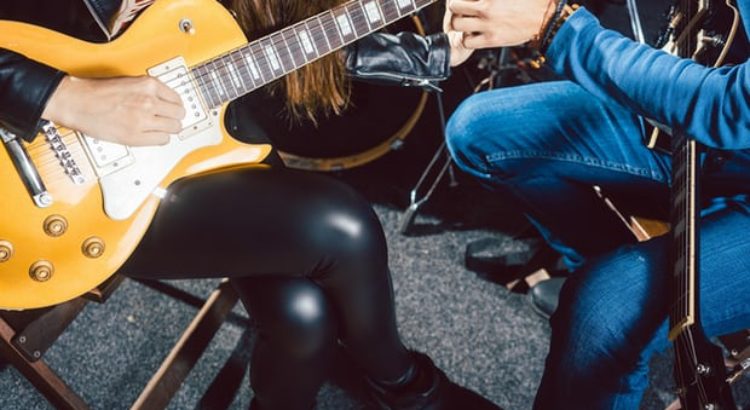
For Kris Halpin, a disabled musician who delivers music lessons in schools, the thought of being in front of a room full of students used to be terrifying. But he knew what it would have meant to him at 14 to see a disabled person teaching his class.

“My experience in education [in the 1980s] was not immensely positive,” Halpin says. “I was bullied a lot at school because of my disability. Not by my peers but by the staff … When I had to flag an access [problem], I was told I was only disabled when it suited me. It was not a supportive place to be. Music education was my one salvation.”

Representation in the arts

At charity Drake Music, we wanted to look at the representation of disabled people in music education. But finding the data was problematic. Figures from Arts Council England [pdf] show that only 4% of the wider arts workforce identify as disabled. UK Music’s diversity research did not include disability in its survey.

In an attempt to improve knowledge in this area, we spoke to 36 music education hubs [pdf] about their workforce. Music hubs are groups of organisations – such as local authorities, schools, art organisations and voluntary organisations – working together to provide music education. They are so varied that making direct comparisons between them is difficult, but it gave us some idea about disability representation.

A third of the hubs said they had at least one paid member of staff who self reported as disabled. One in five (22%) were paid music leaders. There was a wide range of understanding and experience of disability, and each hub was at a different stage in providing truly inclusive music education services. But we were heartened to see that many recognised the importance of the topic. One respondent told us: “You are opening up a discussion we need to have.”

Diverse populations need teachers from a range of ages, backgrounds, experiences and communities. A more balanced and representative workforce creates relatable role models and opens the door to new possibilities for young people. It makes space for positive, constructive debate about the best teaching methods and approaches for working with young disabled people, and it combats negative perceptions and misunderstandings.

We know that music is a powerful force for many of the disabled people we work with. If made accessible, it can be a space for self-expression and offer a way in to a world of creative opportunities. That doesn’t happen enough.

Change cannot be affected by one organisation, or by a single policy, but will take many small movements across music education. There is increasing recognition that making music education more inclusive is important. This month, Youth Music launched the Alliance for a Musically Inclusive England, promoting diversity and cultural democracy in music education. Accessible practice is taking centre stage at conferences such as Music Mark. And there is recognition of the problem of declining music provision in schools more broadly.

From: https://www.theguardian.com/teacher-network/2018/apr/13/music-education-should-be-inclusive-so-where-are-the-disabled-teacher

Comparte este contenido:

Nigeria: As History Returns to the Curriculum

Africa/ Nigeria/ 16.04.2018/ From: allafrica.com.

Finally, the future of Nigeria looks a little brighter because the nation has decided to begin to look, again, into its own past.The erstwhile removal of History from the school curriculum, or its so-called integration into that of Social Studies, was a mindless and uncharitable act of disservice to the generation of Nigerian pupils/students to which it was denied, a deprivation of the human need to understand its origin and trajectory in order to chart a worthy and viable course for its continuity. Thankfully, however, History has been restored, and Nigeria is no longer doomed, like the proverbial river that forgets its origin, to dry up and crack in its bed.

As far back as 1999, in a meeting with the then newly elected President Olusegun Obasanjo who had made a reference to the problem of youth violence across the country, one of Nigeria’s historical icon J. F. Ade-Ajayi had made it clear that this problem stems from the lack of the knowledge of history in the Nigerian youth population. A host of other things, both positive and negative, happening in the country now can be better understood and engaged if they were traced back into history. The paucity of a sense of nationalism or patriotism can be directly tied to the lack of a sense of history, for it is difficult, perhaps even impossible, to love a country that one does not know.

Moreover, there is a sense of identity, culture, ownership and responsibility among other things that can be taught or given only through an immersion in the history of one’s people. Once again, therefore, the re-introduction of History as a stand-alone subject in the basic and junior secondary curriculums across the country must be greeted with joy and renewed hope. The government must be commended for listening to the criticisms and pleas of its people on this particular matter and reshaping its policy to suit the reasonable stance of its citizens.

In implementing or executing this very commendable policy, however, the need for vision and responsibility must not be overlooked. History being as long and wide as human reality itself, the study of the history of Nigerian peoples and their connections with the greater world must be emphasized as the core of the new curriculum. The greater portion of school children in the country nowadays, perhaps by virtue of their exposure to the history-laden comics and sitcoms of the West, are conversant with the exploits of such figures as Benjamin Franklin and Joan of Arc while questioningly cringing their noses at the mention of Ovonramwen and Queen Amina. This is not a desirable state of affairs. History, like charity, must begin at home, and it is time for Nigeria to also begin to utilise the products of technology and innovation in teaching its children its own history.

Culture, being intertwined with history, must share in this rebirth. There is thus nothing wrong with the making of cartoons and other animations that tell the stories of Ogun, Sango, Chaka the Zulu, Amadioha and Mandela, all made colourful with toned-down representations of the personages and rites of passage without which these stories will not be complete. Since these children, as research has shown, respond better to visuals, then let them be given visuals.

The history of a people must also be taught in line with the particular vision that that people has for itself. The Executive Secretary, Nigerian Educational Research and Development Council, Prof. Ismail Junaidu, has said that one of the purposes of this policy is the promotion of Afro-Nigerian history so that the challenges of globalisation can be better understood, appreciated and negotiated. This is a goal that is worth pursuing, and the starting point must be for that which is Nigerian/African to be posited as strong and valuable on its own, able to inter-connect with the outside world on its own terms and as an equal. For this task to be achieved, the employment of history teachers (i.e. teachers who actually studied history and are trained to teach it rather than makeshift instructors from perhaps other disciplines) is imperative. If this is taken along with the use of new media, the study of history in Nigeria will know no limitation in its fruits.

In conclusion, the return of History to schools as an independent subject must be recognised also as a clarion call to parents, teachers, and guardians to first take up the responsibility to educate themselves in their own history and then teach their younglings the same. To be practical, the history of particular tribes and clans (which is also very important) is best taught at the level of the family. It is, therefore, time to bring back the culture of an oral transmission of tribal history.

From: http://allafrica.com/stories/201804110187.html

Comparte este contenido:

Uganda: New Curriculum Good, but Beware of Pitfalls

Africa/Uganda/ 16.04.2018 / From: allafrica.com.

The government has rolled out a revised curriculum for Ordinary Level with ambitious reforms that have seen 20 subjects either dropped or consolidated with others to bring down the number of examinable units to 13. Even among the retained subjects, there have been changes. Topics that are deemed irrelevant have been scrapped.

Teachers have expressed reservations on the implementation of the curriculum, saying they were not consulted as the tail-end implementers, which may impede the execution and realisation of the objective.

 But that aside, the most critical reform in the new curriculum, which might bring more challenges than the intended good, is the change of grading system in the final Ordinary Level examinations for the lower secondary learners.

From: http://allafrica.com/stories/201804120152.html

Comparte este contenido:

England: Many parents face disappointment over primary school places

England/ 16.04.2018/ From: www.theguardian.com.

Parents in England will find out on Monday whether their child got into their top choice of primary school to begin reception class in September, with many likely to face disappointment owing to the pressure on places in some areas of the country.

On what has become known as national offer day for primary schools, about half a million families will receive emails during the course of the day and letters later in the week confirming whether they have been offered a place at their first-choice school.

Despite fewer applications this year as a population bulge moves into secondary schools, thousands of families are still likely to miss out on their top choice, particularly in London, where just 86% got into their first preference last year, with that figure dropping to 68% in Kensington and Chelsea.

Early data suggested a slight improvement on last year’s figures in some areas. In York, for example, 94.2% of children were awarded places in their first-preference school this year – up from 92.9% last year – and just 11 children failed to secure a place at one of their preferred schools, down from 25 last year.

Last year, 97.2% of four-year-olds in England were offered a place at one of their top three primary schools. Many parents go on to lodge appeals in a last-ditch attempt to secure a place at their first choice of school.

According to the Good Schools Guide, the success rate of primary school appeals varies widely. In 2016-17, a third of appeals in the north-east went in the child’s favour, while the success rate was just 7% in London.

Elizabeth Coatman, the guide’s state education consultant, said: “Children are still being offered places which their parents consider to be inappropriate. Appealing is an option, but with huge regional disparities in the success rates, you shouldn’t count on it going your way.

“However unfair it may feel, the length of your school run, having siblings at other schools, super-sized classes and poor Ofsted reports are unlikely to be successful grounds for appeal.”

Paul Whiteman, the general secretary of the National Association of Head Teachers, said “In an increasingly fragmented school system, we lack a coordinated approach to place planning. The government’s own figures show that an extra 654,000 school places will be needed in England by 2026 to meet the 9% rise in pupil population.

“Until the government creates a national strategy to guarantee there are enough school places for every child in England, the annual anxious wait for families will continue.”

From: https://www.theguardian.com/education/2018/apr/16/many-parents-face-disappointment-over-primary-school-places

Comparte este contenido:

Kenya: Lecturers’ Strike to Continue as Talks Fail

The National Treasury wants striking university lecturers to withdraw a case they have filed against the salaries commission before talks on their pay demands can begin.

Principal Secretary Kamau Thugge told the National Assembly’s Education committee that the salaries commission could only finalise its job evaluation and create a basis for increasing the lecturers’ salaries and allowances in the 2017-2021 collective bargaining agreement if the case is withdrawn.

«The determination of the offer to the universities will be subject to the recommendation of the Salaries and Remuneration Commission (SRC),» Dr Thugge, who insisted that nothing would be done outside the Constitution, said.

Union officials, university representatives and Ministry of Education officials also appeared before the committee chaired by Tinderet MP Julius Melly, in efforts to end the one-month strike.

COUNTER-OFFER

Despite the directive by Mr Melly that the parties resume talks, each appeared adamant that its conditions must be met first.

University Education Principal Secretary Japheth Ntiba said lecturers should call off the strike and allow negotiations to take place.

He said the SRC is yet to be reconstituted to enable the new commissioners «to endorse the payment bacon».

However, University Academic Staff Union (Uasu) Secretary-General Constantine Wasonga maintained they will only call off the strike once a counter-offer is tabled.

«If they give us the counter offer today, we will return to class by Monday,» he said.

JOB EVALUATIONVice-chancellors committee chairman Francis Aduol, however, blamed the National Treasury and the Ministry of Education for the stalemate.

Prof Aduol said the talks had collapsed after the ministry failed to authorise the universities to give an offer to the lecturers and other staff.

«Even if they give us a counter-offer of zero per cent, we will present it to the lecturers. But they have not done so,» he said.

A report on staff audit, he said, was available for the government to use to give lecturers an offer.

Dr Wasonga said a job evaluation that was done by SRC should not impede the provision of a counter-offer by universities and the government.

NEGOTIATIONS

He told the committee that the Employment and Labour Court, in a 2016 case involving nurses, ruled that job evaluation by the SRC should not be linked to collective bargaining.

«The SRC, in a letter to Uasu dated March 18, indicated that the government had not sought its advice on the parameters for negotiations of the CBA,» he said.

Uasu asked Parliament to direct the government to present a counter-offer and engage in negotiations so that the deal could be signed.

The union also wants the Education ministry and the National Treasury to nominate representatives to sit in a joint committee with Uasu to facilitate negotiations to «overcome the many bureaucratic layers involved».

PAYROLL AUDIT

Lecturers are demanding Sh38 billion for the four-year deal.

However, Dr Thugge insisted that the ministry must carry out a payroll audit to establish the actual number of university employees and the cost of their compensation.

«The State Department should also conduct a financial audit on the expenditure and revenues, including the internal controls in the universities in order to establish how funds released from the Exchequer and those generated internally, are applied and accounted for,» he said.

From: http://allafrica.com/stories/201804130185.html

Comparte este contenido:

United Kingdom: Measures to deliver quality education across all settings

United Kingdom / April 15, 2018 / Author: Editorial Staff / Source: Government of the United Kingdom

A package of measures to help make sure children receive the best possible education either at home or outside of school have been announced today (10 April).

A package of measures to help make sure children receive the best possible education either at home or outside of school have been announced by School Systems Minister Lord Agnew today.

The announcement will support the families of the estimated 45,500 children that are educated at home, providing parents and local councils with strengthened guidance so both understand their rights and responsibilities.

A Call for Evidence has been launched to ask for the views of parents and local authorities on how to ensure children receive the expected standard of education at home, including:

  • How local authorities can monitor the quality of home education to make sure children are taught the knowledge and skills they need;
  • How effective registration schemes are for children who are educated at home; and
  • How government can better support those families who choose to educate their children at home.

The Education Minister also announced £3 million to support the joint working of local authorities, the police, Ofsted, the government and other agencies in tackling the minority of out of school settings that seek to undermine British values or expose children to other harmful practices. This work will help to share best practice across the country.

Today’s announcement builds on the recently launched Integrated Communities Strategy, which had education at its core. It is part of the drive to ensure all children receive the best possible education, with 1.9 million more pupils in good or outstanding schools than in 2010 thanks to the government’s reforms and the hard work of teachers.

Minister for School Systems Lord Agnew said:

Across the country there are thousands of dedicated parents who are doing an excellent job of educating their children at home, and many selfless volunteers working for clubs and organisations that help to enrich children’s education outside of school.

It is right that we should build on the high standards we’ve set in our schools so that every child receives a suitable and safe education – no matter where they are being taught – and that we can act quickly in the rare instances when this is not the case. This support for families and local communities will help ensure all children get the education they deserve.

The Call for Evidence will run for 12 weeks and will ask for views from families that choose to educate their children at home, local authorities and home education support groups. The issues raised include the registration of children who are home educated and the monitoring of home education provision by local authorities. It will build on the existing requirements for local authorities to identify children they believe are not receiving a suitable education and their powers, which can ultimately include serving a School Attendance Order.

The government is also consulting on revised guidance for parents and local authorities to support them in making sure home education provision is of the highest possible standard. This guidance will set out the processes by which local authorities should identify children who are being educated at home and how best to intervene if they are not receiving a suitable education. For parents, it will offer support and advice on whether or not home education is the right decision for them and their child, while also making clear the powers that local authorities have and the steps parents should take if concerns arise.

The Department for Education has also published its response to the consultation on regulation for out of school settings – environments that enrich children’s education. The department has carefully considered over 18,000 responses and has already taken action by establishing a £3 million targeted fund which will go to selected areas to support work between local authorities and relevant agencies. It will be used to show how existing legal powers can be most effective in addressing safeguarding and welfare concerns, alongside community engagement and outreach. This work will inform the need for any future regulation.

A consultation on a voluntary code of practice for out of school settings will be published later this year to set out what is expected of providers, and the Department will work with local authorities to provide guidance to parents on out of school settings.

Source of the News:

https://www.gov.uk/government/news/measures-to-deliver-quality-education-across-all-settings

Comparte este contenido:
Page 104 of 144
1 102 103 104 105 106 144