Page 3487 of 6193
1 3.485 3.486 3.487 3.488 3.489 6.193

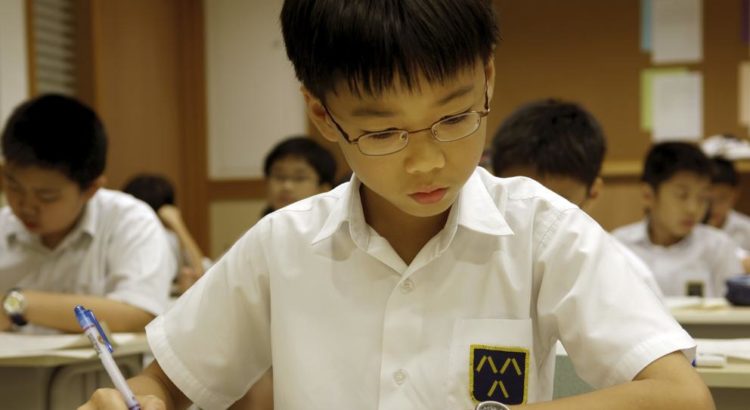
Australia: Fee increases still on the table after Senate committee reports on higher education changes

Oceanía/Australia/Agosto del 2017/Noticias/https://theconversation.com/


On Wednesday, a Senate committee reported on the government’s proposed changes to higher education.

Though more moderate than the 2014 version, the new higher education package represents groundhog day for the major political parties. The committee, chaired as it was by the Coalition, recommended passing the measures, stating that they will:

… balance the Commonwealth’s need to recover student debts over time with the need of students to access a fair and high-quality system of higher education without facing high upfront fees.

However, the Labor members of the committee dissented. They strongly argued for the bill to be rejected, arguing that:

Australian students will have to pay more, for less, sooner.

Where to next?

What are the changes?

The reforms’ explicit intent is to rein in government spending on higher education without compromising teaching quality or restricting access to higher education by making it unaffordable.

The headline changes are:

  • An increase in the student contribution toward the cost of the degree to, on average, 46% for Australian students (currently they pay on average 42%).
  • According to the government, the maximum cost of a Commonwealth-supported course would be A$50,000 for a four-year degree, or $75,000 for a six-year medical degree.
  • Students paying for their degree through HECS-HELP would start paying it back when they earn $42,000 (the current threshold is $54,869).
  • The universities would be subjected to a 2.5% funding cut (the government calls it an efficiency dividend), which amounts to around $380 million in 2019.
  • Access to Commonwealth-supported places for Australian permanent residents and New Zealand students would be removed. These students would have to pay the full tuition rate. This would typically double or even triple the cost of their degree. To offset the fee increase, these students will be able to access HECS-HELP loans like Australian citizens, whereas previously they had to pay up front.

For context, when higher education reform was last attempted in 2014, proposed cuts to university teaching funding were around 20%. And student fees were to be deregulated, leading to fears that degrees could cost more than $100,000.

The 2014 proposals proved almost universally unpopular but the legislation lingered, zombie-like, for several years before being shelved. This new proposal is an attempt to press the reset button and move forward.

Those opposed to the latest proposal have pointed to reduced funding for universities, higher costs to students, and tougher loan repayment requirements.

Those supporting the changes feel the fee increases and funding cuts are moderate in comparison to the 2014 proposals, and in line with the overall fiscal reality.

How was the new reform agenda received?

Since announcing the changes, the government has received more than 1,200 submissions from a wide range of higher education stakeholders, including students and their parents.

Further submissions were made to the Senate committee. The vast majority opposed the proposed changes to student tuition fees and repayments.

The general sentiment revealed by the submissions was a belief that “students will end up paying more to get less”. This phrase, or similar versions of it, appeared in multiple submissions.

Many submissions were from permanent residents and New Zealanders, worried about the intended increase to the cost of their education. In the words of one:

I am pretty sure there are countless others who have had their dreams of studying higher education crushed … We should take care of the people living in this country, and give them a chance to progress into university, before they like us feel as though they may have to return back to their home countries just to follow their educational dreams.

In its submission, the University of South Australia supported the student fee increase but opposed the lowering of the repayment threshold.

Victoria University proposed the money raised by increasing student tuition fees should be given to the universities rather than the Commonwealth:

… in order to directly improve the student experience of those paying the fees.

All other universities either opposed the student fee increases, or avoided the issue in their submissions.

All universities opposed the proposed funding cut to the universities themselves.

What next?

In its dissenting report, Labor calculated, for example, that a graduate with a HELP debt earning $51,000 will have less disposable income than someone earning $32,000.

Labor also expressed its concern about the impact of student debt on New Zealanders and permanent residents, given they will be required to pay full fees.

Similarly, the Greens members of the committee dissented, stating that:

… young people from low socioeconomic backgrounds would be priced out of an education.

Assuming the government proceeds with the changes, the Senate will debate and vote on the bill in due course. If so, its fate lies with the minor parties and independents – just as it did the last time.

Comparte este contenido:

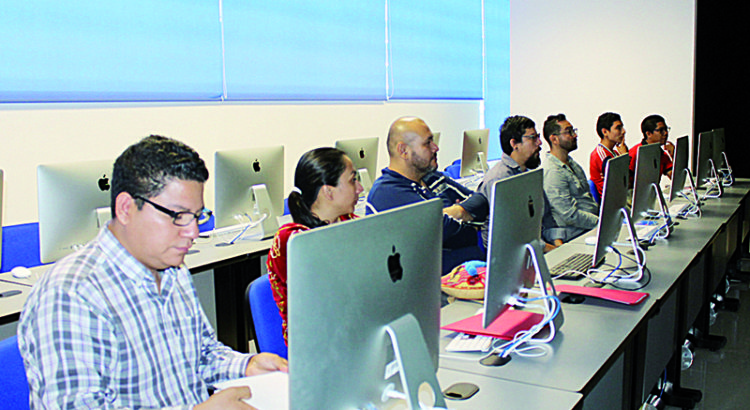
África:The end of South African universities?

África/Agosto del 2017/Noticias/https://theconversation.com/


Jonathan Jansen, vice-chancellor of the University of the Free State in South Africa until a year ago, has written a book on the country’s higher education sector. As by Fire – The End of the South African University is one of a number of recent books that set out to make sense of the current crisis in South African universities.

The crisis began in early 2015 with the #RhodesMustFall protests and gained momentum over the course of 2015. These protests fuelled, and eventually overtook the national #FeesMustFall movement. The underlying economic, cultural and political issues that drove the protests remain largely unresolved.

As by Fire is structured around three main questions: What in fact happened? Why did it happen? And what does the protest crisis mean for the future of South African universities?

Jansen draws on his own experience as well as interviews with 11 vice-chancellors in the country. His conclusion is:

In a nutshell, there is no future, and

What we are witnessing is a full system meltdown.

There are several problems with Jansen’s apocalyptic thesis.

An irresponsible thesis

Firstly, for a scholar of Jansen’s calibre, the analysis lacks a broad comparative perspective. His main reference point is the story of failing universities on the rest of the continent.

Jansen doesn’t make any comparisons to student protests across the globe– in Hong Kong, Canada, Chile, the UK, the US and Turkey, to name a few. These were also characterised by occupations of leaderless movements, threats of violence by police and militant students, reassertion of identity politics in curriculum and political stalemate.

A more thorough comparative analysis of what is happening in South Africa in relation to continental and global trends could have led to a more constructive conclusion that posed a range of future scenarios instead of a single “no future” story.

The more serious problem with Jansen’s “no future” thesis is that it’s irresponsible. Someone of Jansen’s profile has tremendous power to shape the narrative. And how South Africans interpret the events of the past two years shapes how the sector will go forward. In other words, his conclusion has consequences. Why would academics stay if they believed Jansen’s predictions with the certainty that he projects them? Why would students apply? Why would donors invest?

In the final few paragraphs Jansen attempts to wave a small flag of hope by appealing to civic action under the banners of free education for the poor and the right to education for all. This is an unconvincing attempt to end the book on a happier note.

An important perspective on leadership

What the book does offer is a view of university leaders under crisis – a close-up, zoomed-in, largely unedited perspective of 11 VC’s “under fire”, in some cases, literally. This is why the book will be of interest to anyone in higher education management.

The extensive literature of higher education leadership and management needs more of this kind of “in the trenches” study – leaders describing in their own words what it feels like to be flattened between a rock and a hard place, managing competing and contradictory demands from all sides while always under the watch of an unsympathetic media.

The book presents a view of leaders in a lose-lose situation, required to make on-the-spot judgement calls. The reader gets a close-up view of the ways in which they worked tirelessly to defend their institutions and were battered from every side. And Jansen is right to expose the extreme pressure and the personal costs that the VCs and their families paid. The accounts expose both their vulnerability and their resilience.

Jansen concludes by arguing that what’s needed more than ever before is

university leadership that is both compassionate in speaking to the student heart and competent in leading our universities in a demanding world of teaching, research, and public duty.

The missed opportunity of the book is that Jansen doesn’t explicitly extract from his interviewees what that compassionate competence looks like. In retrospect, what do they think they did right? What do they regret? What did they learn as leaders in crisis about the complexities of leading a university community at this stage of South Africa’s democracy?

Rebecca Solnit, American activist and author of Hope in the Dark, writes of the times we are living in that

this is an extraordinary time full of vital, transformative movements that could not be foreseen. It’s also a nightmarish time. Full engagement requires the ability to perceive both.

What South Africa’s universities need from their leaders now is not prophecies of doom, but deeper reflection on the transformative potential of this difficult historical moment.

Fuente:https://theconversation.com/the-end-of-south-african-universities-82180

Fuente Imagen : https://lh3.googleusercontent.com/wf06ZYJ0_sZdaa_AYevAy7P5znkbvjXejpNivdJmcTEYowLECQDQhxLI0eR2VkdPqNbMeA=s85


Comparte este contenido:

EEUU: White educators need to fight racism every day

América del Norte/EEUU/Agosto del 2017/Noticias/https://theconversation.com

Like many people, I watched the news coming out of Charlottesville this weekend in horror. Future generations will ask about this moment, wondering: How did this happen? What did you do to resist?

I asked myself: As a white educator, how do I respond? What will I say to future generations? What is my responsibility?

Siva Vaidhyanathan wrote in the New York Times about the choice, as a professor at the University of Virginia, between denying extremists the attention “that feeds their flaming torches” and the call to direct confrontation. I read this piece and wondered, what would I do? What have I done?

In the 2016 documentary I am Not Your Negro, James Baldwin said: “History is not the past. It is the present. We carry our history with us. We are our history. If we pretend otherwise, we are literally criminals.”

So I need to act. White educators need to act. Every day.

Acting against white supremacy and systemic racism is not about white people demanding to be absolved because we are good people, have been discriminated against ourselves or are self-declared allies. It isn’t about insisting on being called Caucasian — a racist term — instead of white. This is white fragility that distracts from talking about white supremacy and instead centres again on white people’s needs and desires.

I find myself, as I write this, thinking I should tone it down. I want to minimize and not offend. As a white person I can tell myself that, overall, society is equal and fair. But this is a dangerous lie and it requires ignoring overwhelming evidence about global inequity.

White supremacy is defined as thinking that white people are superior to all others. Acting against white supremacy and racism is about learning what white supremacy, systemic racism and white privilege really mean.

It is about learning how the stress of racism affects learning. It is about learning how to understand and dismantle racism. It is about selecting children’s books carefully. It is about teaching children and teens to undo racism and white supremacy.

Systemic racism in school

White supremacy and white privilege normalize winning through violence — imperialism, killing, hurting, stealing knowledge, wasting and convincing everyone that white people are No. 1. White supremacy and white privilege involve doggedly refusing to acknowledge the contributions, and the vast knowledge, of the majority of people in the world who are not white.

This logic infects how we educate, who and what we see as leadership, and how we come to see each other and the planet that we are rapidly destroying.

Six people were killed in a shooting at a Quebec City mosque on January 29, 2017. Here hundreds march in solidarity with the victims. THE CANADIAN PRESS/Jacques Boissinot

When I was growing up, the main characters in books were usually white and male. There were some women characters — including Nancy Drew, Wonder Woman, the Bionic Woman and Samantha from Bewitched. But all were white, and their characters often racist. My mother and grandmothers read books with different heroes but what they all had in common is that they were white, and in school we all learned about famous white people. In other words, our education ignored the vast majority of the world’s artists, thinkers, inventors, conservationists and humanitarians.

Today, students are often encouraged to participate in an event to help Africa such as a 24-hour fast that is supposed to enhance their understanding of starvation, or to go build a school or work in an orphanage over spring break. The assumption is that Africa — often represented as one big country rather than a continent with 54 countries — needs the help of us white people to develop.

Their education on Africa doesn’t include facts about African leaders or colonization and the continued violence towards people, water and landsby predominantly white, multinational corporations.

The canon I read in high school was white and predominantly male. The ideas were focused on meritocracy — work hard and you will succeed. Sometimes there were books on totalitarianism, such as 1984 by George Orwell, but race wasn’t discussed. Some of us might have read To Kill a Mockingbird (about a white saviour type). The secondary school students I speak with today have a reading list remarkably similar to what I had back in the 1980s.

So it’s not surprising that scholars, particularly scholars of colour, might anger students and colleagues who presume they’re pushing their special interest if they suggest readings from scholars who are not white. For white students and educators raised on white supremacy and with white privilege, knowledge from people outside of what has been represented as “normal” (code: white) since early childhood seems fringe, it seems special interest, and it seems irrelevant to their education.

It’s not surprising that there is a combination of anger, sadness and confusion when the white savior industrial complex is challenged.

Changing the structures

Bell hooks reminds us that “we have to constantly critique imperialist white supremacist patriarchal culture because it is normalized by mass media and rendered unproblematic.”

Most educators want to do the best for their students. We spend hours in hopes of developing inspiring classes and piquing the curiosity to learn. But we will do harm if we don’t truly act to change the white supremacist power structures we live within. White supremacy isn’t about ignorance, it is about power.

Talking about the crimes committed in the name of white supremacy is painful, but imagine how it is for the mother worried her child might get shot just for having the audacity to walk down the street as a racialized youth. Imagine what it is like for mothers of missing and murdered Indigenous women. Imagine what it is like for students who year after year read stories about white benefactors and superheroes.

We need to refuse to minimize the oppression despite the temptation to do so. White supremacy is real and does immeasurable harm. What do we teach our children? Do they learn about white supremacy and racism and ways to fight against it? Do they learn about people like Rosemary BrownMary Two-Axe EarleyJames BaldwinViola DesmondMary Shadd Cary and Nina Simone who give us new ways to think and act for a better world?

Yes, those of us who are white and want to learn new ways of being will get challenged for racism that we are trying to unlearn. We will be embarrassed and we will often be confused and angry. But we do have a responsibility to keep learning a new way of being, despite the discomfort.

Unlearning white supremacy is a lifelong process. The consequence of not doing so is to continue to create a planet that is uninhabitable for all.

The good news is that there are plenty of resources to educate ourselves, and plenty of opportunities to engage in collective action for a better world.

Places to start

Listen to Minelle Mahtani’s Sense of Place radio show. She is a leading voice and brings on other scholars to talk about critical race studies, Indigenous studies and white supremacy. Start with these episodes:

  1. Black scholars interrogate white nationalism after the U.S. elections, an interview with Annette Henry, Handel Wright and David Chariandy.
  2. The adultification of Black girls, an interview with Collier Meyerson.
  3. Negroland, an interview with author Margo Jefferson.

Read Özlem Sensoy and Robin DiAngelo’s book Is everyone really equal? An introduction to key concepts in social justice education.

Watch The Funky Academic’s videos which set basic philosophy to a dub beat, targeting white supremacy.

Fuente: https://theconversation.com/charlottesville-white-educators-need-to-fight-racism-every-day-82550

Fuente imagen:https://lh3.googleusercontent.com/U2Mxn6IRtsN44KZeFlU-Cpftvhti-qT1tzbqOuvHhUI5-UKuGaeOzISg0tNveXMIPN9_=s85


Comparte este contenido:

España: Podemos alerta del deterioro de la educación pública en la Región frente al fomento de la educación concertada

Europa/España/Murcia/

La Secretaría de Políticas Públicas de Podemos alerta del deterioro de la educación pública al entrar en vigor para el curso 2018-19, la medida abre la posibilidad de concertación a los centros de Bachillerato y FP que además se amplíen de cuatro a seis años; lo cual, para la el Secretario de Políticas Públicas de Podemos Región de Murcia, implica «una nueva agresión a la educación pública, que el gobierno oficializa»

Juan Ángel Sánchez Naharro, ha explicado que el Gobierno Regional hace una «utilización de la libertad de elección de centros como pantalla para favorecer un determinado modelo educativo frente al interés por la educación pública».

Así; Sánchez Naharro ha denunciado que «La Consejera de Educación sigue empeñada en utilizar conceptos como estabilidad, demanda social y libertad de elección de las familias para enmascarar unas decisiones que no solo son perjudiciales para el buen funcionamiento de nuestro sistema educativo, sino que además pone en riesgo el concepto de servicio público en beneficio de determinados intereses económicos y empresariales».

Desde la Secretaría de Políticas Públicas de Podemos, se considera que prolongar de manera generalizada en seis años la duración de los Conciertos Educativos, -cuando la ley solo lo indica para Educación Primaria y programar para el curso 2018 2019 la entrada en vigor de los mismos en Bachillerato y Formación Profesional en una etapa no obligatoria- «supondrá una carga económica a los presupuestos regionales difícilmente justificables desde el punto de vista educativo y que tendrá repercusiones en la educación pública regional».

Por este motivo, ha concluido el responsable de la Secretaría de Políticas Públicas, Juan Ángel Naharro que «desde PODEMOS lamentamos y denunciamos que una vez más el Gobierno Regional utilice la educación como instrumento para apoyar un concepto de la educación como negocio muy alejado del servicio público que como administración debería esforzarse en mantener».

Fuente: http://www.murcia.com/region/noticias/2017/08/16-podemos-alerta-del-deterioro-de-la-educacion-publica-en-la-region-frente-al-fomento-de-la-educacion-concertada.asp

Comparte este contenido:

En Venezuela desde el IVIC exhortan a científicos venezolanos a debatir sobre la posverdad

America del Sur/Venezuela/PrensaIVIC

El célebre Diccionario de Inglés Oxford, del Reino Unido, la declaró como la palabra del año en 2016. La post-truth o posverdad es definida por los expertos británicos como aquellas “circunstancias en las que los hechos objetivos son menos influyentes en la opinión pública que las emociones y las creencias personales”.

La instantaneidad y virtualidad creadas por la tecnología han transformado la forma de percibir el mundo. ¿Cómo afectan las posverdades a un campo como la ciencia, donde la certeza absoluta y neutralidad valorativa son indispensables?

Para el sociólogo Miguel Ángel Contreras, la ciencia no está al margen de la crisis global del sistema capitalista, la cual ha propiciado la aparición de numerosos discursos donde cada uno busca posicionarse como dominante.

“Estamos atravesando una multiplicidad de crisis en lo político, económico, cultural y ecológico, que hacen que los estándares de la ciencia también estén desestabilizados”, explicó Contreras en conferencia organizada por el Laboratorio de Ecología Política, adscrito al Centro de Estudios de la Ciencia del Instituto Venezolano de Investigaciones Científicas (Ivic).

Desde la perspectiva de la posverdad, la ciencia es una herramienta para conocer la realidad, pero no la única. “Cuando hablamos de posverdad nos referimos a la relativización y pluralización de las fuentes de información, así como a la espectacularización y simulacro de los hechos”, acotó.

El prefijo “pos” no es nuevo; fue usado en los años noventa por el argentino Silvio Funtowicz y el estadounidense Jerome Ravetz para describir la ciencia posnormal, que emerge en contextos donde “los hechos son inciertos, los valores están en disputa, lo que se pone en juego es alto y las decisiones son urgentes”, características contrarias a la ciencia convencional.

Para la ciencia debe haber correspondencia entre el objeto (hecho) y el enunciado teórico (interpretación o análisis del hecho), pero desde la perspectiva de la posverdad esto no siempre ocurre. Un ejemplo sería el cambio climático: pese a la evidencia científica, algunos autores niegan su existencia.

De acuerdo con el docente de la Universidad Central de Venezuela (UCV), el debate sobre el cambio climático supera a la verdad de la ciencia y sobrepasa los límites de la comprobación factual al entrar en el terreno de la política y el marketing.

Aportes desde la academia

¿Qué papel cumplen las instituciones de investigación científica en esta contienda de interpretaciones o posverdades? Según Contreras, este tipo de organizaciones tienen que ofrecer visiones diversas de las cosas “con datos recogidos de la realidad. Un centro como el Ivic necesariamente debe ocuparse de la producción de horizontes alternativos y estos tienen que ver con la crítica a lo dado”, dijo.

El Laboratorio de Ecología Política del Ivic intenta contribuir en esa dirección, combinando la reflexión social e histórica acerca de la relación entre ciencia, tecnología, ambiente, industria, sociedad y Estado venezolano, con la coyuntura política, económica, social y cultural nacional, regional y global.

“Cuando hablamos de verdad podemos identificar una concordancia entre imagen y objeto, y este, a su vez, resulta controversial porque no siempre es verdadero o falso. La diversidad valorativa sobre un mismo suceso o fenómeno entra en confrontación cuando se plantean posiciones antagónicas”, afirmó la socióloga del Ivic, Marhylda Rivero.

A juicio de la experta, los medios de información y las redes sociales inciden en la construcción de esas imágenes, seleccionando y jerarquizando lo que la audiencia ve, oye y lee.

“En ese escenario de fabricación de hechos para su consumo mediático, el diseño de estereotipos sociales y culturales contribuyen con la invisibilización y deshumanización del otro como un nefasto sentido común, que no solo justificaría la confrontación vehemente, sino –y esto es igualmente preocupante– la negación o eliminación del antagonista”, dijo.

Precisamente, uno de los objetivos de las discusiones sobre la posverdad es ayudar a las personas a procesar con prudencia la gigantesca cantidad de noticias, falsas y verdaderas, que obtienen a diario por numerosas vías.

Para el sociólogo del Ivic, Marx Gómez, la idea es que el ciudadano pueda tener “una mayor perspectiva crítica, sin dar por sentado las cosas sino problematizando y cuestionando lo que reciben”, indicó.

De manera similar opina Rafael Carreño, espeleólogo del Ivic. “El proceso de manipulación que está ocurriendo ahora es extremadamente intenso y viene por todos los medios, desde la música y la escuela primaria hasta ámbitos académicos”, concluyó.

Aunado a la influencia externa de las corporaciones mediáticas, está el propio individuo y sus ansias por saber de todo aunque sea parcialmente y su necesidad de reafirmarse como sujeto social, con creencias, sentimientos y gustos.

El economista Fernando Trias lo explicó perfectamente en su artículo «La verdad de la posverdad», publicado en el diario español El País el 28 de mayo: “Prestamos más atención a las cosas que nos llaman la atención independientemente de cuál sea su fuente y si esta tiene credibilidad o no. Por eso preferimos hablar de posverdad. De llamarlo mentira estaríamos aceptando que son alimento de nuestra cabeza”.

En contextos de guerras de interpretación y de debates epistémicos como los actuales, cabría preguntarse: ¿Quién tiene la verdad? ¿Es relevante “tener” la verdad o discutir sobre quién la produce y a través de cuáles relaciones? ¿Acaso la ciencia tiene la última palabra?

Fuente: Enviado a redaccion OVE

Comparte este contenido:

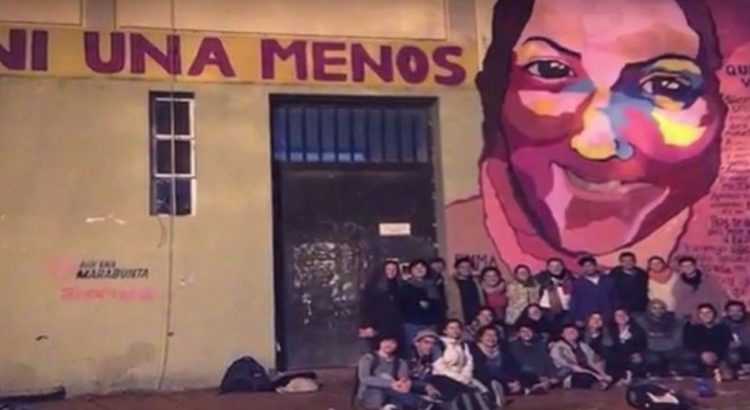
México: campaña mundial para exigir justicia para 43 estudiantes mexicanos desaparecidos


América del Norte/México/ Prensa IE

Una campaña mundial para señalar los tres años transcurridos desde la desaparición forzada de 43 estudiantes normalistas (escuela para maestros de primera enseñanza) en México reclama nuevamente una investigación, reparación y justicia.

Durante tres años, las familias de los desaparecidos, ciudadanos privados y la comunidad internacional, incluyendo los sindicatos de la educación y las organizaciones de derechos humanos, han exigido y siguen exigiendo justicia para los 43.

El 26 de septiembre de 2014, estudiantes de la escuela para docentes rurales de Ayotzinapa se reunieron con el fin de dirigirse a la Ciudad de México para asistir a la conmemoración del aniversario de la Matanza de Tlatelolco de 1968, donde fueron asesinados de 300 a 400 estudiantes y civiles por militares, policías y agentes de inteligencia para suprimir la oposición política. Durante su viaje, los 43 estudiantes de Ayotzinapa fueron detenidos, arrestados y nunca más se volvió a saber de ellos.

“Encontrar a los estudiantes no es una cuestión de información ni de recursos, sino de voluntad política”, afirmó Fred van Leeuwen, Secretario General de la Internacional de la Educación (IE). “Las autoridades tienen que permitir y apoyar una investigación exhaustiva e independiente del acontecimiento y restaurar la dignidad de 43 familias en duelo”, añadió.

Con motivo del tercer aniversario de su desaparición, la IE está poniendo en marcha una campaña mundialpara exigir justicia y una investigación exhaustiva e independiente.

Sume su voz a la campaña para exigir la verdad haciendo clic aquí.

Fuente:

Comparte este contenido:

Argentina: El Sector Educativo con más presupuesto pero no hubo mejora en la calidad

Un trabajo determina que existen en el país notorias falencias en la gestión de los recursos para el área educativa. Otras opiniones consideran que no hay política de financiamiento orientada al sector.

América del Sur/Argentina/losandes.com.ar

Los últimos años se incrementó el presupuesto destinado a Educación, sin embargo esto no se tradujo en mejoras en los aprendizajes ni trayectorias académicas. Es lo que concluye un estudio realizado a nivel nacional por el Instituto de Estudios sobre la Realidad Argentina y Latinoamericana (Ieral) de Fundación Mediterránea.

Con una serie de gráficos apunta a demostrar cómo el país ha incrementado la proporción de PBI que destina para este fin, pese a lo cual los resultados en las evaluaciones de aprendizaje no son buenos.

No hace falta ir muy lejos para tener datos al respeto: el operativo Aprender que se realizó en octubre arrojó resultados preocupantes. En escuelas secundarias  de la provincia  7 de cada 10 alumnos obtuvo un nivel básico o por debajo de éste en Matemática.

En Lengua, 6 de cada 10 estudiantes de secundaria evaluados obtuvieron nivel satisfactorio o avanzado, es decir que los 4 restantes quedaron con nivel básico o inferior.

El estudio muestra la progresión del gasto público consolidado en educación, ciencia y técnica de los últimos años en el país. En 2004 era de 3,7% del PBI y en una curva en permanente ascenso llegó a un pico de 5,9% en 2009. Aunque luego mostró oscilaciones fue de 6,6% en 2015 y se mantuvo en 6,5% en 2016.

Expresa que en términos comparativos esta proporción asignada al área supera a lo asignado por otros países. El promedio argentino entre 2010 y 2016 fue de 5,7% del PBI mientras que el promedio en países latinoamericanos fue de 5,1%; en tanto el de los países de la OCDE fue de 5,5%.


Luego de considerar la evolución de las prueba Pisa de los últimos años señala que “entre 36 países, Argentina presenta la peor evolución en pruebas de Lectura: la mitad de los adolescentes no comprende lo que lee”. Agrega que este panorama “se profundiza en la escuela pública, de cada 10 alumnos que comienzan el nivel inicial sólo 4 logran culminar la secundaria al día”.

El documento hace referencia a falencias en la gestión de los recursos educativos y lo poco de ellos que se destina a insumos y gastos de capital. Menciona la preferencia por las escuelas privadas y expresa: “en los últimos 12 años, la matrícula escolar se incrementó en 871 mil alumnos. Entre éstos, sólo 19% eligió escuelas de gestión pública”. En 2015, 28,9% de los alumnos del país iba a escuelas privadas.

El informe destaca la relación entre nivel de instrucción, pobreza y acceso a trabajo formal y subraya la importancia de mejorar  la formación para aliviar las inequidades sociales. “La educación pública dejó de actuar como instrumento de igualación de oportunidades”, subraya.

Según datos de la Dirección General de Escuelas (DGE) la variación de la matrícula en cuanto al sector de preferencia ha disminuido en el sector privado en el nivel medio. Pasó de ser 20,2% del total de alumnos en 2003 a 17,25% en 2016. En el nivel primario tuvo un leve incremento y pasó de 13,3% en 2003 a 18,48% en 2016.

Emma Cunnietti, directora de Planeamiento y Evaluación de la Calidad  Educativa relativizó los datos de Ieral y dijo que quienes se han trasladado al sector privado son quienes ya estaban escolarizados. Pero hizo hincapié en que el gran paso que se ha dado los últimos años en términos educativos ha sido incorporar al sistema a personas que antes estaban excluidas y es esa población la que ha hecho presión y ha corrido al resto al sector privado.

Señaló que el aumento de presupuesto se destinó a lograr mayor cobertura, no sólo en cuanto a los años de escolaridad obligatorios sino también a la proporción de población que accede. El cambio “ha sido importante en término de garantizar el derecho a la educación pero ese impacto no tiene la misma efectividad en términos de calidad de aprendizaje de los estudiantes”.

Sebastián Henríquez, titular del Sindicato Unido de Trabajadores de la Educación estuvo de acuerdo en que la inversión apuntó a ampliar la cobertura, lo que implicó más edificios y más docentes. Dijo que la lectura que se hace del mal desempeño de los alumnos “deriva en la conclusión de que la culpa es del docente. Donde no fue la inversión del sistema es a profundizar la formación del docente”.

El especialista en Educación, Gustavo Iaies, asegura: “Argentina no tiene una política de financiamiento orientada a la mejora, ponemos plata en cosas que no van a dar resultados. Los desafíos educativos de Argentina son de carácter estructural y no es suficiente con destinar mayores recursos al sector”.


Estrategias para avanzar

El estudio de Ieral enumera estrategias que han demostrado eficacia a nivel internacional en cuanto a lograr mejoras en el rendimiento académico. Entre ellas señala, la jornada completa, el relevamiento de información y contar con buena infraestructura. En cuanto al docente, la importancia de la formación y la experiencia así como de los incentivos por productividad y la satisfacción por la  tarea.

Respecto de los alumnos menciona el impacto positivo de la adquisición de habilidades blandas, las pruebas de evaluación educativa, la autoestima y el apoyo de los padres. Gustavo Iaies, especialista en Educación consideró importante el reconocimiento del docente que obtiene buenos resultados y las evaluaciones. Resaltó la relevancia de garantizar cuestiones de seguridad y que haya clases todos los días.

Por otra parte dijo se le atribuye un peso importante al nivel socioeconómico del alumno. Hizo referencia a un estudio de la Ciudad de Buenos Aires que concluyó que 95 % de los resultados los explica el hogar de origen.

Fuente:  http://losandes.com.ar/article/mayor-presupuesto-pero-no-hubo-mejoras-en-aprendizaje

Comparte este contenido:
Page 3487 of 6193
1 3.485 3.486 3.487 3.488 3.489 6.193