Page 18 of 51
1 16 17 18 19 20 51

The imperativeness of re-assessing the quality of nigerian educational system

Asia/Nigeria/thechronicleofeducation.com/

Resumen: Nigeria se ha ganado la designación del Gigante de África por el buen valor del tamaño, la población y sus vastos recursos. Sin embargo, el lamentable estado de la infraestructura, el bajo nivel de educación, la erosión del sistema de valores, la falta de buena gobernanza y muchas otras tribulaciones prevalecientes en la sociedad nigeriana han causado que el país pierda rápidamente el respeto en la esfera.Es preocupante que mientras algunos países han reconocido el valor de invertir fuertemente en educación como un vehículo para un crecimiento irremediable y una economía robusta, las prioridades de Nigeria todavía se encuentran en la lucha contra la corrupción, sosteniendo un sistema excesivamente costoso de gobierno y seguridad nacional.


Nigeria has earned the designation of the Giant of Africa by good worth of Nigeria’s size, population and vast resources. However, the pitiable state of infrastructure, low standard of education, erosion of our value system, lack of good governance and many other tribulations prevalent in Nigerian society has caused the country to be fast losing the respect across the sphere.

It is worrying that while some countries have recognised the value of investing heavily in education as a vehicle for irremediable growth and brawny economy, Nigeria’s priorities are still found in fighting corruption, sustaining an excessively expensive system of governance and national security.

Nigeria is blessed amply with all the resources to be the best in all ramifications but yet the educational system is in shambles just because it is a product of the Nigerian structure where in most cases normal things are abnormal and abnormal things normal. The stakeholders in our educational system which includes the government, teachers, administrators, parents, students and the society all have a share of the blame due certain action or inactions.

The function of the family as an institution has been eroded and people fail to realise that children’s exposure to cultural norms determines their level of conformity. The society no longer questions any process but accepts the product no matter how ethically erroneous or terrible they appear, merit and hard work are not longer acknowledged and rewarded but rather easy access and admiration to fraudulent wealth, culture of disorder and defective value system is gradually becoming the order of the day.

A lot of factors seem to be playing a negative role towards improving the quality of the educational system; prominent among the identified influencing factors includes Government disappointing investment in education signified by financial crises between staff and management or government, which often degenerate to various reactions such as strike action.

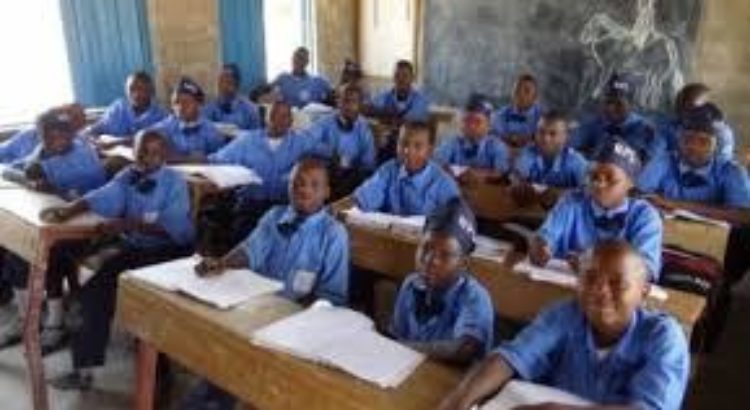
Another reason for low quality standard in the education system is shortage of teaching staff leading to very high staff-student ratio and overcrowded classrooms resulting in work overload, ineffective instructional delivery, poor supervision, examination malpractices etc thereby affecting quality of instructional process and output. The poor state of facilities which is evidence of poor funding in many schools in Nigeria is not cheering.

Apart from shortage of these amenities many of the available ones either obsolete or in deplorable conditions thereby hindering the achievement of the intended educational goals. The interlink between politics and the society prompts the government at all levels in Nigeria to invests some resources in education so as to control quality and quantity of output from the system. This gesture intends to maintain standard and uniformity in all aspects of education.

To this end, the relevance of quality assurance in the education system which provides a framework for shaping the focus of educational administrators to specific areas of needs, enables continuity in standard of service of any educational system, building quality control mechanism into educational administration Nigeria should be strengthened.

Persistent insecurity remains a social menace that resulted from the weak institutions and social organisation within the country, it is appalling that even with the current security challenges that has led to the kidnap of some school girls so many  schools are still operational without a perimeter fencing thereby exposing the learners and learning facilities to danger and security threats.

In other to improve quality of the educational system the essential factors and actors required to facilitate good policy implementation, quality school administrative practise, effective teaching-learning process, proper accountability mechanism and regular evaluation of educational outcomes needs to be organized and mobilized to the education sector to enhance professional development and expertise.

The funding of the education sector needs to be augmented and should not be left in the hands of the governments alone. Since education is capital expensive; the private institutions and multi-national organizations should play a contributory role in funding education programmes in Nigeria through a robust, workable and beneficial public-private partnership.

Training and development of staff which is as well necessary condition for quality assurance in educational system in Nigeria should be accorded the right attention. Similarly, Provision of more physical facilities and supporting facilities would go a long way to enhance quality administration of learning institutions.

In addition, regular monitoring, supervision and evaluation of educational programmes and processes will assist in identifying lapses in implementation process and equally guide in employing the appropriate remedial measures to improve service delivery and educational outcome. Community participation in the administration of schools should be encouraged so as to foster a harmonious school-community relationship that will enhance the security of learners and learning facilities.

It is hoped that confronting the problems affecting the education system promptly will to a large extent assist in setting up the remedial strategies that will confidently modify the value system and re-model education administration towards meeting the aspiration of the nation to build a veritable standard of education with quality and acceptable products.

In other words before we complain that our school products are not employable, we must confirm if our learning environments are all right, if our evaluation processes are reliable, if our teachers are well trained and committed, if our investment in education is rational and whether our schools are universally acceptable.

© 2018, The Chronicle of Education. Permission to use parts of this article is granted provided that www.thechronicleofeducation.com is properly acknowledged.

Fuente: http://thechronicleofeducation.com/2018/07/03/the-imperativeness-of-re-assessing-the-quality-of-nigerian-educational-system/
Comparte este contenido:

Expired education and Africa’s learning crisis

By The Guardian

The recent dismal report of a new World Bank study, which stated that Africa faced learning crises that may hinder its economic growth and the well-being of the citizens, questions the quality of basic education African governments have been providing their people. It is also an eye-opener to the abysmal degeneration of succession management for the society. Although keen observers of events on the continent have been worried about the celebration of mediocrity pervading key areas of society, this new study has presented bleak hope for Africa’s future, if drastic measures are not taken to address basic education. This is disheartening and highly lamentable.

The World Development Report (WDR) 2018, titled “Learning to Realise Education’s Promise”, was co-launched in Abuja the other day by the World Bank Group, the Federal Ministry of Finance and the Federal Ministry of Education. Whilst the report raised concerns about poor future prospect of millions of young students in low and middle-income countries owing to the failure of their primary and secondary schools to educate them to succeed in life, it also called for greater measurement, action on evidence, and coordination of all education actors.

It claimed that despite “considerable progress in boosting primary and lower secondary school enrollment, … “some 50 million children remain out of school, and most of those who attend school are not acquiring the basic skills necessary for success later in life.”

To substantiate its claims, the report noted that among second-grade students assessed on numeracy tests in several sub-Saharan African countries, three-quarters could not count beyond 80 and 40 per cent could not solve a one-digit addition problem. It went further to add: “In reading, between 50 and 80 per cent of children in second grade could not answer a single question based on a short passage they had read, and a large proportion could not read even a single word.”

Concerning Nigeria, the study found out that, when fourth grade students were asked to complete a simple two-digit subtraction problem, more than three-quarters could not solve it. It further stated that “Among young adults in Nigeria, only about 20 per cent of those who complete primary education can read. These statistics do not account for 260 million children who for reasons of conflict, discrimination, disability, and other obstacles, are not enrolled in primary or secondary school.”

Deon Filmer and Halsey Rogers, World Bank Lead Economists, who co-directed the report team, summarized the report when they stated “too many young people are not getting the education they need.” This remark corroborated the observation of Prof. Gamaliel O. Prince, the Vice Chancellor of University of America, California, who remarked at the matriculation of its Nigerian affiliate students, that Nigerians are receiving expired education. The question now is, what kind of education do African young people need?

As if a section of Nigerian youths foresaw the World Bank report, they had, two weeks, earlier flayed the poor education of Nigerian leaders, and had set a list of criteria for the next president. According to them, “many of our past and present leaders are an embarrassment to the country due to their very low educational background and lack of exposure.” These remarks are very instructive because, if today’s leaders, reputed to have had quality basic education, are leading the country astray, the quality of future leaders leaves little to imagine about when the discouraging report of the World Bank is considered.

The vital point that should not be missed in the interpretation of the report is the emphasis on quality basic education. This aspect speaks to Nigeria, where the idea of the educated is construed on the basis of holding a university degree. What kind of education would one claim to have acquired if he earned a university degree and cannot solve the problems of basic numeracy and comprehension? What kind of outcomes would be accomplished by the kind of learning provided by today’s educational institutions? This is not to assert that Nigeria does not have well-trained and adequate manpower. This is far from the truth. The highly quality manpower and human resources which Nigeria has in abundance could be seen in the value Nigerian professionals have added to the growth and progress of other countries.

As this newspaper has always admonished, addressing the problem of education in this country demands emergency response. What this country needs is a leadership that is vision-casting enough to align its human resources for growth in production. All it takes is a vision, the political will to realize that vision, and the sincerity of purpose in mobilizing the people around that vision. If learning is to be impactful and effective as to lead to personal development and pragmatic relevance to society, then Nigeria and all of Africa must first of all, understand the problem they face. Owing to the experiences of colonization, neo-colonization and even globalization, Nigeria and other African countries find themselves in the shackles of economic slavery, and have tied their educational curricula to exploitable learning models that service foreign powers.

Because the structure of income-generation and production has a part to play in learning outcomes in African countries, education ministries and stakeholders of such countries must see learning as a tool for solving problems and generating production in the society. Education should have a promise for children and youths in Africa; incentives should be made available for structured learning.

One of the maladies of African leaders is cronyism and nepotism. This extension of selfish interests to the benefits of family, friends, clans, ethnic groups and political party loyalists has encouraged the dominance of mediocrity in leadership in a manner that suffocates excellence. African leaders should build a culture of succession management founded on excellence so that the right persons in the right places would think out the right policies to move their countries forward. They should take a cue from forward-looking countries by identifying the best in all fields, and positioning them as managers for national reconstruction.

Furthermore, African leaders should go back to the drawing-board and identify the problems facing their people, and on the basis of this, begin to design curricula that should enable African children think inwards. Learning models should consider the role of history in understanding the African predicament and how it can empower them to think about Africa’s place in a competitive world. These models should also stress the relevance of language in learning.

To effectively get this done in Nigeria, especially, and save the nation from its many crises, it is indeed apparent that restructuring into a properly run federalism would have to drive structured learning.

Source of the article: https://guardian.ng/opinion/expired-education-and-africas-learning-crisis/

Comparte este contenido:

La infancia en África entre el conflicto y la pobreza

Autor: Telesur

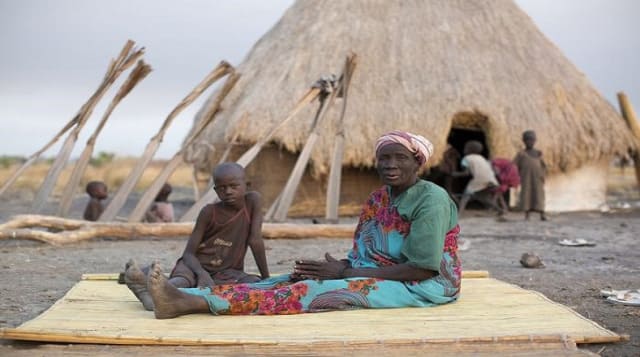
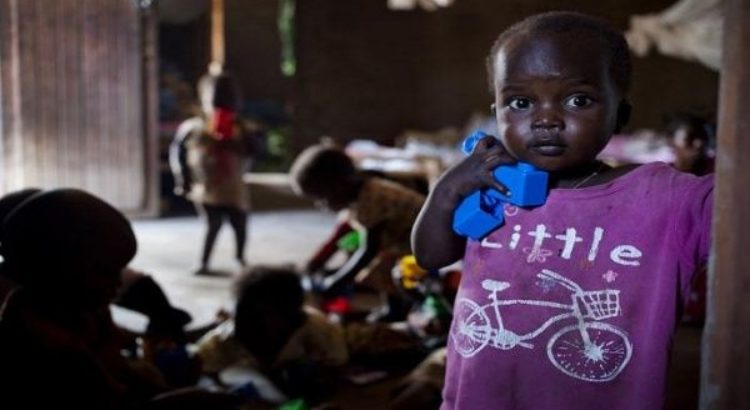
Los niños en África viven una infancia rodeada de adversidades que van más allá de simples trivialidades, éstos pequeños deben asumir difíciles retos desde muy temprana edad.
1. Difícil acceso a la educación y aprendizaje

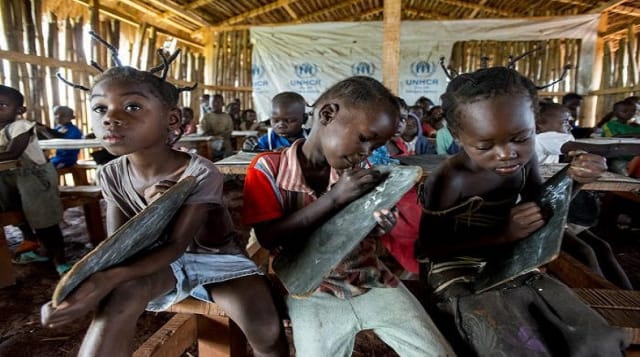
Muchos de los niños en África desconocen un aula de clases. Según cifras de la Organización de las Naciones Unidas para la Educación, la Ciencia y la Cultura (Unesco) en 2017, uno de cada cinco niños entre seis y 11 años no estaba escolarizado, y la situación es mucho peor para las niñas de ese continente ya que el 23% no asiste a la escuela primaria en comparación con el 19% de los varones.

2 Escasez de agua

África enfrenta una cruda escasez de agua durante todo el año, en este continente las lluvias son casi inexistentes. El periodo de sequía es uno de los más largos del planeta y los niños no escapan de esta realidad que los azota de manera indiscriminada durante todo su crecimiento.

3 Desnutrición y mala alimentación

Según el último informe realizado en conjunto por la Organización de Naciones Unidas (ONU) y el Fondo de las Naciones Unidas para la infancia (Unicef) en 2017, la deficiencia de peso en África por edad es de 13,9 mientras que en Nigeria el porcentaje de desnutrición alcanza el 47 por ciento de la población infantil.

4 Acceso a la salud

En la mayoría de los países del continente africano el sistema de salud es privado, aunado a la corrupción hospitalaria y a la escasez de medios humanos y técnicos, por lo que los pobladores menos privilegiados son vulnerados y marginados en este sentido. Los infantes son los más propensos a enfermarse ya que poseen un sistema inmunológico débil por la mal nutrición y la falta de vitaminas.

5 Sometimiento al trabajo forzado

La Organización Internacional del Trabajo (OIT) señala a África como el mayor explotador laboral infantil, indica que 59 millones de infantes entre cinco y 17 años son forzados a ingresar al campo laboral, en situaciones extremas y peligrosas en muchos de los casos. Uganda, Sierra Leona, Somalia y Nigeria encabezan la exposición de menores al trabajo forzado.

Fuente: https://www.telesurtv.net/news/infancia-africa-conflicto-pobreza-20180615-0029.html

Comparte este contenido:

La comercialización de la educación en Nigeria

Autor: El Mercurio

Un nuevo estudio de la Internacional de la Educación en Lagos, Nigeria pone en tela de juicio a las empresas privadas de educación que reciben ayuda internacional.

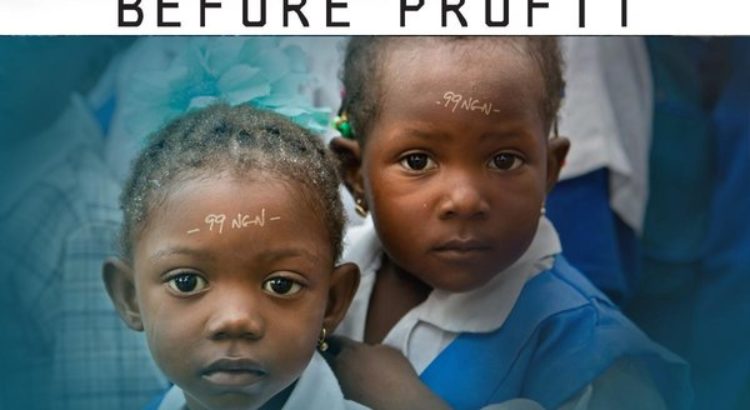
Empresas extranjeras que operan con ánimo de lucro en el sector de la educación, como Bridge International Academies (BIA), están tomando como objetivo a familias en Lagos, Nigeria, mediante la creación de centros educativos de pago con vistas a expandir su modelo empresarial. ¿Es esta una buena opción para los padres y madres que buscan una escuela de calidad para sus hijos/as?

Nigeria es sólo uno de los múltiples objetivos de Bridge, cuyos centros han sido cerrados en Kenia y Uganda por violar la legislación nacional. El pasado mes de marzo, una Corte Suprema de Uganda sentenció que Bridge estaba operando de forma ilegal, en flagrante menosprecio de los requisitos mínimos establecidos por la ley.

Bridge es una de las mayores empresas de educación con ánimo de lucro del mundo, cuyo objetivo es vender sus servicios privados a 10 millones de alumnos/as en toda África y Asia hasta 2025. Según un nuevo estudio presentado por la Internacional de la Educación el 31 de mayo en Lagos, Nigeria, los centros de Bridge, que emplea a personal sin cualificación con bajos salarios, no son una opción de calidad para el alumnado matriculado ni para las comunidades en las que éste vive.

La investigación Calidad e igualdad, un estudio comparativo de escuelas públicas y privadas de bajo coste en Lagos analiza el rendimiento de las escuelas públicas y privadas en Lagos en términos de calidad e igualdad, sobre todo en lo que se refiere al alumnado proveniente de hogares de bajos recursos.

Más costoso y menos calidad

La investigación revela que desde los años 80 ha habido una oferta estatal de educación primaria insuficiente en Lagos. Como resultado ha florecido un amplio sector privado carente de regulación efectiva. Actualmente operan en Lagos unas 18.000 escuelas privadas, lo cual supone un incremento del 50 por ciento desde el año 2011.

Además, las escuelas privadas han recibido apoyo a través de ayuda financiera internacional. Es de notar especialmente que en 2014 el Departamento de Desarrollo Internacional (DFID, por sus siglas en inglés) del Reino Unido pagó 3.45 millones de libras a Bridge International Academies, fomentando su implantación en Lagos. En otras palabras, la ayuda gubernamental inicialmente destinada a la cooperación al desarrollo se está canalizando hacia controvertidos agentes privados .

La investigación encontró que entre los proveedores de educación privada, Bridge es en promedio más costoso para los padres, emplea personal sin cualificaciones, tiene unos estándares bajos en lo que se refiere a la formación del personal y otorga menos importancia a la inclusión y a la igualdad que otros. En comparación, las escuelas públicas de Lagos, que son gratuitas, cuentan con docentes con el máximo nivel de cualificación: todos/as poseen cualificaciones formales para ejercer la enseñanza y tienen acceso a formación continua.

Los investigadores también notaron que pese a la inversión limitada y otros retos a los que se enfrentan las escuelas públicas, los/as docentes estaban comprometidos con sus estudiantes y con los valores de igualdad e inclusión.

Invertir en educación pública

Frente a esta situación, el Secretario General del sindicato Nigeria Union of Teachers (NUT), Mike Ike Ene, ha declarado que “las escuelas privadas de bajo coste no son una alternativa a la educación pública. Si no se realizan inversiones en la educación pública no se cubrirán las necesidades de todos/as los/as niños/as, y se seguirán socavando la calidad y la igualdad en la educación. Apoyamos a la Internacional de la Educación en la realización de esta investigación, que además subraya la profesionalidad y la dedicación de los/as docentes de la escuela pública en Nigeria, así como su empeño pese al desafío que supone ofrecer una educación de calidad para todos/as”, añadió.

“La educación es un bien público y el derecho de cada niño/a, y por lo tanto su provisión debería ser una responsabilidad fundamental del Gobierno”, han declarado en un comunicado conjunto el presidente del sindicato Nigeria Union of Teachers (NUT), Michael A. Olukoya, y Mike Ike Ene, Secretario General del NUT. “Todo tipo de cuota y cualquier barrera económica son un obstáculo al acceso a la educación, sobre todo para las niñas y los socialmente desfavorecidos. Hasta la fecha, el progreso global en el acceso a la educación sólo ha sido posible gracias a la expansión del sector público y a la eliminación de las cuotas”, añaden.

David Edwards, Secretario General de la Internacional de la Educación, añadió que “No es la primera vez que uno de nuestros estudios expone las prácticas de explotación de esta cadena empresarial de la educación. Desde Kenia, pasando por Uganda y Liberia hemos visto cómo los centros de Bridge están contribuyendo a la intensificación de la segregación en la educación. Están socavando el derecho de niños y niñas a la educación gratuita de calidad.”

El informe “Calidad e igualdad, un estudio comparativo de escuelas públicas y privadas de bajo coste en Lagos” por E. Unterhalter, L. Robinson, y J. Ibrahim (2018) está disponible aquí: pdf

Pueden encontrar el resumen ejecutivo aquí: pdf.

Cinco razones para dejar de invertir en las academias con ánimo de lucro Bridge

Fuente: https://www.elmercuriodigital.net/2018/06/la-comercializacion-de-la-educacion-en.html
Comparte este contenido:

Nigeria: Group warns institutions against post -UTME screening, says court order subsists

Africa/Nigeria/12.06.18/Source: guardian.ng

A non-governmental organisation, Legal Defence Assistance Project (LEDAP) has warned managers of the nation’s tertiary institutions against conducting the post Unified Tertiary Matriculation Examinaion (UTME), warning that there’s a subsisting order of the court against the exercise.

The group, in separate letters to the minister of education, mallam Adamu Adamu, alongside heads of universities, polytechnics and colleges of education, and obtained by The Guardian said the court had declared the conduct of post-UTME in the nation’s tertiary institutions as illegal.

The letter signed by LEDAP national coordinator, Chino Obiagwu read in part:

“It has come to our notice that some universities, polytechnics and colleges of education in Nigeria are currently selling forms for post-UTME examinations and other screening tests for admission into the institutions.Please take notice that there is a subsisting Judgment of the Federal High Court in Suit No: FHC/ABJ/CS/979/15 between LEDAP and Joint Admission and Matriculation Board (JAMB), the minister of education and the National Universities Commission (NUC), wherein the court held that only JAMB can conduct examinations and give admissions into tertiary institutions by virtue of Section 5 (1) (2) of the agency’s act.

Furthermore, the court declared the post-UTME conducted by the institutions as illegal, and further issued a perpetual injunction restraining them from conducting post-UTME or any other form of examination.


Source of the notice: https://guardian.ng/features/group-warns-institutions-against-post-utme-screening-says-court-order-subsists/

Comparte este contenido:

Nigeria: Las amenazas del ejército no nos disuadirán de defender los derechos humanos

Nigeria/09 de Junio de 2018/Amnistía Internacional

El ejército nigeriano recurre cada vez más a las amenazas, la intimidación y la difamación para desacreditar el trabajo que lleva a cabo Amnistía Internacional para documentar sus violaciones de derechos humanos, ha manifestado la organización hoy.

El 24 de mayo de 2018, Amnistía Internacional publicó un informe, “They Betrayed Us” (“Nos han traicionado”), en el que documentaba la prevalencia de la violencia sexual contra las mujeres y las niñas afectadas por el hambre que se encuentran recluidas en campos satélite bajo el control de militares y milicias nigerianos. El ejército nigeriano respondió organizando campañas de difamación y amenazando con “tomar medidas contra Amnistía Internacional”.

“En vez de tomar medidas para abordar los problemas planteados en ese informe, como investigar las incontables denuncias de violación y otros crímenes de guerra, el ejército nigeriano ha vuelto a su acostumbrada táctica hostil de negar y amenazar»

“Amnistía Internacional siempre comparte las conclusiones de sus investigaciones con el ejercito nigeriano antes de publicarlas. Formulamos preguntas detalladas para asegurarnos de que el ejército ofrece su versión de los hechos, pero en todos los casos ha ignorado por completo estos intentos de diálogo o nos ha remitido a otras instituciones del Estado con el fin evidente de eludir nuestras preguntas.”

El Senado de la Asamblea Nacional decidió ayer investigar lo denunciado en el informe de Amnistía Internacional, gesto que la organización ha acogido con satisfacción en tanto que representa una señal de esperanza para las víctimas que piden justicia.

El trabajo de Amnistía Internacional en Nigeria no consiste únicamente en documentar violaciones de derechos humanos cometidas por el ejército. La organización ha publicado también informes sobre los múltiples y terribles abusos perpetrados por el grupo armado Boko Haram y sobre las violaciones de derechos humanos cometidas por la policía nigeriana. Sus equipos de investigación han documentado también los violentos desalojos forzosos llevados a cabo por el gobierno del estado de Lagos y han trabajado con las comunidades expuestas a desalojo forzoso del estado de Kaduna y de la Unidad Territorial de la Capital Federal, en ambos casos apoyando el derecho a una vivienda adecuada. La organización ha puesto también de relieve la contaminación que están causando las empresas petroleras en el delta del Níger, y lleva decenios pidiendo que se rindan cuentas por la devastación ambiental resultante.

De acuerdo con la práctica habitual, en los informes de Amnistía Internacional sobre violaciones de derechos humanos en Nigeria se piden investigaciones sobre lo que se denuncia en ellos, pero, en vez de llevarlas a cabo, el ejército ha respondido reiteradamente con campañas de difamación y con intimidaciones y amenazas.

Por ejemplo, el 20 de marzo de 2017, manifestantes patrocinados irrumpieron con un ataúd en la oficina de Amnistía Internacional en Abuya y comenzaron a corear lemas contra la organización como “Amnistía Internacional apoya a Boko Haram” y “Sois malignos; marchaos ya de Nigeria”. Los manifestantes, algunos de los cuales procedían de campos para personas internamente desplazadas instalados fuera de Abuya, dijeron que recibían 1.400 nairas nigerianos al día de agentes de los patrocinadores de la manifestación con los que se habían encontrado en la zona de Unity Fountain de Abuya.

“Estas tácticas de distracción son un vergonzoso intento de evitar investigar las violaciones de derechos humanos expuestas por Amnistía. Las declaraciones del ejército nigeriano muestran claramente que no ha leído nuestros informes»

El 23 de mayo de 2018, la víspera de la presentación del informe “They Betrayed Us”, se llevaron cabo campañas preventivas de difamación en los medios de comunicación y manifestaciones organizadas con el fin evidente de intimidar y hostigar a Amnistía.

Un portavoz del ejército nigeriano reiteró también unas afirmaciones anteriores en las que se acusaba a Amnistía Internacional de estar interesada en prolongar la lucha contra Boko Haram. Al contrario, la organización ha puesto sistemáticamente de relieve cómo el costo del conflicto en toda Nigeria menoscaba aún más el acceso a los servicios sociales, de salud y educativos del país y ha advertido de que la impunidad de los abusos cometidos por todos los bandos perpetúa una espiral mortal del violencia.

“Estas tácticas de distracción son un vergonzoso intento de evitar investigar las violaciones de derechos humanos expuestas por Amnistía. Las declaraciones del ejército nigeriano muestran claramente que no ha leído nuestros informes», ha señalado Osai Ojigho.

“Por ejemplo, aunque nuestro reciente informe está basado en remotos campos satélites de lugares como Bama y Banki, el ejercito llevó a los periodistas a otros campos, situados en Maiduguri, para intentar demostrar que no teníamos razón.”

Amnistía Internacional es una organización de derechos humanos, no una fiscalía: su función consiste en pedir a los gobiernos que cumplan con su obligación de respetar y proteger los derechos humanos y garantizar que cualquier persona cuyos derechos hayan sido violados puede interponer un recurso efectivo.

Por este motivo, la organización continúa pidiendo al gobierno nigeriano que utilice su autoridad y sus recursos para investigar todas las denuncias de abusos y violaciones de derechos humanos, incluidas la violaciones, la tortura, las detenciones arbitrarias y los homicidios ilegítimos; garantizar reparaciones a las víctimas; hacer rendir cuentas a los responsables, y garantizar que no se repiten esos abusos y violaciones.

“Por mucho que haga el ejército, no vamos a quedarnos en silencio. Ante los intentos de eludir la responsabilidad y difamar a nuestra organización, continuaremos alzando la voz cuandoquiera y dondequiera que veamos cometer injusticias, abusos sexuales y discriminación contra las mujeres o cualquier otra violación de los derechos humanos en Nigeria”, ha afirmado Osai Ojigho.

Fuente: https://www.amnesty.org/es/latest/news/2018/06/nigeria-threats-from-the-military-wont-deter-us-from-defending-human-rights/

Comparte este contenido:

Nigeria: Education best instrument to fight poverty, social ills – Nasarawa Speaker

África/Nigeria/June 04, 2018/Source: www.pulse.ng

Abdullahi described education as the best instrument to fight poverty and other related abuses on children, hence the need for parents to give topmost priority to the education of their wards.

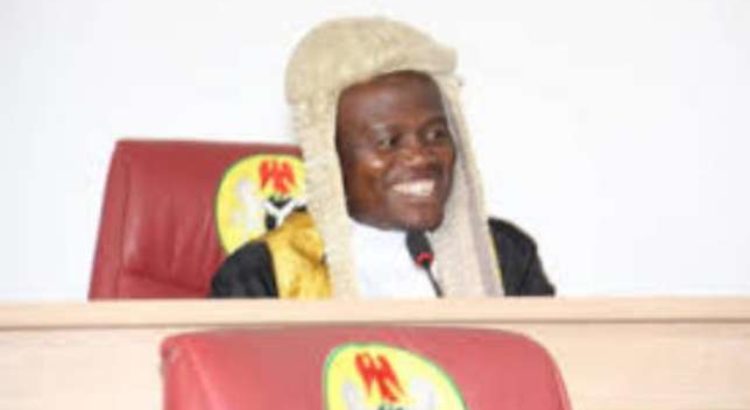
Alhaji Ibrahim Abdullahi, the Speaker, Nasarawa State House of Assembly, has urged parents and guardians to provide good education and proper upbringing of their children for a better society.

The speaker made the appeal in a statement issued by his Press Secretary, Alhaji Jibrin Gwamna, and made available to News Agency of Nigeria (NAN) in Keffi on Sunday.

Abdullahi described education as the best instrument to fight poverty and other related abuses on children, hence the need for parents to give topmost priority to the education of their wards.

The speaker described children as special gifts from God while urging parents to take adequate care of them for a prosperous society.

He also urged parents to live an exemplary life by inculcating good moral values on their children.

Education is the leeway to success in life and a route to escape from poverty box, and it is the bed rock of any society as knowledge is power.

“When one is well informed, he or she can move to places beyond his local environment,” the statement said.

Abdullahi condemned violence against children, calling for all hands to be on deck in order to fight violence against violence.

He congratulated the children on their day, describing the day as unique and worth celebrating.

According to him, there will be permanent peace in the society if parents instill moral values on their children and to live a life worth of emulation for the overall development of the country.

Besides, the speaker called for special prayers for the survival, good health and growth of children as leaders of tomorrow.

He underscored the need for all, especially leaders, to brace up and put smiles on the faces of children, especially the less privileged.

Abdullahi restated the commitment of the state legislature to continue to pass resolutions and enact laws that have direct bearing on the lives of the children.

He enjoined the people of the state and Nigerians at large to be law abiding, respect constituted authorities and to live in peace for the overall development of the country.

Source:

http://www.pulse.ng/news/local/education-best-instrument-to-fight-poverty-social-ills-id8426987.html

Comparte este contenido:
Page 18 of 51
1 16 17 18 19 20 51