Page 207 of 622
1 205 206 207 208 209 622

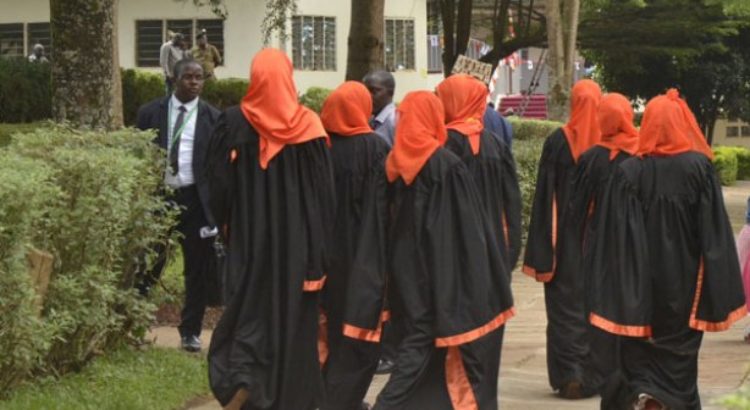
The Evolution of Ethnicity in East Africa

África/May 05, 2018/Allafrica

Resumen: La etnicidad continúa moldeando la política del este de África de manera tanto predecible como inesperada, de acuerdo con los expertos africanos presentados en Peacebuilders, una nueva serie de podcasts de Carnegie Corporation of New York.

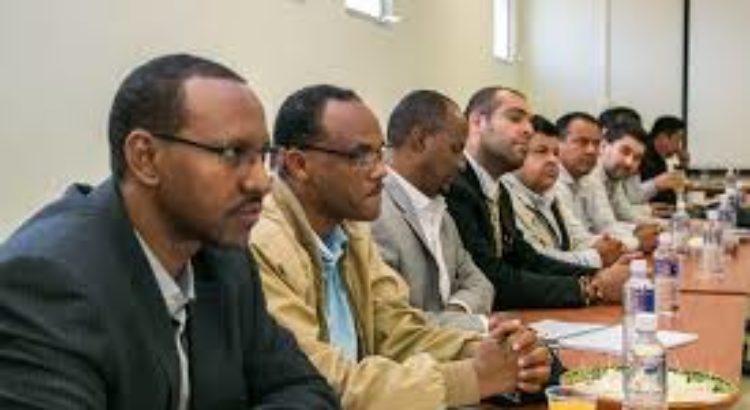
Ethnicity continues to shape East African politics in ways both predictable and unexpected, according to African experts featured on Peacebuilders, a new podcast series from Carnegie Corporation of New York.

«The question of ethnicity,» George Gathigi, lecturer at the University of Nairobi, says, «always features in every conversation.»

The podcast looks in particular at Kenya, Somalia, Ethiopia and South Sudan.  But as elsewhere in Africa, and indeed globally, the ways in which ethnic or group affiliations are understood and experienced differ. Coping with those differences creatively and fairly is key to building peace and stability.

For most of the podcast’s experts, efforts like government devolution in Kenya and ethno-federalism in Ethiopia are attempts to harness the dynamism of ethnic affiliations while preserving the prerogatives of the post-colonial nation-state.

For Ethiopian scholar Solomon Dersso, commissioner of the African Commission on Human and Peoples’ Rights, Ethiopia’s blend of leftist centralism and ethnic federalism is «such a very delicate balance to make. Getting the balance between these two is extremely difficult.»

Like Ethiopia, Kenya has been devolving power away from the capital and into local governments. The policy was adopted in part to reduce ethnic competition for power in the capital, which was convulsed by violence around the 2007 presidential elections.

«I think devolution in the Kenyan context, but also in Ethiopia,» Rashid Abdi of International Crisis Group says, «if it works well, it has the potential of actually putting all these countries onto a very solid path to what is stabilization.» And yet, Abdi continues, «In many ways Africa is regressing back to a very old principle of organizing politics, which is around ethnicity.»

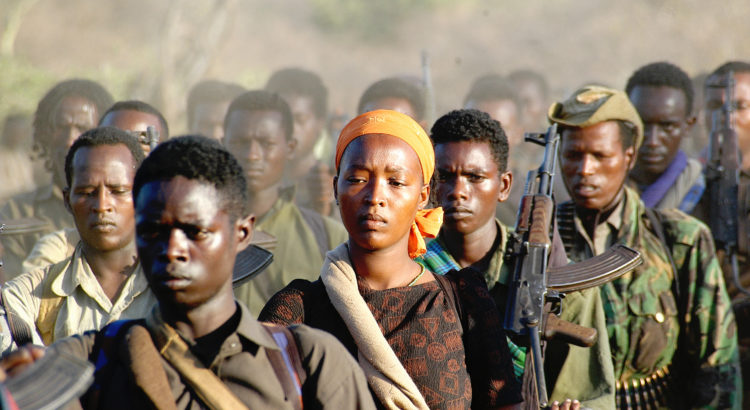
Ethnicity can seem like a constant, but in South Sudan, Jok Madut Jok of the Sudd Institute argues, «I think the tribe has become stronger»: as the central state in Juba continues to fail to protect its citizens – sometime, quite the opposite – political collapse has «actually strengthened the affinity between members of the ethnic group as opposed to others, so in a sense it has fragmented the country further along ethnic lines.
A similar ethnicization can be found in Somalia, although as Somali lawyer Sagal Abshir points out, Somalis have now managed to exist for 30 years without much central government: «that whole Westphalian concept of ‘you have to have a state to have certain things», I mean, Somalia has disproved it. It exists.»

The relative unimportance of the central state is emphasized also by the Kenyan public intellectual Nanjala Nyabola. On «the ethnic question in Kenya,» Nyabola says, «one political decision we can make is to put it in its rightful place and not to overstate its importance.»

She points out that about 40% of Kenyans do not belong to any of the dominant ethnic groups, and that women often marry outside their ethnic group. Both factors add complexity and nuance to simplistic notions of ethnic politics.

Peacebuilders features nine episodes from East Africa. The second, on international interventions, and the remaining episodes – on everything from the future of the African Union to immigration to media and elections in Kenya – will then be broadcast weekly on Tuesday mornings.

The interviewers are Aaron Stanley, a program assistant with the Carnegie Corporation’s international security program, and Scott Malcomson, an author, journalist, and former government official and NGO executive.

Malcomson was a Carnegie Corporation media fellow in 2015-18, and is currently a fellow in international security at the New American Foundation and director of special projects at Strategic Insight Group.

Fuente: http://allafrica.com/stories/201805010329.html

Comparte este contenido:

Uganda: IUIU Students Protest Suspension Over Sex

Uganda/

Kampala — Twenty-three students of Islamic University in Uganda (IUIU) have challenged the university decision to suspend them for one year for allegedly indulging in sexual activities on campus.

The affected students have written to the university management for a review of the decision by the disciplinary committee alleging that they were caught coupling in dark corners at the campus, contrary to university regulations.

The affected students were given one week within which to appeal the decision should they feel the punishment was not just and fair.

The 30-year-old institution, which operates on strict Islamic doctrines, bans physical touch involving hugging, pecking, and kissing between students of opposite sex.

IUIU is one of the rare universities that runs an all-female campus at Kabojja on the outskirts of Kampala city.

In one of the latest cases, one of the suspended students said he was unaware of the rules and consumed alcohol two years ago and was made to write hundred apologies to which he affixed his passport size photograph and was asked to pin on all notice boards at the campus.

The university disciplinary committee also found the suspended students on different course guilty of consuming narcotics, and alcohol, among other offences.

University speaks out

Dr Sulait Kabali, the university coordinator, who also doubles as secretary of the disciplinary committee, told Daily Monitor yesterday that the students were found guilty over breach of university rules and regulations.

«The students were found guilty of coupling and having sex on campus, which is contrary to the University rules and regulations,» he added.

Mr Kabali said other students were also found guilty of theft of property, consuming alcohol and other narcotic drugs, pregnancy and staging acts of violence at the campus.

The suspension letter dated April 14, states that the students were found in dark corners on different occasions engaging in a love affairs.

«During the cross-examining to which you were subjected at the above Disciplinary Sub-Committee and basing on your oral and written submission in which you stated that you were found in darkness engaging in love affairs, you were found guilty of having committed the above stated offence hence having violated the above cited rule,» reads part of the letter.

Mr Kabali said the suspension should act as a strong warning to other students, adding that university administration will not hesitate to expel any anyone who breaches the rules and regulation governing IUIU.

The suspended students, some in the final years of their courses, were about to sit for their examinations, which commenced yesterday.

Ms Rehema Katono, the public relations officer, said the university Disciplinary Committee will soon sit again to reach a final decision on the students, who have appealed against their suspension.

«At the moment, we cannot declare that we have suspended or discontinued them because the final conclusion has not been made as yet regarding their appeals,» she said.

One of the affected students, who preferred anonymity for fear that his appeal may be revoked, said disciplinary committee was too harsh in its judgment.

«I find it so astonishing that committee retrieved an offence I committed two years ago when I had just joined the campus but apart from that, they were too harsh,» he said.

Ms Katono advised that students interested in one another for sexual relationships should apply to the dawwah committee for consent and be allowed to marry officially.

About IUIU

Islamic university: IUIU is an Islamic-rule governed multi-disciplinary university offering courses at certificate, diploma, undergraduate and postgraduate levels. IUIU runs a main campus in Mbale in eastern Uganda, another in Kampala and in Arua plus Kabojja outside Kampala.

At 30 years, IUIU has seen increased enrolment of students from only 80 to more than 8,612, with campuses increasing from one to four. It has also trained more than 1,000 master graduates and over 50 PhD students. It has also produced more than 25,000 undergraduates.

From: http://allafrica.com/view/group/main/main/id/00060501.html.

Comparte este contenido:

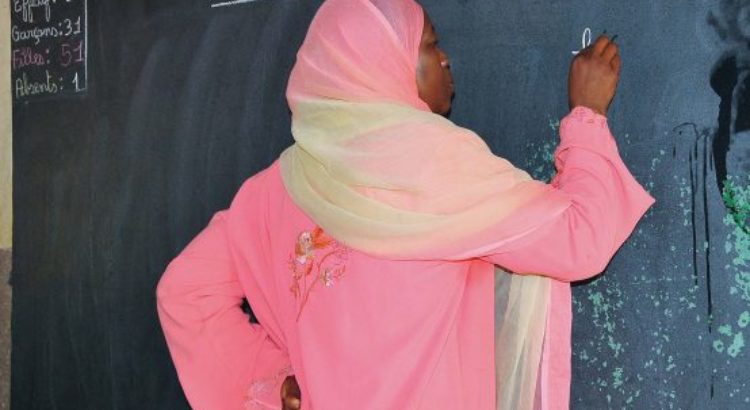
Nigeria: Address quality education at home first, not by sending teachers abroad

Africa/Nigeria/prensaIE

Resumen: La solicitud de Liberia de maestros nigerianos en virtud del acuerdo del Cuerpo de Asistencia Técnica ha sido recibida con la condena de las uniones educativas de las autoridades nigerianas, argumentando que Nigeria misma está luchando por brindar una educación de calidad. Los sindicatos de educación de Nigeria han destacado la escasez de docentes de su país y la dificultad para garantizar una educación de calidad. La reacción fue provocada por una solicitud de más de 6.000 maestros del recién inaugurado presidente de Liberia, George Weah, durante una visita de cortesía al presidente de Nigeria, Muhammadu Buhari. Weah dijo que los problemas heredados por su gobierno solo podrían abordarse con ayuda de países como Nigeria. El presidente de Liberia identificó el desempleo juvenil y la necesidad de reactivar los sectores de educación, agricultura, minería y salud como algunos de los problemas urgentes que enfrenta su país. Le dijo a su homólogo nigeriano que «su asistencia técnica sostenida para el desarrollo de capacidades en estos sectores es bienvenida».Más específicamente, en el marco del programa de Intercambio Bilateral de Maestros, estamos buscando 6.000 maestros más para compensar la escasez de buenos maestros en nuestro sistema educativo «.


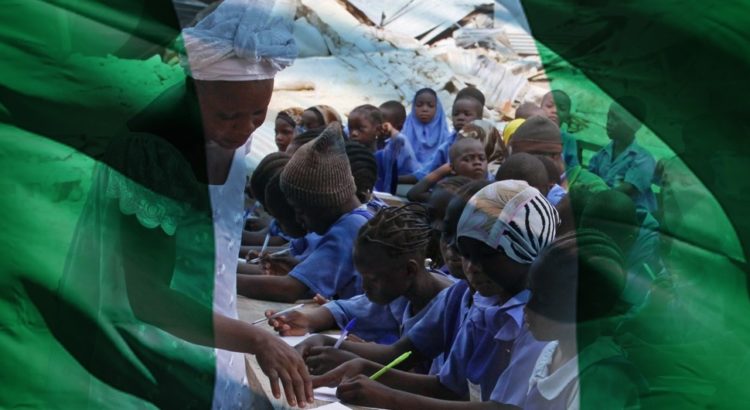
Liberia’s request for Nigerian teachers under the Technical Assistance Corps agreement has been met with condemnation of the Nigerian authorities by education unions, arguing that Nigeria itself is struggling to deliver quality education.

Nigerian education unions have highlighted their country’s shortage of teachers and struggle to ensure quality education. The reaction was prompted by a request for over 6,000 teachers from the newly inaugurated President of Liberia, George Weah, during a courtesy visit to Nigeria’s President, Muhammadu Buhari. Weah said the issues inherited by his government could only be tackled with assistance from countries like Nigeria.

The Liberian president identified youth unemployment and the need to revive the education, agriculture, mining and health sectors as some of the urgent problems facing his country. He told his Nigerian counterpart that “your sustained technical assistance for capacity building in these sectors is most welcome.

More specifically, under the Bilateral Teacher Exchange programme, we are seeking 6,000 more teachers to make up for the shortage of good teachers in our educational system.”

NUT: Address issues at home

The Nigeria Union of Teachers (NUT) insisted that “the country does not have enough teachers to go around and the union has still not come to an agreement with the government over the issue of salaries”.

In fact, Nigeria still needs to find a solution concerning 25,000 teachers in Kaduna, in North-West Nigeria, who were fired because they could not pass tests the government forced them to take, said Kalaama Toinpre, Chairman of the Bayelsa State NUT branch.

The Nigerian government should employ quality teachers in schools without such teachers, take adequate care of its teachers, and tackle the myriad of problems undermining the education sector, instead of sending Nigerian teachers work abroad, he added.

“Our schools are suffering; even some subjects do not have teachers. The country cannot take adequate care of its teachers and they are talking about sending them abroad to teach,” he said.

Comparte este contenido:

Angola: Vicepresidente defiende mayor calidad en formación jóvenes angoleños

África/Angola/03 Mayo 2018/Fuente: Prensa Latina

El vicepresidente de Angola, Bornito de Sousa defendió la búsqueda de mayor calidad en la formación de los jóvenes, al considerar el tema como uno de los desafíos hoy para el desarrollo del país.
De Sousa visitó la víspera la Feria Nacional Juvenil de Educación, Tecnología y Cultura, que concluirá mañana en Luanda.

Queremos aumentar el número de jóvenes y niños en el sistema escolar, pero miramos para la calidad en la formación, expuso.

Estamos en un momento en que debemos pasar de la cantidad para la calidad, añadió tras explicar que el sector juvenil está llamado a protagonizar la lucha por el desarrollo.

El Festival, promovido por la Juventud del gobernante Movimiento Popular para la Liberación de Angola, cuenta con 93 expositores entre estudiantes de institutos de enseñanza media y de universidades de las 18 provincias del país.

Durante la primera cita pretende instituirse los premios Hoji-Ya-Henda, el patrono de la juventud angoleña, en materia de investigación científica, aplicación informática o software, obra literaria juvenil, pieza teatral, composición musical, joven emprendedor y mejor stand.

Imagen: http://cdn2.portalangop.co.ao/angola/pt_pt/files/highlight/2016/9/41/0,04a1828a-0708-4389-80c6-39917ba6e482.jpg
Fuente: http://www.prensa-latina.cu/index.php?o=rn&id=174516&SEO=vicepresidente-defiende-mayor-calidad-en-formacion-jovenes-angolenos
Comparte este contenido:

Kenya Public Universities Crack Whip on Striking Lecturers

Kenya/May 01, 2018/By Ouma Wanzala/ Source: http://allafrica.com

The University of Nairobi has taken the lead by suspending 35 lecturers after they declined to return to work following the Labour Court’s ruling that declared the pay strike illegal and unprotected in March. The industrial action enters its third month on May 1.

Public universities have started cracking the whip on striking lecturers and other staff as the industrial action enters its third month on Tuesday.

The University of Nairobi (UoN) has suspended 35 lecturers after they declined to return to work following Labour Court’s ruling that declared the strike illegal and unprotected last month.

Technical University of Kenya (TUK) on Friday started a head count of lecturers who are teaching, and has threatened to sack those who will not report to work.

At UoN, acting Deputy Vice Chancellor Finance and Administration Isaac Mbeche said the suspension is a warning to those who are still on strike.

«We are now dealing with individuals since they have different contracts with the university. If you do not come to work without permission, there are consequences,» Prof Mbeche warned.

SALARIES

He said the institution wrote to staff asking them to resume work, and that those who abided have not been punished.

«Some wrote back agreeing to resume work while others insisted they were still on strike,» Prof Mbeche said, adding that learning had resumed at the institution.

Last month, the university denied more than 1,200 staff their salaries for boycotting work.

At TUK, all staff are now required to sign commitment forms as the institution moves to ensure that operations are normalised.

«The directors of schools and heads of administrative units are hereby requested to ensure compliance with this directive by submitting completed commitment forms to the management,» a circular by Deputy Vice-Chancellor in charge of Administration and Planning, Joseph Kiplangat, reads.

Staff at the university who are still on strike are set to start receiving their suspension letters today.

ACADEMIC CALENDAR

At Moi University, Vice-Chancellor Isaac Kosgey has warned that the striking staff will not get their salaries.

«Other disciplinary measures will be taken as the university council advises.

«Staff who are ready to resume work can do so by registering with the respective heads of departments on a daily basis with immediate effect,» Prof Kosgey said.

At Kenyatta University, lecturers are now required to sign forms indicating their willingness to teach, and which must be submitted to deputy VC in charge of administration and planning.

Jaramogi Oginga Odinga University has since adjusted its academic calendar for all students due to the strike.

STUDENTS

Students in most universities have gone home as they wait for a solution to the crisis that has affected learning for the last one year.

The strike, which started on March 1, has paralysed learning in all 31 public universities. Lecturers are demanding Sh38 billion for the 2017-2021 CBA.

Education Cabinet Secretary Amina Mohamed last week set up a team to table a counter-offer.

«The impact of these perennial strikes has, to say the least, been disastrous.

«The image of our university education worldwide is taking a severe beating.

«Our students are taking more than double the period required to complete academic programmes and employers are losing faith in the capacity of our graduates,» Ms Mohamed said.

SRC

Ms Mohamed said with the enactment of the Constitution and the subsequent creation of the Salaries and Remuneration Commission, all salaries in the public sector must now be based on advice from the commission.

However, Universities Academic Staff Union Secretary General Constantine Wasonga said lecturers will only call off their strike after receiving an offer.

«We are used to threats, and we will now be forced back to work,» Dr Wasonga said.

 
 Source:
http://allafrica.com/stories/201804300034.html
Comparte este contenido:

«La lección más grande del mundo»: el proyecto educativo de la ONU

ONU/01 de mayo de 2018/Fuente: http://noticias.universia.es

La erradicación de la pobreza y el cuidado del planeta es cosa de todos y es un proyecto de educación mundial.

  • “La Lección más Grande del Mundo” es el proyecto lanzado por las Naciones Unidas que recoge los 17 Objetivos Mundiales para el Desarrollo Sostenible.
  • Te damos a conocer estos objetivos y las metas que persigue, porque es responsabilidad de todos colaborar para conseguirlos.
  • Este proyecto educativo conlleva que docentes y alumnos sean conscientes del valor de la educación social y que todos tenemos mucho que aportar.

«La lección más grande del mundo” es el proyecto de educación social y mundial creado por la ONU y en el que se ha dado forma a diversos objetivos para el alcance de unas metas que terminen con la pobreza extrema, apoyen la igualdad social y luchen contra el cambio climático.

Este proyecto de educación mundial necesita de una importante difusión, de manera que todos los ciudadanos conozcamos esos objetivos y trabajemos para llevarlos a cabo, tanto en nuestra faceta personal como profesional.

Objetivos Mundiales difundidos por la ONU

Es importante que conozcamos los objetivos, trabajemos en ello y los compartamos en nuestro entorno y comunidad para que más gente se una a este proyecto mundial.

1. Erradicar la pobreza en todas sus formas y en todos los lugares del mundo.

2. Luchar contra el hambre, logrando la seguridad alimentaria, una buena nutrición y promoviendo la agricultura sostenible.

3. Buena salud y un nivel de bienestar aceptable para todos los habitantes del planeta.

4. Educación de calidad, inclusiva y equitativa.

5. Igualdad de género y empoderamiento de mujeres y niñas.

6. Agua potable y saneamiento.

7. Uso de energías renovables, sostenibles y accesibles para todos.

8. Empleo digno y crecimiento económico.

9. Innovación e infraestructuras para una industria sostenible e inclusiva.

10. Reducir la desigualdad social y favorecer la inclusión de todo tipo de nacionalidades, etnias o creencias.

11. Ciudades y comunidades sostenibles.

12. Consumo responsable, siendo conscientes de las repercusiones de lo que producimos y gastamos.

13. Erradicar el cambio climático de forma urgente con medidas que frenen su impacto.

14. Cuidado de la flora y fauna acuática. Reestablecer la salud de los océanos y de la vida marina.

15. Cuidado de la flora y fauna terrestres. Promover ecosistemas que favorezcan la biodiversidad y combatan la degradación del suelo.

16. Paz y justicia, trabajando en la creación de sociedades pacíficas y dialogantes.

17. Alianzas para conseguir los Objetivos Mundiales con el compromiso de todos los países.

«La lección más grande del mundo» es un proyecto de educación social que estará vigente hasta 2030, con la esperanza de haber resuelto gran parte de estas problemáticas mundiales y que suponga la solidez de unas medidas y alianzas que favorezcan un desarrollo próspero y sostenible.

¡Es hora de ponerse manos a la obra y aportar nuestro grano de arena!

Fuente de la Noticia:

http://noticias.universia.es/educacion/noticia/2018/04/30/1159291/leccion-grande-mundo-proyecto-educativo-onu.html

Comparte este contenido:

¿Cómo es la educación en otros países donde conviven varias lenguas?

Europa / 29 de abril de 2018 / Autor: Redacción / Fuente: Europa Press

Aunque la mayoría de países del mundo son monolingües, en tanto que reconocen «una sola lengua oficial» , hay más de 20 Estados con varios idiomas, según la «UNESCO«. Sólo en India existen 22 lenguas oficiales y en Sudáfrica 11. No tan lejos, en Suiza, conviven hasta cuatro. Pero, ¿cómo es la política lingüística en estos lugares?

BÉLGICA

Bélgica está formada por tres comunidades lingüísticas: la francesa, la flamenca y la alemana. Como sucede en el caso español, la educación está transferida a las tres comunidades mencionadas, aunque algunos temas puntuales, muy limitados, son competencia del Gobierno central.

En el caso flamenco, el lenguaje utilizado como medio de instrucción es el neerlandés, al igual que sucede en las escuelas flamencas de Bruselas, ciudad dividida entre la comunidad francófona y flamenca. Las escuelas de habla neerlandesa enseñan francés como primera lengua extranjera, e inglés, como segunda, e incluso, alemán y español, dependiendo del centro.

En la zona francófona la lengua oficial en las aulas es el francés. Y al contrario de lo que sucede en Flandes, donde la enseñanza en francés es obligatoria, los estudiantes valones pueden elegir como lengua extranjera entre inglés o neerlandés. En la comunidad germanófona, la enseñanza es en lengua alemana, mientras que el francés es la lengua extranjera que desde el parvulario aprenden los alumnos.

SUIZA

En el caso de Suiza, otro de los grandes ejemplos de países con varias lenguas cooficiales, el sistema educativo en materia de lenguas no es tan rígido. Suiza reconoce cuatro idiomas nacionales: el alemán, el francés, el italiano y el romanche. La educación en el país helvético es competencia de los diferentes cantones, lo que determina que existan hasta 26 sistemas de escolaridad diferentes. Así lo explica el especialista de la Universidad de Ginebra, François Grin, en su estudio «Language Policy in Multilingual Switzerland«.

REINO UNIDO

A finales del siglo XX, el estudio del galés se fijó como obligatorio para todos los alumnos de hasta 16 años en las áreas de habla galesa en Reino Unido, reintroduciendo al menos un conocimiento elemental de este idioma en lugares que se habían convertido casi por completo en anglófonos. El éxito de esta medida se contagió al gaélico escocés que, desde 2005, se enseña en las escuelas de Escocia a través de la sociedad , creada para su difusión y protección. Un caso distinto es el de la lengua irlandesa, asignatura obligatoria en la República de Irlanda desde su independencia, pero no así en Irlanda del Norte.

OTROS PAÍSES EUROPEOS

El alsaciano, el corso, el euskera, el bretón o el catalán son algunas de las lenguas regionales que se hablan en Francia. No obstante, la Constitución gala establece en su artículo 2 que «el francés es la única lengua oficial de la República» y así se refleja en el sistema educativo, cuya administración depende del Gobierno central. Lo mismo ocurre en Italia, donde los diferentes dialectos del italiano como el corso, el sardo o el romano no se contemplan en el sistema educativo.

Por su parte, en Países Bajos el frisio puede estudiarse en las escuelas de la región de Frisia desde 1936, si bien el idioma predominante sigue siendo el neerlandés. Aún más minoritario es este idioma en el estado federado alemán de Schleswig-Holstein, cuya Constitución garantiza la protección de las lenguas frisonas y del danés, así como su representación en el parlamento regional.

INDIA

El hindi, el inglés y las 21 lenguas regionales reconocidas por el Gobierno de India conviven desde 1961, cuando la Conferencia de Ministros Jefes aprobó la ‘fórmula de tres idiomas’. Los niños indios reciben una educación multilingüe desde el comienzo del ciclo educativo, tal y como explican académicos de las universidades de Arizona y Nevada en el estudio «Globalization and Language Policies of Multilingual Societies«. Las escuelas deben ofrecer educación en la lengua materna de cada alumno, en hindi y en inglés. Si el hindi es la lengua materna, el niño tiene, además, la opción de aprender otro idioma.

CHINA

China es una nación multilingüe con más de 56 grupos étnicos reconocidos y su Constitución establece que «cada nacionalidad tiene libertad para usar y desarrollar su propio lenguaje y sistema de escritura». En este sentido, las políticas educativas del Gobierno chino hacen hincapié en el desarrollo de una enseñanza bilingüe en las distintas comunidades étnicas para crear una «identidad bicultural»: los alumnos deben dominar sus idiomas regionales, pero a la vez comprender su «lengua materna», el chino mandarín.

SUDÁFRICA

La Constitución de Sudáfrica reconoce 11 «idiomas nacionales» oficiales y 8 no oficiales, lo cual sugiere la necesidad de una compleja política lingüística. Generalmente, los niños sudafricanos aprenden su lengua materna durante los primeros tres años de colegio y, a partir de entonces, cambian a inglés o afrikaans hasta el final de su carrera escolar. Aunque ésta es la opción recomendada por el Gobierno, algunos padres optan por enviar a sus hijos a escuelas de inglés desde que empiezan el ciclo educativo, según explican los académicos Stephen Taylor y Marisa Coetzee en «Estimating the impact of language of instruction in South African primary schools«.

Fuente de la Noticia:

http://www.europapress.es/sociedad/noticia-educacion-otros-paises-donde-conviven-varias-lenguas-20180423181116.html


Comparte este contenido:
Page 207 of 622
1 205 206 207 208 209 622