Page 206 of 622
1 204 205 206 207 208 622

Nueva York: Estudio demuestra el agravamiento de los ataques contra la educación en todo el mundo

Nueva York/12 de Mayo de 2018/HRW

 Los ataques deliberados e indiscriminados contra escuelas y universidades y sus alumnos y personal se han vuelto más comunes en los últimos cinco años, manifestó la Coalición Global para Proteger la Educación de Ataques (Global Coalition to Protect Education from Attack, GCPEA) en la edición de 2018 de su informe insignia, presentado hoy. El informe de 300 páginas, Ataques a la educación 2018identifica más de 12.700 ataques ocurridos entre 2013 y 2017 que afectaron a más de 21.000 alumnos y educadores.

En los últimos cinco años, 41 países sufrieron al menos cinco ataques a la educación, incluido como mínimo uno con carácter deliberado o consecuencias letales. Esto supone un drástico incremento respecto de la edición 2014 del informe, cuando GCPEA documentó que 30 países sufrieron este nivel de ataques a la educación entre 2009-2013.

“Enseñar y aprender es cada vez más peligroso, y a menudo están en riesgo las vidas de estudiantes, docentes y académicos”, explicó Diya Nijhowne, directora ejecutiva de GCPEA. “Aunque las escuelas y universidades deberían ser espacios seguros y de protección, sigue ocurriendo que fuerzas y grupos armados las conviertan en ámbitos de intimidación y violencia”.

Este informe incluye perfiles de 28 países que sufrieron al menos 20 ataques a la educación entre 2013 y 2017. GCPEA concluyó que nueve países sufrieron más de 1.000 ataques a la educación o agresiones en las que se perjudicó a más de 1.000 estudiantes, docentes, profesores u otro personal educativo. Entre estos países se incluyen la República Democrática del Congo (RDC), Israel/Palestina, Nigeria, Filipinas, Sudán del Sur, Siria y Yemen.

Por ejemplo, más de 1.500 escuelas y universidades en Yemen resultaron dañadas o destruidas por ataques aéreos o combates, o se usaron para fines militares. GCPEA identificó señalamientos de al menos 650 incidentes de ataques a la educación o uso militar de escuelas en Siria. En Filipinas, grupos armados habrían hostigado o intimidado al menos a 1.000 alumnos y enseñantes.

En 18 de los países relevados, los ataques a la educación estuvieron dirigidos deliberadamente a alumnas o mujeres docentes. Algunos grupos extremistas atacaron con explosivos o incendiaron escuelas de niñas, o bien mataron, hirieron o amenazaron a alumnas y profesoras. Por ejemplo, cerca del 25 % de los ataques que se habrían cometido contra escuelas en Afganistán estuvieron dirigidos a escuelas de niñas. En todo el mundo, partes armadas también abusaron o violaron sexualmente de mujeres y niñas en contextos escolares o en las proximidades de estos. En un ejemplo de 2017, milicias armadas de la RDC habrían secuestrado a ocho niñas de una escuela primaria para violarlas sexualmente durante un período de tres meses.

Entre 2013 y 2017, se usaron escuelas y universidades para fines militares en 29 países, por ejemplo, como bases, cuarteles, centros de detención o para otras tareas militares. Estos usos militares aumentan el riesgo de que las escuelas y universidades afectadas sean atacadas por fuerzas contrarias, que grupos armados recluten a niños y niñas o que se someta a violencia sexual a alumnos y docentes. Por ejemplo, una escuela en Ucrania usada por diversas fuerzas y grupos armados como depósito de armas fue alcanzada por lanzamientos de artillería en seis ocasiones en enero y febrero de 2015.

Fuerzas y grupos armados también han reclutado a niños soldados en escuelas en 16 de los 28 países analizados. En un incidente ocurrido en diciembre de 2013, cerca de 413 niños de escuelas de la localidad de Rubkona en Sudán del Sur fueron reclutados por la fuerza y enviados a combatir.

En 52 países de distintas regiones del mundo hubo ataques contra la educación superior, incluidos todos los países analizados. Los ataques incluyeron, entre otros hechos, la represión violenta de protestas vinculadas con la educación en las cuales se hirió a estudiantes o personal educativo, o abusos físicos o amenazas debido al contenido del programa académico. En 20 de los países analizados se produjeron ataques a edificios de educación superior. Uno de estos ataques ocurrió en Kenia, donde hombres armados mataron al menos a 142 alumnos e hirieron a otros 79 el 2 de abril de 2015, durante un ataque perpetrado en la Universidad de Garissa.

“Fueron varias las tendencias que contribuyeron a los abusos que se describen en el informe”, apuntó Amy Kapit, directora de Investigación de GCPEA. “Se pueden mencionar los ataques de grupos armados extremistas, como ‘Estado Islámico’, el uso de bombardeos aéreos para combatir a grupos armados y la violencia contra estudiantes durante protestas en escuelas o universidades”.

Ante esta violencia, existe un consenso global cada vez mayor de que debe protegerse a las escuelas y universidades como espacios seguros en contextos de guerra. Más de un tercio de los Estados Miembros de la ONU, 74 países, han adheridos a la Declaración sobre Escuelas Seguras, un compromiso político impulsado por Noruega y Argentina. Al adherir a la Declaración, los Estados se comprometen a tomar medidas concretas para proteger la educación, entre otras cosas, implementando las Directrices para Prevenir el Uso Militar de Escuelas y Universidades durante Conflictos Armados. La cantidad de Estados que adhieren a la Declaración se ha duplicado en menos de tres años y el nuevo informe de GCPEA insta a todos los Estados a sumarse a la Declaración e implementarla como principal recomendación para proteger la educación en los conflictos armados.

Asimismo, el Objetivo de Desarrollo Sostenible 4, Educación de calidad —un compromiso global para alcanzar la educación de calidad universal y equitativa en 2030—, incluye un indicador que mide el Número de ataques a estudiantes, personal e instituciones, y reconoce así la importancia de preservar a la educación durante los conflictos armados. La serie de documentos Ataques la educación ha sido seleccionada como fuente para medir los avances hacia el logro de este indicador.
“Ataques a la educación 2018 pone de manifiesto el profundo sufrimiento humano infligido por estos ataques”, señaló Nijhowne. “Al adoptar e implementar la Declaración sobre Escuelas Seguras, entre otras medidas, llevando a cabo un seguimiento de los ataques a la educación para responder de manera más eficaz y posibilitar que haya rendición de cuentas, los países podrán empezar a garantizar la educación segura para todos”.
                                         *****
La Coalición Global para Proteger la Educación de Ataques (Global Coalition to Protect Education from Attack, GCPEA) incluye a los siguientes miembros: copresidentes Human Rights Watch y Save the Children, el Council for At-Risk Academics (Cara), el Instituto de Educación Internacional (Institute of International Education, IIE), Education Above All Foundation (EAA) y organismos de la ONU. GCPEA es un proyecto de Tides Center, una organización sin fines de lucro constituida en virtud del apartado 501(c)(3).
El presente estudio se elaboró a partir de investigaciones independientes realizadas por GCPEA. Se llevó a cabo separadamente de las distintas organizaciones miembros que integran el Comité Directivo de GCPEA y no refleja necesariamente la opinión de estas. Para la preparación de este informe, GCPEA reunió datos de organismos de la ONU, organizaciones no gubernamentales, órganos gubernamentales; organizaciones de investigación, informes de medios y datos compartidos por expertos y grupos de trabajo nacionales. El estudio es el cuarto de la serie. Las ediciones anteriores de Ataques a la educación fueron publicadas en 2007 y 2010 por la UNESCO y en 2014 por GCPEA.
Education Above All Foundation, el Ministerio de Relaciones Exteriores de Noruega y un donante anónimo brindaron generosos aportes para la preparación de Ataques a la educación 2018. EAA trabaja en la prevención de ataques a la educación en alianza con GCPEA desde 2011. La Escuela de Salud Pública Mailman de la Universidad de Columbia colaboró con investigaciones en áreas concretas. The NoVo Foundation también ha patrocinado el trabajo de GCPEA.
Fuente: https://www.hrw.org/es/news/2018/05/10/estudio-demuestra-el-agravamiento-de-los-ataques-contra-la-educacion-en-todo-el
Comparte este contenido:

KENYA Falling student numbers – A shift in the High Education landscape

Africa/Kenia/.universityworldnews.com

Resumen: Los inversores privados y el gobierno de Kenia están mirando millones de dólares en pérdidas ya que varias universidades registran una caída en el número de estudiantes, dejando a las universidades con una capacidad subutilizada significativa. Los datos de la encuesta publicados por el Ministerio de Educación del país recientemente indican que la mayoría de las universidades están luchando para atraer a los estudiantes a tomar algunos cursos bajo el programa regular financiado por el estado. Para empeorar las cosas, todos los estudiantes que se inscribieron anteriormente para los lucrativos cursos de auto patrocinado ahora están siendo absorbidos por el programa regular. Desde el año pasado, el número de candidatos exitosos que se gradúan de las escuelas secundarias ha disminuido sustancialmente después de que el gobierno endureció las reglas de examen para eliminar a miles de tramposos que se habían beneficiado a lo largo de los años de un sistema de supervisión descuidado. En términos de una directiva del gobierno emitida a comienzos de este año, las universidades públicas deben absorber directamente a todos los que abandonan la escuela secundaria y obtienen una calificación promedio de C + y superior. Los que están por debajo del límite ya no podrán inscribirse en los grados. Esto es una desviación del pasado cuando tenían la opción de ingresar a las universidades como estudiantes con financiación privada.


Private investors and the Kenyan government are staring at millions of dollars in losses as several universities record falling student numbers, leaving universities with significant underutilised capacity.

Survey data released by the country’s Ministry of Education recently indicate that a majority of universities are struggling to attract students to take up some courses under the state-funded regular programme. To make matters worse, all the students previously enrolling for the lucrative self-sponsored courses are now being absorbed under the regular programme.

Since last year, the number of successful candidates graduating from secondary schools has fallen substantially after the government tightened examination rules to weed out thousands of cheaters who had over the years taken advantage of a sloppy monitoring system.

In terms of a government directive issued at the beginning of this year, public universities are to directly absorb all secondary school leavers who score a mean grade of C+ and above. Those below the cut-off will no longer be allowed to enrol for degrees. This is a departure from the past when they had the option of entering universities as privately-funded students.

The state, through the sector regulator the Commission for University Education, also barred universities from offering bridging courses, often taken by students who lacked sufficiently high grades to qualify for degree courses.

The changes have significantly drained universities of potential students, raising questions over the viability of costly expansion projects embraced by several higher education institutions over the past few years.

Statistics show that slightly fewer than 70,000 students qualified to join universities this year after attaining the requisite grades in the 2017 secondary examinations. Previously, at least half of these students were joining universities under the self-sponsored programmes while an equal number would be enrolled for regular courses. The number of those joining public universities is at least 18,000 lower than in 2017.

Of the qualified candidates, only 62,851 have expressed an interest in joining universities this year, which suggests that over 7,000 students have opted not to enrol in any of the available courses.

Data released recently by the Kenya Universities and Colleges Central Placement Service (KUCCPS) – the body that places qualified students in universities – show that universities had at least 132,686 slots available in 2018.

According to the data, one private university that had declared capacity for 50 students failed to attract a single one; another institution, which expressed interest in admitting at least 400 students, only received eight applicants; one of the newly-established constituent colleges, formed under the older public universities, attracted only four students in total; and a total of 14 of the universities vying for the available students attracted under 50 students.

Educationists are justifiably concerned about the sustainability of Kenya’s higher education system and predict it is set for a major restructuring.

“Many universities face a bleak future because they cannot attract students and may not survive if the trend continues. Even those that do survive will have to scrap several courses that have turned out to be unpopular and irrelevant,” said David Aduda, a Nairobi-based educationist.

 “What is emerging is that university education was built on quick sand. The exponential growth witnessed in the past 20 years was a mirage. It was not based on fundamentals. Now the chips are falling in place and the reality is that the country may not require so many universities after all,” he wrote in a blog in the leading Daily Nation newspaper.

The situation was not entirely unforeseen. Recently, as reported by University World News, government asked for a policy review that will see the rationalisation of institutions. In terms of the review, Education Cabinet Secretary Amina Mohamed directed the commission to justify the existence of the 74 universities in the country and asked all universities to defend their academic programmes and provide evidence of staffing levels.

“In the recent past, the quality of university education in Kenya has been under scrutiny, attracting great public attention. The time has come for drastic and bold steps to be taken to revive the university education sub-sector. This may be a painful, but inevitable, process for the growth and development of the sub-sector,” said Mohamed in March.

“There have been complaints from the public that are indicative of the failure of universities to provide a conducive learning environment for students to excel in their fields of study, produce graduates who have the knowledge, skills, attitudes and competencies needed for the world of work; and drive the national development agenda,” she said.

The data from the KUCCPS paints a dire picture in respect of course choices. There is growing disinterest in skills that were previously identified as key drivers of the county’s economic agenda. In most of the universities, courses related to agriculture, horticulture, food science and technology and environmental studies received the lowest number of applicants. There was also a general neglect of courses in social sciences.

The changing dynamics in the higher education sector is beginning to raise questions over the millions of dollars being pumped into universities annually.

For the coming financial year which begins in July, the National Treasury has allocated US$1.03 billion to the institutions of higher learning, up from US$961 million in the current fiscal year. This is the first time the allocation has crossed the billion dollar mark, raising hopes of increased funding in the coming years.

However, the amount is US$300 million lower than the amount the universities requested, according to budget documents released by the government. Funding is projected to rise to US$1.3 billion by 2020. Treasury, which funds a huge part of the public universities’ budgets, has over the years either cut allocations or failed to meet institutions’ needs.

Analysts believe that the declining student numbers will discourage investors who were previously falling over each other for opportunities in the sector. Kenya is seeking over US$200 million from foreign and local private investors to help build hostels in three public universities this year. The Treasury has called for potential bidders to present proposals to add 30,000 extra bed spaces across three of the country’s institutions: South Eastern Kenya University, Embu University College and Moi University.

For now, only time will tell the direction the country’s higher education sector will take.

Fuente: http://www.universityworldnews.com/article.php?story=20180502112909878
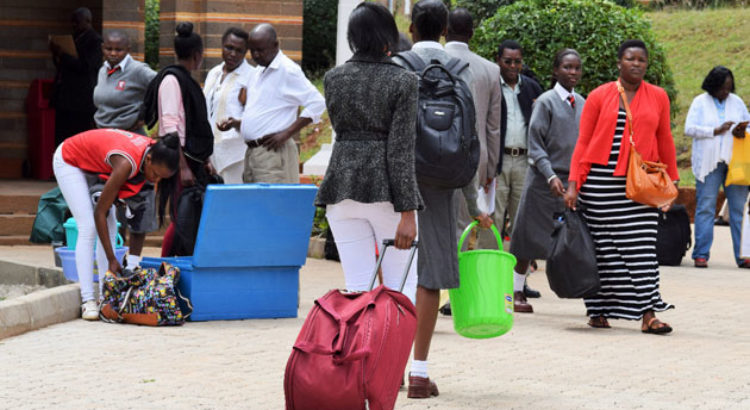
Imagen tomada de: http://otrasvoceseneducacion.org/wp-content/uploads/2018/01/FORM-1-STUDENTS-ARRIVE-1.jpg
Comparte este contenido:

Big data could be key to Africa’s graduate employability

Africa/universityworldnews

Resumen: En todo el continente africano, la educación superior está ampliando su alcance, tanto en términos de cantidad como de calificaciones. Al mismo tiempo, las universidades subsaharianas enfrentan enormes desafíos para mejorar la calidad y la relevancia. Hay muchas razones para esto: lo más importante es la cuestión de la falta de datos confiables y útiles sobre la base de los cuales planificar, supervisar y revisar. Hacer frente a este problema requiere una atención meticulosa a los detalles, la capacidad analítica, el aprendizaje adecuado o las plataformas estadísticas y el apoyo de gestión de alto nivel. Es importante destacar que también se considera que necesita un aporte financiero continuo y significativo.  Por lo tanto, es particularmente interesante observar el progreso de un pequeño proyecto piloto que promete desafiar algunos de los factores que limitan la capacidad de las universidades del África Subsahariana para unirse al juego de «grandes datos».  El proyecto, dirigido por el British Council, persigue dos objetivos: (i) realizar una encuesta de salida de postgrado sobre estudiantes graduados de Bachelor of Pharmacy de tres universidades importantes de la región (las universidades de Ghana, Lagos y Western Cape), y al mismo tiempo (ii) probar el potencial de los teléfonos móviles para la recopilación de datos.


All over the African continent, higher education is expanding its reach, both in terms of numbers and range of qualifications. At the same time, Sub-Saharan universities face enormous challenges in enhancing quality and relevance. There are many reasons for this – paramount is the issue of the lack of reliable and useful data on the basis of which to plan, monitor and review.

Addressing this problem requires meticulous attention to detail, analytical capacity, adequate learning or statistical platforms and high-level management support. Importantly, it is also viewed as needing ongoing and significant financial input.

It is therefore particularly interesting to note the progress of a small pilot project that promises to challenge some of the constraining factors militating against Sub-Saharan African universities’ ability to join the ‘big data’ game.

The project, run by the British Council, seeks to achieve two aims: (i) to conduct a graduate exit survey on graduating Bachelor of Pharmacy students from three major universities in the region (the universities of Ghana, Lagos and the Western Cape), and at the same time (ii) to test the potential of mobile phones for data collection.

The first aim has intrinsic interest, given the significant curriculum developments in the field that impact on the role of pharmacists in national health systems. Graduate exit surveys also provide important information about the kinds of jobs students obtain after graduation – for example, how long it takes them to find a job, what resources they employed to do so, who is employing them (including self-employment) and this helps institutions to build long-term, mutually beneficial relationships with employers.

The second aim, however, has broader implications for universities across Sub-Saharan Africa – indeed, in lower income countries more generally. If it can be shown that data can be gathered cheaply and reliably, and that the quality of the data is not compromised, a major hurdle to establishing and maintaining student databases could be overcome.

Rolling out the survey

Initial evidence in this regard is encouraging, with very high response rates – over 90% of surveys have been fully completed. Analysis of the data is in progress and so it is not appropriate to make more in-depth claims at this stage.

Plans are under way to roll out the graduate exit survey project from the small, highly specialised field of pharmacy to a very large qualification such as the Bachelor of Commerce (or Administration), and to a higher number of universities. This will allow the approach to be fully tested.

At the same time, another higher education project in Sub-Saharan Africa is working on the provision of capacity development programmes for senior professional staff in universities. The four priority topics identified in the regional needs analysis workshops held to date include the capacity to work with data as a planning, monitoring and developmental tool for universities. It is envisaged that staff from universities participating in the early phases of the graduate exit surveys will be among the earliest beneficiaries of these opportunities.

Modern universities need to be much more than centres of teaching and research excellence; they need to be preparing their undergraduates for the world of work, going beyond the formal curriculum to provide pastoral support and improve skills across the board.

There is, however, a relative lack of capacity for many universities, not only in Africa but around the world, to go beyond traditional university improvement efforts (such as increasing the numbers of staff with PhDs) to meet these aspirations.

International internet-based market research firm YouGov recently conducted a survey which discovered that 52% of employers believed that no or few graduates were ready for the workplace, with just 19% believing that all or most were ready – and 17% said that none at all were prepared. This chimes with several of the findings of the recently concluded ‘Universities, Employability and Inclusive Development’ study commissioned by the British Council.

So this is why, in Sub-Saharan Africa, our proposed higher education development priorities are focusing on two areas where we think that we can make a real difference: data collection, analysis and use and support for university staff in this area.

Dr Nan Yeld is a senior adviser in higher education development at the British Council.

Fuente: http://www.universityworldnews.com/article.php?story=20180424134453712 
Comparte este contenido:

Angola aumentará presupuesto educacional, apuesta a calidad enseñanza

África/Angola/10 Mayo 2018/Fuente: Prensa Latina

 Angola aumentará las asignaciones a educación hasta un 20 por ciento del presupuesto general del Estado en 2022 en aras de la búsqueda de la calidad de la enseñanza.
El anuncio lo realizó el vicepresidente Bornito de Sousa al intervenir en el Encuentro Nacional de Educación, que sesionó esta semana en el Centro de Convenciones de Talatona, en el sur de esta capital.

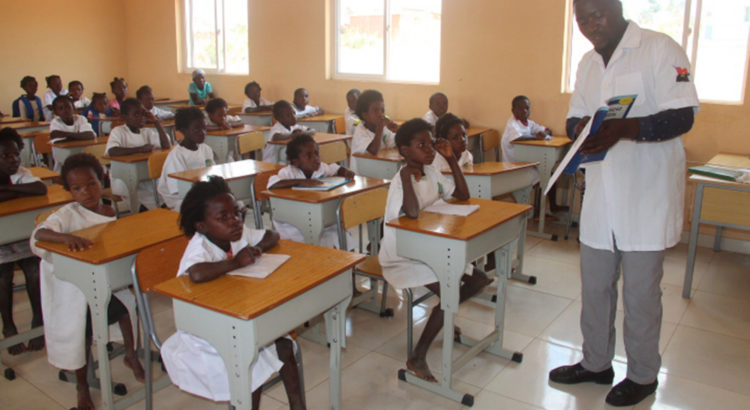
Mientras que el ministro de Estado para el Desarrollo Económico y Social Manuel Nunes Junior adelantó que el país construirá unas cinco mil escuelas para poner fin al problema de niños fuera del sistema de enseñanza.

En Angola estudian unos 10 millones de niños, adolescentes y jóvenes, pero más de dos millones se encuentran sin aulas o sin profesores.

Esa cuestión debe ser encarada como un desafío a enfrentar y superar con éxito, explicó Junior.

Al hablar sobre lo avanzado dijo que el sistema educacional pasó de atender 2,5 millones de alumnos en 2002, con el logro de la paz, a casi 10 millones en el presente año lectivo, que comenzó en febrero pasado.

En el 2000 la tasa de analfabetismo era superior a la mitad de la población adulta, y en 2014 -según los datos del censo de población y viviendas- fue de 34 por ciento, aseguró.

Durante la cita, de cinco días, los participantes defendieron el incremento de la calidad en la formación de profesores como única vía para mejorar el sistema de enseñanza, lo que supondrá además un aumento en su remuneración. La ministra de Educación Maria Cândida Teixeira destacó la necesidad de invertir en el sector para el desarrollo de la sociedad.

Esto debe ser una constante en la promoción del desarrollo sostenible.

Entretanto, en la reunión se recomendó una mayor interacción de empresas públicas y privadas en el proceso de formación técnico-profesional.

Igualmente se volcaron propuestas para el perfeccionamiento de los currículos, el sistema general de evaluación y los proyectos educativos de las escuelas.

Deben implementarse medidas para la inclusión, equidad, sostenibilidad, formación, financiamiento, remuneración y gestión de carreras, aconsejaron los asistentes.

Fuente: http://www.prensa-latina.cu/index.php?o=rn&id=177554&SEO=angola-aumentara-presupuesto-educacional-apuesta-a-calidad-ensenanza
Comparte este contenido:

Uganda: Janet Museveni tells parents to prioritise education

Por: http://observer.ug/09-05-2018

The first lady and minister of Education and Sports, Janet Museveni, is concerned that most parents are not actively involved in the education of their children, thus leading to poor performance.

Ms Museveni said while it the responsibility of government to provide education, parents have abandoned their responsibility of providing essential items such as lunch, scholastic materials and shoes for learners.

“Why are families failing to feed our children? Someone produces a child and they are unable to feed them, what does this mean? When I talk about this, I am not talking about only mothers but also the fathers,” Ms Museveni said.


She added that during her term as MP for Ruhaama County in Ntungamo, most children in the constituency walked bare feet to school.

“When I went to Ruhaama, I said, ‘I will not leave when its children have no shoes.’ I was shocked that I spent 10 years in Ruhaama and left its children without shoes. I had done everything there but parents were not helping themselves. Why should someone spend a whole year without engaging in anything generating income? What should we do to such people?” she asked.

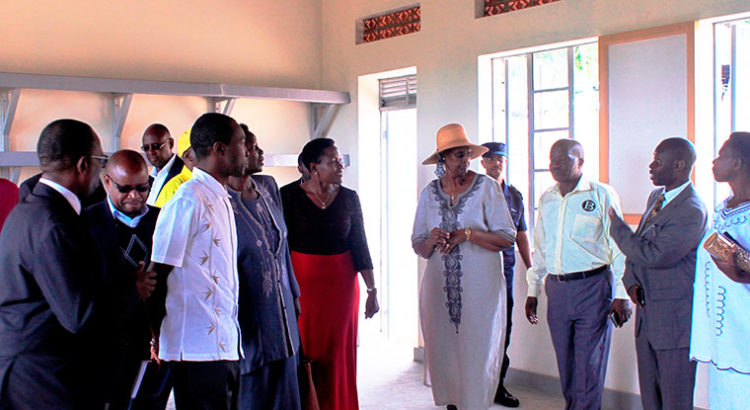
The minister was speaking to parents, district leaders and politicians after officially handing over new structures to Birere mixed primary school in Isingiro district on May 2, 2018.

Museveni said replacing the dilapidated structures with new ones will not be meaningful if parents don’t prioritize their children’s education.

Birere mixed primary schools is one of the 138 schools countrywide that have received a facelift with support from Global Partnership for Education (GPE) grant worth $100m under the Uganda Teacher and School Effectiveness Project (UTSEP) supervised by the World Bank. The grant agreement was signed on August 27, 2014 and became effective on March 24, 2015.

In Isingiro, 20 schools were selected with each receiving seven new classroom blocks, one administration block, five and two-stance latrines and a 5,000-litre water tank.

Ms Museveni also commended schools for implementing the thematic curriculum insisting that it when children study in their mother tongue up to primary three, they understand better as opposed to being instructed in English language.

“I know there are some people de-campaigning that programme [thematic curriculum] but that is being very short-sightedness. It is much easier for young children to study in their local language,” she said.

According to the ministry’s schedule, handover of all the schools which started on May 2 will end on May 30, 2018 in the respective districts.

JOB WELL DONE

While handing over more structures in Ibanda district, the state minister for primary education, Rosemary Seninde, said contractors did a commendable job with no building found with cracks as it is known for most new buildings.

“We are satisfied that the work is perfect and real. I call upon parents to love, cherish and maintain what has been given to them because it is not going to be the responsibility of government to maintain the infrastructure,” Seninde said.

Of the 11 schools constructed in Ibanda, she visited and handed over new structures at Kijongo PS, Rwenkobwa PS, Ishongororo PS, Kashambya PS, Kemihoko PS, Rwanyabihuka PS and Kyeibumba PS to the relevant school heads. Seninde reiterated the first lady’s message by encouraging parents in Ibanda to provide lunch and shoes for their children.

“It is a shame that children come to school bare-feet in this era. If you cannot afford modern shoes, buy for them plastic shoes or sandals. How will they enter into such new beautiful classes? This attitude that education of Ugandan children is for President Museveni must change,” she said adding that all classrooms in the 54 completed schools countrywide out of the 138 will be furnished with desks before the beginning of second term.

The remaining 84 schools will be furnished and handed over when completed. Speaking to The Observer, Julius Atwijukye, the head teacher Kashambya PS, applauded government on the latest development at his school although he remained not convinced on whether parents will provide shoes for learners.

“Our children are not used to putting on shoes. When we call parents to address such issues, they tell us that they are poor while others threaten to withdraw their children from school if we impose such conditions on them,” Atwijukye said.

“Maybe now that we have a new environment, parents have promised to buy shoes. But if we can get some sponsors to buy some shoes, it is highly welcome because according to the understanding of my parents, I know most will not buy them next term [two].” Out of the 560 pupils at Kashambya, about 50 study in proper shoes.

For Justine Tukashaba, a parent at Kashambya, some parents think shoes are meant for children in urban settings.

“I am a catechist of our church but whenever I teach about such things, parents ignore me. Many of the children have one pair of shoes they use only when going to church. Parents are poor and not bothered about the situation,” she said.

By the time minister Seninde left the school on Thursday May 3, most parents, some of whom had no shoes at this function, pledged to buy shoes for children and they requested her to visit the school next term to check on their progress.

*Fuente: http://observer.ug/news/headlines/57633-janet-tells-parents-to-prioritise-education.html

Comparte este contenido:

Liberia to Hold Education Summit

Liberia/May 8, 2018/ Source: http://inprofiledaily.com

The Ministry of Education has disclosed plans to hold an education summit with the aim of harnessing collective efforts to provide quality education.

The event is expected to be held May 21-25, 2018, at the Booker Washington Institute (BWI) in Kakata City, Margibi County.

“This landmark event hosted by Minister of Education, Prof. Dr. Ansu  D. Sonii Sr., will bring together over 300 education specialists, policy makers, parents, business and community leaders, teachers as well as others with an interest in seeing the Liberian education system succeed,” the ministry said in a press release issued on Friday.

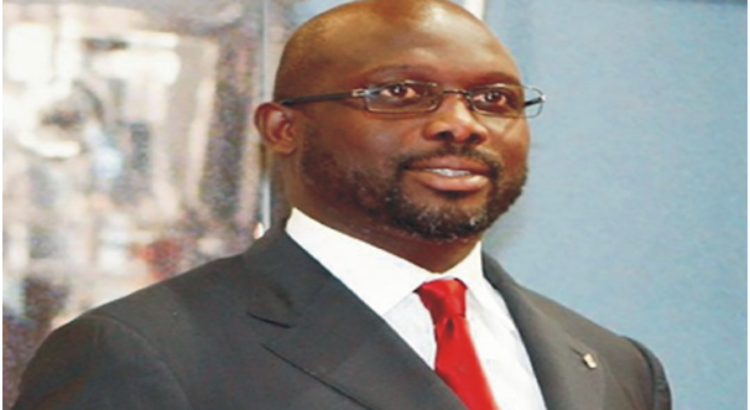
According to the release, President George Manneh Weah will open the ‘internationally significant event’ by highlighting the government’s vision for education as a key pillar of its’Pro-Poor Agenda’ and outlining his government’s approach to working alongside key stakeholders and experts to give Liberian children the best possible start in life.

Partners such as the Global Partnership for Education (GPE), the World Bank and USAID, among others, are expected to make presentations at the event.

The release continued: “Education is a priority for the new administration, which has recognized that robust change is needed to improve the life chances of Liberians and contribute to the sustained development of Liberia or the benefit of everyone.”

Objectives of the summit are: to present findings from key assessments of the education sector (ESA, other reports from the sector); present the “Pro-Poor Agenda” perspectives for quality education in Liberia;      identify workable solutions that contribute to an improved education system;               Present the rationale for increments in allocation to the education sector in the national budget; and                obtain shared commitments for education advancement in Liberia.

It further explained that the summit will be divided into two sessions. The first two days will provide opportunities for key stakeholders to review the education sector, provide independent perspectives of the status of the sector, and develop consensus around a shared vision for the improvement of the education system in Liberia. The last three days will concentrate entirely on the Joint Education Sector Review (JESR) and the development of an operational plan for implementation of the sector plan, which will assess implementation progress at both the county and national levels against planned activities and targets outlined in the Getting to Best Education Sector Plan (G2B ESP) and will outline forward-looking recommendations.

At the same time, the ministry said it anticipates that tangible steps can be agreed during the Summit to begin to make improvements in education that the Liberian people wish to see.

Speaking ahead of the summit, Minister Sonii said: “In order to build on previous gains and learn from existing challenges, we have undertaken a wide range of engagement with stakeholders and a nation-wide assessment of schools. This has provided us with first-hand information about the issues affecting education in Liberia today.”

Minister Sonii added that this ground-breaking summit builds on the commitment they have shown to finding the right solutions to give all Liberians the start in life that will help them and Liberia prosper in the years to come. By bringing together a broad range of partners, stakeholders and independent experts in the education sector, he elucidated that they aim to build a consensus on essential priorities to fast-track reform of the education sector.

Source:

http://inprofiledaily.com/index.php/2018/05/07/liberia-to-hold-education-summit/

Comparte este contenido:

África: Actionaid insta por justicia tributaria como forma de garantizar un financiamiento adecuado y sostenible para la educación

África/ 07.05.2018/ Fuente: same2017.campanaderechoeducacion.org.

En el contexto de la Semana de Acción Mundial para la Educación (SAME), ActionAid participa en la Conferencia Panafricana de Educación de Alto Nivel(PACE) en Nairobi, y en esta ocasión argumenta que los países de la Unión Africana podrían transformar sus sistemas educativos si los gobiernos recortaran los incentivos fiscales que hoy conceden a algunas de las empresas más ricas del mundo.

ActionAid insta a los gobiernos a que reduzcan los incentivos fiscales perjudiciales, que agotan los fondos de la educación en sus países, subrayando que este sería un paso clave en el sentido de garantizar los recursos suficientes para implementar el Objetivo de Desarrollo Sostenible 4 de la Agenda de Desarrollo 2030, referido a la educación.

Se han logrado avances en la financiación de la educación con la Conferencia de Financiamiento de la Alianza Mundial por la Educación (GPE, por su acrónimo en inglés), que tuvo lugar en Senegal en febrero de 2018, donde los países en desarrollo y donantes se comprometieron a aumentar la financiación educativa [sepa más]. Sin embargo, ActionAid defiende que se podrá hacer mucho más caso los gobiernos miren más allá del porcentaje del presupuesto público total que se gasta en educación, y aumenten el tamaño de los presupuestos nacionales, desde la ampliación de su base tributaria nacional.

Julie Juma, de ActionAid Malawi, señala: «Durante años, muchos de estos gobiernos han avanzado hacia la meta de investir el 20% de sus presupuestos nacionales en educación, pero el 20% de un pastel pequeño es una cantidad pequeña. Si queremos movilizar el dinero que se necesita urgentemente para la educación, los países ahora deben enfocarse en formas de expandir su base tributaria. Se pueden hacer algunos avances rápidos para aumentar los ingresos fiscales mediante la eliminación de los incentivos fiscales perjudiciales otorgados a las empresas multinacionales. Esto podría permitir que algunos países dupliquen su presupuesto de educación».

ActionAid presentará los hallazgos del informe «Haciendo que los impuestos funcionen para la educación de las niñas: cómo y por qué los gobiernos pueden reducir los incentivos fiscales para invertir más en la educación de las niñas» en el evento PACE.

Además, ActionAid elaboró breves historias en video con el apoyo de la Agencia Noruega de Cooperación para el Desarrollo (NORAD), que muestran cómo niñas, docentes y comunidades alrededor del mundo luchan para que una mejor educación sea financiada de manera sostenible a través de la justicia tributaria. Los videos son de TanzaniaMalawiNepal y Mozambique (ese último también disponible en portugués).

Fuente: http://same2017.campanaderechoeducacion.org/index.php/mundo/174-actionaid-insta-por-justicia-tributaria-como-forma-de-garantizar-un-financiamiento-adecuado-y-sostenible-para-la-educacion

Comparte este contenido:
Page 206 of 622
1 204 205 206 207 208 622