Page 225 of 622
1 223 224 225 226 227 622

La UNESCO ayuda a Senegal a fomentar la transparencia en la financiación de la educación

UNESCO/27 de febrero de 2018/Fuente: https://es.unesco.org

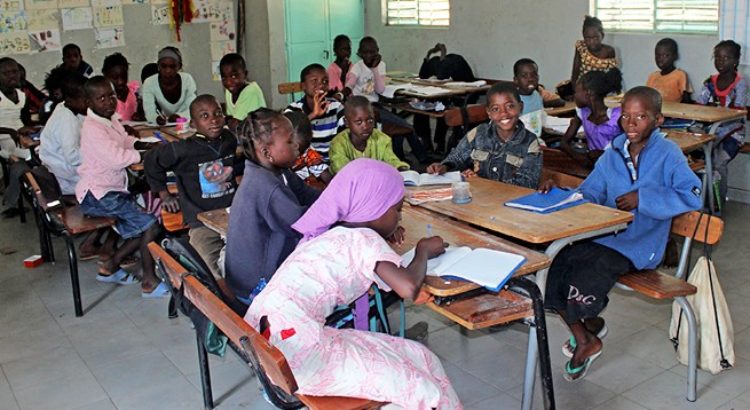
Los gastos de la educación en Senegal, aumentan con regularidad. Dichos gastos son repartidos más o menos en partes iguales entre gastos públicos y gastos en los hogares.

Estos son los resultados para el año 2016 emanados de los servicios de contabilidad nacional de educación (CNE, por sus siglas en inglés) del país, que dan seguimiento y clasifican los diferentes datos a partir de las fuentes clave de financiación – recursos públicos, gastos privados y financiación exterior – en un marco común con el objetivo de definir mejor los recursos educativos, de mejorar las decisiones políticas y de dar seguimiento a los logros en la consecución del ODS 4 en materia de Educación.

Durante el año pasado, el programa de Desarrollo de Capacidades de la UNESCO para la Educación (CapED) de la UNESCO, que cuenta con la asistencia técnica del Instituto Internacional de Planificación de la Educación(IIEP), ha respaldado el desarrollo del CNE de Senegal en el marco de un programa más amplio cuyo objetivo es hacer efectivo el ODS 4.

Al hacer efectivo la labor inicial financiada por la Alianza Mundial para la Educación(link is external) (GPE, por sus siglas en inglés), el programa del CapED ha proporcionado a la CNE un marco para el desarrollo de capacidad integral, en el que figura el análisis de toda forma de flujos de financiación. Esto ha dado lugar a un reforzamiento de los instrumentos ya existentes para la recopilación y el análisis de datos, así como para el desarrollo de nuevos instrumentos con miras a recopilar todo tipo de información sobre los gastos del sector educativo, incluso a nivel de la administración local y escolar. Ahora los gastos están agrupados en un marco común, siendo éste una herramienta para que el gobierno pueda tener una visión más exacta de la distribución de los recursos entre los subsectores.

Los resultados obtenidos por la CNE para el año 2016 muestran que la distribución de los gastos de educación por parte de los recursos públicos y de los hogares prácticamente la misma (casi 48% para cada uno), tomando en cuenta las posibles variaciones en función de los subsectores. Esta situación se debe en parte a que la situación socioecómica del país ha mejorado durante los últimos años, ya que los hogares disponen de mayor poder adquisitivo y gastan más en educación privada. Al mismo tiempo, las contribuciones de los asociados en materia de desarrollo representan sólo un 3%.

Estos resultados muestran también que la financiación del sector educativo ha aumentado con regularidad entre 2009 y 2016, un periodo en que, por otra parte, la cantidad de estudiantes que han aprobado los exámenes de la educación secundaria se ha duplicado (54,571 estudiantes en 2016 en relación con 20,475 en 2009).

Los datos en lo relativo a la estructura presupuestaria del sector educativo han permitido que Senegal lleve a cabo una estimación de las previsiones financieras de su plan sectorial en materia de educación (PAQUET – 2013-2030) y de preparar una mejor asignación de los recursos financieros al tomar en cuenta la equidad, la calidad y la transparencia.

Como consecuencia, la CNE conllevó a mejorar la transparencia, ya que el gobierno, los docentes y las comunidades tendrán acceso a los datos publicados en materia de utilización de los recursos. La UNESCO también ha apoyado a Senegal en el desarrollo de una herramienta de simulación que permite efectuar una estimación de las necesidades de financiación con miras a la consecución del ODS 4, mientras que la CNE facilita la adopción de decisiones y el seguimiento de los logros alcanzados en la consecución de las metas de dicho objetivo.

La experiencia y los resultados de la CNE se han puesto a conocimiento de los participantes de un evento paralelo organizado conjuntamente por el Gobierno de Senegal y la UNESCO, que tuvo lugar en Dakar, el 31 de enero de 2018, antesala de la Tercera Conferencia de Financiación de la Alianza Mundial para la Educación. Dicho evento, congregó a más de 200 participantes y constituyó una oportunidad única para debatir los resultados de las inversiones en el sector educativo, así como las posibilidades y los retos experimentados en el proceso de desarrollo de la CNE. Una conferencia nacional sobre la financiación de la educación tendrá lugar en abril de 2018, con miras a utilizar los datos recopilados por la CNE con el objetivo efectuar gastos más equitativos y eficaces en lo relativo al sector educativo.

Como resultado de este proceso, el país desarrollará en lo adelante su CNE subnacional de manera independiente.

Fuente de la Noticia:

https://es.unesco.org/news/unesco-ayuda-senegal-fomentar-transparencia-financiacion-educacion

Comparte este contenido:

Kenya: Climate change to be included in new education curriculum

África /Kenya / 26.02.2018 / By: www.the-star.co.ke.

Commonwealth countries have resolved to include climate change in their curriculum from Early Childhood Education to institutions of higher learning.

In a declaration of the 20th Commonwealth Conference of Education Ministers in Nadi, Fiji, on Friday, the ministers said they will double efforts to educate present and future generations on climate change.

Speaking during the conference, Education CS Amina Mohamed said rising seas and extreme weather changes are the greatest threats facing humanity.

Mohamed, who also chaired the conference, said there was need to promote climate awareness, including through mass education beyond the classroom.

The CS called for stronger engagement with the private sector and other industry players.

The conference also called for increased awareness of green and blue technologies and emerging alternative for clean energy sources.

The ministers said progress has been made in expanding access to education. They stressed the need to improve quality of education to ensure learners master both numeracy and literacy skills.

Member states also agreed to focus on training, recruitment and motivation of teachers.

The ministers said there was need to tackle emerging challenges like employment and ensure learners get the best start in education.

The conference called on governments to invest at least four to six per cent of their GDP or between 15-20 per cent of government spending in education.

The meeting in Fiji also resolved to have Kenya host the next conference in 2021.

The conference brings together education ministers from all the 52 Commonwealth countries to discuss key issues affecting the sector.

Mohammed appreciated the decision to have Kenya host the next conference.

“I wish to confirm, with gratitude and humility, that Kenya accepts the honour of hosting the 21st CCEM. Kenya looks forward to hosting the 21st Conference of Commonwealth Education Ministers in 2021,” Mohamed said.

“We will work with the Commonwealth Secretariat to ensure that the logistical, administrative and other preparations are in place for a successful conference.»

From: https://www.the-star.co.ke/news/2018/02/26/climate-change-to-be-included-in-new-education-curriculum_c1719891.

Comparte este contenido:

The reality of free education for all in Ghana

Asia/Ghana/ 26.02.2018/ By: www.aljazeera.com.

Since gaining independence in 1957, Ghana has focused on improving access to education and achieving universal enrolment.

Primary education became free in 1961 and the 1980s saw major reforms swept through the education system, including restructuring primary and secondary education and introducing vocational classes.

In September 2017, the Ghanaian government made secondary education free, with President Nana Akufo-Addo reportedly saying: «There will be no admission fees, no library fees, no science centre fees, no computer laboratory fees, no examination fees, no utility fees. There will be free textbooks, free boarding and free meals.»

The benefits of the Ghanian government’s focus on education are reflected in the country’s rising literacy rate. According to UNESCO statistics from 2010, the literacy rate among 15-24-year-olds is 85.72 percent, compared with 34.89 percent in those aged 65 or older.

Despite these measures, many children, particularly those living in rural areas, struggle to stay in school.

Economic necessity forces children to drop out of school in search of work, and girls are often charged with looking after younger siblings and helping with domestic work.

NGOs are attempting to address these issues at the community level and ensure every child has access to education.

Johnson Ayonka is the director of the Grassroots Transparency Initiative at WillWay Africa, an NGO that supports low-income communities in health, education and economic empowerment.

Jo Hallett works with Ghana School Aid and Let’s Read Ghana to provide grants to schools in rural communities and support the teaching of English in the far north of the country.

Al Jazeera spoke with Ayonka and Hallett about the realities of getting an education in Ghana today.

Al Jazeera: What effect has the recent removal of secondary school fees had on both children and schools?

Johnson Ayonka: It has had an impact, but because the national government is inefficient, the money from the central government doesn’t always get to the communities. In the very poor communities, there is the wider problem of poverty that’s forcing people to drop out, despite education being free and some schools are still charging fees because the money from the government didn’t get to them.

Even though the intention behind the policy was good, the government was not well prepared to implement it to the fullest. They also tried to implement it from the centre, instead of from the local area and the money was not made available in advance. It was sort of «putting the cart before the horse», instead of the money being there before the policy, the policy comes and then the money.

The policy is OK, the students have enrolled because they know that they’ll get free education, but after that, we find out that nothing effective takes place because what is needed is not there because of bureaucracy and inefficiency.

Al Jazeera: What are the barriers still preventing access to education today?

Jo Hallett: In the last few years, there has also been quite a push on more school buildings and a big push on enrolment and I think that [the Ghanaian government has] done very well on getting the vast majority of children into school, [but] there are huge barriers to accessing education. There’s a serious lack of trained teachers. In many of the schools we go into, the majority of the staff are volunteers or student teachers.

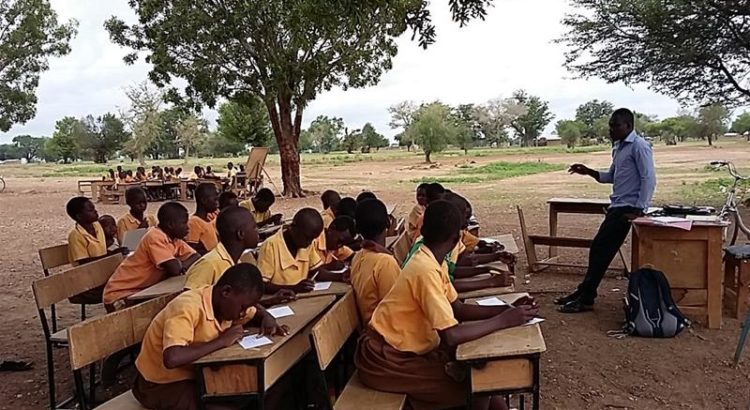
There’s a lack of finance for schools in general, so although the children are there, the buildings are not there, although overall they have improved, lots of schools have either very poor buildings or no buildings at all; they call it «under the tree» so classes are taught under a tree. There’s a lack of equipment and a lack of books and resources, the training of teachers, finance of all sorts and that needs to be addressed.

Often the teachers don’t get paid for several months because the District Education doesn’t have the finance to pay them and, therefore, there’s a lack of commitment on their part to some extent. Class sizes also vary enormously. A good teacher can manage quite a big class but sometimes it’s overwhelming: you go into a classroom and there are 70 pupils in there and one teacher who may not be trained, who’s trying to manage them and it’s impossible really, it’s really difficult.

There’s a lack of finance for schools in general, so although the children are there, the buildings are not there … lots of schools have either very poor buildings or no buildings at all.

Al Jazeera: How are rural communities affected?

Hallett: In many rural areas, the families are involved in subsistence farming or illegal mining and, with farming, the children get pulled out of school for harvest and sewing.

Another really significant thing that we see is the complete lack of spoken English in the rural areas. In school, after the first couple of years, the education is in English. There are 52 languages in Ghana, but the common language, and the language of government, [and] the language they’re expected to learn in is English.

If you live in a town, the chances are that you will see English sometimes and hear it, but out in the rural areas where we go in the far north, they speak a language called Guruni, which is spoken in a very small area, and it’s not written down at all so there aren’t any signposts or posters so [children] don’t have text in the environment, either in their own language or in English.

Al Jazeera: Do girls face additional challenges to entering education?

Ayonka: At the primary level the gender gap is small, it’s very, very small, and that indicates that a lot of progress has been made in the education of girls. But as girls mature into their teenage years, they face a lot of challenges because there’s a lot of gender disparity in terms of who should do house chores, so girls suffer more.

When you get closer to higher levels of education, even though the gap has reduced over the years, it’s still there because cultural factors come into play and there are issues of early marriage and families spending more on boys than on girls.

We need something to address that gap because it will relieve the economic aspects of education and leave the responsibility to the government so that families don’t have to decide: «Are we going to educate the boy and leave the girl out? Or are we going to educate both?»

Al Jazeera: What steps should the government take now?

Ayonka: What we see recently from the government is that a lot of policies and actions are done in isolation. Let’s say you see an area where there’s a high instance of teenage pregnancy and you don’t also make arrangements for the education authorities to work with the healthcare authorities and social workers; even though there’s free education, you are still going to get low enrolment because there is no coordination.

Another problem is the issue of access to the education infrastructure, there’s free education on paper but the schools are few, especially in the rural areas. You can say you want to give free education to people but if you don’t give them physical access to the schools by building more schools, then you still don’t have free education … I think communities need to be empowered to build their own schools, to recruit their own teachers, monitor the teachers and make sure that the standard of education is high.

There’s a big gap between what is happening at the government level and what is happening at the community level.

Hallett: There needs to be a bigger commitment to funding and a raising of the status of teachers. [The government] has done some really good things, some of the curriculum books are excellent, but they also need to have a bit of money and resources to back up that commitment, but I do think Ghana is trying hard.

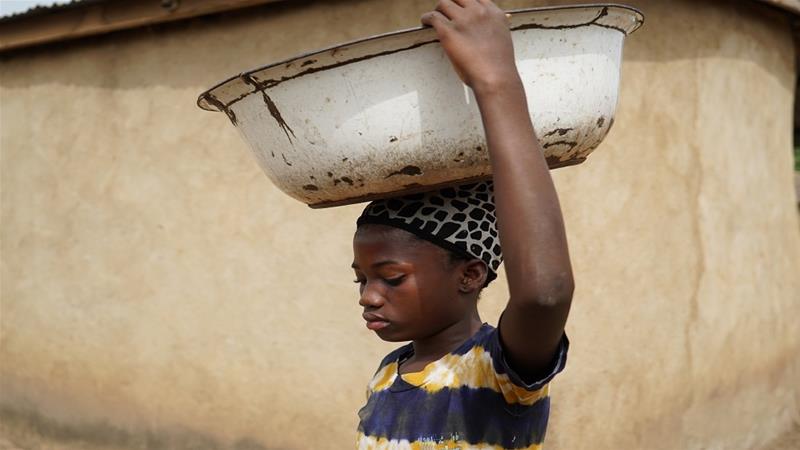
Kayayo: Ghana's Living Shopping Baskets

SOURCE: AL JAZEERA

From: https://www.aljazeera.com/indepth/features/qa-reality-free-education-ghana-180219070207774.html

Comparte este contenido:

South Africa: Why Budget 2018 gets a C for addressing education crisis

South Africa / 26.02.2018 /By:  www.fin24.com/.

Educación de jóvenes de Sudáfrica se ha destacado como una de las tres principales prioridades nacionales en discurso sobre el presupuesto 2018.

Cape Town – The education of South Africa’s youth has been highlighted as one of the top three national priorities in Finance Minister Malusi Gigaba’s 2018 budget speech.

Soria Hay, head of corporate finance at Bravura, says that, while Budget 2018 gets an A for the commitment to fee-free higher education and training for South Africa’s disadvantaged youth, it deserves a meagre C for inefficiently responding to the burning issues at the heart of South Africa»s education crisis.

Fee-free higher education

The 2018 Budget Speech has made good on the commitment towards fee-free education by proposing an implementation plan that will guarantee access to higher education and training for all South Africans who qualify, based on merit rather than class position. Government is committed to spending over R1trn on education in the next three years.

Post school education and training will be the fastest-growing spending category in the 2018 budget, with an anticipated annual average growth rate of 13.7%.

A budget allocation of R57bn in the medium term for fee-free higher education and training will be dispersed as R12.4bn in 2018/19, R20.3bn in 2019/20 and R24.3bn in 2020/21. There is also the inclusion of a R10bn provisional allocation made in Budget 2017.

Fee-free higher education and training (including university and TVET colleges) will be implemented in a phased approach aimed at first-year students from poor and working-class families, with a total family income below R350 000 per annum. The roll out will continue into subsequent years until all years of study are covered.

Allocation to basic education

In terms of basic education, a total of R792bn in aggregate will be spent on basic education over the medium term. Within this, the education infrastructure grant will allocate R31.7bn over the medium term and will include a R3.8bn allocation to the school infrastructure backlogs grant in order to replace 82 inappropriate and unsafe schools, and to provide water to 325 schools and sanitation to 286 schools.

A further R21.7bn over the medium term will be set aside to provide daily meals to 19 800 schools (9 million learners) through the national school nutrition programme grant. And 39 000 Funza Lushaka bursaries will be disbursed over the next three years via the National Student Financial Aid Scheme, at a cost of R3.7bn earmarked for prospective teachers in priority subject areas such as mathematics, science and technology.Furthermore, to support effective curriculum delivery over the medium term, R15.3bn is allocated to provide printed and digital content to teachers and learners. This includes the provision of 183 million workbooks and textbooks, teacher support, and increased access to information and communication technology.

But Hay questions the merit of these allocations.

«Alarming statistics and reports on the state of basic education point to the need for far more aggressive management of teacher training and classroom efficiency. Allocations do not significantly account for this,» cautioned Hay.

Basic education system broken

Budget 2018 states that fee-free education will contribute towards breaking the cycle of poverty and confronting unemployment, as labour statistics point to the lowest rate of unemployment for tertiary graduates.

Hay says that, while the budget quite rightly considers tertiary education in the light of the development of the youth as being critical to SA’s economic recovery and long-term health, it falls short in acknowledging the fact that the primary and secondary education systems continue to let down SA’s children.

«While a substantial 70% of the R1trn budget has been earmarked for basic education, it is arguable whether the specific allocations will hit the right marks to meaningfully change the prospects for the majority of school-going children,» says Hay.

«It is widely acknowledged that the basic education system in SA is completely broken.»

Hay cites an article that appeared in The Economist last year, which highlighted the fact that SA has the most unequal school system in the world with the widest gap in the world between the test scores of the top 20% of schools and the rest of schools.

The article went on to quote a study undertaken in 2007 where maths teachers of 11- and 12-year-olds sat tests similar to those taken by their class. As many as 79% of teachers scored below the level expected of the pupils. The average 14-year-old in Singapore and South Korea performs much better.

According to a ranking table of education systems drawn up by the Organisation for Economic Co-operation and Development (OECD) in 2015, South Africa ranked 75th out of 76 based on its overall education system.

In 2014, only 36.4% of those who began grade 1 in 2002, matriculated in 2014. And in 2015, Basic Education Department statistics in 2015 reflected 1.2 million learners registered for Grade 1, but only 790 000 learners in Grade 12.

The Department of Higher Education report in 2015 indicates that a vast 47.9% of university students did not complete their degrees, with black students holding the highest drop-out rate. As many as 32.1% enrolled students leave within their first year. This points to an alarming drop-off rate, which Hay says costs the taxpayer billions of rand with no outcome.

«South Africa’s historic spend on education (6% of GDP) is an appropriate percentage of our budget compared to other developing countries, if not slightly higher. Brazil spends 5.8% of GDP on education, India 3.3% and China around 4%. Yet, it seems that few countries spend as much to so little effect. The issue of quality remains highly problematic,» says Hay.

Accommodating all the additional students

«But let’s take a step back for one moment. As a result of the fee-free education programme, the anticipated number of tertiary students able to benefit in 2018 will include 340 000 university students and over 420 000 full-time equivalent students at TVET colleges. This means that by the end of 2018 around 760 000 students will have benefited from higher education and training.»

University student numbers are already near capacity. Plans have been in place to grow the current number of universities (26) that accommodate about 1 million students in order to ensure the inclusion of a further 500 000 students by 2030.

These plans, developed prior to the fee-free education commitment, could be severely impacted by fee-free education, leading to a fresh exclusion discourse based on access rather than cost.

Hay says that an important aspect of university education is to fuel research and innovation capability, which drives economic growth and competitiveness. She suggests that it is time for government to prioritise the areas and industries where they want students to focus on given that the country needs specific skills in order to grow our economy and ensure inclusive growth.

Hay cautions that, despite government’s commitment to inclusivity in education based on merit and not class position, there are numerous risks that have not been accounted for.

«Principles, theory and strategy are important aspects and Budget 2018 can be applauded for a strategic pointing in the right direction. But details of how to ensure access to higher education and training for the fee-free education recipients, coupled with how best to allocate funds in basic education to guarantee sustained improvement in education, are glaringly absent,» says Hay.

From: https://www.fin24.com/Budget/why-budget-2018-gets-a-c-for-addressing-education-crisis-20180225

Comparte este contenido:

Tanzania: wizara ya elimu imewataka walimu nchini watakiwa kujiendeleza kitaaluma

Tanzania / Februari 25, 2018Mwandishi: Chanzo: zanzibar24

Wizara ya  elimu na Mafunzo ya amali Zanzibar imewataka walimu nchni kujiendeleza kitaaluma ili kutoa elimu inayoendana  na mahitaji ya wanafunzi  katika kuengeza ufaulu wa masomo yao.
 Akizungumza katika mkutano uliyowakutanisha wadau wa sekta ya elimu katika kujadili tathmini ya masomo kwa mwaka mzima, Kaimu waziri wa Wizara ya Elimu Zanzibar Mahmoud Thabit Kombo amesema fani ya elimu imekuwa ikishushwa hadhi kutokana na baadhi ya walimu kushindwa kujiendeleza kitaaluma.
Amesema imefika wakati kwa walimu kujua umuhimu wa kazi zao katika kutoa elimu bora kwa wanafunzi ili waweze kunufaika na elimu inayotolewa katika skuli pamoja na kuengeza kasi ya kuzalisha wataalamu wa fani mbalimbali Nchi.
Aidha Kaimu kombo ametowa wito kwa Wazazi kuengeza kushirikiana na walimu katika kufatilia maendeleo ya wanafunzi ili kuwaengezea walimu ari ya kusomesha jambo ambalo litasaidia kurejesha hadhi na heshima ya walimu Nchini.
 Kwa upande wake Mwakilishi wa mtandao wa Elimu Zanzibar khamis Saidi ametowa wito kwa serikali kuwashirikisha wadau wa sekta ya elimu katika kuandaa bajeti ya sekta hiyo ili bajeti hiyo iweze kutumika kwa mahitaji yaliyokusudiwa .
Aidha amesema sekta ya elimu inahitaji mashirikiano mazuri baina ya serikali na wadau wa maendeleo ili kujua namna ya kuengeza ufaulu kwa wanafunzi.
 Nae mwakilishi kutoka Shirika la kuhudumia watoto nchini UNICEF Masoud Muhammed amesema wataendelea kuuunga mkono juhudi za serikali katika kutatua matatizo yanayo ikabilia sekta ya elimu.
Amesema mpaka sasa kuna matatizo mbalimbali ambayo yansababisha wananfunzi kutopata elimu ipasavyo ikiwemo wingi wa wananfunzi madarasani.
Amesea tatizo hilo pia la waingi wa wananfunzi maskulini linachangi baadhi ya wananfunzi kutoandikishwa skuli na wazeee wao jambalo ambalo linachangia kupotea kwa haki za watoto hao.
Mkutano huo wa siku tatu unaendelea kufanyika mazizini imekusudia kufanya tathmini ya mwaka katika sekta ya elimu ili kujua namna ya kupunguza matatizo yanayoikabilia sekta hiyo.
Chanzo cha Habari:
http://zanzibar24.co.tz/2018/02/19/wizara-ya-elimu-imewataka-walimu-nchini-watakiwa-kujiendeleza-kitaaluma/
Comparte este contenido:

Analysis: How corrupt local officials kill decent education in Africa

Africa/February 24, 2018/Author: Maty Konte/Independent

There’s no disputing that many African countries’ education systems are in trouble. Despite significant investment and some improvements linked to the push to achieve the Millennium Development Goals, children in large parts of Africa are simply not being well taught or learning what is needed as they progress through the school system.

A lot of the discussion around this problem centres on resources: people argue that teachers must be trained better. More money must be spent. This is, of course, correct.

And governance is sometimes discussed, though mostly only as it relates to central governments and their responsibilities. But the quality of local governance matters, too. Local governments – those at a regional, provincial level, district or village level – are closer to communities. They are more likely to understand particular populations’ needs. At a practical level, they are often in charge of providing or distributing goods and services. In education this would mean textbooks, furniture and repairs to classrooms.

This suggests that local governance can have a real effect – positive or negative – on the quality of learning resources in a community and, by association, on how children perform?

I set out to explore this effect by using a series of surveys conducted by Afrobarometer in 33 African countries. This is an independent and non-partisan research network which conducts nationally representative surveys in Africa measuring public attitudes on economic, political and social matters. More than 50,000 citizens have been interviewed in the selected surveys I used for this study.

My study showed a strong link between the quality of local governance and the quality of the educational resources in Africa’s public schools.

In fact, I found that corrupt behaviour by local government councilors increased the likelihood that schools would lack textbooks, have poor facilities and overcrowded classrooms, have poor quality of teaching, and would record high levels of teacher absenteeism. This finding stands no matter how much money a particular country’s central government had invested in education.

If Africa is serious about improving its schooling systems (and meeting the Sustainable Development Goal related to education), it must tackle corruption among local councilors.

What the data shows

My research was based on survey data Afrobarometer collected between 2005 and 2013. Some of the questions related to education; others to people’s perceptions of their local government councilors’ performance and ability.

Among the questions about education, interviewees were asked whether they had encountered the following challenges in their local public schools: expensive school fees; lack of textbooks or other learning supplies; poor teaching; teacher absenteeism; overcrowded classrooms; and facilities that were in poor condition.

Afrobarometer Round 5 (2011 – 2013)

For almost each of the items listed, more than 50% of the respondents had encountered the challenge in the question.

Most interviewees complained particularly about a lack of textbooks and teaching materials; poor teaching quality and teacher absenteeism. These are all key determinants of what students can achieve by the end of an academic year.

A crisis of corruption

Corruption, like low-quality education, is a real problem across Africa. In its 2017 Ibrahim Index of African Governance, the Mo Ibrahim Foundation warned that the level of corruption on the continent had risen between 2007 and 2016.

This is borne out by what interviewees told Afrobarometer in the surveys I studied. More than 80% of those surveyed on the subject said that at least some of their local government councilors were involved in corrupt activities. Less than 10% of those surveyed believed that their local councilors listened to their communities.

Afrobarometer Round 5 (2011 – 2013)

The study shows that a 1% increase in the measure of local government corruption is associated with an increase of about 0.4% to 0.9% in the percentage of people who face poor human or physical school resources in local public schools. This statistical evidence suggests tackling issues in local governance can help education systems in Africa.

And it matters because good local governance can ensure that textbooks and learning materials are available and that they reach the students at public schools. The behaviours and attitudes of local government councilor’s may affect the way public sector employees, like teachers, are hired and treated.

The performance of teachers in public schools depends on many factors, and their degree of accountability depends also on the degree of accountability and responsiveness of those in charge of the management of the schools that include local government councilors.

Taking action

Improving the quality of education systems will have huge benefits for Africa’s present and future generations. Part of this improvement must involve tackling people’s negative perceptions about their local councilors, whether those relate to corruption, effectiveness or responsiveness.

Central governance remains important. It should be coupled with careful plans and actions to fix local governance, make councilors more accountable and ensure they’re providing the services schools need to thrive.

Fuente: https://www.independent.co.ug/analysis-corrupt-local-officials-kill-decent-education-africa/

Comparte este contenido:

No hay tiempo que perder contra la mutilación genital femenina

Por: Will Higginbotham y Tharanga Yakupitiyage


Más de 200 millones de mujeres sufrieron algún tipo de mutilación genital y todavía hay muchas más en peligro de padecer la práctica que pone en riesgo no solo a la persona afectada sino a comunidades enteras.
La prevalencia disminuyó en el mundo, pero nuevos datos del Fondo de Población de las Naciones Unidas (UNFPA) prevén que cualquier avance logrado podría desaparecer porque hay 68 millones de niñas en peligro de sufrir mutilación genital en 2030. Los datos se conocieron en el marco del Día Internacional de la Tolerancia Cero contra la Mutilación Genital Femenina (MGF), conmemorado el 6 de febrero.

“Los nuevos datos significan que la práctica amenaza la vida y el bienestar de más mujeres y niñas de las que se pensaba al principio”, dijo a IPS la coordinadora del Programa Conjunto UNFPA-Fondo de las Naciones Unidas para la Infancia (Unicef) sobre la MGF, Nafissatou Diop. “Tu y yo y la vecina pueden verse afectadas”, indicó. La MGF, a veces llamada circuncisión o corte, suele practicarse por motivos religiosos, personales, culturales y dentro de los rituales de iniciación de las adolescentes a la vida adulta. Según el UNPFA, la mayoría de los casos afectan a niñas pequeñas y hasta los 15 años. El aumento de casos “en riesgo de sufrir la MGF” se debe, en parte, al crecimiento de la población en países donde es una práctica común, principalmente el norte y oeste de África, Medio Oriente y algunas zonas de Asia.

Solo en Egipto, más de 90 por ciento de las mujeres fueron mutiladas. Tanto Unicef como UNFPA denunciaron la MGF por considerarla una “violación de los derechos humanos” y una “práctica cruel” que inflige un daño emocional y afecta a las personas más vulnerables de la sociedad. “Es inadmisible que 68 millones de niñas se agreguen a las 200 millones de mujeres y niñas que ya soportaron la MGF”, subrayó.

Daño que cambia la vida

La MGF puede dejar traumas de por vida, como problemas urinarios y vaginales, mayor riesgo de complicaciones durante el parto y trastornos psicológicos como depresión, ansiedad, estrés postraumático y baja autoestima. La directora ejecutiva de la división de derechos de las mujeres de Human Rights Watch, con sede en Nueva York, Liesl Gerntholtz, dijo a IPS que era “inaceptable” que hubiera 68 millones de casos. “Es una violación de los derechos humanos fundamentales que puede arruinar la vida vida de las niñas”, alertó. “Es común que no puedan opinar, en la infancia ¿qué pueden decir?”, acotó. “No trae beneficios para la salud de las mujeres cortadas, y tiende a verse en esas sociedades que no tienen igualdad de género. Es una práctica arraigada en la desigualdad de género”, remarcó Gerntholtz.

MGF expresión de desigualdad de género

Gerntholtz subrayó que para hacer frente a la mutilación genital femenina, la comunidad internacional debe atender no solo la práctica misma, sino la cuestión más general de la arraigada desigualdad de género. “Como comunidad internacional, podemos luchar contra la MGF no solo apoyando iniciativas específicas vinculadas a ella, sino también mirando de forma holística la desigualdad de género en esas regiones e invirtiendo en programas que apoyen los derechos y la educación de las niñas; y la educación de la comunidad, también es clave”, explicó. Por su parte, la directora ejecutiva de UNFPA, Natalia Kanem, coincidió, y recordó que el mundo ya sabe qué hacer para afrontar el problema.

“Sabemos qué funciona, inversiones dirigidas destinadas a cambiar normas sociales, prácticas y vidas”, precisó. “Cuando se hace frente a las normas sociales de pueblo en pueblo, cuando hay acceso a la salud, a la educación y a servicios legales, cuando las niñas y las mujeres están protegidas y empoderadas para alzar su voz”, añadió. El cambio viene particularmente del ámbito comunitario. Latifatou Compaoré, de 14 años, se volvió una luchadora contra la práctica tras conocer la experiencia que había sufrido su madre por la MGF. “Me contó que una de las niñas a la que habían cortado el mismo día que a ella, habría sufrido problemas graves y murió de una hemorragia que nadie pudo parar”, relató en entrevista con el UNFPA. “Cuando se convirtió en madre, se prometió a sí misma que si tenía niñas, nunca las cortaría; y cumplió con su palabra”, añadió. En los países donde trabajan Unicef y el UNFPA, unas 18.000 comunidades rechazaron la práctica y muchos otros tomaron medidas legales para prohibirla.

Por ejemplo, después de que Kenia prohibió la MGF en 2016, el número de casos cayó de 32 a 21 por ciento.

Se necesita una acción acelerada

Pero no bastan las leyes ni los compromisos de palabra, observó el secretario general de la Organización de las Naciones Unidas, António Guterres. “Sin una acción concertada y acelerada, vemos que otras 68 millones de niñas pueden sufrir esa práctica dañina”, alertó. Diop también reclamó más esfuerzos para destinar fondos y recursos humanos a esta lucha. La meta de frenar la MGF tiene un lugar destacado en los Objetivos de Desarrollo Sostenible (ODS). Su inclusión se consideró un reconocimiento de las vastas consecuencias que tiene la MGF, que van más allá del impacto individual e incluye un impacto social y económico para comunidades enteras. “No se puede lograr el desarrollo sostenible sin el total respeto de los derechos humanos de mujeres y niñas”, reza la declaración de Guterres.

El secretario general pidió a los gobierno que aprueben y apliquen las leyes que protegen los derechos de niñas y mujeres y eviten la mutilación genital. También anunció una nueva iniciativa de la ONU llamada “Iniciativa Spotlight”, que procura crear una fuerte asociación para poner fin a todas las formas de violencia contra mujeres y niñas. “Cuando está en juego la dignidad, la salud y el bienestar de millones de niñas, no hay tiempo que perder”, remarcó. “Juntos podemos y debemos terminar con esta práctica perjudicial”, añadió Guterres.

Fuente: https://www.rebelion.org/noticia.php?id=238209

Comparte este contenido:
Page 225 of 622
1 223 224 225 226 227 622