Page 255 of 622
1 253 254 255 256 257 622

Sudáfrica: Sex education introduced to the youngsters

Sudáfrica/Noviembre de 2017/Fuente: News 24

Resumen:  Por primera vez en Sudáfrica, se lanzó la serie en línea de educación sexual y reproductiva de Amaze.

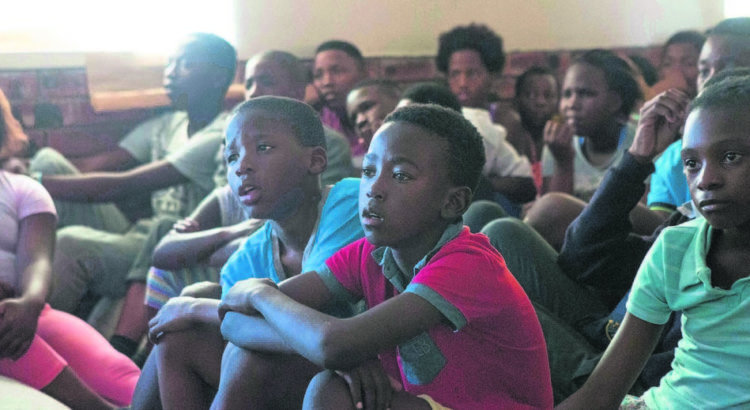
La serie sudafricana Amaze se lanzó en el programa Ikamva Labantu Youth Centered Family en Gugulethu el miércoles pasado.

Ikamva Labantu fue una de las organizaciones de la comunidad que apoyó al equipo sudafricano Amaza en el desarrollo de la serie, proporcionando comentarios de los jóvenes y cuidadores en su programa para asegurarse de que el contenido tuviera sentido.

Los dos primeros episodios fueron titulados Bullying and Sexual Orientation y el tercer episodio se llamó Healthy Relationships (Relaciones sanas) y se lanzarán el 13 de noviembre. La serie de 11 partes se lanzará en noviembre y hasta diciembre en YouTube, las redes sociales y en: www.amaze.org.za

For the first time in South Africa the Amaze sex and reproductive health education online series has gone live.

The South African Amaze series launched at the Ikamva Labantu Youth Centred Family Programme in Gugulethu last Wednesday.

Ikamva Labantu was one of the community organisations who supported the South African Amaza team in the development of the series, providing feedback from the young people and caregivers in their programme to make sure that the content made sense.

The first two episodes were entitled Bullying and Sexual Orientation and the third episode was called Healthy Relationships) due to go live on 13 November. The 11-part series will roll out over November and into December on YouTube, social media and at: www.amaze.org.za

Amaze is an online, animated video series for 10 to 14 year olds that tackles the tough questions young people have about their changing bodies, sexuality, healthy relationships and behaviour.

The highly successful series originated in the US, and now a portion has been adapted for a South African audience including translation into Xhosa and Afrikaans and new locally relevant characters and topics.

Amaze’s local partner is Marie Stopes South Africa who, through a grant from the Westwind Foundation has worked to localise and distribute the content in South Africa.

Marie Stopes operates a national network of sexual and reproductive health centres and see first-hand the need for more vibrant, relatable sex education that impacts young people as early as possible.

Whitney Chinogwenya, Brand and Communications Manager for Marie Stopes says: “The South African Amaze series hopes to be a resource for 10 – 14 year olds to help them navigate their adolescence with accurate, age appropriate information about sexuality that’s presented in an educating and entertaining way.”

Under the tagline #MoreInfoLessWeird the series also aims to help parents and guardians discuss these issues with the young people in their lives openly and honestly. “The series creates the opportunity for fun, youth-friendly tools to help start these conversations earlier, with tweens and teens, in a way that resonates with their everyday experiences,” Chinogwenya says.

Aside from helping with awkward conversations, these videos provide real information that can help young people be prepared for the experiences they may deal with in the future. South African teens face many challenges when it comes to sexual health.

Fuente: https://www.news24.com/SouthAfrica/Local/City-Vision/sex-education-introduced-to-the-youngsters-20171108

Comparte este contenido:

Your voice is your weapon”: Taking on sexual harassment in Egypt

Egipto/Noviembre de 2017/Fuente: UNFPA

Resumen:  «Tu miedo te está controlando», dijo el instructor Amany Abdel-Aal a una habitación llena de mujeres en una clase de autodefensa de Wen-Do, realizada en un centro juvenil alegremente pintado en las afueras de El Cairo.

Los estudiantes, la mayoría de ellos refugiados sirios, asintieron con la cabeza.

«A veces quiero hacer algo pero no puedo», admitió una mujer.

Sus miedos están bien fundados. La mayoría de los estudiantes de la Sra. Abdel-Aal han sufrido acoso sexual. Y ellos no están solos.

El acoso sexual tiene lugar en todas las sociedades de la tierra y sus costos son inconmensurables. Degrada y aterroriza a las mujeres, las mantiene alejadas de la escuela y del trabajo, lo que las obliga a medir el valor de las oportunidades frente al riesgo para su seguridad.

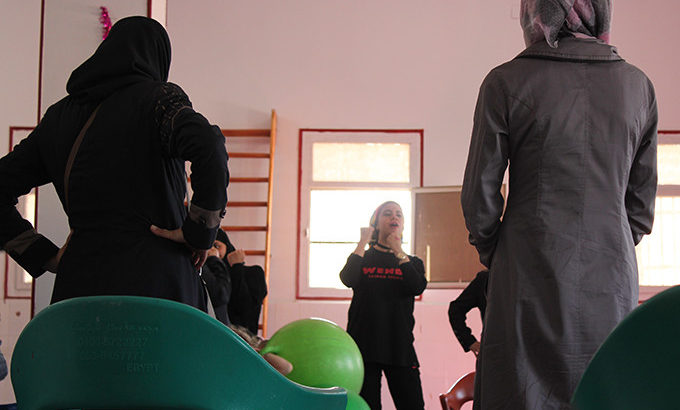
“Your fear is controlling you,” instructor Amany Abdel-Aal told a roomful of women at a Wen-Do self-defence class, held in a cheerfully painted youth centre on the outskirts of Cairo.

The students – most of them Syrian refugees – nodded in agreement.

“Sometimes I want to do something but I can’t,” one woman admitted.

Their fears are well founded. Most of Ms. Abdel-Aal’s students have experienced sexual harassment. And they are not alone.

Sexual harassment takes place in every society on earth – and its costs are immeasurable. It degrades and terrorizes women, keeping them from school and jobs, forcing them to measure the value of opportunities against the risk to their safety.

The Wen-Do students – women and girls of all ages – learn about more than self-defence. They also discuss their experiences with harassment and learn to stand up for their rights. © UNFPA/Rebecca Zerzan

But a global movement is sweeping the world, encouraging women to stand up against these abuses.

Millions of people are airing their own experiences on social media, using the hashtags #MeToo, وانا_كمان#, #BalanceTonPorc, #YoTambién and others. They describe catcalls, lewd gestures, suggestions and assaults. They are demanding change.

Ms. Abdel-Aal’s students are demanding change, too.

Large majorities face harassment in Egypt

Sexual harassment is a major problem in Egypt. Studies show that large majorities of women have been subjected to it, often on the street or public transportation. And the problem is deeply rooted. In one survey , 64 per cent of men admitted to engaging in sexual harassment.

Ms. Abdel-Aal’s class is part of broader efforts to empower vulnerable Egyptian and Syrian women.

The Wen-Do lessons are conducted by the local organization Etijah, with support from UNFPA and funding from Norway and the European Civil Protection and Humanitarian Aid Operations department (ECHO).

Held in locations identified as “safe spaces” – places where women and girls can speak freely and seek assistance, such as counselling or violence prevention services – the classes are part martial arts lesson, part support group.

Many Wen-Do students are refugees who have learned to make fabrics, ceramics and other handicrafts. But to make a living with these skills, they must be able to brave the streets and buses. © UNFPA/Rebecca Zerzan

“We don’t only play with physical techniques. Fifty per cent is psychological,” said Ms. Abdel-Aal, a psychologist by training.

At one recent class, the students gathered in a circle, their children playing underfoot, and shared their experiences.

One woman said she had blocked a harasser on Facebook.

Another said she experienced hostility in her daily life: “There are some people we cannot get rid of, but we cannot defend ourselves – bad people.”

Ms. Abdel-Aal encouraged them to be strong: “You can limit their control over your lives.”

Reaching vulnerable women and girls

The class introduces women to human rights concepts – including the right to live free of violence and abuse.

Such ideas may be new to these students.

Surveys show that 90 per cent of Egyptian men and 70 per cent of Egyptian women believe women should tolerate violence to keep their families together.

The students learn how to strike an attacker. Other lessons include walking with confidence through a busy street and shouting down harassers. «You shouldn’t be afraid or hesitate. It is your right,” Ms. Abdel-Aal said. © UNFPA/Rebecca Zerzan

And Syrian refugee women may be at even greater risk.

A majority of refugee households in Egypt are considered “severely economically vulnerable.” UNFPA and the Ministry of Youth and Sports offer sewing, cooking and ceramics classes for refugee women, and will soon provide entrepreneurship courses to empower them economically and socially.

But to take advantage of these programmes, they must be able to brave the streets and buses.

“It is your right”

Ms. Abdel-Aal told her students to stand. It was time for exercise.

But before they started punching, she wanted them to practice shouting at an attacker. “What would you say?” Ms. Abdel-Aal asked.

“Behave yourself!” yelled one student.

“You are rude!” another called out.

“You are an animal!” shouted another. The women applauded.

You should not feel ashamed by harassment, the instructor told them. “Your voice is your weapon. You shouldn’t be afraid or hesitate. It is your right.”

The lessons have had a positive impact on her students, Ms. Abdel-Aal later explained. “They become more aware of their boundaries. They take this to their jobs.”

Her students had another way of describing how the class made them feel.

“I have self-confidence,” one woman said, smiling.

Another announced, “I felt I am the queen of the world.”

Fuente: http://www.unfpa.org/es/news/%E2%80%9Cyour-voice-your-weapon%E2%80%9D-taking-sexual-harassment-egypt

Comparte este contenido:

Africanía, 29-10-17: Educación Superior en Ghana

España / 12 de noviembre de 2017 / Autor: Fundación Sur / Fuente: Audio URCM

En “Africanía” charlamos con José maría Mella, catedrático de Estructura Económica y Economía del Desarrollo de la Universidad Autónoma, sobre la educación superior en Ghana, así como su experiencia como profesor en este país de la Universidad Kwame Nkrumah.


Producción: Fundación Sur   |   Relacionado con : Fundación Sur   |  Duración aproximada: 00:55:00

Hablamos en “Africanía” con José María mella, profesor durante el curso académico 2016-2017 de la Universidad Kwame Nkrumah, sobre la importancia de la formación superior en África, así como de su implementación tanto teórica como práctica y sobre la relevancia de la cooperación internacional universitaria.

Africanía es el primer y único programa de la radio española, con más de trece años de emisión, que trata íntegramente de la actualidad del continente africano y de sus diferentes expresiones culturales. Su principal objetivo es informar con claridad y sencillez, desde la reflexión y el análisis, del día a día de África. Además, cada programa cuenta con un protagonista, del máximo interés, que aporta su personal visión y experiencia profesional sobre la política, la cultura, la economía, etc. Toda esta información se sirve bien guarnecida con los infinitos ritmos y estilos musicales que nos traen todo el olor, sabor y sonido de África, dando prioridad a los músicos africanos instalados o de paso por estos lares, a quién se les tiene, siempre que hay oportunidad, en directo. Un espacio que combina seriedad y humor para desvelarles los misterios de un continente cercano.

Africanía lleva en antena desde 1997 y se emite por emisoras locales, comunitarias y culturales, así como web radios, de España e Iberoamérica. Además, puedes escucharlo a lo largo de toda la semana, así como todos los programas desde 2006, en: http://www.audio.urcm.net y en el Portal del Conocimiento sobre África de la Fundación Sur (http://www.africafundacion.org).

Africanía es un programa realizado bajo la dirección de Rafael Sánchez, Subdirector General de la Fundación Sur, anteriormente conocida como Centro de Información y documentación Africana (CIDAF), con la colaboración puntual de los más destacados profesionales. Se pretende habilitar a la sociedad, a través de la formación e información, para participar en el desarrollo y renovación mundial, trabajando sobre la base de la diversidad cultural para desestructurar prejuicios y crear una dignidad global que integre a las sociedades africanas y que permita su desarrollo económico y social.

Fuente de la Entrevista:

http://audio.urcm.net/Africania-29-10-17

Comparte este contenido:

Kenia: Inside Kenya’s most guarded KCPE exam

Kenia / 08 de noviembre de 2017 / Por: OUMA WANZALA / Fuente: http://www.nation.co.ke/

A high-level meeting on the eve of last week’s Standard Eight examinations was behind the smooth delivery of the tests in election hotspots in parts of the country, the Sunday Nation has established.

Education Cabinet Secretary Fred Matiang’i convened a meeting of top security and education chiefs last Monday to work out strategies to ensure the examinations were not disrupted.

The meeting followed growing fears that – given the violent scenes witnessed in Kibera, Kawangware, Mathare and parts of Nyanza – the examination administration would be disrupted.

TEAMS

At the meeting chaired by Dr Matiang’i, officials formed community examination committees to inspire proper involvement and ownership of the exercise.

At least 25 people, representing community stakeholders in each of the communities, were appointed to be members to the examination teams.

The committees’ tasks included throwing a ring around the schools to ensure all examination materials reached schools.

Groups represented at the committees included; chiefs and their assistants, village elders, parents and opinion leaders within the communities.

For the three days the examination was held, the groups conducted civic education and peace building around the examination centres, a move largely believed to have softened the areas, many of which had heightened tensions as a result of elections.

Kibera had experienced disturbances that led to destruction of a school over the fresh presidential election which was held on October 26. It was a similar case in Mathare where tension was high.

VIOLENCE

In Kawangware, the violence caused the death of six people after rival groups allied to Jubilee and Nasa clashed and the hostility was evident when, on Monday afternoon during rehearsals at Gatina Primary School, Dr Matiang’i’s convoy was attacked by rowdy youths.

The rowdy youths also held hostage several education officials and journalists who were later rescued by the police.

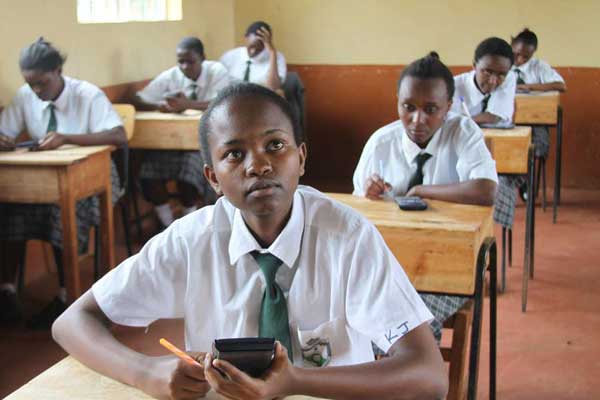
A total of 1,003,556 candidates sat the examination in 28,566 centres.

They started with English Language and Composition on the first day, Science, Kiswahili Lugha and Kiswahili Insha on the second day and concluded with Social Studies and CRE on Thursday.

At the national level, President Uhuru Kenyatta mobilised his entire Cabinet to spread out to various parts of the country to join the relevant ministries to administer the examinations.

President Kenyatta, who had promised that his government would spend a few days to focus on the national examinations, made a surprise visit to Westlands Primary School to personally monitor the opening of the examination papers.

RESUME DUTY

On their part, Cabinet Secretaries Dr Matiang’i (Education), Mr Willy Bett (Agriculture), Mr Charles Keter (Energy), Ms Phylis Kandie (Labour), Ms Sicily Kariuki (Public Service), Dr Cleopa Maillu (Health), Mr Dan Kazungu (Mining) and Mr Joe Mucheru (ICT) were all dispatched to various counties to monitor the exercise.

At the Ministry of Education, Dr Matiang’i advised all his top and middle-level officers who were on leave to resume duty to help in the monitoring.

The ministry has formed a multi-sectoral examination monitoring group comprising officials from the Kenya National Examinations Council (Knec), Teachers Service Commission, Kenya Institute of Special Education and Kenya Institute of Curriculum Development among others who are deployed throughout the country during the examinations process.

The team is headed by Knec chairman George Magoha, who is also in charge of releasing official communication to the public.

All the top bosses, including TSC chief executive Nancy Macharia, KICD director Julius Jwan and Knec’s Mercy Karogo moved to various counties for the exercise.

All of the officials provided feedback on the examinations from time to time.
MONITORING

Some of the activities of the examination monitoring teams would be reported directly to a command and control centre at the Knec offices from where necessary action would be taken.

Such monitoring was the reason an attempted case of impersonation in Baringo County was immediately detected and action taken.

“We are happy that the suspect was arrested immediately,” Prof Magoha said in response to the attempted impersonation case. He said: “It is proof that our systems are working very well to detect any anomalies.”

There were also cases of examinations starting late in Tana River, Wajir and Mandera due to heavy rains and, where necessary, the examination materials were airlifted.

Prof Magoha maintained that the KCPE and the Kenya Certificate of Secondary Education examinations, to start tomorrow, will be credible and no paper would be leaked.

SYSTEMS

He said all the multi-sectoral agencies had helped to step up the systems of monitoring the examinations.

“It is clear, from the way we have planned this year, that we have benefited more from the fact that the Education and Interior dockets were under one command, making it easier to co-ordinate,” Prof Magoha said.

At least four high-level meetings were held between education and security agencies ahead of the exams, the first ever to be held in an atmosphere of political tension caused by a disputed presidential election.

Dr Matiang’i said the KCSE examinations that will start countrywide tomorrow will be administered with the same zeal.

“We are determined to execute the exam processes with great precision with a focus to deliver credible results,” he said.

Fuente noticia: http://www.nation.co.ke/news/Kenya-most-guarded-KCSE-exam/1056-4173624-q1obnnz/index.html

Comparte este contenido:

Alfabetización a lo cubano en Angola: dos millones de Sim, eu posso.

África/Angola/07.11.2017/Autor y Fuente:http://www.prensa-latina.cu
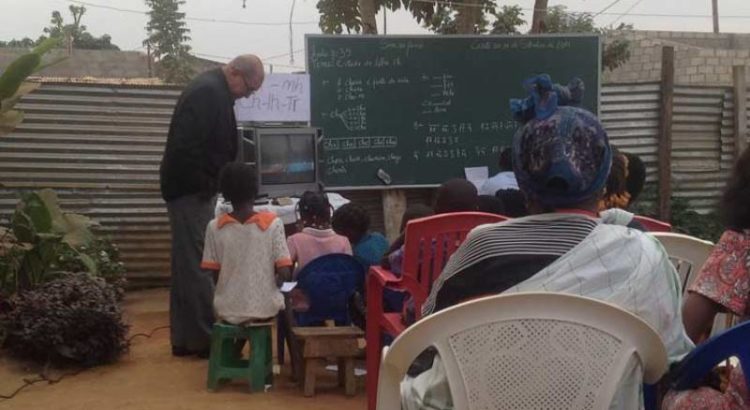
Dejaron la sombra que persigue a los iletrados y hoy dicen con orgullo en su portugués melodioso Sim, eu posso (Yo, sí puedo). Son más de dos millones de angoleños adultos que se alfabetizaron con un método cubano.
Algunos hasta hace muy poco engrosaban la fría estadística de un cuarto de la población, que totaliza 28 millones de habitantes, que no sabe leer ni escribir en Angola.

Desde que se reactivó aquí el Yo, sí puedo en 2012 hasta octubre pasado se graduaron dos millones dos mil 749 alumnos, expresó a Prensa Latina el consultor del Ministerio de Educación y responsable del programa, Alfredo Díaz.

Han sido sobresalientes las labores de los 42 asesores cubanos en las 18 provincias del país y de casi la mitad (54,7 por ciento) de los alfabetizadores que este año colaboraron voluntariamente, subrayó.

Existen, precisó, alfabetizados en 162 de los 173 municipios con que cuenta el país, que se independizó en 1975 de Portugal y vivió casi tres décadas envuelto en una guerra civil.

El método, que cumplió recientemente 15 años, tuvo su estreno en 2002 en Venezuela, que se declaró libre de analfabetismo al igual que Bolivia, Nicaragua y Ecuador.

Su capacidad de adaptarse a cualquier zona y soporte técnico le ha permitido al Yo, sí puedo estar presente lo mismo en América, en África o en Asia, y tuvo incluso una incursión en Europa al probarse en la ciudad española de Sevilla. 

Las grabaciones de las clases se realizan con actores de cada nación e incluyen variaciones propias del idioma hablado en cada territorio, flexibilidad que busca la aceptación y el apoyo de las experiencias vividas por los beneficiados.

Otra de las bondades reconocidas es su rapidez al desarrollarse el curso de siete a 10 semanas como promedio, aunque en condiciones intensivas se ha podido conseguir la alfabetización en un mes.

Sin embargo, la mayor facilidad del método consiste en que se asocia cada número a una letra del alfabeto, una opción que permite al estudiante partir del dígito conocido hacia lo desconocido.

El programa cuenta con versiones en español, inglés y otra en portugués, además de en creole para Haití, aymara y quechua para Bolivia y tetum para Timor Leste.

Fuente: http://www.prensa-latina.cu/index.php?o=rn&id=128688&SEO=alfabetizacion-a-lo-cubano-en-angola-dos-millones-de-sim-eu-posso
Imagen: http://www.prensa-latina.cu/images/2017/noviembre/03/angolaclases1.jpg
Comparte este contenido:

Injustice In The Classroom: Young Women In Uganda Deserve An Education

Uganda/November 07, 2017/ Source: http://www.huffingtonpost.co.uk

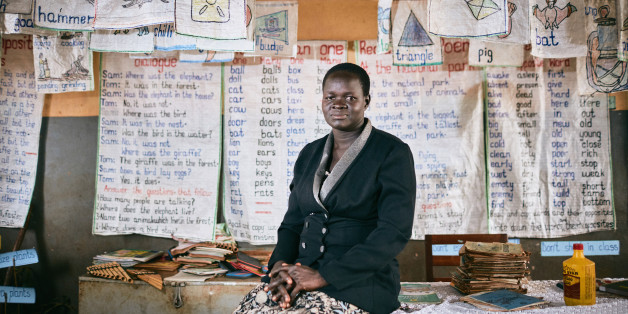
My name is Jenifer Aloyo, a classroom teacher of a government-aided primary school in Western

Uganda. For the last 10 years I have been teaching Years 3 and 7 as well as English. However, in these past so many years, I have also experienced the heartbreaking situation where ambitious young girls have repeatedly missed out on the education they deserve.

Where I live, in the district of Kiryandongo, there is a divergence of cultures including refugees who have been displaced by disastrous circumstances in South Sudan as well as Kasese and Bududa in Uganda. This has left many girls and young women vulnerable, and, within a complexity of issues, means that the education of daughters is less important than their marriage.

I have seen girls enrolled in school at a late age, perhaps eight years old, because they had been kept at home to do household chores or to take care of their siblings. Parents have also been scared to send their daughters to school for fear that they would be kidnapped as they walk tough distances through thickets. They are considered vulnerable and weak.

As they grow into young women, girls are so often bullied by their male counterparts and not supported either at school or at home to understand their bodies, reproductive health and the importance of their own rights. When they begin to have their period, girls are not given the facts and often told misinformation from ill-intentioned people – people who allege that when a girl menstruates it is a sign that she is ready for marriage and child bearing. Girls are so often exposed to illicit practices inappropriate to their age and mislead into early sex. For this reason, I have seen countless girls drop out of school due to teenage pregnancies and early marriage.

I have also countered cases where parents have tasked girls with «business» during school time. So as boys are concentrating in class, girls are anxiously wondering how they will sell the pancakes they given to take to school before hurrying back home to prepare for the evening meal. This greatly affects their learning.

At home, husbands and fathers often leave the responsibility of their children’s education to the women. Unfortunately though, many are not empowered to do this.

Almost half of women in Uganda are unable to read. They lack the money, skills and influence they need to provide for their family. They’re voices are not heard and so the issues facing their daughters are overlooked. Even something as simple as a need for underwear can be forgotten, so adolescent girls can be forced home from school due to shame and discrimination. They will eventually drop out.

All of this results in generation after generation of young women who, deprived of an education, become mothers too soon and will repeat the same challenges in supporting their own children.

Missing out on an education means that a young mother’s understanding of, and access to, healthcare can be so poor. She will not make antenatal or postnatal appointments. She will struggle to visit hospitals or clinics when she need to. Her children will miss out on vaccinations against preventable diseases. And, if she cannot read, she will face the struggle to interpret medical advice and instructions, sometimes resulting in a dangerous under or overdose for her children.

While all this happens, «uneducated» young mothers face such stigma from society. They are looked at as misfits and are rarely allowed to participate in their community or school meetings. They struggle with such low self-esteem and acceptance and cannot speak up for the rights of themselves of their children.

Injustice truly is a cycle. But it can be broken.

Build Africa is helping young mothers in Jenifer’s region to learn literacy skills and access healthcare and nutrition services.

Research shows that an educated mother is more likely to be healthier, more economically stable and to take care of her children better. She will have the power to vaccinate her children, providing more nutritious meals and nurture them from their earliest days.

Most importantly, her children will be more likely to complete their own education, so they will have more opportunities in life and one day send their own children to school.

Please help transform the life of a young mum in Jenifer’s community: support Build Africa’s #MumsReadKidsSucceed appeal. It could be the most powerful thing you do today.

http://www.build-africa.org/youngmums

Source:

http://www.huffingtonpost.co.uk/jenifer-aloyo/injustice-in-the-classroo_b_18479232.html

Comparte este contenido:

Angola: Educação necessita de professores

Angola/06 de Noviembre de 2017/Jornal de Angola

Resumen: La provincia de Moxico necesita más de tres mil profesores, informó ayer, en Luena, el director provincial de Educación.

A província do Moxico necessita de mais três mil professores, informou ontem, no Luena, o director provincial da Educação.

Abel Jones Pique explicou que a província conta com 5.544 professores, número insuficiente para cumprir  os objectivos do sector. “Com o preenchimento das vagas e aumento de salas de aula, o sector da Educação na província  vai colocar em cada turma o máximo de 35 alunos, um imperativo da reforma educativa.”

Sobre este ano lectivo, que caminha para o fim, Abel Pique   fez um  balanço positivo e disse que no segundo trimestre houve 87 por cento de aproveitamento escolar em todos os subsistemas de ensino. Ao perspectivar os desafios do sector, Abel Jones Pique   disse que as prioridades são a construção de mais escolas e o enquadramento de docentes.

Fuente: http://jornaldeangola.sapo.ao/provincias/educacao_necessita_de_professores_1

Comparte este contenido:
Page 255 of 622
1 253 254 255 256 257 622