Page 253 of 622
1 251 252 253 254 255 622

La época de cosecha apenas da respiro a la crisis alimentaria en Sudán del Sur

15 de noviembre de 2017 / Fuente: https://www.unicef.org

Las tasas de desnutrición aumentan, especialmente entre los niños, y el periodo de escasez amenaza con adelantarse

La temporada de cosecha en Sudán del Sur no terminará con la crisis alimentaria mientras continúe el conflicto en el país y la hiperinflación deje los alimentos fuera del alcance de muchos. Así lo revela la Fase de Clasificación de Seguridad Alimentaria Integrada (IPC por sus siglas en inglés) lanzada hoy por el gobierno de Sudán del Sur, la Organización de Naciones Unidas para la Alimentación y la Agricultura (FAO), el Fondo de Naciones Unidas para la Infancia (UNICEF), el Programa Mundial de Alimentos (PMA) y otros aliados humanitarios.

Es probable que el número de personas en situación de inseguridad alimentaria grave descienda a 4,8 millones entre octubre y diciembre, frente a los 6 millones de junio. Sin embargo, estos 4,8 millones de personas son 1,4 millones más que el mismo periodo del año pasado, y gran parte de este aumento se ha dado en la categoría de emergencia (fase 4 –de 5- en la escala del IPC).

“La época de cosecha no ha traído demasiado alivio a los millones de personas en Sudán del Sur que no tienen alimentos suficientes. El cinturón verde del país ha sido devastado por los combates, y encontrar una solución pacífica a esta tragedia creada por el hombre debería ser prioritario. Si no, esta situación será incluso peor el año que viene”, asegura Serge Tissot, representante de la FAO en Sudán del Sur.

Se prevé que la situación de inseguridad alimentaria empeore a comienzos de 2018, y que el periodo de escasez –cuando normalmente los hogares se quedan sin alimentos antes de la siguiente cosecha- empiece tres meses antes de lo normal. Mucha gente tiene muy pocos medios para afrontar el periodo de escasez, y se espera que la situación sea cada vez más inestable.
“Una respuesta humanitaria contribuyó a detener la hambruna en algunas partes del país este año. Pero incluso en el periodo de cosecha, millones de personas necesitan ayuda de manera sostenida para sobrevivir”, explica Adnan Khan, representante del PMA en Sudán del Sur. “Es estremecedor ver que, en el peor de los escenarios, se podrían producir situaciones similares en muchos lugares durante el periodo de escasez en 2018”.
Los equipos que han realizado el análisis han identificado dos condados –Wau y Ayod-, donde 25.000 personas se enfrentan a un estado catastrófico según la escala del IPC. Preocupa especialmente en Gran Baggari, subdistrito del antiguo Wau, donde al menos el 15% de la población afronta una situación similar a la de hambruna debido a que la inseguridad ha limitado seriamente las actividades de subsistencia y la ayuda humanitaria.

Se necesita urgentemente un corredor de ayuda humanitaria entre Wau y la zona de Gran Baggari para que las agencias puedan proporcionar una atención integral.

Niveles críticos de desnutrición

La desnutrición también ha empeorado respecto al mismo periodo del año pasado. Las encuestas muestran que las tasas de desnutrición en la mayoría de comunidades están por encima del umbral de emergencia, que la OMS establece en el 15%. Más del 30% de la población sufre desnutrición en varios condados.

Más de 1,1 millones de niños menores de cinco años podrían sufrir desnutrición en 2018, incluidos 300.000 gravemente desnutridos y en alto riesgo de morir.

“Demasiados niños pasan hambre en Sudán del Sur. Más de uno de cada cinco niños que luchan por poder alimentarse tienen menos de cinco años”, lamenta Mahimbo Mdoe, representante de UNICEF en Sudán del Sur. “Esto ha creado una crisis de desnutrición que está poniendo muchas vidas en riesgo”.

Aumento del precio de los alimentos

La inseguridad sigue dificultando la producción alimentaria y perjudicando a los mercados. Esto, unido a una crisis económica, ha llevado a precios extremadamente altos. Básicos como el sorgo, maíz o la harina de trigo han aumentado su precio hasta un 281% más que el año pasado, y llegó a ser hasta un 560% más alto en mayo, en el pico del periodo de escasez.

En Juba, un saco de 100 kilos de sorgo cuesta 11.285 libras sur sudanesas, frente a las 4.314 de hace un año; esto va mucho más allá de lo que la mayoría de las familias se pueden permitir.
Millones de personas dependen de la ayuda humanitaria para sobrevivir en Sudán del Sur, pero si las condiciones de seguridad amenazan aún más las operaciones de las organizaciones, la situación empeorará rápidamente.

El informe alerta de que el conflicto permanente, unido a las limitaciones de acceso a la ayuda y a una inestabilidad económica, derivará en un deterioro de la ya desesperada situación en muchos lugares de Sudán del Sur durante 2018.

Respuesta rápida

Los equipos humanitarios se enfrentan a unos retos logísticos y de seguridad enormes para llegar a las comunidades que lo necesitan.

La FAO ha proporcionado kits de pesca, de cosechas y de cultivo de verduras a más de 4,2 millones de personas, muchas de ellas en zonas en conflicto o difíciles de alcanzar, para ayudarles a cultivar o cazar su propio alimento. Además ha vacunado a más de 4,8 millones de animales para protegerlos, ya que son el medio de subsistencia de las familias vulnerables.

UNICEF y sus aliados han tratado a más de 160.000 niños con desnutrición severa aguda en lo que va de año. El objetivo para todo el año era llegar a 207.000 niños desnutridos en todo el país. Como parte del planteamiento multisectorial para abordar este asunto, UNICEF ha proporcionado agua potable a más de 750.000 personas y acceso a instalaciones de saneamiento a otras 230.000.

El PMA y sus aliados han entregado en lo que va de año ayuda en efectivo o alimentos a 4,6 millones de personas en Sudán del Sur, incluyendo apoyo nutricional para niños menores de cinco años.

Los equipos móviles de emergencia, que han realizado 135 misiones, la mayoría en helicóptero, en zonas aisladas por el conflicto, han dado apoyo a 1,8 millones de personas este año.

Fuente noticia: https://www.unicef.org/spanish/media/media_101452.html
Comparte este contenido:

Sudafrica: Higher Education Minister welcomes release of Fees Commission report

Sudafrica/Johannesburg/news24.com

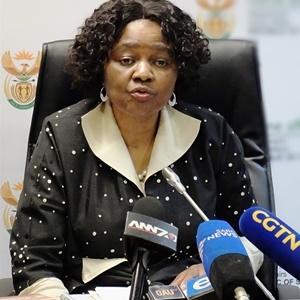
Resumen: Hlengiwe Mkhize, el martes dio la bienvenida a la publicación del informe sobre la Educación Superior en Sudafrica de la Comisión Heher, enfatizando que no hace ningún pronunciamiento o decisión. Mkhize dijo que la publicación del informe conduciría a una discusión saludable sobre una base informada, para un camino más sostenible.»Esto proporcionará una oportunidad para que las comunidades académicas, estudiantiles y más amplias lo estudien y se familiaricen con los detalles de los hallazgos, propuestas y escenarios alternativos del juez Heher», dijo. Al respecto indicó que no creía que el contenido del informe pudiera provocar un estallido de protestas en el campus.»Tengo la creencia de que todos los representantes que están mirando el informe tienen en serio la difícil situación de los estudiantes. No preveo ninguna decisión [en el informe] que pueda dañar a los estudiantes per se», dijo. La Comisión Heher fue establecida por el presidente Jacob Zuma en 2015 luego de protestas estudiantiles en todo el país por las tarifas. Estaba encabezado por un juez retirado, el juez Jonathan Heher. La comisión exploró la viabilidad de los modelos de financiación para la educación superior. Zuma recibió el informe el 30 de agosto y «aplicó su mente» a él, solo lo publicó tres meses después de recibirlo. El informe de 752 páginas , publicado el lunes, concluyó que actualmente no hay capacidad para que el estado brinde educación terciaria gratuita a todos los estudiantes del país. Recomienda, entre otras cosas, préstamos de contingencia garantizados por el gobierno de los bancos comerciales para estudiantes de pregrado y posgrado, y un enfoque en las escuelas de educación y formación profesional técnica (EFTP), que serán gratuitas. Se transferirán R50bn del superávit del Fondo de Seguro de Desempleo (UIF) para el desarrollo de infraestructura.


Higher Education Minister Hlengiwe Mkhize on Tuesday welcomed the release of the Heher Commission report, emphasising that it does not make any pronouncements or decisions.

«It provides government with recommendations only. Decisions still have to be made by government. Government must have the space to conduct a thorough due diligence and to weigh up all aspects of the proposals,» she said in Pretoria.

Mkhize shared that debt, especially for poor students, was a concern of hers and had to be monitored closely.

«Having come from a very poor background as well, my belief is that education is the ladder of taking yourself out of poverty – and your family. So if you inherit a huge debt coming out of school, it might not help those who have sacrificed to put you through.»

Mkhize said that the release of the report would lead to a healthy discussion on an informed basis, for a more sustainable way forward.

«This will provide an opportunity for the academic, student, and broader communities to study it and to familiarise themselves with the detail of Judge Heher’s findings, proposals, and alternative scenarios,» she said.

Peace on campuses

Mkhize called for peace on campuses. She hoped students would be able to complete exams so they did not miss out on opportunities available to them.

She did not believe that the contents of the report might lead to a flare up of protests on campus.

«I have this belief that all representatives who are looking at the report have the students’ plight at heart. I don’t foresee any decision [in the report] that could harm the students per se,» she said.

Responding to a question from a journalist, Director-General Gwebs Qonde said that they were not aware of an individual by the name of Mukovhe Morris Masutha, as he was not an employee of the higher education department.

According to reports, Masutha is behind a plan for free education which would fly in the face of the Heher Commission’s findings that South Africa cannot afford blanket free higher education.

News24 reported exclusively on Monday that Morris was listed as an employee of the State Security Agency during his time as a student activist at Wits University.

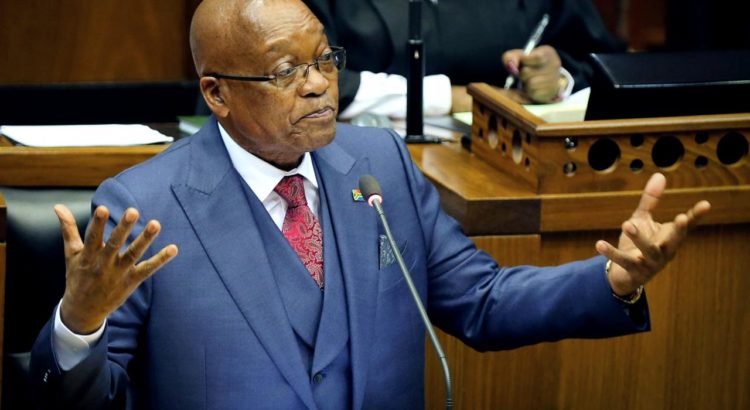
The Heher Commission was put in place by President Jacob Zuma in 2015 following nationwide student protests over fees. It was headed by retired judge, Judge Jonathan Heher.

The commission explored the viability of funding models for higher education. Zuma received the report on August 30 and «applied his mind» to it, only releasing it three months after receiving it.

The 752-page report – which was released on Monday – concluded that there was currently no capacity for the state to provide free tertiary education to all students in the country.

It recommends, among other things, government guaranteed income-contingency loans from commercial banks for undergrad and postgrad students, and a focus on technical vocational education and training (TVET) colleges – which will be free. R50bn will be transferred from the surplus of the Unemployment Insurance Fund (UIF) for infrastructure development.

Mkhize was previously the minister of Home Affairs before President Jacob Zuma’s Cabinet reshuffle on October 17.

Fuente: https://www.news24.com/SouthAfrica/News/higher-education-minister-welcomes-release-of-fees-commission-report-20171114

Comparte este contenido:

Nigeria: Buhari backs firing of teachers who failed primary school exam

Nigeria / 15 de noviembre de 2017 / Por: MOHAMMED MOMOH / Fuente: http://www.nation.co.ke/

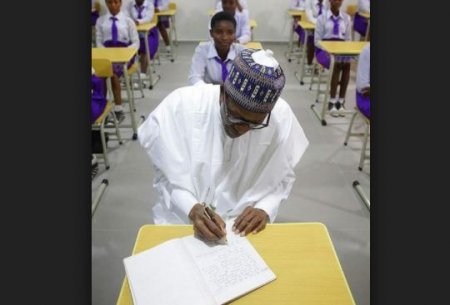
Nigerian President Muhammadu Buhari has endorsed the sacking of 21,000 teachers who failed a primary school examination.

President Buhari approved the dismissal despite strong opposition from labour unions.

The examination was conducted by the Kaduna State government for 33,000 teachers, as part of its education reform.

President Buhari endorsed the sacking at the opening of a special retreat of the Federal Executive Council on Education, at the Presidential Villa, Abuja on Monday.

Kaduna Governor Nasir El Rufa’i came under attacks recently, especially from the Nigeria Labour Congress (NLC), over the action on the teachers, many of who are secondary school certificate holders.

The mass layoff prompted a protest on November 8.

VERY SERIOUS

However, President Buhari described the situation as «very, very serious’’ and said «it is bad that teachers cannot pass the exams that they are supposed to teach the children’’.

“Having been an orphan, I still feel that whatever I did in life so far was built by boarding school. For nine years, I was in a boarding school, three in primary and six in secondary school.

“In those days, teachers treated their students like their own children. If you did well, they told you, you did well, if you didn’t do well, they never spared the rod,» he said.

DRASTIC MEASURES

The president said that with the rot in the education sector, drastic measures had become necessary to salvage the situation.

He said the ruling All Progressive Congress (APC) was committed to all the electoral promises made to revamp the education sector.

The Nigerian leader also revealed that the current statistics of the out of school children stood at 13.2 million, up from the 10 million estimated by the United Nations a few years back.

“We cannot afford to continue lagging behind. Education is our launch-pad to a more successful, more productive and more prosperous future.

“This administration is committed to revitalising our education system and making it more responsive and globally competitive.”

He commended the Ministry of Education for setting the stage for the national conversation that aimed at refocusing the education sector.

Fuente noticia: http://www.nation.co.ke/news/africa/Nigerian-teachers-fail-primary-exam/1066-4186662-7gqyj9z/index.html

Comparte este contenido:

La crisis educativa de Yemen se profundiza a medida que los maestros no remunerados continúan atacando

Por:Internacional de la Educación 

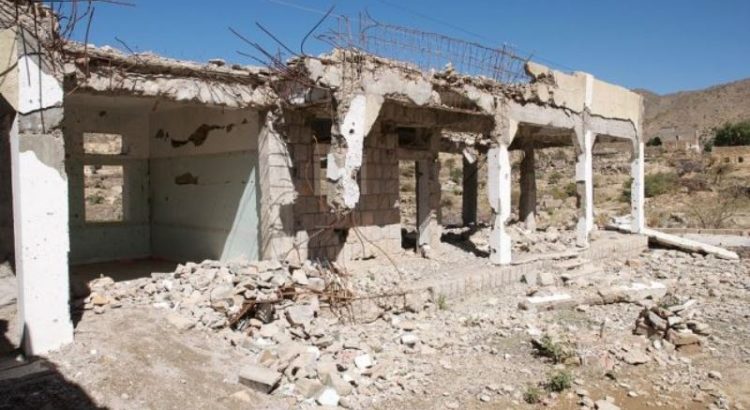
Con más de 1700 escuelas cerradas debido a los daños del conflicto armado, los maestros del país se han declarado en huelga desesperados por recibir un salario después de un año, lo que no hace más que aumentar las dificultades educativas del país.

Al no recibir un salario desde octubre de 2016, los docentes decidieron tomar medidas como último recurso para recibir un sueldo. La situación afecta a los docentes que viven y trabajan en regiones controladas por el movimiento Houthi. Yemen alberga a 166000 docentes que no están solos. en su lucha por cobrar Los trabajadores del sector público de countryrsquos en las mismas regiones tampoco han sido remunerados durante un año En algunas áreas, hasta el 90 por ciento de los docentes se han declarado en huelga para protestar porque no les pagan o porque les pagan demasiado. aproximadamente 160 USD por mes antes de que se suspendieran los salarios. Yemen Teachers Syndicate es una afiliada de IE Internacional de Educación. Para empeorar las cosas, el gobierno pide voluntarios no calificados para reemplazar a los maestros en huelga. Al menos dos millones de niños no asisten a la escuela.el gobierno se convirtió recientemente en el país número 70 en aprobar la Declaración de Escuelas Seguras antes del Debate del Consejo de Seguridad de la ONU sobre los Niños y los Conflictos Armados nbsp.

Fuente:https://regions.ei-ie.org/asiapacific/detail_ap_news/?id=15518

Imagen:https://ei-ie.org/media_gallery/fdb3e.jpg

Comparte este contenido:

South African commission urges more education spending before ratings reviews

South African/November 14, 2017/By: Alexander Winning, Mfuneko Toyana/ Source: http://www.reuters.com

 http://www.reuters.com/article/us-safrica-politics/south-african-commission-urges-more-education-spending-before-ratings-reviews-idUSKBN1DD13C
Comparte este contenido:

Buhari’s Statement On How To Improve Nigeria’s Education Sector

Nigerian/November 14, 2017/By: RemmyAlex/ Source: https://www.nigerianbulletin.com

President Muhammadu Buhari on Monday assured of an improved education sector during his opening remarks at the presidential summit on education.

The event held at the Old Banquet Hall of the presidential villa in Abuja.

In his speech, Buhari “congratulated the Minister of Education and the entire education family for setting the stage for this national conversation aimed at refocusing the education sector not only to overcome the numerous challenges, but also to strengthen the Ministerial Strategic Plan.”

Noting that the significance of the summit is obvious, Buhari added that it is those who acquire the most qualitative education, equipped with requisite skills and training, and empowered with practical know-how that are leading others.

He continued: “We cannot afford to continue lagging behind. Education is our launch-pad to a more successful, more productive and more prosperous future. This administration is committed to revitalizing our education system and making it more responsive and globally competitive.

“One of the primary roles of education is to build and sustain individual and society’s development. It renews and improves the economic, social, political and cultural aspects of any nation.

“Education upgrades the living standard of citizens and enables people to become better and more productive citizens. It is a human right that creates a safe, healthy and prosperous society.

“It changes the visions and perspectives of individuals, enhances critical decisions and improves democracy. Indeed education is paramount and necessary requirement for all-round development.

“Nigeria’s participation in all relevant international education fora together with our investment in education and collaboration with development partners is an indication of high level of commitment towards ensuring that every capable Nigerian receives good quality education.

“These efforts are justifiable only to the extent that schooling is effective in promoting the realization of national objectives, attaining the Sustainable Development Goals (SDGs), and Education For All (EFA) by 2030.

“These targets are, happily, in harmony with the manifesto and the CHANGE agenda of our Party, the All Progressive Congress (APC).

“It is also in agreement with my campaign promises during the 2015 elections exercise and in pursuit of the yearnings and aspirations of the generality of Nigerian citizens.

“That our country is facing numerous challenges in education and all other sectors as a result of historical abuses, mindless impunity and corruption is not news to anyone.

“With an estimated 13.2 million children out of school, high illiteracy level, infrastructural deficit and decay, unqualified teachers, and inadequate instructional materials, to mention some of the challenges, we can clearly see the effect of decades of neglect that the education sector has suffered.

“We are determined to turnaround the sector for the better. We are already making appreciable progress in this respect. This summit must therefore, among other things, sharpen our strategies for addressing the challenges of basic and secondary education, teacher training and professional development; technical and vocational education.

“The summit must work to enhance quality in, and access to, higher education and other challenges in the sector that will debar us from attaining the SDGs and be among the top 20 economies in the world.

“No nation can achieve economic, social, political and cultural prosperity without a sound and functional education system.”

Source:
https://www.nigerianbulletin.com/threads/buharis-statement-on-how-to-improve-nigerias-education-sector.246568/
Comparte este contenido:

Africa Talks Jobs: tailor education programmes to market needs

Kenia/Noviembre/Autora: Margaret Njugunah/Fuente: Capital Business

Resumen:  Más de 400 representantes de jóvenes, hombres de negocios, profesionales de la educación y responsables políticos de 44 países de todo el continente africano han pedido la mejora de las perspectivas de empleo para los jóvenes africanos a través de la educación orientada al empleo y el desarrollo de habilidades.La llamada se hizo en la conferencia Africa Talks Jobs celebrada en la sede de la Comisión de la Unión Africana en Addis Abeba. Las recomendaciones requieren un compromiso más fuerte de la comunidad empresarial africana para brindar oportunidades de capacitación y ofertas conjuntas con instituciones educativas.

More than 400 representatives of youth, businessmen, education practitioners and policy makers from 44 countries across the African continent have called for the improvement of job prospects for the African Youth through employment-oriented education and skills development.

The call was made at the Africa Talks Jobs conference held at the African Union Commission headquarters in Addis Ababa.

The recommendations call for a stronger engagement of the African business community in providing opportunities for skills training and joint offers with education institutions.

120 African companies and business associations, under the auspices of Business Africa, have also committed to investing in skills development and partnership with education institutions for job skills education and training.

Governments have been urged to provide the necessary frameworks as well as favourable conditions for young entrepreneurs.

At the same time, education at all levels and youth activities need to better address labour market demands and equip the youth with skills to start their own businesses.

In 2016, the International Labor Organization revealed that Africa, which has the world youngest population, had 71 million unemployed persons. Similarly, working poverty rates among youths in Sub-Saharan Africa was 70 per cent, translating to 64.4 per cent million youths living in extreme or moderate poverty.

A World Bank report indicates that unemployment in Kenya rose to 17.4 per cent in 2016 among its 25.5 million working age population.

Fuente: https://www.capitalfm.co.ke/business/2017/11/africa-talks-jobs-tailor-education-programmes-to-market-needs/

Comparte este contenido:
Page 253 of 622
1 251 252 253 254 255 622