Page 257 of 622
1 255 256 257 258 259 622

Kenia: Pupils hopeful of posting good results despite political tension

Kenia / 01 de noviembre / Fuente: http://www.nation.co.ke

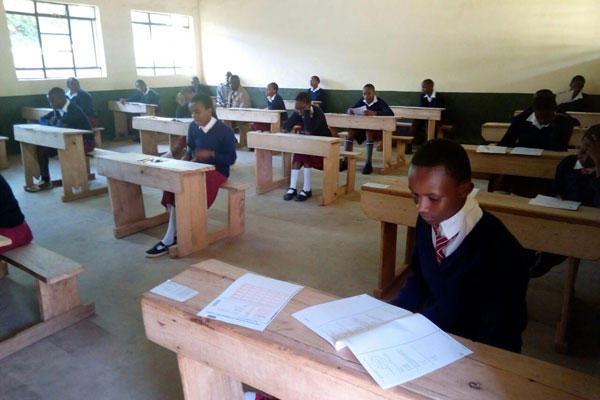
Primary school children from areas hit by violence during last week’s repeat presidential election were yesterday gearing up for the national exams that start this morning.

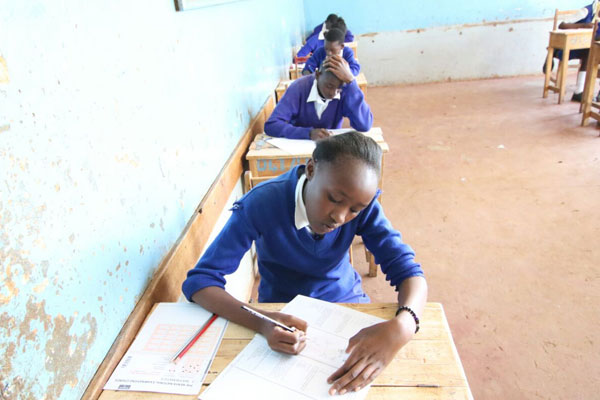
The Nation found the children rehearsing for the Kenya Certificate of Primary Education (KCPE) examination, hoping for improved performance in the examinations that end on Thursday.

At Pandpieri Primary School in Kisumu County, headteacher Veronica Otieno said the 121 pupils were ready for the exams.

 “Due to our location next to Nyalenda slums, we have had to contend with a lot of challenges since the region has experienced confrontations with police in the run-up to the October 26 presidential polls,” she said.

REVISION

Mr Peter Okello, the headteacher at Hekima Primary School, which has 16 candidates, said: We have taken our students through a thorough revision exercise and we hope to improve on the 341 mean score we attained last year.”

Kenya National Union of Teachers (Knut) Kisumu executive secretary Joshua Ogallo called on the government to increase security patrols around schools to ensure the smooth administration of the exams.

Kakamega County Director of Education Fred Kiiru said a total of 46,594 candidates — 22,150 boys and 24,443 girls— will sit the exams.

“We have finalised all the logistics including transportation of exam materials to respective centres and ensuring adequate security,” he said.

Jackeline Walumbe, the public relations manager at Bridge International, said most of the candidates will sit the examination in public schools.

“We have about 3,628 candidates across the country, with 85 in Busia. We expect to perform well this year, since recording a positive trajectory in the past two years,” she said.

RAINFALL

In Kisii, 30,618 standard eight candidates will sit the test in 918 centres spread across nine sub-counties according to the county education director William Sugut.

In Mount Kenya, examiners asked the government to ferry examination materials by air because most of the roads had been rendered impassable by heavy rainfall. Education director Margaret Mwirigi said they had procured several four-wheel drive vehicles to help in the exercise.

Tharaka Nithi county commissioner Florence Amoit sought to assure the candidates and teachers that security forces would provide adequate security as the Mandera education boss Abdihamid Maalim said the county’s  5,232 candidates were all ready for the test.

In Meru, 32 inmates from Meru GK main prison participated in yesterday’s rehearsal that was conducted countywide.

READY

Nyandarua education chief Abbakar Hassan said: “We have already sent supervisors and security men to all examination centres. We do not anticipate any challenges since we are fully prepared.”

In Nakuru, 44 inmates from Naivasha Maximum Security Prison will be among thousands of candidates and among them is 65-year-old Stephen Muria Mwangi who will be writing the test for the first time sharing the examination hall with the youngest candidate at the institution — 19-year-old Harrison Kipyego Bungei.

At the Nakuru prison, five women and eight men inmates will sit the examination, according to the head of the institution James Sawe.

The Kenya Defence Forces will provide extra security to officers manning the exams in some schools in Wajir South constituency, which lies on the Kenya-Somalia border. Deputy County commissioner Felix Kisalu said the KDF officers will join police in protecting the candidates, teachers and examiners in Wajir Bor area to Gherille in Wajir South.

Fuente noticia: http://www.nation.co.ke/news/education/Pupils-hopeful-of-posting-good-results/2643604-4162904-u1at1vz/index.html

Comparte este contenido:

Kenia: Security increased in Coast region as KCPE exams start

Kenia / 01 de noviembre de 2017 / Fuente: http://www.nation.co.ke/

Security has been heightened in terror prone Lamu and Tana River counties as Standard Eight candidates started their national exams.

Coast regional police boss Larry Kieng said security had been heightened in terror prone areas of Lamu and Tana River to counter Al-Shabaab attacks.

Mr Kieng said enough officers had been deployed to schools in Lamu that were affected by Al-Shabaab attacks.

“The security of our children and that of our schools is guaranteed. We will not take any chances in this critical time for our children,” he said.

He said adequate security had also been deployed in Mombasa, Kilifi, Kwale and Taita Taveta.

The Standard Eight candidates started their English exams at 8 am in most schools.

Distribution of Kenya Certificate of Primary Education examination materials in the six coast counties continued smoothly ahead of the exams.

Education officials and county commissioners ensured the distribution of the materials to various schools.

In Lamu, the county education officials led by county director William Micheni denied journalists access to examination centres.

Mr Micheni said he was representing his boss, Cabinet Secretary Fred Matiang’I who had asked that the journalists access  as they are “propagandists.”

He directed security guards to kick out journalists from Lamu Boys Primary School terming them ‘intruders.’

In the Coast region where 84,088 candidates are expected to sit for the exams, regional education director Abdikadir Kike County Commissioner Achoki witnessed the distribution of the papers at Kisauni

In Kilifi, head teachers picked the materials from the county commissioner’s office.

Candidates were frisked to ensure they did not have materials that could be used to cheat.

In Tana River, 14 KCPE candidates from Koticha Primary School were asked to sit for their exams in Hola, more than 50 kilometres away.

Speaking to the Nation, Wayu MCA Saddam Hussein said the move by the Kenya National Examination Council was unreasonable and would affect the pupils’ performance in the exams.

“Why would KNEC suddenly advice pupils to travel over 50kms from Wayu to go and take their exams yet there is just an examination centre just 5kms from Koticha Primary school?” he posed.

Mr Hussein said KNEC ought to have consulted with stakeholders on ground.

His sentiments were echoed by Koticha Primary School chairman Ali Jara who accused KNEC of “plans to make Koticha Primary school fail, hence tainting its image of  good performance.”

Mr Jara said it was unfortunate for KNEC to have arrived at such a decision without considering stakeholders on ground and other factors that would affect exams performance.

“KNEC should have alerted parents early in advance so that these pupils can be prepared for such moment, and besides, there is an exam centre 5kms from Koticha Primary. They should have transferred these pupils to Wayu primary School. Why Hola? ”he posed.

Mr Jara said this decision would affect the pupils psychologically as they have to adapt to the environment to settle for the exams. He also said he was worried as the plans by KNEC had not outlined how the pupils would be catered for in terms of food and accomodation.

However Tana River Director of Education Gitonga Mbaka confirmed that they had raised the matter with KNEC officials who had apologized for having made such an oversight.

Mr Mbaka in a text told the Nation said: “KNEC made a mistake and delivered the exams to the wrong centre. We have raised the matter and they have promised to rectify the issue next year.”

Concerning the pupils’ upkeep, Mr Mbaka told the Nation that he had liaised with the county commissioner to address the issue.

He confirmed that the pupils have since arrived in Hola for the exams.

The candidates were relocated because they were few.

According to KNEC a school has to have at least 11 candidates to be registered as an examinatiuon centre.

However, Mr Mbaka said it was wrong that Koticha was not registered yet it was 14 and that the issue will be

KCPE candidates in terror-prone Basuba ward and Pandanguo in Lamu County were moved to safer areas to sit for their exams.

Nine candidates from the Boni minority community in Basuba, Lamu East were moved to Mokowe Arid Zone Primary School.

The Mokowe Arid Zone was established in 1992 to give refuge and education to children from the Boni and Sanye minority communities.

All schools in Basuba ward including Basuba, Milimani, Mangai, Mararani and Kiangwe have remained closed for more than two years due to insecurity caused by al-shabaab attacks.

KCPE candidates from the ward have not set foot in class for the entire year.

The young girls and boys will now sit their exams at the Mokowe Arid Zone Primary School which is a full boarding institution, well furnished with all the necessary requirements for learners.

The school is also under 24-hour security surveillance by police.

Mokowe Arid Zone Primary School headteacher Zbubakar Ruhuma said there were concerns on how the pupils would perform.

“We received a total of 141 pupils from the Boni Community living in Boni forest. Out of that, nine are among the 42 KCPE candidates to sit for the exams in this school as from Tuesday. They couldn’t sit the exams in their schools since they haven’t opened for the last two years due to insecurity. They have faced so many challenges but we are praying for them to do better. Here, the pupils are safer and the environment is peaceful,” said Mr Ruhuma.

At Pandanguo Primary School in Lamu West, 19 KCPE candidates will now sit their exams at the Witu Primary School after their school remained shut since July due to insecurity.

The school whose pupils are also majorly children from the Boni minority community remained closed since July 4 this year owing to constant attacks and raids by Al-Shabaab.

Majority of the KCPE candidates have been living in IDP camps with their parents who fled their villages in Pandanguo due to Al-Shabaab attacks that left several people dead including four police officers at the Pandanguo police station which was raided by the militants on July 4.

Parents are concerned that their children will not do well as they would have if they had been in school throughout.

“Most of our children who are sitting for this year’s KCPE have been living with us in IDP camps at Katsaka Kairu and at Witu AIC since July this year. They haven’t been in school since then because the teachers also ran away leaving the school deserted and closed. We are glad they have been moved and will do their exams elsewhere but we know that will not make any difference since they lost so much,” said Mr Adan Golja who is the Pandanguo village headman.

Pandanguo Primary School headteacher Hussein Athman said each year, candidates at the school have to be moved to Witu Primary School which is about 21 kilometres from Pandanguo as their exam centre due to unpredictable security situation in the area.

“I have 19 candidates from Pandanguo Primary School whom we have had to transfer them to Witu Primary School where they will be doing their exams from there. Our school is currently closed and we did all preparations at Witu. I am praying that they will do better in the forthcoming KCPE exams,” said Mr Athman.

Meanwhile, all is set for KCPE exams across Lamu with County Commissioner Gilbert Kitiyo assuring all schools of adequate security measures to ensure the exams progress smoothly.

He said schools in Ishakani and Kiunga border of Lamu and Somalia and those bordering the Boni forest will also be provided with adequate security to ensure no external attacks and interruptions from the Al-Shabaab militants.

“We have ensured all schools will be closely guarded by police. It’s not like we expect anything to happen during the exams but we are just taking precaution. All schools are under police surveillance. We have made similar arrangements for students in terror prone areas and so there is no cause for alarm,” said Mr Kitiyo.

Fuente noticia: http://www.nation.co.ke/news/education/Security-increased-as-KCPE-exams-start-/2643604-4163066-49c4ahz/index.html
Comparte este contenido:

Burkina Faso: un frente sindical de la educación unido para obtener un mejor estatus docente.

África/Burkina Faso/31.10.2017/Autor y Fuente:https://www.ei-ie.org/

Por primera vez desde hace tres años, todos los sindicatos de la educación de Burkina Faso han convocado una huelga con el fin de conseguir mejores condiciones de vida y trabajo para los docentes y contribuir a lograr la educación de calidad.

El Gobierno debe garantizar una educación pública gratuita y de calidad para todos

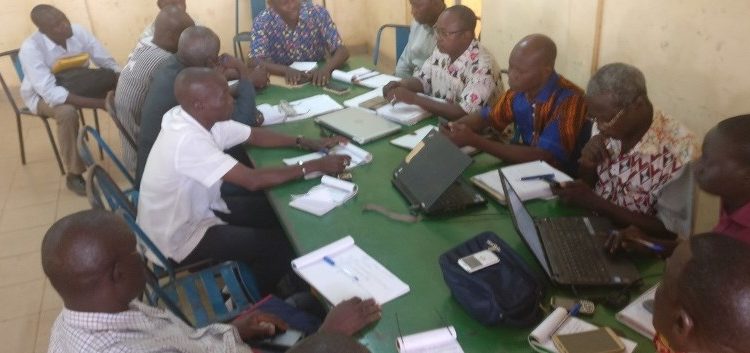
Desde la etapa infantil hasta la educación superior, pasando por las etapas primaria y secundaria, el personal administrativo, los inspectores y el sector no formal de la educación, prácticamente todos los sindicatos de docentes se han unido para coordinar dos días de huelga general en el sector de la educación en todo el país, los días 26 y 27 de octubre.

La plataforma de reivindicaciones abarca cuatro aspectos: la adopción de un estatus decente; la mejora del acceso a la educación;la mejora de las condiciones laborales; y la revalorización de la profesión docente.

En Burkina Faso los indicadores de las tasas de escolarización, el número de alumnos por clase y la obtención de títulos siguen siendo preocupantes, por no hablar de los sueldos de los docentes, que no son especialmente atractivos, con 100 000 francos CFA (150 Euros) para los docentes de Primaria, y 165 000 francos CFA (250 Euros) para los de Secundaria.

Para los sindicatos, entre ellos los afiliados a la Internacional de la Educación, tales como la Fédération des Syndicats de l’Enseignement du Burkina, la Fédération des Syndicats Nationaux des Travailleurs de l’Education et de la Recherche, el Syndicat national des enseignants africains du Burkina y el Syndicat national des enseignants du secondaire et du supérieur, es hora de que el Estado se comprometa a garantizar una educación pública gratuita y de calidad para todos los niños y niñas.

Al no hacerlo, el Gobierno central ya ha permitido que el sector privado ocupe un lugar importante en el sector educativo: un 20 por ciento en la educación primaria, un 80 por ciento en la etapa infantil y la formación profesional, y un 50 por ciento en la educación secundaria. Por otra parte, los docentes de estos centros privados que intentan reivindicar sus derechos corren el riesgo de ser despedidos inmediatamente, según informa el órgano coordinador de los 15 sindicatos.

Coordinación sindical para una máxima movilización

Por todo ello, el órgano coordinador ha previsto dirigirse a las asociaciones de padres de alumnos con el objetivo de explicarles los motivos de la huelga y de obtener su apoyo. El respaldo por parte de las centrales sindicales parece estar garantizado. Asimismo, se ha puesto en marcha un plan de comunicación mediático.

Los sindicatos también realizan una profunda labor en lo que se refiere a cada aspecto de la plataforma de reivindicación con el propósito de poder proporcionar contraargumentos sólidos a las afirmaciones del ministro de Educación.

Por otra parte, el órgano coordinador ha llevado a cabo un plan de despliegue para la movilización en las 45 regiones del país  y se ha dado los medios de efectuar una evaluación muy precisa sobre el éxito de la huelga, realizando un censo de los huelguistas de cada centro y recopilando toda la información relevante.

En los últimos años, los sindicatos han obtenido resultados significativos gracias a sus luchas colectivas, tales como la integración de los docentes contractuales y la firma de un convenio con el sindicato nacional de los directores de la educación privada laica. Así pues, pretenden obtener más beneficios mediante una movilización masiva los días 26 y 27 de octubre para los docentes y el sistema educativo de Burkina Faso.

Fuente:https://www.ei-ie.org/spa/detail/15487/burkina-faso-un-frente-sindical-de-la-educaci%C3%B3n-unido-para-obtener-un-mejor-estatus-docente

Imagen:https://www.ei-ie.org/resources/views/admin/medias/timthumb.php?src=https://www.ei-ie.org/media_gallery/original_1ebf3.jpg&w=1200&h=530&zc=1

Comparte este contenido:

Nigeria: Government To Stop Free Secondary School Education

Nigeria/October 31, 2017/Source: http://www.informationng.com

Indications emerged on Sunday that the Ondo State government is set to discontinue free education at the Secondary Schools level across the state.
The decision was contained in a communique issued by the over 2,000 stakeholders who converged on the International Culture and Events Center (DOME), Akure, for a two-day education summit in the state.
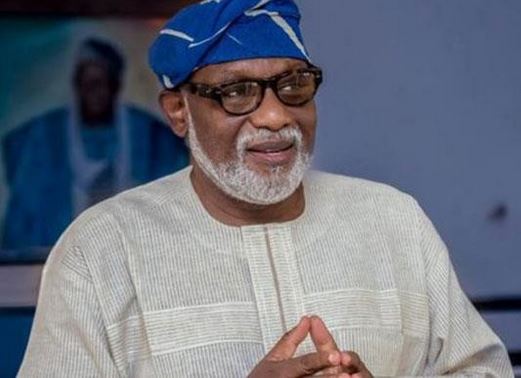
Governor Oluwarotimi Akeredolu, who declared the event opened last Thursday, had assured the participants of the summit that the government will enforce any decision taken at the end of the summit.
He urged participants to deliberate in line with the current economic realities and sustainability. According to the communique which was handed to reporters by the summit’s media and publicity chairman, Kunle Adebayo, stakeholders at the summit resolved that “Government should fund education at the Primary school level while parents should be responsible for the education of their children at the Secondary and Tertiary levels”.
The summit also resolved that automatic promotions should be cancelled in the Secondary Schools, stressing that the joint SSS 2 examination must be reintroduced to present qualified students for the Senior Certificate Examination.
The communique read in part, “That the issue of Education funding is too important to be left in the hands of Government alone if we must achieve functionality in education. It must be the business of all stakeholders.
 
“That there should be a review of chargeable fees in State’s tertiary institutions in line with the needs of each school and current economic realities.
 
“That the issue of return of schools to their original owners requires further engagement amongst stakeholders in order to arrive at amicable and workable solution.
 
“That State Government; International Development Patners; Non Govermental Organisations;and spirited individuals should collaborate in the training and retraining of teachers; school Administators/Education Managers in order to update their knowledge on contemporary issues on education “.
The summit also resolved that renovation and reconstruction of dilapidated school structures must not be left in the hands of government alone.
It recommended that Philanthropists, Old Students Association, PTA and Corporate Organizations should also intervene in such projects.
“That Mega schools in the State should be put into more functional,optimal and better use by government to address the current state of underutilization of some of them
 
“That Examination Ethics and Disciplinary Committee should be strengthened in the Ministry and schools to checkmate incidences of examination malpractice.
 
“That a measurable parameter should be designed for the promotion of teachers while Teachers Biometric Attendance device should be designed to monitor their class attendance and enhance productivity.
 
“That the Ministry should reinvigorate co-curricular activities in schools while craft work and school gardens should be revived in all schools ” the communique read.

Source: Tori

Source:

Government To Stop Free Secondary School Education

Comparte este contenido:

Ghana: World Bank warns of ‘learning crisis’ in global education

Ghana/October 31, 2017/By Iddi Yire/Source: http://www.ghananewsagency.org

Millions of young students in low and middle-income countries face the prospect of lost opportunity and lower wages in later life because their primary and secondary schools are failing to educate them to succeed in life.

Warning of ‘a learning crisis’ in global education, a new Bank report said schooling without learning was not just a wasted development opportunity, but also a great injustice to children and young people worldwide.

The World Development Report 2018: ‘Learning to Realise Education’s Promise’, which was made available to the Ghana News Agency, argues that without learning, education will fail to deliver on its promise to eliminate extreme poverty and create shared opportunity and prosperity for all.

It said even after several years in school, millions of children cannot read, write or do basic math and the learning crisis was widening social gaps instead of narrowing them.

It said young students who were already disadvantaged by poverty, conflict, gender or disability reach young adulthood without even the most basic life skills. “This learning crisis is a moral and economic crisis,” World Bank Group President Jim Yong Kim said.

“When delivered well, education promises young people employment, better earnings, good health, and a life without poverty. For communities, education spurs innovation, strengthens institutions, and fosters social cohesion. But these benefits depend on learning, and schooling without learning is a wasted opportunity. More than that, it’s a great injustice: the children whom societies fail the most are the ones who are most in need of a good education to succeed in life.”

The report recommended concrete policy steps to help developing countries resolve this dire learning crisis in the areas of stronger learning assessments, using evidence of what works and what doesn’t to guide education decision-making; and mobilise a strong social movement to push for education changes that champion ‘learning for all.’

According to the report, when third grade students in Kenya, Tanzania, and Uganda were asked recently to read a sentence such as “The name of the dog is Puppy” in English or Kiswahili, three-quarters did not understand what it said.

It said in rural India, nearly three-quarters of students in grade three could not solve a two-digit subtraction such as “46 – 17”—and by grade five, half still could not do so.

It said although the skills of Brazilian 15-year-olds had improved, at their current rate of improvement they would not reach the rich-country average score in maths for 75 years; adding that in reading, it would take 263 years.

It said these statistics do not account for 260 million children who, for reasons of conflict, discrimination, disability, and other obstacles, were not enrolled in primary or secondary school.

It said while not all developing countries suffer from such extreme learning gaps, many fall far short of levels they aspire to.

It noted that leading international assessments on literacy and numeracy show that the average student in poor countries performs worse than 95 per cent of the students in high-income countries—meaning such a student would be singled out for remedial attention in a class in those countries.

It said many high-performing students in middle-income countries, young men and women who achieve in the top quarter of their group would rank in the bottom quarter in a wealthier country.

The report, written by a team directed by World Bank Lead Economists, Deon Filmer and Halsey Rogers, identifies what drives these learning shortfalls, not only the ways in which teaching and learning breaks down in too many schools, but also the deeper political forces that cause these problems to persist.

The report noted that when countries and their leaders make “learning for all” a national priority, education standards can improve dramatically.

It cited that, from a war-torn country with very low literacy rates in the 1950s, South Korea achieved universal enrollment by 1995 in high-quality education through secondary school, its young people performed at the highest levels on international learning assessments.

It said Vietnam’s 2012 results from an Organisation for Economic Co-operation and Development (OECD) test for high school students in maths, science, and reading called the Programme for International Student Assessment (PISA), showed that its 15-year-olds performed at the same level as those in Germany—even though Vietnam is a much poorer country.

“The only way to make progress is to ‘find truth from facts.’ If we let them, the facts about education reveal a painful truth. For too many children, schooling does not mean learning,” said World Bank Chief Economist, Paul Romer.

Relying on evidence and advice gathered during extensive consultations in 20 countries, with governments, development and research organisations, CSOs, and the private sector.

The report offers three policy recommendations: firstly, it calls for assess learning, so it could become a measurable goal; secondly, it recommends making schools work for all children and thirdly mobilising everyone who had a stake in learning.

“Developing countries are far from where they should be on learning. Many do not invest enough financial resources and most need to invest more efficiently. But it is not only a matter of money; countries need to also invest in the capacity of the people and institutions tasked with educating our children,” said Jaime Saavedra, World Bank’s Senior Director for Education.

Source:

http://www.ghananewsagency.org/education/world-bank-warns-of-learning-crisis-in-global-education-124220

Comparte este contenido:

El horror de la mutilación genital en Kenia

Kenia/30 octubre 2017/Fuente: Página Siete

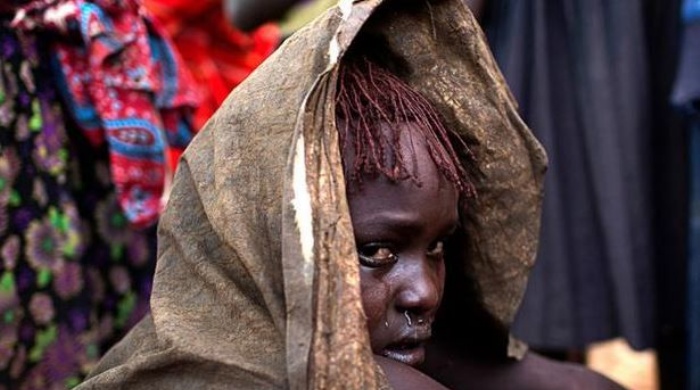
«Cuando tenía 5 años me llevaron a casa de mi abuela, en Kenia. Era el día de purificación. Yo era una niña feliz y creí que algo importante iba a pasar en mi vida. La noche de antes estaba nerviosa, no podía dormir. Mi madre me levantó temprano, me bañó, me puso un vestido muy corto y me dijo que cuando abrieran la tienda fuese a comprar una cuchilla». Al volver, la madre de Asha Ismail, su abuela y una señora desconocida estaban esperándola alrededor de un agujero cavado en el suelo. «Me entró pánico. Me quitaron la ropa interior, mi abuela me agarró y separó mis piernas». Lo recuerda la mujer keniana durante una entrevista en el documental La manzana de Eva, del director José Manuel Colón, ganador de varios premios y candidato al Goya, que pronto podrá verse en la plataforma Netflix.

Normalmente, la mutiladora practica un corte a lo largo del labio menor y luego elimina, raspando, la carne del interior del labio mayor. La operación se repite al otro lado de la vulva. La madre, así como las otras mujeres, verifican el trabajo, algunas veces introduciendo los dedos. La cantidad de carne raspada depende de la habilidad de la cortadora. En ocasiones, como le ocurrió a Fátima Djarra en Guinea Bissau, la operación ha de realizarse rápido, «porque éramos 300 niñas en el bosque, 25 de mi propia familia. Mientras seis mujeres me sujetaban, otras bailaban y cantaban alrededor. Yo gritaba, llamaba a mi papá». Dos niñas fallecieron «y las escondieron para que no nos enterásemos. Yo, que era muy curiosa, las vi. Los mayores me dijeron que lo que pasaba en el bosque no salía del bosque, que si las niñas habían muerto era porque Dios así lo había querido».

Según un informe de Amnistía Internacional hay 120 millones de mujeres mutiladas en el mundo, y tres millones de niñas cada año son sometidas a esta práctica. Los motivos son peregrinos, pero fielmente seguidos por miles de tribus no solo en África. La movilidad humana ha logrado exportar esta tortura y ya en España hay 57.000 mujeres sometidas a la ablación genital. «La creencia firme es que si tiene clítoris, tiene placer, querrá estar con más hombres y terminará siendo una prostituta. Además, es una ceremonia de paso para que la niña sea casadera, porque un hombre –normalmente 40 o 50 años mayor– no quiere casarse con una chica que no está cortada, y por consiguiente, esa familia no tendrá la dote de una vaca o una cabra, algo que supone en muchas ocasiones la diferencia entre dar o no de comer a los hijos», explica desde Kenia Mónica Batán, de la ONG Mundo Cooperante, en el documental.

«La primera vez que tuve que atender a una niña mutilada vino en un estado irreversible. Tenía 3 añitos y lo que vi fue tan terrible que me asusté. Le hicieron un corte increíble, no se veía nada del órgano genital, tan solo había un hueco», recuerda Gelson Reyes, ginecólogo cubano que trabaja en Gambia. No pudieron salvarla. «Ejecutan los cortes con elementos muchas veces infectados, no suturan con aguja estéril e hilo, sino que utilizan espinas de matas y luego aplican una pasta hecha con hojas de plantas», añade Yamisel Mejías, médico y profesora universitaria.

Las niñas que sobreviven a las infecciones no tienen un horizonte muy halagüeño. «Durante mucho tiempo intentar orinar era terrible. Me hacía pis encima porque no quería pasar por aquel dolor», explica Asha Ismail. «Pero la noche de bodas fue, sin duda, el recuerdo más aterrador. A los 20 años me casaron con un señor que no había visto nunca. Tras la ceremonia tenía que cumplir como marido, pero como mi cicatriz era muy cerrada, no podía hacer nada. Las familias habían preparado a una señora, que esperaba fuera, por si él no podía consumar. La señora entró y me cortó, y él terminó su labor. Había escuchado historias de chicas que se habían quemado vivas con bidones de gasolina durante la noche de bodas, nunca había entendido el porqué hasta entonces. Y mientras todo el mundo bailando fuera, feliz».

Hace escasos años que en Gambia son conscientes de que las muertes durante el parto y los problemas de infertilidad por los que pasan muchas mujeres están relacionados con la mutilación genital femenina. Las infecciones afectan en muchas ocasiones al aparato reproductor; además, «las mujeres no logran retener el semen porque aquello es un orificio abierto. Y aquí, si la mujer no pare, es discriminada y el hombre se busca otra», recalca el ginecólogo Gelson Reyes.

Fátima Djarra estuvo 15 años sin poder tener hijos. «Me decían que era como una calabaza seca; otros, que era mala y por eso no quería quedarme embarazada. Yo amaba a mi marido, y mientras estaba en Bélgica estudiando una beca, él falleció en un accidente de coche. No pude ir a despedirme de mi amor, no me esperaron para el funeral. Su familia dijo que no teníamos hijos, así que yo no podía estar allí». Fátima nunca relacionó su infertilidad con la mutilación. Hasta que llegó a España. «Mi principal objetivo ahora es que ninguna niña esté desinformada sobre la ablación, que ninguna más muera», cuenta en la película.

Las estadísticas señalan que en 2030 podría haber 90 millones de niñas en riesgo de sufrir esta mutilación. Aunque en diciembre de 2012 la Asamblea General de Naciones Unidas aprobó una resolución unánime sobre su eliminación, algo que supone «un tremendo avance que ha logrado que haya una caída importante en varios países», como reconoce en el documental Michelle Bachelet, presidenta de Chile y primera directora de la ONU Mujeres, «es una lacra que aún persiste. Se necesita a mucha gente que escudriñe la raíz cultural de cada pueblo y vea cuáles son las medidas y argumentos que generen el cambio».

Guinea Conakri fue el primer país que prohibió la mutilación genital femenina en 1984. Pero «han pasado 33 años y todavía hay un 92 % de mujeres mutiladas. Solo ha descendido un 4 %. Para llegar a cero mutilaciones tendrían que pasar 1.000 años», afirma José Manuel Colón, director del documental. «En Kenia, por ejemplo, hay una pena de diez años para los mutiladores, pero ¿cuántos son encarcelados? Hay prohibiciones que están escritas, pero no se aplican».

La unanimidad de la Unión Africana contra esta práctica, desde 2016, ha supuesto un antes y un después. Omar Sey, ministro de Sanidad de Gambia, reconoce ante las cámaras que «con conocimientos, hemos aprobado la ley contra la mutilación; ahora hay que ejecutarla». Esta ley, añade Adriana Kaplan, de la Fundación Wassu, «no va a cambiar la realidad, pero es un marco jurídico importantísimo».

El ministro gambiano ha dado en el clavo. La formación que se imparte en el país a enfermeras, médicos y comadronas ha supuesto un cambio. La educación es el motor del desarrollo. Lo saben las 40 de Tasaru, un centro keniano donde estas 40 niñas, que huyeron de noche, corriendo solas por la sabana para no ser mutiladas, reciben educación. «Voy a probar que no es cierto lo que dicen, que las chicas podemos hacer cosas importantes, que somos fuertes», sostiene Silvia. Su padre la amenazó de muerte y la echó de casa cuando se negó a ser cortada.

Fuente: http://paginasiete.bo/miradas/2017/10/27/horror-mutilacion-genital-kenia-157313.html

Comparte este contenido:

Víctimas del matrimonio infantil en África alzan su voz

África/30 octubre 2017/Fuente: La República

Sentada en el suelo y vestida de negro, la joven de 15 años sostenía a su bebé en brazos mientras lloraba de miedo. Su marido, dos décadas mayor que ella, podría matarla si descubría que estaba contando su historia, dijo.

 La adolescente se casó a los 13 años en Guinea, en el oeste de África, porque sus padres temían que pudiera empeorar sus perspectivas de matrimonio si tenía relaciones sexuales antes de casarse. En ese momento, explicó, ni siquiera se le habían desarrollado los pechos.

“Me entregaron a un hombre que no elegí antes siquiera de que mi cuerpo estuviera preparado para tener sexo”, dijo, hablando bajo condición de anonimato por miedo a represalias. “Después no me pude mover durante una semana porque estaba hinchada y sangraba”.

El matrimonio infantil sigue muy arraigado en el centro y oeste de África, donde se encuentran seis de los 10 países con las tasas más altas del mundo. Grupos de derechos y líderes políticos y religiosos de toda la región se reunieron en Senegal en la última semana para buscar formas de combatir esta práctica.

Varias sobrevivientes del matrimonio infantil les instaron a seguir trabajando.

En Guinea, más de la mitad de las niñas se casan antes de los 18 años. Aunque el país prohibió hace poco el matrimonio de menores, los observadores dicen que la práctica sigue siendo generalizada. Algunas niñas entran en matrimonios arreglados en momentos de inseguridad o cuando sus familias pasan apuros económicos.

“Esta es una cuestión compleja impulsada por la pobreza, las normas culturales y familias que intentan hacer lo mejor para sus hijas”, dijo la directora general de Save the Children, Helle Thorning-Schmidt.“Pero hasta que rompamos el ciclo en el que la única forma en la que una niña puede honrar a su familia es casándose y teniendo hijos, no cambiaremos esto”.

El matrimonio infantil afecta a casi 15 millones de niñas en todo el mundo. La tasa alcanza el 76% en Níger, mientras que en Chad y República Centroafricana es del 68%. Mali y Burkina Faso tienen tasas de más del 50%, según datos de Save the Children y Girls Not Brides.

Los expertos afirman que la educación de las menores es clave para darles oportunidades más allá del matrimonio y mejorar la prosperidad regional.

Musu Bakoto Sawo, de Gambia, que ahora es una abogada y activista de derechos humanos de 27 años, se casó a los 14 años. A los 21 se quedó viuda y no heredó nada.

La educación es el único motivo por el que salió adelante, afirmó, señalando que había sido “la única forma en la que pude ir contra el sistema”.

Incluso para las que evitan una boda temprana, las consecuencias sociales pueden ser inmensas.

Fatoumata, de 14 años, dijo que había sido “la pesadilla de mi vida” cuando su familia dijo que debía casarse con su primo de 39 años. Huyó esa noche en pijama para quedarse con un amigo de la familia.

“Mi padre dijo que si me negaba a esa boda, ya no era su hija”, dijo la joven, que solo dio su primer nombre por miedo a represalias. “Amenazó a mi madre también… ella ha sufrido mucho por mí”.

Algunas jóvenes podrían aceptar de buen grado esos matrimonios tempranos y considerarlos como una forma de protección en zonas en conflicto, explicó Zuwaira Bello, del grupo activista Girl Child Concerns. El grupo opera en el norte de Nigeria, donde se sabe que el grupo insurgente extremista Boko Haram secuestra a mujeres jóvenes y las obliga a casarse.

Implicar a antiguas novias niñas en el activismo comunitario ayudará a disuadir de nuevos matrimonios infantiles como protección, dijo Bello.

Algunas mujeres que huyeron de matrimonios forzosos hacen campaña ahora en contra de esta práctica.

Leila, que pidió que no se utilizara su apellido para proteger a su familia, dio que su tío en Níger la había obligado a casarse con un hombre a los 14 años porque él tenía una deuda que no podía pagar. Un año más tarde, estaba embarazada.

Dijo que su marido la había golpeado por negarse a mantener relaciones sexuales. Tras un segundo embarazo pudo escapar, divorciarse y volver a sus estudios.

Entre lágrimas, instó a las jóvenes novias a conservar la esperanza. “Yo les diría que sean pacientes y se mantengan valientes”, dijo. (I)

Fuente: https://www.larepublica.ec/blog/sociedad/2017/10/28/victimas-matrimonio-infantil-africa-alzan-voz/

Comparte este contenido:
Page 257 of 622
1 255 256 257 258 259 622