Page 260 of 622
1 258 259 260 261 262 622

Kenia: apoyo sindical al movimiento de huelga de los profesores universitarios.

África/Kenia/24.10.2017/Autor y Fuente: https://www.ei-ie.org

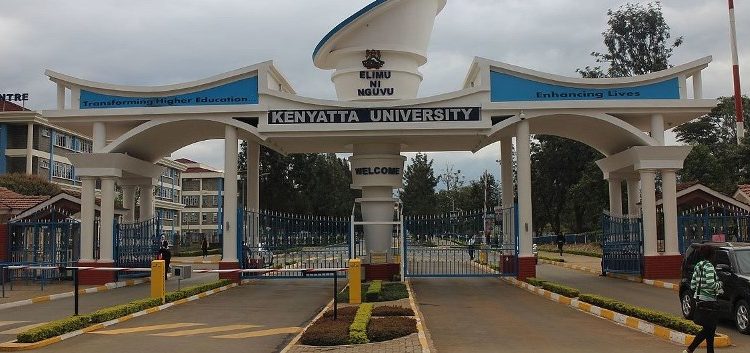
El Congreso de Sindicatos de Kenia ha hecho público su apoyo a los profesores universitarios de 31 universidades públicas de Kenia que han notificado con 21 días de antelación su intención de declararse en huelga después de que los consejos universitarios no hubieran logrado incrementar su salario básico y el subsidio de vivienda.

El Congreso de Sindicatos de Kenia (TUC-Kenia) respalda al Sindicato de Personal Académico Universitario (UASU, por sus siglas en inglés), su afiliado, en su propuesta de huelga. La huelga, si el conflicto no se resuelve de manera satisfactoria durante el periodo de tres semanas de notificación, se limitará a las 31 universidades públicas.

El preaviso de huelga es consecuencia del fracaso por parte de las administraciones universitarias a la hora de aplicar plenamente las escalas salariales tal como están estipuladas en el convenio colectivo 2013-2017. El incremento salarial de 10 mil millones de chelines keniatas (unos 82 millones de euros) estaba incluido en el acuerdo. Sin embargo, solo fue respectado parcialmente por el gobierno.

La violación de los derechos

“Vamos a protestar por la flagrante violación de los derechos y libertades fundamentales de los trabajadores de las universidades en virtud del Artículo 41 y del Capítulo 4 de la Constitución de Kenia”, declaró el Secretario General de UASU, Constantine Wasonga, en un mensaje dirigido a los presidentes del consejo de las universidades públicas de Kenia.

Fue profundamente lamentable, dijo, que “el gobierno no hubiera manifestado compromiso alguno de resolver este asunto de manera amistosa” y añadió que “no volveremos a mantener conversaciones con los directivos de las universidades ya que no son sinceros”.

Wasonga advirtió de que todos los miembros de UASU que trabajan en las universidades públicas y en las facultades vinculadas a ellas suspenderán sus servicios y no volverán a retomar sus funciones hasta que el acuerdo haya sido plenamente aplicado, e informó de que su acción sindical dará comienzo el 31 de octubre.

Apoyo

El apoyo de TUC-Kenia fue dado a conocer por su secretario general, Wilson Sossion, en una carta a los presidentes del consejo. “Tenemos la obligación, en tanto que central sindical a la que UASU está afiliado, a exigir […] que implementen el convenio colectivo en litigio sin más demora”. Sossion es también presidente del Comité Regional Africano de la Internacional de la Educación.

El fracaso del consejo a la hora de aplicar el acuerdo dio lugar a que UASU actuara “dentro de la legalidad al emitir el preaviso de huelga mencionado anteriormente”, destacó Sossion, y que TUC-Kenia respalde y defienda la acción prevista de UASU.

Fuente: https://www.ei-ie.org/spa/detail/15482/kenia-apoyo-sindical-al-movimiento-de-huelga-de-los-profesores-universitarios

Imagen: https://www.ei-ie.org/resources/views/admin/medias/timthumb.php?src=https://www.ei-ie.org/media_gallery/original_0b056.jpg&w=1200&h=530&zc=1

Comparte este contenido:

La Internacional de la Educación llora la pérdida de docentes y estudiantes somalíes

Africa/Somalia/24.10.2017/Autor y Fuente: https://www.ei-ie.org/

Las consecuencias del terrible bombardeo de Mogadiscio se están sintiendo lejos de la capital mientras la comunidad educativa expresa su solidaridad por los compañeros perdidos en este acto violento que se ha cobrado la vida de cientos de personas.

El bombardeo de un concurrido y céntrico barrio de Mogadiscio, que tuvo lugar el 14 de octubre, constituyó el peor caso de violencia que se ha visto en el país durante el conflicto civil en curso. Los últimos informes dan cuenta de al menos 300 muertos y 500 personas heridas.

Entre las personas que han perdido la vida se encuentran estudiantes y miembros del Sindicato Nacional de Docentes de Somalia (SNUT), afiliado nacional de la Internacional de la Educación (IE).

“Este ataque es uno de los actos terroristas más letales y entre las víctimas se encontraban docentes y estudiantes universitarios que cursaban su último año de carrera”, confirmó Yaqub Moalim, Secretario General de SNUT.

En respuesta al ataque, la IE ha emitido una firme declaración de apoyo a SNUT.

“Bajo ningún concepto se puede o se debe tolerar la violencia ejercida contra civiles inocentes, motivo por el cual la IE insta a las autoridades a redoblar sus esfuerzos destinados a proteger a los ciudadanos de Somalia”, señala el comunicado. “Cualquier acto de terrorismo es criminal e injustificable. Al reafirmar la necesidad de hacer frente al terrorismo por todos los medios posibles, la IE está convencida de que el antídoto al extremismo se encuentra en las aulas, de que la educación es la manera más sostenible y pacífica de contrarrestar el odio”.

Fuente: https://www.ei-ie.org/spa/detail/15463/la-internacional-de-la-educaci%C3%B3n-llora-la-p%C3%A9rdida-de-docentes-y-estudiantes-somal%C3%ADes

Imagen: https://www.ei-ie.org/resources/views/admin/medias/timthumb.php?src=https://www.ei-ie.org/media_gallery/original_73f11.jpg&w=1200&h=530&zc=1

Comparte este contenido:

Reseña de Película: Educación y transformación social en África.

La llegada del cine a África se produce de manera simultánea al instante de consumación de la colonización europea del continente: el reparto de África entre las mayores potencias coloniales occidentales en la Conferencia de Berlín de 1884-1885. El lenguaje universal del nuevo medio resulta idóneo para educar y civilizar a unas poblaciones en su mayor parte analfabetas y con una multitud de lenguas maternas. Desde fechas tempranas, el cine será empleado por las instituciones coloniales y por misioneros de credos diversos en su «misión civilizadora» y de progreso. De manera paralela, las películas producidas en territorios africanos para el público extranjero muestran la realidad del continente y de sus gentes siguiendo un planteamiento etnográfico, exótico y paternalista.
Cuando, en la década de los sesenta del siglo XX, nacen los cines africanos per se (películas realizadas por africanos en África sobre temas y realidades africanas) su idoneidad como instrumento de educación de la población local y medio de representación de las historias silenciadas por el discurso oficial de los colonizadores es incuestionable. Este doble proceso de educación para nativos y extranjeros caracteriza a buena parte de las películas de África hasta la actualidad, convirtiéndose en una peculiaridad que las diferencia de otras cinematografías centradas en mayor medida en el entretenimiento (Hollywood, Bollywood y el cine asiático, entre otros).
Los cines africanos, íntimamente ligados a los procesos de liberación e independencias nacionales, surgen en el clima internacional de las «Nuevas Olas» cinematográficas, del «Tercer cine» latinoamericano y de la Guerra Fría, aspectos que influyen notablemente en los temas tratados, en los géneros elegidos y en su forma y narración fílmicas.
Hasta los años 80, dentro del ambiente revolucionario de mediados del siglo pasado, una facción importante del cine en África clamaba por convertirse en esa «escuela de noche» por la que apostaba el senegalés Sèmbene Ousman (el «padre del cine africano») y que se encargaría de tomar el relevo a la literatura y a los intelectuales en la labor de educar a sus conciudadanos. Hasta los años 90, un gran número de películas africanas se centraron en la creación de un discurso alternativo al occidental con una fuerte carga político-ideológica de izquierdas. Hoy en día, si bien el documental sigue realizando esta labor educativa e informativa y existe un grupo de cineastas que confían en el cine como medio idóneo de cambio y transformación social (con Abderrahmane Sissako, Med Hondo, Haile Gerima, Raoul Peck y Jean-Marie Teno a la cabeza, a los que se unen jóvenes directores del Magreb y el Máshreq), estamos asistiendo a un cambio desde la ficción, con películas donde prima el disfrute del público y la experimentación formal, en las que la ideología progresista es inexistente o apenas visible, y cuyo blanco es el público internacional. Frente a esta tendencia se posiciona la industria del video de Nigeria (Nollywood) la cual, bajo su apariencia de mero entretenimiento, esconde un claro interés moralizador y educativo para su creciente y dilatada audiencia.
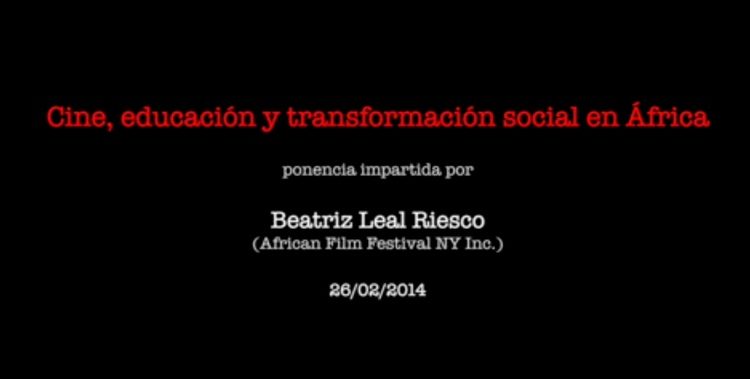
Estos y otros aspectos son los abordados, a través del cine, en la conferencia titulada «Cine, educación y transformación social en África», impartida por Beatriz Leal Riesco, del African Film Festival NY Inc. (New York, USA), de la Universidad de Vic (Barcelona, España), desarrollada el día 26 de febrero de 2014 en el Salón de Actos de la Facultad de Educación de Palencia (Universidad de Valladolid), enmarcada en el III Seminario de Pedagogía de Ágora de Educación (octubre de 2013 — mayo de 2014), que lleva por lema Democracia, desarrollo y educación.

Fuente: https://youtu.be/9O8A0oPUPRY

Imagen: http://seda21.files.wordpress.com/2014/03/leal-riesco-beatriz.jpg?w=500

Comparte este contenido:

Making education meaningful and relevant in African countries

African/October 24, 2017/Source: http://www.iran-daily.com

In Africa, achieving a meaningful and relevant education means addressing a web of challenges in society in order to attain a transformative outcome.

However, only 43 percent of young people have access to secondary education and only eight percent can access tertiary education, according to UNESCO’s Global Monitoring Report, 2016, newtimes.co.rw wrote.

Thus, in order to achieve a more educated population, a higher retention of more girls and young women in schools, especially those pursuing the sciences, will contribute to social transformation.

Given the huge education gap between the number of boys and girls studying sciences, a disruption in traditional mindsets must occur. Young women need to be at the forefront alongside young men when it comes to making change.

Linah Divine Icyezumutima is a Physics, Chemistry and Mathematics (PCM) student at FAWE School and one of the secondary school scholars that The MasterCard Foundation supports through FAWE Rwanda. She chose to study science subjects because she wants to become a pilot.

“When I was still young, I remember, I saw it fly in the skies. I was told that it was an animal. So I used to run and hide because I was terrified! But after I knew what it was, I loved watching it fly in the sky as a child. I always thought to myself, why can’t I be the one to fly that thing,” Icyezumutima narrated her childhood experience with airplanes.

Nevertheless, it has not been a smooth road for the seventeen-year-old Icyezumutima. Three years ago, Icyezumutima was an O’Level candidate when her mother passed away. This was a huge blow to her studies as her hopes for tuition were dashed.

“It was really difficult when my mother died. Even though my father is alive, he doesn’t care that much because he has another wife and he doesn’t know such kinds of stories about us. So I went to live with my grandmother in Byumba,” she said.

Together with her older brother and younger sister, they were taken in by their grandmother who cultivates land to take care of them. She appeared to be the end of her education. And, despite doing her national exams while carrying the grief of her mother’s death, she excelled. She was located by FAWE Rwanda for the Scholars program and is an A’Level candidate today.

Speaking about the challenges that girls face with pursuing education in the science field, Icyezumutima said it was a matter of perspective and determination.

“Rwanda is developing and I just feel comfortable with my country and this is what motivates me to inspire other girls to reach for their goals. Your past does not determine your destiny, you have to be focused and know what you want to achieve. Give your best effort and reach your goals,” she said.

Ivy Mwai is the Senior Program Manager, Education and Learning at The MasterCard Foundation that works to make education relevant and meaningful by investing $800 million to support 35,000 scholars globally. The bulk of these students are African in both secondary and Tertiary institutions, with a few in Lebanon and Costa Rica.

“Historically, girls have not been encouraged to pursue sciences but have always been told that science subjects are for boys and difficult, and that girls should stick to simple subjects. Yet there are many young women who have a lot of potential and interest in science subjects,” Mwai said.

“We have been very intentional about supporting young women overall, particularly those in sciences so that they can pursue their studies without any distractions. This way, they can join some of the finest schools both at secondary and tertiary levels,” she said.

Emphasising girls’ education comes with greater returns because when girls are educated, families benefit more. Girls are more likely than their counterparts to raise their family’s income, stay healthy and participate in uplifting their community once they are educated. This is why two-thirds of all the MasterCard Scholars are women — at 66 percent.

“We believe that women are a living science everyday and once they are able to practice and especially do it in school they are able to contribute even greater in their economies, communities and ideas that will change the world,” Mwai said.

“If you look at AIMS (Africa Institute of Mathematics and Sciences), their catch-phrase is, ‘The next Einstein will be African’; but we like to add, ‘An African woman’ to it”, she said.

The challenge for the Foundation has been finding the right kind of scholars, those who are most vulnerable and yet with so much potential. They facilitate the ability for some partners to hire more people to go to the grassroots and connect with organizations there to go beyond the limited context within which they operate. This means expanding their inclusivity and equity within the program to reach the populations by cutting across geographic limitations, marginalized people, those with disabilities, gender and bringing in those who would traditionally not be able to access education in sciences.

Through supporting the existing programs of their partners the Foundation’s scholars program enables young women to pursue their education dreams. In Rwanda, they partner with CMU-A (Carnergie Melon University-Africa), AIMS (Africa Institute of Mathematics and Sciences), ALU (Africa Leadership University) and FAWE Rwanda through whom they support over 1200 high school students.

Source:

http://www.iran-daily.com/News/202853.html

Comparte este contenido:

Namibian: Hardap schools struggle to implement inclusive education

Namibian/October 24, 2017/By: Hilma Hashange/ Source: https://www.namibian.com.na

SCHOOLS in the Hardap region are struggling to implement the curriculum introduced into the education sector in 2012 to end the segregation and exclusion of individuals.

The curriculum is designed to end discrimination or segregation on the grounds of academic performance, gender, race, culture, religion, lifestyle, health conditions and disability. The ministry’s policy on inclusive education states that the curriculum is based on the understanding that all pupils have the right to be educated with peers, friends and family members, in their own neighbourhood or local community.

However, according to Veronika Axakhoes, principal of A A Denk Memorial School at Kalkrand in the Naukluft circuit, even though inclusive education entails that pupils should be taught inclusively without anyone being left out, some pupils are automatically left out because of the lack of learning support from the teachers.

“As long as a pupil is not taught on his or her level of ability in that subject, that learner is automatically left out of this inclusive teaching system,” she said.

Axakhoes further said pupils taught in a normal classroom and who experience learning difficulties find it hard to achieve the basic competencies in that lesson because the lesson is usually beyond the pupil’s basic understanding.

“If a pupil is, however, taught on his or her level no matter what level the teacher has to start from, the pupil will show some improvement and at least get some understanding and his or her mind will be opened up,” said Axakhoes.

She said for inclusive education to work, learning support is needed and that phonics should be the basics. “Reading should be integrated during lessons so that every pupil should at least know what phonics are because if you do not know phonics, you will not be able to read, and if you cannot read, there is no way you will be able to study and if you cannot study, you will fail. All these leads to pupils being transferred until they reach Grade 10 and it is from there that the problem escalates,” she added.

Axakhoes, who has 22 years experience in teaching, said she has also taught in other regions such as Erongo, Otjozondjupa and Omaheke where she conducted special learning sessions.

“I have noticed that the sessions we had with the pupils in those regions were fruitful because they are improving. When I started here at A A Denk Memorial School, the teachers were trying hard to provide learning support and from experience I advised them to have phonics cards for every lesson, clear pronunciation of words from the teachers and especially integrate reading in all subjects,” said Axakhoes.

She said she had informed the circuit inspector, Herbert Britz, about the concerns of pupils with learning difficulties and held several meetings with both the inspector and several education officers earlier this year.

She appealed to the ministry to separate pupils with learning difficulties so that they can be taught from the basic level of their understanding.

“We understand that the inclusive education policy does not allow for pupils to be separated but if government can allow that they be taught separately, then the system will have a huge impact on these pupils. Teachers, especially in lower primary, should also be given training on how to offer learning support to pupils with learning difficulties,” Axakhoes pleaded.

Echoing the principal’s sentiments, head girl of A A Denk Memorial school, Legine Garises pleaded on behalf of the pupils with learning difficulties at the school. She said although the inclusive education is well thought out on paper and does not discriminate or stereotype slow learners, the programme has its challenges.

“The fact that we are taught in one classroom with pupils who are average and above average achievers, teachers find it difficult to reach our level. Although we are not labelled as slow learners, it becomes evident within ourselves that we cannot do what the other pupils can do. Frustrations build up and our self-esteem suffers, which eventually results in a lot of pupils dropping out of school,” said the Grade 7 pupil.

Teachers at the school said one of the biggest problems they face is with reading. The teachers also said the pupils have difficulties with phonics, and said the learning support in a 40 minute lesson cannot cater for the different levels of learning abilities.

The teachers also pleaded with the parents and guardians to offer support to their children.

Confirming the difficulties by the schools in the Naukluft circuit, Britz said the issue is not a regional, but a national problem.

“We have discussed the issue at length at my office and had a brainstorming exercise on how to deal with it and identified a few challenges. We try to address this issue in our circuit by using experts to train teachers on how to offer learning support. It is difficult, however, because we cannot reach all the teachers in the circuit let alone the region,” he said.

He said although certain measures are in place, it is simply not enough because a lot of pupils develop a backlog that is not easy to erase.

“Learning support is something that should be an ongoing exercise, not only in primary schools but also in high schools,” said Britz, adding that the matter had been brought to the attention of the education regional director.

“The director is fully aware of the challenges. We, however, tried to address them but budget cuts are hampering our efforts. All schools address the issue against their own circumstances,” he said. Contacted for comment, acting education regional director Ernfrieda Stephanus said she is not aware of the concerns raised by Axakhoes on inclusive education as she is acting on behalf of regional director Mzingisi Gqwede, who is on sick leave.

Source:

https://www.namibian.com.na/60709/read/Hardap-schools-struggle-to-implement-inclusive-education

Comparte este contenido:

Global Partnership for Education Grants US$5.6 million for Quality Education for Children in the Puntland State of Somalia

Somalia/October 24, 2017/Source: education.einnews.com

The Global Partnership for Education (GPE) is pleased to announce a US$5.6 million grant for Puntland. The grant will be implemented by the Puntland Ministry of Education to address the north-eastern state’s wide ranging education needs and challenges. UNICEF is the grant agent, and the European Union is the coordinating agency for the GPE across Somalia.

The grant will focus on strengthening the Ministry of Education through capacity building and technical support to provide effective and efficient services to the most marginalized children in Puntland. It aims at strengthening the quality of teaching and learning through teacher training, producing much needed learning materials, and addressing financial barriers to access education with scholarships.

“The support from the Global Partnership for Education is highly appreciated by Puntland,” said Puntland’s Minister of Education and Higher Education, Professor Abshir Aw-Yusuf Isse. “It will help us realize our vision of a quality education system that guarantees and fosters success for learners regardless of their abilities, and responds to and recognizes the potential of all learners, enabling them to make fulfilling life choices.”

The grant will support 2,650 children from the poorest households, thereby helping families.

«This key investment in educating children in Puntland is critical for their future wellbeing and for building a prosperous and peaceful Somalia,” said Steven Lauwerier,
UNICEF Representative in Somalia. “There is a huge demand for education. Families know how important it is and we are moving forward with building on our positive partnership with the Puntland Ministry of Education.”

In recent years, primary school enrollments have increased, but with larger numbers of children entering school and limited capacities in the school system to absorb all children, more needs to be done to ensure every child gets a quality education. In Puntland there are still some 200,000 children not in school, and who need to be reached.

“GPE’s work in Somalia and Puntland focuses on strengthening their capacity to improve equity and access to quality education, and improving teaching and learning,” said Alice Albright, Chief Executive Officer of the Global Partnership for Education. “This grant will help thousands of children in Puntland go to school, stay in school and learn with qualified teachers.”

Somalia has been a Global Partnership for Education partner since 2012. Since then a total of US$14.5 million was allocated to Somalia for 2013 to 2016. The current GPE funding for Somalia is almost US$33 million for the entire country, with US$ 9.6 million for Somaliland, US$ 5.6 million for Puntland and US$ 17.9 million for the Federal Government.

About The Global Partnership for Education

The Global Partnership for Education (GPE) works with developing countries to ensure that every child receives a quality basic education, prioritizing the poorest, the most vulnerable and those living in countries affected by fragility or conflict. GPE mobilizes financing for education and supports developing countries to build effective education systems founded on evidence-based planning and policies. Its partners include developing countries, multilateral organizations, donors, the private sector, teachers, civil society/NGOs, and private foundations.

For more information visit www.globalpartnership.org and follow us on Facebook,
Twitter and Instagram

Media contact; Alexandra Humme, +1 202 458 5511; ahumme@globalpartnership.org

About the Ministry of Education and Higher Education for Puntland

The Ministry of Education and Higher Education for Puntland, is responsible for all matters pertaining to the development and delivery of education services. This includes policies on education, curriculum development, and national examinations at all levels of education, certification, supervision of schools and all educational institutions, monitoring and evaluation. This is in line with Puntland’s national development plans, which the Education Sector Strategic Plan, is aligned to and contributes to.

For more information about MoEHE and its work visit: www.moepuntland.com

About UNICEF

UNICEF works in more than 190 countries and territories to help children survive and thrive, from early childhood through adolescence. The world’s largest provider of vaccines for developing countries, UNICEF supports child health and nutrition, good water and sanitation, quality basic education for all boys and girls, and the protection of children from violence, exploitation, and AIDS. UNICEF is funded entirely by the voluntary contributions of individuals, businesses, foundations and governments. For more information about UNICEF and its work visit: www.unicef.org

Follow us on Twitter and Facebook

For more information, please contact:

Susannah Price, UNICEF Somalia, +254 722 719867, sprice@unicef.org

Source:

education.einnews.com/article/411288318/qgyXaAxuNj1D_Mx4?lcf=eG8zt30RHq4WcGF5PkFdHg%3D%3D

Comparte este contenido:

Angola: Ministerio apuesta en combate de prácticas ilegales en sistema de educación superior

Angola / 22 de octubre de 2017 / Autor: Redacción / Fuente: ANGOP

El Ministerio de Educación Superior Ciencia y Tecnología de Innovación tiene como una de sus apuestas el combate de las prácticas ilegales en el sistema de enseñanza superior y promover el mérito, informó este martes, en Luanda, la titular de la pasta, Maria do Rosário Bragança Sambo.

La gobernante, que hablaba a la prensa tras la ceremonia de presentación de los nuevos secretarios de Estado, refirió que la intención es neutralizar prácticas como favorecimiento por apadrinamiento, fraudes y corrupción que hacen con que haya débil preparación de los estudiantes.

De acuerdo con la ministra, este será es un trabajo que será llevado  a cabo con las instituciones de educación superior a nivel nacional y la comunidad para que cada ciudadano conduzca al cambio que se pretende.

En cuanto a la reformulación de las regiones académicas, refirió que es un aspecto de estructura de la enseñanza superior que va a llevar a cabo, llamando a todos los actores del subsistema para juntos dar respuestas necesarias.

Fuente de la Noticia:

http://m.portalangop.co.ao/angola/es_es/noticias/educacao/2017/9/42/Ministerio-apuesta-combate-practicas-ilegales-sistema-educacion-superior,245ec5f9-628b-4734-b60b-c30f63347bae.html

Comparte este contenido:
Page 260 of 622
1 258 259 260 261 262 622