Page 283 of 622
1 281 282 283 284 285 622

Kenia: Schools get money to fund free education

Kenia / 30 de agosto de 2017 / Por: OUMA WANZALA / Fuente: http://www.nation.co.ke

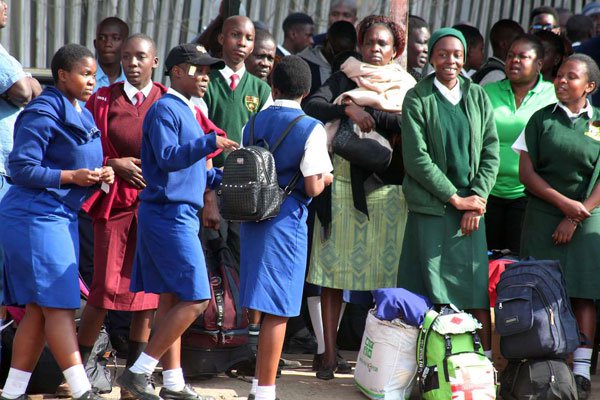
The government on Tuesday released Sh2.5 billion for free primary education, a day after schools reopened for the third and final term.

Education Principal Secretary Belio Kispang said Sh6.4 billion for subsidised secondary education will be released to schools by Friday.

There are about 23,000 primary and 9,000 secondary schools across the country.

MANAGEMENT

The timely release of the funds is set to ease the burden head teachers faced in the past in managing schools due to regular delays in disbursing the cash.

The delays saw school heads being harassed by suppliers over failure to pay for goods and services on time.

“We want learning for this term to go on smoothly without any hitches,” Dr Kipsang said.

Two weeks ago, the government released 18 per cent of last term’s capitation.

The delay hurt the management of most public schools in the second term.

EXAMS
According to a government schedule, 50 per cent of the capitation is released in the first term, 30 per cent in the second term and 20 per cent in the third term.

The government allocates Sh32 billion for subsidised secondary school education and Sh14 billion for free primary education annually.

Schools will close on October 29 to allow the start of national examinations in November for Standard Eight and Form Four candidates.

SCHOOL FEES
The fee structures for the different categories of public secondary schools indicate that the government pays a subsidy of Sh12,870 while a parent pays Sh53,554 for a child in boarding school.

For a student attending a day school, the parent is supposed to pay Sh9,370.

Parents with children in special-needs schools are required to pay Sh37,210 while the government pays Sh32,600.

For primary schools, the government pays Sh1,420 per child per year.

SUPPLIERS
Kenya Secondary Schools Heads Association chairman Kahi Indimuli said the timely release of the cash will enable schools to plan effectively.

“We are going to have examinations this term and the early release of the money will make us move forward as planned,” Mr Indimuli said.

Kenya Primary Schools Heads Association chairman Shem Ndolo made similar remarks.

He said principals can now pay suppliers on time.

“Since 2013, we have increased enrolment from 2.9 million to 3.9 million at the early childhood development level, 9.9 million to 10.1 million in primary schools and 2.1 million to 2.6 million in secondary schools.

«The number of special-needs education students increased from 107,000 to 132,000,” President Uhuru Kenyatta said last week.

At the same time, Elimu Yetu Coalition has urged teachers to ensure the term runs smoothly as candidates prepare for the national exams.

The Kenya National Union of Teachers has threatened to call a strike if members are not awarded an annual salary raise.

Fuente noticia: http://www.nation.co.ke/news/education/Schools-get-money-to-fund-free-education/2643604-4076018-5p5ay5/index.html

Comparte este contenido:

Nigeria: World Bank Pledges Continuous Support for Nigeria On Child Education

Nigeria/August 30, 2017/Souce: http://allafrica.com

The World Bank Group said on Tuesday that it would continue to support Nigeria toward boosting the literacy rate, especially among school-age children.

Olatunde Adekola, the Senior Education Specialist, African Region of the World Bank, made this known in a sideline interview with the News Agency of Nigeria, NAN, at the ongoing 10th Pan African Literacy for all Conference, Abuja 2017.

NAN reports that the conference was organised by the Reading Association of Nigeria, RAN, with support from the International Literacy Association, and the Federal Ministry of Education, among others.

«World Bank is more than 100 per cent in support of what RAN is doing. We believe in this effort and for the World Bank, we will continue to support the country to enhance literacy.

«This is because literacy is a critical determinant of a country’s economy, growth, development and standard of living of the people.

«There is need for concrete action to strengthen the literacy systems, policies, structures and the desire for the achievement of sustainable development goals.

«There is need to think through holistic approach to providing inclusive and equitable quality education at all levels especially for the vulnerable groups and particularly, the girl child,» Mr. Adekola said.

The official said the World Bank had inaugurated a one-million-dollar project to enhance literacy in the northern parts of the country.

According to him, the project is a global partnership for education tagged ‘Nigeria Partnership for Education’.

He said: «It is carried out by the World Bank and other development partners such as USAID, UNICEF and DFID in the North-west of the country.

«The focus of the project is first, to strengthen the government systems to deliver basic education for the children by improving the basic education service delivery especially at the early primary level.

«There is need to think through holistic approach to providing inclusive and equitable quality education at all levels especially for the vulnerable groups and particularly, the girl child,» Mr. Adekola said.

The official said the World Bank had inaugurated a one-million-dollar project to enhance literacy in the northern parts of the country.

According to him, the project is a global partnership for education tagged ‘Nigeria Partnership for Education’.

He said: «It is carried out by the World Bank and other development partners such as USAID, UNICEF and DFID in the North-west of the country.

«The focus of the project is first, to strengthen the government systems to deliver basic education for the children by improving the basic education service delivery especially at the early primary level.

«The project has a life span of four years. We are almost two years into it now.

«We still have about two more years and the outcome is very good because we are now seeing more girls in school.

«Nevertheless, we need partnerships, collaboration and cooperation between and within state and non-state actors to address the issue of literacy as a tool for problem-solving.

«However, we will continue to support the country to enhance the literacy level in the country,» he explained.

Mr. Adekola, who is also the Task Team Leader for the Global Partnership for Education in Nigeria, said the conference would focus more on literacy, reading, language and learning issues.

He stated that the idea is to ensure that children become familiar with the language in which they will be taught as a step toward improving their literacy.

Source:

http://allafrica.com/stories/201708290558.html

Comparte este contenido:

Gambia: The Gambia Basic Education Certificate Examination (Gabece) Results

Gambia/ August 29, 2017/ Source: http://allafrica.com

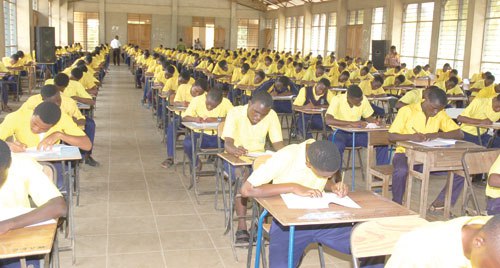
The Ministry of Basic and Secondary Education is pleased to release the results of the 2017 Gambia Basic Education Certificate Examinations.

The total number of candidates who entered for the examination was 22,136 students of whom 10,075 males and 12,061 females.

Philip M Goba, Ancha Sarr and Rejoice Favour Uyamadu all of St Therese’s Upper Basic are the top candidates with a 1 (one) in all their nine subjects.

A total of 21 candidates scored aggregate 6, an increase of 5, in 2017

8 are from St Therese’s Upper Basic.

2 from Presentation of St Mary’s

2 from Ndow’s Comprehensive Upper Basic

1 from Charles Jow Academy (22nd July)

1 from SOS Hermann Gmeiner New Covenant Upper Basic

1 from ABC Upper Basic Talinding Upper Basic

1 from St Peter’s Upper Basic

1 from Sibanor Upper Basic

1 from Old Yundum Upper Basic

1 from Kunkujang Keitaya Upper Basic

1 from Anne Marie Rivier

1 from Tahir Ahmadiyaa Muslim Upper Basic

Candidates are to receive their individual results from their respective schools.

Admission to grade 10 should be based on passes in the core subjects to be decided by boards of governors and not exceeding aggregate 42.

Source:

http://allafrica.com/stories/201708280888.html

Comparte este contenido:

Banco Mundial: Solo con educación se evita el matrimonio infantil

28 agosto 2017/Fuente: Ciudadania Express

Cada día, 41 000 niñas se casan antes de cumplir 18 años de edad, es decir 15 millones de niñas todos los años. Si bien tanto niños como niñas contraen matrimonio a una corta edad, la práctica del matrimonio infantil afecta principalmente a las niñas en la mayoría de los países del mundo.

Se trata de niñas como Nafissa* (no es su nombre real), de Níger.

“Dejé (de ir a) la escuela para casarme”, dice la adolescente. “Se debió a la mentalidad de las personas y sus prejuicios. Tuve que casarme durante un receso escolar y, antes de que pudiera regresar a la escuela, quedé embarazada. Después de eso, nunca volví”.

El matrimonio infantil afecta profundamente a las niñas casadas, sus hijos, sus familias e incluso los países donde ellas viven. Poner fin a esta costumbre es una de las metas de los Objetivos de Desarrollo Sostenible de las Naciones Unidas. De hecho, esta práctica tendrá un costo de miles de millones de dólares para los países en desarrollo a fines de 2030, según un nuevo informe (i) del Grupo Banco Mundial y el Centro Internacional de Investigaciones sobre la Mujer.

Las niñas se casan a menudo debido a la presión de los padres y familiares, la pobreza y la falta de alternativas. El acceso limitado a una educación de calidad y el hecho de que las familias priorizan la educación de los varones por sobre la de las niñas —en parte debido a las limitadas oportunidades de empleo— contribuyen a perpetuar el matrimonio infantil.

“Las escuelas primarias se encuentran muy lejos. En su camino a la escuela, las niñas se encuentran con hombres. Luego, algunas quedan embarazadas y abandonan la escuela”, cuenta un padre de Uganda. “Además, no tenemos una escuela vocacional que capacite a nuestras hijas después que completan la educación primaria y secundaria, así que educar a las niñas lo vemos como un despilfarro de recursos”.

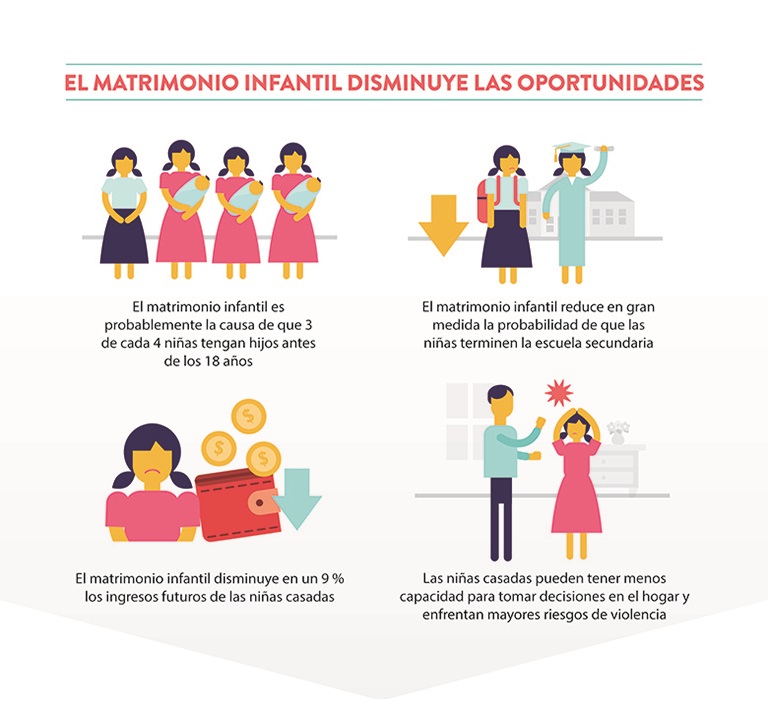
El impacto del matrimonio infantil puede ser devastador para las niñas casadas en términos de pérdida de oportunidades de educación e ingresos, pero también debido a los riesgos sanitarios al dar a luz a una edad temprana.

Image

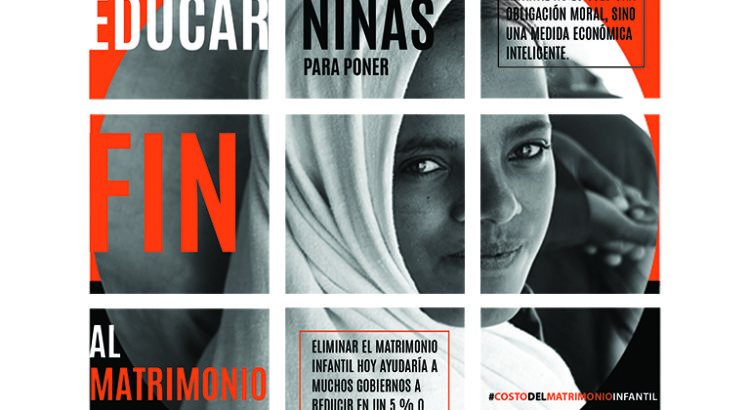
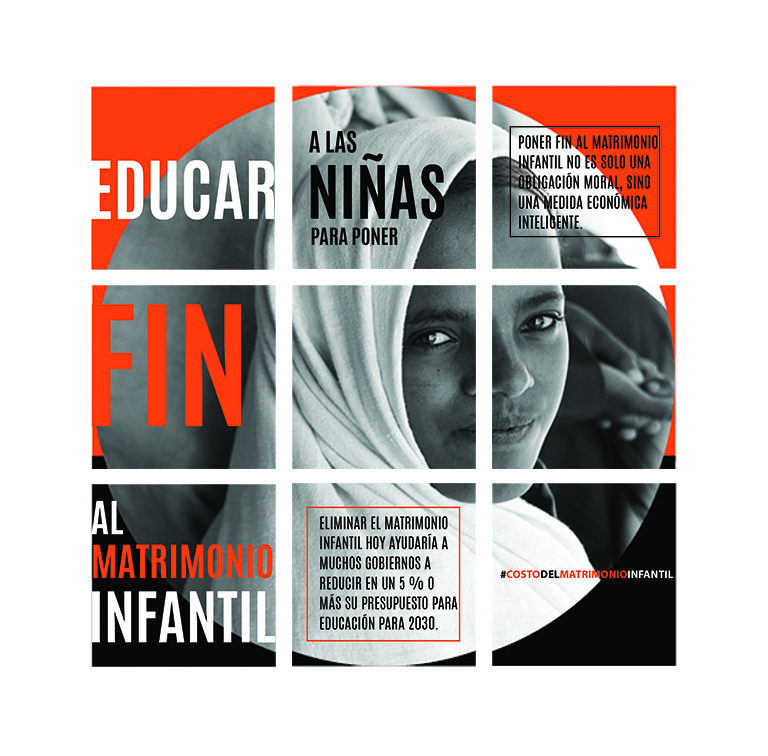
“El matrimonio infantil no solo pone fin a las esperanzas y los sueños de las niñas. También frena los esfuerzos orientados a terminar con la pobreza y lograr el crecimiento económico y la equidad”, dice Quentin Wodon, autor principal del informe. “Poner fin a esta práctica no es solo una obligación moral, sino también una medida racional desde el punto de vista económico”.

Poner fin al matrimonio infantil es un planteamiento económico acertado

El análisis del Grupo Banco Mundial indica que el costo económico del matrimonio infantil es alto. La eliminación del matrimonio infantil y los partos precoces podría reducir la fertilidad y disminuir el crecimiento demográfico en un 10 % en los países con una alta prevalencia. El estudio sostiene que, a nivel mundial, el beneficio anual en términos de bienestar derivado del menor crecimiento de la población podría superar los USD 500 000 millones en 2030.

En el caso de los hijos de madres que dan a luz a temprana edad, se reducirían los riesgos de los niños de morir a los 5 años o ser afectados por un retraso del crecimiento. A nivel mundial, los beneficios estimados de una reducción de la mortalidad de los niños menores de 5 años y la malnutrición podrían superar los USD 90 000 millones anuales a fines de 2030.

Poner fin al matrimonio infantil contribuiría también a aumentar el nivel de ingresos previstos de las mujeres en el mercado laboral. Debido en gran parte al impacto del matrimonio infantil en la educación, en 15 países las mujeres que se casan siendo niñas obtienen ingresos un 9 % más bajos en promedio que los que hubieran ganado si se hubieran casado a una mayor edad.

Por último, los países también podrían lograr ahorros en su presupuesto destinado a educación. Eliminar el matrimonio infantil hoy ayudaría a muchos Gobiernos a reducir en un 5 % o más su presupuesto para educación a fines de 2030.

Medidas para poner fin al matrimonio infantil

La comunidad internacional está cada vez más consciente de los efectos negativos del matrimonio infantil. En la República Dominicana, un país de ingreso mediano alto donde más de 1 de cada 3 niñas aún se casa antes de los 18 años, se llevará a cabo una campaña para poner fin al matrimonio infantil, en la cual se utilizarán nuevos datos del Fondo de las Naciones Unidas para la Infancia (UNICEF) sobre el país y del Grupo Banco Mundial acerca de los impactos económicos de esta práctica.ImageVea más fotos relacionadas en la cuenta de Instagram del Banco Mundial

Con financiamiento de la Asociación Internacional de Fomento (AIF), el fondo del Banco Mundial para los países más pobres, el Proyecto de Empoderamiento de las Mujeres y Dividendo Demográfico (SWEDD) en la Región del Sahel (i) colabora con los Gobiernos de Burkina Faso, Chad, Côte d’Ivoire, Malí, Mauritania y Níger para empoderar a las adolescentes y mujeres. El proyecto apunta a retrasar el matrimonio y ampliar el acceso a los servicios de salud reproductiva, infantil y materna, a partir del trabajo conjunto con las comunidades, entre ellos líderes religiosos y tradicionales. El proyecto SWEDD por un monto de USD 205 millones (i) ofrece también programas de “espacio seguro” para las niñas e incluye transferencias monetarias condicionadas para alentarlas a permanecer en la escuela.

En Uganda, los clubes de niñas a cargo de BRAC Uganda, (i) una rama de la organización internacional BRAC con sede en Bangladesh, han resultado ser exitosos. Unos 1500 clubes de Uganda ofrecen juegos, música, clases de educación sexual, conocimientos financieros, formación en oficios y acceso a microfinanciamiento para las jóvenes que quieren convertirse en emprendedoras. Las niñas que han sido miembros de los clubes por dos años tienen un 58 % menos probabilidades de casarse a temprana edad.

Una de las mejores maneras de poner fin al matrimonio infantil es mantener a las niñas en la escuela

En muchos países, cada año de educación secundaria puede reducir la probabilidad de casarse antes de los 18 años en cinco puntos porcentuales o más. Por el contrario, es mucho más probable que las niñas casadas abandonen la escuela y completen menos años de educación que sus compañeras que no se casan a corta edad.

“Si mis padres me hubieran permitido estudiar, lo habría hecho con mucho gusto. Mis amigas pudieron continuar sus estudios y ahora tienen más conocimientos y son más inteligentes”, dice *Pooja (no es su nombre real) de Nepal. “Si hubiera estudiado, estaría trabajando. Pero mis padres organizaron mi matrimonio y no pude hacer nada después del casamiento. Ahora tengo que cuidar a mis hijos”.

Si Pooja y otras niñas hubieran seguido asistiendo a la escuela, ellas podrían tener mayor acceso a seguridad, salud y educación, y poder elegir y tomar sus propias decisiones en la vida.

 ¿Qué sigue?

Las niñas son agentes poderosos de los cambios socioeconómicos, y el Grupo Banco Mundial se ha comprometido a mantenerlas en la escuela y darles la oportunidad de aprender. Las niñas que terminan la educación secundaria tienden a ser más saludables, participan más en el mercado de trabajo formal, ganan más, se casan a una mayor edad, tienen menos hijos y proporcionan una mejor atención de salud y educación a la generación que les sucede. La combinación de estos factores puede ayudar a sacar de la pobreza a los hogares, las comunidades y los países.

En 2016, el Grupo Banco Mundial se comprometió a invertir USD 2500 millones en el curso de un quinquenio en proyectos de educación en beneficio directo de las adolescentes.

En el próximo Informe sobre el desarrollo mundial 2018 titulado Learning to Realize Education’s Promise (Aprender para hacer realidad la promesa de la educación) se hace un balance de lo que sabemos y de cómo ampliar el alcance y la calidad de la educación en todo el mundo, en particular para los más marginados.

Además, sobre la base del informe sobre los costos económicos del matrimonio infantil, el Grupo Banco Mundial está preparando un estudio de seguimiento acerca de los beneficios económicos de invertir en la educación de las niñas.

Fuente noticia: http://ciudadania-express.com/2017/08/24/solo-con-educacion-se-evita-el-matrimonio-infantil-bm/

Fuente imagen: http://www.bancomundial.org/content/dam/photos/768×768/2017/aug/ChildMarriage_InstaGridSpanish2.jpg

Comparte este contenido:

Kenya: Teachers Union Issues 7-Day Strike Notice Over Annual Increment

Kenya/August 21, 2017/Allafrica

Resumen: El Sindicato Nacional de Maestros de Kenia (KNUT) ha emitido al gobierno un aviso de huelga de siete días al gobierno debido al desguace del incremento anual de sueldo para los maestros.

The Kenya National Union of Teachers (KNUT) has issued a seven-day strike notice to the government due to the scrapping of the annual salary increment for teachers.

Speaking after a National Executive Council (NEC) meeting, Secretary General Wilson Sossion accused the Teacher Service Commission (TSC) of deceit since it increased teachers’ salaries while at the same time removing their benefits.

He further stated that the Commission has also failed to recognise and compensate teachers who have attained higher academic qualifications.

«This increment is available to the teacher as a matter of right in the law. The increasing schemes of service further governs this entitlement. The schemes of service for the teachers, graduates, non graduates and technical teachers must be upgraded appropriately by the Teachers Service Commission. This has not been done for the last three years and our patience has run out,» he said.

Sossion stated that should the issues not be addressed, teachers countrywide will down their tools.

«We have given a seven day notice that the department which is involved must take care of this matter as quickly as possible so that the program of the Ministry of Education should not be disrupted because that is what will happen on a grand scale,» he stated.

The union also wanted the TSC to discuss recognition of new qualification as contained in the scheme of service for teachers as they want teachers to be promoted on graduation.

Fuente: http://allafrica.com/stories/201708250064.html

Comparte este contenido:

Nigeria: Dangote Plans N200 Billion Technology Varsity for Abuja

Nigeria/August 28, 2017/Allafrica

Resumen: El presidente y fundador de la Fundación Dangote, Aliko Dangote, ha reservado N200 millones de dólares para establecer una universidad de clase mundial en Abuja.

The President and Founder of Dangote Foundation, Aliko Dangote, has set aside N200 billion to establish a world-class  in Abuja.

Former Executive Secretary of the National Universities Commission, NUC, Julius Okojie, who is the chairman of the technical team for the establishment of the university, said the foundation intended to drive technology and research in stimulating economic growth.

Okojie, who led his team to the current Executive Secretary of the commission, Abubakar Rasheed, said the proposed university was meant to be technology-driven and asked for the cooperation and support of the NUC towards the realisation of the goal.

According to a National Open University of Nigeria, NOUN, publication, the team, accompanied by the Chief Executive Officer, CEO of the foundation, Zouera Yousouffou, disclosed that Dangote’s desire was to float a unique university of technology with all the necessary infrastructure and best faculty members from across the globe.
Rasheed, who applauded the bold step, promised to offer all the needed assistance for the success of the project.

He, however, advised the team to reconsider its plan of establishing a university of technology to ‘a conventional university running all programmes but with specialty in the area of technology.’

The executive secretary, who underscored the advantages of the conventional university over the special one, said with the countless impacts on society by the business mogul, the project would be a success.

He asked the team to consult widely and look at the universities in Nigeria and abroad, with a view to creating a unique university that would be different in terms of quality in all its operations.

Fuente: http://allafrica.com/stories/201708250388.html

Comparte este contenido:

Nigeria: Las estudiantes liberadas de Chibok, a punto de ir a la universidad

Nigeria/28 de Agosto de 2017/El Telégrafo

Las 106 estudiantes de Chibok, liberadas en estos últimos meses de las manos del grupo yihadista nigeriano Boko Haram, empezarán la universidad en septiembre, anunció el viernes la ministra de Asuntos de la Mujer de Nigeria, Aisha Alhassan.

«Las 106 chicas retomarán la escuela en la Universidad Americana (de Yola, en el nordeste) a partir de septiembre», declaró la ministra en un comunicado. De ellas, 24 ya habían empezado las clases, precisó.

En una rueda de prensa en Abuya, Alhassan facilitó varios detalles sobre la situación de algunas de las jóvenes, que pasaron unos tres años secuestradas por el grupo yihadista.

Una de ellas tuvo que ser operada en la pierna en múltiples ocasiones y ahora lleva una prótesis. Otra dio a luz a cuatro bebés durante su cautiverio, aseguró Alhassan. Las estudiantes recibieron un apoyo psicológico muy importante, precisó la ministra.

«Los anteriores problemas de recuerdos, insomnio y pesadillas están ahora controlados», agregó. En total, 276 chicas fueron secuestradas en abril de 2014 en su escuela en Chibok (Estado de Borno), lo que desató una ola de indignación internacional.

En mayo, 82 chicas fueron liberadas al término de una serie de negociaciones con los insurgentes islamistas. En octubre de 2016, 21 de ellas fueron intercambiadas por prisioneros.

Otras tres fueron halladas por el ejército y 57 consiguieron escapar en el momento del secuestro. Boko Haram, que significa «la educación occidental es un pecado», lleva a cabo sanguinarias campañas contra profesoras y estudiantes en el nordeste de Nigeria, donde quiere instalar su Califato.

La organización extremista utiliza los secuestros masivos para reclutar. Ha secuestrado a decenas de miles de personas, que el ejército nigeriano libera a medida que va avanzando en los territorios ocupados por los islamistas.

Fuente: http://www.eltelegrafo.com.ec/noticias/mundo/9/las-estudiantes-liberadas-de-chibok-a-punto-de-ir-a-la-universidad


Comparte este contenido:
Page 283 of 622
1 281 282 283 284 285 622