Page 301 of 622
1 299 300 301 302 303 622

UNICEF dice que la falta de fondos amenaza la educación de nueve millones de niños y pide al G-20 que ayude

UNICEF/ 18 de julio de 2017/ Autor: Europa Press/Fuente: http://www.lainformacion.com

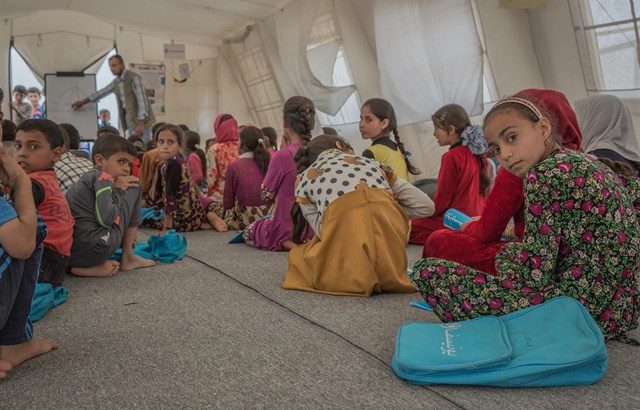
El Fondo de Naciones Unidas para la Infancia (UNICEF) ha advertido este viernes de que la falta de fondos amenaza la educación de más de nueve millones de niños en zonas en conflicto y desastre, pidiendo al G-20 que «inviertan en el futuro de los niños».

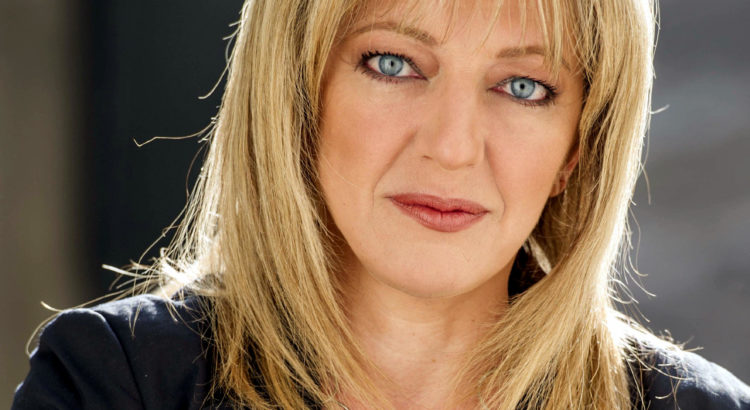
En un comunicado publicado en vísperas de la cumbre del G-20 en la localidad alemana de Hamburgo, que se celebra este viernes y este sábado, la embajadora de Buena Voluntad de UNICEF Muzoon Almellehan ha afirmado que «sin educación, los niños crecen sin el conocimiento y las habilidades necesarias para contribuir a la paz y el desarrollo de sus países y economías, agravando una situación que ya es desesperada para millones de niños».

«Para los millones de niños que están creciendo en zonas de guerra, estas amenazas son aún más sobrecogedoras: al no ir a la escuela los niños son más vulnerables ante el matrimonio y el trabajo infantil, y frente al reclutamiento por parte de grupos armados», ha subrayado Almellehan, enviada del organismo a la cumbre.

UNICEF ha cifrado el 932 millones de dólares (unos 818 millones de euros) los fondos que necesita este año para sus programas de educación en países en situación de emergencia, de los que hasta ahora sólo ha recibido menos de 115 millones de dólares (cerca de 101 millones de euros).

El déficit de fondos para los programas de educación de UNICEF en algunos lugares de conflicto del mundo varía desde el 36 por ciento en Irak hasta el 64 por ciento en Siria, el 74 por ciento en Yemen y el 78 por ciento en República Centroafricana (RCA).

En este sentido, Almellehan ha recordado su experiencia tras escapar de Siria en 2013, afirmando que cuando llegó a Jordania se dio cuenta de que había una escuela en el campamento de refugiados y agregando que ello la hizo «sentirse aliviada y esperanzada».

«La escuela ofrece a niños como yo esperanza y la oportunidad de un futuro positivo y en paz», ha sostenido.

En este sentido, UNICEF ha destacado que «la búsqueda de oportunidades de educación es una de las razones que impulsan a las familias y niños a huir de sus hogares, muchas veces arriesgando sus vidas».

Así, cita una encuesta realizada a refugiados y migrantes en Italia que reveló que el 38 por ciento de ellos se dirigió a Europa para acceder a oportunidades de formación, un resultado similar a otro estudio llevado a cabo en Grecia.

«Insto a los líderes del mundo a que inviertan en el futuro de los niños que viven en situaciones de emergencia. Al hacerlo estarán invirtiendo en el futuro de nuestro mundo», ha remachado Almellehan.

Fuente de las Noticia:

http://www.lainformacion.com/disturbios-conflictos-y-guerra/UNICEF-amenaza-educacion-millones-G-20_0_1042395858.html

Comparte este contenido:

Interview, Katarina Popović: A commitment to free and universal education is very important for eradicating poverty, achieving equality and a better life for all

By: CLADE

In the context of the UN High Level Political Forum, we spoke with Katarina Popović, General Secretary of ICAE

The UN High Level Political Forum (HLPF 2017), the international platform for monitoring and reviewing the Sustainable Development Goals (SDG) is held in New York from 10 to 19 July 2017 in New York.

In this context, we had a dialogue with Katarina Popović, General Secretary of International Council for Adult Education (ICAE), organization that impels the Education and Academia Stakeholder Group (EASG) – which integrates the structure of civil society participation in the debates on SDG in the United Nations-, alongside the Global Campaign for Education (GCE), Education International (EI) and the European Students’ Union. «The HLPF has spaces for civil society and stakeholder groups to present their reports and we were invited to bring examples of how we contributed to the implementation of the 2030 Agenda and how we helped governments in doing so», says Katarina about her participation in the High Level Political Forum. Read the complete interview:

What were the main issues that were discussed during the side event organized by the EASG in NY yesterday and why are they important?

The opportunities and challenges for the implementation of the Education Agenda 2030 have been analysed in several sections, and many aspects have been mentioned and explained, such as the fact that education is underfunded and experience budget cuts in many countries, further on there is the growing trend towards privatization and commercialization of education, undermining the responsibility of the state as the duty bearer for the 2030 agenda.

These were highlighted as the major challenges to achieving the Agenda 2030’s Goal 4 on education. In addition, and that is something that other SDGs are also facing, there are problems with the implementation of the goals: how to move from rhetoric to action and move from the overall agenda to a national and regional level. Further on, there is a strong focus on indicators, measuring and testing, and on quantitative data. Even if this is the precondition for the accountability, it narrows down the understanding of education and the approach to quality education for everyone. While reviewing of the implementation is being intensively discussed, there is no enough political commitment and financial support for the implementation itself.

There were lots of discussions about the role of the Member States and Major and Stakeholder Groups and about the best ways for civil society for taking on its responsibilities for both implementation and monitoring. In the discussions, we from the EASG always pointed out that the State has the main responsible for these tasks, but with the spaces for dialogue always open for participation of other actors.

Considering the role of civil society, it is double: there is, on one hand, the question of how to contribute to the implementation and monitoring, and on the other, the question of how to hold governments accountable, how to make sure that they take responsibility for these processes. Many sessions during HLPF resulted in concrete proposals.

HLPF offered spaces for civil society and stakeholder groups to present their reports, experiences and recommendations, and to bring concrete examples. Of course, we still believe that this exchange and dialogue could be improved, but HLPF is ‘young’ mechanism and we are all still ‘shaping’ it.

In which events or side events organized in the context of HLPF did you participate and which highlights would you like to share about these encounters?

The Education and Academia Stakeholders Group organized a side event at the HLPF in New York, whose main focus was the intersectionality of the global agenda. Why is this so important if that goal is not under review that year? With this event, we wanted to send the message that the implementation of the SDG4 is crucial for the implementation of the other goals.

A commitment to free and universal education is very important for eradicating poverty, achieving equality and better life for all. The experts who participated in the event pointed out that the commitment to education and lifelong learning, accompanied with sufficient investment, is the answer to most of the world’s problems. We emphasize the indivisibility and interdependence of all human rights reflected in all 17 SDG, and that achieving universal, quality, affordable education is the requirement for achieving them all.

The interdependence of the goals, and relationship between education and other goals is mutual: poverty, hunger, health problems, gender discrimination and environmental disasters are detrimental elements to the SDG4. In our event, we pointed out that it is necessary to break the traditional silose-thinking for more cross-sectoral partnership. It was the message of all speakers, both from Member States and civil society, as well as participants that took part in the discussion.

What are the main opportunities and challenges for the realization of the 2030 Education Agenda, according to the discussions that has taken place in the HLPF until now, and what are the expectations of civil society about possibilities of advocacy in this context?

The HPFL 2017 is a very dynamic event. In addition to the main sessions, there are numerous side events, discussions, and side meetings that we use for effective coordination of our activities with other stakeholder groups.

Yesterday, one of the session of the main programme – “Thematic review: Eradicating poverty and promoting prosperity in a changing world: Multi-stakeholder perspectives”, gave us the opportunity to bring up our views and specific issues. At that session I had the opportunity, as the representative of the EASG, to present our vision and to remind the plenary of the intersectorality of the agenda and of some important facts. One of them – the world map of illiteracy coinciding with maps of poverty, malnutrition, ill health, high infant and child mortality, proves that education hast to be the “golden thread that runs through the implementation of all 17 SDGs”.

There were also other events where we could discuss and get to know other aspects and dimensions of that topic, and get important information and ideas for our future advocacy actions. We also met with our allies and other groups, such as the Women’s Major Group, which organized daily events, meetings and actions, the Major Group of Persons with Disabilities and the Major Group for Aging. “No one should be left behind” is the idea that connects us in a very strong way. We believe that increasing collective efforts will help us improve the way we oversee the implementation of the Agenda.

I would say that the HLPF this year is more inclusive, and civil society has more spaces to discuss, raise issues and ask questions. But there is also a sense of urgency and a feeling that we all need to make more efforts together to implement Agenda 2030.

Source:

http://v2.campanaderechoeducacion.org/en/news/778-2017-07-17-16-37-46.html

Comparte este contenido:

Entrevista UNESCO: Evernice Munando nos habla sobre la igualdad de género en la educación

Por: UNESCO

La UNESCO conversa con Evernice Munando, fundadora y directora de proyecto del Fondo Fiduciario de la Red de Alumnas de Zimbabwe, durante la víspera de la reunión del jurado internacional de la UNESCO para la segunda edición del Premio UNESCO de educación de las niñas y las mujeres.

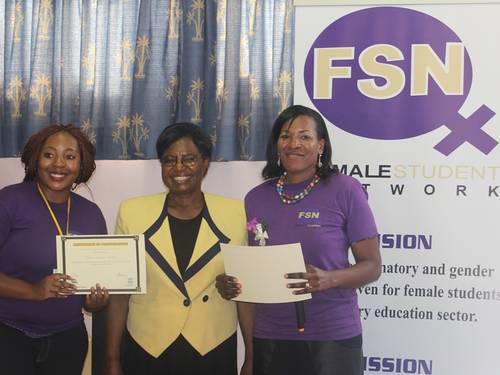
El Fondo Fiduciario de la Red de Alumnas (FSNT, por sus siglas en inglés) fue uno de los dos galardonados de la edición 2016 del Premio UNESCO de educación de las niñas y las mujeres por su iniciativa de empoderamiento de las alumnas de tercer ciclo mediante la implantación de políticas de desarrollo de liderazgo y programas de tutoría.

¿Por qué decidió hacer el trabajo que hace y convertirse en una defensora de  la igualdad de género?

Hago este trabajo porque es mi pasión. Me he esforzado en seguir mi educación a pesar de los múltiples desafíos a los que tuve que hacer frente, tales como la violencia de género y el patriarcado. Crecí en una familia de 9 niños (4 niñas, 5 niños) que siempre dio prioridad a los niños. Al haber crecido en este contexto, me convertí en la única niña de mi familia que logró alcanzar este nivel de educación. Decidí que era vital que me convirtiera en la abogada y defensora de la igualdad de género, para poder inspirar a otras niñas y mostrarles que todo es posible gracias a la educación.

¿Qué ha significado para usted ser la galardonada de la edición 2016 del Premio UNESCO de educación de las niñas y las mujeres?

Este galardón revitalizó mi pasión y renovó mi ímpetu. Haber sido reconocida a nivel mundial ha arrojado luz sobre el trabajo que estoy haciendo para cambiar las vidas y la mentalidad de las niñas y  empoderar a las niñas y las mujeres mediante la educación. Me di cuenta de que mi trabajo en Zimbabwe me permite tener una repercusión en todo el mundo, y que nuestra organización es parte del programa de desarrollo – tanto en la ONU como en Zimbabwe. Haber sido galardonados del Premio nos colocó en el centro de atención y frente al desafio de hacer aún más, de seguir abogando por la educación de las niñas y las mujeres, y de tener más repercusión en mayor número de niñas, incluidas aquellas que viven en regiones remotas.

¿Qué cuenta hacer su organización en lo adelante?

Gracias al premio 2016, puedo afirmar que ese dinero ha servido de mucho. La semana pasada, por ejemplo, homenajeamos a una mujer, la Sra. Melissa Thand, quien superó las barreras del patriarcado al convertirse en la primera mujer presidenta del Consejo Representativo Estudiantil (SRC, por sus siglas en inglés) del Instituto Politécnico de Harare. Desde su fundación en 1919, dicho instituto nunca había tenido una presidenta del SRC. Este año, mediante nuestro trabajo de promoción, logramos que varias mujeres asumieran posiciones de liderazgo. Además, ellas también se convirtieron en mentores y están motivando a otras niñas de las los centros de formación de docentes.

En cuanto al acceso a la educación, nuestra organización logró vincular a varios estudiantes con organizaciones de servicio que les ayudaron a seguir su educación, por ejemplo, mediante becas otorgadas por la Embajada de Estados Unidos.

El reconocimiento por parte del Gobierno es también un resultado importante. Abogamos por la creación de políticas contra el acoso sexual. El mes pasado, el Gobierno de Zimbabwe, por conducto del Ministerio de Educación Superior para las Ciencias, la Tecnología y el Desarrollo, presentó una campaña preliminar sobre la formulación de políticas relativas al acoso sexual. Con el dinero del Premio, elaboramos directivas en materia de políticas contra el acoso sexual, que ahora se utilizan como modelo para elaborar las políticas significativas en materia de acoso sexual en las instituciones de enseñanza terciaria.

Usted ha venido para participar en la conferencia ”UNESCO’s Soft Power Today: Fostering Women’s Empowerment and Leadership” sobre fomento del empoderamiento y del liderazgo de las mujeres. ¿Qué sugeriría a la UNESCO en aras de profundizar su labor en el ámbito de la igualdad de género en la educación?

Recomendaría a la UNESCO que respaldara a las organizaciones de base como la nuestra. La UNESCO trata en general con los Gobiernos y las Comisiones Nacionales en el plano nacional, más que con las organizaciones de base. Sugeriría entonces que considere también la posibilidad de una labor de promoción basada en la investigación, que se apoye en las estadísticas en el terreno, de modo que cuando determinemos su repercusión seamos capaces de proporcionar elementos factuales sobre determinados problemas y de transmitir estos elementos en los ámbitos nacional e internacional.

Me pregunto cuáles son los puntos de referencia en el contexto del ODS 4, y en particular, en el ámbito de la igualdad de género, el empoderamiento y la inclusion de mujeres y niñas en la educación. Es extremadamente importante que la UNESCO apoye cada vez más las iniciativas que disponen de un programa basado en hechos factuales, para que podamos medir el impacto real con respecto a estos puntos de referencia.

En cuanto a las próximas etapas, el FSN fortalecerá sus programas de tutoría y explorará también el ámbito de la educación sexual y sanitaria en la reproducción, mediante la sensibilización y el asesoramiento de los estudiantes. La FSN quiere ejercer presión sobre el Gobierno para que preste servicios como éstos en el marco de la enseñanza terciaria.

El Fondo Fiduciario de la Red de Alumnas (FSN) es una organización sin fines de lucro, basada en la membresía, que trabaja con las estudiantes de la enseñanza terciaria en Zimbabwe. Fundada en 2005 como una red informal de estudiantes de la Universidad de Zimbabwe, se convirtió, en 2010, en una organización sin fines de lucro. La FNS empodera a las estudiantes para que desempeñen papeles de liderazgo, y apoya la promoción en materia de políticas y de defensa de los medios de comunicación en cuestiones que afectan a las estudiantes. En 2010, se convirtió en una organización de pleno derecho, transformándose en una plataforma donde las estudiantes de las instituciones de la enseñanza terciaria interactúan y comparten sus experiencias acerca de los desafíos a los que deben hacer frente en la vida cotidiana. El FSN trabaja en 36 instituciones en las 10 provincias de Zimbabwe.

Fuente de la Entrevista:

http://www.unesco.org/new/es/media-services/single-view/news/speaking_out_for_gender_equality_in_education_evernice_muna/

Comparte este contenido:

UNESCO: Mejorar la calidad y el rendimiento del aprendizaje de la primera infancia

Fundado en 2014, la Iniciativa Medición de la Calidad y de los Resultados del Aprendizaje Preescolar (MELQO, por sus siglas en inglés) tiene como objetivo dar solución a la necesidad de disponer de una medida internacional basada en la demografía, que pueda aplicarse al contexto de los países de ingresos débiles y medianos. La iniciativa MELQO está dirigida conjuntamente por la UNESCO, el UNICEF, el Banco Mundial y la Brookings Institution.

https://gemreportunesco.wordpress.com/2016/10/24/target-4-2-what-is-at-stake-for-monitoring-progress-on-early-childhood-education/La meta del ODS relativa a la educación, la protección y el desarrollo de la primera infancia (meta 4.2) reitera la importancia del desarrollo y del aprendizaje de la primera infancia en aras de su futuro rendimiento escolar, salud y bienestar. Asimismo, constituye un cambio muy importante en la manera de medir el desarrollo de los niños, pues hasta fechas recientes se hacía énfasis sobre todo en los aspectos relacionados con la salud. Hacer hincapié en la primera infancia mediante el programa del ODS 4 constituye un llamamiento a acrecentar los esfuerzos en materia de medición del desarrollo y del aprendizaje de la primera infancia, y a mejorar las fuentes que proporcionan los datos.

Mediante un proceso de consulta de expertos de la primera infancia y de especialistas en evaluaciones de los logros iniciales, la plataforma MELQO ha utilizado las medidas ya existentes en el aprendizaje preescolar para elaborar herramientas de medición a escala internacional integradas tanto por el desarrollo y aprendizaje de la primera infancia (MODEL) como por la calidad de los entornos de aprendizaje (MELE). Dichas herramientas forman parte de un proceso iterativo de pruebas en el terreno en diferentes contextos.

El informe MELQO que acaba de ser publicado describe el enfoque metodológico utilizado y el proceso de concertación que dieron como resultado el desarrollo de los módulos MELQO. También documenta las diferentes fases del proceso de adaptación y evalúa la pertinencia de los resultados de la evaluación según la evolución de las políticas.

En relación con la iniciativa MELQO, los esfuerzos de la UNESCO encaminados en mejorar la calidad y los resultados del aprendizaje preescolar incluyen un taller técnico en el plano regional sobre la medición del aprendizaje de la primeria infancia en África subsahariana que tuvo lugar el año pasado.

Dicho taller movilizó a diversos socios de la sociedad civil, expertos, profesionales y representantes gubernamentales quienes expresaron la necesidad de un compromiso político reforzado y de inversiones en el sector educativo y de protección a la primera infancia.

La UNESCO debe organizar durante el otoño de 2017 un taller regional de reforzamiento de capacidades sobre medición del aprendizaje, en el marco del subgrupo Enseñanza y Aprendizaje: red de docentes para la transformación (TALENT), que forma parte del Grupo de Coordinación Regional sobre ODS 4 de la Agenda 2030 de Educación para África Occidental y Central.

Fuente:

http://www.unesco.org/new/es/media-services/single-view/news/advancing_early_learning_quality_and_outcomes/

Comparte este contenido:

Ghana: Education Minister says teacher promotions no longer automatic

Ghana/July 18, 2017/Source: https://www.ghanamma.com

Education Minister, Dr. Matthew Opoku Prempeh, warns teachers in public schools that promotions will be based on merit and not automatic henceforth.

Education Minister Dr. Opoku Prempeh has recently stated that teachers teaching in public schools ought to endeavor live up to their responsibilities and the teaching standards of their trade.

He’s stated that teachers need to show a high sense of discipline, commitment, and respect for the their profession so that they may be able to upgrade the quality of education delivery.

“The Ministry is determined to ensuring that teachers’ promotion is based on competence, hard work and other relevant requirements per the National Teachers Council’s demands”, he noted.

Dr. Matthew Opoku Prempeh’s comments were relayed in a speech read on his behalf during the graduation ceremony of the Jackson College of Education in Kumasi, Ashanti Region.

In the Education Minister’s speech, he reminded teachers that theirs was an altruistic profession, one of selflessness and dedication towards the benefit of their pupils.

On the other hand, Prof. Samuel Afrane, Council Chairman of the Jackson College of Education, urge graduates to embrace rural postings..

Source:

Education Minister says teacher promotions no longer automatic

Comparte este contenido:

No Education Crisis Wasted: Billionaires Seek to Make Education in Africa Profitable

Africa/July 18, 2017/By Maria Hengeveld/http://www.alternet.org

Bill Gates and Mark Zuckerberg are betting big on an effort to turn African education into a for-profit venture. But investigations show that children and their teachers are getting a raw deal.

The dream is wonderful: provide a good education to millions of children growing up in poverty. That’s why Bill Gates, Mark Zuckerberg, the World Bank and the Dutch Ministry for Foreign Affairs are pouring millions into a company that aims to turn that dream into reality. Investigations show, however, that both the children and their teachers get a raw deal.

Shannon May is clearly emotional when she walks onto the stage in early February 2017. The founder and strategist behind the world’s largest chain of kindergarten and primary schools is about to speak to a room full of women. She will talk about education, motherhood and the reasons why she founded her company, Bridge International Academies, with her husband Jay Kimmelman in 2008.

May and Kimmelman are in Nairobi, the city they live in and where Bridge has its headquarters. About 70 percent of the more than 100,000 pupils attending Bridge schools live in Kenya and around 6,000 staff work and live there. It was also the company’s base for expanding into Uganda, Liberia, Nigeria and India.

In her speech, May tells the story of the founding of Bridge: “I was speaking with mothers and with fathers, about their struggles… two things came up across hundreds of conversions I had… the first was health… the other thing was education.”

This made May think about her own childhood: if she hadn’t had good teachers, she would never have been admitted to Harvard and she would probably never have worked at Morgan Stanley. She would certainly never have come up with the idea of ​​setting up Bridge, the “edu-business model” that aims to provide affordable, high-quality education to millions of children from families who have to live on less than US$2 a day. When the couple founded Bridge in 2008, their dream was to emancipate these children.

The exact number of children involved is unclear.  Sometimes her husband talks about 700 million children, at other times it’s around 700 million families.  According to the World Bank, 767 million people worldwide currently live below the poverty line of 1.90 dollars a day. Whatever the exact figures are, they are high and education opportunities fall short of what is needed. There are not enough good state schools and private schools are often too expensive. May and her husband have spotted a gap in the market: education needs to be better than what state schools offer, and provided at only 30 percent of what the state currently spends per student.

May, close to tears, continues her speech in Nairobi: “Bridge is different because it exists for only one reason, it’s so that every child, not just the rich kids, not just the kids in the cities, not just the kids who have mothers and fathers who can look after them and teach them at home but every kid no matter what else is going on in their lives can go to a great school.” She is even more positive in an interview: “We fight for social justice, to create opportunities.”

And for profit. According to her husband, the “global education crisis”  is worth about US$51 billion a year. In 2013, Kimmelman explained in a presentation how, for less than US$5 in tuition fees per pupil per month, Bridge could grow “into a billion-dollar company” and “radically change the world.” Earlier he and May promised that they could do this for US$4 per month per pupil.

Big dreams and even bigger promises. However, my research and research done by others shows:

  • that their quality claims have not been supported by any independent research;
  • that the education provided turns out to be more expensive than promised;
  • that underpaid teachers have to recruit additional pupils;
  • that they have dismissed criticism from non-governmental organizations and trade unions;
  • that critics are silenced;
  • that a PR offensive has been launched in order to continue selling the education services provided.

Furthermore, €1.4 million of Dutch taxpayers’ money has been poured into the company. Dutch support was provided because Lilianne Ploumen of the country’s Labor Party, currently caretaker Minister for Foreign Trade and Development Cooperation, believes that Bridge uses an “innovative and cost-effective education model, which is able to keep tuition costs per child down.”

How do you improve education, make it cheaper and also make it profitable? May and Kimmelman have come up with an “innovative pedagogical approach.” The possibility of setting up a few thousand standardized schools within a few years is to be the first innovation. The profit made from each school may be low, but once half a million pupils are recruited — the number of enrollments that Bridge needs to break even — business really takes off. The plan is to reach two million pupils by 2018 and 10 million by 2025.

This rapid growth would be made possible by using Bridge’s second innovative method, namely its very own approach to the role of teachers and their salary scale. May believes that “qualities such as kindness” are more important than diplomas and this allows for significant savings. In Kenya, where the starting salary for qualified teachers is around US$116 dollars a month, Bridge teachers usually earn less than US$100 a month. However, as Kimmelman explains in a presentation, teachers can earn bonuses by recruiting new students themselves. Marketing is a core task for both teachers and school principals.

A third innovative aspect, explains May, is the smart use of technology. It works like this: a team of “master teachers” designs digital “master lessons” that are so detailed that all a teacher needs to do is read them from a special Bridge tablet (know as the Nook).

Leaning how to use the Nook is therefore a key component of the crash course that Bridge teachers must complete. Over three to four weeks, they learn how to download new lesson material, how to present it, and how to record daily scores and progress made with the lessons.

This last skill is crucial, says May. It allows Bridge to see “hundreds of thousands of assessment scores” every day and to find out “what works and what doesn’t.” The “extremely robust data” can then be used to “continuously improve the teaching material.”

Setting up schools from scratch, paying teachers and developing and maintaining technology all cost money.

“One of our challenges when we were first pitching Bridge to investors was getting them to… see people living in poverty not just as beneficiaries but as customers,” May explains in a 2015 World Economic Forum video. It must have been a convincing argument because May and Kimmelman have attracted more than US$100 million in support since Bridge was set up in 2008. Supporters range from venture capitalists, like Bill Gates and Mark Zuckerberg, to development agencies such as the World Bank.

My request for information under the Dutch Freedom of Information Act revealed that the Dutch government, too, invested nearly €1.4 million in Bridge between 2015 and 2016 via contributions to the Novastar East Africa Fund. Minister Ploumen says that this “indirect support complements the weak public education systems in these countries.”

Support is not only provided through funding. In 2015, the World Economic Forum named May “One of Fifteen Women Who Changed the World.” That very same year, the President of the World Bank, Jim Yong Kim lauded the Bridge business model as one for the future. And a few months ago, Bridge won the Global Shared Value Award, a prestigious prize awarded to companies that have a social mission.

It has made May and Kimmelman extremely self-confident. We have “definitively proven that it is possible to provide high-quality education […] and in doing so solve an increasingly urgent crisis for families, communities and countries,” May wrote in February of this year. Kimmelman even believes that international research shows that Bridge “students already perform better than others in six months.”

If that would be true, why have they still not reached those millions of pupils? Anton (a former academy manager with Bridge, who did not want his real name published) is familiar with the darker side of Bridge’s “innovative pedagogical approach.” Anton was fired after a year in the post when a quality assurance manager and a regional manager made an unannounced visit to his school and discovered three pupils attending in contravention of school fees policy.

The children were registered with Bridge, but were no longer allowed to attend classes because their parents had fallen behind with the payment of tuition fees. Anton knew that he was supposed to turn pupils away if their parents had not paid. He had already had his salary docked once and was at risk of losing his job if he continued to allow those pupils to attend.

Apparently, the children had returned because their parents were not at home and they didn’t feel safe outside. So, their class teacher had allowed them back into the classroom without getting Anton’s permission. But the visiting quality assurance and regional managers did not agree that this was a good enough reason and Anton was told to clear his desk.

On reflection, Anton says he is relieved that he is no longer working for Bridge. He was under too much pressure to attract new pupils and the “rigid payment system” put him in uncomfortable waters with parents. Every month, about half of the parents couldn’t pay their fees on time, and would get upset with Anton when their children were, again, sent home from school. These tensions made it even more difficult to attract new customers and to persuade existing customers to bring in new ones.

“We promised them heaven” says another former academy manager. John (name changed) says it was the only option, “otherwise, you lost your job.” He worked at Bridge for two and a half years before he handed in his resignation. The low salary and the heavy work load (60 hours a week, according to John) were contributing factors. His pangs of conscience were the deciding factor: he felt that he was “constantly deceiving parents.”

It wasn’t because Bridge had directly instructed him to “only mention the basic price to new customers and avoid mentioning additional costs, such as exam fees and uniforms.” But since his salary was partly calculated on his success rates, he often told half truths.

If parents weren’t happy with the strict payment arrangements and threatened to transfer their children to a school with more flexible system, John would think up an argument in an attempt to keep them, telling them for example “that there would soon be a sponsor for them who would pay the tuition fees on their behalf.”

How representative are these reports from these two former academy managers? Juul (name changed) can tell us more. Juul, a researcher, was part of a team that in early 2016 completed nearly four hundred interviews with Bridge parents (128), pupils (65), teachers (21) and academy managers. The research was carried out on behalf of Education International, an international trade union for teachers, which is not a competitor of Bridge.

The academy managers and teachers who were interviewed expressed the same frustrations as Anton and John. They described the marketing work as annoying, demoralizing and underpaid. The Nook script was considered to be restrictive and almost half of those interviewed said that they did not use the Nook as intended or sent “meaningless data” to the headquarters.

“You hear such sad stories,” said Juul. “Some parents took out loans to pay the tuition fees and were evicted from their homes because they were unable to make payments on time.”

Bridge, however, doesn’t agree with the research. In a statement, the company called the report nonsense. It claims:

  • Bridge internal data shows that 64 percent of Bridge teachers enjoy teaching in Bridge classes;
  • 100 percent of them would like to grow with the company; and
  • 96 percent of teachers appreciate the community engagements responsibilities assigned to them.

According to May, the study is therefore proof of the witch hunt that Education International started against her company. The organization had already published a similarly critical report on Bridge in Uganda. May continues to believe in her dream: “Changing the status quo is inherently a challenge to entrenched interests and existing models.”

But those “entrenched interests” aren’t finished with Bridge yet. Angelo Gavrielatos led the Education International research project. He shows me a short film in which Kenyans from various national educational institutions and former Bridge staff criticize the company’s infrastructure, facilities and teaching materials. For example, a former staff manager says that “people are being misled” with promises about an “excellent lesson package.”

A package, it should be noted, that has never been approved by the Kenyan authorities. A leaked letter from the Ministry of Education reveals that a Kenyan inspection had deemed Bridge’s teaching material “largely irrelevant to Kenyan teaching objectives” and that the teaching methods don’t allow teachers enough room to tend to pupils with special needs.

Education International is not the only organization to criticize Bridge. At the start of 2015, 116 non-governmental organizations sent a letter to World Bank President Jim Yong Kim. They stated that there was no evidence at all that Bridge had succeeded in delivering better results than competing state schools and criticized Kim for blindly accepting Bridge’s unverifiable “internal data.”

What’s more, Bridge is by no means as affordable as the company claims. In Kenya, the cost per student is between US$9 and US$13 a month once exam fees, uniforms, books and administration costs are included. The situation is similar in Uganda, the organizations write.

According to Bridge, the organizations’ calculations are entirely wrong. However, when asked, the company does not deny that, in practice, tuition fees are higher than the promised fees of US$4-6. May, meanwhile, continues to insist that Bridge’s prices are reasonable. Because, she writes, by sending their children to Bridge, parents have “determined for themselves that Bridge is affordable” and that they feel that the tuition fees charged by Bridge “are an appropriate rate.”

However, voices within the United Nations have also started to speak out against the Bridge model. When it was announced at the start of March 2016 that Liberia was considering outsourcing its entire primary school system to Bridge, the Special Rapporteur on the right to education stated that “public schools, their teachers, and the concept of education as a public good, are under attack.”

Questions are also being raised by the Ugandan government. Following an inspection, the Ministry of Education found that Bridge schools “showed poor hygiene and sanitation which puts the life and safety of the schoolchildren in danger” and decided that the company had to close 63 schools. May puts this setback down to troublemakers who have “sold lies to the Ugandan government.” Lies that “unfortunately the government has taken seriously.”

It’s Kenya where May’s dream really begins to turn into a nightmare. In August 2016, the Ministry of Education sent the company an ultimatum. Bridge was given 90 days to adapt the curriculum to Kenyan guidelines and ensure that at least half of the teachers had a diploma. If they didn’t meet those requirements, Bridge was at risk of having to close down all of its schools.

But Bridge won’t be beaten. It is trying to silence Kenyan critics, as shown in two leaked letters. One was addressed to the head of the national teachers’ union, the other addressed to the director of a national school association. The first was sent by Bridge’s law firm, the second by Bridge’s in-house lawyer. In both letters, the recipients are threatened with a defamation lawsuit if they continue to speak out against Bridge and portray it as a company that “is only interested in profit.”

Steps have also been taken in Liberia to counter negative reports. Anderson Miamen from the Liberian Coalition for Transparency and Accountability in Education described the situation to me in an e-mail. When he wanted to interview Bridge teachers at the start of this year as part of an assessment study, he discovered that they had apparently been “warned against speaking to visitors or researchers. Especially not about their welfare or that of the children.”

Bridge has also launched a PR offensive. The company opened a London communications office earlier this year and has advertised several vacancies for PR professionals who should have good contacts with the media in order to “promote and protect” Bridge’s reputation.

Since then “Bridge’s success” has been widely praised on Twitter. For example, “A survey shows that 87 percent of the Bridge parents believe that Bridge teachers are well trained and that their teaching method is the best.” There is no link to the survey, only photos of smiling pupils in Bridge uniforms. The new PR manager, Ben Rudd, did not want to send me the survey either. He did, however, send promotional material that refers to the same internal data and mysterious studies. He also offered to arrange a “high-level quote.”

And the data that May earlier described as “robust?” They are up for sale. At least, that’s what a leaked Bridge presentation, meant for investors, from 2016 suggests. In this presentation, Bridge outlined new profit-making opportunities, including the sale of customer information to lenders and insurance companies, and increased profit margins on school lunches and student uniforms.

What has happened to May and Kimmelman’s dream? Opposition from governments, non-governmental organizations and trade unions seems to have slowed down Bridge’s growth considerably. It also looks like the company is not going to reach its planned target of two million pupils by 2018. The company wrote me that it currently has just over 100,000 pupils.

Not all of Bridge’s innovations are bad, of course. Absenteeism among teachers appears to be lower at Bridge schools than at state schools. Juul says that other schools could also take Bridge’s electronic payment methods as an example as a way to tackle corruption.

As for the Dutch Ministry of Foreign Affairs and its investment of €1.4 million, spokesperson Herman van Gelderen informed me by e-mail that compliance with quality standards and affordability are part of “our involvement and dialogue with Bridge. The findings in the article serve as a basis for discussing these issues with Bridge.” The same applies to the teachers’ workload and remuneration.

Van Gelderen points out that the quality of the education provided is better than at state schools. To back up his argument he refers to a national test  in 2015 and 2016 on which Bridge students apparently scored slightly higher than the national average. But even if Bridge performs better than state schools, it still doesn’t tell us anything about the quality of the education provided by Bridge. Because — and May also admits this herself in an article — the poorest and, therefore, often weaker students, who bring the average exam scores down, mainly go to state schools. Moreover, Bridge is a private school and can therefore also influence scores by not accepting weaker pupils or by unnecessarily making them repeat a year. In Education International’s report, teachers admit that this kind of selection occurs.

High-quality education cannot simply be provided using a universal script, and meaningful learning outcomes cannot be summed up in self-assessed evaluations. Especially not if they are part of a business model that does not tolerate transparency or independent evaluations, and where profit incentives, branding bluff and promotional spiel are rewarded more than honest, critical reflection.

* This is a translation of an article originally published in the Dutch news magazine De Correspondent.

Maria Hengeveld writes about feminism, inequality, multinational corporations and economic justice, sometimes in Dutch.

Source:

http://www.alternet.org/no-education-crisis-wasted

Comparte este contenido:

Calidad educativa frente al fracaso escolar en Benín

Benín/17 julio 2017/Fuente: El País

Un proyecto de un beninés formado en España impulsa la enseñanza de excelencia frente al hacinamiento y la falta de profesores y recursos en un barrio de la ciudad de Parakou.

Calles polvorientas, falta de alcantarillado, decenas de motos, niños jugando o mujeres vendiendo casi cualquier cosa conforman el paisaje de Tibona, un barrio joven situado a ocho kilómetros del centro de Parakou, la ciudad más importante del norte de Benín. La falta de infraestructuras y urbanización se hace patente una vez que se accede a él. La zona está poblada en su mayoría por personas venidas de otras partes del país en busca de trabajo. No son de la etnia bariba dominante en la región, lo que provoca la marginalidad, que se acentúa con la ausencia de centros educativos.

El gran número de jóvenes sentado bajo cualquier atisbo de sombra es indicativo de la alta tasa de desempleo juvenil que reina en el área. Ni siquiera ahora, que las fábricas de algodón de la ciudad están trabajando día y noche para empaquetar todo el producto que les llega en plena campaña de recolección, se les ofrece una oportunidad. Solo les queda el trapicheo y la economía informal para sobrevivir. El abandono que sufre la población de esta zona se nota de manera muy especial en la educación. El hacinamiento, la falta de profesores y de facilidades de los pocos colegios que existen en Tibona son, entre otras muchas razones, causa directa del alto índice de fracaso escolar que se registra en el barrio.

Estas son las principales razones que impulsaron a la Fundación Vie pour Tous (Vida para Todos) a ofrecer oportunidades a los menores de Tibona con la apertura de centros escolares. Tras realizar en 2011 una escuela infantil con la colaboración de Caja Segovia y edificar en 2013 un centro de primaria con la aportación de la Fundación Salvador Soler, en septiembre de 2016, se ha abierto la sección de secundaria. El edificio, separado unos cuantos metros de los anteriores, todavía está en construcción. Los trabajos que han permitido acomodar a los alumnos de los tres primeros años de este ciclo se han desarrollado por la herencia dejada a la fundación de un sacerdote de la diócesis de Bilbao.

No es el primer centro escolar que esta organización abre en un lugar remoto. Más al norte, en Kandi, una zona de fuerte influencia musulmana, han sido pioneros en establecer un internado y clases mixtas; y llevan siete años seguidos siendo la mejor escuela de todo el país, según la inspección del Ministerio de Educación en Parakou. La clave está en la calidad de la educación ofrecida, comenta el beninés Theodore Soume, fundador de Vie pour Tous, que ostenta un MBA por la Escuela Europea de Negocios de Bilbao, un doctorado en teología dogmática por la Universidad Pontificia de Salamanca, un máster en cooperación por la Universidad del País Vasco y que escribe su tesis doctoral sobre la cultura como base del desarrollo humano integral.

En Benín se han conseguido avances considerables en la matriculación de menores en la enseñanza primaria desde que se adoptaran los Objetivos de Desarrollo del Milenio (ODM), en el año 2000, pero mantener a los alumnos en la escuela sigue siendo un reto importante, según se  vislumbra del Programa de Naciones Unidas para el Desarrollo (PNUD). A pesar de ello, se ha logrado que el 55,8% de los inscritos terminen la primaria, lo que supone en sí un gran logro.

Sin embargo, preocupa la gran cantidad de jóvenes de entre 15 y 24 años que están fuera del sistema educativo. Entre 2010 y 2014 se consiguió reducir la tasa en 13 puntos, pero todavía son muchos, especialmente chicas, los que no reciben educación. Esto tiene como consecuencia directa que más de la mitad de las mujeres del país (56.1%) no sepa leer ni escribir. Entre los hombres jóvenes la tasa también es alta, aunque algo menor, el 40,1%.  El Gobierno de Benín se esfuerza para escolarizar a su población. El 18,2% está en edad de acudir a la escuela, y la mayoría vive en zonas rurales, por lo que la tarea no es fácil. «El ejecutivo responde de manera adecuada a este reto destinando recursos a la educación, según afirma el PNUD», que reasalta que el país está a punto de alcanzar la paridad en educación primaria.

Sin embargo, Benín debe poner más esfuerzo en el nivel pre-primario y en la alfabetización de adultos, reconoce el PNUD. Además, la gran asignatura pendiente del país, en materia de educación, es su calidad. Por ejemplo, Benín tiene una ratio media de 48 estudiantes por profesor, que en zonas rurales es superada con bastante frecuencia y muchos maestros carecen además de la formación adecuada. El material escolar es también difícil de adquirir por la mayoría de las familias, por o que el organismo internacional pide que se dediquen más esfuerzos a la formación profesional y a becas para ayudar a todos los alumnos a continuar sus estudios.

“El gobierno beninés no prioriza la educación, muy al contrario, está poniendo todo su esfuerzo en industrializar el país descuidando todos los demás sectores”, afirma Soume aún con los datos oficiales. Un ejemplo es la campaña contra los pequeños negocios gracias a los que viven cientos de familias. Estos son la base de la llamada economía informal. Se han destruido quioskos, tenderetes, puestos y tiendas que se levantaban en las aceras de las ciudades y al borde de las carreteras de entrada y salida de las grandes urbes y en los que se ofrecía de todo: comida, bebidas, recambios para motos y otros vehículos… y mucho combustible traído clandestinamente desde la vecina Nigeria.

Ahora, un reguero de escombros sustituye al bullicio que hasta hace poco caracterizaba a esos lugares. La excusa utilizada por el ejecutivo es que hay que modernizar el país y esa faceta anárquica que ofrecían esos mercadillos no cuadra con la nueva imagen. Además, como estas edificaciones suelen estar construidas sobre suelo público, los dueños no son indemnizados, por lo que a los políticos les sale casi gratis la operación. Una consecuencia directa de esta medida es que muchas personas se han quedado sin ingresos y eso ha repercutido en una retirada masiva de los hijos de los colegios. “Puede que lo que las autoridades están haciendo sea legal, pero no es humano”, concluye el fundador de la entidad.

Escudo con iglesia y mezquita

En el colegio del barrio Tibona se buscan fórmulas para dar respuesta a estos problemas. Al entrar en él llama la atención el orden y la limpieza. Las aulas no tienen más de 15 alumnos, existen ayudas para evitar el abandono escolar y la fundación corre con el gasto de los sueldos de los profesores. La tolerancia y la convivencia entre alumnos de distintas etnias y religiones son algunos de los valores difundidos. De hecho, el escudo de la fundación luce una iglesia y una mezquita. “Nadie puede perder su cultura, su tradición y sus creencias por venir a la escuela”, afirma Soume.

Creó la Fundación Vie pour Tous en 2005 basándose en su experiencia personal. “Soy de una familia muy rica en confesiones religiosas”, comenta el beninés en un perfecto castellano. “Mi padre viene de una familia que es cuidadora de nuestros ancestros y mi madre es musulmana. Todos hemos vivido unidos respetándonos unos a otros. Yo he aprendido que la práctica religiosa no define la calidad de una persona”, reflexiona. La primera escuela se abrió en Kandi, luego vino N’Dali donde la fundación tiene varias bibliotecas infantiles, centros de formación para mujeres y una escuela de soldadura. Y finalmente llegó a Parakou, donde gestiona cuatro escuelas y un centro de formación para mujeres.

«Si se ofrecen oportunidades, todos los niños,  de forma independiente  a su condición social, pueden conseguir las mismas metas», dice Soume

En la clase del último curso de primaria de Tibona impera un silencio absoluto. Todos los alumnos están concentrados sobre sus cuadernos resolviendo los ejercicios de matemáticas que el profesor ha escrito en la pizarra. Soume comenta que este grupo recibe especial atención por parte de los profesores porque tiene que hacer el examen para acceder a la escuela secundaria y quieren conseguir los mejores resultados del país para demostrar que si se ofrecen oportunidades, todos los niños, de forma independiente a su condición social, pueden conseguir las mismas metas. Es la falta de recursos y el abandono de las instituciones lo que condena a los menores de las zonas menos privilegiadas al fracaso.

“No basta con dar a los niños la oportunidad de estudiar, hay que ofrecerles la mejor educación posible para ayudarles a progresar en la vida”, comenta Mindo Gore, director de la escuela primaria. La fundación, entre otras cosas, ha optado por los idiomas. La educación es en francés, pero se estudia también castellano e inglés y son pioneros en la enseñanza en bariba (idioma predominante en la zona).

En la clase de segundo de primaria una niña recita un poema delante de todos sus compañeros y a mitad del mismo se le une un chico que continúa con las rimas. En esta clase hay total paridad de género, pero recorriendo las aulas se puede apreciar como el número de chicas disminuye a medida que se sube de curso. Por eso la fundación hace un gran esfuerzo para evitar que las niñas abandonen el colegio.

Una profesora supervisa los trabajos de sus alumnos en una clase de primaria. ampliar foto
Una profesora supervisa los trabajos de sus alumnos en una clase de primaria. CH. C.
 Trabajan con las familias para concienciar de la importancia de educar a las hijas igual que a los hijos. “Muchos padres retiran a sus hijas para que trabajen en casa o para casarlas”, explica Pascualine Abo, directora de la fundación. Cuando eso sucede los trabajadores sociales de la organización visitan a la familia y hablan con ella. “En algún caso, incluso, hemos tenido que dar a los padres una pequeña ayuda para que no pongan a la niña a trabajar y ellas puedan continuar con sus estudios”, dice Abo.

Pero para no tener que depender siempre de fuera, la fundación ha empezado un proceso de autofinanciación con la puesta en marcha de varios negocios como venta de agua o el alquiler de algunos de los coches que les han donado. Pequeñas ayudas para ofrecer una educación de alta calidad a los más vulnerables.“Para poder ofrecer calidad hay que invertir en ella y pagar bien a los maestros”, afirma Soume.

Fuente: https://elpais.com/elpais/2017/07/14/planeta_futuro/1500022755_679026.html

Comparte este contenido:
Page 301 of 622
1 299 300 301 302 303 622