Page 305 of 622
1 303 304 305 306 307 622

Unesco designa regiones de África como patrimonio cultural

África / www.telesur.net / 12 de Julio de 2017

Un estado que existió entre XIV y XIX en Angola, la capital eritrea de Asmara y una zona desértica en Sudáfrica habitada en la Era de Piedra forman parte del patrimonio cultural de la humanidad.

La Organización de las Naciones Unidas para la Educación, la Ciencia y la Cultura (Unesco, por su sigla en inglés) designó a más sitios en África como parte del patrimonio cultural de la humanidad en un reunión en Polonia celebrada este fin de semana.

Mbanza Kongo, en el noroeste de Angola, capital del reino del Kongo, un estado que existió entre los siglos XIV y XIX, la antigua capital monárquica en Angola, la capital eritrea de Asmara y una zona desértica en Sudáfrica, que fue habitada en la Era de Piedra, forman parte del patrimonio cultural de la humanidad.

La Unesco destacó Asmara, donde hubo construcción a gran escala bajo el dominio italiano en la década de 1930, como «ejemplo temprano del urbanismo modernista» en el contexto africano.

También señaló a la región de Khomani, en la frontera entre Sudáfrica, Botsuana y Namibia, como demostración del pueblo San, que primero fue nómada e influyó mucho en la región.

Fuente:http://www.telesurtv.net/news/Unesco-designa-regiones-de-Africa-como-patrimonio-cultural-20170710-0046.html

Comparte este contenido:

Uganda: Magufuli Stance a Setback On Girl-Child Education

Uganda/July 11, 2017//Source: http://allafrica.com

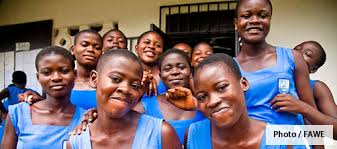
I am one of the African women deeply disappointed by the utterances made by Tanzania president John Pombe Magufuli that teenage mothers impregnated while still in school should not be allowed back to their studies.

Magufuli reasons that these girls may affect their colleagues if allowed to associate with them again.In a short time, Magufuli has gained popularity in East Africa and Africa in general as a result of the many positive things he has done and implemented, including the policy on free education.

When the famous president now comes up and thinks otherwise, it is a shock, a serious human rights violation and a setback to what many governments and organizations promoting girl child education and women empowerment have worked for in a long time.

One of the things that have caused early pregnancies among girl children is poverty. Many teenage girls coming from poor backgrounds get easily lured by men who come in their lives promising heaven and earth. As much as the president may be looking out for the interests of the rest of the girls not yet affected, I think stopping teenage girls from achieving their dreams after going through the unwanted pregnancy is double punishment.

Just last year, my neighbour’s daughter (in Ntungamo) who had been under the care of her paternal aunt in Ibanda district went through the same experience at 14 years old. She was ready to sit for her primary seven exams.

However, her dreams were cut short when a 35-year-old man got her pregnant. She could not go back to her aunt’s home or come back to her parents’ home for fear of the repercussions, including torture and discrimination. She, therefore, decided to stay with the man.

I remember cutting my Christmas break short after deciding that her uncle and I travel to Ibanda, investigate and report the matter to police!

While in Ibanda, this is what we discovered: That the aunt with whom the girl had been staying had not reported the matter to police for fear for her life and family as the man is said to be dangerous.

The community was aware of what the man had been doing to people’s children but was silent. From the local police station in Ibanda, we proceeded to another local police station on Entebbe road where the culprit works, according to the local sources. We reported the matter but, up to now, the case has not been taken to court.

In order to fight poverty in our continent, education remains paramount – more so the education of the girl child. Let us imagine the future of my neighbour’s daughter is at stake!

Pregnant at 14 years, she is now staying with the 35-year-old illiterate man, whose health status is not known and cannot even guarantee that he will stay and take care of her and the baby before he moves on another young girl. Does this young girl even know the values of marriage?

Does she understand what it means to be a mother? All she will be is a helpless woman with broken dreams and aspirations. Her parents cannot help much either, because they are also illiterate and only work for daily bread.

This girl was the hope of the family; probably after completing her education, she would have contributed to her siblings’ school fees. Unfortunately this is going to be the vicious cycle of poverty Uganda and Africa are facing.

We need to come up with lasting solutions that will not affect young girls’ education. Mr Magufuli and his government plus many other governments need to devise policies and strategies to address poverty and other social challenges which affect girl-child education in Africa.

It starts with family: parents ought to engage in serious talks with their children on matters of sex and its consequences. Make children your friends so that in times of confusion, they can feel free to share with you but also count on you for protection.

The law should provide severe punishments for defilers. Any person who collaborates with the culprits should face heavy punishment once found guilty.

Local leaders need to be pragmatic in ensuring the safety and wellbeing of the people in their communities, but should also share responsibility for any crimes committed against young girls. Civil society organisations working on girl empowerment issues should put in more effort in raising awareness.

In conclusion, teenage girls’ rights need to be protected and, therefore, we need combined efforts from all leaders. Alienating them is not a solution at all!

The author works with Advocates Coalition for Development and Environment (Acode).

Source:

http://allafrica.com/stories/201707100250.html


Comparte este contenido:

Africa: Mauritius. Focus On Retention of Girls and Young Women in Education Systems

Africa/ July 11, 2017/Source: http://allafrica.com

The education of girls and young women should cease to be an eristic matter subject to controversy or disputation. The African Renaissance can only be built on the conviction that the story of African girls and young women should no more be narrated sotto voce.

The Minister of Education and Human Resources, Tertiary Education and Scientific Research, Mrs Leela Devi Dookun-Luchoomun, made this statement this morning at the launching of a Forum on Strategies for retention of girls and young women in educational systems, at the Intercontinental Hotel, in Balaclava. The forum is conducted by a panel of resource persons from the AU, CIEFFA, UNESCO, WomHub, and UNICEF. Some 70 foreign delegates and 50 Mauritian participants are attending.

In her opening address, the Minister Dookun-Luchoomun, spoke of the need for leveraged actions so that both, boys and girls have the possibility to be active participants in fashioning the destiny of our countries. Mauritius fully subscribes to the idea that any theme that places girls and young women at centre stage should sit high on the national agenda, she said.

Mauritius has made considerable progress in terms of access of girls to education, equity of treatment and inclusion. In Mauritius, we hardly need to talk of retention when girls are known to outperform boys and are self-motivated enough to pursue their education path to the hilt, she said. Mrs Dookun-Luchoomun enumerated some factors that contribute to this fact namely, the advantage of being a small country with a declining population; and the powerful demand for education universally seen as an instrument for social mobility and economic take-off.

However, the Minister conceded that Mauritius still faces numerous challenges as regards STEM (Science, Technology, Engineering, and Mathematics). The trend in Mauritius, as elsewhere in Africa, is the disproportionate number of women as compared to men, both in STEM subjects in academia and in employment. It is, therefore, important to come up with strategies to attract more girls and young women in the STEM and TVET fields and work towards ensuring gender parity in the field of science and sustaining that parity once it is attained, she pointed out.

 For her part, the Coordinator, African Union (AU), the International Centre for Girls’ and Women’s Education in Africa (CIEFFA), Dr Rita Bissoonauth, stressed that if gender equity and equality is to be achieved and if full participation of all segments of African human resources is to be ensured, all training fields should be mobilised and made accessible to all.

«We should accept the educational and professional choices of the women who wish to give themselves the capacity, knowledge and skills», she added.

About the Forum

The three-day event is organised jointly by the AU, the CIEFFA and the Ministry of Education and Human Resources, Tertiary Education and Scientific Research. The objectives are to address the challenges that impede the retention of girls and young women in education systems, and find solutions so as to bring about real and sustainable changes.

Discussions will focus on: accessibility of STEM (Science, Technology, Engineering, Mathematics) for girls and young women in Africa; women in STEM – challenges and perspectives; gender stereotyping in TVET – assessing the facts, challenging the myths; legal and institutional environment to support right to quality education for girls and young women; higher education and gender sensitivity to increase retention rate among young women and quality acquisition; identifying gender-sensitive contents in teaching and learning resources.

Source:

http://allafrica.com/stories/201707100691.html

Comparte este contenido:

Sexuality education for Kenya’s youth: When the evidence is on the wall, but politics gets in the way

Kenya/July 11, 2017/By: Diana Warira* /Source: https://www.standardmedia.co.ke

The need to provide sexuality education for Kenya’s youth has been the subject of discussion in Kenya’s development circles for decades. Whether sexuality education has a critical role in improving the sexual and reproductive health outcomes of youth, or not, is no longer the debate. Why? One may ask. Well, research evidence already shows that sexuality education reduces risky sexual behaviour among youth. This means that when youth are well-informed about their sexuality, then the likelihood of engaging in risky sexual behaviour reduces. Those who are abstaining from sex continue abstaining, and those who are already having sex practice safer sex. This means that sexuality education has potential to reduce teenage pregnancy, unsafe abortions, and HIV infections among other negative sexual and reproductive health outcomes in Kenya.

However, despite the strong evidence supporting the need for sexuality education for Kenya’s youth, the momentum the government had gained over recent years towards incorporating sexuality education in the formal education curriculum seems to have waned, drastically. To quote one development practitioner, the ‘matter was shelved.’

We have an enabling policy environment, right?

More puzzling is the fact that the government has a policy outlining the need for sexuality education for Kenya’s youth, adolescents to be precise. The Ministry of Health’s National Adolescent Sexual and Reproductive Health (ASRH) Policy of 2015 outlines contributing to increased access to ASRH information and age-appropriate comprehensive sexuality education (AACSE) as one of the policy objectives. The Policy goes on to outline that it shall “Strengthen ASRH information and AACSE programmes for out-of-school and in-school adolescents.”

Further, in order to ensure the policy recommendations are implemented, the Policy stresses the use of a multi-sectoral approach cutting across various ministries and state agencies. Top on the list of ministries to be involved in the Policy implementation is the Ministry of Education, Science and Technology (MoEST). The Policy stipulates that MoEST shall implement sexuality education, AACSE to be precise, in-line with the Education Sector Policy on HIV and AIDS of 2013. Other areas of involvement for MoEST as outlined in the Policy are: facilitating provision of information to parents on the sexual and reproductive health of adolescents within the school set up, and strengthening partnership with the Ministry of Health (MoH) to provide ASRH information and services in schools.

That said, it is clear that the question of whether we have a policy framework, or not, within which to implement sexuality education is no longer valid. Several groups of stakeholders, including a technical working group on adolescent sexual and reproductive health, have convened in order to deliberate how to move the policy recommendations into action. However, all these efforts seem to have hit a snag.

While the mandate of ensuring good sexual and reproductive health outcomes among youth falls on the MoH, implementation at the school level lies with MoEST. A good point to note is that we have a National Curriculum Policy of 2015, which outlines various education reforms driven by the Second Medium Term Plan of Kenya Vision 2030. The Policy seeks to ensure life-long learning and steer learners towards achieving their full potential.

Ensuring that youth have good sexual and reproductive health outcomes is a major determinant as to whether youth achieve their full potential or not. However, the glaring absence of any mention of sexuality education (or the more salient option, family life education) in the National Curriculum Policy as part of the curriculum reforms is evidence to the disconnect in commitments between the various state agencies charged with steering the ASRH Policy and other policy frameworks forward. The 2015 National Curriculum Policy was an excellent opportunity for MoEST to take up some of the recommendations of the 2015 ASRH Policy in order to ensure joint effort towards improving the sexual and reproductive health of Kenya’s youth. Perhaps it is worth mentioning that the ASRH Policy was published a few months ahead of the National Curriculum Policy hence there was room to incorporate these elements in the latter.

A middle ground perhaps?

The lack of collective political will within government therefore, is the greatest hurdle standing in the way of realising sexual and reproductive health among Kenyan youth. It is widely known that a notable proportion of adolescents in Kenya are engaging in sex. The 2014 Kenya Demographic and Health Survey (KDHS) reported that half of women and men begin having sex by age 18. Moreover, 15 percent of women and 22 percent of men aged 20-49 had sex by age 15. Opponents of sexuality education have pointed out that this type of education, if implemented in schools, will lead to moral decadence, spike curiosity among adolescents to experiment with sex, among other issues. However, shouldn’t the government, parents, teachers and other stakeholders be working collaboratively to ensure these young ones have the right information regarding their sexual and reproductive well being? The ASRH Policy is very clear on the emphasis on ‘age-appropriate’ sexuality education. This means that information shared with a 10 year old is very different from that shared with an 18 year old. The fixation on the ‘comprehensive’ bit of sexuality education has led many to throw out the entire agenda. Throwing the baby out with the bathwater, so to speak.

While the arguments against sexuality education may be hinged on genuine fears, it is time we separated the evidence from the myths and opinions. It is at this point that the government agencies charged with steering this matter should step up to provide guidance on the best way forward. Sexuality education, comprehensive or not, is a critical remedy to the runaway morals we are witnessing among our youth, and a long-term fix to the declining sexual and reproductive health outcomes. If nothing is done, we shall not only miss the sustainable development targets on improving the health and wellbeing of Kenyan youth, but also the Vision 2030 goals. Therefore, a key question for us to answer is – should we let go of what the evidence says because the reality makes us uncomfortable, or should we all find a middle ground and save our youth while we still have the chance? 


*Diana Warira is a Communications Officer at the African Institute for Development Policy (AFIDEP)

Source:

https://www.standardmedia.co.ke/ureport/story/2001246878/sexuality-education-for-kenya-s-youth-when-the-evidence-is-on-the-wall-but-politics-gets-in-the-way

Comparte este contenido:

Niños de Sudán del Sur esperan la paz a 6 años de independencia

Sudán del Sur/10 julio 2017/Fuente: Telesurtv

Hace seis años Sudán del Sur alcanzó su independencia, pero el conflicto armado ha agudizado la pobreza y el desplazamiento de sus habitantes. Los niños siguen siendo los más afectados.

Sudán del Sur cumple este domingo seis años de independencia. Es considerada la nación más joven del mundo, pero el resurgimiento de la violencia en 2013 ha empeorado su situación humanitaria y miles de personas han huido hacia Etiopía, Kenia, Sudán y Uganda.

El Fondo de las Naciones Unidas para la Infancia (Unicef, por su sigla en inglés) lamentó este sábado que los sueños y las esperanzas de los niños no se han materializado por causa del conflicto.

La nación africana sigue sumida en el caos y los niños deben afrontar el mayor peso del conflicto y padecer el colapso de los servicios básicos, advirtió el organismo internacional.

Millones de infantes no tienen acceso a la educación, a la salud ni a una nutrición adecuada, denunció Mahimbo Mdoe, representante de Unicef en ese país.

Más de dos millones de niños han huido de sus casas para salvar sus vidas de los constantes enfrentamientos. Hasta junio pasado, más de un millón de menores permanecen en condición de refugiados, detalló Mdoe.

Los menores también se exponen a virus mortales como el sarampión debido al colapso del sistema de salud, el agua y procesos de saneamiento.

¿Celebrar la independencia en medio de la crisis? 

Los ciudadanos de Sudán del Sur fueron convocados el 1° de enero de 2011 a un referendo. El 98,83 por ciento de los habitantes de la región votaron a favor de la independencia que se materializó el 9 de julio de ese año.

La crisis económica que atraviesa el Gobierno de Yuba, por segundo año consecutivo decidió anular las celebraciones del aniversario, además, no pagan los salarios de sus funcionarios desde hace tres meses.

El 21 de junio se levantó la clasificación de «hambruna» en Sudán del Sur, sin embargo, la Federación Internacional de la Cruz Roja calificó este paso de una «victoria frágil», dado que 1,7 millones de personas aún se enfrentan a niveles de emergencia de hambre.

El catedrático de Ciencias Políticas en la universidad de Yuba James Ukuk,  expresó que la única esperanza que queda es que la comunidad internacional rescate al país del deterioro económico y que pueda reducir el sufrimiento que padecen los civiles.

Fuente: http://www.telesurtv.net/news/Ninos-de-Sudan-del-Sur-esperan-la-paz-a-6-anos-de-independencia–20170709-0028.html

Comparte este contenido:

The Power of Radio in the Fight for Girls’ Education in Malawi

Malawi/Julio de 2017/Autora: Neetha Tangirala/Fuente: USAID

Resumen: La mayoría de las personas en Malawi dependen de la radio como su principal fuente de noticias e información, ya que el 85 por ciento de la población no tiene acceso a la televisión ni a los periódicos. Marshall Dyton no es ajeno a este hecho – reconoce el poder de la radio y su papel crítico en la educación y la información a las comunidades rurales de todo el país, incluyendo la suya en el distrito de Mangochi en el este de Malawi. Como miembro de Mandela Washington – elegido como parte del programa de la Iniciativa de los Jóvenes Líderes Africanos (YALI) en 2015 – y redactor jefe de la primera publicación musulmana en línea de Malawi, Marshall produjo primero emisiones de radio durante una pasantía en la Estación de Radio Comunitaria de Kumakomo en Zimbabwe, Con el apoyo de USAID. Allí dirigió un equipo de una docena de voluntarios para producir contenido.

Most people in Malawi  rely on radio as their primary source of news and information, as 85 percent of the population do not have access to television or newspapers.

Marshall Dyton is no stranger to this fact — he recognizes radio’s power and its critical role in educating and informing rural communities across the country, including his own in Mangochi District in eastern Malawi.

As a Mandela Washington Fellow
— chosen as part of the Young African Leaders Initiative (YALI) program in 2015 — and editor-in-chief of Malawi’s first online Muslim publication, Marshall first produced radio broadcasts during an internship at the Kumakomo Community Radio Station in Zimbabwe, which he secured with support from USAID. There, he led a team of a dozen volunteers to produce content.

After completing the internship, Marshall decided to put his newfound skills to use to engage communities about a plight sweeping Malawi — the negative impact of child marriage on education for women and girls.

This is an issue that Marshall understood personally — his mother was one of the few women who went to school in his community, despite a culture that prioritizes the education of men and boys.

Marriam Larry (left), from Wumi Wumo Foundation and part of the second cohort of USAID's Regional Leadership Centers, and Halima Twabi (right), from Malawi Girls and a 2016 Mandela Washington Fellow. / IREX

Marriam Larry (left), from Wumi Wumo Foundation and part of the second cohort of USAID’s Regional Leadership Centers, and Halima Twabi (right), from Malawi Girls and a 2016 Mandela Washington Fellow. / IREX

Shedding Light on a Dark Subject

According to UNICEF, Malawi has the 11th-highest child marriage rate in the world, with nearly one in two girls married before the age of 18. Human rights activists have long argued that child marriage is a barrier to education particularly for girls, making them vulnerable to cycles of poverty and violence.

Bashir Amin, of the Malawi Broadcasting Corporation, the state-owned radio station. / IREX

Bashir Amin, of the Malawi Broadcasting Corporation, the state-owned radio station. / IREX

Early this year, the Malawian government voted to amend the constitution to remove a provision that allowed children to marry at 15. Now, marriage before the age of 18 is illegal, but challenges remain.

To join the fight against child marriage and other issues that affect women and girls in marginalized communities, Marshall wanted to engage directly with communities to create change. Inspired by his time at the Kumakomo Radio, he organized a radio talk show that brought together chiefs, religious leaders, girls, women and men to confront child marriage and discuss the importance of education for girls.

Florence Mwitha, a recent graduate, representing girls during a live broadcast of Kumakomo Radio (left) and Twaina Sanudi, an activist advocate of Muslim girls’ rights (right). / IREX

Florence Mwitha, a recent graduate, representing girls during a live broadcaston Radio Islam (left) and Twaina Sanudi, an activist advocate of Muslim girls’ rights (right). / IREX

The show was a collaboration across the YALI and Mandela Washington Fellows networks, and with Regional Leadership Center participants — young leaders between 18 and 35 enrolled in USAID-supported leadership training programs in sub-Saharan Africa — who took turns at the microphone during the live show.

Previously, issues around child marriage, women’s education and the status of women were rarely discussed, and they remain largely taboo. Marshall’s goal was to take the discussion to the national stage.

A Malawian schoolgirl reads out loud to her class. USAID is working to improve reading skills in primary school students and create safe spaces for girls to learn. / Amos Gumulira, Feed the Children

A Malawian schoolgirl reads out loud to her class. USAID is working to improve reading skills in primary school students and create safe spaces for girls to learn. / Amos Gumulira, Feed the Children

“With radio we spent less but achieved more,” Marshall said.

The show was broadcast live for two hours and reached an estimated 3 million listeners on national radio. The aim was to increase awareness within Muslim communities in Malawi about education, the misinterpretation of religious text, and why communities must confront embedded cultural values that lead to child marriage.

Marshall Dyton during the Mandela Washington Fellowship Presidential Summit in 2015 in Washington, D.C. / IREX

Marshall Dyton during the Mandela Washington Fellowship Presidential Summit in 2015 in Washington, D.C. / IREX

“Radio allows for debates and discussions to be open and transparent, and can be a critical tool for building consensus among communities and citizens,” Marshall said.

The talk show was organized under the Girl Child Education Movement, an initiative that Marshall founded to help girls in his community access education in rural Malawi. Broadcast on Malawi’s only Islamic radio station, Radio Islam, the event was designed to reach Malawi’s Muslim communities, who are vulnerable to discrimination given their religious and cultural background, Marshall said.

Creating Change Through Community Inclusion

As a result of the talk show, the Muslim Association of Malawi, who attended the event, agreed to open new offices in rural areas where communities can access up-to-date information about education and scholarship opportunities for girls.

Girl power in Chipoka, Malawi. /Amber Lucero-Dwyer

Girl power in Chipoka, Malawi. /Amber Lucero-Dwyer

Inspired by the success of his radio show, Marshall’s dream is to start a community radio station that is run by youth from diverse religious backgrounds. He believes that one way to tackle challenges facing marginalized communities and women in Malawi is to discuss these issues in an open forum.

Like in Malawi, USAID supports programs in over 30 countries to strengthen journalistic professionalism for individuals such as Marshall, establish media management skills and promote free media.

Fuente: https://blog.usaid.gov/2017/05/the-power-of-radio-in-the-fight-for-girls-education-in-malawi/


Comparte este contenido:

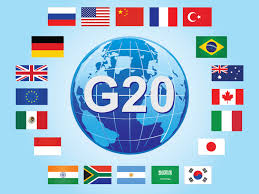
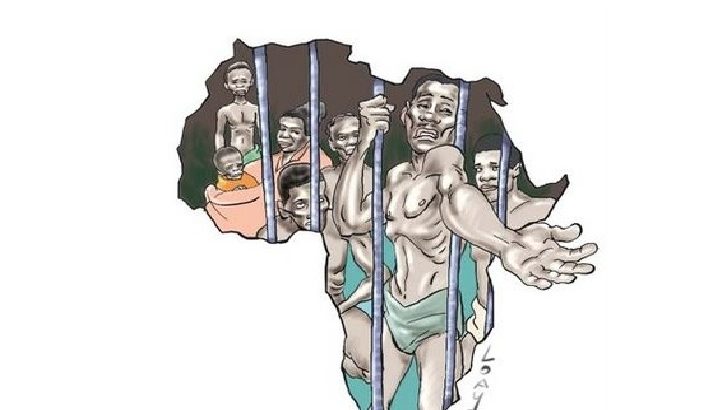
El G20 lanza un plan para luchar contra la pobreza en África

África/10 julio 2017/Fuente: Swissinfo

El G20, que este sábado terminó su cumbre anual en Hamburgo, lanzó un plan para luchar contra la pobreza en África, criticado por varias oenegés por ser poco ambicioso.

La iniciativa, liderada por la canciller alemana Angela Merkel, permitirá a siete países africanos beneficiarse de apoyos para atraer nuevos inversiones privadas.

El objetivo es frenar las migraciones masivas hacia occidente desarrollando la economía del continente, en el que más de la mitad de la población tiene menos de 25 años.

Los países que participan son Ghana, Costa de Marfil, Túnez, Etiopía, Marruecos, Ruanda y Senegal, en distintos grados, aunque algunos de los países africanos más pobres, como Níger o Somalia, no están en la lista.

«Estamos listos a ayudar a los países africanos interesados y a pedir a otros socios que se unan a la iniciativa», dijo el G20 (19 países más la Unión Europea) en el comunicado final de la cumbre.

El plan, que se une a otros programas para ayudar a las niñas, a los jóvenes en zonas rurales y a la promoción de la energía renovable, permitirá «tratar el problema de la pobreza y la desigualdad» como causas de la migración».

Sin embargo, según la oenegé ONE, el programa promete mucho, pero muchos miembros del G20 no parecen estar interesados.

«Este será el siglo de África y la canciller Merkel quería que el G20 se pusiera del buen lado de la historia, pero las tensiones internas y la división alejaron al G20 de este camino visionario», dijo Jamie Drummond, uno de los responsables de la oenegé.

Por su parte, Oxfam considera que la iniciativa «se basa en la suposición increíblemente ‘naive’ (ingenua) de que estimulando la inversión privada se ayudará automáticamente a los más pobres del continente».

Fuente: https://www.swissinfo.ch/spa/el-g20-lanza-un-plan-para-luchar-contra-la-pobreza-en-%C3%A1frica/43319596

Comparte este contenido:
Page 305 of 622
1 303 304 305 306 307 622