Page 335 of 622
1 333 334 335 336 337 622

Escuelas de Sudán del Sur cierran por la hambruna

Sudán del Sur/08 de Mayo de 2017/ El Comercio

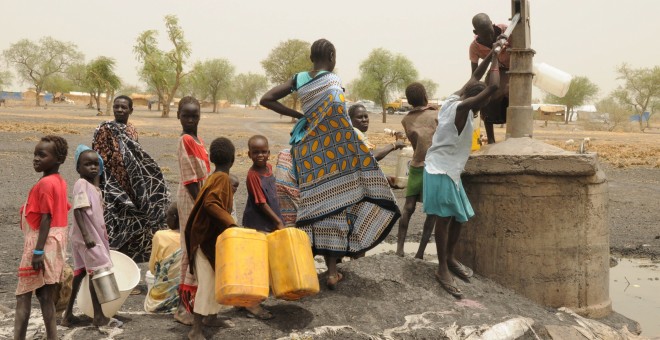
Varios centros educativos han cerrado en el estado sursudanés de Imatong (este) por la situación económica de las familias, que les obliga a huir del país para luchar contra la hambruna declarada en la zona, declaró hoy a Efe el gobernador del estado, Tulio Abelio Oromo.

«Las escuelas en la ciudad de Torit y otras cercanas cerraron por la situación económica, que está provocando la hambruna, porque los estudiantes se han ido con sus familias a campamentos de la ONU en Kenia y Uganda», aseguró.

Aseveró que el Programa Mundial de Alimentos (PMA) intentó ofrecer «apoyo alimentario» a algunas escuelas en el estado con el objetivo de que pudiesen seguir con las actividades educativas.

Pero «el empeoramiento de la situación económica llevó a que las familias se lleven a sus hijos a los campamentos de refugiados en el extranjero», señaló.

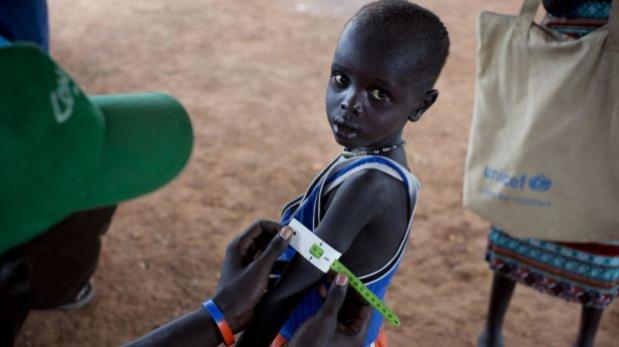
Según un informe publicado por el Gobierno sursudanés, la Organización de la ONU para la Alimentación y la Agricultura (FAO) y el Fondo de la ONU para la Infancia (Unicef), el 40 % de la población de Sudán del Sur está en peligro de una hambruna.

El país africano es escenario de un conflicto que estalló en diciembre de 2013 entre fuerzas leales al presidente, Salva Kiir, de la etnia dinka, y al exvicepresidente Riek Machar, de la tribu nuer.

A pesar de que ambas partes firmaron un acuerdo de paz en agosto de 2015, el conflicto se reanudó en julio de 2016, causando miles de muertos y millones de desplazados.

Fuente: http://elcomercio.pe/mundo/africa/escuelas-sudan-sur-cierran-hambruna-noticia-1988806

Comparte este contenido:

Malawi: Luanar Optimistic to Benefit From Regional Universities Forum

África/Malawi/07 Mayo 2017/Fuente: allafrica/Autor:Sylvester Kumwenda

Resumen: La Universidad lilongwe de Agricultura y Recursos Naturales (LUANAR) ha expresado su optimismo por el benificio que recibira de  los diversos programas y proyectos ofrecidos por el Foro de Universidades Regionales (RUFORUM) para la creación de capacidad en la agricultura.

Lilongwe University of Agriculture and Natural Resources (LUANAR) has expressed optimism that the university will greatly benefit from the various programs and projects offered by Regional Universities Forum (RUFORUM) for capacity building in agriculture.

Vice Chancellor for LUANAR Professor Emmanuel Kaunda made the remarks Tuesday evening after organizing a dinner for RUFORUM with the aim of orienting the forum on the background, activities, weaknesses and strengths of LUANAR at the Bingu International Convention Centre (BICC).

«So what we needed to do is to get advantage of their presence here and give them a glimpse of what LUANAR is all about. Also, provide some background as regards how and why we have great affinity of working very closely with the forum,» Kaunda explained.

The vice chancellor expressed optimism that after the interaction, the LUANAR will now have a greater opportunity of striking deals, enter into partnerships and collaborate closely with the forum and other departments.

«For example, present here is the department of science and technology of South Africa which fund research and we have a bilateral relationship with it. We hope through this, we should be able to interrogate with their embassy or the high commission here to see how we can engage each other on that.

«We also hope that the forum itself would support us in building up capacity to get some proposals and projects running and staff exchange programs,» he said.

Kaunda disclosed that during the event, LUANAR had a chance to showcase some of its success stories to the forum.

He said one of the success stories and lessons was on how public sector interacts with universities and how public sector can work with the private institutions.

«We have showcased a project that we have been running with Sothguru, a consulting company in India, Cornell University in the US and LUANAR supported by USAID. In this project, we partnered a local private sector seed company called CPM to buy seed which we had farmers grow around Bunda community.

«So this is a huge success story as we have shown them we, as a university, can partner with private institutions to generate technologies that can improve farmers’ livelihoods by increasing their incomes,» Kaunda said.

Deputy Secretary for RUFORUM Dr Moses Osiru said it was advantageous for LUANAR to have its vice chancellor on the RUFORUM board.

Fuente de la noticia: http://allafrica.com/stories/201705050566.html
Fuente de la imagen: https://ruforum.files.wordpress.com/2017/04/02.jpg
Comparte este contenido:

Nigeria: Schools Urged to Support Personnel Audit

África/Nigeria/07 Mayo 2017/Fuente: /Autor: Halima Musa

Resumen: El vicegobernador Profesor Hafiz Abubakar ha pedido a las escuelas públicas y privadas en el estado para que asegurar el cumplimiento deben participar en la Auditoría Ejercicio Nacional.

Kano — Kano State Deputy Governor Professor Hafiz Abubakar has called on public and private schools in the state to ensure total compliance and participation in the forthcoming National Personnel Audit Exercise.

Abubakar, who is also Commissioner for Education, Science and Technology, made the call while inaugurating the state and local government planning committees for the coordination of the 2017 Personnel Audit Exercise for both public and private schools.

Professor Hafiz said the audit was a validation exercise, which needs the commitment of the committees, as it would be conducted in all the 774 local government areas of the 36 states and the FCT.

According to him, the target population to be considered were the pupils, students, teaching and non-teaching staff in all basic schools as well as administrative personnel at SUBEB and Local Government Education Authority.

The deputy governor urged the committee to device way to know the exact number of enrolment in private schools under their domain as some of such schools use to hide figures to avoid charges and taxation.

Fuente de la noticia: http://allafrica.com/stories/201705050667.html

Fuente de la imagen: http://imagenes.universia.net/gc//net/images/profesiones/p/pr/pro/proceso-de-auditoria-tributaria.jpg

Comparte este contenido:

Ethiopia: Higher Learning Institutions in Sustaining Growth

Resumen:  La nueva política de educación planteada para transformar la nación. Estableciendo el lugar que merece la educación para la vida económica y social general del país, se presentan los resultados hasta el momento.

Twenty years ago Ethiopia was a country at the verge of disintegration and absolute poverty.

For that reason, as a remedial action the then Transnational Government was aiming at bringing much-needed peace, ensuring stability, cultivating democracy and fighting out abject poverty.

Mindful of the role of education in transforming the overall economic, political and social life of the country, it was before amending the constitution the government drafted the education policy. Previously, the educational policy was not given due attention for no apparent reasons. But the new education policy was planned to transform the nation. Seeing the role of education for the overall economic and social life of the country, the then Transnational Government brought into play the new approach.

When the policy came into existence, it placed focal attention on primary schools as compared to higher learning institutions. At that time, Ethiopian education was centuries old. But, surprisingly the primary school education coverage was confined to 19 per cent. It was after the establishment of primary schools on strong foundations more secondary and higher learning institutions came to the scene.

Lately, the 7th high educational Institutes Intentional Conference was held at Jigjiga town. On the event, several researchers and scholars had presented papers concerning the quality of education in Ethiopian higher learning institutions.

Having appreciated higher educational institutions’ roles to the ongoing socio-economic growth of the country, the conference has spotlighted quality gaps in education. During the two-day long conference, Jigjiga University President Dr. Abdulaziz Ibrahim said that «Our country is on the path of continuous economic growth. But, in the efforts to sustain the growth, quality education plays irreplaceable role.»

Capitalizing the importance of education for the overall growth of the country, the government is working ceaselessly to further increase the accessibility of education to all citizens by establishing additional universities.

«Jigjiga University is one of the higher educational institutions established ten years ago with a mission to address basic needs of the community. So far, the University has contributed a great share for the development of the country churning out thousands of competent graduates.»

Dr. Abdulaziz noted that the university has been playing a pivotal role in the socio economic development of the community through various research activities that have a tangible impact on the community.

According to him, if properly used the researches have a significant role in sharing ideas among scholars and researchers to further speed up the economic development of the country and to fill gaps identified in the educational sector. It has a key role in improving the quality of education which is a challenge for any form of economic growth, he added.

Adviser of the Ministry of Education, Yibeltal Ayalew on the occasion said that education is key for sustainable development. According to him, higher educational institutions are responsible to producing skilled manpower based on the economic need of the country.

Higher institutions have three core responsibilities namely seeing to the teaching-learning process, rendering community service and conducting researches. Currently, in Ethiopia, higher educational institutions are working to address the social and economic needs of the country.

Indeed, higher education has contributed a great role in transforming country’s socio-economic and political life. However, it does not mean that the road was smooth. Traditionally, higher learning institutions were working targeting training and research. The two must not be the sole targets of higher learning institutions.

Every research has to play a role in the socio-economic life of a particular society. If a research could not serve the country or community it would be quite meaningless. If the research fails to support poor Ethiopian farmers, it would be a wastage of resource and time.

The role of high learning institutions must be churning out manpower that will breathe life in the agricultural and industrial sector. What is more, they should be centres of excellence that will produce skilled man power. They as well must serve places where multiculturalism and democratization are promoted.

The motive behind increasing the number of universities is not not for the sake of political consumption or to compete with other countries but to address the basic needs of the nation. What is more, the country is not building Universities to increase the number of graduates that speak English language but to produce a critically thinking and responsible citizens.

It is already known that, the country had been wallowing under decades of civil war and undemocratic governance. This has adversely impacted the quality of education which in turn resulted in economic and social turmoil in the nation. However, on the wake of the new education policy, tangible results are taking shape throughout the country. This does not mean that the educational quality of the country is absolutely perfect. It could have its own shortfalls. But, it is contributing a huge role for the birth of new Ethiopia.

The current socio-economic developmental leap of the country is among the blessings of our education. In this regard, all university lecturers, researchers and others have played their due role.

Currently, several public universities are operating throughout the country and additional universities are in the pipeline. The expansion of universities have brought urbanization. Places that were hardly inhabited by people have became urban areas. What is more, such universities contribute to equity, cohesion and democratization. Above all things, our universes have contributed for the economic growth of the country.

The increasing in number of skilled man power has contributed for the consecutive economic growth of the nation. The universities have played a significant role in combating drought and supporting the growing economy. They have played a significant role for the success of MDGs and others. Higher education have also played a significant role in combating poverty.

Here, it must be emphasized that whenever one talks about higher educational institutions one has to also think the issue of quality learning and education processes. Our universities have already conducted seven conferences on quality. The past seven conferences have identified several challenges to the high education institutions. If these conferences are centres for discussion without solutions their exertion would be wastage of time and resources. In this regard, universities are duty bound to focus on tangible results. They have to be centres of excellence. They have to work for change.

Fuente de la noticia: http://allafrica.com/stories/201705050813.html

Fuente de la imagen: http://www.geeskaafrika.com/wp-content/uploads/2016/08/gondar-1.jpg

Comparte este contenido:

Nigeria: Children’s Education, Everybody’s Responsibility- Educationist

África/Mayo de 2017/Fuente: NTA

Resumen: Un educador, Sr. Dare Owoyemi, ha dicho que la educación de los niños no debe quedar en manos solo de los maestros, afirmando que es responsabilidad de todos en la sociedad. Owoyemi, que es el Propietario de  Best Foundation Nursery y Primary School, Fate, Ilorin, hizo la observación en Ilorin el viernes mientras hablaba con la Agencia de Noticias de Nigeria (NAN). El propietario, sin embargo, identificó a los maestros, padres, gobierno, líderes religiosos y los medios de comunicación como actores con roles cruciales en la educación de los niños. «Los padres no deben dejar la educación de sus hijos solo a los maestros. Los niños necesitan una estrecha vigilancia para llegar a la cima, porque la caridad comienza en casa. «Los lectores son líderes, por lo tanto, los padres deben inculcar la cultura de la lectura en sus hijos y también enseñarles la moral de la vida», dijo.

An educationist, Mr Dare Owoyemi, has said Children education should not be left in the hands of teachers alone saying that it is the responsibility of everybody in the society.

Owoyemi, who is the Proprietor, Best Foundation Nursery and Primary School, Fate, Ilorin, made the remark in Ilorin on Friday while speaking with the News Agency of Nigeria (NAN).

The proprietor, however,  identified teachers, parents, government, religious leaders and the media as stakeholders with crucial roles to play in children’s education.

“Parents must not leave their children’s education to the teachers alone. Children need a close watch to get to the top, because charity begins at home.

“Readers are leaders, therefore, parents should inculcate reading culture in their children and as well teach them the morals of life,” he said.

Owoyemi also said that education was essential to the survival of a nation, adding that no child should be left behind.

He urged parents to keep an eagle eye on their children and inculcate in them discipline and hard work for a better future. (NAN)

Fuente: http://www.nta.ng/news/education/20170505-childrens-education-everybodys-responsibility-educationist/


Comparte este contenido:

La OCDE publicó cuáles son los países con mayor índice de acoso escolar

Internacional / www.cnnchile.com / 4 de Mayo de 2017

El 2 de mayo es el Día Internacional contra el Acoso Escolar, un problema que afecta de forma frecuente al 8,9% de los alumnos adolescentes en los países que integran la Organización para la Cooperación y el Desarrollo Económico (OCDE).

En su informe ‘El bienestar de los estudiantes’, dentro de la evaluación PISA 2015, presentado el pasado mes de abril, la OCDE presenta un capítulo sobre acoso escolar o bullying, basado en los reportes de los propios estudiantes.

El 8,9% de los alumnos en los países de la OCDE dijo sufrir bullying de manera «frecuente». Ese porcentaje es mayor en países como Estados Unidos (10%) o México (10,1%).

Los países de la región miembros de la OCDE con los peores resultados en este capítulo son República Dominicana (12,2%) y Costa Rica (10,9%).

En tanto, Perú, Colombia y Chile tienen resultados mejores a la media de la OCDE. En Perú, el 6,1% de los alumnos reconoció sufrir acoso frecuentemente. La cifra se situó en el 7,6% para Colombia y 7,9% para Chile.

También España se sitúa por debajo de la media, con el 6%.

Fuente: http://www.cnnchile.com/noticia/2017/05/02/la-ocde-publico-cuales-son-los-paises-con-mayor-indice-de-acoso-escolar

Comparte este contenido:

CLADE: Sindicatos piden al Banco Mundial que cese las inversiones en escuelas privadas de bajo costo

CLADE/06 de mayo de 2017/

Dirigentes sindicales y defensores de la educación se unieron el 21 de abril ante el Banco Mundial en protesta por su continuo apoyo a las agencias de educación con fines de lucro en general, y en concreto a Bridge International Academies (BIA).

En una carta conjunta a Jim Yong Kim, presidente del Banco Mundial, los dirigentes de varios sindicatos de profesores internacionales y sindicatos mundiales solicitaron al Banco Mundial para que cese inmediatamente su apoyo a escuelas privadas de bajo costo como BIA. En la misma señalan que el acceso a la educación es un derecho humano fundamental y no debe basarse en la capacidad de pago de una familia.

Al apoyar la expansión de la educación privada de bajo costo y otras prácticas competitivas, el Banco Mundial contribuye a que un gran número de los/as niños/as más vulnerables del mundo no tengan esperanza de una educación de calidad, y creemos que una educación pública de alta calidad debe ser reconocida como un bien público y que la educación es una responsabilidad primordial de los gobiernos y no de las empresas y los empresarios.

“Debemos recordar al banco cuáles deben ser sus prioridades: apoyar la educación pública, no privatizar las escuelas que crean unos cuantos ganadores a expensas de millones de niños”, expresó Lorretta Johnson, secretaria-tesorera de la AFT.

Afirman que el apoyo continuo del Banco Mundial a BIA es imposible de entender a la luz de las recientes decisiones judiciales que confirman la mala trayectoria de Bridge.

Fuente de la Noticia:

http://privatizacion.campanaderechoeducacion.org/sindicatos-piden-al-banco-mundial-que-cese-las-inversiones-en-escuelas-privadas-de-bajo-costo/

Comparte este contenido:
Page 335 of 622
1 333 334 335 336 337 622