Page 340 of 622
1 338 339 340 341 342 622

Etiopia: Empowering Women Through Education

Etiopia/Abril de 2017/Fuente: All Africa

Resumen:  Para asegurar un crecimiento económico sostenible en una nación dada, el empoderamiento de las mujeres se está convirtiendo en un asunto serio del día. Como la mayoría de los estudiosos han acordado, la educación es una de las áreas más cruciales de empoderamiento para las mujeres. Ofrecer a las niñas educación básica es una manera de proporcionarles mucho más y de permitirles tomar decisiones genuinas sobre las clases de vidas que desean dirigir. Esto parece un lujo pero es una visita obligada. De conformidad con el artículo 28 de la Convención de las Naciones Unidas sobre los Derechos del Niño, los Estados Partes reconocen el derecho del niño a la educación y, con miras a lograr este derecho progresivamente y sobre la base de la igualdad de oportunidades, Educación primaria obligatoria y gratuita para todos; Fomentar el desarrollo de diferentes formas de educación secundaria, incluida la educación general y profesional, ponerlas a disposición de todos los niños y hacerlas accesibles, y adoptar medidas apropiadas, como la introducción de la educación gratuita y la asistencia financiera en caso de necesidad; Hacer que la educación superior sea accesible a todos sobre la base de la capacidad por todos los medios apropiados; Poner a disposición de todos los niños la información y la orientación educativa y profesional; Adoptar medidas para fomentar la asistencia regular a las escuelas y la reducción de las tasas de abandono escolar.

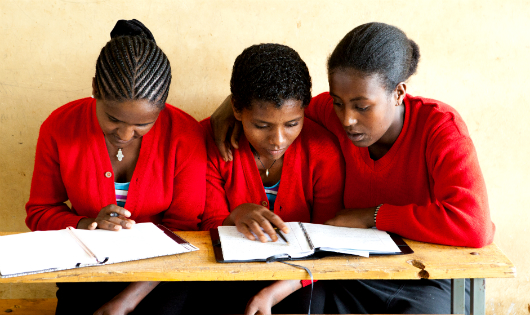
In ensuring sustainable economic growth in a given nation, empowering women is becoming a serious issue of the day. As most scholars have agreed up on, education is one of the most crucial areas of empowerment for women. Offering girls basic education is one way of providing them much greater and enabling them to make genuine choices over the kinds of lives they wish to lead. This seems a luxury but it an absolute must see.

According to Article 28 of the UN Convention on the Right of the Child, States Parties recognize the right of the child to education, and with a view to achieving this right progressively and on the basis of equal opportunity, they shall, in particular: make primary education compulsory and available free to all; encourage the development of different forms of secondary education, including general and vocational education, make them available and accessible to every child, and take appropriate measures such as the introduction of free education and offering financial assistance in case of need; make higher education accessible to all on the basis of capacity by every appropriate means; make educational and vocational information and guidance available and accessible to all children; take measures to encourage regular attendance at schools and the reduction of drop-out rates.

As to article 10(a) of the Convention on the Elimination of All Forms of Discrimination Against Women, they have equal rights with men in the field of education. The same conditions for career and vocational guidance, for access to studies and for the achievement of diplomas in educational establishments of all categories in rural as well as in urban areas; this equality shall be ensured in pre-school, general, technical, professional and higher technical education, as well as in all types of vocational training.

Ethiopia is among states who received and signed the aforesaid two conventions and made them part of the constitution, child guidelines and women policy. According to article 35(3) of Ethiopian constitution; «Considering that traditionally women have been viewed with inferiority and are discriminated against, they have the right to the benefit of affirmative actions undertaken for the purpose of introducing corrective changes to such heritages. The aim of such measure is to ensure that special attention is attached to enabling women to participate and compete equally with men in the political, economic and social fields both within public and private organizations.»

Besides, article 35(8) of the constitution also ensues the right to get education. It says; «Women shall have the right of access to education and information on family planning and the capability to benefit so as to protect their good health and prevent health hazards resulting from child birth.»

No doubt, women who enjoy all fundamental human rights can lead a healthier and happier life. Thus, education in this regard plays an important role in empowering girls. Besides it upgrades women’s power of decision making. The society can get tremendous benefits form educated girls. If, an educated woman has the skills, information and self-confidence she could to be a better parent, worker and citizen.

When the society allows woman to go to school, such a move helps control early marriage and manage family size. And the children of an educated mother are more likely to survive than that of uneducated ones.

An educated woman will also be more productive at work and better paid. Indeed, the dividend for educational investment is often higher for women than men. Studies from a number of countries suggest that an extra year of schooling will increase a woman’s future earnings by about 15 per cent, compared with 11 per cent for a man.

Over recent decades, in Ethiopia, there has certainly been significant progress in girls education. As per the information this writer got from the Ministry of Education, following the affirmative action taken by the government and the sound education policy introduced, the gross enrolment ratio of girls has been steadily increasing year by year.

These days, in Ethiopia, over 26 million students have been attending primary, secondary and tertiary level education. Including pre-school education, currently, over 22.6 million students attend primary education. Of which 10.78 million are girls. The gross enrolment ratio of girls in primary education has reached 106.3 per cent, said Ministry Corporate Communication Director Ahmed Seid.

As to him, in 2014/15, 1.67 million students were attending secondary education, of which 805,549 are girls. The gross enrolment ratio of girls in secondary education has now reached 40.8 per cent. Compared to the previous years, it has shown great progress. The construction of high schools being carried out helps to further increase students’ enrolment in secondary school, Ahmed said.

«Almost half of the students in preparatory schools comprises girls. Citing 2014/15 fiscal year report of the ministry, Ahmed indicated that over 433,439 students had been attending pre-university education, of which, 201,826 were girls. He said various activities are being carried out over the past years to reduce gender disparity. The country is working to bring boys to girls ratio to one to one.»

Of the total 195,640 students who took preparatory final exam by the year 2014/15, 165,000 students had got university entrance pass mark. Due to low intake capacity of universities, 115,680 students have joined government universities. Of the total students, some 38.5 per cent women students had got a chance to join universities. In line with affirmative action, during the reported period, 29,743 girls had joined science and technology fields whereas 14,763 girls are assigned in social science and humanities field of studies, Ahmed said.

According to Ministry’s Gender Directorate Director, Elizabeth Gessese, the ministry had been making various activities to narrow down gender gaps in the Millennium Development Goals(MDGS) through mobilizing the public, increasing woman’s role in education leadership, carrying out various communication works in line with media institutions. Efforts have been made so far to encourage and enthuse girls with high scorers. She also said that in collaboration with the Ministry of Women and Children, her ministry has been providing every assistance to encourage girls.

As to her, affirmative action has also been under way to assist girls. For instance, in pre affirmative action, lowering passing marks, we do various things that help girls join preparatory schools and universities. As part of post affirmative action, we have been clicking with every gender structure which are found under various colleges and universities. We provide every assistance to girls until they complete education successfully. Nowadays, by mobilizing the public and raising awareness of the community, in some areas, it is possible to arrest the number of school dropouts, especially girls. Besides, various assistance has been provided for those who come from the low income bracket.

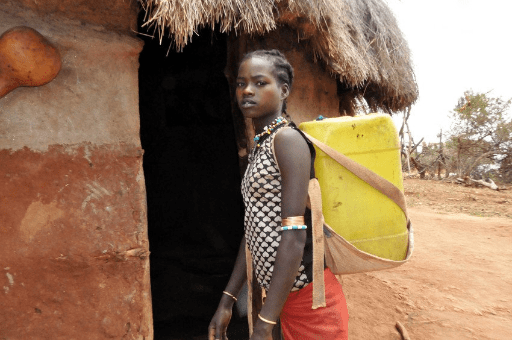
Early marriage, abduction and house chores on the shoulder of girls,among others, are still ascribable challenges for the attrition of girl students. Here, there is a call for to do more awareness raising tasks to change the mindset of the rural community. Specially the importance of educating girls for social well being is called for, she stated.

According to 2015 report of annual continental activities, the Commission of Africa Union is expected to devise draft continental education strategy for Africa 2016-2025. The strategy will be driven by a visualization of a transformed and integrated African education and training system. A system geared towards the development of knowledge, skill and values for achieving the vision of the Union. Its mission will be to reorient Africa’s training systems to meet the knowledge, competencies, skills, innovation, and creativity required to nurture African core values and promote sustainable development at the national, sub-regional and continental levels, the report pointed out.

The strategy goes along from perspective and minimalist goals of human rights that demand human empowerment through creating enabling conditions to help individuals and nations realize their potential. It sees to the task of delivering better living standards, higher levels of quality employment, entrepreneurship and innovation through establishing robust and dynamic inter-sectoral linkages; while also addressing Africa’s quest for increased capacity and human development capacity, as a key to realizing that common development approach the continent has taken.

The draft strategy demands that education and training programmes be directly linked to national human resource development programmes as well as national socio-economic development visions, it was learnt form the report.

Fuente: http://allafrica.com/stories/201704260910.html

Imagen: https://borgenproject.org/higher-education-ethiopia-falls-short-continues-improve/

Comparte este contenido:

El 76 % de las niñas de Sudán del Sur no va a la escuela

Sudán del Sur/27 abril 2017/Fuente: Telesur

Las familias prefieren dejar a sus hijas en casa para que ayuden en las tareas domésticas o las dan en matrimonio, explicó la directora ejecutiva del Plan Internacional.
Alrededor del 76 por ciento de las niñas en Sudán del Sur no van a la escuela por el conflicto que vive el país y por la crisis alimentaria, denunció Plan Internacional y advirtió que «su futuro y seguridad están en peligro».

«Las niñas de Sudán del Sur se están enfrentando  a una triple tragedia en forma de conflicto brutal, hambruna y negación de sus derechos a la educación»,  denunció en un comunicado la directora ejecutiva del Plan Internacional, organización asociada al Fondo de la ONU para la Infancia (Unicef), Anne- Birgitte Albrectsen.

«Más del 40 por ciento de la población de Sudán del Sur (4.9 millones de personas) no tienen suficiente para comer» recordó  Albrectsen. Destacó que esto supone que «miles de niños», en su mayoría niñas, sean apartados de la escuela para hacer tareas domésticas o ayudar a sus familias a encontrar comida.

La responsable de Plan Internacional indicó que en tiempos de crisis alimentaria las familias prefieren dejar a sus hijas en casa para que ayuden en las tareas domésticas o en el búsqueda de alimentos. «Asombrosamente, también es corriente que sean vendidas en matrimonio precoces a cambio de ganado».

Albrectsen explicó que muchas familias apenas tienen una comida al día, por lo cual dar en matrimonio a las niñas puede ser «un medio útil de ahorrar dinero o de conseguir recursos para salvar la vida, especialmente ahora que mujeres y niños tienen que arreglárselas solos» debido al conflicto.

«Los hombres están desaparecidos, se han marchado  en bus de pasto para su ganado  o para luchar en el conflicto», precisó.

Fuente:http://wp.telesurtv.net/news/El-76–de-las-ninas-de-Sudan-del-Sur-no-va-a-la-escuela-20170426-0057.html

Comparte este contenido:

Kenia: Teachers’ appraisal system has improved curriculum delivery

Kenia / 26 de abril de 2017 / Por: NANCY MACHARIA / Fuente: http://www.nation.co.ke

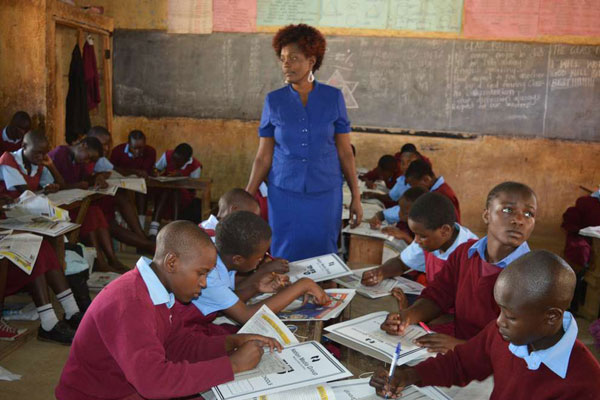
Amid the heightened political activities in the preparation for elections, performance contracting for the heads of institutions and teacher appraisal reforms are gradually transforming delivery of education to children.

The Teachers Service Commission (TSC) introduced the two performance management tools in January last year to enhance the quality of teaching and ultimately improve learning in primary, and secondary schools and tertiary institutions.

MANAGEMENT AREAS

The reforms are intended to build a performance-oriented culture and instil accountability in public learning institutions.

In performance contracting (PC), the heads of institutions are assessed against negotiated targets in the key management areas that have a direct impact on the quality of education offered.

They include teaching standards; curriculum organisation and implementation; supervision of staff; teaching and learning infrastructure.

Others are financial management and compliance with the law.

In teacher performance appraisal and development (TPAD), they are evaluated on pedagogy, particularly preparation and use of schemes of work, lesson plans and notes, and maintenance of learners’ progress and assessment records.

REDUCED ABSENTEEISM

Other important areas are innovation in curriculum delivery such as integration of information communication technology, implementation of learners’ welfare programmes, participation of teachers in co-curricular activities and collaboration with parents and guardians.

From a survey carried out by the TSC recently, it is evident that save for teething challenges such as slow uptake of technology, poor Internet coverage in some areas and resource constraints, performance contracting and teacher appraisals are already having a major impact on teaching and learning in public schools and colleges.

First, there is improved time management. Because heads and other teachers have targets to achieve, and report on at the end of every term, absenteeism has considerably reduced.

Heads have become more rigorous in supervision because their targets cannot be met without teachers first delivering on their own.

FEEDBACK

They are now regularly verifying professional documents for teachers and promoting teamwork.

Even when assignments outside school or illness lead to missed classes, systems are now in place to ensure the lessons are made up for.

Learners providing feedback on attendance by teachers motivates them not to miss classes.

Every day, student leaders compile a daily summary on attendance by all teachers for accountability.

This is used by the administration to reconcile attendance records for all teachers, including the heads.

As a result, teachers are becoming increasingly sensitive to the needs of learners as their primary clients.

ACCOUNTABILITY

More teachers are preparing and using crucial professional documents such as schemes of work, lesson plans and notes and teaching aids.

Learners’ progress records are well-maintained.

There is also increased integration of information communication technology in teaching, sourcing of appropriate teaching and learning materials from the Internet, and sometimes through mobile phones.

There is evidence that a collaborative culture is developing in schools where teachers involve parents and guardians in the management of learner behaviour.

Equally important, accountability structures in the management of institutional resources have improved.

IMPROVING TEACHING

Compliance with public procurement and disposal of assets laws and regulations, through tendering, evaluation, awarding and disposal procedures is becoming entrenched.

This ensures prudent use of financial resources.

Although it is still early to tell, some heads of institutions are convinced performance contracting and appraisal is the reason for their improvement in examinations.

In order to address the teething problems cited, the commission will commit more resources to induction, training, supervision and communication infrastructure to ease implementation.

Ms Macharia is the Chief Executive Officer, Teachers Service Commission

Fuente noticia: http://www.nation.co.ke/oped/Opinion/Teachers–appraisal-system–improved-curriculum/440808-3902374-128smg2z/index.html

Comparte este contenido:

25 million children out of school in conflict zones – UNICEF

Chad/Dakar/New York/ 26 de abril de 2017 / Fuente: https://www.unicef.org

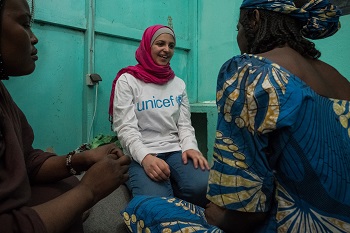
Syrian education activist and refugee Muzoon sees impact of conflict on education during trip to Chad

More than 25 million children between 6 and 15 years old, or 22 per cent of children in that age group, are missing out on school in conflict zones across 22 countries, UNICEF said today.

“At no time is education more important than in times of war,” said UNICEF Chief of Education Josephine Bourne. “Without education, how will children reach their full potential and contribute to the future and stability of their families, communities and economies?”

At the primary school level, South Sudan has the highest rate of out-of-school children with close to 72 per cent of children missing out on education. It is followed by Chad (50 per cent) and Afghanistan (46 per cent). The three countries also have the highest rate of girls who are out of school, at 76 per cent for South Sudan, 55 per cent for Afghanistan, and 53 per cent for Chad.

At the lower-secondary school level, the highest rates of out-of-school children are found in Niger (68 per cent), South Sudan (60 per cent) and the Central African Republic (55 per cent). Out-of-school rates for girls spike for this age group, with nearly three quarters of girls in Niger and two in three in both Afghanistan and the Central African Republic not in school.

To help drive an increased understanding of the challenges children affected and uprooted by conflict face in accessing school, 19-year-old Syrian refugee and education activist Muzoon Almellehan, dubbed ‘the Malala of Syria’, travelled to Chad, a country where nearly three times as many girls as boys of primary-age in conflict areas are missing out on education.

Muzoon met a 16-year-old girl who was abducted by Boko Haram outside her school in Nigeria at the age of 13 and was drugged, exploited and abused for three years before fleeing to Chad. Muzoon also met children who are able to get an education for the first time, and community members who, like her once, are risking it all to get children into school.

“Conflict can take away your friends, your family, your livelihood, your home. It can try to strip you of your dignity, identity, pride and hope. But it can never take away your knowledge,” said Muzoon. “Meeting children in Chad who had fled Boko Haram reminded me of my own experiences in Syria. Education gave me the strength to carry on. I wouldn’t be here without it.”

When Muzoon was forced to flee unspeakable violence in Syria four years ago, her school books were the only belongings she took with her. She spent nearly three years in Jordan, including 18 months in Za’atari refugee camp, where she made it her personal miss ion to get more girls into education. She went from tent to tent talking to parents to encourage them to get their children into school and learning. She’s now resettled in the UK.

Like Muzoon, who fled violence in Syria to Jordan, 4,400 children have fled Boko Haram violence in northeast Nigeria to Chad. Unlike her, many of them remain out of school – and therefore risk abuse, exploitation and recruitment by armed forces and groups. Around 90 per cent of children arriving into Chad from Nigeria have never been to school.

UNICEF works in conflict-affected countries to get children back to learning, by providing catch-up education and informal learning opportunities, training teachers, rehabilitating schools and distributing school furniture and supplies.

In response to the education crisis in Chad, UNICEF has so far this year provided school supplies to more than 58,000 students, distributed teaching materials to more than 760 teachers, and built 151 classrooms, 101 temporary learning spaces, 52 latrines and 7 sports fields. UNICEF Chad also supported the salaries of 327 teachers for the 2016-2017 school year.

A USD $10 million allocation from Education Cannot Wait, a fund launched during the World Humanitarian Summit held in May 2016, will provide quality education for children who have been displaced and those living in host communities in Chad.

Despite these efforts, funding shortfalls are affecting children’s access to school in the conflict-affected areas of Chad. Currently, 40 per cent of UNICEF’s 2017 education funding needs in the country have been met.

###

Fuente noticia: https://www.unicef.org/media/media_95861.html

Comparte este contenido:

Estados Unidos: Education First, U.S. Based Liberians’ Initiative Improving Education In Liberia

Estados Unidos / 26 de abril de 2017 / Por: Cholo Brooks / Fuente: http://gnnliberia.com

Officially registered in the United States as a not-for-profit organization with the planned objective of helping to improving Africa’s oldest Republic Liberia educational system and to nurture its youthful population as its future leaders, the Education First was born.

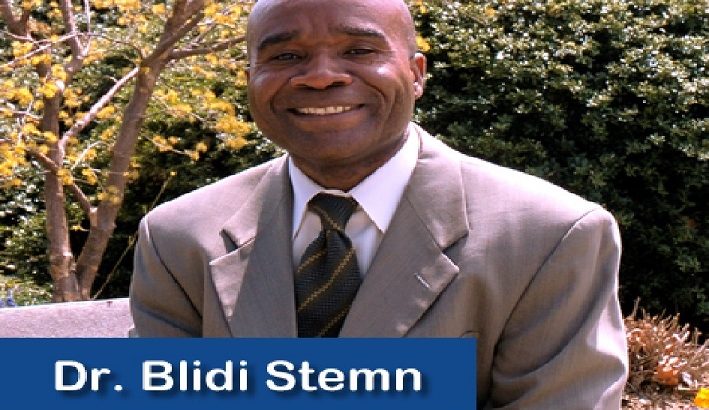
The dreams and aspiration of the foundation of this NGO came to spotlight when in 2008 its Executive Director and Founder, Dr. Blidi Stemn, who has been in the field of education for more than two decades came to Liberia in a bid to mold the minds of the Country’s future leaders.

While in Liberia, Dr. Stemn extensively traveled across the country noticing the overcrowding of Liberian school classrooms with children who are ambitious of sound education sitting on lumber supported by cement blocks as they wrote with their notebooks on their laps. Most of the schools visited by Dr. Stemn were staffed with under qualified and untrained teachers who taught at grade levels they themselves had barely achieved.

In spite of the surmounting problems faced by schools and teachers as a result of the 14 years of civil unrest, Dr. Stemn came across some dedicated teachers with limited to no resources teaching in abandoned buildings and open areas. These teachers were making the best of the limited resources available to them at the time.

At the end of his visit to Liberia, this humanitarian and educator, Dr. Stemn established what is now called ‘Education First Academy’ in 2012 to provide quality education to children and youths in under-served communities particularly in southeastern Liberia, specific in Harper, Maryland County.

According to information gathered, in September 2012, Education First Academy started with 40 children from the early per-kindergarten to grade 2. Since its establishment, approximately 300 children are receiving quality education and the primary education program has been extended to include grade 3 through 6. Other programs include after-school remedial sessions, technology literacy, summer camps, and extracurricular activities are also offered at this unique educational setting.

Being aware that education is a treasure that can never be taken away, it must also be noted that it is one of the soundest predictors of well-being and economic stability; as Communities can flourish when families have access to quality early childhood education, high-performing schools and enrichment activities for their children, and when adults can get the skills training and continuing education they need to land and advance in living wage jobs.

Unfortunately, education continues to be the victim in post war Liberia with most of the better facilities found mainly in the capital Monrovia and its environs. According to recent report, approximately 62% of the children in Liberia are not enrolled in any form of primary education program. That’s why promoting educational opportunity is at the foundation of our work in under-served communities in Liberia.

In order to do more for the children of Liberia, Education First, Inc. is soliciting funding to construct its own facility to house Education First Academy in Harper, Liberia.  The enrollment at our current facility, which is privately owned, has increased its enrollment from 40 students in 2012 to 300 in 2016.

This $300,000 (United States Dollars) facility when completed will enable the founders to better provide quality education to approximately 500 students from pee-kindergarten through secondary school. Specifically, the facility will have an early childhood center, a primary school and a secondary school.

In addition, the facility will have administrative offices, school health and wellness center, a multimedia center, library, science and technology lab, multipurpose building for indoor activities, and a cafeteria for the school feeding program. The school will also provide community-based programs for adults, particularly women, outside of regular school hours.

The founders of Education First believe and are of the conviction that there are many people who could immensely wish to contribute to the cause of the future leaders in order for a safe and reliable conduit will be provided for people who want to help Liberia’s children from under-served and rural communities aspire to a brighter future, through access to a good education.

For the betterment and in the interest of the children of Liberia, the founders of Education First have vowed to guarantee donors and supporters who are of the desirous to contribute to the cause that every penny donated to this NGO will go towards the construction of this Education Complex.

Fuente noticia: http://gnnliberia.com/2017/04/24/education-first-u-s-based-liberian-initiative-improving-education-liberia/

Comparte este contenido:

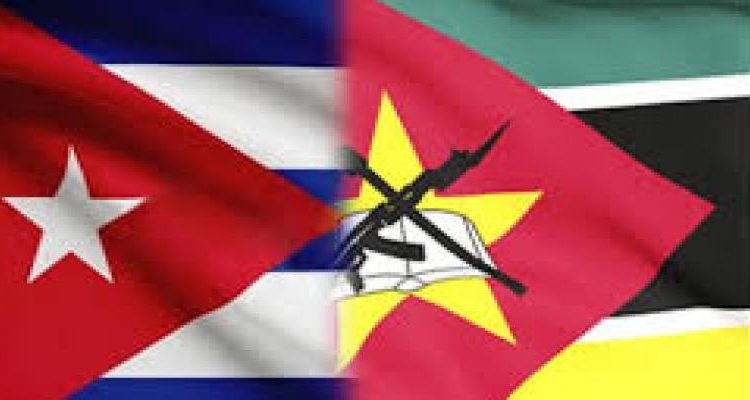
Cuba y Mozambique firman acuerdo de cooperación en educación

Maputo / 26 de abril de 2017 / Fuente: http://www.radiohc.cu

Jorge Penicela Nhambiu, titular del Ministerio de Ciencia y Tecnología, Enseñanza Superior y Técnico Profesional (MCTESTP) de Mozambique, y Raúl García Quiñones, Embajador de Cuba en Maputo, en representación del Ministerio de Educación de su país firmaron un acuerdo para desarrollar la cooperación en el sector.

El actual convenio prevé, entre otros objetivos, compartir las experiencias de Cuba en la enseñanza técnico profesional y de ciencias para fortalecer la formación y capacitación en el sistema educativo público mozambicano en el nivel medio y superior, precisa el sitio oficial del Ministerio cubano de Relaciones Exteriores (Cubaminrex).

El acuerdo se alcanza en el contexto de la celebración de los 40 años del viaje a la mayor isla del Caribe del primer grupo de estudiantes mozambicanos para cursar estudios desde nivel primario a superior, en diversas especialidades.

Esto fue posible gracias a la decisión tomada por el Comandante en Jefe Fidel Castro Ruz junto al líder de la independencia mozambicana, y primer presidente de Mozambique libre, Samora Machel, lo cual permitió la formación de miles de jóvenes del país africano en las más de cuatro décadas de relaciones bilaterales fraternales.

Fuente noticia: http://www.radiohc.cu/noticias/nacionales/127973-cuba-y-mozambique-firman-acuerdo-de-cooperacion-en-educacion

Comparte este contenido:

Educación en pro del ambiente

Por: Arminda García

El planeta ha sufrido graves cambios debido al mal uso de los recursos naturales, utilizados por el hombre para subsistir y progresar. Por esta razón, resulta prioritario hacer esfuerzos con el fin de tratar de revertir estos efectos tan dañinos. En este sentido, la educación ambiental puede aportar soluciones al problema, pues es una forma útil para evidenciar la relación que tiene la crisis ecológica, con la conducta inadecuada y el mal uso de los recursos naturales.

La educación ambiental consiste en todos los esfuerzos organizados y programados que deben cumplirse de forma continua, a través de estrategias educativas, para así lograr que los individuos tomen conciencia sobre la grave situación global. Asimismo, evidencia cuál es la conexión verdadera entre el comportamiento de los miembros de la sociedad y los daños ecológicos existentes, con el fin de lograr los cambios necesarios en su actitud, en beneficio del correcto uso de la naturaleza.

Igualmente, a través de la educación ambiental, se busca brindar la información vital, para que se formen criterios conservacionistas y tomen decisiones responsables. Así, busca enseñar a los individuos la importancia de contar con pensamientos críticos, demostrándoles mediante el aprendizaje las distintas caras del problema. Esta formación, se puede canalizar de manera formal o informal, a través de instituciones educativas, en la familia y en la sociedad.

Entre algunas de las razones que justifican la necesidad de desarrollar la educación ambiental se pueden mencionar que, en primer lugar, brinda a disposición de la sociedad información y conocimientos para que tengan una idea más clara de estos problemas globales, y así, tome conciencia para generar un compromiso personal y colectivo. Además, motiva la participación activa de los interesados en resolver la crisis ecológica.

De esta forma, permite a las personas formase hábitos más adecuados en cuanto a la utilización cuidadosa de los recursos naturales, que son tan necesarios para el avance del planeta. Por otro lado, facilita el análisis y el entendimiento de las causas que afectan al ambiente, así como la repercusión que tienen los modelos productivos para que puedan tomar las mejores decisiones.

Por último, cabe destacar que la educación ambiental solo podrá cumplir su cometido si se fortalece su presencia, tanto en la educación formal como en la informal, incluyéndola en pensum de estudios y realizando convocatorias o actividades con ese fin. Asimismo, se debe reforzar en el seno del hogar, pues es en la familia donde se forman los valores y se puede combatir la irresponsabilidad sembrando una cultura ecológica, a través de la formación de principios conservacionistas de sus miembros como base de la sociedad.

Fuente:http://www.el-nacional.com/noticias/columnista/educacion-pro-del-ambiente_178782

Comparte este contenido:
Page 340 of 622
1 338 339 340 341 342 622