Page 341 of 622
1 339 340 341 342 343 622

Negerian: Saraki Canvasses Comprehensive Education Reform

Negerian/25 April 2017/Source: http://www.promptnewsonline.com

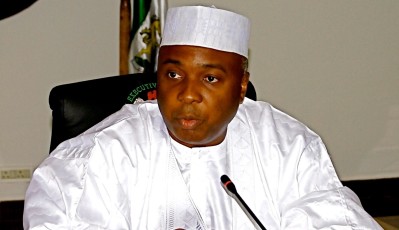
President of the Senate, Dr. Abubakar Bukola Saraki, has said that with the recent economic recession in the country, interventions in the nation’s educational system must no longer be business as usual.

In a statement signed by his Special Adviser on Media and Publicity, Yusuph Olaniyonu, the Senate President said there is a need for comprehensive education reform across all levels to ensure that Nigerian students and schools are competitive globally.

“Considering the economic situation in the country and the widening social inequality, we need to ensure that all Nigerians are well equipped for the future that lies ahead,” he said, “This means that any reform in education can no longer be business as usual — it must involve government, academia, and the private sector.

“What we all want to see is an educational system that is meeting the demands of the employers in both the public and private sectors,” the Senate President said, “ However, it goes beyond just reforming our school systems, we have to tackle this problem from the root, which is primary education, all the way to tertiary education, which is at the top.

“For example, basic education is the primary responsibility of the local governments. This needs to be reviewed. We have to look into and redesign the current education model that has domiciled the most important tier of education in the weakest tier of government.”

The Senate President also stated that all reform in education must be addressed from the simple perspective of: “What do we as Nigerians want our children to know and be able to do at each stage of their education?”

“Once we are able to answer this question, once we are able to determine what our children should know and be able to do at every age and level, from these expectations, we can begin to measure the competence of both teachers and students.”

The Senate President stated that over the next few months, the Senate will be working to restructure Nigeria’s education system by providing a legislative framework that will create more autonomy for Nigeria’s education system to make it more competitive locally and internationally.

Source:

Saraki Canvasses Comprehensive Education Reform


Comparte este contenido:

Kenyans Unhappy As Teens Say They Want Contraception

Kenya/25 april 2017/ By: /Source: All Africa

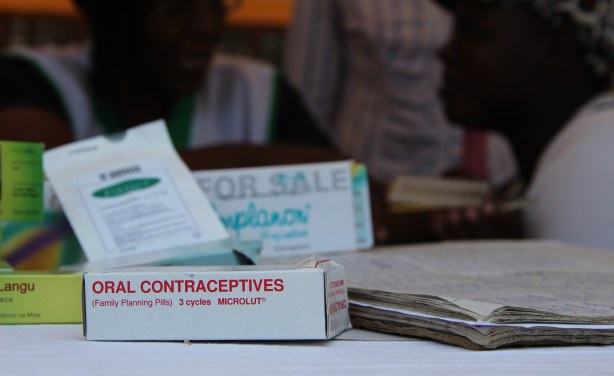
So our teenagers want to know where to get contraceptives and how to use them? A recent Daily Nation headline, «We want condoms, say teens», made that patently clear.

The clamour to give the devices to children as young as 10 is an all-too-familiar strategy of the American population control lobby.

They use opinion leaders, notably MPs, policymakers and actors, civil society groups, religious leaders and even the media to further an agenda with well-documented harmful effects on children.

The latest strategy shifts focus from the vested interests in the multibillion-dollar industry.

Did you know that the global market is projected to hit the Sh2 trillion mark by 2020 at a 3.1 per cent compound annual growth rate since 2014?

COST OF CONTRACEPTIVES

Did you also know that since fiscal year 2011-2012, the government has been covering the full cost of contraceptives, thanks to the 2010 Constitution, which treats reproductive health like any other health issue, never mind that nobody ever died from sexual starvation?

With constitutional bottlenecks removed, the remaining hurdle to channelling taxpayers’ billions to the Western contraceptive makers is that clause in the law, which regards anybody under 18 as a child incapable of consenting to sex.

SEXUAL OFFENCES ACT

Section 8 of the Sexual Offences Act stipulates penalties for having sex with under-18-year-olds:

– 8(1) A person who commits an act which causes penetration with a child is guilty of an offence termed defilement.

-8(2) A person who commits an offence of defilement with a child aged eleven years or less shall upon conviction be sentenced to life imprisonment.

-8(3) A person who commits an offence of defilement with a child between the age of twelve and fifteen years is liable upon conviction to imprisonment for a term of not less than 20 years.

A person who commits an offence of defilement with a child between the age of sixteen and eighteen years is liable upon conviction to imprisonment for a term of not less than 15 years.

SEX PESTS

Anybody having sex with an under-18 belongs in jail and should not be facilitated by dishing out contraceptives to prevent pregnancies and sexually-transmitted diseases inflicted by such sex pests.

But the old maxim that every man (and woman) has his price holds sway. The contraceptives industry is determined to expand the under-18s market in Kenya, which represents some 25 per cent of the population.

Their softest target is legislators, whose greed is comparable only to that of police, who consistently top Transparency International corruption charts.

Female lawmakers, who should be championing children’s wellbeing, have been lobbying to lower the age of consent to 16.

The lawmakers have fallen prey to contraceptive sellers’ ploys, thanks to their penchant for soliciting bribes to legislate in favour of unpopular causes.

PRO-ABORTION AGENDA

Vested interests drive the push to have contraceptives for children.

It can’t be by chance that Guttmacher Institute study claiming teens want to know where to get and how to use contraceptives coincided with the Teen Pregnancy Task Force Summit in Portland, Oregon, US, also associated with Guttmacher.

Guttmacher has an undisguised pro-abortion agenda as evidenced by its statement: «In the first quarter of 2017, there was an increased focus by abortion foes on legislation to ban abortion under various circumstances. This worrying trend could be driven by expectations that the US Supreme Court might uphold such laws in the future.»

Telling children about the dangers of contraceptives is neither moralistic nor is it meant to instil fear and guilt; it’s being factual. Isn’t it about time we exposed commercial interests that treat our children as a vast contraceptives market?

Ms Kweyu is a freelance writer and consulting editor.

Source:

http://allafrica.com/stories/201704240178.html

Comparte este contenido:

Ethiopia’s Youth Bulge – From Problem to Opportunity

Ethiopia/25 april 2017/By: /Source: All Africa

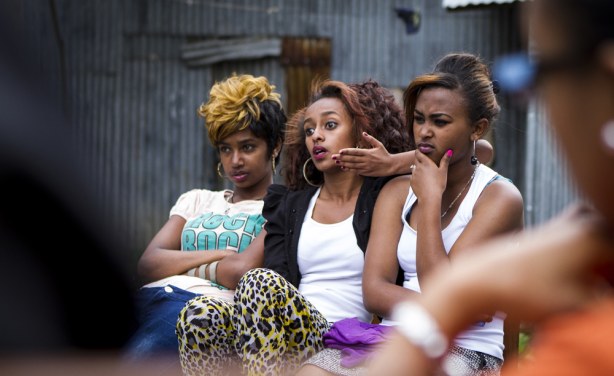
Ethiopia’s youth has come under the spotlight recently for their role in a political protest that is seen to be threatening stability. But Ethiopia’s youth bulge doesn’t need to be a political problem. It can be converted to an economic muscle.

Over the past 12 years Ethiopia has been lauded as one of the fastest growing economies in the world with average Gross Domestic Product (GDP) growth of 10.8%. It has also seen a significant decline in poverty. In 2004 it had a poverty rate of 39% which had fallen to 23% by 2015.

But there’s a cloud hanging over the country. In 2016 it was hit by a drought that affected 10 million people. And a new drought has emerged again this year.

2016 also saw an outbreak of political protest. Although things are relatively calmer now, the state of emergency that was declared in October 2016 has been extended.

But Ethiopia still has a lot going for it, including a large youth population – over 70% of the country’s population is under 30 years of age. This could be turned to a massive advantage if backed by appropriate policies.

Ethiopia’s demographic profile mirrors China’s in the 1980s and of East Asian countries in the 1950s. The spectacular economic growth in East Asia in the second half of the 20th century is partly attributed to the demographic transition that supplied the economies with a young work force. The key to reaping this demographic dividend is, of course, that there are jobs for those joining the labour force.

While a young population can be a positive economic factor, it can also be a political risk in an economy that doesn’t create enough opportunities.

Until recently Ethiopia had avoided large scale political upheaval among young people. This was partly due to the government’s tight control of youth groups and surveillance of their activities. But recent unrest with youth at the helm signals huge problems, indicating that their livelihood and unemployment issues can no longer be suppressed or ignored. Addressing the problem head on is the smarter thing to do.

The problem

Every year more than a million young Ethiopian men and women join the labour market. But the economy produces far fewer new jobs and opportunities. This is partly due to the structural make up of the largely agrarian economy.

Over 80% of Ethiopians live in rural areas. While the agricultural sector in Ethiopia has declined significantly as a contributor to the economy in the past decade and now accounts for less than 50% of the national product, it still employs more than 70% of the labour force.

Historically, most people who were born in rural areas tended to settle there. But land scarcity and population growth, coupled with limited non-farm employment opportunities has started pushing young people into the urban areas.

There aren’t enough jobs for them there either. Official statistics show that 30% of 20 to 24 year-olds in urban areas are unemployed. Some studies suggest that the actual rate is as high as 50%.

National level labour surveys and other studies suggest that young people with secondary education or more are the ones missing out the most from the flourishing economy. Many – about 70% – join the labour market with little or no practical or specialised training past the general secondary education.

High aspirations and expectations

High levels of unemployment among educated young people is a troubling phenomenon. The country’s youth have increasingly higher aspirations and expectations due to the possibilities they see, given the country’s economic growth. They also have high expectations of what they believe they deserve as relatively educated people.

But not only are there no jobs, wages are often not high enough to support high living costs.

This gap between aspirations and economic reality is clearly becoming increasingly frustrating.

In focus groups of young people in different parts of southern Ethiopia we captured a deep sense of hopelessness and a fear that they would remain trapped in poverty.

For those living with their parents the main concern was that unemployment was «waiting for them» when they finished school. Many said that they previously thought that hard work at school was the way out of the life of poverty their parents had endured. Many were clearly itching to do something about their lives.

One sign of this pent up frustration is the surge in young people choosing to take the risk of irregular international migration even when they’ve been warned about the risks.

Way forward

Ethiopia’s youth bulge can be an engine for growth as international companies look to set up operations where they can access low wage labour. On top of that, an increase in the number of young people working would boost demand and investment in the country.

But to transform young people into an engine of growth requires improving access to employment.

The government should create an enabling environment for the private sector by improving the country’s dismal business environment.

At the same time, it should design effective employment programmes. It’s recent effort to increase job opportunities for unemployed young people is a step in the right direction. But policymakers, politicians and those implementing policies should resist the temptation to use access to jobs and employment as a political tool.

Disclosure statement

Sosina Bezu does not work for, consult, own shares in or receive funding from any company or organization that would benefit from this article, and has disclosed no relevant affiliations beyond the academic appointment above.

Read the original article on The Conversation Africa
Comparte este contenido:

Egipto: los cristianos denuncian el odio que se estimula en su contra en escuelas y mezquitas

Egipto/24 abril 2017/Fuente: Enlace Judio

Tras los ataques terroristas a iglesias coptas, apuntan a una segregación que comienza desde la infancia.

Los cristianos coptos de Egipto, que han sido blanco de recientes ataques terroristas, han denunciado que durante años los imanes musulmanes predican el odio y la violencia públicamente por medio de altavoces.

Luego de los brutales ataques sobre la comunidad cristiana pareciera que estos están perdiendo el miedo. El diario egipcio Al Watan ha publicado esta semana varias entrevistas a ciudadanos cristianos. “Es muy común que los imanes prediquen el odio y la violencia contra nosotros por altavoces dentro o fuera de las mezquitas” dijo Antoine, un copto de los suburbios de El Cairo. Incluso en suelo occidental, la doctrina de la yihad está siendo predicada en muchas mezquitas y centros islámicos contra cristianos, judíos, infieles, apóstatas y gays, amplio este artista plástico que reside en Italia hace 4 años y pidió reserva de su identidad.

“Los devotos musulmanes recitan la primera parte del Coran o Fatiha (الفاتحة ) una docena de veces al día rechazando a cristianos y judíos. Esto es muy grave, porque se convierte en una amenaza a la seguridad de las personas cuando se mezcla con la doctrina yihadista”, agrego Merah.

El Fatiha (sura 1 del Corán) dice: “Guíanos por el sendero recto, el sendero de aquellos sobre los cuales Tú has otorgado favor, no de aquellos que han evocado tu ira o de los que están extraviados”.

El influyente estudioso sunita Ibn Kathir explicó en su momento este pasaje de la siguiente manera. “Los dos caminos que describió como equivocados son los caminos de los cristianos y los judíos, siendo eso un hecho que el creyente debe tener cuidado y evitar”. El camino de los creyentes es el conocimiento de la verdad y el cumplimiento de ella.

En comparación, según Khatir, los judíos abandonaron la práctica de la religión, mientras que los cristianos perdieron el verdadero conocimiento. Esta es la razón por la cual la “ira” descendió sobre los judíos, mientras que se describe como “extraviados” a los cristianos.

Ibn Kathir explica sobre otro verso del Corán que indica: “aquellos a quienes Allah ha maldecido porque lo enojaron” acabaron transformados en “simios y cerdos” (Corán 5:60). En consecuencia, cristianos y judíos son rechazados por Allah y dignos de su ira.

Hace años, la doctrina de interpretación Wahhabi llamó la atención incluso dentro del mundo musulmán por agregar a la Fatiha palabras explicitas como “los judíos” y “los cristianos” a frases sobre este pasaje en ejemplares del Coran que se imprimía en Arabia Saudita”.

Un doble atentado contra iglesias cristianas en Egipto dejó 45 muertos el pasado 9 de abril (@Conflicts)

Es espantoso conocer el odio que los imanes imponen a los cristianos en nombre del Islam justo después de los mortales ataques a las iglesias en Egipto. Pero el odio y la intolerancia son comunes en sus sermones. Dice Antoine.

“Los musulmanes invocaron la ira de Dios contra los cristianos” desde los altavoces de varias mezquitas antes de los ataques terroristas a las Iglesias”, publico Stoyan Zaimov, en The Christian Post, el 13 de abril de 2017.

Michel Fahmy, residente de El Cairo, dijo a la AFP en un informe del miércoles que los imanes locales continúan difundiendo sermones desde los altavoces de las mezquitas “invocando la ira de Dios sobre los cristianos”. “En las mezquitas hay oraciones que dañan a los cristianos”, dijo Fahmy, señalando que algunos sermones están específicamente dirigidos contra ellos, siendo llamados “enemigos del Islam”.

“Incitan a la violencia a los jóvenes a quienes inyectan odio contra nosotros para que actúen salvajemente”, agregó Fahmy, dueño de una tienda de artículos regionales.

“Nos concierne a todos: Estas conductas llevan al terrorismo y los cristianos son el blanco”, titula el periódico egipcio pro-gubernamental en otra nota sobre los ataques a las iglesias.

Cuarenta y cinco personas fueron masacradas en los ataques a las iglesias en Alejandría y Tanta días pasados, su autoría fue reivindicada por el grupo terrorista Estado islámico (ISIS). Ha habido gran numero de otros ataques en los últimos meses y años, incluyendo el del 11 de diciembre de 2016, un planificado atentado suicida en una iglesia de El Cairo, semanas antes de Navidad.

La última masacre fue tan devastadora que obliga a algunas iglesias a cancelar sus celebraciones normales anunció la Diócesis Ortodoxa Copta de Minya, a pesar de recibir garantías en la seguridad del presidente Al Sisi, cuando comunicó que limitará sus misas y oraciones litúrgicas.

Fahmy sugirió que parte del problema es la forma en que los jóvenes son educados. “La sociedad no enseña a los jóvenes que los musulmanes y coptos no deben ser enemigos, la educación juega un papel importante”, dijo.

Lillian Anis, una mujer copta que trabaja en una tienda de ropa, señaló que los cristianos son considerados una clase social inferior y una clase religiosa inadmisible por parte de los musulmanes.

“El problema comienza en la escuela donde los niños son tratados de manera diferente”, dijo Anis. “En la escuela algunos se negaron a hablarme porque yo era cristiana”; y lo peor es la negación y el ocultamiento por parte de los musulmanes de que todo esto esta sucediendo, agregó.

Fuente: http://www.enlacejudio.com/2017/04/22/egipto-los-cristianos-denuncian-odio-se-estimula-en-contra-en-escuelas-mezquitas/

Comparte este contenido:

Más de 1,5 millones de niños, en riesgo por la violencia en la república democrática del congo

República Democrática del Congo/24 abril 2017/Fuente: ecodiario

La crisis en la región de Kasai, en la República Democrática del Congo, tiene «un impacto devastador» en la infancia porque más de 1,5 millones de niños, incluidos los 600.000 que ya se han visto desplazados de sus hogares, están en riesgo debido al conflicto, según señaló este viernes Unicef (Fondo de las Naciones Unidas para la Infancia).

Tras visitar la región afectada, Tajudeen Oyewale, representante interino de Unicef en la República Democrática del Congo, afirmó en un comunicado que «los niños están siendo obligados a soportar un sufrimiento horrible en Kasai».

«Cientos de niños han resultado heridos debido a la violencia. Nos han informado de que hay niños detenidos, violados e incluso ejecutados. No podemos permitir que continúe este abuso horrible contra los niños. Los responsables deben rendir cuentas», añadió.

La violencia y la inestabilidad en las provincias de Kasai, una de las regiones más pobres del país, comenzó en agosto del año pasado, cuando un líder fue asesinado en un combate con las fuerzas de seguridad. La situación ha empeorado en los tres primeros meses de 2017.

Según Unicef, unos 2.000 niños están siendo utilizados por las milicias en la región afectad, al menos 300 han sido gravemente heridos por la violencia y más de 4.000 han quedado separados de sus familias.

Además, subrayó que la violencia ha tenido un impacto devastador en los sistemas educativo y sanitario, ya que más de 350 escuelas han sido destruidas y uno de cada tres centros de salud ya no está operativo en la provincia de Kasai Central, lo cual pone a los menores en un mayor riesgo de contraer enfermedades.

«Estos niños deberían estar a salvo en sus casas, en las escuelas y en los parques infantiles, no obligados a combatir, o heridos o asesinados», apuntó Oyewale.

Esta agencia de la ONU advirtió de que seis millones de niños (toda la población infantil de las tres provincias de Kasai) están en riesgo si la situación no mejora rápidamente.

La organización ha garantizado la liberación de 384 niños detenidos o retenidos en la región, que previamente estaban en las milicias. Además, ha ampliado su respuesta de emergencia con el fin de proporcionar servicios de salud, nutrición, protección, educación, agua y saneamiento y artículos no alimenticios a cerca de 173.000 personas.

Por último, Unicef hizo un llamamiento a todas las partes del conflicto para que garanticen el cumplimiento de los derechos de los niños. Hasta ahora, la organización solo ha recibido 3,5 millones de dólares (3,2 millones de euros) de los 20,6 millones (19,2 millones de euros) que necesita para dar respuesta a esta crisis en Kasai.

Fuente noticia : http://ecodiario.eleconomista.es/sociedad/noticias/8308018/04/17/Mas-de-15-millones-de-ninos-en-riesgo-por-la-violencia-en-la-republica-democratica-del-congo.html

Fuente imagen: http://static.un.org/News/dh/photos/large/2017/April/04-21-2017Kasai.jpg

Comparte este contenido:

Ethiopia’s Youth Bulge – From Problem to Opportunity

Ethiopía/24 de Abril de 2017/Allafrica

Resumen: La juventud de Etiopía ha estado bajo el reflector recientemente por su papel en una protesta política que se ve amenaza la estabilidad. Pero el boom de la juventud de Etiopía no necesita ser un problema político. Se puede convertir en un músculo económico.

Ethiopia’s youth has come under the spotlight recently for their role in a political protest that is seen to be threatening stability. But Ethiopia’s youth bulge doesn’t need to be a political problem. It can be converted to an economic muscle.

Over the past 12 years Ethiopia has been lauded as one of the fastest growing economies in the world with average Gross Domestic Product (GDP) growth of 10.8%. It has also seen a significant decline in poverty. In 2004 it had a poverty rate of 39% which had fallen to 23% by 2015.

But there’s a cloud hanging over the country. In 2016 it was hit by a drought that affected 10 million people. And a new drought has emerged again this year.

2016 also saw an outbreak of political protest. Although things are relatively calmer now, the state of emergency that was declared in October 2016 has been extended.

But Ethiopia still has a lot going for it, including a large youth population – over 70% of the country’s population is under 30 years of age. This could be turned to a massive advantage if backed by appropriate policies.

Ethiopia’s demographic profile mirrors China’s in the 1980s and of East Asian countries in the 1950s. The spectacular economic growth in East Asia in the second half of the 20th century is partly attributed to the demographic transition that supplied the economies with a young work force. The key to reaping this demographic dividend is, of course, that there are jobs for those joining the labour force.

While a young population can be a positive economic factor, it can also be a political risk in an economy that doesn’t create enough opportunities.

Until recently Ethiopia had avoided large scale political upheaval among young people. This was partly due to the government’s tight control of youth groups and surveillance of their activities. But recent unrest with youth at the helm signals huge problems, indicating that their livelihood and unemployment issues can no longer be suppressed or ignored. Addressing the problem head on is the smarter thing to do.

 The problem

Every year more than a million young Ethiopian men and women join the labour market. But the economy produces far fewer new jobs and opportunities. This is partly due to the structural make up of the largely agrarian economy.

Over 80% of Ethiopians live in rural areas. While the agricultural sector in Ethiopia has declined significantly as a contributor to the economy in the past decade and now accounts for less than 50% of the national product, it still employs more than 70% of the labour force.

Historically, most people who were born in rural areas tended to settle there. But land scarcity and population growth, coupled with limited non-farm employment opportunities has started pushing young people into the urban areas.

There aren’t enough jobs for them there either. Official statistics show that 30% of 20 to 24 year-olds in urban areas are unemployed. Some studies suggest that the actual rate is as high as 50%.

National level labour surveys and other studies suggest that young people with secondary education or more are the ones missing out the most from the flourishing economy. Many – about 70% – join the labour market with little or no practical or specialised training past the general secondary education.

 High aspirations and expectations

High levels of unemployment among educated young people is a troubling phenomenon. The country’s youth have increasingly higher aspirations and expectations due to the possibilities they see, given the country’s economic growth. They also have high expectations of what they believe they deserve as relatively educated people.

But not only are there no jobs, wages are often not high enough to support high living costs.

This gap between aspirations and economic reality is clearly becoming increasingly frustrating.

In focus groups of young people in different parts of southern Ethiopia we captured a deep sense of hopelessness and a fear that they would remain trapped in poverty.

For those living with their parents the main concern was that unemployment was «waiting for them» when they finished school. Many said that they previously thought that hard work at school was the way out of the life of poverty their parents had endured. Many were clearly itching to do something about their lives.

One sign of this pent up frustration is the surge in young people choosing to take the risk of irregular international migration even when they’ve been warned about the risks.

Ethiopia’s youth bulge can be an engine for growth as international companies look to set up operations where they can access low wage labour. On top of that, an increase in the number of young people working would boost demand and investment in the country.

But to transform young people into an engine of growth requires improving access to employment.

The government should create an enabling environment for the private sector by improving the country’s dismal business environment.

At the same time, it should design effective employment programmes. It’s recent effort to increase job opportunities for unemployed young people is a step in the right direction. But policymakers, politicians and those implementing policies should resist the temptation to use access to jobs and employment as a political tool.

Disclosure statement

Sosina Bezu does not work for, consult, own shares in or receive funding from any company or organization that would benefit from this article, and has disclosed no relevant affiliations beyond the academic appointment above.

Fuente: http://allafrica.com/stories/201704190823.html

Comparte este contenido:

Túnez se propone erradicar el trabajo infantil

Túnez/24 abril 2017/Fuente: El País

Basta dar un paseo matinal por el centro de Túnez, por las abarrotadas calles alrededor del Mercado Central, para comprobar que el trabajo infantil es todavía un serio problema en el país magrebí. Muchos de los vendedores ambulantes detrás de docenas de tenderetes, armados con cajas de cartón y mantos, son adolescentes. Algunos, niños de apenas 10 años. Desde hace meses, la policía juega con ellos al gato y al ratón. A veces les confisca el material, la mayoría se conforma con ahuyentarlos, pero nunca intenta hacer cumplir las convenciones internacionales relativas a la protección de la infancia firmadas por Túnez. Según la propia ley nacional, está prohibido emplear a menores de 16 años.

Sin embargo, el Gobierno realizó el pasado martes una propuesta de enmienda al presentar un proyecto en colaboración con la Organización Mundial del Trabajo para poner fin a esta práctica bajo el lema Todos contra el trabajo de los niños en Túnez. Según explicó el ministro de Asuntos Sociales, Mohamed Trabelsi, “este fenómeno ha alcanzado los últimos años una cierta dimensión, sobre todo con la situación actual de Túnez, una situación de transición”. Golpeada por la caída del turismo y el marasmo de la vecina Libia, su principal socio comercial, la economía tunecina permanece estancada desde hace seis años.

Actualmente, no existen datos fiables sobre la gravedad de esta lacra. Por eso, uno de los componentes del proyecto será llevar a cabo un detallado estudio al respecto con una muestra de 15.000 hogares. Su publicación está prevista para septiembre. Ahora bien, es indicativo que cada año unos 100.000 menores, la mayoría niñas, pongan fin a sus estudios de forma prematura, sin terminar el periodo de escolarización obligatorio de hasta los 16 años.

De acuerdo con las autoridades, los sectores más afectados por la explotación laboral infantil son la agricultura, sobre todo en las granjas familiares, los pequeños talleres artesanales, comercios como garajes y peluquerías, y el servicio doméstico.

Fuente:http://elpais.com/elpais/2017/04/21/opinion/1492775125_443023.html

Comparte este contenido:
Page 341 of 622
1 339 340 341 342 343 622