Page 506 of 622
1 504 505 506 507 508 622

Eritrea: College of health science and technology graduates 367 students

África/Eritrea/10 Julio 2016/Fuente y Autor:Shabait

Resumen: El Colegio asmara de Ciencia y Tecnología de la Salud graduó el 2 de julio a 367 estudiantes en los diferentes campos de estudio. 40% de los graduados son mujeres, 124 de los estudiantes graduados en grado y 243 en Diploma.

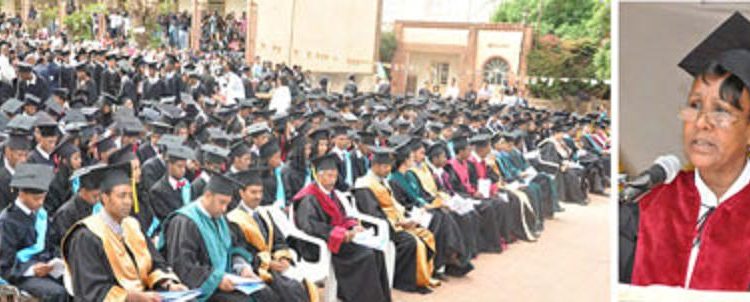
The Asmara College of Health Science and Technology graduated on 2 July 367 students in different fields of study. 40% of the graduates are females. 124 of the students graduated in Degree and 243 in Diploma.

At the graduation ceremony conducted at the Asmara University premises, Prof. Tadesse Mehari, Executive Director of the Commission of Higher Board of Education, congratulated the students on the special day of their education.

The Dean of the Asmara College of Health Science and Technology, Dr. Ghidei Gebrehannes pointed out that the college has registered a commendable progress in terms of upgrading the human resources development and thus improving the health care services nationwide. He further called on the graduates to live up to the people’s expectations.

Noting that the Government is giving utmost priority to ensuring the health of the society, Ms. Amina Nur-Husein, the Minister of Health, indicated that the graduates assigned to the different parts of the country are significantly contributing to the improvement of the health care provision to the society.

The Minister further called on the graduates to serve their people with honesty and dedication.

The graduates on their part expressed appreciation for the opportunity they were provided and reiterated readiness to live up to expectations.

The Asmara College of Health Science and Technology has so far graduated 2,950 students since its establishment in 1999.

Fuente de la noticia: http://www.shabait.com/news/local-news/22121-college-of-health-science-and-technology-graduates-367-students

Fuente de la imagen: http://www.shabait.com/images/stories/sawa/july-5-news-health1.jpg

Comparte este contenido:

Uganda: Universities to benefit from world bank Shs469 billion support

África/Uganda/10 Julio 2016/Fuente: Monitor/Autor: Dorothy Nakaweesi

Resumen: Uganda ha sido seleccionado entre los ocho países de África oriental y meridional para beneficiarse del crédito de $ 140 millones (Shs469b) de la Asociación Internacional de Fomento (AIF) del Grupo del Banco Mundial. De acuerdo con un comunicado emitido del Banco Mundial, esta línea de crédito se canalizará a través de los Southern Africa Centros de Educación Superior del Este y del Proyecto de Excelencia (ACE II) de los países participantes – principalmente de Etiopía, Kenia, Malawi, Mozambique, Ruanda, Tanzania, Uganda y Zambia.

Uganda has been selected among eight Eastern and Southern African Countries to benefit from the $140m (Shs469b) credit of the International Development Association (IDA) of the World Bank Group.

According to a communiqué issued early this week from the World Bank, this line of credit will be channeled through the Eastern and Southern Africa Higher Education Centres of Excellence Project (ACE II) of participating countries – of mainly Ethiopia, Kenya, Malawi, Mozambique, Rwanda, Tanzania, Uganda and Zambia.

«The objective of the ACE II project is to strengthen selected Eastern and Southern Africa higher education institutions to deliver quality postgraduate education and build collaborative research capacity in the regional priority areas,» the communiqué noted.

The selected ACEs are expected to address specific development challenges facing the region through graduate training in Master’s, PhD, and short-term courses and applied research in the form of partnerships and collaborations with other institutions and the private sector.

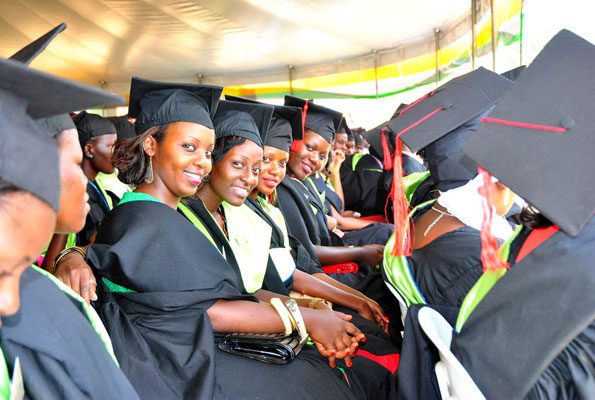
A total of 24 Africa Centres of Excellence (ACE) will each be funded up to $6m (Shs20b) over the project period of five years.

It is envisaged that at the end of the project the centres will have developed sufficient capacity to become sustainable regional hubs for training and research in their specialised fields, capable of leading efforts to address priority development challenges and improve lives in the region.

The ACE II project is expected to close in October 2021.

Criteria

The ACEs were selected through an open, objective, transparent and merit-based competitive process based on the following criteria like proposal writing that addressed a specific challenge in one of the five priority areas in the region–industry, agriculture, health, education and applied statistics.

Highest quality proposal, hosting institution had evident capacity, selection that provided for geographical balance and the hosting country had International Development Association (IDA) funding eligibility and availability.

ACEs’ Role

According to WB, all these ACEs are expected to perform the following tasks:

– Build institutional capacity to provide quality post-graduate education with relevance to the labour market.

– Build institutional capacity to conduct high quality applied research, relevant to addressing a key development challenge/priority.

– Develop and enhance partnerships with other academic institutions (national, regional and international) to pursue academic excellence.

– Enhance and develop partnerships with industry and the private sector to generate greater impact.

– Improve governance and management of the institution and set up a role model for other higher education institutions.

– Deliver outreach, and create an impact to society by delivering excellent teaching and producing high quality applied research.

Expected results

According to the WB, over the project duration of five years collectively these ACEs are expected to enroll more than 3,500 graduate students in the regional development priority areas.

«Out of which more than 700 will be PhD students and more than 1,000 will be female students,» the statement says.

The ACEs are expected to publish almost 1,500 journal articles, launch more than 300 research collaborations with the private sector and other institutions, and generate almost $30m (Shs100b) in external revenue.

The Inter-University Council for East Africa (IUCEA), a coordinating higher education institution of the East African Community, was selected by the Regional Steering Committee (RSC) of the ACE II project as the Regional Facilitation Unit (RFU).

Beneficiaries

The four ACEs from Uganda to benefit from this programme are:

– Makerere University Centre for Crop Improvement (MaCCI)

– Centre of Materials, Product Development & Nanotechnology (Mapronano)-Makerere University

– African Centre for Agro-ecology & Livelihood Systems (Acalise) – Uganda Martyrs University

– Pharm-Biotechnology & Traditional Medicine Center (Pharmtac) – Mbarara University of Science & Technology

Fuente de la noticia: http://www.monitor.co.ug/Magazines/Jobs-Career/Ugandan-Universities-to-benefit-from-World-Bank-shs469b-support/-/689848/3274706/-/awwl09/-/index.html

Fuente de la imagen: http://www.monitor.co.ug/image/view/-/3274712/highRes/1368810/-/maxw/600/-/113dyx9z/-/job01pix.jpg

Comparte este contenido:

Senegal: Global academic collaboration: a new form of colonisation?

África/Senegal/Julio 2016/Autor: Hanne Kirstine Adriansen / Fuente: theconversation.com

Resumen:  La educación superior en África es tan antigua como las pirámides de Egipto. Pero las instituciones más antiguas del continente desaparecieron hace tiempo. El tipo de educación superior que se entrega hoy en África, desde el curriculum a las estructura de los estudios y de las lenguas de instrucción, tiene sus raíces en el colonialismo. Esto ha llevado a muchos a preguntarse si las universidades africanas siguen sufriendo una especie de colonización – de la mente.

Higher education in Africa is as old as the pyramids in Egypt. But the continent’s ancient institutions have long disappeared. The type of higher education that’s delivered in Africa today, from curriculum to degree structure and the languages of instruction, is rooted in colonialism. This has led many to question whether African universities are still suffering from a sort of colonisation – of the mind.

The story of renowned climate change researcher Cheikh Mbow is an example. Mbow was born in Senegal in 1969 and studied there. Looking back at his experiences during his first years of university, Mbow observes: “I knew all about the geography and biology of France but nothing about that of Senegal.”

Mbow also happens to be my friend, and together with one of his colleagues we wrote a book chapter about the production of scientific knowledge in Africa today. The chapter is based on Mbow’s life story – which I’ll return to shortly.

In recent years a new consciousness has emerged about higher education’s historical roots. People are calling strongly for a decolonised academy. This feeds into a broader debate about the role of modern universities.

There’s little doubt that Africa’s universities need to be locally relevant – focusing their teaching and research on local needs. Unavoidably, though, they’re simultaneously expected to internationalise and participate in the heated global higher education competition. Standardisation is the name of the game here. Universities compete to feature on global ranking lists, mimicking each other.

Internationalisation also sees African researchers like Mbow travelling North in search of research environments with better resources. These international collaborations can be hugely beneficial. But all too often it’s organisations, universities and researchers in the global North that call the shots.

So how can the continent’s universities manage the tricky balance between local relevance and internationalisation? How can they participate in international collaboration without being “recolonised” by subjecting themselves to the standards of curriculum and quality derived in the North? How can they avoid collaborative programmes with the North that become mere tick-box exercises that only benefit the Northern researchers and organisations?

International collaboration grows

Over the past 20 years, international interest in African higher education has intensified. Aid agencies in the North have developed policies that are designed to strengthen Africa’s research capacity. Scandinavian countries were among the first to do so: Denmark has the Building Stronger Universities programme. Norway and Sweden have similar collaborative programmes.

Such initiatives are important. Research funding is very limited at African universities. National higher education budgets are quite low, especially compared with universities in the North. In their bid to educate rapidly growing populations, African universities tend to emphasise teaching rather than research. So these institutions rely heavily on external funding for research and depend on support from development agencies via so-called capacity building projects. These projects engage researchers from the North and South in joint activities within teaching and research, ideally to create partnerships based on mutual respect.

Many researchers from universities in the North and South are involved in these collaborative projects, usually as practitioners. Only rarely do we turn these collaborative projects into a research field, turning the microscope on ourselves and our own practice. After participating in a capacity building project in Africa, some colleagues and I became interested in understanding the geography and power of scientific knowledge.

We wanted to know how this power and geography is negotiated through capacity building projects. We also sought to understand whether such projects functioned as quality assurance or a type of neo-imperialism.

Simply put, our research explored whether capacity building and the tendency towards increased international collaboration in higher education is helping or hindering African universities. The answer? Both.

‘Monocultures of the mind’

The problem with such projects is that they might create what Indian activist Vandana Shiva calls “monocultures of the mind”. Shiva argues that these make diversity disappear from perception and consequently from the world. People all end up thinking in the same ways.

International collaboration can cause African universities to become more dependent on the North. Their dependence is on funding; through publication in journals from the North; and through technology that only exists in the North. It also manifests in thinking mainly using concepts and solutions developed in the North.

Another problem is that this international collaboration may draw African universities into the competition fetish that dominates higher education today. This may help them to become globally competitive. But they risk losing their local relevance in the process.

Capacity building projects risk creating Shiva’s monocultures of the mind. But they can also have the opposite effect: they can empower African researchers and help them to become more independent.

Empowerment through capacity building

For Cheikh Mbow, the North represented both an imposed curriculum through colonial heritage and the chance to acquire the skills needed to become an emancipated academic capable of creating new knowledge.

His PhD project explored natural resource management in Senegal “but using methods designed in the global North, in particular from France”. During his project he travelled from Senegal to Denmark and was exposed to another way of behaving. At his home institution, the Université de Cheikh Anta Diop in Dakar, questioning the knowledge and methods of older professors was perceived as misbehaviour. In Denmark he experienced a different system. There he was asked to question what was taken for granted even if it meant questioning older professors.

Paradoxically, the Danish system enabled Mbow to become an independent researcher. He became aware of how knowledge and methods inherited from the North were used in an African context without being questioned.

This is precisely what the African academy – and its societies more broadly – require.

Collaboration to decolonise

I would argue that collaborative projects such as capacity building programmes can be a means to assist African universities in producing contextualised knowledge. These projects can even lead to some sort of decolonisation of the academy if they are based on long-term partnerships, a close understanding of historical, political and geographical context, and not least a common exploration of knowledge diversity.

Fuente de la noticia: https://theconversation.com/global-academic-collaboration-a-new-form-of-colonisation-61382

Fuente de la imagen: https://62e528761d0685343e1c-f3d1b99a743ffa4142d9d7f1978d9686.ssl.cf2.rackcdn.com/files/128962/width926/image-20160701-18306-1fjureg.jpg

Comparte este contenido:

Namibia: Africa, Technology Is Important in Education

Africa/Namibia/Julio 2016/Autor: Editor/ Fuente: allafrica.com

Resumen:  El Director Ejecutivo de Recursos para el Aprendizaje en Pearson Education Africa, Brian Wafararowa, se reunió con funcionarios del gobierno y los educadores a principios de esta semana en Windhoek, como parte de su serie de Diálogos de Educación de África, que se llevará a cabo en más de 30 países.

Executive Director Learning Resources at Pearson Education Africa, Brian Wafararowa met with government officials and educators earlier this week in Windhoek, as part of their African Education Dialogues series, that will be held in over 30 countries.

«We aim to educate 1 million people with quality education,» he said, when he addressed the topic ‘Providing solutions to the challenges of education and quality of learning in Africa, from early childhood to higher education’. Wafararowa emphasised on the importance of using technology in the classroom to ensure that skills imparted to the learners are equipping them for the needs of the 21st Century. «Technology does not have or need to be complicating or complicated, it can be as simple as communication via WhatsApp, between teachers, students and parents,» he added.

He said that Africa’s future and success is its population and even thought most people focus on the negatives, it does not mean that progress has not and is not being made in improving education. «Education clearly is the ticket out of poverty, as I am sure the 91% of Namibian graduates who are employed would agree,» he said.

«At Pearson we know that learning must be lifelong, and the skills obtained must be relevant and up to date and the qualifications that our hard earned money is spend on must be internationally recognized and valid,» added Wafararowa. The breakfast was concluded with a panel discussion which included, Ilana Carlitz from the Institute of Open Learning (IOL), Fritz David from the National Institute for Educational Development (NIED) and Peter Reiner an education specialist.

The panelists were all in agreement that education is the key, and quality education should start at an early age and learners should be able to use what they have learned in their lives.

After the breakfast dignitaries took a trip to Blowkrans Primary School in Dordabis and handed over a cheque of N$30,000 to Lucas Bock the school principal, which will be used for upgrades at the school.

Fuente de la noticia: http://allafrica.com/stories/201607010669.html

Fuente de la imagen: https://www.google.co.ve/search?q=windhoek+university+namibia&espv=2&biw=1366&bih=683&source=lnms&tbm=isch&sa=X&sqi=2&ved=0ahUKEwjv-5bWsuXNAhVJOiYKHYQIDuUQ_AUIBygC

Comparte este contenido:

MOOCs have a massive potential market in Africa

Comparte este contenido:

Africa: Waverley Girls’ High receives solar-powered classroom

Alta Waverly de las niñas recibe el aula con energía solar 

África/Sudafrica /de julio del 2016 /Noticias /www.itnewsafrica.com

Dell abrió su noveno Laboratorio de Aprendizaje de energía solar en África del Sur en High Waverley de las niñas. Según la compañía, la apertura del Laboratorio de Aprendizaje de energía solar en la escuela proporcionará tecnología de clase mundial y la conectividad a cientos de niñas de comunidades con escasos servicios en Alejandría y Hillbrow.

Parte de 2020 legado de buen plan de Dell , que tiene como objetivo poner su tecnología y experiencia para trabajar donde se puede hacer el mayor bien para las personas y el planeta, Dell Laboratorios de Aprendizaje de energía solar proporcionan acceso a la tecnología directa a más de 5.000 estudiantes de escasos recursos en las comunidades donde la infraestructura de tecnología es limitada. Esta asociación específica en alta Waverley de las niñas es sólo uno de los proyectos de Dell y Sci-Bono han colaborado . Esto no es sólo una lucha por la escuela para competir y ofrecer las mismas facilidades que rodea a las escuelas privadas, pero sigue tratando de animar y preparar a las niñas para entrar en la industria de TI.

Natasha Reuben, Jefe de Transformación en Dell Sudáfrica afirma que: «Proporcionar una educación de clase mundial es un desafío permanente en todo el mundo en desarrollo, incluyendo África, América del Sur y Asia. Las apuestas son demasiado altas – la educación es demasiado importante – por lo que Dell toma este reto muy en serio. Dando la vuelta a las comunidades a las que llama su hogar siempre ha sido central para el sistema de valores de Dell. Creemos que el acceso a la educación y la tecnología no es un lujo, sino una necesidad «.

Impulsado por estos valores, Dell comenzó el proyecto de Laboratorios de Aprendizaje, que combina lo mejor de las nuevas tecnologías con ideas prácticas para entregar aulas donde más se necesitan.

Todo esto se vincula a la campaña Listo para el futuro de Dell: las tecnologías están cambiando rápidamente el mundo y las generaciones futuras deben estar preparados para eso. Mediante la combinación de la innovación de vanguardia, incluyendo escritorios virtuales y software, con las demandas contemporáneas de aula, laboratorios de aprendizaje, los alumnos y profesores a entender que el futuro en sus términos.

La iniciativa da presentaciones sobre la adquisición de talento para los estudiantes, incluyendo orientación sobre la forma de comercializar mejor a sí mismos en el mercado de trabajo. Dell empleados reciban sesiones de simulación de entrevista con cada estudiante para darles experiencia práctica. La compañía tiene mucha fe en este acercado, dice Rubén, como proyectos similares en el pasado han dado lugar a la contratación indefinida por parte de Dell de varios estudiantes del proyecto.

El futuro de la educación no es para que la tecnología conduce por la nariz, sino más bien para potenciar la TI. Si Laboratorios de Aprendizaje de Dell son una visión del futuro, la educación del futuro se ve mucho más brillante.


Fuente:http://www.itnewsafrica.com/2016/07/south-africa-waverley-girls-high-receives-solar-powered-classroom/

Fuente Imagen: http://www.itnewsafrica.com/wp-content/uploads/2016/07/Dell-300×225.jpg

Dell opened its ninth solar-powered Learning Lab in South Africa at Waverley Girls’ High. According to the company, the opening of the solar-powered Learning Lab at the school will provide world-class technology and connectivity to hundreds of girls from underserviced communities in Alexandria and Hillbrow.

Part of Dell’s 2020 Legacy of Good Plan, which aims to put its technology and expertise to work where it can do the most good for people and the planet, Dell solar-powered Learning Labs provide direct technology access to more than 5,000 underprivileged students in communities where technology infrastructure is limited. This specific partnership at Waverley Girls’ High is just one of the projects Dell and Sci-Bono have collaborated on. Not only does this school struggle to compete and offer the same facilities as surrounding private schools, but it continues to strive to encourage and prepare girls to enter the IT industry.

One of 11 labs globally, the Learning Labs are constructed inside standard shipping containers, using Dell’s Wyse thin client computers and Dell PowerEdge Servers to create a computer-empowered learning space. Solar panels take care of power requirements, while the computers use cloud technologies to run the latest Windows Office systems. The setup is also highly efficient, according to Dell, with each workstation requiring less than seven Watts of power, as opposed to 180 Watts for a typical PC.

Natasha Reuben, Head of Transformation at Dell South Africa states that: “Providing world-class education is an ongoing challenge across the developing world, including Africa, South America and Asia. The stakes are too high – education is too important – which is why Dell takes this challenge very seriously. Giving back to the communities it calls home has always been core to Dell’s value system. We believe that access to education and technology is not a luxury, but a necessity.”

Driven by these values, Dell started the Learning Labs project, which combines the best of new technologies with practical ideas to deliver classrooms where they’re needed most.

This all ties into Dell’s Future Ready campaign: technologies are rapidly changing the world and future generations need to be ready for that. By combining cutting-edge innovation, including virtual desktops and software, with contemporary classroom demands, Learning Labs enables learners and teachers to understand that future on their terms.

“Dell developed solar-powered Learning Labs through a pilot phase in Nigeria in 2013. It has shaped up so well that there are now ten similar sites in Africa, as well as a new site in Colombia. The concept works brilliantly. Instead of throwing technology at teachers and students, we looked at how to solve their problems. Learning Labs offers a classroom supported by new technologies and is entirely self-sustaining. It adapts the digital world for them, not the other way around,” Reuben said.

“Youth empowerment has always been a major focus for Dell. In keeping with youth month, Dell has embarked on a coaching and mentoring initiative, the Sci-Bono Youth Development Programme, which will see Dell employees share their knowledge and expertise with students,” she adds.

The initiative gives presentations on talent acquisition to students, including guidance on how to better market themselves in the job market. Dell employees host mock interview sessions with each student to give them hands-on experience. The company has a lot of faith in this approached, says Reuben, as similar past projects have led to the permanent hiring by Dell of several project students.

The future of education is not for technology to lead it by the nose, but rather to empower it. If Dell’s Learning Labs are a vision of the future, education’s tomorrow looks a lot brighter.


Comparte este contenido:

Nigeria: Candido Lays Foundation of Iddo Maji School Building

Nigeria/09 Julio 2016/Autor: Taiwo Adeniyi/Fuente: All Africa

The Chairman of the Abuja Municipal Area Council (AMAC), Abdullahi Adamu Candido, has laid the foundation of a school building at Iddo Maji, Abuja.

The AMAC boss said that the construction of the three classrooms and a headmaster’s office was in fulfilment of his campaign promises to the residents.

He said that, hitherto, residents risked their lives crossing the Giri-Airport expressway to attend schools in neighbouring communities, adding that the school, when completed, would accommodate pupils from primary one to three.

He recalled that before the election, the residents identified lack of primary school as one of their challenges.

«We felt very bad at that point and prayed God to make it possible for us to win,» he said. «So after emerging the winner, we felt it is only better if we fulfill the promise.»

He said that the project could not be awarded to a contractor due to the economic crunch.

«We know we do not have resources, that is why we did not award the job to contractors, we have to pass it to the direct labour committee. What is important is that let us see that a school is raised up here,» he said.

Fuente: http://allafrica.com/stories/201607080064.html

Comparte este contenido:
Page 506 of 622
1 504 505 506 507 508 622