Page 593 of 621
1 591 592 593 594 595 621

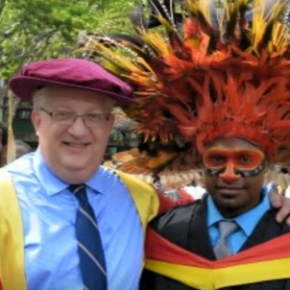
Many university graduates still searching for Jobs in Papua Nueva Guinea, says Dr. Schram

Nueva Guinea- Papua/ 07 abril 2016/ Fuente: http://edu.pngfacts.com/

Resumen: El número de estudiantes graduados en instituciones de educación
superior en Papua, se ve enfrentado año tras año en un reducido mercado
laboral, debido a las pocas ofertas que existen. La Universidad de
Tecnología graduó recientemente a casi 1000 estudiantes de los cuales el

Consejo Universitario y la Comisión Consultiva de Trabajo de la Universidad
evalúan la asignación de un trabajo remunerado. Cabe destacar, que el año
pasado sólo el 50% de los estudiantes graduados aseguraron un puesto de
trabajo luego de cinco meses de haber finalizado sus estudios

The number of graduating students from higher learning institutions that
enter job markets can be confronting as one university advises.

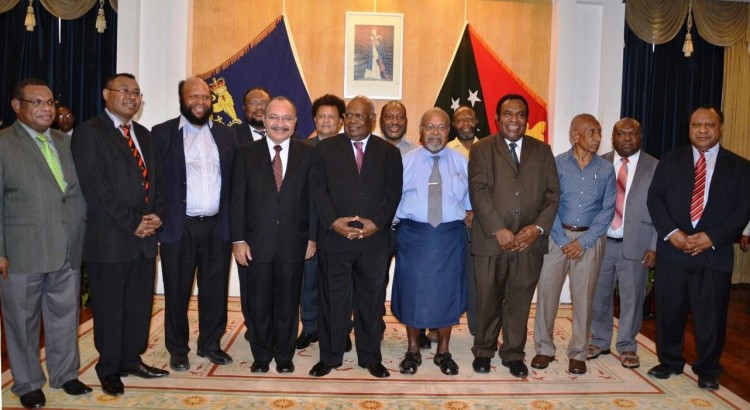
Just recently, the University of Technology graduated almost 1000 students,
(978 in total and not 920 as reported) and an assessment of those that will
earn a paid job is being assessed by the university council and
university’s industrial advisory board.

Last year, only 50 per cent of students from the university secured jobs
after five months of finishing their studies.

The university vice-chancellor Dr Albert Schram told this paper yesterday
that the 50 per cent is not very good compared to UK which is 75 per cent
but he added is not very bad either. This percentage depends on
engineering, agriculture, applied physics students that do very well as do
business students. Dr Schram said the results were presented to the
university council and the university industrial advisory board. This board
makes suggestions on how to improve matters.

«In addition, we are re-activating departmental industrial advisory
committee who work with the departments to update their curriculum.» Post
Courier

Fuente de la Noticia:
edu.pngfacts.com/education-news/many-university-graduates-still-searching-for-jobs-in-png-says-dr-schram


Comparte este contenido:

Cabo Verde: Lança curso modular em agricultura urbana e periurbana

África/Cabo Verde/Abril 2016/Fuente y Autor: Inforpress-Fim

Resumen: La escuela de ciencias agrarias y ambientales (ECCA) de la Universidad de Cabo Verde, inauguro en San Jorge Isla de Santiago el curso modular en Agricultura Urbana y Periurbana, destinado a los técnicos de las camaras municipales de las playas de San Vicente, Sal y Puerto Nuevo.

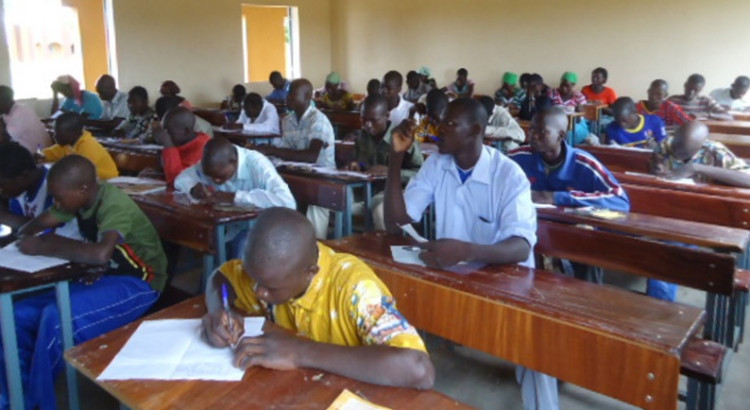
O primeiro curso modular em Agricultura Urbana e Periurbana, financiado pela Organização das Nações Unidas para a Alimentação e Agricultura (FAO), abriu esta segunda-feira, na Escola de Ciências Agrárias e Ambientais (ECAA) da Universidade de Cabo Verde (Uni-CV).

A abertura deste curso vem na sequência da assinatura de um protocolo entre o Ministério de Desenvolvimento Rural (MDR) de Cabo Verde e a FAO  para a efetivação do projeto “Agricultura Urbana e Periurbana” com o principal objetivo de assegurar um abastecimento constante de produtos frescos que atendam às necessidades nutricionais das populações urbanas e a um preço acessível.

A formação, que é dirigida a 25 técnicos das Câmaras Municipais da Praia (Santiago), de São Vicente, do Sal e do Porto Novo (Santo Antão), visa a sua capacitação no domínio da agricultura urbana e periurbana, de modo a que possam apoiar a implementação deste projeto.

O projeto tem permitido financiar e desenvolver a agricultura, concretamente, a horticultura, dirigida sobretudo às famílias que vêm do interior e que residem nas periferias e que já sabem trabalhar na produção agrícola.

Os promotores deste projeto consideram que a promoção da agricultura urbana e periurbana irá contribuir para a melhoria da qualidade de vida das populações urbanas e periurbanas, através de criação de empregos e boa gestão de espaços urbanos, fazendo com que as populações rurais que procuram os centros urbanos para residirem possam produzir e gerar rendimentos.


Fuente  de la noticia: http://inforpress.publ.cv/ambiente/125872-ecaa-da-uni-cv-lanca-curso-modular-em-agricultura-urbana-e-periurbana

Fuente de la imagen:http://www.africa21online.com/artigo.php?a=14297&e=Pol%C3%ADtica

Comparte este contenido:

Mali: Next phase of quality education project launched

África/Mali/Abril 2016/Fuente y Autor: Internacional de la Educación

Resumen: La nueva fase de las exitosas educadores de calidad para todos Proyecto – «Cada niño necesita un buen maestro» – se ha puesto en marcha en Mali, con el objetivo de mejorar la calidad de los maestros, la enseñanza y el aprendizaje en el país. La Internacional de la Educación (IE) Coordinador Superior Dennis Sinyolo reconoció el trabajo y compromiso con la mejora de la calidad de la educación en Mali a través de este proyecto.

Education InteMali-IErnational (EI) Senior Coordinator Dennis Sinyolo acknowledged the work of EI’s partner, Oxfam Novib, and the Quality Educators project partners in Mali – the Syndicat National de l’Education et de la Culture, the Association des Jeunes pour le Développement Endogène au Sahel and the Ministry of Education. At the launch in Bamako, Mali, from 2-4 March, under the patronage of t
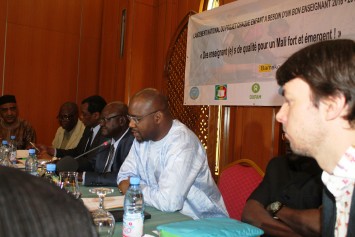
he Education Minister Barthélémy Togo, Sinyolo praised these organisations for their commitment to improving the quality of education in Mali through this project.

Praise for Minister

Sinyolo also commended Togo “for fully embracing the project and providing the necessary policy direction, technical support, training and monitoring since the project’s inception”. He noted the Government’s considerable efforts to integrate more than 800 community teachers into the public service.

Togo underlined the Malian government’s continued commitment to support this project, which falls within the framework of the objectives of the government’s 10-year programme of development of education. He also said that the government is committed increasing teachers’ salaries by FCFA25,000 (equivalent to €38) per month and to accelerate the process of turning community schools into public schools, “to give children the same opportunities in the competition for life, enabling them to play a role in the development of their country”.

Education International: Collaboration towards quality education

Education International urges Mali’s Government to accept all the community teachers who have been trained into the public service, Sinyolo said.

“The success of this project proves that governments, teacher unions, and civil society can work together to improve the quality of teaching and learning,” he highlighted. “Let’s make the next three years better than the last five years! We can do it, and we must do it, for the sake of all Malian children and youth!”

Drawing on experiences and lessons learnt from this project, Sinyolo said that EI is developing global guidelines on minimum professional teaching standards, which will help to raise teaching standards across the globe.

Award-winning initiative

The Quality Educators for All Project has gained recognition internationally. In 2014, it won the UNESCO-Hamdan Prize for Outstanding Practice and Performance in Enhancing the Effectiveness of Teachers in 2014. Sinyolo added that this project was recognised by UNESCO, the Global Partnership for Education (GPE), the International Task Force on Teachers and other partners as a good model for improving teacher quality, teaching and learning.

He also underlined that the International Commission on Financing Global Education Opportunity, jointly headed by GPE Chair Julia Gillard (former Australian Prime Minister) and UN Special Envoy for Global Education Gordon Brown (former British Prime Minister), is currently documenting examples of best practices in improving quality education, and Quality Educators is one of them.

Background

Through the Quality Educators for All project, EI joined forces with Oxfam Novib, a worldwide development organisation working to find practical, innovative ways for people to lift themselves out of poverty and thrive, to engage teacher unions, governments and civil society in jointly developing consensus-based competence profiles for teachers, and improve the quality of the education system.

Initiated in 2010 in Mali, the first phase was launched in the Segou region, and saw 5,500 teachers trained, 800 of whom were included in the public service. That first phase also focused on professional competence and acceptance in the public system of teacher community primary schools.

Drawing on lessons learned from that phase, the second phase, supported by Comic Relief like the previous one, will focus on the training of teachers of community schools, as well as secondary schools, on improving student learning in lower secondary education, and will include an ICT component in education.
Fuente de la noticia: http://www.ei-ie.org/en/news/news_details/3899

Fuente de la imagen: https://www.google.co.ve/url?sa=i&rct=j&q=&esrc=s&source=imgres&cd=&ved=0ahUKEwiHn-Tw1vrLAhVBGh4KHSWwDLMQjRwIBw&url=http%3A%2F%2Fwww.ei-ie.org%2Fen%2Fnews%2Fnews_details%2F3899&psig=AFQjCNGHrvr-PEF_e2NJnzvElicwY0jD6Q&ust=1460055004939001

Fuente Imagen Principal:

http://www.solidaridaddonbosco.org/foyer-colegio-rural-touba-mali/

Comparte este contenido:

Nigeria: Responsible parenting, schooling critical to national rebirth

África/Nigeria/Abril 2016/Fuente: TheGuardian/Autor:Ujunwa Atueyi

Resumen:  En un seminario realizado en el Hotel Sheraton, directores de escuela, padres y líderes religiosos se reunieron para  deliberar sobre el papel de la escuela, el hogar, la iglesia y el gobierno en la consolidación de los niños nigerianos. Este seminario fue diseñado con el propósito de unir a todas las partes interesadas para reflexionar y discutir sobre el futuro de la próxima generación.

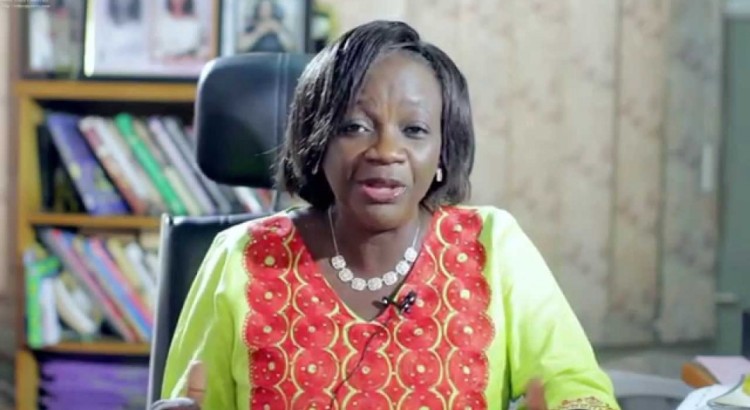
It was for the sake of the next generation that stakeholders from far and near converged on Sheraton Hotel, Lagos, recently to deliberate on the role of schools, homes, churches and government in nurturing the Nigerian child. In The seminar which was attended by school managers, parents and religious leaders, according to the Convener, Bisi Ibitayo, was designed to get everybody in the area of children’s influence come together to discuss the future of the next generation.

Citing high rate of crime and indiscipline among Nigerian students in particular and the youth in general, Ibitayo regretted that contemporary parents have neglected parenting, and urged all stakeholders to be alive to the place of individual responsibility. She said until the homes and schools got it right in inculcating the right values in children, societal ills might continue to multiply.

She said, «Parenting, you will agree with me, is not limited to the biological parents alone. For the next generation to turn out well, all areas of influence of children’s lives must work in sync. It does not matter how much effort is made by one arm of influence, lack of effort or insufficient effort on the part of any other arm is capable of messing up a child’s future.

«Schools, parents, the church, government and the entire society have a stake in this. I have observed that the next generation is deficient of so many things that helped mould our lives when we were growing up. It is time to return to the time when parenting was everybody’s business. The next generation is on the brink of destruction and we cannot fold our arms and watch different vices destroy our youth.»

Other panelists who spoke at the forum insisted that all efforts should be made to teach the right morals to the younger ones, as the strength of the nation, to a large extent, depended on sound families.

According to the former Attorney-General of Ogun State, Mr. Oluwemimo Ogunde, «It is sound parenting that brings a sound nation and when you have sound families in large number, then we are bound to have a sane society and a sound nation.

Fuente de la noticia: http://guardian.ng/features/responsible-parenting-schooling-critical-to-national-rebirth/

Fuente de la imagen: http://cdn.guardian.ng/wp-content/uploads/2016/03/Bisi-Ibitayo-1062×598.jpg

Comparte este contenido:

Que es el PNUMA?

El PNUMA, establecido en 1972, es la voz del medio ambiente en el sistema de las Naciones Unidas. El PNUMA actúa como catalizador, defensor, educador y facilitador para promover el uso sensato y el desarrollo sostenible del medio ambiente global.

|Mandato

Ser la autoridad ambiental líder en el mundo, que fija la agenda ambiental global, que promueve la aplicación coherente de las dimensiones ambientales del desarrollo sostenible en el marco del sistema de las Naciones Unidas, y que ejerce de defensor acreditado del medio ambiente global.

|Misión

Proporcionar liderazgo y alentar la participación en el cuidado del medio ambiente inspirando, informando y facilitando a las naciones y los pueblos los medios para mejorar su calidad de vida sin comprometer la de las futuras generaciones.

ACERCA DEL PNUMA/ORPALC

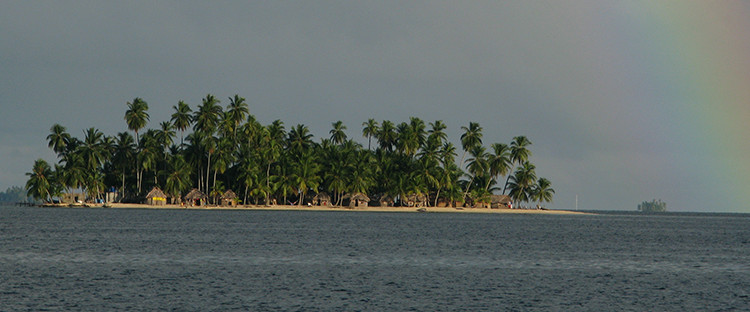
América Latina y el Caribe es una región rica en diversidad de ambientes, ecosistemas, especies y culturas e incluye 7 de los países megadiversos. La región se divide en cuatro subregiones: Mesoamérica, el Caribe, la Región Andina y el Cono Sur y cada uno posee un conjunto único de características, prioridades y retos ambientales.

La oficina regional para América Latina y el Caribe (ORPALC) situada en Ciudad de Panamá trabaja muy de cerca con los 33 países de la región – entre ellos 16 pequeños Estados insulares en desarrollo- con una población de cerca de 588 millones de habitantes. La oficina trabaja al servicio de las necesidades de la región y sus actividades se integran dentro de los programas de trabajo aprobados por la Asamblea de las Naciones Unidas para el Medio Ambiente del PNUMA (UNEA).

|Países en los que trabajamos

Antigua y Barbuda, Argentina, Bahamas, Barbados, Belice, Bolivia, Brasil, Chile, Colombia, Costa Rica, Cuba, Dominica, Ecuador, El Salvador, Granada, Guatemala, Guyana, Haití, Honduras, Jamaica, México, Nicaragua, Panamá, Paraguay, Perú, República Dominicana, San Kitts y Nevis, San Vicente y las Granadinas, Santa Lucía, Surinam, Trinidad y Tobago, Uruguay, Venezuela.

7 ÁREAS
PRIORITARIAS
DE
TRABAJO


Comparte este contenido:

UNRISD: Social Policy and Development

UNRISD (United Nations Research Institute for Social Development)  research and policy analysis are at the forefront of progressive international development thinking that has reasserted the centrality of social policy in development strategies. UNRISD understands social policy as public interventions that aim to guarantee adequate and secure livelihoods, income and well-being, and that enable all individuals to strive for their own life goals. This is a purposefully broad definition that goes beyond interventions designed only to protect the most vulnerable. UNRISD research has demonstrated, for example, the transformative role that state-led social policy can play in development contexts, and has shown that social welfare is tightly bound to economic progress, as well as the role of social policy in strengthening citizenship, political participation and social cohesion.

The contemporary challenge is to build on the expansion of social policies and programmes related to the MDGs, which have largely focused on ameliorating problematic outcomes of development processes, to generate a more transformative approach to social policy that responds to the global challenges of inequality, conflict and unsustainable practices, and identifies and addresses structural inequalities and their drivers.

The UNRISD Social Policy and Development Programme examines how social policies can be instrumental to economic development, and financed in a sustainable and progressive way, while maintaining their intrinsic goals of protection, equity and social inclusion.

Projects

New Directions in Social Policy: Alternatives from and for the Global South

Politics of Domestic Resource Mobilization for Social Development

Towards Universal Social Security in Emerging Economies: Process, Institutions and Actors

Linking Social Protection and Human Rights

Making International Development Cooperation Effective

Migration and Health in China

South-South Migration and Development: What Role for Social Policy and Regional Governance?

Social Policy in Mineral-Rich Countries: Harnessing Natural Resource Wealth for Social Development

Mobilizing Revenues from Extractive Industries: Protecting and Promoting Children’s Rights and Well-Being in Resource-Rich Countries

Political Economy of Social Pensions in Asia

Social Policy as a Key to Sustainable Development

Strategies for Integrated, Coordinated and Equitable Social Protection

Strengthening Social Protection in Six Asian Countries

Health Systems as Social Institutions: Progress towards Health in All Policies

Employment-Centred Poverty Reduction and Social Policy in Rural Tanzania: Policy and Institutional Change

Photo credit: UN Photo/JC McIlwaine.

Comparte este contenido:

Angola: Educação no Cubal reforçada com duas escolas

África/Angola/Abril 2016/Fuente y Autor: Agencia Angola Press

Resumen: Dos escuelas una de enseñanza primeria y otra del primer ciclo, con capacidad de 540 alumnos cada una, fueron entregadas a las comunidades de Kassalassito e Kahanga/Malongo, de municipio de Cubal, en el marco de las conmeraciones del 14º aniversario de la Paz y la Reconciliación Nacional.

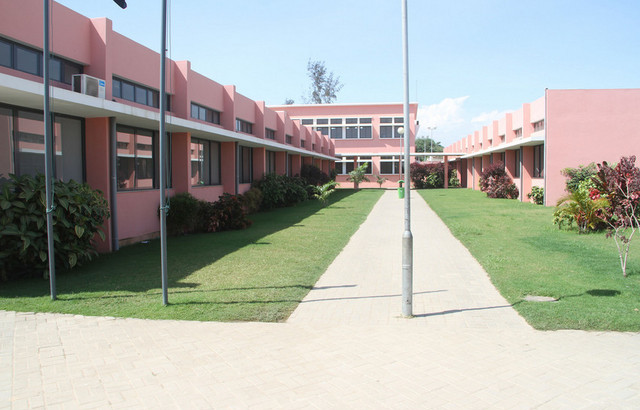
Inscritas no Programa de Investimentos Públicos (PIB), os dois empreendimentos inaugurados vice-governador de Benguela para o sector técnico e infra-estruturas, Victor Moita, e pelo administrador municipal do Cubal, Carlos Alberto Guardado, respectivamente, comportam seis salas de aulas, gabinetes para directores, salas de professores, balneários e secretárias cada.

De acordo com coordenador da comissão de gestão da repartição municipal de Educação no Cubal, António de Oliveira, a implantação das duas infra-estruturas traduz a vontade do Executivo Angolano, na redução dos índices de crianças fora do sistema de ensino.

Por seu turno, os alunos manifestaram satisfação pelo feito que vai dar resposta aos desafios consignados nos 11 compromissos do governo sobre as crianças, consubstanciado na inserção do maior número ede petizes no sistema de ensino, que passa necessariamente pela construção de mais salas de aulas.

Ressaltam a necessidade de as comunidades, alunos pais e encarregados de educação a conservarem o património, uma vez servirão para gerações vindouras.

O sector de Educação no Cubal controla 235 escolas, das quais nove do primeiro ciclo, três do segundo ciclo, uma técnica agrária e 222 do ensino primário.

Fuente de la noticia: http://www.portalangop.co.ao/angola/pt_pt/noticias/educacao/2016/3/14/Benguela-Educacao-Cubal-reforcada-com-duas-escolas,db26b0c6-15f9-4f87-8e18-47046476cd51.html

Fuente de la imagen: http://cdn1.portalangop.co.ao/angola/pt_pt/files/highlight/2016/3/14/0,a483c76b-891b-423b-a918-bc627081183f.jpg

Comparte este contenido:
Page 593 of 621
1 591 592 593 594 595 621