Page 150 of 396
1 148 149 150 151 152 396

Docentes del estado Arizona obtienen aumentos salariales tras huelga

Estados Unidos/05 de Mayo de 2018/Ecodiario

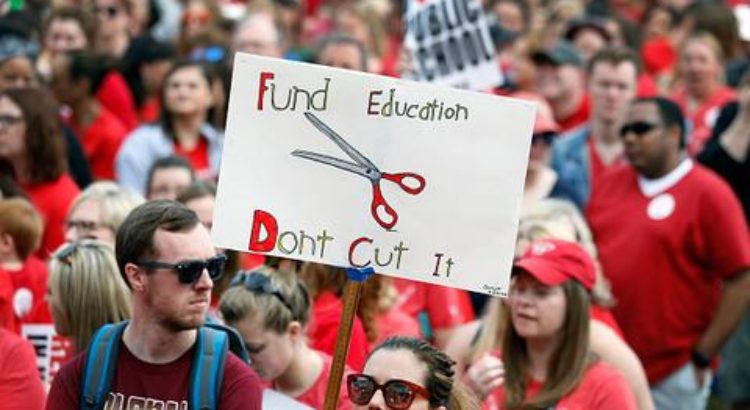
Los maestros del estado de Arizona, suroeste de Estados Unidos, recibirán un aumento salarial tras realizar una huelga de cinco días, que formó parte de protestas en otros estados, anunció el jueves el gobernador republicano Doug Ducey.

«Firmado. Los aumentos a los profesores están en camino», escribió Ducey en Twitter, junto a un video en el que aparece a punto de ratificar una ley de presupuesto votada por la noche en el parlamento del estado.

Protestas similares a las de Arizona también se realizaron días atrás en Colorado, Oklahoma, Virginia Occidental y Kentucky en demanda de incrementos salariales, causando que miles de estudiantes se quedaran sin clases.

«Es una gran victoria para los estudiantes, los profesores y los educadores públicos de Arizona», agregó el gobernador, indicando que el aumento aprobado será de un 20% de aquí a 2020.

De su lado, la Unión de Educadores de Arizona (AEU), que organizó las huelgas en las que participaron unos 850.000 maestros, anunció en Twitter que «el presupuesto de educación fue votado y firmado», con lo que llamó al «fin de la huelga».

Como en Oklahoma (centro), Arizona es uno de los estados con mayores recortes al presupuesto de la educación: 1.000 millones de dólares menos en 10 años, según el sindicato Arizona Educators United.

Tras una paralización de más de 10 días, los maestros en Oklahoma obtuvieron un aumento de 6.000 dólares al año, aunque no todas sus exigencias para el presupuesto para la educación; mientras que en Virginia Occidental se aprobó un incremento salarial de 5%.

Estas huelgas se registran principalmente en estados republicanos, donde los presupuestos para la educación han sufrido con las promesas de recortar impuestos, sobre todo después de la crisis financiera de 2008.

En Estados Unidos, la educación es responsabilidad de los estados y municipios. El gobierno federal solo proporciona subsidios específicos, como por ejemplo para niños discapacitados.

Fuente: http://ecodiario.eleconomista.es/internacional/noticias/9114348/05/18/Docentes-del-estado-Arizona-obtienen-aumentos-salariales-tras-huelga.html#

Comparte este contenido:

Estados Unidos: La universidad que instaló un armario para que los estudiantes lloren

América del norte/Estados Unidos/03 Mayo 2018/Fuente: Semana 

En la institución apareció el curioso elemento para que los estudiantes en época de exámenes puedan llorar y desahogarse por diez minutos.

El estrés de las clases y las horas de estudio para los exámenes hicieron que la estudiante de cerámica y escultura, Nemo Miller, llevara a cabo el particular proyecto que hizo reír a más de uno y llorar a otros pocos.

En medio de la biblioteca J. Willard Marriott de la Universidad de Utah ubicada en la capital del Estado de Utah, Salt Lake City, la estudiante instaló un armario, el Cry Closet,  para que los estudiantes se acerquen a liberar el estrés y llorar por cualquier situación que les cause tensión.

El cubículo de madera que hizo Miller en un taller de carpintería tiene el interior totalmente forrado de negro y está lleno de animales de peluche. En la puerta cuelga un letrero en el que se puede leer, “es un lugar seguro para el estudiante estresado, también conocido como el armario del llanto. Este espacio está destinado para que aquellos que estudian en finales tomen un breve descanso de diez minutos”.

De igual forma para poder entrar a él solo se deben seguir cinco reglas: tocar antes de entrar, solo debe haber una persona en el armario a la vez, el límite de tiempo dentro no debe sobrepasar los diez minutos, se debe apagar la luz y el temporizador antes de irse y por último, compartir #cryclosetuofu en caso de publicar la experiencia en redes sociales.

«La idea surgió de mi propio estrés y ansiedad por la graduación y de querer un lugar para tomar un descanso del mundo por unos minutos» contó Miller al periódico El País, y agregó, «El título estaba destinado a ser un poco humorístico, no estaba esperando que los estudiantes llorarán realmente mientras estaban en el armario».

Por otro lado en el portal de la institución aseguró que «quería crear y proporcionar un espacio donde los estudiantes como yo pudiéramos descomprimir. El estrés de las finales es real para muchos estudiantes, e incluso hemos visto por la abrumadora respuesta a esta pieza que la gente en el mundo del trabajo quiere y necesita lugares para desahogarse con seguridad, también. La necesidad es universal, porque es humano».

Fuente: https://www.semana.com/educacion/articulo/una-universidad-en-estados-unidos-instalo-el-armario-del-llanto/565496

Comparte este contenido:

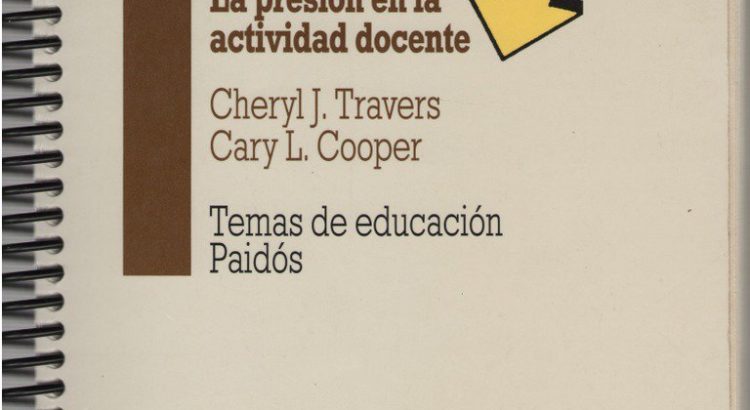
Libro: El estrés de los profesores. La presión en la actividad docente

Cheryl J. Travers, Cary L. Cooper / Fuente: Google Books

Nuestro sistema educativo ha venido sufriendo en los ultimos anos enormes y rapidos cambios, siempre acompanados por las denuncias de los profesores respecto a la escasa e insuficiente ayuda que reciben para afrontarlos. Como consecuencia de esto, la mayoria de los docentes suelen verse sometidos, en un momento u otro de su carrera, a un intenso y a menudo insoportable estres. Asi, este libro, concebido como reaccion directa a esta situacion, se plantea como un somero estudio del estado actual de salud de los profesores, de su sentimiento de bienestar y de su satisfaccion laboral, e intenta identificar los sintomas mas claros del estres en el terreno de la docencia, explorando como varian los problemas en funcion de la ubicacion del centro escolar, de los niveles de ensenanza, del genero y margen de edad de los alumnos, etc. Finalmente, sugiere vias de ayuda y medidas preventivas para minimizar el estres y mejorar la experiencia educativa.

Link para la descarga:

https://sitraiemscarmenserdan.files.wordpress.com/2018/02/travers-el-estres-de-los-profesores.pdf

Fuente:

https://books.google.com.mx/books/about/El_estr%C3%A9s_de_los_profesores.html?id=a7bhr27JlIMC&redir_esc=y


Comparte este contenido:

EEUU-Massachusetts: Native Language Schools Are Taking Back Education

Por:  intercontinentalcry.org/ Abaki Beck/ 02-05-2018
MORE THAN A CENTURY AGO, THE LAST FLUENT SPEAKERS OF WÔPANÂAK PASSED AWAY. NOW THIS SCHOOL IS WORKING TO REVIVE THE LANGUAGE.
For more than 150 years, the Wôpanâak language was silent. With no fluent speakers alive, the language of the Mashpee Wampanoag people existed only in historical documents. It was by all measures extinct. But a recently established language school on the Mashpee Wampanoag Tribe’s reservation in Massachusetts is working to bring back the language.

The threat of extinction that faces the Wôpanâak language is not uncommon for indigenous languages in the United States. Calculated federal policy, not happenstance, led to the destruction of Native American languages such as Wôpanâak.

But today, Native language schools are working to change that by revitalizing languages that have been threatened with extinction.

In the 19th century, federal policy shifted from a policy of extermination and displacement to assimilation. The passage of the Civilization Fund Act in 1819 allocated federal funds directly to education for the purpose of assimilation, and that led to the formation of many government-run boarding schools. Boarding schools were not meant to educate, but to assimilate.

Tribal communities continue to be haunted by this history. As of April, UNESCO’s Atlas of the World’s Endangered Languages listed 191 Native American languages as “in danger” in the United States. Of these, some languages are vulnerable—meaning that children speak the language, but only in certain contexts—to critically endangered—meaning the youngest generation of speakers are elderly.

Today, the education system in the United States fails Native American students. Native students have the lowest high school graduation rate of any racial group nationally, according to the 2017 Condition of Education Report. And a 2010 report shows that in the 12 states with the highest Native American population, less than 50 percent of Native students graduate from high school per year.

By founding schools that teach in Native languages and center tribal history and beliefs, tribal language schools are taking education back into their own hands.

Mukayuhsak Weekuw: Reviving a silent language

On the Massachusetts coast just two hours south of Boston is Mukayuhsak Weekuw, a Wôpanâak language preschool and kindergarten founded in 2015. The school is working to revitalize the Wôpanâak language. As one of the first tribes to encounter colonists, the Mashpee Wampanoag faced nearly four centuries of violence and assimilation attempts; by the mid 19th century, the last fluent speakers of Wôpanâak had died.

In the 1990s, Wampanoag social worker Jessie Little Doe Baird began to work to bring the language back to her people. It began like this: More than 20 years ago, Baird had a series of dreams in which her ancestors spoke to her in Wôpanâak. She says they instructed her to ask her community whether they were ready to welcome the language home.

She listened, and in 1993 she sought the help of linguists and community elders to begin to revitalize the language—elders like Helen Manning from the Aquinnah Wampanoag Tribe, with whom she would later co-found the Wôpanâak Language Reclamation Project.

Baird found a lot of resources. To translate the Bible, colonists had transcribed Wôpanâak to the Roman alphabet in the 1600s, which the Wampanoag used to write letters, wills, deeds, and petitions to the colonial government. With these texts, Baird and MIT linguist Kenneth Hale established rules for Wôpanâak orthography and grammar, and created a dictionary of 11,000 words.

In 2015, the Wôpanâak Language Reclamation Project was ready to open the Mukayuhsak Weekuw preschool. According to the school’s Project Director Jennifer Weston, 10 students attended in the first year it opened, growing to 20 in the current school year. As part of the language program, parents or grandparents of students at the school are required to attend a weekly language class to ensure that the youth can continue speaking the language at home.

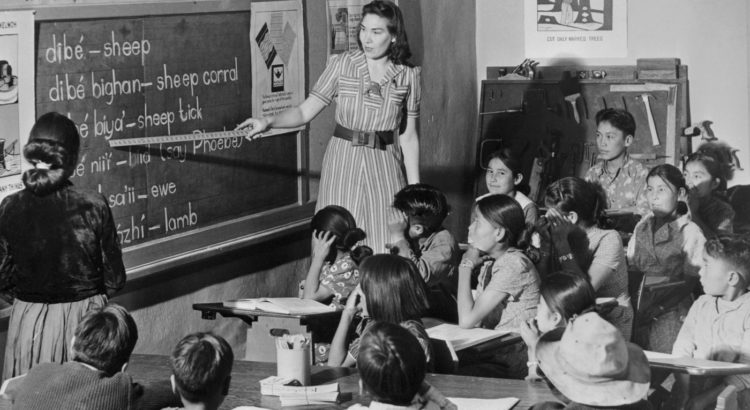
The curriculum is taught entirely in the Wôpanâak language, and it is also grounded in tribal history and connection to the land. “Our languages embody our ancestors’ relationships to our homelands and to one another across millennia,” Weston says. “They explain to us to the significance of all the places for our most important ceremonies and medicines. They tell us who we are and how to be good relatives.”

In addition to language learning, the children also learn about gardening, hunting, and fishing. They practice tribal ceremonies, traditional food preservation, and traditional hunting and fishing practices. At Native American language schools like Mukayuhsak Weekuw, students experience their culture in the curriculum in a deeply personal and empowering way.

‘Aha Pūnana Leo: Overcoming policy barriers

Considering the violent history of America’s education system towards Native Americans, it is perhaps unsurprising that policy barriers continue to hinder contemporary language revitalization schools.

Federal policies are often misaligned with the reality of tribal communities and language revitalization schools. Leslie Harper, president of the advocacy group National Coalition of Native American Language Schools and Programs, says schools often risk losing funding because they lack qualified teachers who meet federal standards. But these standards are paternalistic, notes Harper, who says that fluent language teachers at Native schools are often trained outside of accredited teaching colleges, which don’t offer relevant Native language teaching programs. These teaching colleges don’t “respond to our needs for teachers in Indian communities,” she says.

In Hawai’i, ‘Aha Pūnana Leo schools have had some success in overcoming policy barriers like these. The schools have led the way for statewide and national policy change in Native language education.

When the first preschool was founded in 1984, activists estimated that fewer than 50 children spoke Hawaiian statewide. Today, ‘Aha Pūnana Leo runs 21 language medium schools serving thousands of students throughout the state, from preschool through high school. Because of this success, emerging revitalization schools and researchers alike look to ‘Aha Pūnana Leo as a model.

Nāmaka Rawlins is the director of strategic collaborations at ‘Aha Pūnana Leo. Like Harper, she says that required academic credentialing burdened the language preschools, which relied on fluent elders. This became an issue in 2012 when kindergarten was made compulsory in Hawai’i, and teachers and directors of preschools were required to be accredited. But she, along with other Hawaiian language advocates, advocated for changes to these state regulations to exclude Hawaiian preschools from the requirement and instead accredit their own teachers as local, indigenous experts. And they succeeded. “We got a lot of flack from the preschool community,” she says. “Today, we provide our own training and professional development.”

One of the early successes of ‘Aha Pūnana Leo was removing the ban on the use of Hawaiian language in schools, which had been illegal for nearly a century. Four years later, in 1990, the passage of the Native American Language Act affirmed that Native American children across the nation have the right to be educated, express themselves, and be assessed in their tribal language.

But according to Harper, progress still needs to be made before NALA is fully implemented by the Education Department. Since 2016, Native American language medium schools have been able to assess students in their language. This took years of advocacy by people like Harper, who served on the U.S. Department of Education’s Every Student Succeeds Act Implementation Committee and pushed for the change.

While this is an important first step, Harper is concerned that because language medium school assessments must be peer reviewed, low capacity schools—or those that lack the technical expertise of developing assessments that align with federal standards—will be burdened. And the exemption doesn’t apply to high schools.

Studies from multiple language revitalization schools have found that students who attend these schools have greater academic achievement than those who attend English-speaking schools, including scoring significantly higher on standardized tests. “We are beginning to see the long-term benefits of language revitalization and language-medium education in our kids,” Harper says. “But the public education system and laws are still reticent about us developing programs of instruction for our students.”

Looking back, looking forward

A movement to revitalize tribal languages is underway. The success of ‘Aha Pūnana Leo and promise of Mukayuhsak Weekuw are examples of communities taking education into their own hands. When Native American students are taught in their own language and culture, they succeed.

Weston says parents are eager for Mukayuhsak Weekuw to expand into an elementary school, and in fall 2018, the school will include first grade in addition to pre-school and kindergarten. It is a testament to the work and vision of the Wampanoag that just two decades ago, their language was silent, and today, they have a school that expands in size each year. “All of our tribal communities have the capacity to maintain and revitalize our mother tongues,” Weston says—no matter how daunting it may seem.

This article was originally published by Yes! Magazine. It has been re-published at IC under a Creative Commons License.

*Fuente: https://intercontinentalcry.org/native-language-schools-are-taking-back-education/

Comparte este contenido:

Interview: 3 vital ways to measure how much a university education is worth

By The Associated Press

(The Conversation is an independent and nonprofit source of news, analysis and commentary from academic experts.)

Mark S. Schlissel, University of Michigan; Michael H. Schill, University of Oregon, and Michael V. Drake, The Ohio State University

(THE CONVERSATION) Editor’s note: Today we begin a new series in which we ask the leaders of our country’s colleges and universities to address some of the most pressing issues in higher education.

The past several years have seen increased calls for colleges and universities to demonstrate their value to students, families and taxpayers. And the pressure has come from both sides of the political spectrum. Barack Obama, for example, didn’t mince his words when he spoke a few years ago on the University of Michigan campus: “We are putting colleges on notice…you can’t assume that you’ll just jack up tuition every single year. If you can’t stop tuition from going up, then the funding you get from taxpayers each year will go down. We should push colleges to do better.”

So how is a would-be student or a tax-paying citizen to decide the value of a given university or degree? There is certainly no shortage of tools that have been developed to help in this regard.

The federal College Scorecard, for example, is meant to “help students choose a school that is well-suited to meet their needs, priced affordably, and is consistent with their educational and career goals.”

Various magazines put together college rankings. There have been efforts at the state level to show what graduates of a given institution or program can expect to earn. And some colleges and universities are working to provide those data themselves.

So we asked our panel of presidents – from the University of Michigan, University of Oregon and The Ohio State University: If you had to devise just one tool or metric to help the general public assess the value of a particular college or degree, what would it be and why?

Michael Drake, president of The Ohio State University

When I ask individuals if they want their own children to attend college, the answer is, overwhelmingly, yes. The evidence is clear. College graduates are more likely to be employed and more likely to earn more than those without degrees. Studies also indicate that people with college degrees have higher levels of happiness and engagement, better health and longer lives.

Wow.

If living a longer, healthier and happier life is a good thing, then, yes, college is worth it.

A four-year degree is not necessarily the best path for everyone, of course. Many people find their lives are enhanced by earning a two-year or technical degree. For others, none of these options is the perfect choice. But if there is one data point I want to highlight, it is the correlation between a college education and greater life expectancy. In fact, one study suggests that those who attend college live, on average, seven years longer.

Last year was the second year in a row that average life expectancy in the U.S. went down. But greater mortality didn’t affect all Americans equally. Studies point to a growing gap in life expectancy between rich and poor. Higher education may, in other words, be part of the solution to this problem.

This is just one of the reasons that so many of our country’s institutions of higher learning are focused on the question of how to make sure more Americans have access to a quality – and affordable – college education.

Since December 2016, the American Talent Initiative, a coalition of 100 (and counting) colleges and universities, has been working to educate 50,000 additional lower-income students by 2025. In another initiative, the 11 public universities in the University Innovation Alliance are committed to producing more U.S. graduates and have, over the past three years, increased their number of low-income graduates by 24.7 percent.

As educators, we must continue to increase pathways to the American Dream — a journey that includes health, happiness, long life and, very often, a college degree.

Michael Schill, president of the University of Oregon

While it is impossible to devise only one indicator to describe the value of a university, I would suggest that a good place to begin would be the number of first-generation students it admits and the rate at which they graduate.

As a first-generation college student myself, I may be somewhat biased, but I believe that our generation will be judged by how well we enhance the opportunities for social mobility among our citizens. And despite some skepticism about the value of higher education on the part of pundits and politicians, it is well-documented that there is no better way for young people to achieve the “American Dream” than by getting a college degree.

Note that my metric is really two – first-generation enrollment numbers and graduation rates. The simple fact is that students who go to college and don’t receive a degree may well be in worse shape economically than those who don’t go at all. They will have invested time and money, yet without a diploma will not achieve the economic returns from that investment. Moreover, many are hobbled by student loans without the economic wherewithal to repay them.

It is easy for universities, colleges and community colleges to admit large numbers of students from modest backgrounds. That happened in the for-profit sector. However, the graduation rate at for-profit institutions is only 23 percent, compared to the 59 percent rate overall. The hard part is to support students so that they can succeed.

First-generation students make up a third of college undergraduates in the United States. They are more likely to be minorities and to come from low-income households, and are far less likely to graduate than their peers who had one or more parent attend college. We can do better.

Part of the solution is for more universities to provide more adequate need-based financial assistance, but even that isn’t enough. College can be a confusing experience for first-generation kids, both in terms of learning how to succeed academically and “fitting in” socially. Real value will accrue to students and American society only if we can provide them with appropriate advising and counseling so that they not only get in, but persist and flourish.

Mark Schlissel, president of the University of Michigan

To devise one metric to help the public assess our value, we need to challenge ourselves the same way we challenge students in our classrooms and labs. Let’s first determine the right question to ask. What are our students looking for in life and how can a college degree change the quality and trajectory of their lives?

Higher education gives graduates the best opportunity to pursue their ambitions, change careers, define and solve complex problems, and persuade and lead others. College graduates enjoy higher salaries, qualify for further levels of education and are at a lower risk of ending up in jobs that become obsolete. Moreover, they lead richer and fuller lives – happier, healthier, wealthier and longer.

Each of these outcomes is a component of the value of a college education, yet none of them alone fairly captures its full value. In considering these metrics together, in the context of our question, I believe that one very important concept emerges.

That concept is freedom.

Freedom’s link to education has long been a quintessential American value. As the educator and philosopher John Dewey wrote at the beginning of the 20th century, “We naturally associate democracy, to be sure, with freedom of action, but freedom of action without freed capacity of thought behind it is only chaos.”

At its best, higher education gives us the freedom to make decisions based on our values, desires, human talents and willingness to work hard. We are free to choose our own path.

Education takes freedom beyond its status as a legal right and elevates it into a lifetime of choices. It’s the trajectory of those lives, changed by the opportunities available through a college education, that I am most interested in measuring.

The American public rightfully expects higher education to serve as an enabler of prosperity and equality. I would devise a metric that captures higher education’s greatest potential: to enhance the freedom of an individual graduate in a nation founded on constitutionally guaranteed rights of life, liberty and the pursuit of happiness.

Editor’s note: The Ohio State University is a member of the University Innovation Alliance. The University of Michigan and The Ohio State University are members of the American Talent Initiative.

This article was originally published on The Conversation. Read the original article here: http://theconversation.com/3-vital-ways-to-measure-how-much-a-university-education-is-worth-94208.

Source:

https://wtop.com/education/2018/04/3-vital-ways-to-measure-how-much-a-university-education-is-worth/

 

Comparte este contenido:

Unfashionable Fascism: Mainstream Politicians Switching Sides Under Trump’s Regime of Barbarism


Madeleine Albright, without irony, has written a book on resisting Fascism. She has also published an op-ed in the New York Times pushing the same argument. Albright is alarmed and wants to warn the public to stop the fascism emerging under the Trump regime before it is too late.[1]  Unfortunately, moralism on the part of the infamous and notorious is often the enemy of both historical memory and the truth, in spite of their newly discovered opposition to tyranny.   It is hard to believe that a woman who defended the killing of 500,00 children as a result of the imposed US sanctions on Iraq can take up the cause of fighting Fascism while positioning herself (or being positioned by the mainstream media) as being on the forefront of resistance to US authoritarianism. Here is what David Rieff writing in the New York Times says about the sanctions Albright justified: “For many people, the sanctions on Iraq were one of the decade’s great crimes, as appalling as Bosnia or Rwanda. Anger at the United States and Britain, the two principal architects of the policy, often ran white hot. Denis J. Halliday, the United Nations humanitarian coordinator in Iraq for part of the sanctions era, expressed a widely held belief when he said in 1998: ‘We are in the process of destroying an entire society.’ It is as simple and terrifying as that.”[2]Is any policy worth the death of 500,000 children?  She is not alone.

Hilary Clinton, known more politically as a former war monger and an unabashed ally of the financial elite, has also resurrected herself as a crusader in fighting the creeping fascism that now marks the Trump regime. Speaking with Ngozi Adichie at the PEN World Voices Festival, Clinton appears to have completely removed herself from her notorious past as a supporter of the Iraqi war and the military-industrial-financial complex in order to sound the alarm “that freedom of speech and expression is under attack here in our own country” while further calling for numerous voices to make visible the creeping authoritarianism in America.[3] This is an odd flight from memory into the sphere of moral outrage given her own role in supporting domestic and foreign policies both as a former first lady and as Secretary of State that refused to punish CIA torturers, lavished funds on the military war machine, shredded the federal safety net for poor people, and endorsed neoliberal policies that offered no hope and prosperity “for neighborhoods devastated by deindustrialization, globalization, and the disappearance of work.”[4] No irony here. Just the opposite. Her critique of Trump’s fascism does more than alert the public to the obvious about the current government, it also legitimizes a  form of historical amnesia and a long and suppressed legacy of cruelty and human misery. She is not alone.

The U.S. and its Vichy Republican Party has drifted so far to the fascist right that people such as Albright and Clinton come across as the heroic vanguard of a political and ethical resistance to fascism. Under such circumstances, even some outspoken Republicans, again without irony, such as Flake, Corker and McCain are viewed in the mainstream press as principled heroes in spite of the fact that they have supported Trump’s domestic and foreign policies, including his tax reform bill and his cruel and obscene budget, which not only offers $700 billion to the military but condemns millions of people to a life of misery and suffering. While the call to resist fascism is to be welcomed, it has to be interrogated and not aligned with individuals and ideological forces that helped put in place the racist, economic, religious, and educational forces that helped produce it.

I am not simply condemning the hypocrisy of mainstream politicians who are now criticizing the emerging fascism in the United States. Nor am I proposing that only selective condemnations should be welcomed. What I am suggesting is that the seductions of power in high places often work to impose a silence upon people that allows them to not only benefit from and become complicit with authoritarian tendencies and anti-democratic policies and modes of governance, but also once such people are out of power their own histories of complicity are too often easily erased, especially in the mainstream media. Regardless of such a newly found stance against fascism, such actions do nothing to help explain where we are and what we might do next to resist the fascism that has now engulfed American society and its economic, cultural, and political institutions.

What is often unrecognized in the celebrated denunciations of fascism by celebrity politicians is that neoliberalism is the new fascism. And what becomes invisible in the fog of such celebration is neoliberalism’s legacy and deadly mix of market fundamentalism, anti-intellectualism, rabid individualism, white supremacy, toxic masculinity, and all embracing quest for profits. The new and more racist, violent and brutalizing form of neoliberalism under Trump, has produced both a savage politics in the US and a corrupt financial elite that now controls all the commanding institutions of American society including the state. In other words, what disappears are the very conditions that have made possible a new and more feral American-style fascism.   Systemic corruption, crassness, overt racism, a view of misfortune as a weakness, unapologetic bigotry, and a disdain of the public and common good has been normalized under Trump after gaining strength over the last 50 years in American politics. Trump is merely the blunt instrument at the heart of a fascistic neoliberal ideology. We need to be wary, to say the least, about those mainstream politicians now denouncing Trump’s fascism who while in power submitted, as Stanley Aronowitz puts it, “to neoliberal degradations of health care, jobs, public housing, and income guarantees for the long-term unemployed (let alone the rest of us).”[5]

What is often ignored in the emerging critiques of fascism is the history of neoliberalism’s legacy coupled with the mainstream media’s attempts to foreground many if its architects and supporters as celebrated opponents of Trump’s fascist government. Trump is the extreme point of a long series of attacks on democracy and former politicians such as Albright and Clinton cannot be removed from that history. None of these politicians have denounced state violence, nationalism, the myth of American exceptionalism, and the forces that produce obscene inequality in wealth and power in the US, or the oppressive regime of law and order that has ruled America ruthlessly and without apology since the 1980s.

Unchecked and systemic power, a take no prisoners politics, and an unapologetic cruelty are the currency of fascism because they are the wedge that makes fear visceral and violence more than an abstraction. This lethal combination is also a pathological condition endemic to brutal demagogues such as Trump. They demand loyalty not to an ideal that expands the meaning of justice and democracy but loyalty to themselves, one that stands above the truth and rule of law. As The Economist points out, “Trump demands loyalty to himself and to the prejudice and rage which consume the voter base that, on occasion, even he struggles to control. In America that is unprecedented and it is dangerous.”[6] This combination of a demand to an insular notion of loyalty and their penchant for cruelty offers such demagogues not only a terrifying symbol of their unchecked power but also the emotional rush that may provide one of the few options for them to feel any emotion at all.  Cruelty also feeds on irony and cleanses the past of the conditions that allow the mobilizing passions of fascism to bloom. The call to resist fascism is welcome but also complicated and cannot be separated from acts of bad faith that cleanse the historical record of the forces that helped produce it. The public imagination withers under the assault on historical consciousness and the institutions that nurture it.

The fight against fascism is part of a struggle over memory and those critical narratives that refuse to be couched in a form of historical and social amnesia. It is also a fight over the public spheres and institutions that make civic literacy, the public imagination, and critical consciousness possible.  This suggests both a struggle to reclaim historical consciousness and to expose the forces that are and have been complicit with the long standing attack on democratic institutions, values, and social relations, especially those that now hide their past and ideological convictions in the purifying discourse of outrage, disingenuousness, and resistance.

Any resistance to fascism has to be rooted in the call to make education central to politics with a strong emphasis on the teaching of historical consciousness and civic literacy as crucial weapons in the fight against fascism. At the same time, such a fight must take an unwavering standpoint in its refusal to equate capitalism and democracy. Such a battle has to be waged in diverse struggles that can be aligned through a common thread willing to recognize that we are at war over not just the right of economic equality and social justice but also against the powerful and privileged positions of whiteness, a toxic masculinity, and the elimination of the very notion of the social, solidarity, and compassion.

This is a war waged over the possibility of a radical democracy while acknowledging that the rich and powerful will not give up their power without a fight. Instead of listening to politicians and others deeply embedded in a system of exploitation, disposability, austerity, and a criminogenic culture, we need to listen to the voices of the striking teachers, the Parkland students, the women driving the me too movement, the Black Lives Matter movement, and others willing to make resistance visible, collective, and widespread. But we also need to connect these voices as part of a more comprehensive struggle against fascism and the diverse forms of repression that it produces.

A radical and progressive struggle against fascism needs a comprehensive vision, a struggle against economic inequality, and strategies that privilege direct action such as the wildcat strikes we have seen among public school teachers in West Virginia.  There is also a need for wide-ranging educational struggle willing to use both established and alternative institutions of schooling, digital spaces, and diverse forms of social media in order to challenge the propaganda produced by the powerful cultural apparatuses of the right such as Sinclair broadcasting, Fox News, and other establishment sources. There is also a crucial necessity to take up the challenge to educate the young and old in the new technologies and how to use them in the service of economic and social justice. At the same time, there is challenge of the left to produce its own public intellectuals who can write and speak in ways that are rigorous, accessible, and attractive to a broader public. A new politics of education is a precondition for creating a new political formation that refuses to be coopted by the liberal center and is rooted in a vision that endorses fundamental social changes in the fight against American style fascism. Such a challenge will not come from establishment politicians and pundits parading as the new heroes of the resistance to Trump’s fascism.

Notes.

[1] Madeleine Albright, “Will We Stop Trump Before It’s Too Late?” New York Times (April 6, 2018). Online: https://www.nytimes.com/2018/04/06/opinion/sunday/trump-fascism-madeleine-albright.html

[2]David Rieff, “Were Sanctions Right?” New York Times (July 27, 2003). Online: https://www.nytimes.com/2003/07/27/magazine/were-sanctions-right.html

[3] Nina Pearlman, “Creeping Authoritarianism in America: The former secretary of state spoke with author Chimamanda Ngozi Adichie at the PEN World Voices Festival,” The Village Voice (April 24, 2018). Online: https://www.thenation.com/article/hillary-clinton-does-not-deserve-black-peoples-votes

[4] Michelle Alexander, Why Hillary Clinton Doesn’t Deserve the Black Vote

From the crime bill to welfare reform, policies Bill Clinton enacted—and Hillary Clinton supported—decimated black America,” The Nation(February 29, 2016). Online: https://www.thenation.com/article/hillary-clinton-does-not-deserve-black-peoples-votes/

[5] Stanley Aronowitz, “What Kind of Left Does America Need?,” Tikkun, April 14, 2014

[6]Editorial, “What Has become of the Republican Party?,”The Economist (April 21, 2018), p. 9.

Source:

https://www.counterpunch.org/2018/04/27/unfashionable-fascism-mainstream-politicians-switching-sides-under-trumps-regime-of-barbarism/

Comparte este contenido:

Las series se convierten en una escuela de sexualidad

Estudios constatan que las escenas sexuales son positivas para los jóvenes cuando son realistas

Las escenas que tienen el sexo o la sexualidad como protagonistas pueden convertirse en el mejor maestro para los adolescentes. Algunos ejemplos: uno de los episodios de Friends gira alrededor de un preservativo que se rompe y que deriva en un embarazo no deseado; en el caso de la serie Urgencias, se dedican un par de capítulos a hablar de las enfermedades de transmisión sexual y los anticonceptivos de emergencia. Según el libro El impacto de los medios de comunicación en la infancia. Guía para padres y educadores, de Editorial UOC y Aresta, los jóvenes estadounidenses encuestados demostraron que tenían más conocimiento de los temas relacionados con la sexualidad después de ver estos capítulos.

En el ámbito estatal, hay otro ejemplo claro con la serie Merlí. En uno de los episodios, el personaje de Tània es la única chica del grupo de amigos que es virgen y, cuando lo confiesa, recibe el apoyo de sus amigas, quitándose de encima el peso de una etiqueta que la perseguía desde hacía tiempo. Merlí también ha dedicado capítulos a cuestiones como las relaciones gais, los tríos, los desengaños y las infidelidades, para destacar algunas.

Para Amalia Gordóvil, doctora en Psicología, profesora colaboradora de la UOC, los medios de comunicación son «agentes socializadores a partir de los cuales los adolescentes toman modelos y normalizan patrones de conducta». Por lo tanto, «es positivo que en las series aparezcan personajes con los que los adolescentes se puedan sentir identificados».

El estudio Televised Sexual Content and Parental Mediation: Influences on Adolescent Sexuality, elaborado por científicos del Instituto del Pacífico para la Investigación y la Evaluación (PIRE), de Estados Unidos, concluye que el contenido erótico de buena parte de las series y las películas que se proyectan en la televisión influye directamente en los pensamientos, los comportamientos y las expectativas sexuales de los adolescentes. El trabajo, publicado en Media Psychology y dirigido por Deborah Fisher, ha contado con la participación de 1.012 jóvenes de entre 12 y 16 años.

Esta investigación alerta también de las consecuencias negativas que pueden tener algunas escenas sexuales para los jóvenes sin experiencia, sobre todo a la hora de exagerar los resultados positivos de las relaciones y cuando se omiten los mensajes sobre los riesgos potenciales, las precauciones y la responsabilidad. Estas representaciones que no son realistas pueden desembocar en actitudes y comportamientos de riesgo de los adolescentes, alertan los investigadores. En cambio, constatan que las escenas sexuales son positivas para los chicos y las chicas cuando son historias realistas, con personajes, por ejemplo, que toman medidas y luchan con las consecuencias negativas de las malas decisiones que han tomado.

En la misma línea está el estudio Presuming the influence of the media: teenagers’ constructions of gender identity through sexual/romantic relationships and alcohol consumption. Fruto del trabajo con grupos de discusión formados por adolescentes de entre 13 y 15 años, los autores concluyen que los medios de comunicación influyen sobre su concepción de las relaciones sexuales y románticas, en la medida que las toman como modelos de identidades de género.

PERSONAJES FEMENINOS HIPERSEXUALIZADOS

El libro mencionado anteriormente, El impacto de los medios de comunicación en la infancia. Guía para padres y educadores, también alerta de la hipersexualidad con la que se presentan algunos personajes femeninos, que son descritos con «connotaciones excesivamente sexuales». Las autoras advierten que este fenómeno puede llevar a los más jóvenes a sentirse «descontentos con sus cuerpos» y a acabar sufriendo trastornos alimentarios.

Para Gordóvil, estos contenidos audiovisuales son «transmisores de falsas creencias», puesto que vinculan el uso del cuerpo y de la imagen con determinados resultados en cuanto a la relación con las otras personas, tales como tener poder, éxito o control sobre los demás, a la vez que promueven el culto al cuerpo.

FOMENTAR LA CONCIENCIA CRÍTICA DESDE NIÑOS

«La falta de autoestima», añade Gordóvil, «ocurre si la valoración que hago de mí misma depende únicamente de mi imagen y no de lo que tengo dentro», aclara. Por eso es necesario «fortalecer el espíritu crítico» de lo que se ve desde muy niños. Según la psicóloga del centro GRAT, la escuela y la familia son los principales pilares para que los niños y los jóvenes crezcan con conciencia crítica y lleguen a la adolescencia con una buena base de autoestima. Revalorizar atributos de la personalidad de los niños y de los jóvenes más allá de lo físico es una herramienta de trabajo para los padres y los maestros que la psicóloga da.

Las autoras del libro El impacto de los medios de comunicación en la infancia. Guía para padres y educadores exponen la misma solución y sugieren que los profesores pueden tener un papel importante por medio de la alfabetización mediática. Concluyen que la escuela debe ayudar a los alumnos a «desarrollar un pensamiento crítico» a la hora de consumir estos contenidos y evitar así que lo hagan en un «estado letárgico».

 Fuente: https://ocio.levante-emv.com/tv/noticias/nws-661057-las-series-convierten-una-escuela-sexualidad.html
Comparte este contenido:
Page 150 of 396
1 148 149 150 151 152 396