Page 208 of 396
1 206 207 208 209 210 396

Estados Unidos: Riverside Unified’s first black teacher, Hazel Hawkins Russell, dies at 93

Estados Unidos/Agosto de 2017/Fuente: The Press Enterprise

Resumen:  Hazel Hawkins Russell, el primer maestro afroamericano en Riverside Unified, murió el viernes. Tenía 93 años. A partir de 1947, siete años antes de que la Corte Suprema decidiera que las escuelas tenían que ser desagregadas, Russell enseñó a generaciones de estudiantes en la escuela primaria, secundaria, Cal State Fullerton y Riverside Community College. Ella también enseñó a la comunidad, dijo Woodie Rucker-Hughes, presidente de la rama Riverside de la NAACP y una educadora de larga data. «Sin ella, muchos de nosotros probablemente no estaríamos donde estamos», dijo Rucker-Hughes. «Cuando llegué en 1969, había muchos afroamericanos en su lugar, la gente simplemente te aceptaba en base a tu profesionalismo y experiencia. Así que le doy las gracias por preparar el camino.Cuando llegó de su lugar de nacimiento de Texas y durante gran parte de su carrera, Russell enseñó en la Casa Blanca School en el barrio predominantemente latino de Riverside.Romper la barrera de color significaba que a menudo enfrentaba resistencia, pero siempre la manejaba con gracia, según Rucker-Hughes.

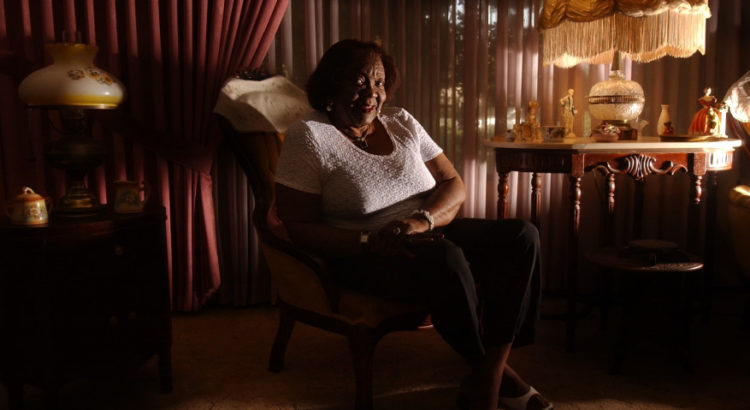
Hazel Hawkins Russell, the first African American teacher in Riverside Unified, died Friday. She was 93.

Starting in 1947 — seven years before the Supreme Court would rule that schools had to be desegregated — Russell taught generations of students in elementary school, junior high, Cal State Fullerton and Riverside Community College.

She also taught the community, said Woodie Rucker-Hughes, president of the Riverside branch of the NAACP and a longtime educator herself.

“Without her, many of us probably wouldn’t be where we are,” Rucker-Hughes said. “By the time I came in ’69, there were many African Americans in place —people just accepted you based on your professionalism and experience. So I thank her for paving the way.”

When she arrived from her Texas birthplace and for much of her career, Russell taught at Casa Blanca School in Riverside’s predominantly Latino neighborhood.

Breaking the color barrier meant she often faced resistance, but she always handled it with grace, according to Rucker-Hughes.

“She was courageous and she didn’t back down for no one,” Rucker-Hughes said. “She could also work within the confines of a situation, so she wasn’t so combative where she was constantly (fighting) — she didn’t need to be. People appreciated her intellect and her ability to move forward without conflict.”

For instance, things were tough when Russell started at Casa Blanca, Rucker-Hughes has heard.

“When she went to the first meeting of the staff, people were looking at her like she was something alien and started moving their seats,” she said. “She stayed right there and held her head high, and by the time she (retired from the school) she was friends with everyone.”

Russell kept teaching into her 80s for one reason, said her daughter Vickie Russell: She loved her students.

“She just loved the children,” she said. “(She had a) strong work ethic. Especially in college, they became her friends. She would give them insight into life.”

With her own children, Russell loved to travel: Israel, Egypt, Kenya, Russia, Spain and England are some of the memorable trips, according to Vickie.

What she remembers most is her mom’s hard work and the lesson she passed to her family: “Be true to yourself.”

Russell wasn’t always recognized as a pioneer, and didn’t refer to herself as one, according to Rucker-Hughes.

“She didn’t make a big deal out of being a pioneer or a number one,” she said. “But she was a trailblazer and a fine example of good and truth and education.”

Rep. Ken Calvert, R-Corona, honored Hawkins on the floor of the House of Representatives in 1997.

“She is an outstanding advocate for increasing educational opportunities for minorities and those with special needs,” Calvert said, according to the Congressional record. “… Her enthusiasm and positive spirit served as an inspiration, and every student left Dr. Hawkins Russell’s class with a little piece of her in their hearts.”

She leaves behind two daughters, Beverly Russell and Vickie Russell, both of whom still live in Riverside. Her husband, James Russell, died in 1988.

Russell died at Kindred Hospital Ontario.

Funeral arrangements have not yet been made.

Fuente: http://www.pe.com/2017/08/19/riverside-unifieds-first-black-teacher-hazel-hawkins-russell-dies-at-93/

Comparte este contenido:

EEUU: LAUSD lanza programas bilingües de educación temprana, la mayoría en español

América del Norte/EEUU, 19 de agosto de 2017.  Fuente: laopinion.com

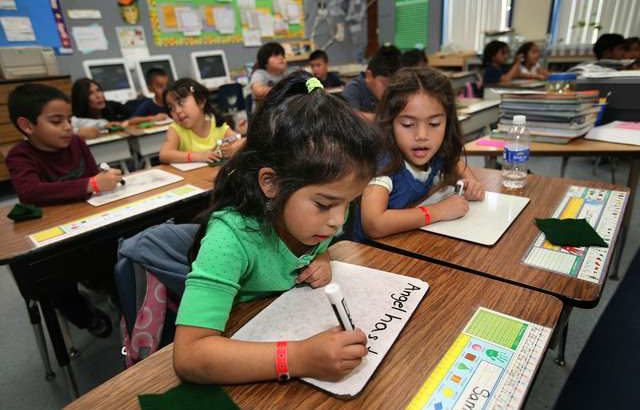
La educación bilingüe, que por décadas se debatió en California, ha regresado en grande en Los Ángeles. Este año, el LAUSD no sólo está ampliando estos programas, sino que por primera vez el distrito ofrecerá 10 programas piloto de inmersión de doble idioma de educación temprana: ocho en español y dos en coreano.

La popularidad de este tipo de programas en el distrito está impulsando un incremento en la matriculación en algunas escuelas – algo significativo para un distrito que ha experimentado años de reducción en su matricula.

Mountain View Elementary es una de las escuelas donde los programas están atrayendo nuevos estudiantes.

“Mountain View estaba contemplando una caída en su inscripción, así que desarrollamos un plan para implementar un programa bilingüe en armenio. El año pasado fue el primer año en que implementamos el programa, y ​​la escuela fue capaz de abrir con dos clases de kindergarten a toda su capacidad, y fue la primera vez que la escuela fue capaz de hacerlo en los últimos años”, dijo Hilda Maldonado, directora ejecutiva del Departamento de Educación Multilingüe / Multicultural del LAUSD.

“Las familias de nuestra comunidad realmente valoran que sus hijos mantengan su idioma. Los padres que estaban pensando en llevarlos a otras escuelas de otros distritos o escuelas privadas locales, cuando vieron que estamos implementando el programa vinieron a nosotros “, dijo.

Los programas de educación temprana estarán disponibles tanto en kindergarten de transición temprana (ETK) como en kindergarten de transición (TK). Los programas de inglés y español se están abriendo en las escuelas primarias Queen Anne, Eastman, Nevada, Grand View y Montara y en Santana Arts Academy, así como en el Early Education Center at Gates Elementary y la California State Preschool en Vista Del Valle Academy.

Los programas de inglés y coreano se ofrecerán en el nivel ETK en las escuelas primarias Cahuenga y Denker Avenue.

Estos se sumarán a los 16 nuevos programas bilingües en las escuelas primarias y secundarias, lo que eleva a 101 el número total de programas de inmersión en dos idiomas en LA Unified. Una lista de los programas disponibles este año escolar a través del distrito se puede encontrar aquí.

El modelo de inmersión en dos idiomas es un programa bilingüe donde se enseña a los estudiantes la mitad del tiempo en inglés y la mitad del tiempo en un segundo idioma, en un salón de clases donde algunos estudiantes son angloparlantes y otros son aprendices de inglés. El objetivo es que los estudiantes se vuelvan totalmente bilingües y bi-literados en ambos idiomas, aprendiendo a un ritmo gradual.

Las investigaciones indican que la inmersión en dos idiomas es el modelo más efectivo para educar a los estudiantes que tienen habilidades limitadas en inglés y que cierra las brechas de desempeño entre los estudiantes de inglés y sus compañeros a largo plazo.

Algunos padres tenían miedo de que sus hijos no aprendieran inglés adecuadamente si están en una clase bilingüe, pero cada vez más se están dando cuenta de que sus hijos pueden desempeñarse mejor académicamente que otros niños que no están en el programa”, dijo Mayra Salguero, una maestra de tercer grado en la escuela primaria Edmondson en el Distrito Escolar Unificado Norwalk-La Mirada, quien fue reconocida el año pasado como maestra bilingüe del año por el programa de lectura bilingüe Read Conmigo.

En noviembre, los californianos aprobaron la Proposición 58, para alejarse de la Proposición 227 que hace 20 años ordenó que todas las escuelas proporcionaran instrucción sólo en inglés, a menos que los padres decidieran lo contrario.

En ese momento, muchos padres cuya lengua materna no era el inglés creían que un programa en doble lengua sólo retrasaría el dominio de sus hijos en inglés.

El estado cuenta con más de 1.4 millones de estudiantes clasificados como aprendices de inglés, de los cuales la mayoría habla español como su primera idioma. Alrededor del 5 por ciento de las escuelas públicas de California ofrecen programas bilingües.

La Proposición 58 ahora permite el crecimiento de programas bilingües y multilingües en escuelas en todo el estado y trae más flexibilidad para que las escuelas implementen dichos programas.

“Uno de los cambios más importantes para el distrito que estamos implementando es el hecho de que los padres ya no tienen que llenar el formulario de exención para que los niños estén en un programa de doble lenguaje. Además, estamos esperando que el estado nos dé las regulaciones completas de la Prop. 58, y esperamos que eso ocurra en la primavera”, dijo Maldonado.

Originalmente los programas bilingües se crearon para apoyar a los estudiantes aprendices de inglés, pero cada vez más estudiantes cuyo primer idioma es el inglés se inscriben en estos programas, ya que sus padres ven el valor de ser bilingües en un mundo globalizado.

Algunos cuestionan si los estudiantes de inglés deben tener prioridad en estos programas.

“Definitivamente hay un mayor interés en algunas partes de la ciudad por parte de los padres (cuyo primer idioma es el inglés) que están cada vez más conscientes del valor de tener niños bilingües”, dijo Maldonado.

Para los padres de habla hispana, cuyo hijo ya está obligado a aprender inglés, es importante mantener el idioma que se habla en su hogar. Y los padres de habla inglesa envían a sus hijos a aprender un segundo idioma porque saben que va a ayudarles a desarrollar habilidades cognitivas y de toma de decisiones. Creo que tenemos de los dos en el distrito, dependiendo del área de la ciudad”, dijo.

La hija de Mayra Azanza, Karen, ha estado en un programa bilingüe en español el distrito unificado de en Culver City desde kindergarten. Ella ahora está entrando a cuarto grado en la escuela primaria El Marino.

“Lo mejor que mis hijos pueden heredar de mí es mi idioma y mi cultura, y la oportunidad de comunicarse con mi familia y otras personas de otras partes del mundo”, dijo Azanza, quien emigró de México a Los Ángeles.

“Tener a Karen en ese programa fue una opción, y ya en sí eso es un compromiso del tipo de educación que se quiere para nuestros niños . Los padres, maestros e incluso los propios estudiantes valoran eso, y el resultado crea un ambiente de aprendizaje muy enriquecedor. Definitivamente inscribiré a mi hijo menor también en un programa bilingüe “, dijo Azanza.

La escasez de maestros en California plantea preocupaciones sobre si habrá suficientes maestros bilingües para que los programas bilingües y multilingües continúen expandiéndose.

Un nuevo informe publicado el mes pasado por Californians Together muestra que muchos distritos escolares de todo el estado están enfrentando una creciente escasez de maestros bilingües y que en el corto plazo hay un grupo de al menos 7,000 maestros bilingües que estarían bien posicionados para enfrentar esta escasez, pero que necesitan ser apoyados con desarrollo profesional.

Maldonado dijo que el distrito reconoce esa necesidad y está trabajando para fomentar más maestros bilingües.

“Vamos a necesitar más maestros de lo que ya tenemos, con el tiempo a medida que implementamos más programas nuevos porque los maestros se retiran o se van. Los tenemos, pero probablemente necesitamos más”, reconoció.

“Tenemos un buen número de maestros bilingües que no han estado usando sus credenciales bilingües en un programa bilingüe, y sabemos que podemos activarlos si es necesario. Todavía tendrían que recibir alguna inducción adicional sobre la educación bilingüe, la investigación reciente y la última pedagogía”.

El distrito también tiene alianzas con varias escuelas de educación en las universidades locales para llenar esa necesidad.

“También tenemos talento natural aquí en la ciudad de Los Ángeles, antes de ir a otros países. Sé que tenemos que sacar sl talento bilingüe que puede considerar entrar en esta profesión”, dijo Maldonado.

La inscripción para cualquiera de los programas bilingües en LA Unified aún tiene que hacerse en los sitios de las escuelas, pero eso cambiará para el próximo año escolar cuando las familias podrán meter solicitud a cualquier escuela y / o programa a través del nuevo sistema unificado de inscripción del distrito.

Es cortesía de LA School Report en español.

Fuente de la noticia: https://laopinion.com/2017/08/18/lausd-lanza-programas-bilingues-de-educacion-temprana-la-mayoria-en-espanol


Comparte este contenido:

EEUU:The legal threat to diversity on campus

América del Norte/EEUU/Agosto del 2017/Noticias/https://theconversation.com

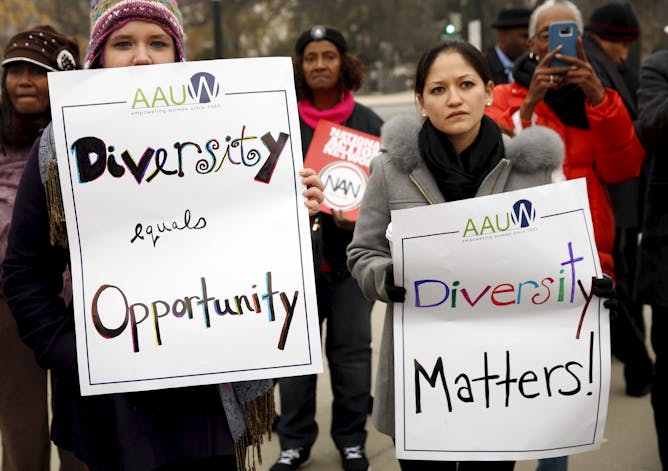
Last summer, the Supreme Court ruled that colleges and universities can use race as one factor among many in making admissions decisions. The court determined that such policies helped further an institution’s mission to attain the educational benefits of diversity.

A recent report by The New York Times, however, has brought affirmative action back to the forefront. According to The New York Times, the Trump administration may be considering a “project” to direct Department of Justice resources to investigate race-conscious admissions. While Department of Justice officials responded that the internal memo did not reflect new department policy, the story has placed colleges and universities “on notice” that their efforts may face renewed scrutiny.

As an education and legal scholar of equity in higher education, I’ve represented hundreds of social scientists before the Supreme Court to support colleges’ use of race-conscious admissions. My belief – and that of many educators and civil rights advocates – is that the alleged investigation by the Department of Justice is meant to intimidate institutions and, perhaps, sway admissions officers from considering race in their admissions policies.

Unintentional or not, the potential threat of legal action could have a dramatic impact on the diversity of college campuses across the country.

University of Michigan student Ebrie Benton protests against the state’s ban on affirmative action. AP Photo/Al Behrman

Legal intimidation

Despite the Supreme Court’s ruling last year, conservative groups like Students for Fair Admissions continue to press lawsuits against universities that employ race-conscious admissions. Cases against Harvard University and UNC Chapel Hill are making their way through the courts and could potentially bring affirmative action to the Supreme Court again.

However, Harvard and Chapel Hill have some of the largest endowmentsin the country, with US$34 billion and $2 billion, respectively. Might institutions that lack the financial resources to defend against lawsuits begin changing admissions policies and practices in order to avoid potential legal threats?

recent study found that over the last 20 years, a public commitment to race-conscious admissions has become far less common, particularly among institutions that are relatively lower in the status hierarchy. In 1994, 82 percent of “very competitive” public universities openly considered race as one of many factors in admissions decisions. By 2014, that number declined to just 32 percent. The “most competitive” universities, however, have continued their public commitment to race-conscious admissions practices unabated.

While the reasons for this trend haven’t been studied directly, it’s worth noting that the “most competitive” institutions are also the institutions that have more financial resources to defend against potential legal action.

Lawyer Bert Rein speaks to press during the 2015 affirmative action case. He’s joined by his client, Abigail Fisher, and legal strategist Edward Blum, founder of Students for Fair Admissions. AP Photo/J. Scott Applewhite

Why opposition exists

In many ways, higher education provides a pathway to positions of power and influence in the United States.

Attending an elite institution remains an important part of the trajectory for those in the ruling class. Harvard, Stanford and Yale, for example, have graduated considerably more recent members of Congress than other less prestigious schools.

Elite institutions also provide particularly high labor market returns for students of color. Economists have shown, for example, that attending the most selective institutions made an especially big difference in the life earnings for black, Latino and first-generation students.

Keeping the path to high-status positions open for people of color was one of the reasons the Supreme Court found race-conscious admissions to be constitutional. In the words of the court, to cultivate a set of leaders with legitimacy in the eyes of the citizenry, “the path to leadership must be visibly open to talented and qualified individuals of every race and ethnicity.”

recent opinion piece by Emory professor Carol Anderson made the compelling case for why opposition to affirmative action is grounded on the politics of white resentment – that is, a false view that opening the path to the ruling class for black and Latino students represents a “theft” of those resources from white students.

A world without affirmative action

What happens when colleges and universities cannot consider race as a factor in admissions?

Research shows that, without race-conscious admissions, the racial diversity of student bodies drops substantially. For example, African-American and Latino enrollment declined at the most selective undergraduate institutions in states with bans on affirmative action. Similar findings were reported in enrollment at law schools and business schools after these bans were instituted.

My own research documents declines due to affirmative action bansacross a number of graduate fields of study, including engineering and natural and social sciences as well as medical schools.

The decline in racial diversity across these educational sectors exacerbates the already disproportionately low number of students of color in these programs and reduces the variety of perspectives that are needed to foster innovation and advance scientific inquiry.

In short, race-conscious admissions do make a difference in campus diversity, allowing universities to address, rather than exacerbate, existing racial inequities.

Supporters of affirmative action believe that it’s still the best way to ensure a diverse student body – something that benefits all students. Reuters/Kevin Lamarque

Next steps for universities

Though the Fisher case cleared a path for race-conscious admissions, universities must still do their part. The court ruled that institutions must be able to connect racial and ethnic diversity to their mission and demonstrate why so-called “race-neutral” efforts are not as effective as race-conscious ones.

However, these steps alone are not enough for preserving true diversity in the face of ongoing attacks.

One of the very important aspects of the Fisher decision is that the Court’s rationale reflects a robust understanding of diversity: namely, that diversity is about more than the number of students of color; it’s also about fostering an environment in which students can benefit from diversity.

Research suggests that this means ensuring that students are engaging across racial and ethnic lines. In an analysis of decades of social science research, my co-author and I learned that realizing the benefits of diversity requires healthy, even if uncomfortable, cross-racial interactions.

Doing so requires attending to the ways that race, in explicit and subconscious ways, influences our interactions and shapes educational opportunity. It’s hard to see how institutions can do so without considering race in their educational policies and practices – including college admissions.


Fuente:

https://theconversation.com/the-legal-threat-to-diversity-on-campus-82402

Fuente imagen:

https://lh3.googleusercontent.com/KA7B3ABscoiZu619uFMTBsVxDDjWganqudbq2YcEHLtLRAyo9WgCt–szplV7ZIIVFWlCw=s85


Comparte este contenido:

EEUU: Give peace education a chance

América del Norte/EEUU/Agosto del 2017/Noticias/https://theconversation.com/


In times of conflict, education is often viewed as the place to promote better relations. Under the UK’s “Prevent” policy, nurseries, schools and universities are treated as places where the growth of radical extremism may be undermined.

Educators are expected to instil “British values” in their students while also being on the lookout for signs of extremist behaviour or attitudes, which they are required to report.

By contrast, when working in other parts of the world, the UK government encourages a different approach – peace education. It offers funding for this in places like Lebanon, Iraq, Jamaica, Rwanda, and the Somali region of Ethiopia.

The former British prime minister, David Cameron, was co-chair of the UN work that culminated in the Sustainable Development Goals (SDGs). These include a target that children around the world acquire knowledge and skills for peace, non-violence and appreciation of cultural diversity.

But if the UK is happy to support peace education at a global level, why does it adopt such a different approach in British schools?

Peace education focuses on dismantling all forms of violence and on creating a just and sustainable culture of peace. It covers subjects such as human rights, the environment and conflict resolution – and there are many ways of introducing it into education systems.

In Northern Ireland the focus has been on getting young people from Protestant and Catholic communities to interact with each other inside and outside of school.

Another approach uses history as a tool to learn lessons for the present and future. The American organisation, Facing History and Ourselves, has inspired educators in South Africa, Rwanda and the countries which made up the former Yugoslavia.

In Colombia, a new policy requires schools to teach about peace. For some, this has meant the introduction of a new subject, for others it means holding peace events or local history projects.

In Kenya, as a response to the post-election violence in 2007-08, peace education was integrated throughout the national curriculum, in subjects like social studies, religious education and history.

Botswana, a country that has not witnessed major incidents of violent conflict despite being surrounded by neighbours who have, created its post-independence education policy around kagisano (making peace) and continues to involve schools in developing a sense of national unity in an ethnically diverse country.

Peace education and Prevent are both about values. The difference is that peace education seeks to develop values rather than delivering them. Peace education gives students the opportunity to consider the values which are important to them, and to the societies in which they want to live.

Prevent, on the other hand, delivers a set of values (deemed to be British ones) and demands an allegiance to them. It is inherently exclusive, viewing deviation from these values as grounds for concern – a sign of developing extremism.

Peace education would take a more reasonable approach, seeing opportunities for dialogue in the conflict situation. Prevention of violence is, of course, an important part of building peace. But as the Norwegian sociologist Johan Galtung argues, the absence of violence is only the first step towards peace.

Positive peace

Galtung defines the absence of violence as “negative peace”. He calls instead for work towards “positive peace”, which addresses direct violence but also examines its causes and consequences.

To deal with these causes and consequences, societies have to understand them. Good peace education gives young people this chance – encouraging them to explore difficult histories, discuss alternative perspectives, learn lessons from the past and imagine better futures.

Keeping the focus on negative peace in the UK’s classrooms shuts down opportunities for these important discussions. Chances are being missed for young people in increasingly diverse classrooms to learn from one another.

Around the world, countries affected by conflict are turning to their classrooms as a place to build peace. Although the UK is not necessarily viewed globally as a traditional conflict setting, recent events in London and Manchester coupled with the stark reality of the race and hate crimes for England and Wales make clear that relations in the UK are tense and conflicted.

Moving to a broader approach, away from the narrow concerns of Prevent, would align with the UN’s sustainable development goals of achieving quality education and promoting peace, justice and strong institutions.

Fortunately, there is a wealth of international knowledge on peace education programmes from which the UK could directly benefit. It could be used to develop a culture of sustainable peace by enabling difficult discussions and by supporting students to understand and tackle the causes of violence and inequality.

Education is not just about passing exams or economic wealth. To prevent extremism, it needs to enable students to develop alternatives. So, all we are saying, is give peace education a chance.


Fuente :https://theconversation.com/give-peace-education-a-chance-79390

Fuente Imagen:

https://lh3.googleusercontent.com/clNFLJOVsQLzivq2k0EceQxkr2U6xVcS9XO_OfgDn3sTnfkExrtRph5mcV5oeqoVUowS9A=s85

Comparte este contenido:

EEUU: White educators need to fight racism every day

América del Norte/EEUU/Agosto del 2017/Noticias/https://theconversation.com

Like many people, I watched the news coming out of Charlottesville this weekend in horror. Future generations will ask about this moment, wondering: How did this happen? What did you do to resist?

I asked myself: As a white educator, how do I respond? What will I say to future generations? What is my responsibility?

Siva Vaidhyanathan wrote in the New York Times about the choice, as a professor at the University of Virginia, between denying extremists the attention “that feeds their flaming torches” and the call to direct confrontation. I read this piece and wondered, what would I do? What have I done?

In the 2016 documentary I am Not Your Negro, James Baldwin said: “History is not the past. It is the present. We carry our history with us. We are our history. If we pretend otherwise, we are literally criminals.”

So I need to act. White educators need to act. Every day.

Acting against white supremacy and systemic racism is not about white people demanding to be absolved because we are good people, have been discriminated against ourselves or are self-declared allies. It isn’t about insisting on being called Caucasian — a racist term — instead of white. This is white fragility that distracts from talking about white supremacy and instead centres again on white people’s needs and desires.

I find myself, as I write this, thinking I should tone it down. I want to minimize and not offend. As a white person I can tell myself that, overall, society is equal and fair. But this is a dangerous lie and it requires ignoring overwhelming evidence about global inequity.

White supremacy is defined as thinking that white people are superior to all others. Acting against white supremacy and racism is about learning what white supremacy, systemic racism and white privilege really mean.

It is about learning how the stress of racism affects learning. It is about learning how to understand and dismantle racism. It is about selecting children’s books carefully. It is about teaching children and teens to undo racism and white supremacy.

Systemic racism in school

White supremacy and white privilege normalize winning through violence — imperialism, killing, hurting, stealing knowledge, wasting and convincing everyone that white people are No. 1. White supremacy and white privilege involve doggedly refusing to acknowledge the contributions, and the vast knowledge, of the majority of people in the world who are not white.

This logic infects how we educate, who and what we see as leadership, and how we come to see each other and the planet that we are rapidly destroying.

Six people were killed in a shooting at a Quebec City mosque on January 29, 2017. Here hundreds march in solidarity with the victims. THE CANADIAN PRESS/Jacques Boissinot

When I was growing up, the main characters in books were usually white and male. There were some women characters — including Nancy Drew, Wonder Woman, the Bionic Woman and Samantha from Bewitched. But all were white, and their characters often racist. My mother and grandmothers read books with different heroes but what they all had in common is that they were white, and in school we all learned about famous white people. In other words, our education ignored the vast majority of the world’s artists, thinkers, inventors, conservationists and humanitarians.

Today, students are often encouraged to participate in an event to help Africa such as a 24-hour fast that is supposed to enhance their understanding of starvation, or to go build a school or work in an orphanage over spring break. The assumption is that Africa — often represented as one big country rather than a continent with 54 countries — needs the help of us white people to develop.

Their education on Africa doesn’t include facts about African leaders or colonization and the continued violence towards people, water and landsby predominantly white, multinational corporations.

The canon I read in high school was white and predominantly male. The ideas were focused on meritocracy — work hard and you will succeed. Sometimes there were books on totalitarianism, such as 1984 by George Orwell, but race wasn’t discussed. Some of us might have read To Kill a Mockingbird (about a white saviour type). The secondary school students I speak with today have a reading list remarkably similar to what I had back in the 1980s.

So it’s not surprising that scholars, particularly scholars of colour, might anger students and colleagues who presume they’re pushing their special interest if they suggest readings from scholars who are not white. For white students and educators raised on white supremacy and with white privilege, knowledge from people outside of what has been represented as “normal” (code: white) since early childhood seems fringe, it seems special interest, and it seems irrelevant to their education.

It’s not surprising that there is a combination of anger, sadness and confusion when the white savior industrial complex is challenged.

Changing the structures

Bell hooks reminds us that “we have to constantly critique imperialist white supremacist patriarchal culture because it is normalized by mass media and rendered unproblematic.”

Most educators want to do the best for their students. We spend hours in hopes of developing inspiring classes and piquing the curiosity to learn. But we will do harm if we don’t truly act to change the white supremacist power structures we live within. White supremacy isn’t about ignorance, it is about power.

Talking about the crimes committed in the name of white supremacy is painful, but imagine how it is for the mother worried her child might get shot just for having the audacity to walk down the street as a racialized youth. Imagine what it is like for mothers of missing and murdered Indigenous women. Imagine what it is like for students who year after year read stories about white benefactors and superheroes.

We need to refuse to minimize the oppression despite the temptation to do so. White supremacy is real and does immeasurable harm. What do we teach our children? Do they learn about white supremacy and racism and ways to fight against it? Do they learn about people like Rosemary BrownMary Two-Axe EarleyJames BaldwinViola DesmondMary Shadd Cary and Nina Simone who give us new ways to think and act for a better world?

Yes, those of us who are white and want to learn new ways of being will get challenged for racism that we are trying to unlearn. We will be embarrassed and we will often be confused and angry. But we do have a responsibility to keep learning a new way of being, despite the discomfort.

Unlearning white supremacy is a lifelong process. The consequence of not doing so is to continue to create a planet that is uninhabitable for all.

The good news is that there are plenty of resources to educate ourselves, and plenty of opportunities to engage in collective action for a better world.

Places to start

Listen to Minelle Mahtani’s Sense of Place radio show. She is a leading voice and brings on other scholars to talk about critical race studies, Indigenous studies and white supremacy. Start with these episodes:

  1. Black scholars interrogate white nationalism after the U.S. elections, an interview with Annette Henry, Handel Wright and David Chariandy.
  2. The adultification of Black girls, an interview with Collier Meyerson.
  3. Negroland, an interview with author Margo Jefferson.

Read Özlem Sensoy and Robin DiAngelo’s book Is everyone really equal? An introduction to key concepts in social justice education.

Watch The Funky Academic’s videos which set basic philosophy to a dub beat, targeting white supremacy.

Fuente: https://theconversation.com/charlottesville-white-educators-need-to-fight-racism-every-day-82550

Fuente imagen:https://lh3.googleusercontent.com/U2Mxn6IRtsN44KZeFlU-Cpftvhti-qT1tzbqOuvHhUI5-UKuGaeOzISg0tNveXMIPN9_=s85


Comparte este contenido:

USA: Education unions reaffirm role of education in addressing racial violence

América del Norte/EEUU/Prensa IE

Resumen: Como reacciòn ante la violencia racial en Charlottesville, Virginia, los sindicatos de educación de Estados Unidos han jurado firmemente defender la diversidad y promover la tolerancia y la justicia para todos. Tanto la Asociación Nacional de Educación (AEN) como la Federación Americana de Maestros (AFT) han expresado su preocupación por la violencia racialmente motivada en una manifestación de derecha y han pedido acciones para proteger los derechos y la seguridad de todos los estadounidenses. «El odio, la violencia y el racismo no tienen cabida en nuestras escuelas o en nuestras ciudades», subrayó el vicepresidente de la NEA, Lily Eskelsen García. «Somos poderosos en nuestra diversidad». Por su parte el 14 de agosto, Eskelsen García y Jim Livingston, presidente de la Asociación de Educación de Virginia (VEA), emitieron una declaración que decía: «Los fanáticos llenos de odio volvieron a Charlottesville en un despreciable intento de evocar miedo y terror. A su paso, tres fueron muertos, muchos más heridos, y la comunidad dejó traumatizados «.

La VEA y la NEA han desarrollado recursos para que los estudiantes, educadores y familias se dirijan al diálogo nacional sobre el racismo, el odio y el prejuicio, y que puedan ser utilizados a raíz de los recientes acontecimientos en Charlottesville.


Reacting to racial violence in Charlottesville, Virginia, United States’ education unions have strongly vowed to stand up for diversity and to promote tolerance and justice for all.Both the National Education Association (NEA) and the American Federation of Teachers (AFT) have voiced their concerns about the racially motivated violence at a right wing rally and have called for action to protect the rights and safety of all Americans.NEA: Powerful in diversity

“Hate, violence, and racism have no place on our campuses or in our cities,” stressed NEA President and Education International (EI) Vice-President Lily Eskelsen García. “We are powerful in our diversity.”

On 14 August, Eskelsen García and Jim Livingston, President of the Virginia Education Association (VEA), issued a statement that read: “Hate-filled bigots again descended on Charlottesville in a contemptible attempt to evoke fear and terror. In their wake, three were dead, many more injured, and the community left traumatised.”

One young woman was killed when a man drove a car into the crowd of protestors, and two police officers lost their lives when their helicopter crashed while monitoring the events.

Solidarity

The VEA and NEA have developed resources for students, educators, and families to address and engage in the national dialogue about racism, hate, and bias, which can be used in the wake of recent events in Charlottesville.

AFT: Stronger when embracing diversity

Meanwhile, AFT President Randi Weingarten also expressed her union’s concerns about the events in Charlottesville. “The atrocious display of racist hate in this march is antithetical to our values as Americans,” she said.

In a statement dated 13 August, Weingarten, AFT Secretary Treasurer Lorretta Johnson and AFT Executive Vice President Mary Cathryn Ricker explained that “what happened in Charlottesville exposed a dark turning point in America. It is not just a sobering reminder of the very real racism and anti-Semitism running through the veins of Americans, but a call to stand up to the forces of hate and division in this country that feel emboldened today.”

Action required

They are also adamant that “this moment requires more than simply denouncing hatred; it requires action to protect the basic rights and safety of American families from those who peddle terror and hate”.

They further call on the US President, the Justice Department and the FBI to conduct “real, transparent investigations into terrorism from white supremacists”, and for elected officials and law enforcement from all 50 states to use all of the resources at their disposal to keep communities safe.

The AFT co-sponsored vigils around the country on 13 August with Indivisible and other organisations committed to safety, tolerance and justice for all Americans.

Its free Share My Lesson class plans on civil rights, bullying and helping students to cope with traumatic events, and supporting families and educators talk to children about these kinds of events can be downloaded here.

Fuente: https://ei-ie.org/en/detail/15316/usa-education-unions-reaffirm-role-of-education-in-addressing-racial-violence

Comparte este contenido:

Estados Unidos: Crossing Boundaries: The Future of Science Education

Estados Unidos / 16 de agosto de 2017 / Por: Josephine Lister / Fuente: https://blogs.scientificamerican.com/

The science, technology, engineering and math (STEM) industries are booming. In the U.S. the STEM industries account for more than half of the sustained economic expansion, while in the U.K., the tech industry grew 32 percent faster than any other industry.

In a time when young people face an increasingly hostile and competitive job market, doesn’t it make sense to teach them the skills for the industries that have an excess of job opportunities? Unfortunately, science education is struggling to keep up with the fast developments happening in the world, as Kristiina Kumpulainen, professor of pedagogy at the University of Helsinki, explains, “Society and the demands of the workforce are changing at a rapid rate, as is our perception of what to teach children and what they need to know to survive.”

Education needs to keep up with industry demands in order for there to be a seamless cohesion between a child’s education and their adult life. Kumpulainen goes onto say, “the world of children and young people outside of schools has changed, and so the school environment, teaching methods and the content aren’t relatable or inspiring to them any longer, which creates motivational problems.”

The most effective way of getting pupils excited about what they’re learning is to link it to real-life situations and opportunities. The challenge of engagement affects the whole of education, and STEM subjects in particular are often perceived as difficult, boring or simply not for them. Schools operate separately from the rest of the world, so of course it is difficult for young people to understand and see how what they’re learning links to real life, which in turn makes it challenging to be motivated and passionate.

A fundamental issue that needs to be addressed is young people’s perceptions of STEM subjects. The disinterest in science and technology fields starts very young; all you have to do is look at the media children consume. Science-related characters are often portrayed as geeky or nerdy, and are almost always male. Instantly this implies that science is not a subject for girls, and children who are interested in science don’t necessarily see it as a positive trait. We are limiting our young people by not showing them what they could be and encouraging them to follow any passions they may have.

There are ways to counter this perception though. One example is Detective Dot, a children’s app which teaches coding through storytelling. Children become members of the CIA (Children’s Intelligence Agency) and help Dot to solve problems through learning and then applying coding and STEM skills. Creator of Detective Dot, Sophie Deen, wanted to provide STEM materials that promote diversity and that are gender neutral – encouraging every child to explore a range of industries, skills and interests that aren’t limited by gender.

Schools also need to counter these negative stereotypes by helping to introduce a love for science early on. Science for Tots, a project being trialled in Finnish preschools by HundrED, focuses on teaching science in a holistically rich way through exploration and play. The goal of the experiment is to teach children STEM skills through discovery, and to create positive feelings of achievement and wonder at a young age, in the hopes that this will build a long-lasting love for science and give the foundation skills they will need going forward.

Another effective means of inspiring young people in STEM is to link the subject to industries, allowing students to see the wealth of opportunities in the sector. “Education is everyone’s responsibility,” says Kerrine Bryan, STEM ambassador and founder of Butterfly Books. “We should be making sure that students know how subjects relate to the industry. What they are learning at school relates to real-life things, and knowing that helps them to make important decisions, such as what further education subjects they want to study or what skills they want to go into.”

Therefore, we need industries to partner with schools. Professionals can offer work experience, mentor or even provide talks on what they’re currently working on. By adopting this practice, students will have a clearer idea of what working in STEM industries involves, which will revitalize science as a subject and give the lessons meaning.

Collaboration in all walks of life is a great way to innovate and develop ideas and should therefore become a natural way for science teachers to work together in order to improve their practices. For example projects like Scientix, which provides an online portal for science teachers across Europe, helps teachers to collaborate and learn from each other’s practices. The online tool also encourages linking science materials to real-life practices. Industry professionals upload information on their current work practices and developments to the platform, so that teachers can be informed on the latest contemporary advances in their chosen field. Teachers can then invigorate their work by incorporating the contemporary information into their classes.

If we are going to make science classrooms exciting learning environments for today’s youth, science education needs to break out of schools, out of books and out of gender and racial constructs, moving away from both traditional practices and traditional perceptions of who science is for. Only then will the sciences catch up with the world that they are supposed to be educating for.

Fuente noticia: https://blogs.scientificamerican.com/observations/crossing-boundaries-the-future-of-science-education/

Comparte este contenido:
Page 208 of 396
1 206 207 208 209 210 396