Page 238 of 396
1 236 237 238 239 240 396

EEUU: Indiana Girls and Boys Club gives boost to STEM education

EEUU/09 May 2017/By Rebecca R. Bibbs/Source: http://www.dailyindependent.com

As she links electrical wires to plastic disks and cubes, 13-year-old Alaisha Arthur doesn’t seem to mind that her school day is extended while she participates in the Boys and Girls Club of Indiana’s new STEM program.

The eighth-grader is one of about 20 students in Grades 6 through 12 participating in the monthlong science, technology, engineering and math program, «Boiler Bang!»

“I kind of like it because it’s kind of like school but it’s not really,” Arthur said. “I like to build stuff, and I wanted to do stuff with math.”

The Anderson Township Trustee’s Girls and Boys Club opened in September, and joined forces with Purdue Polytechnic University at Anderson to start the county’s first free recreational STEM program.

As schools are pushed to focus measurable academic results through standardized tests, programs like music, arts and technology are often reduced or cut. After school programs like Boiler Bang! provide supplementary classes that students may otherwise not have access to.

According to a study done by Charles Stewart Mott Foundation and STEM Next, more than 70 percent of students who participated in after school STEM programs showed positive gains in all related subjects and careers, as well as in their knowledge and technologic skills.

Arthur, who is considering a career as a doctor or lawyer, said the after-school program is right up her alley because math is her favorite subject.

“I like everything where you have to have one answer, not multiple answers,” she said.

The program, which takes place on the Purdue Polytechnic campus from 4:30 to 7 p.m., includes a wood shop class on Mondays and a robotics class on Wednesdays.

Boiler Bang
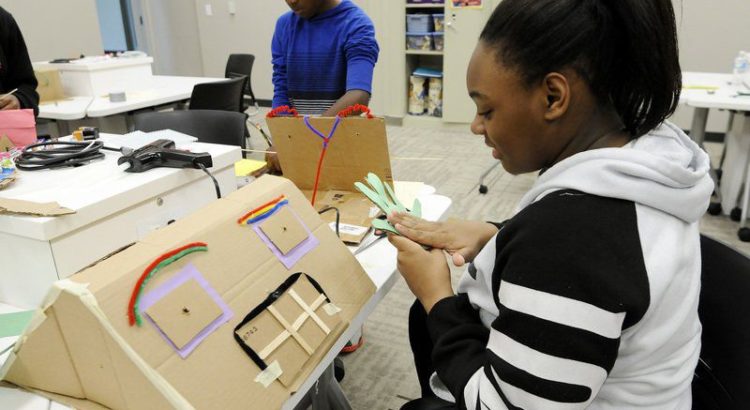
Dontez Rimpson arranges a pair of LEDs that will be the eyes for his Robot Friend.

Don Knight | The Herald Bulletin

Larry McClendon, the Girls and Boys Club after-school program director, said it’s important for young people to continue learning even after the school day ends.

“We want to have more than recreation with the kids,” he said. “When you think of a STEM program, it covers it all for the kids and gets them college prepared.”

Many of the students who attend the after-school program might not have exposure to college preparation programs through their schools, McClendon said. Boiler Bang! closes that gap.

“That’s the importance of quality after-school programs. They enhance what happens in school,” he said.

Spending time on a college campus also normalizes the experience for the students, allowing them to feel as if they belong there, McClendon said.

Boiler Bang! also is good for those preparing for a trade rather than college, McClendon said.

“I think we can excite them in a way the teachers can’t excite them,” he said.

 Lorri Barnett, business leadership, industrial tech and supply chain lecturer at Purdue Polytechnic, leads the Boiler Bang! classes.

“For me, personally, it’s about engaging the community and what we have to offer here,” she said. “Partnering with the Girls and Boys Club allows us to show what we have here and to give back to the community in a small way.”

Boiler Bang
Fay Dansby instructs Promise McClendon on building his Robot Friend during the Boiler Bang! program for children from the Girls and Boys Club of Anderson, Indiana.

Don Knight | The Herald Bulletin

Though STEM education is a primary goal of the Boiler Bang! program, students also receive valuable education about the ongoing attendance and performance standards that remain crucial as they continue their educations and enter the workforce.

For example, program guidelines encourage attendance by not permitting students to attend Boiler Bang! on days when they are absent from school and the students must maintain a grade point average of at least a 2.5.

Barnett said if she was able to reach one child and introduce her to things many take for granted, it was worth the experience.

“It’s about little insights where we see their face light up,” she said. “Maybe we open their eyes to the endless possibilities about who they might be when they grow up.”

Source:

http://www.dailyindependent.com/cnhi_network/indiana-girls-and-boys-club-gives-boost-to-stem-education/article_cc41b628-90c6-5d01-8988-acaf9b31964a.html

Comparte este contenido:

EEUU: A comprehensive look at charters and what they mean for Philadelphia’s Education

EEUU/ 09 may 2017/by Diamond Jones/Source: http://thenotebook.org

It is 4:20 p.m. and the security line at the school district’s Education Center was beginning to grumble with agitation. A mother clutched a poster-board using it as a fan as she stood in line in the heavy humid air. The small crowd took steps forward almost in unison, rushing to the auditorium hoping to get one of the limited seats.

As the group entered, the tension in the room could immediately be felt, sticking to everyone like that heavy humid air outside. The School Reform Commission budget meeting started and the agitation only grew.

Students, teachers, education advocates and community members filled the seats of the auditorium while the presiding board ushered through the meeting’s presentations. The room would erupt in cheers one second, then a wave of groans and sighs would roll through the back of the hall.

Filling up four rows of chairs were members from Memphis Street Academy, a charter school recommended for closure by the School District board. They wore bright orange shirts holding up signs saying “Save Our School” when speakers of their group were up at the podium.

Memphis Street Academy is one of two charter schools at risk of closing its doors due to a non-renewal contract recommendation.

“The community and our scholars will face a great loss if Memphis were to close,” Tracey McKnight, a Memphis parent, urged while speaking at the meeting.

For many years charter schools have been popping up throughout the city of Philadelphia. While the number of schools grow, the misunderstanding and lack of information on what exactly a charter school is, also rises.

A school, in general, is supposed to serve as a place of learning and as a pillar in communities for families. So then, what are charter schools and why have they sprouted up in almost every neighborhood of Philadelphia?

“A charter school is basically a contract,» Julian Vasquez Heilig, a professor of educational leadership and policy studies at California State University, Sacramento said. «It’s a contract involving education, the government and a private organization.”

According to the U.S. Department of Education, a charter school by definition is a publicly funded school typically governed by a group under a legislative contract with the state or respective jurisdiction. The independently operated public schools originated in the early 1990s in Minnesota. Since then, they have spread across the nation with 176 schools developing in Pennsylvania.

The Pennsylvania Charter School Law was enacted in 1997 allowed local boards of education to launch new schools that can operate freely from many local and state requirements that apply to traditional public schools. Of those 176 state schools, 86 are located in the city of Brotherly Love. According to the School District of Philadelphia, the schools were established to provide students with more educational alternatives.

Source:

http://thenotebook.org/articles/2017/05/08/a-comprehensive-look-at-charters-and-what-they-mean-for-philadelphia-s-education


Comparte este contenido:

Estados Unidos: Las escuelas públicas de Nueva York instalarán un baño adicional para alumnos transgénero

Estados Unidos/08 mayo 2017/Fuente: Univisión

Esta política de un baño neutro busca beneficar a alumnos transgénero pero también a aquellos con alguna discapacidad o condición médica. Con esta iniciativa, las escuelas públicas de la ciudad ofrecen un cuarto de baño adicional para que los estudiantes cuenten con más privacidad y no se sientan acosados por otros.

En una iniciativa que adelanta las luchas de la comunidad LGBT, las escuelas públicas de la ciudad de Nueva York deberán instalar un baño adicional o neutro para que los alumnos transgénero puedan usarlo. La política pretende beneficiar también a aquellos estudiantes con alguna discapacidad o condición médica y necesitan mayor privacidad.

Estas facilidades proveen «un espacio adicional, seguro» y no requieren un permiso especial o documentación médica, según lee el anuncio que el Departamento de Educación (DOE, por sus siglas en inglés) de la ciudad hizo este martes. La primera fase de este proyecto debe estar lista para junio de este año mientras los demás edificios tendrán estos baños para enero de 2018, señala el DOE.

«Queremos asegurarnos que todos los estudiantes tengan la privacidad adicional que necesitan y que tengan acceso a un baño que se alinee con su identidad de género», sostuvo la canciller del DOE, Carmen Fariña, al explicar que la iniciativa es parte del esfuerzo para que los alumnos tengan en la escuela un espacio de aprendizaje «seguro e inclusivo».

La iniciativa es cónsona con la guía sobre estudiantes transgénero del DOE que procura que el estudiantado se sienta seguro, independientemente de su identidad de género u orientación sexual y no se genere una cultura de bullying o rechazo que los afecte.

A través de un tuit, el capítulo de Nueva York de la Unión Estadounidense por las Libertades Civiles ( ACLU) felicitó a la ciudad al decir que «esta es una manera importante en la que podemos apoyar a que los estudiantes sean como son».

De cara a la instalación de estos baños y lo que supone esta iniciativa, los estudiantes y sus padres recibirán folletos e información adicional de parte del Departamento de Educación.

Esta política surge luego que en febrero pasado el presidente Donald Trump revocara la política implementada por Barack Obama que viabilizaba que los estudiantes transgéro utilizaran baños en escuelas públicas según su identidad de género y dejara entonces esa decisión en manos de cada estado y distrito escolar.

Cuando en marzo pasado la Corte Suprema se abstuvo en un caso crucial sobre el uso de baños por parte de transgéneros en una escuela secundaria, el alcalde Bill de Blasio dijo desde su cuenta de Twitter que en la ciudad de Nueva York, los estudiantes transgénero «usan el baño que les hace sentido» y que eso no iba a cambiar.

Fuente:http://www.univision.com/nueva-york/wxtv/noticias/politica-de-educacion/las-escuelas-publicas-de-nueva-york-instalaran-un-bano-adicional-para-alumnos-transgenero

Comparte este contenido:

Fidget Spinners, el juguete que amenaza la paz escolar en Estados Unidos

Estados Unidos/08 de Mayo de 2017/El Progreso

Este artilugio, la sensación del momento, es recomendado para niños con déficit de atención, y los escolares se escudan en ello para llevarlo a clase.  En España se están propagando a gran velocidad. Cabe en la palma de la mano y consta de 3 aros unidos entre sí. En el centro, otro círculo hace las veces de eje giratorio. La gracia, hacerlo girar y girar.

Los Fidget Spinners son la sensación del momento entre los niños de Estados Unidos. Este juguete que gira y gira tiene a los maestros dando vueltas a cómo sacarlo de las aulas, pero no es fácil pues se vende como utensilio de ayuda para los millones de pacientes con déficit de atención. En un concepto básico, este artilugio cabe en la palma de la mano y consta de 3 aros unidos entre sí. En el centro, otro círculo hace las veces de eje giratorio. En principio esa es precisamente la gracia, hacerlo girar, girar y girar. ¿Suena divertido? Pues para muchos lo es y por eso hoy inundan las paradas de autobús, los parques y, por supuesto, las escuelas.

Este sencillo artículo fue concebido en su momento, hace más de dos décadas, por una mujer que pretendía crear un juguete que, de alguna forma, simbolizara la paz. Sin embargo, hoy se ha convertido en un juguete popular y, más que eso, en el eje de una controversia que involucra a estudiantes, maestros y administradores escolares.

Este sencillo artículo fue concebido en su momento, hace más de dos décadas, por una mujer que pretendía crear un juguete que, de alguna forma, simbolizara la paz

Los padres de familia de una escuela de Henderson, en el sur de Nevada, recibieron esta semana una carta en la que se invocaba a la conciencia de todos aquellos que hasta ahora permitían que sus hijos llevaran a la escuela los famosos juguetes. «Se han convertido en una gran distracción y molestia en los salones de clase», advierte la misiva, que asegura que de ahora en adelante cualquier ingenio como ese será confiscado y devuelto a los padres del propietario o, en su defecto, al mismo dueño, aunque al final del año escolar.

No habría nada de extraordinario en esta comunicación, si no fuera porque se trata de una de las muchas que a diario se envían a lo largo y ancho del país en diferentes escuelas. Y el verdadero origen de la controversia radica en el porqué de la súbita explosión de Spinners en las aulas escolares.

AYUDA PARA PACIENTES. La razón es que muchos de estos aparatos se comercializan como herramientas de ayuda para pacientes con autismo, déficit de atención, estrés, ansiedad y hasta depresión, pues se venden para, presuntamente, aumentar la capacidad de enfoque. Por esa razón, no es raro que cuando un maestro enfrenta a su alumno y le pide guardar su juguete este le responda: «Lo siento, me lo recetó el doctor».

El número de casos de déficit de atención en Estados Unidos se disparó un 43% entre 2003 y 2011, hasta alcanzar casi seis millones de menores diagnosticados

El número de casos de déficit de atención en Estados Unidos se disparó un 43% entre 2003 y 2011, hasta alcanzar casi seis millones de menores diagnosticados, según datos de 2015 de las autoridades sanitarias del país, que indican que el 11% de los niños entre 4 y 17 años padecen esta condición. Tanto educadores como administradores están al tanto de la tendencia. Reconocen que efectivamente hay especialistas que lo recomiendan como terapia de ayuda para algunos de sus pacientes, pero aseguran que no pueden sacrificar el orden y la disciplina de un plantel entero por su causa.

CON NOTA MÉDICA. Bill Mitchell, maestro y especialista en administración educativa, afirma que lo cierto del caso es que en su escuela del sur de Nevada ha visto menos casos de niños que se meten en problemas por arrojar lápices o esconder cosas a sus compañeros, desde que usan los famosos giradores. «Entiendo la preocupación de muchos maestros y el hecho de que se les prohíba, pero hay que ver el otro lado. Yo tengo menos incidentes con estudiantes que usualmente se meten en problemas y que tienen demasiada energía, desde que usan el Spinner. Es cuestión de balance y de establecer reglas claras», opina. Reglas que planteles educativos de estados como Illinois, Massachusetts, Minesota, Florida y ahora Nevada están empezando a implementar para contrarrestar la invasión de estos juguetes.

Jerónimo Guerra, estudiante de séptimo grado en una escuela de Henderson, asegura que en su escuela la única forma de llevar uno de estos populares juguetes ahora es con una nota médica.

Fuente: http://elprogreso.galiciae.com/noticia/698450/fidget-spinners-el-juguete-que-amenaza-la-paz-escolar-en-estados-unidos


Comparte este contenido:

Los cerebros de los alumnos se sincronizan durante una clase

Por: Tendencia 21

Sus ondas cerebrales presentan modelos similares que son más intensos cuanto mayor es la concentración.

Los cerebros de los alumnos se sincronizan durante una clase, ha descubierto un estudio, ya que sus ondas cerebrales presentan modelos similares. La sincronización es mayor cuanta más concentración tienen los alumnos. La investigación, basada en EEG, servirá para determinar cómo la audiencia de un espectáculo puede influir sobre lo que se produce en el escenario.

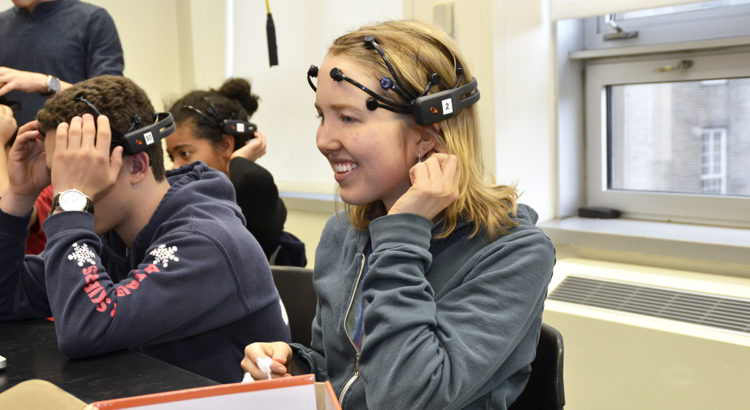
uando las personas de un grupo están concentradas unas con otras y con el entorno, sus ondas cerebrales presentan modelos similares. Lo ha descubierto un estudio que utilizó electroencefalografía (EEG) portátil para registrar simultáneamente la actividad cerebral de una clase de alumnos de secundaria durante un semestre.

El estudio midió las interacciones entre parejas de estudiantes, las interacciones entre todo el grupo como un todo y las interacciones entre estudiantes individuales y el resto del grupo.

El grado en que las ondas cerebrales de los estudiantes se alinearon anticipó tanto sus niveles de participación en la actividad de la clase como su conexión social.

El estudio constató que las ondas cerebrales de los estudiantes estaban alineadas con los otros cuando estaban más concentrados durante la clase. La sincronización entre un cerebro y otro ha identificado asimismo a los estudiantes realmente interesados en el aprendizaje.

La interacción entre cerebros también descubre la interacción social entre alumnos y las personalidades de los estudiantes. Los investigadores consideran que estos efectos se pueden explicar por los mecanismos de concentración compartidos que se producen durante las interacciones dinámicas de los grupos.

Los investigadores, dirigidos por David Poeppel, de la Universidad de Nueva York y del Instituto Max Planck, utilizaron un EEG portátil para registrar simultáneamente la actividad cerebral de los alumnos durante una clase.

Sincronización de ondas cerebrales

A continuación utilizaron nuevas técnicas de análisis para evaluar en qué medida esta actividad cerebral estaba sincronizada entre los estudiantes y la manera en que el nivel de sincronización variaba según la concentración de los alumnos en diferentes momentos de la clase y de la dinámica social.

Los investigadores consideran que el nivel de sincronización procede de un fenómeno que se conoce como sincronización de las ondas cerebrales. Los millones de neuronas producen, cada una, sus propias señales eléctricas. Estas señales, combinadas, generan oscilaciones conocidas como ondas cerebrales, que pueden ser medidas mediante electroencefalografía (EEG).

Las ondas cerebrales se solapan con las ondas sonoras o los patrones de luz del mundo exterior. Cuanto más se concentra el cerebro sobre estos modelos cerebrales, más se va a confundir con estos modelos, señalan los investigadores.

En consecuencia, si las personas de un grupo están concentradas en un mismo punto de atención, las ondas cerebrales son similares porque se confunden con la misma información compartida por los miembros del grupo.

La sincronización cerebral es igualmente necesaria para un comportamiento sincronizado de la interacción humana, explican los investigadores. Por ejemplo, una sincronización es necesaria entre dos personas que mantienen una conversación, que bailan o trasladan el mismo mueble.

Los resultados de esta investigación sugieren que la dinámica social es importante, incluso cuando las personas ven el mismo video o asisten a una conferencia.

Implicaciones y perspectivas

“Estos hallazgos tienen implicaciones para los investigadores de la educación que podrían querer saber qué técnicas de enseñanza aumentan el compromiso de los alumnos y para los neurocientíficos básicos que quieren descubrir los procesos neuronales, psicológicos y sociales subyacentes al aprendizaje», explica David Poeppel, profesor de psicología en la Universidad de Nueva York Y director del Instituto Max Planck de Estética Empírica en Frankfurt, en un comunicado de la NSF.

Para profundizar en estos procesos, los investigadores se proponen ahora ampliar el análisis simultáneo de cerebros a 45 personas en un auditorio.

De esta forma, esperan determinar cuáles son las condiciones óptimas para que un público pueda apreciar mejor un espectáculo o una película, y si existe un tamaño ideal de un grupo para que la sincronización entre cerebros sea óptima.

También se proponen descubrir si una interacción conjunta ante una tarea mejoraría la sincronización entre cerebros y cómo la audiencia de un espectáculo puede influir sobre lo que se produce en el escenario.

Fuente: http://www.tendencias21.net/Los-cerebros-de-los-alumnos-se-sincronizan-durante-una-clase_a43908.html

Comparte este contenido:

EEUU: Niagara Falls students seek better sex education than ‘abstinence only’

EEUU/06 May 2017/By

The rates of teens getting pregnant or contracting sexually transmitted diseases are far higher in Niagara Falls than the state average.

And that has one group particularly worried: Niagara Falls teenagers.

They have identified a place where they can go to help curb those high rates – their classrooms. But they’re not satisfied with what they have been hearing there.

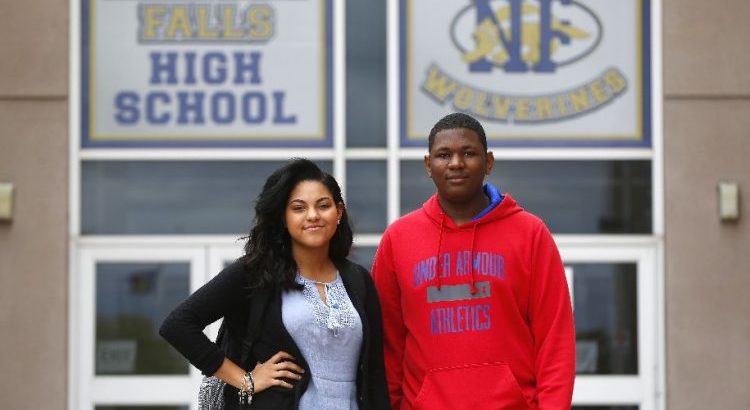
So the Niagara Falls Youth City Council, a 10-member group, addressed the Board of Education last week and asked for better sex education in the high school’s mandatory health courses.

«I’m a ninth grader, and all my friends are participating in sex, and they have no idea what they’re doing,» said Mia Maye, a freshman Youth City Council member. «They’re not being safe about it. They’re always scared there’s going to be a pregnancy scare or an STD. And they have no one to talk to about it.»

They found at least one sympathetic listener.

Superintendent Mark R. Laurrie says the students are right.

He promised to work with the board to deliver plans for a more informative sex education course by October.

«For quite a long time, we haven’t paid enough attention to it,» Laurrie said. «I think their advocacy was right on, a topic that needed to be addressed.»

Laurrie said the high school’s current sex ed program «is based around abstinence, and abstinence only.»

The students question how effective the program is, given that one of every 10 teenage girls in the 14301 and 14303 ZIP codes in Niagara Falls become pregnant, according to state Health Department data.

«We can’t hide our heads in the sand on this,» Laurrie said.

Nowhere close to average

Teen pregnancy rates have fallen in Niagara Falls, as they have in the rest of the country, but the decrease in the Falls has not kept pace with the national average.

The teen pregnancy rate in Niagara Falls’ poorer neighborhoods is about three times higher than the state average.

The percentage of teenagers with sexually transmitted diseases in Niagara County is well above statewide averages, too, and it is rising.

From 2007 to 2009, the pregnancy rate for 15- to 19-year-olds was 16 percent for the 14301 ZIP code, and 13 percent in the 14303 and 14305 ZIP codes.

In 2014, the most recent Health Department data available, the teen pregnancy rates were 9.7 percent in 14301, 9.5 percent in 14303, 6.3 percent in 14305.

The 14301 and 14303 ZIP codes cover an area generally bounded by the Niagara River, Pierce Avenue and 47th Street. Those are the southern and western parts of Niagara Falls. The 14305 ZIP code covers most of the northern part of the city, along with parts of the Town of Niagara and southern Lewiston.

Meanwhile, the U.S. Centers for Disease Control said the national teen birth rate for 2015 was 2.2 percent, the lowest since the agency has been keeping track. It’s been dropping steadily for 25 years. But CDC reports say the pregnancy rate tends to be higher in areas with lower incomes, and that would include parts of Niagara Falls.

«They’ve seen some decrease, but nowhere close to the national average,» said Christopher Spicer, vice president of programs for Planned Parenthood of Western and Central New York. «It’s pretty clear that there’s things going on in Niagara Falls that are separate and apart from the rest of the country.»

Laurrie said the district’s staff needs to discuss what content is appropriate for which grade level, while holding parent information nights on the topic and allowing them to opt their children out of the sex education curriculum.

«We really have to pull up our socks on this curriculum,» Laurrie said.

Sex ed that comes ‘way too late’

The state Education Department mandates some form of sex education, but leaves the details up to local districts.

The department «encourages districts to partner with their students, families and communities to make decisions about sexuality education that are developmentally appropriate and consistent with identified needs and values,» a department spokeswoman said. «The Education Department allows and encourages districts to adopt developmentally appropriate evidence-based curriculum supporting the needs of their students and communities, thereby providing the district flexibility to prioritize and tailor curriculum.»

The key phrase is «evidence-based,» said Spicer of Planned Parenthood.

That means a program should show it has reduced pregnancy rates.

In 2010 the state Health Department started supporting only evidence-based sex education programming. The statewide teenage pregnancy rate fell 31 percent in the ensuing four years.

«We want more education on how to avoid pregnancy,» Niagara Falls senior Adam Hamilton said.

He said sex education is discussed only for a couple of 45-minute class periods in the health course.

Laurrie said that class normally is taken in 11th grade.

«It’s way too late,» said Maye, the ninth grader.

She said she knows more than 10 teens who have become pregnant.

Niagara Falls also requires a health course in seventh grade, which discusses the physical changes students experience during puberty.

«There was nothing really about sex,» Maye said.

She said the detailed sex information should be presented at least by ninth grade.

«We’re still using the same material that was discovered in the 1960s,» Hamilton said. «We know a lot of districts in other places have Planned Parenthood come in and give demonstrations.»

Few Planned Parenthood opt outs

Planned Parenthood sends representatives to 134 schools between Buffalo and Syracuse to talk to classes and present demonstrations of contraceptive use, such as how to apply a condom or insert an intrauterine device, Spicer said.

Parents can keep their children out of those classes.

If Planned Parenthood or another organization with similar information comes into Niagara Falls schools, a parental opt-out will be allowed, Laurrie said.

Planned Parenthood has found that very few parents opt out, said Spicer, the organization’s local vice president of programs. And that is good for the students, he said.

«They are living lives so far removed from what we lived,» Spicer said.

«I think we need to open up more accessibility for outside agencies,» Laurrie said.

Besides Planned Parenthood, sex education assistance also is offered by Native American Community Services and the Buffalo Federation of Neighborhood Centers.

«The age people start having sex has lowered so much, and people don’t know what they’re talking about,» Maye said. «We need a lot of information about healthy relationships, and what to do if you’re put in that position, birth control, how to make sure you are taking your safe precautions, how to know when you’re giving consent and when you’re not. No one should be pressured on something so serious.»

What should we tell the kids?

Sex education was an early battleground in the culture wars, with fights over whether the courses should go beyond telling kids not to have sex.

«Some of the abstinence-only-until-marriage programs were ideologically based, they weren’t very practical, they didn’t consider the communities that they were going to be implemented in, so ultimately they didn’t resonate,» Spicer said.

He said newer sex education programs, such as the «Be Proud, Be Responsible» program created by ETR, a California company, continue to include abstinence «as an option that’s front and center.»

«However, this focus on repeatedly saying ‘no’ can give the impression that sexual pressure is an expected norm in relationships,» an ETR news release said. «Many educators now want to reframe instructional activities in ways that emphasize mutual respect and affirmative consent.»

In New York, the Education Department said it «requires districts to have advisory councils to include parents, school board members, school staff, community representatives, and members of local faith-based organizations to provide recommendations concerning the depth and breadth of such topics in health education.»

Of course, teens are aware that sex leads to babies and that a child having a child is a recipe for problems, but the message needs to be reinforced, Maye said.

«Teens think it will never happen to them, but it always happens,» said Maye, a freshman. «When you’re not pregnant, you don’t think you’re ever going to get pregnant.»

The ninth grader added that «information about condoms and how to check them would be very helpful at our age.»

Handing out condoms

Since last year, condoms have been available in Buffalo public schools. Students whose parents haven’t forbidden them from getting the condoms may ask their school nurse for condoms. The nurses have been trained in demonstrating their use, said Assunta Ventresca, director of health-related services for the Buffalo Public Schools.

But Laurrie opposes doing that in Niagara Falls.

«I’m not going that far,» Laurrie said. «I’m not going to distribute condoms in school. I don’t think that’s our role.»

Buffalo schools also updated their sex education materials and gave teachers new professional training on the topic, Ventresca said.

A 2015 survey of Buffalo students showed 38 percent had lost their virginity, but that number was 51 percent in 2011, Ventresca said.

She said the 2015 teen pregnancy rate in Buffalo’s nine highest reporting ZIP codes was 6.1 percent, and for the city as a whole, it was 4.95 percent. That’s still better than the rates in Niagara Falls.

Sexually transmitted diseases are also are a growing problem for local teens.

In 2015, the gonorrhea rate among those 15 to 19 in Niagara Falls was 66 percent higher than the average for the state outside of New York City. Erie County’s teenage gonorrhea rate is three times the upstate average. The numbers in both counties have risen since 2013.

The Niagara County Health Department says teenagers account for 20 percent of the known gonorrhea cases. The county reported 48 patients 15 to 19 with confirmed cases of gonorrhea in 2015.

Boys 15 to 19 account for 22 percent of Niagara County’s male chlamydia cases, and teenage girls account for 36 percent of the female chlamydia cases.

Laurrie said if Niagara Falls’ budget permitted it, he would like to have a health educator travel from school to school in the district, as early as fifth grade, talking to students about their challenges and questions on all health issues. He also said if he had enough funds, he’d like an on-campus health clinic.

«If you were given the opportunity to have a health guide who would talk about and let you know how to protect yourself, it would be a lot more helpful for us teens,» Maye said.

Source:

http://buffalonews.com/2017/05/05/niagara-falls-students-want-better-sex-education/
Comparte este contenido:

Educación cerrará 184 escuelas en Puerto Rico

Puerto Rico/06 de mayo de 2017/Fuente: http://www.telemundo47.com

Cerca de 27,000 estudiantes se verían afectados.

El Departamento de Educación anunció este viernes el cierre de 184 escuelas públicas, en una medida esperada con la que el gobierno busca ahorrar millones de dólares en medio de una profunda crisis económica que en la última década ha provocado un éxodo de sus residentes al suelo continental de Estados Unidos.

La portavoz del Departamento de Educación, Yolanda Rosaly, dijo a The Associated Press que las autoridades reubicarán a 27,000 estudiantes a otras escuelas. Los cierres ocurrirán una vez que termine el año escolar este mes.

Es el cierre de escuelas más grande que se haya anunciado en la historia del territorio estadounidense. Las autoridades cerraron 150 escuelas entre 2010 y 2015.

Según los detractores de la medida, no se tuvieron en cuenta la logística del transporte ni las necesidades de los que requieren educación especial. Un 30% de los estudiantes puertorriqueños tienen necesidades especiales, el doble del promedio en el continente.

La isla tiene un total de 1,292 escuelas públicas a las que asisten 365,000 estudiantes. La matrícula escolar ha caído en un 42% en las últimas tres décadas y se prevé una caída adicional de 22% en los próximos años, según un informe del Grupo Consultivo de Boston al gobierno anterior para ayudar a reestructurar el sistema escolar de la isla.

La caída se debe en buena medida a que los mayores se trasladan a Estados Unidos continental en busca de empleo y una vida mejor. Los docentes de la isla están en gran demanda debido a que son bilingües.

La baja tasa de natalidad también contribuye a reducir la matrícula.

Comparte este contenido:
Page 238 of 396
1 236 237 238 239 240 396