Page 239 of 396
1 237 238 239 240 241 396

“A los gobiernos les cuesta medir cuáles son los problemas tecnológicos de las escuelas” Entrevista a Steven Hodas

Europa/España/6 Mayo 2017/Autor: Pau Rodríguez/Fuente: El diario la Educación

Steven Hodas fue el responsable durante 8 años de iZone, una iniciativa de la ciudad de Nueva York para conectar escuelas y empresas tecnológicas para que desarrollasen juntas las herramientas que compraría la Administración.

De la aplicación de las nuevas tecnologías en las aulas, de sus beneficios y perjuicios, se ha hablado ampliamente. Pero ¿quién es el encargado de comprar estas herramientas? ¿Quién debe decidir qué marca de tabletas necesita una escuela? ¿O cuál es el software más adecuado? La avalancha de nuevas empresas, a menudo start-ups, que ofrecen productos a los centros educativos es cada vez más voluminosa, pero pocos se han parado a pensar cuál es el mejor procedimiento para incorporar, si es que hay. Las concertadas tienen más margen para valorar qué se adapta mejor a sus escuelas, pero las públicas están a menudo a merced de compras a gran escala de la Administración. Ante este panorama, en Nueva York pusieron en marcha el iZone, un proyecto de innovación que pone en contacto escuelas y empresas desarrolladoras de programas para diagnosticar cuáles son sus necesidades en el ámbito tecnológico y adaptar las soluciones. Esta iniciativa la dirigió durante ocho años Steven Hodas, que dio todos los detalles en el acto Debates de Educación, organizado por la UOC y la Fundación Jaume Bofill.

¿Por qué el Departamento de Educación de Nueva York decidió que debía crear un espacio de colaboración entre maestros y start-up con respecto a la innovación relacionada con las nuevas tecnologías?

Antes de participar en esta iniciativa, yo había trabajado en empresas de software, y me había dado cuenta de que las escuelas en general son compradores muy malos. Me explico: se gastaban mucho dinero sin conseguir todo el valor que sus vendedores y los respectivos productos pueden ofrecer. A la administración pública, que es quien compra, le cuesta diagnosticar los problemas reales de las escuelas en este sentido. A la vez, muchas empresas innovadoras eran reacias a trabajar con las escuelas porque para ellas es difícil y desagradable, porque los lleva a procesos muy lentos.

Hasta ahora no son las escuelas las que deciden qué se compra y qué no, sino sus titulares. A menudo, pues, el Gobierno.

Y el Gobierno suele ser un mal consumidor porque no tiene formas precisas de medir cuáles son los problemas tecnológicos de las escuelas. Además, tarda meses o años a comprar lo que cree que puede ir bien y, entonces, encima, el mundo ha cambiado y ya hay productos mejores en el mercado. Deben ir más rápido.

Entonces ¿Quién sabe qué tecnologías necesita una escuela?

Depende del problema que tengan. Si hablamos de tecnología relacionada con el aprendizaje, seguramente los maestros son quienes más pueden saber. Ellos saben cómo hacer clase, cómo aprenden sus alumnos, así que deben formar parte de la definición del reto. En Estados Unidos -en otros países no lo sé- los maestros nunca han formado parte de este proceso. Suele ser alguien en una oficina sin contacto con los maestros, que no ha pisado un aula desde hace años, sin herramientas para evaluar el producto, el que toma la decisión de comprar. Y se gastará muchísimo dinero en colocar una herramienta en todas las escuelas que luego le sorprenderá que nadie utiliza.

Hay muchos ejemplos de estas compras al por mayor. En España hubo un caso con la compra masiva de ordenadores. En Los Ángeles hay un juicio abierto entre la Administración y Apple y Pearson por la adquisición millonaria de tabletas para todos sus alumnos.

Esto ocurre porque no se paran a pensar despacio. Alguien en Los Ángeles decidió que repartirían tabletas en todo el mundo sin preguntar a los maestros. ¡Nadie con dos dedos de frente daría un proyecto de esta envergadura sin haberlo probado antes! Hacer un piloto con cinco escuelas, ver cómo funciona, qué cambiarían …

¿Es esto lo que hacen en iZone? ¿Valorar la tecnología antes de aplicarla?

Usamos los principios básicos del diseño centrado en el usuario. Es decir, que se va a la persona que tiene el problema, es decir, al maestro: se lo observa, se le escucha, se le deja diseñar el propio problema… Y entonces los diferentes desarrolladores tratan de dar respuesta, la devuelven al docente, que prueba las diferentes opciones, las elige… Fíjate que hasta aquí aún no se ha comprado nada. La prueba puede durar tres o seis meses, trabajando codo a codo los maestros y los desarrolladores, que adaptan el producto en función de ello. Al cabo de unos meses, tienes una herramienta mucho mejor para las escuelas, y la próxima que desarrollen seguro que será más cuidadosa.

Las empresas tienen ánimo de lucro, claro. ¿Cómo saben que tienen un interés real para hacer buenos productos educativos?

Deben tener ánimo de lucro, sino no durarán mucho en el mundo de la empresa. Les interesa hacer productos útiles para las escuelas aunque solo sea para garantizar que crecen como empresa. Tienen un interés real por hacer las cosas mejor. Y créeme, la gente que funda pequeñas empresas o start-up que ofrecen servicios a escuelas saben que no harán mucho dinero rápidamente. Si buscaran eso se dedicarían a otra cosa.

Fotografía: Robert Bonet

Pero me refiero a que ustedes dan una información con un potencial de explotación muy valioso -por ejemplo: qué necesitan los docentes- a unas compañías determinadas. ¿Cómo las seleccionan?

Esto es cierto, tenemos que ser muy cuidadosos a la hora de conectar las empresas con los maestros. Nos aseguramos de que se tomen el proyecto serio y que su compromiso se mantenga en el tiempo. Hacemos un proceso de evaluación severo. También con los maestros, porque las startup están invirtiendo su tiempo sin asegurarse de que venderán el producto, lo hacen de forma gratuita. El compromiso y el nivel han de ser en ambos, porque es una relación que no tiene nada que ver con una transacción.

Y al final, ¿quién decide qué se compra? ¿La escuela o la Administración?

En Estados Unidos depende de la ciudad. A veces uno, a veces otro, dependiendo del coste y, sobre todo, de si es o no para todos los centros.

Póngame un ejemplo de iZone de colaboración entre maestros y empresas emergentes que haya llegado a buen puerto.

Quizá el más conocido es el Gap App Challenge, pensado para solucionar un problema de bajos resultados de matemáticas en Primaria. Abrimos un concurso donde se presentaron 200 empresas y particulares. Los maestros evaluaron las propuestas, y escogieron 40 de finalistas. Estas se adjudicaron a diferentes clases que también se habían presentado al concurso. Los juntamos de forma cuidadosa y trabajaron conjuntamente para mejorar los programas. El proceso duró 9 meses.

¿Y ustedes subvencionan a las empresas?

No, nunca. Estos experimentos no comportan darles dinero. A excepción de los que se llevan premios en casos como el del ejemplo anterior. El compromiso consiste en invertir su tiempo y recursos para tener estas reuniones con los maestros. Y lo hacen con gusto, algunas veces volando a Nueva York desde la otra punta del país.

Las nuevas tecnologías ¿pueden ser una herramienta que ayude a personalizar el aprendizaje? ¿O aún están lejos de este objetivo?

De entrada, sabemos que la tecnología en sí misma no conduce a la personalización. Es una herramienta que nos sirve para un objetivo, y gracias a dios es el objetivo el que debemos definir primero, y luego pensar cómo adaptamos la herramienta. En iZone no sólo desarrollábamos tecnologías, también a veces repensábamos cuestiones del día a día en el aula, como los espacios o los tiempos. Para personalizar los aprendizajes, si me lo permites, no necesitas ni electricidad: te basta personas conversando y un maestro hábil que aprovecha lo que sabe cada alumno. Con o sin iPad.

Las escuelas cada vez reciben más mensajes sobre la incoporación de tecnologías. Empresas que los venden su producto, familias que recomiendan aplicaciones, maestros informados que proponen otras… ¿Cómo debe proceder un centro ante esto?

Todo ha cambiado mucho en los últimos años, es cierto. Pero antes también pasaba. Los directores, o las administraciones, siempre han tenido vendedores llamando a su puerta constantemente. Con los libros de texto, por ejemplo. Con el actual bombardeo de recursos por parte de startup, no hay forma de evaluarlo todo. La pregunta que se hace un centro es: “¿Como sé qué hay en el mercado y qué es bueno o malo?”. Y la cuestión es que no hay un producto bueno, sino que depende del ecosistema o del currículo donde se aplique. Sabemos que aprender es complejo y que no hay ningún factor mágico. Para ello se ha de implicar a las escuelas en el proceso de selección de los productos.

¿Y cómo los evalúan?

Probando el producto sin pagar, o pagando poco. Y entonces la clave es habilitar webs donde los profesionales puedan ir compartiendo sus comentarios sobre los productos y los contextos en los que los han utilizado. Al estilo de webs como Tripadvisor.

Una última pregunta. Las nuevas tecnologías cada vez tardan menos en quedar obsoletas o superadas. ¿Esto significará que el sistema educativo tiene que gastar cada vez más? ¿Se puede evitar?

Pues no lo sé… Es algo que tendremos que resolver. Lo que es evidente es que tenemos que aceptar que la forma como adquirimos ahora tecnología no es la mejor ni es la que debería ser.

Fuente: http://eldiariodelaeducacion.com/blog/2017/05/01/a-los-gobiernos-les-cuesta-medir-cuales-son-los-problemas-tecnologicos-de-las-escuelas/

Fuente de la imagen: https://leaders.edweek.org/wp-content/uploads/2014/02/LTLF-Steven-Hodas-Emile-Wamsteker-940.jpg

Comparte este contenido:

EEUU: What was the protest group Students for a Democratic Society? Five questions answered

América del Norte/EEUU/Mayo del 2017/Noticias/https://theconversation.com

Editor’s note: The 2016 election brought student activism back into the spotlight. No student activist organization in U.S. history has matched the scope and influence of Students for a Democratic Society (SDS), the national movement of the 1960s. We asked Todd Gitlin, former president of SDS (1963-1964), professor of journalism and sociology at Columbia University, and author of The Sixties: Years of Hope, Days of Rage for his perspective on this renowned organization and the state of student protest today.

1. What were the goals of Students for a Democratic Society (SDS) when it started?

SDS wanted participatory democracy – a public committed to making the decisions that affect their own lives, with institutions to make this possible. Its members saw an American citizenry with no influence over the nuclear arms race or, closer to home, authoritarian university administrations.

The organization favored direct action to oppose “white supremacy” and “imperial war,” and to achieve civil rights and the radical reconstruction of economic life (i.e., the redistribution of money into the hands of African-Americans in order to fight racism). SDS was increasingly suspicious of established authorities and looked askance at corporate power. But there was no single political doctrine; for most of its existence (1962-69), SDS was an amalgam of left-liberal, socialist, anarchist and increasingly Marxist currents and tendencies.

Several hundred people affiliated with the SDS race through the Los Angeles Civic Center in a 1968 demonstration against the Vietnam war. AP Photo/Harold Filan

From 1965 on, it was focused chiefly on opposing the Vietnam war. After 1967, SDS became partial to confrontational tactics and increasingly sympathetic to one or another idea of a Marxist-Leninist revolution.

2. How did SDS grow so quickly, from fewer than 1,000 members in 1962 to as many as 100,000 in 1969?

Tom Hayden, president of SDS from 1962 to 1963. AP Photo

The organization was launched with a stirring manifesto, the Port Huron Statement, and a leadership that was passionate, visionary, energetic, stylish and thoughtful.

Unlike most left-wing radicals and manifestos of the time, the Port Huron Statement was forthright and not riddled with jargon, thus its opening sentence:

“We are people of this generation, bred in at least modest comfort, housed now in universities, looking uncomfortably to the world we inherit.”

SDS, in language and spirit, spoke to a widely felt need for a New Left that was free of the dogmas about “class struggle” and a “vanguard party” that prevailed in the 1930s, 1940s and 1950s.

Its growth was helped along by a structure that, for many years, was flexible enough to encompass diverse orientations and styles of activism. Its volcanic growth after the 1965 escalation of the Vietnam War was made possible by its combination of zealous idealism and pragmatic activity that made sense to students – protests, demonstrations, sit-ins and marches.

3. Why did the SDS effectively dissolve in 1969? Were the Weathermen (the militant radical faction of SDS) to blame?

Poster from the 1969 Days of Rage demonstrations, organized by the Weathermen faction of SDS. SDS-1960s.org

Under the pressure of the Vietnam War and black militancy in the wake of Martin Luther King Jr.‘s assassination, SDS’ leadership factions adopted fantastical ideas, believing they were living in a revolutionary moment. The Weathermen were the most ferocious, dogmatic and reckless of the factions. Inspired by Latin American, Southeast Asian and Chinese revolutionaries, but heedless of American realities, they thought that by stoking up violent confrontations, they could “bring the war home” – force the U.S. government out of Vietnam to deal with a violent domestic revolt.

On March 6, 1970, a dynamite bomb they were building in New York City – intended to blow up hundreds of soldiers and their dates at a dance that evening – went off in their own hands, killing three of their own number. The Weather Underground (as the faction now called itself) went on to bomb dozens of government and corporate targets over the next few years, but the group was incapable of leading a larger movement: Though there were no further casualties after the 1970 explosion, the vast majority of SDS’ members were put off by the Weatherman violence. As the Vietnam War came to an end, no student radical organization remained.

4. What is the chief legacy of SDS?

SDS tried many tactics in its effort to catalyze a national radical movement. It was multi-issue in a time when single-issue movements had proliferated: hence, the SDS slogan “the issues are interrelated.” With community organizing projects, it tried to create an interracial coalition of the poor; it launched civil disobedience against corporations like the Chase Manhattan Bank, which was seen to be supporting the South African apartheid regime; it helped launch the most effective antiwar movement in history; it incarnated a generational spirit that was both visionary and practical.

SDS also engendered second-wave feminism, though sometimes in a paradoxical fashion. Many female members felt both empowered and thwarted – they gained skills and experience in organizing, but were angered by their second-class status in the organization.

But SDS’s confrontational tendencies from 1967 onward bitterly alienated much of its potential political base. In my view, the group’s romanticism toward the Cuban, Vietnamese, and Chinese revolutions – and its infatuation with the paramilitary Black Panther party – flooded out its common sense and intellectual integrity.

5. How has campus protest changed since the days of SDS?

Many changes that SDS campaigned for came to pass. Student life loosened up and became less authoritarian. In the decades since, students have taken on issues that were not raised – or even recognized – 50 years ago: climate change, sexual violence and racial subordination through the criminal justice system. On the other hand, campus protest is dominated by single issues again, as it was in the period before SDS. Much of the current issue-politics rests on an assumption that racial, gender or sexual identity automatically dictates the goals of student activism.

I also believe that student protest has become far more modest in its ambitions. It has abandoned extreme revolutionary delusions, but at some expense. It has failed to build a tradition that’s serious about winning power: Students are content to protest rather than work toward building political majorities and trying to win concrete results.

I feel that student protest today often confines itself within the campus and fails to sustain organizing outside. As the right threw itself into electoral politics, student activists largely dismissed the need to compete. As a result, students of the left face the most hostile political environment in modern times.

Fuente:

https://theconversation.com/what-was-the-protest-group-students-for-a-democratic-society-five-questions-answered-76849

Fuente Imagen:

https://lh3.googleusercontent.com/XaFf0x4_789O3sP3nIiQ1ZP5WHvHlEedBKn0S4zSMpzCWUnu_ird5f75-FozeBkwbkuQ=s85

Comparte este contenido:

En EEUU: Experts gather at MIT to explore new research in education technology

Researchers, policymakers, and education company leaders discuss innovative technologies to improve education for disadvantaged learners.

América del Norte/EEUU/MITPrensa

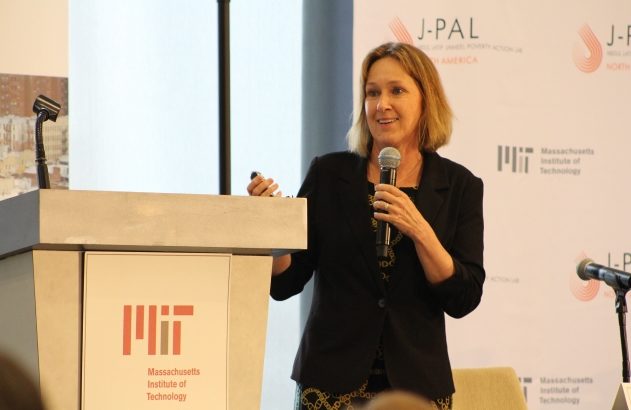
Resumen: Expertos se reúnen en el MIT para explorar una nueva investigación en tecnología de la educación Los investigadores, legisladores y líderes de la compañía educación discuten tecnologías innovadoras para mejorar la educación de los alumnos desfavorecidos. J-PAL América del Norte  28 de de abril de, 2017 Preguntas de la prensa La tecnología avanza a un ritmo vertiginoso, y se está cambiando fundamentalmente la forma en que los maestros, los políticos y los investigadores piensan acerca de la educación. El 31 de marzo, J-PAL América del Norte organizó una conferencia en el MIT para discutir el papel de la investigación y la evidencia en la tecnología de la educación, que reúne a un grupo diverso de líderes de todo el mundo académico, las empresas de educación, la práctica de la educación y la administración, y la filantropía para compartir sus experiencias implementación y evaluación de la tecnología, tanto dentro como fuera del aula. A lo largo de la conferencia, los oradores y participantes abogaron por una evaluación rigurosa para avanzar en nuestra comprensión de cómo la tecnología puede ayudar a los estudiantes, independientemente del nivel de ingreso y aprender.

Technology is developing at a breathtaking pace, and it’s fundamentally changing the way teachers, policymakers, and researchers think about education. On March 31, J-PAL North America hosted a conference at MIT to discuss the role of research and evidence in education technology, bringing together a diverse group of leaders across academia, education companies, education practice and administration, and philanthropy to share their experiences implementing and evaluating technology both in and out of the classroom. Throughout the conference, speakers and participants advocated for rigorous evaluation to advance our understanding of how technology can help students, regardless of income level, learn.

Technology: An opportunity, a challenge, and the need for research

Quentin Palfrey, executive director of J-PAL North America, and Phil Oreopoulos, J-PAL Education co-chair and professor of economics and public policy at the University of Toronto, discussed the transformative promise of education technology and some of its most exciting uses, including approaches to personalize learning and scale instruction to learners across different contexts. However, they warned that rapid advances in education technology create the risk of leaving those without access behind, exacerbating already stark inequalities between affluent and low-income students — a public policy problem known as the “digital divide.”

“Emerging fields like machine learning, big data, and artificial intelligence will likely compound the influence of technology even further, increasing the range of tools that ed-tech can draw on and speeding up cycles of learning and adjustment…[but] these technologies are arising in a context of persistent inequality,” Oreopoulos said. “Despite expanding access, the digital divide remains very real and very big. If ed-tech practitioners and researchers don’t pay close attention to equity of access and tailoring programs to the needs of those at the lower end of the income spectrum, there’s a risk that the growing influence of technology will aggravate the educational inequalities that already exist.”

Oreopoulos set the stage with a review of the current evidence on what in education technology works, what works best, and why, drawing on over 90 studies across economics, education, and social psychology. Technology-assisted personalized learning programs emerged as an especially effective approach from the review, which stems from an upcoming education technology literature review. However, many open questions remain about how to leverage technology to help disadvantaged learners, which technologies are the most cost-effective, and why successful approaches work.

Kumar Garg, a former White House advisor who spearheaded President Obama’s efforts to improve STEM education, underscored the tremendous need for investment in education research to help us answer these questions. In 2015, only 0.4 percent of the federal education budget was spent on research, compared to 6.3 percent in health and 12.3 percent in defense. By increasing investments in rigorous research, we can better understand how to use technology to truly transform education, Garg stated.

Not a silver bullet for education

Despite the excitement around education technology, a consistent theme throughout the conference was how technology alone will not serve as a panacea. Rather, it’s best used as a complement to good pedagogy.

«Technology is not a silver bullet, but education is,» said Karen Cator, CEO of Digital Promise and former director of the Office of Educational Technology for the U.S. Department of Education. During her keynote address, Cator highlighted the need to produce and use evidence to understand how we can make the most of technology both within and outside of the classroom. She went on to discuss educational equity, technology, and the profound impact of education on social justice and economic development.

Ken Eastwood, superintendent of the Middletown City School District in New York, shared his personal experience with innovative approaches to improving high-poverty schools in his home district. In his experience, “pedagogy and the art of teaching trumps technology every time,” and emphasizing complementary professional development is key to optimizing technology in the classroom.

Working at the intersection of policy, research, and philanthropy

Alongside practitioners and researchers, the conference featured philanthropic leaders like Emary Aronson, the interim chief program officer of the Robin Hood Foundation. Aronson spoke as part of a panel focused on improving access to education in the 21st century. “Technology enables access to information, and access to information is a poverty issue,» Aronson said of the foundation’s role in the education technology space.

Speakers also addressed the challenge of translating research into policy action. Tom Kane, a leading education scholar at the Harvard Graduate School of Education, discussed how he aims to keep the research process and results localized and timely in order for evidence to be actionable. Former U.S. Chief Technology Office Aneesh Chopra and former White House advisor R. David Edelman shared their perspective on how research can impact large-scale federal policies.

Additional speakers from academia and education companies discussed diverse strategies to embed rigorous evaluation in the rollout of new education programs — such as former First Lady Michelle Obama’s Reach Higher Initiative — to better understand how real-world policies affect student outcomes. Building off the lessons from the conference, J-PAL North America plans to catalyze new research and promote evidence-based policymaking in the education technology space.

Fuente: http://news.mit.edu/2017/experts-explore-new-education-technology-research-0428

Comparte este contenido:

MIT y Comunidad Jameel anunciaron la creación de la Latif Jameel Laboratorio Mundial de Educación Abdul

Resumen: Hoy MIT y co-fundador de la Comunidad Jameel, que fue establecido y está presidido por Mohammed Abdul Latif Jameel ’78, anunciaron la creación de la Latif Jameel Laboratorio Mundial de Educación Abdul ( J-LEP ). El esfuerzo de colaboración mundial ayudará a los educadores, a universidades, gobiernos y empresas a cambiar completamente la eficacia y el alcance de la educación, con el objetivo de ayudar a preparar a la gente de todo el mundo para un mercado laboral alterado radicalmente por el progreso tecnológico, la globalización, y la búsqueda de mejores niveles de vida en todo el mundo. El enfoque rector de J-VLA será la atención a aprendices en el mundo en desarrollo, así como las mujeres, las niñas, y una creciente población desplazada que incluye refugiados.

Today MIT and cofounder Community Jameel, which was established and is chaired by Mohammed Abdul Latif Jameel ’78, announced the creation of the Abdul Latif Jameel World Education Lab (J-WEL).

The global collaborative effort will help educators, universities, governments, and companies revolutionize the effectiveness and reach of education, and aims to help prepare people everywhere for a labor market radically altered by technological progress, globalization, and the pursuit of higher living standards around the world. A guiding focus of J-WEL will be learners in the developing world, populations underserved by education such as women and girls, and a growing displaced population that includes refugees.

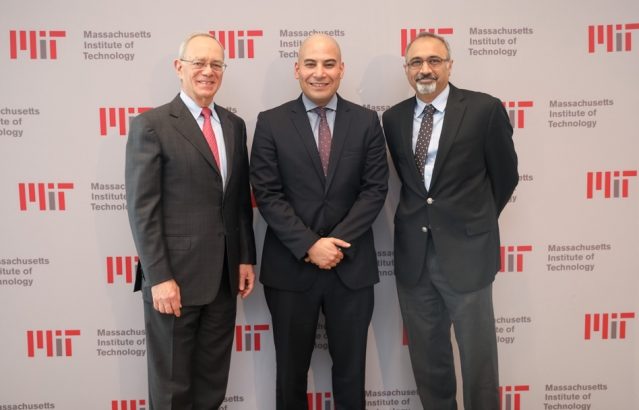
“For years, Community Jameel’s commitment to finding practical solutions to complex global problems has inspired all of us at MIT,” says MIT President L. Rafael Reif. “With J-WEL, Community Jameel builds on that extraordinary legacy with an effort that will empower learners around the world and in the United States, opening educational pathways that are currently closed to millions. We are grateful to Community Jameel for their vision, their partnership, and their unwavering dedication to making a better world.”

J-WEL will be an anchor entity within MIT’s open education and learning initiatives that are led by MIT Vice President for Open Learning Sanjay Sarma. The three special interest groups integral to J-WEL’s mission — pre-K–12, higher education, and workplace learning — will each have faculty leads. Professors Angela Belcher and Eric Klopfer will direct pre-K–12, and Professor Hazel Sive will direct the higher education special interest group. A workplace learning faculty director will be named soon. M.S. Vijay Kumar, MIT’s associate dean of digital learning, will serve as J-WEL’s executive director and will work closely with the faculty leads. Faculty will receive J-WEL grants for research related to this initiative. J-WEL will also draw on existing educational resources at MIT, including the MIT Integrated Learning Initiative (MITili) and Office of Digital Learning, to research and apply what works best in the education of children, university students, and workers.

Leveraging MIT’s resources, J-WEL will convene a global community of collaborators for sustainable, high-impact transformation in education through research, policy, pedagogy, and practice. The lab will foster new initiatives and build a powerful collaborative of schools, governments, nongovernmental organizations, philanthropists, and businesses. Through these networks, J-WEL and MIT at large will gain input and insight from the regions, both domestic and international, where the new educational tools and methods will be deployed. Collaborative members will have special access to MIT programs and resources, such as trainings, workshops, and certification programs.

Fady Mohammed Jameel, president of Community Jameel International, says: “Education and learning are fundamental to a strong society and economy — they promote employment and create increased opportunity for all. While there has been progress made in improving education, there is always more that can be done. Enabling individuals to do their very best and reach their full potential, whatever their background, is a key priority for Community Jameel and the world. That is exactly why we are establishing the Abdul Latif Jameel World Education Lab with MIT.

“MIT is one of the most respected research universities in the world, and through J-WEL those involved in education will have special access to their programs and resources, such as training and workshops, as well as collaborative opportunities with MIT and other members. From our ongoing collaborations, including the Abdul Latif Jameel Poverty Action Lab and the Abdul Latif Jameel World Water and Food Security Lab, we have already seen firsthand the benefits of working with MIT, and J-WEL will build on that record of success.”

In an age of social and technological change, education is a critical tool for society. MIT’s approach has centered on understanding the processes of learning at a fundamental level, allying that understanding with the technological means to deliver learning, and then designing educational systems in the most effective ways possible. Building on MIT’s historic footprint in education at the childhood level (through STEM teacher education camps and programs such as Scratch), in the collaborative formation of new universities (such as Singapore University of Technology and Design and Instituto Tecnológico de Aeronáutica in Brazil), and in the education of professionals (through MIT Professional Education and MIT Sloan Executive Education), J-WEL will work with its global collaborators to improve the delivery and quality of educational opportunities using new digital, maker, and in-person “mind-and-hand” approaches to learning.

Early examples of MIT efforts in this arena include work at the high school level across India with the Tata Trusts, on teacher education with the Woodrow Wilson Foundation, improvements to workplace learning at Accenture, and expanded educational reach in the Arab world with the Abdulla Al Ghurair Foundation for Education.

“Tata Trusts has successfully partnered with MIT on seeding the Connected Learning Initiative (CLIx) that leverages the power of technology to enhance both teaching and learning, in high schools in India. The Trusts are also collaborating with the Tata Center for Education and Design at MIT to apply technical talent to address challenges in development. We look forward to J-WEL breaking new ground through applied research in education in India and the world,» says Mr. R. Venkataramanan, managing trustee of the Sir Dorabji Tata Trust, in India.

“We have a very special collaboration with MIT spanning several years, with a shared vision to bring to life new ways of learning for people at unprecedented scale,” says Rahul Varma with the Talent and Learning Office at Accenture. “Hearing about the plans for J-WEL reminds us of MIT’s expertise and commitment in helping to address major issues of the day. I have no doubt J-WEL will be a success and have significant impact.”

“It is exciting to see MIT put together an effort to share emerging best practices across the world in education, especially in the primary and secondary education spaces. The need for new thinking in these sectors is pressing, especially in STEM, and MIT is perfectly poised to take on this challenge,” says Arthur Levine, president of the Woodrow Wilson Foundation

“Through J-WEL, we will forge new and long-lasting collaborations as we learn, share, and train together, using the assets developed at MIT as well as by leveraging the community convened by J-WEL,” says Sarma. “To borrow an idea expressed by philosophers and educators across the centuries: J-WEL will help to spark fires in students’ minds, and enable educators to spark solutions to their communities’ most demanding challenges.”

«As we help young people prepare to navigate in an uncertain future, we cannot do so without re-imagining learning at every level, inside and outside formal schooling. This is why our collaboration with MIT on online learning is critical to our strategy to educate and upskill Arab youth. We welcome J-WEL and look forward to being a part of its visionary work, and we applaud Community Jameel for this important educational investment,» says Maysa Jalbout, CEO of the Abdulla Al Ghurair Foundation for Education.

The gift is part of MIT’s current $5 billion Campaign for a Better World and is consistent with Community Jameel’s focus on creating a better future. Abdul Latif Jameel Poverty Action Lab (J-PAL), established in 2003, seeks answers to poverty in a changing world. Abdul Latif Jameel World Water and Food Security Lab (J-WAFS), established in 2014, seeks answers to food and water scarcity issues as the population rises and global warming takes hold.

Fuente: http://news.mit.edu/2017/abdul-latif-jameel-world-education-lab-established-0502

Comparte este contenido:

Estados Unidos: Las escuelas charter Celerity, bajo investigación federal, podrían perder su acreditación

Estados Unidos/Mayo de 2017/Autora: Anna Phillips/Fuente: Hoy

Siete escuelas dirigidas por la organización sin fines de lucro Celerity Group (CEG) se extienden a través de todo el Distrito Escolar Unificado de Los Ángeles (LAUSD). Seis de ellas llevan el sello de aprobación de la Asociación Occidental de Escuelas y Universidades, comúnmente conocida por su acrónimo WASC, una agencia de autorización reconocida por el Departamento de Educación de los Estados Unidos.

El miércoles pasado, la asociación envió una carta a la directora ejecutiva de Celerity, Grace Canada, donde notificó que tras una investigación preliminar había descubierto que la red violaba varias de las políticas de la agencia. La entidad exigió que Celerity proporcionara pruebas para demostrar “por qué no debería negársele la acreditación a todas las escuelas CEG”, según la carta firmada por el presidente de la entidad, Fred Van Leuven.

Fundado por una exempleada del LAUSD, Celerity Educational Group maneja escuelas charter en Los Ángeles hace más de una década. En los últimos años tuvo un alcance nacional y se expandió a Ohio y Florida – donde luchó por hacerse un lugar en el mercado, hasta que finalmente se retiró- a Luisiana, donde hoy en día todavía operan cuatro charter.

Pero después de años de relativamente poco escrutinio, la red es ahora objeto de dos investigaciones, una por parte del Inspector General del LAUSD, quien examina las denuncias de malversación de fondos públicos, y otra por parte de agencias federales, incluyendo el Departamento de Educación de los Estados Unidos.

En enero, agentes del Departamento de Seguridad Nacional, el FBI y otros organismos allanaron las oficinas de Celerity, así como la sede de una organización sin fines de lucro relacionada, Celerity Global Development,  y el domicilio de su fundadora, Vielka McFarlane.

En su informe de los registros financieros del grupo, The Times documentó años de gastos cuestionables realizados por los líderes de Celerity y posibles conflictos de interés.

Ninguna persona en Celerity, incluyendo a McFarlane, fue acusada de un delito derivado de las operaciones de las escuelas. Los líderes de la organización, en repetidas ocasiones, han defendido la administración y las decisiones financieras de la red como perfectamente legales y típicas de las escuelas charter, las cuales son operadas de forma privada y reciben fondos públicos.

En su carta a Celerity, WASC criticó a la red por no alertar a la asociación en forma “oportuna” sobre la investigación y redada federal. Las políticas de la asociación requieren que las escuelas informen cualquier “cambio significativo” dentro de 30 días. También cuestionó la ética y el compromiso de la organización para divulgar plenamente la información sobre sus operaciones.

Dentro de la carta de WASC se incluyó una lista de solicitudes de información detallada sobre las finanzas de Celerity y la implicación de McFarlane en la red charter. En la carta se le pidió a Celerity que lleve a cabo una auditoría independiente para determinar si la organización es financieramente estable y si se atiene a las leyes estatales y federales.

“Con base a la información disponible, la comisión considera que la integridad de las escuelas CEG ha sido gravemente socavada”, señaló la nota. WASC le dio a Celerity hasta el 2 de junio próximo para proporcionar la información solicitada. Van Leuven no respondió a la solicitudes de comentarios de este medio.

Celerity afirma que notificó a la asociación sobre la investigación federal y le proporcionó a The Times una carta con fecha del 30 de enero pasado, menos de una semana después de la redada, en la cual informó a WASC que agentes federales habían decomisado documentos de sus oficinas.

“Tan pronto como nos enteramos del comienzo de esta investigación,  notificamos a WASC al respecto y le dimos seguimiento con llamadas e información sensible a las preocupaciones de la asociación, incluyendo una correspondencia del 30 de enero”, aseguró la red en una declaración escrita proporcionada por un consejero de relaciones públicas.

“Continuamos con este esfuerzo y trabajaremos con WASC teniendo en cuenta sus preocupaciones, para asegurar que nuestras escuelas sean reconocidas por la educación de alta calidad que proporcionan, no por los rumores e insinuaciones”.

La acreditación es importante para las preparatorias, ya que muchos colegios, universidades y programas de becas prefieren o requieren que los alumnos tengan diplomas de instituciones acreditadas. Para las escuelas K-8 como las dirigidas por Celerity, la pérdida de la acreditación no tiene ramificaciones inmediatas. Conseguir el sello de aprobación de una agencia externa es opcional.

“Es básicamente sólo una cosa de estatus”, afirmó Robert Perry, coordinador administrativo de la división de escuelas charter del LAUSD. Pero el distrito escolar sí toma en cuenta la acreditación al decidir si renueva una escuela charter por otro término de cinco años. “Que WASC haga eso es una señal de que algo debe estar mal. Eso es bastante raro”, expresó Perry. “Atrae una atención no deseada sobre la escuela”.

A pesar de las preguntas que rodean el funcionamiento de Celerity, la red está decidida a abrir dos escuelas nuevas el año próximo. El viernes pasado, el Departamento de Educación de California emitió una recomendación para que la Junta de Educación del estado renueve dos de las escuelas existentes de Celerity, a las cuales el LAUSD se negó a conceder otro término de cinco años. La recomendación exige a su vez como condición que Celerity acuerde entregar a los funcionarios estatales más información sobre su funcionamiento interno.

Fuente: http://www.hoylosangeles.com/noticias/educacion/hoyla-lat-las-escuelas-charter-celerity-bajo-investigacion-federal-podrian-perder-su-acreditacion-20170502-story.html


Comparte este contenido:

Estados Unidos: Otra oportunidad para jóvenes de LA involucrados en pandillas y drogas

Estados Unidos/04 mayo 2017/Fuente: La Opinion

Learning Works Charter School tiene a «chasers» que motivan a los alumnos a seguir estudiando.

Para Destiny Lozano caminar a la escuela o al trabajo por las calles de Boyle Heights se convierte en una sentencia de cárcel o de muerte cada día.

La joven de 20 años residente de Lincoln Heights pertenece a una pandilla rival a las existentes del barrio de Boyle Heights.

Sin embargo, su deseo por superarse vence su miedo.

Lozano es estudiante de Learning Works Charter School, una secundaria no tradicional que ofrece un programa académico personalizado y riguroso para estudiantes que están en alto riesgo de abandonar sus estudios sin haber obtenido un diploma de secundaria.

La joven de descendencia mexicana recuerda estar involucrada en las pandillas desde que tiene uso de razón.

Destiny Lozano, 20, muestra sus tatuajes. (Foto: Aurelia Ventura/La Opinión)

“Toda mi familia son pandilleros, vengo de varias generaciones de pandilleros”, contó Lozano el mientras tomaba un descanso recientemente de sus clases en Learning Works.

“Yo no veía ni maestros, ni abogados ni nada de eso cuando iba creciendo, yo quería ser un gangster”, aseveró.

Su vida desde los 13 años se convirtió en un entrar y salir de la cárcel juvenil. Su primer tatuaje se lo hizo a la edad de 12 años.

Un tatuaje muy notable es el de su frente –que dice “R.I.P. Danny”. “Él era mi papá. Murió cuando yo tenía 5 años”, aseveró la joven.

A su costado, otra estudiante hacía su tarea. A Samantha Espino, Learning Works le permite estudiar mientras cuida a su hija Desiree de 1 año.

Espino, de 20 años, dijo que nunca conoció a su padre y cuando tenía 5 años de edad su madre falleció. Ella quedó bajo la custodia de su abuela, pero el sentimiento de desamparo y falta de atención la llevaron a involucrarse en las drogas y el alcohol desde los 14 años.

Samantha Espino con su hija Desiree, de un año, asiste a una escuela no tradicional en Boyle Heights. (Foto: Aurelia Ventura/La Opinión)

“Me mandaron a un hogar de crianza y yo no quería estar ahí, entonces huía a cada rato”, recordó Espino.

La joven dijo que aunque se cuestionaba por qué se involucraba en situaciones de peligro no podía dejar esa vida. Se volvió adicta a las drogas. “Utilizaba cocaína, marihuana, PCP, crack, cristal meth y alcohol”, contó Espino, quien asegura que cuando estaba bajo las drogas solía robar, asaltar casas y no sentía miedo.

“Estaba tan drogada que ni pensaba. Las drogas me ayudaban a olvidar”, recordó.

Sin embargo, a los 19 años – cuando nació su niña – Espino decidió darle un cambio a su vida. “Ahora que tengo a mi bebé no quiero que pase por lo que yo pasé”, dijo la joven madre soltera.

La “Chaser” que no los deja solas

Lo que convierte a Learning Works en una escuela diferente es la presencia de las mentoras o “Chasers”.

Bernie Pérez, de 26 años, es la chaser de Lozano y Espino. Su trabajo consiste en perseguir a las jóvenes para que no abandonen los estudios y brindarles apoyo.

Ella conoce de primera mano las dificultades y obstáculos de ambas chicas, puesto que ella tuvo un pasado similar. En sus años de estudiante Pérez se involucró en las pandillas y se convirtió en madre a los 16 años.

Bernie Pérez, la “chaser” de Lerning Works. (Foto: Aurelia Ventura/La Opinión)

Sin embargo, fue el programa de Learning Works en Pasadena lo que la ayudó a salir adelante. Así logró obtener su diploma de secundaria y ahora se prepara para obtener su licenciatura en la University of Phonenix.

“Poco después de que yo terminé el programa quería seguir haciendo trabajo voluntario y me dijeron que en Learning Works de Boyle Heights había una posición de trabajo disponible”, cuenta Pérez, quien gustosa aceptó el reto de ayudar a otras jóvenes como alguien la ayudó a ella.

“Todos se merecen una segunda oportunidad. Y muchos de estos estudiantes piensan que ellos no pueden hacerlo”, dijo Pérez.

Una ayuda constante

Mikala Rahn, fundadora de Learning Works—con sede en Pasadena—dijo que los chasers están de guardia las 24 horas del día, los fines de semana y las noches, siempre listos para ayudar a sus jóvenes estudiantes.

“No sólo están allí para el apoyo escolar, sino también para el apoyo emocional. Hacen lo que sea necesario para construir esa confianza y una relación real con cada estudiante”, dijo Rahn.

Destiny Lozano hace un trabajo de la escuela en Learning works de Boyle Heights. (Foto: Aurelia Ventura/La Opinión)

Learning Works apareció por primera vez en Pasadena hace 10 años y en Boyle Heights hace seis.

En la sede de Boyle Heights, la institución trabaja en asociación con la organización Homeboy Industries –que trabaja con jóvenes pandilleros- quienes refieren a los adolescentes en riesgo de abandonar la escuela y al mismo tiempo les ofrecen empleo mientras estudian.

Rahn explicó que la belleza del programa de Learning Works es que todos los jóvenes se conocen y se convierten en una comunidad.

Lozano y Espino trabajan en el área de mantenimiento de la oficina de Homeboy Industries, localizada sobre la calle Primera en Boyle Heights.

Lozano dijo que la parte más difícil que enfrenta ahora que quiere cambiar su vida es que las personas no la vean como un ser humano, sino solo como pandillera.

“Es difícil cuando me ven solo por mis tatuajes y que tengo cierto estilo de vida. Pero en realidad soy una buena persona”, aseveró la joven quien piensa continuar sus estudios después de obtener su diploma de secundaria.

“Quiero trabajar en la construcción…donde no me juzguen por mis tatuajes”, añadió.

Por su parte, Espino dijo que ya esta inscrita en el colegio del Este de Los Ángeles y solo esta esperando terminar unas clases en Learning Works para estudiar a tiempo completo en el colegio.

Fuente:https://laopinion.com/2017/05/03/otra-oportunidad-para-los-jovenes-que-estan-involucrados-en-pandillas-y-drogas/

Comparte este contenido:

EEUU: Trump On Education Department: ‘Reverse This Federal Power Grab’

EEUU/ 2 May 2017/By: Anya Kamenetz and Eric Westervelt/ Source: http://www.npr.org

As we head into the 100th day of the Trump presidency, NPR Ed has our regular weekly education roundup to keep you in the loop.

Attorneys General speak out on behalf of student borrowers

Twenty state attorneys general and the District of Columbia this week sent a letter criticizing Education Secretary Betsy DeVos for revoking federal protections for student borrowers.

As we reported earlier this month, DeVos revoked three Obama-era memos governing new contracts for student-loan-servicing companies that collect payments for the Education Department.

The state officials said the memos provided necessary guidance to help borrowers get accurate information about their loans and repayment options and to increase accountability for the servicers.

The memos had also called for targeted outreach to those at greatest risk of default.

«My Student Loan Assistance Unit works everyday with student borrowers who are struggling to repay their loans,» Massachusetts AG Maury Healey wrote. «With loan defaults on the rise, this rollback of student protections comes at the worst possible time. We are urging the Secretary to change course immediately.»

A coalition of labor and community groups weighed in, calling on the Consumer Financial Protection Bureau to help «clean up the mess» it said was left by DeVos in scaling back the borrower protections.

When DeVos withdrew the memos she said the loan servicing contract process had been plagued by, «moving deadlines, changing requirements and a lack of consistent objectives.»

DeVos’ office did not return requests for comment on the protest letter.

Student loan servicer tops complaints list

Speaking of student loan servicing, guess what financial services company drew the most consumer complaints of any in the country in the last three months? Not a bank. Not a credit reporting agency. It’s Navient, the largest student loan servicer. That’s according to the Consumer Financial Protection Bureau this week. The federal agency is currently suing Navient for what it says are patterns of misinforming borrowers and delaying services in ways that cost them money. Navient’s leadership has responded that the company feels it is being unfairly «singled out.»

The executive order

President Trump this week ordered Education Secretary Betsy DeVos to look into whether the federal government has usurped state and local control of education.

The executive order, which gives DeVos’ office 10 months to conduct a review of laws and procedures, is short on details. The first question from a reporter to a White House official was, «Can you remind me exactly how this executive order would, I guess, change anything?»

It says that DeVos can change or cut any regulations to «ensure strict compliance with statutes that prohibit Federal interference with State and local control over education.» This power was already inherent in her office.

But the rhetoric may resonate with many conservatives who’ve long complained about federal education overreach.

«Previous administrations have wrongly forced states and schools to comply with federal whims and dictates for what our kids are taught,» President Trump said at a White House signing ceremony on Wednesday.

Federal spending consistently represents less than 10 percent of K-12 school funding. Critics have often singled out the federal No Child Left Behind Act and the 2009 Race To The Top effort as examples of D.C. overreach.

But as Margaret Spellings, who served as education secretary under President George W. Bush, put it to us earlier this year: «Frankly, in NCLB’s case, the federal intervention was oversold. There was a ton of local control in funding and policymaking.»

And, as we’ve reported often, the new federal law, the Every Student Succeeds Act, puts even more power in the hands of states.

Low-income students cut off from grant program by a half-inch margin

The Chronicle of Higher Education reported this week that the Department of Education denied grant applications from at least 40 colleges and universities, totaling $10 million, because of formatting errors.

The grant program, Upward Bound, is over half a century old. It assists tens of thousands of low-income and first-generation students in the transition to college. And it’s one of many programs targeted for cuts in the President’s budget proposal.

These rejections over the past few weeks came for issues like double-spacing that was too narrow, or use of the wrong font. Members of Congress are reaching out to the Department of Education to ask them to reconsider, and there is a citizen letter-writing campaign as well.

Source:

http://www.npr.org/sections/ed/2017/04/29/525720941/trump-on-education-department-reverse-this-federal-power-grab

Comparte este contenido:
Page 239 of 396
1 237 238 239 240 241 396