Page 1026 of 1684
1 1.024 1.025 1.026 1.027 1.028 1.684

Boletín Informativo N°2. Reformas y Contrarreformas Educativas. CLACSO


Publicación que llega a ustedes, gracias al apoyo de investigadores(as) del GT CLACSO “Reformas y Contrarreformas Educativas” y el Observatorio Internacional de Reformas Educativas y Políticas Docentes (OIREPOD), registrado en el IESALC – UNESCO.

Para iniciar la edición del boletín tenemos un extraordinario artículo sobre las reformas educativa de Darío Balvidares denominado, ¿Revolución educativa o Invasión educativa? en https://www.rebelion.org/noticia.php?id=226737

En América, EEUU: Los Angeles School Board race takes center stage in battle for public education”, mencionan sobre las elecciones de la Junta Escolar de Los Ángeles que se realizó el 16 de mayo del corriente año, donde se enfrentan, los partidarios de la educación pública contra la industria de escuelas charter y sus aliados en el esfuerzo de reforma educativa corporativa. en http://otrasvoceseneducacion.org/archivos/217822,

Por otro lado, presentamos el artículo “Mercantilización de la educación” de Xavier Díez en http://otrasvoceseneducacion.org/archivos/220699

Propiciando el Apagón Pedagógico Global, en México, “Enrique Peña Nieto menciona EPN: la reforma educativa, el mejor regalo a la niñez mexicana”, en http://otrasvoceseneducacion.org/archivos/217942

Siguiendo en México, hay quienes expresan que “La reforma educativa inicio al revés: académico de la UNAM”, véalo en http://www.eluniversal.com.mx/articulo/nacion/sociedad/2017/04/28/reforma-educativa-empezo-al-reves-academico-de-la-unam

Continuando en México que es uno de los laboratorios de reformas educativas en el mundo, tenemos el artículo de Miguel Brenner que nos habla sobre La reforma educativa como reforma laboral” en http://www.educacionfutura.org/la-reforma-educativa-como-reforma-laboral/

Con la innovación educativa en Uruguay, Muestran al Plan Ceibal como el puntapié de la reforma educativa” http://www.elobservador.com.uy/muestran-al-plan-ceibal-como-el-puntapie-la-reforma-educativa-n1069472

No podía falta en éste recorrido por América, la reforma educativa y laboral que se está impulsando en Argentina en la siguiente Avanza Macri con su reforma educativa: presentó una web para debatir el Plan Maestro” http://www.entornointeligente.com/articulo/9909266/ARGENTINA-Avanza-Macri-con-su-reforma-educativa-presento-una-web-para-debatir-el-Plan-Maestro-24042017

En Europa, otra acción que va en contra del derecho a la educación es lo que promueve la ley de educación húngara, en ese sentido no se pierda de leer “Hungary education law: Orban to meet EU demands”, en http://otrasvoceseneducacion.org/archivos/217830

En España, Los colegios públicos viven otro paro sin cambio de posturas entre sindicatos y Gobierno”, ya que han denunciado, los recortes salariales, pérdida de poder adquisitivo, sustituciones que no se hacen hasta pasada una semana, o la penalización de las bajas, entre otros aspectos. A ello se suman las reformas educativas (Lomce y Heziberri), que suponen una mercantilización de la educación, léalo en http://www.eldiario.es/norte/euskadi/colegios-publicos-posturas-sindicatos-Gobierno_0_646386373.html

Para concluir éste pequeño recorrido, observamos la protesta estudiantil en un programa televisivo australiano por los recortes en la inversión educativa universitaria, léalo en “Australian: Q&A: Protesters confront Education Minister Simon Birmingham over university fee increases”, http://otrasvoceseneducacion.org/archivos/220690


Comparte este contenido:

Del auditorio a cinco ‘aztecas’

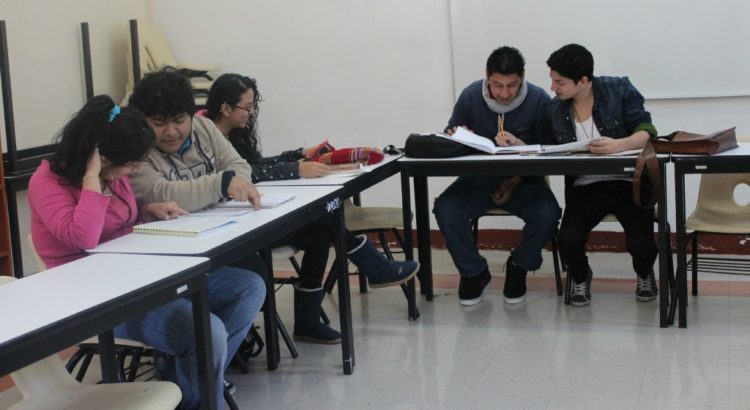
La reforma de la educación básica y media ha sido el tema central del hacer y decir del gobierno. Es normal que haya acaparado el espacio en todos los foros y medios: por su importancia, sin duda, y en relación directamente proporcional a los desatinos de los aprendices que se consideran redentores de la patria escolar.

El nivel superior, entonces, ha pasado inadvertido durante 5 años, aunque no del todo: el 9 de mayo, el maestro Jorge Valls, secretario general ejecutivo de la Asociación Nacional de Universidades e Instituciones de Educación Superior (ANUIES), publicó en estas páginas una reflexión sobre la profesión docente. “El docente —armó— es el pilar fundamental de la formación de los estudiantes, para ‘darles’ la mejor preparación académica y una formación integral que les permita ser mejores ciudadanos, en el entendido que el desarrollo profesional del docente ‘sustenta’ el buen desarrollo del estudiante”.

Además de esta lamentable definición que concibe al profesor como el actor que da, prepara, forma y sustenta a ese otro, el estudiante, pasivo, ignorante, carente, urgido de muletas que lo sostengan, dio a conocer cifras oficiales sobre los académicos en las instituciones de educación superior del país.

En 1960, había 10 mil profesores universitarios. Valls, con datos del ciclo 2015-2016, arma que ya son, casi, 400 mil. Si 56 años después contamos con 390 mil académicos adicionales, una división arroja que han sido necesarias, como promedio anual, 6 mil 840 contrataciones. No es poca cosa: equivale a incorporar a 19 personas cada día, incluyendo sábados, domingos y fiestas de guardar. Cabían antes en el Auditorio Nacional; hoy repletarían cinco veces el Estadio Azteca renovado.

De esa magnitud ha sido la incorporación del personal académico que, de acuerdo a otra noción de docencia, con base en el conocimiento que tienen, han de ser capaces de generar, junto a los estudiantes, relaciones, estrategias y ambientes de aprendizaje que permitan, justo en y por ese vínculo, avanzar en el conocimiento de todos, sin excluir a los propios docentes: el que “enseña”, dice el sabio, aprende dos veces. Sólo 24% tienen tiempo completo (96 mil) y contratados por horas-pizarrón hay 300 mil, que se encargan de 50% de los cursos, sobre todos los iniciales.

Muchos son trabajadores a destajo que, al acumular clases a la semana, se convierten en docentes de tiempo repleto. Otros, profesionistas con empleo en mercados alternos, dan alguna clase sin que lo que perciben sea la base del ingreso familiar.

45% tiene una antigüedad en el ocio de cuatro años o menos. Si se distingue por régimen, público o privado, en el sector de escuelas particulares son 6 de cada 10 los que tienen poca antigüedad, lo que indica una mayor rotación asociada a peores condiciones laborales.

La otra mitad concentra a una buena parte en edades cercanas a la jubilación que, en general, los desbarranca económicamente. Seguirán ahí hasta que el cuerpo aguante. Para ser docentes, lo que se les ha pedido es un certificado de estudios: que conste que sepan. ¿Y saber enseñar, o mejor, ser diestros en la creación de ambientes de aprendizaje? Eso es fácil, cualquiera lo puede hacer.

Craso error: en la educación superior mexicana tenemos, además de la planta académica estratificada, una falla pedagógica común. En pocas palabras: para la docencia, los profesores de la educación superior somos, y hemos sido, improvisados. Nos urge aprender de, y con, los colegas especialistas, ellos sí, en el ocio docente. ¿Una profesora de primaria, normalista, acompañando a un doctor para que aprenda a organizar sus clases? Sería genial, pero hay un problema: implica pensar en lo que viene siendo una reforma educativa en serio, y, lástima, eso sí que no se lo maneja este gobierno.

Fuente del Artículo:

Del auditorio a cinco ‘aztecas’

Comparte este contenido:

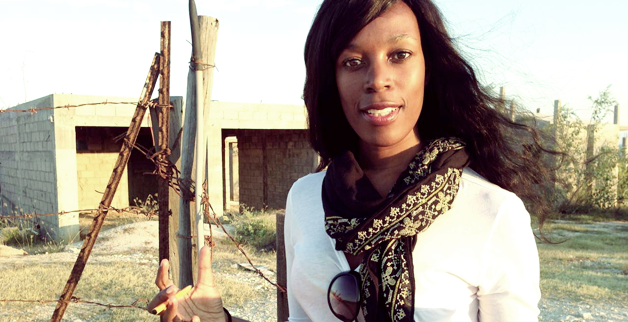
Entrevista: Elisabeth Nyamayaro: “La igualdad de género es clave para el progreso social”

Así era…

Elisabeth Nyamayaro

Activista, asesora en desigualdad de género y miembro de la ONU Mujeres

De pequeña le fascinaba el inglés y siempre le ha apasionado correr y jugar a hockey. Considera el deporte una buena manera de promover la igualdad de género y le habría gustado que en su etapa de escolarización le hubieran hablado más abiertamente sobre la desigualdad entre hombres y mujeres. Actualmente es asesora senior en la ONU Mujeres.

Desde la ONU Mujeres trabajamos para eliminar la discriminación de las mujeres y las niñas, en favor del empoderamiento de la mujer y para lograr la igualdad entre géneros en beneficio del desarrollo.

¿Cuáles son las cifras sobre desigualdad de género que más preocupan?
Los datos más preocupantes son los referentes a la violencia de género ya que, por ejemplo, hay estudios que revelan que el 70% de mujeres sufren violencia física y/o sexual a lo largo de sus vidas a manos de su pareja. Aun así, no debemos olvidar otros problemas de la mujer como el menor acceso a la educación, su participación desigual en el mercado laboral o las diferencias salariales.

¿Cuál es el perfil de mujer que más sufre esta problemática?
No hay un perfil específico, la desigualdad de género afecta a todo tipo de mujeres independientemente de su edad, país de nacimiento, nivel educativo, profesión… Aunque no tendemos a pensar en ellas cómo víctimas de esta problemática, las mujeres de países ricos, con un alto nivel de formación y con un trabajo cualitativo, también la sufren.

¿Qué importancia tienen los aspectos culturales en la existencia de esta desigualdad?
Son elementos muy importantes. A pesar de que cómo decíamos se trata de un problema global, presente en todos los países, podemos hablar de labores específicas a desempeñar, por ejemplo en países africanos, dónde todavía a día de hoy persisten aspectos culturales que promueven el patriarcado.

¿Cómo puede la educación ayudar a revertir esta situación?
La educación es un elemento clave, no sólo la escolar sino también la de los hogares. Si nos centramos en el mayor problema que es el de la violencia hacia las mujeres y las niñas, los hombres son, como muestran los datos, los que mayoritariamente la ejercen. Y estos hombres han sido criados por otras personas, por lo que es clave educarles desde el hogar en contra de la violencia de género.

¿Y en la escuela?
El papel instrumental que juegan los profesores es muy importante ya que los niños pasan gran parte de su tiempo en las escuelas con sus maestros. Por lo que los docentes se convierten en su modelo a seguir e influencian de forma directa en el modo de pensar y de comportarse de los alumnos.

¿Qué consejos darías a los profesores para que puedan contribuir a mitigar esta desigualdad desde dentro de las aulas?
Utilizaré una experiencia que me contó una profesora sobre una actividad que desarrolló en clase para concienciar a sus alumnos sobre las dinámicas entre ambos géneros. Preguntó a las niñas qué les gustaría que los niños hicieran para erradicar la desigualdad entre ellos. Y a diferencia de lo que esperaba, las niñas contestaron que no querían que hicieran nada en concreto, simplemente querían jugar juntos.

Básico pero fundamental…
Tendemos a separar los juguetes entre los que son de niños y de niñas e incluso las tareas según las habilidades que se requieren. Por lo que el reto consiste en encontrar una forma de no crear una división dentro de las clases,  ya que la mejor manera de educar a los niños y niñas en la igualdad de género es tratándoles como iguales.

¿Qué se puede hacer desde los gobiernos para mejorar esta situación?
Hay muchas acciones que se pueden impulsar desde los gobiernos y desde las instituciones educativas. Con la campaña HeForShe estamos buscando el compromiso de los hombres, ya que para revertir esta situación los necesitamos a ellos, especialmente si  tenemos en cuenta que los poderes que pueden ayudar a solventarlos están dominados principalmente por hombres.

Su papel es clave…
Es importante conseguir su compromiso como catalizadores y agentes de cambio, ya que en muchos países el problema no radica en la falta de legalización para proteger a la mujer sino que la problemática deriva de la falta de implementación de las leyes ya existentes.

Brevemente, ¿en qué consiste la campaña HeForShe?
Se trata de una campaña para conseguir el compromiso de los hombres ya que son parte de la solución y socios clave para solventar una problemática social, que no sólo afecta a las mujeres.  Es la constatación de que la igualdad de género sólo se puede conseguir si hombres y mujeres trabajan en una misma dirección.

¿Qué importancia tiene contar con una actriz mediática como Emma Watson como embajadora de la ONU Mujer?
La idea era contar con una persona joven, con pasión, inteligente y comprometida que diera voz a la campaña y que ayudara a hacer llegar el mensaje a la sociedad. Ella está muy implicada y creemos que encarna los valores de la ONU Mujer. Su participación activa influenciará en la manera de sentir y pensar de los jóvenes a nivel mundial, hecho muy importante, ya que esta generación es fundamental para el progreso.

En este sentido, ¿cómo valoras el trabajo de la activista Malala Yousafzai en términos de concienciación?
Su trabajo es muy importante. Si antes decíamos que necesitamos el compromiso de más hombres para acabar con la desigualdad de género, también podemos afirmar que necesitamos más Malalas para ayudar a concienciar y educar a la sociedad en términos de igualdad de género.

Finalmente, más allá de los beneficios obvios para las mujeres para acabar con la desigualdad de género, ¿cuáles son las principales ventajas de esta igualdad para la sociedad?
Primeramente se trata de un derecho humano básico,  pero su logro también tiene impacto en  el ámbito socioeconómico. Si le otorgamos mayor poder a la mujer y potenciamos sus fortalezas damos impulso a las economías, especialmente a las subdesarrolladas, mejoramos la productividad y contribuimos al crecimiento. La igualdad de género es un elemento clave para el progreso de las sociedades.

Fuente de la Entrevista:

Elisabeth Nyamayaro: “La igualdad de género es clave para el progreso social”

Comparte este contenido:

Vámonos entendiendo. Educación sexual en el hogar

Por Armando Ahued

La ciencia ha demostrado que las relaciones sexuales son naturales, normales y necesarias.

Muy pocas personas hablan de sexo con sus familias. La mayoría de la población desestima la importancia de la sexualidad como eje educativo, particularmente para reducir riesgos asociados a la salud sexual y reproductiva de los hijos o de la pareja.

Conozco muchos padres de familia arrepentidos por no haber hablado de sexo dentro del hogar. Abundan las historias de familias donde se ha debido enfrentar la carga de embarazos adolescentes, divorcios motivados por insatisfacción sexual e incluso de enfermedades de transmisión sexual.

Si el sexo es una parte fundamental de nuestro desarrollo, ¿por qué nos resistimos a llevar el tema a las conversaciones familiares? Con frecuencia esto sucede porque sentimos vergüenza o porque sabemos muy poco o casi nada del tema.

La ciencia ha demostrado que las relaciones sexuales son naturales, normales y necesarias. Están inscritas en nuestros genes y constituyen no sólo una fuente de placer, sino que representan el eje de nuestra supervivencia como especie.

Es en este sentido que la educación sexual resulta indispensable. Pero hay que hacerlo con información certera, sin castigos de por medio ni tampoco miedos o mentiras. Debe quedar claro que ofrecer información científica no determina el comportamiento, pero que sí contribuye a tomar decisiones acertadas en el propósito de cuidar la salud.

Gran parte de la violencia asociada a la sexualidad puede explicarse por esta ausencia de educación, que es estructural e histórica. No hemos sido capaces de incluir, sostener y enriquecer la información científica sobre la sexualidad en los sistemas educativos, como tampoco en los medios de información y entretenimiento.

Nuestros hijos deben aprender desde pequeños cómo funcionan los órganos genitales, cuáles son las prácticas sexuales seguras para evitar un embarazo o infecciones de transmisión sexual, cuál es la utilidad de usar anticonceptivos y condones, así como otros recursos disponibles, así como aprender a protegerse de abusos, trata o violencia sexual. También necesitan aprender a respetar las diversas expresiones de la sexualidad.

Créame usted que la educación sexual previene mucho más de lo que podría imaginarse a primera vista. No puede ser de otra manera porque la sexualidad, además de ser uno de los elementos que definen la naturaleza humana, es también fuente inagotable de expresiones artísticas. Cuando hay salud sexual y reproductiva, en consecuencia, hay más libertad, más energía, más compromiso con la vida misma.

Y dado que el sexo es inherente a todas las personas, no existe otra opción que educarnos respecto a cómo orientarlo para poderlo integrar a la vida cotidiana.

La disyuntiva, debo aclarar, es si nos educamos con base en principios de seguridad, protección y cuidado sustentado en evidencia científica, o lo hacemos desde la vergüenza, el temor, mediante restricciones y castigos. Esa es la diferencia, porque de cualquier manera la sexualidad se va a manifestar.

El crecimiento de una persona, no lo dude ni tantito, estará siempre asociado a diferentes factores y uno definitivo es la formación recibida en torno de su sexualidad. Si se crece con dudas, si se crece con prejuicios, si se crece creyendo que el sexo es algo malo, le aseguro que difícilmente se podrán construir referentes eróticos.

Por el contrario, crecer con educación biológica, con referentes documentados en la ciencia y con el conocimiento mínimo para asumir la conciencia del ejercicio libre y seguro de la sexualidad, construye condiciones que permiten gozar de nuestro cuerpo.

No se crea, sin embargo, que sólo nuestros hijos necesitan educarse en estos temas. También nos hace falta a nosotros saber más del sexo. Si hemos dicho que la falta de información en esta materia ha sido un reto a lo largo de la conformación de nuestra cultura, pues entonces es muy claro que los adultos necesitamos también información.

No puede haber sociedades sustentables que se desarrollen y cultiven si la gente vive su sexualidad a ciegas, con preguntas abiertas que nadie responde, acechada por hijos no planeados ni deseados, con infecciones o sometidas a redes de explotación y violencia.

Vamos entendiéndonos y unamos esfuerzos para impulsar la necesaria, pero también urgente educación sexual.

Fuente del Artículo:

http://www.excelsior.com.mx/opinion/armando-ahued/2017/05/21/1164801

Comparte este contenido:

Pobreza e inseguridad, factores que más afectan el aprendizaje

Laura Poy Solano

Los maestros de educación básica en México consideran que entre los factores que más afectan el aprendizaje de sus alumnos y su práctica pedagógica están la pobreza y la carencia de servicios básicos en el plantel educativo, así como las condiciones de inseguridad, robos, pandillerismo y narcotráfico que asolan a las comunidades, familias y estudiantes.

En su informe anual La educación obligatoria en México 2017, el Instituto Nacional para la Evaluación de la Educación (INEE) destaca que aparte de la escolaridad promedio de los padres de familia, otro elemento que impacta el proceso de aprendizaje es la actividad económica de la comunidad, pues determina las posibilidades de los padres de trabajar cerca del domicilio y tener estabilidad financiera y tiempo para involucrarse en la educación de sus hijos.

Los docentes estiman que si los padres tienen trabajos demandantes, lejanos o inestables, hay repercusión en los recursos y la atención que pueden brindar a los hijos para su aprovechamiento escolar.

En un análisis sobre la práctica docente, cuyos datos fueron recabados a partir de la información generada en la Evaluación del Desempeño realizada en 2015, que incluyó la Planeación Didáctica Argumentada y el Expediente de Evidencias de Enseñanza, el INEE destaca que la migración es un factor contextual que también preocupa a los docentes.

Migración y desánimo

Señala que tiene efectos negativos sobre el aprendizaje tanto por la ausencia de los padres y la desintegración familiar, como porque disminuye la motivación de los alumnos para continuar estudiando. Sin embargo, reconocen que también es una fuente de sostenimiento económico para las familias e incluso las comunidades.

El documento apunta que los maestros consideran que las condiciones de infraestructura y equipamiento en sus escuelas es insuficiente o no pertinente para impulsar una mejor práctica pedagógica.

Además, indican con frecuencia que el mobiliario escolar está descuidado y viejo. Los profesores de educación física se enfrentan a la falta de espacios específicos para impartir su clase, ya que deben adaptarlos o compartirlos simultáneamente con otros profesores, enfrentar altas temperaturas, o bien utilizar espacios externos a la escuela.

Incluso, subraya el INEE, en telesecundaria se mencionó que algunos planteles carecían de acceso al sistema de televisión educativa, denominado Red Satelital de Televisión Educativa, cuyos programas, de acuerdo al Modelo Educativo para el Fortalecimiento de Telesecundaria, son fundamentales en los procesos de enseñanza de dicho servicio.

Los educadores frente a grupo también reportaron que cuentan, en la mayoría de los casos, con equipo de cómputo, pero obsoleto, insuficiente o sin acceso a Internet. Y frente a la falta de recursos, algunos profesores, indica el reporte, proveen ellos mismos el material o bien plantean actividades que involucren materiales que los alumnos puedan adquirir sin dificultad.

En educación básica el número de estudiantes por aula es un elemento que afecta la práctica pedagógica de los docentes, pues reportan que cuando los grupos son numerosos –algunos hasta de 60 alumnos–, las posibilidades de realizar una intervención didáctica efectiva disminuyen.

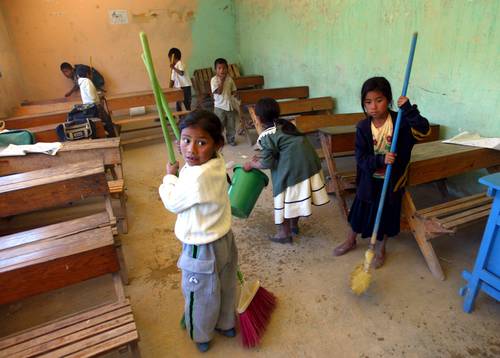
Reseña de la Imagen:

Niñas mixtecas hacen la limpieza en su escuela, la primaria Vanguardia, en Coicoyán de las Flores, Oaxaca, uno de los lugares con mayor pobreza y enfermedades relacionadas con la falta de higiene. Foto Marco Peláez

Fuente del Artículo:

http://www.jornada.unam.mx/2017/05/21/sociedad/033n1soc

Comparte este contenido:

Dancing With the Devil: Trump’s Politics of Fascist Collaboration

by Henry A. Giroux

Donald Trump’s election has sparked a heated debate about the past, particularly over whether the Trump administration represents a continuum, if not an echo, of the protean origins of fascism. This is an argument that combines the resources of historical memory with current analyses of the distinctive temper of a new and dangerous historical moment in the United States. For instance, an increasing number of pundits across the ideological spectrum have identified Trump as a fascist or neo-fascist, while resurrecting some of the key messages of an earlier period of fascist politics. On the left/liberal side of politics, this includes writers, such as Chris Hedges, Robert Reich, Cornel West, Drucilla Cornell, Peter Dreier and John Bellamy Foster. Similar arguments have been made on the conservative side by writers, such as Robert Kagan, Jeet Heer, Meg Whitman and Charles Sykes.

Historians of fascism, such as Timothy Snyder and Robert O. Paxton have argued that Trump is not Hitler but that there are sufficient similarities between them to warrant some concerns about surviving elements of a totalitarian past crystalizing into new forms in the United States. Paxton, in particular, argues that the Trump regime is closer to a plutocracy than to fascism. But, I think Paxton overplays the differences between fascism and Trump’s style of authoritarianism, particularly underemphasizing Trump’s ultra-nationalism, militarism and his embrace of the neoliberal state which does not suggest the rule of free-market capitalism but a more extreme example of the corporate state or what Mussolini called the corporatist state. In this case, traditional state power has been replaced by the rule of major corporations and the financial elite. At the same time, the social cleansing and state violence inherent in totalitarianism has been amplified under Trump. Both Hannah Arendt and Sheldon Wolin, the great historians of totalitarianism, have argued that the conditions that produce authoritarian logics have persisted well after their mid-twentieth century expressions. Wolin, in particular, insisted in 2010 that the United States was evolving into an authoritarian society.

Recently, though, numerous critics have denied the persistence of fascism and totalitarianism. They have argued that Trump is either a sham, right-wing populist, or simply a reactionary Republican. Three notable examples of the latter positions can be found in the work of cultural critic Neal Gabler, who argues that Trump is mostly a self-promoting con artist and pretender president whose greatest crime is to elevate pretense, self-promotion and appearance over substance, all of which proves that he lacks the capacity and will to govern. Andrew O’Hehir claims we have to choose between whether Trump is just a clown or a fascist dictator and in the end seems to pivot more toward the clown argument, though he admits Trump is nonetheless dangerous. A more sophisticated version of this argument can be found in the work of historian Victoria de Grazia, who has argued that Trump bears little direct resemblance to either Hitler or Mussolini and is just a reactionary conservative.

Certainly, Trump is not Hitler, and the United States at the current historical moment is not the Weimar Republic. But it would be irresponsible to consider Trump to be a either a clown or aberration given his hold on power and the ideologues who support him. What appears indisputable is that Trump’s election is part of a sustained effort over the last 40 years on the part of the financial elite to undermine the democratic ethos and highjack the institutions that support it. Consequently, in the midst of the rising tyranny of totalitarian politics, democracy is on life support and its fate appears more uncertain than ever. Such an acknowledgment should make clear that the curse of totalitarianism is not a historical relic and that it is crucial that we learn something about the current political moment by examining how the spread of authoritarianism has become the crisis of our times, albeit in a form suited to the American context.

History, once again, offers us a framework in which a global constellation of authoritarian economic, social  and political forces are coming together that speak to tensions and contradictions animating everyday lives that transcend national boundaries for which there is not yet a comprehensive, coherent and critical language. What has emerged is a climate of precarity, fear, angst, paranoia and incendiary passion. Drawing upon Hannah Arendt, it would be wise to resurrect one of the key questions that emerges from her work on totalitarianism, which is whether the events of our time are leading to totalitarian rule.

Whether or not Trump is a fascist in the exact manner of earlier totalitarian leaders somewhat misses the point, because it suggests that fascism is a historically fixed doctrine rather than an ideology that mutates and expresses itself in different forms around a number of commonalities. There is no exact blueprint for fascism, though echoes of its past haunt contemporary politics. As Adam Gopnik observes:

            … to call [Trump] a fascist of some variety is simply to use a historical label that fits. The arguments about whether he meets every point in some static fascism matrix show a misunderstanding of what that ideology involves. It is the essence of fascism to have no single fixed form — an attenuated form of nationalism in its basic nature, it naturally takes on the colors and practices of each nation it infects. In Italy, it is bombastic and neoclassical in form; in Spain, Catholic and religious; in Germany, violent and romantic. It took forms still crazier and more feverishly sinister, if one can imagine, in Romania, whereas under Oswald Mosley, in England, its manner was predictably paternalistic and  aristocratic. It is no surprise that the American face of fascism would take on the forms of celebrity television and the casino greeter’s come-on, since that is as much our symbolic scene as nostalgic re-creations of Roman splendors once were Italy’s.

The undeniable truth is that Trump is the product of an authoritarian movement and ideology with fascist overtones. In responding to the question of whether or not he believes Trump is a fascist, historian Timothy Snyder makes clear that the real issue is not whether Trump is a literal model of other fascist leaders but whether his approach to governing and the new political order he is producing are fascistic. He writes:

I don’t want to dodge your question about whether Trump is a fascist or not. As I see it, there are certainly elements of his approach which are fascistic. The straight-on confrontation with the truth is at the center of the fascist worldview. The attempt to undo the Enlightenment as a way to undo institutions, that is fascism. Whether he realizes it or not is a different question, but that’s what fascists did. They said, ‘Don’t worry about the facts, don’t worry about logic, think instead in terms of mystical unities and direct connections between the mystical leader and the people.’ That’s fascism. Whether we see it or not, whether we like it or not, whether we forget, that is fascism. Another thing that’s clearly fascist about Trump were the rallies. The way that he used the language, the blunt repetitions, the naming of the enemies, the physical removal of opponents from rallies, that was really, without exaggeration, just like the 1920s and the 1930s. And Mr. [Steve] Bannon’s preoccupation with the 1930s and his kind of wishful reclamation of Italian and other fascists speaks for itself.

To date, Trump’s ascendancy has been compared to the discrete emergence of deeply reactionary nationalisms in Italy, Germany, France and elsewhere. I would like to broaden the lens with which we view these incipient events in ways that allow for a deeper historical understanding of the international scope and interplay of critical forces that respond to the shifts and contradictions brought about by a globalizing world increasingly brought to the brink of catastrophe by technological disruption, massive inequities in wealth and power, ecological disaster, mass migrations, relentless permanent warfare and the threat of a nuclear crisis. In the United States, shades of a growing authoritarianism are present in Trump’s eroding of civil liberties, the undermining of the separation of church and state, health care policies that reveal an egregious indifference to life and death, his manufactured spectacles of self-promotion, contempt for weakness and dissent, and his attempts to shape the political realm through a process of fear, if not tyranny itself, as Snyder insists in his book On Tyranny: Twenty Lessons from the Twentieth Century.

History contains dangerous memories and this is particularly true for Trump given the ideological features and legacies of fascism that are deeply woven into his rhetoric of hate and demonization, his mix of theater and violence, his frenzied defiance of basic laws and his policies supportive of ultra-nationalism and racial cleansing. All the more reason for Trump and his acolytes to treat historical memory as a dangerous ghost that harbors critical tools for understanding how the present has become the past and the past informs the future. Historical memory matters because it serves as a form of moral witnessing, and in doing so becomes a crucial asset in preventing new forms of fascism from becoming normalized. We cannot pretend as if the current conditions exist outside of history in some ethereal space in which everything is measured against the degree of distraction it promises.

Echoes of Trump’s fascist impulses  have been well documented, but what has been overlooked is a sustained analysis of his abuse and disparagement of historical memory, particularly in light of his association with a range of current right-wing dictators and political demagogues across the globe. Trump’s ignorance of history was on full display with his misinformed comments about former president Andrew Jackson and nineteenth-century abolitionist Frederick Douglas. Trump’s comments about Jackson having strong views on the civil war were widely ridiculed, given that Jackson died 16 years before the war started. Trump was also criticized for comments he made during Black History Month when he spoke about Frederick Douglass as if he were still alive, though he died 120 years ago. For the mainstream press, these historical missteps largely reflect Trump’s ignorance of American history. But I think there is more at stake than simply ignorance, given the appeal of Trump’s comments to white nationalists.

Trump’s comments provide a window into his ongoing practice of stepping outside of history so as to deny its relevance for understanding both the economic and political forces that brought him to power and the historical lessons to be drawn, given his egregious embrace of a number of authoritarian elements that resemble the plague of a fascist past. His alleged ignorance is also a cover for enabling a post-truth culture in which dissent is reduced to «fake news,» the press is dismissed as the enemy of the people and a mode of totalitarian education is enabled whose purpose, as Hannah Arendt wrote in The Origins of Totalitarianism, is «not to instill convictions but to destroy the capacity to form any.» Trump may appear to be an ignoramus and a clown, but such behavior points to something more profound politically, such as an attack on any viable notion of thoughtfulness and moral agency. His forays into international politics offer another less remarked upon form of fascistic embrace.

There are important lessons to be mined historically regarding how we examine Donald Trump’s support from and for a number of ruthless dictators and political demagogues. Trump’s endorsements of and by a range of ruthless dictators are well-known and include Egyptian President Abdel-Fattah el-Sisi, Turkish President Recep Tayyip Erdoğan, Russian President Vladimir Putin and Philippine President Rodrigo Duterte and the [recently defeated] French presidential candidate Marine Le Pen, the leader of the National Front party. All of these politicians have been condemned by a number of human rights groups, including Human Rights Watch, Amnesty International and Freedom House. Less has been said about the support Trump has received from controversial right-wing bigots and politicians from around the world, such as Nigel Farage, the former leader of the right-wing UK Independence Party; Matteo Salvini, the right-wing Italian politician who heads the North League [Lega Nord]; Geert Wilders, the founder of the Dutch Party for Freedom; and Viktor Orbán, the reactionary prime minister of Hungary. All of these politicians share a mix of ultra-nationalism, xenophobia, Islamophobia, anti-Semitism, homophobia and transphobia. While the mainstream press and others have expressed moral outrage over these associations, they have refused to examine these relationships within a broader historical context. In an age when totalitarian ideas and tendencies inhabit the everyday experiences of millions of people and create a formative culture for promoting massive human suffering and misery, Trump’s affinity for indulging right-wing demagogues becomes an important signpost for recognizing the totalitarian nightmare that marks a terrifying glimpse of the future.

Historical memory suggests that a better template for understanding Trump’s embrace of rogue states, dictators and neo-fascist politicians can be found in the reprehensible history of collaboration between individuals and governments, and the fascist regimes of Italy and Germany before and during the Second World War. For instance, one of the darkest periods in French history took place under Marshall Philippe Petain, the head of the Vichy regime, who collaborated with the Nazi regime between 1940 and 1944.

As Helene Fouquet and Gregory Viscusi have noted, the Vichy regime was responsible for «about 76,000 Jews [being] deported from France, only 3,000 of whom returned from the concentration camps…. Twenty-six percent of France’s pre-war Jewish population died in the Holocaust.» For years, France refused to examine and condemn this shameful period in its history by claiming that the Vichy regime was an aberration, a position that has been recently taken up by Marine Le Pen, the neo-fascist National Front candidate. Not only has Le Pen denied the French government’s responsibility for the roundup of Jews sent to concentration camps between 1940 and 1944, she has also used a totalitarian script from the past in appealing to economic nationalism in order «to cover up her fascist principles.» During the election [campaign], as Angela Charlton has noted, [now President] Emmanuel Macron repeatedly «paid homage … to the tens of thousands of French Jews killed in the Holocaust, with a somber, simple message to voters: Never Again,» which served as a powerful reminder «of the anti-Semitic past of his rival Marine Le-Pen’s far-right National Front party.» Of course, such comments should not be read as an extraordinary political intervention for a mediocre neoliberal presidential candidate. These comments should be acknowledged by all candidates.

The deeply horrifying acts of collaboration with twentieth-century fascism were not limited to France and included collaborators in Belgium, Croatia, the IRA [in Ireland], Greece, Holland and other countries. At the same time that millions of people were being killed by the Nazis, many businesses collaborated with them in order to profit from the fascist machinery of death. Business that collaborated with the Nazis included Kodak, which used slave laborers in Germany. Hugo Boss, the clothing company, manufactured clothes for the Nazis. IBM created the punch cards and a sorting system used for identifying Jews and other marginalized people and sending them to the gas chambers. BMW and IG Farben used forced laborers in Germany along with Audi, the giant car company that «used thousands of forced laborers from the concentration camps … to work in their plant.»

The political and moral stain for collaboration with the Nazis was also at work in the United States and was evident in both FDR’s and the American business community’s initial supportive views of Mussolini. Moreover, as Noam Chomsky has pointed out, «In 1937 the State Department described Hitler as a kind of moderate who was holding off the dangerous forces of the left, meaning of the Bolsheviks, the labor movement … and of the right, namely the extremist Nazis. [They believed] Hitler was kind of in the middle and therefore we should kind of support him.» One telling incident of collaboration suggesting America’s deeply rooted affinity with fascist principles is visible in the America First movement of the 1930s. America First was the motto of Americans friendly to Nazi ideology and Hitler’s Germany. Its most famous spokespersons were Charles Lindbergh and William Randolph Hearst. The movement had a long history of anti-Semitism evident in Lindbergh’s claim that American Jews were pushing America into war. Historian Susan Dunn has argued that the phrase, America First, which was appropriated and used by Donald Trump before and after his election, is a «toxic phrase with a putrid history.»

The concept of collaboration functions historically to deepen our understanding of Trump’s associations with right-wing demagogues as a warning sign that offers up a glimpse of both the contemporary recurrence of fascist overtones from the past and what Richard Falk has called «a pre-fascist moment.» Trump’s endorsement of right-wing demagogues, such as Duterte, Le Pen and Erdoğan, in particular, is more than an aberration for a US president: It suggests more ominously his disregard for human rights, the suppression of dissent, human suffering and the principles of democracy itself. Trump’s collaboration with dictators and right-wing rogues also suggests something more ominous. As Michael Brenner observes, » … authoritarian movements and ideology with fascist overtones are back — in America and in Europe. Not just as a political expletive thrown at opponents, but as a doctrine, as a movement, and — above all — as a set of feelings.»

It is against this historical backdrop of collaboration that Trump’s association with various dictators should be analyzed. The case of Rodrigo Duterte is particularly telling. Warning signs of a «pre-fascist moment» abound in Trump’s invitation to Rodrigo Duterte to visit the White House. Duterte has supported and employed the use of death squads both as mayor of Davao and as the president of the Philippines. The New York Times has reported that «more than 7,000 suspected drug users and dealers, witnesses and bystanders — including children — have been killed by the police or vigilantes in the Philippines» under Duterte’s rule. Moreover, he has supported a nationwide killing machine that includes giving «free license to the police and vigilantes» to kill drug users and pushers while allowing children, innocent bystanders and others to be caught in the indiscriminate violence. He has called former president Obama «the son of a whore,» has compared himself to Hitler, has stated that Trump approves of his drug war, and has threatened to assassinate journalists. Duterte’s ruthlessness is captured by photographer, Daniel Berehulak, who while working in the Philippines stated that he had «worked in 60 countries, covered wars in Iraq and Afghanistan, and spent much of 2014 living inside West Africa’s Ebola zone, a place gripped by fear and death» but added that what he experienced in the Philippines «felt like a new level of ruthlessness: police officers’ summarily shooting anyone suspected of dealing or even using drugs, vigilantes’ taking seriously Mr. Duterte’s call to «slaughter them all.'»

Trump’s support for Duterte may arise out of his admiration for his law-and-order campaign, his hatred of the press, and his utter embrace of one-man rule. It may also have to do with Trump’s various business ventures in the Philippines, including ownership of a new «$150 million tower in Manila’s financial district.» All of these issues represent in more extreme form elements of Trump’s own anti-democratic policies and serve as a warning as to how far he might want to push them.

Trump’s affinity for what borders on collaboration with overt racists and authoritarians has played out within a global configuration of economic nationalism and right-wing politics among people, such as Le Pen, Erdoğan, Putin and el-Sisi who look to Trump for support and tacit approval.

Trump’s tacit support for Le Pen’s failed bid for the presidency of France rests on his sympathies with her anti-immigration policies, her ultra-nationalism and her claim to speak for the people. Like Le Pen, he deflects attention away from real problems, such as rising inequality, a carceral state, human rights violations, racial injustice and climate change, while demonizing and scapegoating marginalized people. Trump wants to join hands with those other right-wing leaders who want to build walls, beef up the security state and enable his white nationalist and white supremacist followers. His affinity for collaboration with Le Pen feeds his own narcissistic impulses, bigotry, hatred of Muslims and what Juan Cole calls «economic patriotism.»

At the same time, Trump’s disdain for human rights, the critical media and dissent has enamored him to Putin in Russia, Erdoğan in Turkey and el-Sisi in Egypt. These men are all ideological bedfellows of Trump who harbor a great deal of contempt for the rule of law, the courts and any other check on their power. Erdoğan, in particular, has not only imposed a state of emergency on his country and then later installed himself as a virtual dictator, but he has also purged and arrested dissidents in the critical media and in academia. After Erdoğan assumed dictatorial powers through what many believe was a rigged election, Trump congratulated him in a phone call. As Jennifer Williams and Zack Beauchamp have noted, el-Sisi, a brutal military dictator, «overthrew his country’s democratically elected president in a 2013 coup, killed more than 800 protesters in a single day, and has imprisoned tens of thousands of dissidents since he took power.» Williams and Beauchamp add that Trump’s response to his human rights violations and the turning of Egypt into a police state was to publicly announce that he was «very much behind President el-Sisi. He’s done a fantastic job in a difficult situation.» Trump has also offered to meet with Thailand prime minister, Prayuth Chan-ocha, a junta head who is responsible for jailing dissidents after he took power through a coup. He has also called one of the most brutal dictators in the world, North Korean leader Kim Jong-un, «a smart cookie.» Ironically, such praise comes at a time when Trump is threatening North Korea with a frightening and terrifying military confrontation.

In his endorsement, support and legitimation of a range of dictators and right-wing extremists, Trump has emulated a period in history of shameless complicity with the ideologies, policies and practices associated with fascism itself. Situating Trump within the historical legacy of collaboration with fascist states and leaders provides a new language for examining how far Trump might go in pushing authoritarian policies, and how historical memory can be used to prevent such practices from being normalized. Trump’s collaborationist endorsements offer insights into what the prelude to authoritarianism looks like in contemporary terms by enabling the public to understand how fascism can be normalized by escaping from history.

The politics of collaboration reminds us that the current crisis facing Americans is really about the crisis of memory, justice and democracy and not simply about Trump’s poor judgment or aberrant behavior. Historical memory, in this case, is a crucial referent for gaining insights into the violent forces and totalitarian forms emerging under the Trump regime. It also provides a referent for salvaging possibilities for individual and collective resistance against the evolving dynamics of an American-style fascism that poses a dire threat to democracy at home and abroad.

Source:

http://www.truth-out.org/news/item/40593-dancing-with-the-devil-trump-s-politics-of-fascist-collaboration

Comparte este contenido:

WomenStrong International Launches Menstrual Education Campaign to Reduce Obstacles Preventing Impoverished Girls from Finishing School

Africa – Asia – North America – Central America/23 may 2017/By: WomenStrong International/Source: http://www.kait8.com

WomenStrong International, a consortium of non-profit organizations in five nations supporting women-driven solutions to extreme urban poverty, today launched a campaign to increase menstruation education and reduce obstacles preventing girls from getting the education they need to create better, more prosperous lives.

WomenStrong invited those who care about women and girls to join #WomenStrongWarrior on Menstrual Hygiene Day, May 28, and support the fight for access to menstrual and reproductive health education, sanitary pads and basic facilities, such as school toilets.

«Our experience working with adolescent girls in sub-Saharan Africa and India demonstrates the importance of education, which is everything to a girl hoping for a better life,» said Dr. Susan M. Blaustein, WomenStrong Founder and Executive Director. «We call on schools, local governments, multilateral institutions, policymakers and international development organizations to help create a world where menstrual health is a human right and girls can grow up with dignity and joy in their womanhood.»

Studies show that most girls don’t receive the information they need on changes that occur at puberty and don’t have money to buy sanitary products. These gaps become insurmountable barriers to school attendance. Yet, education is known to be the most critical factor in a woman’s ability to delay marriage, survive childbirth, raise healthier and better-educated children, and emerge from poverty.  When a girl misses a week of school each month because of her period, or drops out, she is condemned to a life without resources or dignity. The impact of losing this girl resonates in the national economy since educating girls is now known to be one of the highest yielding investments in the economic growth of developing countries.

WomenStrong’s Consortium members working at the community level in the slums of Kisumu, Kenya; Kumasi, Ghana; and Madurai, India, have established Girls’ Clubs, providing thousands of adolescent girls with a safe place to make friends, build confidence, learn about sexual and reproductive health and rights, and exchange information with peers and mentors.  The Clubs have seen the substantial positive impact of training girls and boys on puberty and menstrual and reproductive health and hygiene. Including boys, men, mothers, teachers, health workers and others in trainings helps break the silence around menstruation, destroys negative myths and misinformation, and removes the stigma from this natural biological process.

But trainings alone aren’t enough. Girls also need school toilets with doors and locks for privacy, and basic menstrual supplies.  So, as often as possible, trainings are followed up with the provision of personal hygiene packs containing sanitary pads, soap and panties, all of which increase a girl’s chances of staying in school.

Research funded by The Bill and Melinda Gates Foundation found that 65% of Kenyan women and girls were unable to afford sanitary pads and often resorted to using rags or even leaves, the source of a variety of health risks. Families living on less than $2 per day are faced with choosing between buying sanitary pads for their daughters or food for the family.

«To a young girl, the obstacles seem huge, simply overwhelming. Confusion, embarrassment, no money to buy the supplies so many of us take for granted.  But it really takes so little to change a girl’s life,» Dr. Blaustein said.  «Even a small contribution makes a big difference to a girl, now and for years to come.»

  • $12 can buy a girl a year’s worth of sanitary pads
  • $25 pays for two packets of sanitary pads, a monthly recording chart and pencil
  • $50 buys a menstruation kit, with a year’s worth of pads, panties and soap
  • $100 buys a girl a menstruation kit for two years
  • $200 provides menstruation kits for four girls in a WomenStrong location of the donor’s choosing

#WomenStrongWarrior is a part of a growing global movement calling for menstrual hygiene education that informs and empowers girls and women to make decisions on managing their own bodies. Organizations and governments are calling for menstruation education to be part of national school curricula, as well as policies and programs for teen boys and girls.

For more information on WomenStrong International, and to stay updated on program news, innovations and stories that inspire from around the world, please visit www.womenstrong.org or follow us on Facebook, Twitter or Instagram.

ABOUT WOMENSTRONG INTERNATIONAL
WomenStrong International is a consortium of non-profit organizations in five nations supporting women-driven solutions to extreme urban poverty. WSI emerged from a decade of work at Columbia University’s Millennium Cities Initiative where we found the most successful programs were local and led by women. Through our Consortium members in Ghana, Kenya, Haiti, India and Washington, D.C., we help thousands of women and girls meet their 6 Essential Needs for health, shelter, safety, education, economic empowerment and a functioning urban environment. These women, in turn, improve the lives of their children, families, communities and nations. WomenStrong International believes the path out of poverty and toward a more just and prosperous world can be found by making women strong. For more information, visit www.womenstrong.org.

Media Contacts:
Melissa DiMercurio
Public Relations Manager
mdimercurio@delucchiplus.com

Natalie Dudas-Thomas
WomenStrong International
ndudasthomas@womenstrong.org

To view the original version on PR Newswire, visit:http://www.prnewswire.com/news-releases/womenstrong-international-launches-menstrual-education-campaign-to-reduce-obstacles-preventing-impoverished-girls-from-finishing-school-300460882.html

Source:

http://www.kait8.com/story/35485232/womenstrong-international-launches-menstrual-education-campaign-to-reduce-obstacles-preventing-impoverished-girls-from-finishing-school

Comparte este contenido:
Page 1026 of 1684
1 1.024 1.025 1.026 1.027 1.028 1.684