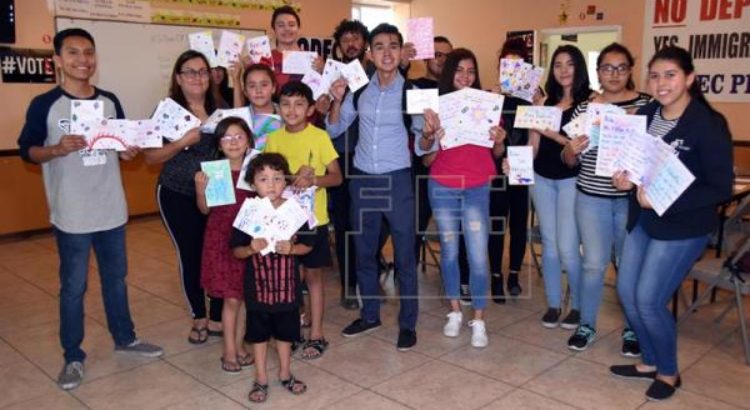
Oaxaca.-Las organizaciones sociales, colectivos, sindicatos, organizaciones civiles y activistas sociales lamentamos de manera profunda el asesinato de Abraham Hernández González Coordinador Regional del Comité por la Defensa de los Derechos Indígenas (CODEDI).
Los militantes de CODEDI en este año han sido víctimas de diversas agresiones, tal es el caso de los 3 compañeros asesinados en el mes de febrero y la detención arbitraria de la que fue objeto Fredy García Ramírez el 20 de junio en Pochutla por agentes del Estado.
Reconocemos la labor comunitaria y autónoma en las comunidades donde CODEDI tiene presencia, han cambiado la forma de pensamiento y roto cacicazgos que pretenden mantener a los pueblos en la ignorancia y el control social; aunado a su solidaridad con las diversas luchas y en tiempos recientes su incorporación a la lucha contra la reforma educativa en apoyo a la CNTE.
Es por ello que hoy son víctimas del creciente terrorismo de Estado en Oaxaca, condenamos las agresiones en contra de los militantes de CODEDI, exigimos justicia, esclarecimiento de los hechos y cárcel para los autores materiales e intelectuales de los compañeros.
Hacemos el llamado a todas las expresiones del movimiento social a pronunciarse ante este hecho a nivel internacional, nacional y local, realizar acvidades unitarias y cerrar filas ante la creciente represión que se vuelve sistemática contra los opositores del régimen priísta en Oaxaca.
Exigimos al gobernador Alejandro Murat el cese inmediato de las hostilidades contra acvistas sociales.
Atentamente
Firmas de Oaxaca
Sección XXII del SNTE-CNTE, Grupo internacionalista, Frente Amplio de Comunidades Marginadas del Estado de Oaxaca, Comité de Familiares Amigas y Amigos de Damián Gallardo Martínez, OCIO CNPA MN, Frente Amplio de Lucha Popular ( dirección estatal colectiva ), Coordinadora Indígena Popular Autónoma, Servicios para una Educación Alternativa A. C. EDUCA, Unión de Comunidades Indígenas de la Zona Norte del Istmo, Movimiento Agrario Indígena Zapatista, CAMPO, Unión de Artesanos y Comerciantes Oaxaqueños en Lucha, Comité por la Defensa de los Derechos Indígenas, Voces Oaxaqueñas Construyendo Autonomía y Libertad, UCIO CNPA, Corriente del Pueblo Sol Rojo, UNIR, FPR, UJRM, PCMML, UCIPEZ, CCCyP, CIPO-R.F.M, Unión Campesina Indígena de Oaxaca Emiliano Zapata, Colectivo Mujer Nueva, Servicios Universitarios y Redes de Conocimientos en Oaxaca SURCO AC, Movimiento de Unificación y Lucha Triqui, URTARTE, Sindicato de Telefonistas de la República Mexicana Sección 75
Oaxaca, Subsección 7 del Hospital Civil, Colectivo Salud, Sindicato de Trabajadores UABJO, Sindicato Independiente de los Trabajadores de Salud Sección 9, Sindicato Libre del Municipio de Oaxaca, Sindicato Único de Trabajadores de Caminos y Aeropistas de Oaxaca, Sindicato de Trabajadores al Servicio del CECYTEO, Coordinadora de Bases IMSS, Movimiento de Aspirantes Rechazados UABJO, Movimiento Oaxaqueño por la Lucha de los Excluidos, Tianguis Cultural Libertad y Resistencia, COLMENA Oaxaca, Liga Mexicana por la Defensa de los Derechos Humanos Oaxaca, Asamblea Popular del Pueblo Juchiteco, Pobladores Oaxaca, Consejo Indígena de Uxpanapa, Unión de Lucha Anticapitalista, Frente Nacional de Movimientos y Organizaciones Populares, CECIPROC, OIDHO, IDEMO, Pobladores AC, Comité de Defensa Integral de Derechos Humanos Gobixha A.C. Asamblea Mixe para el Desarrollo Sostenible, Asociación de Autoridades Mixes, Colectivo por la Ciudadanía de las Mujeres A.C., Frente Indígena de Organizaciones Binacionales, Fuerza Social Choapense A.C.
Firmas nacionales
Resistencia Civil Indígena y Popular contra las altas tarifas de luz (Sur de Veracruz-zona sierra) Frente Popular Francisco Villa México Siglo XXI, Nuevo País, Movimiento de Liberación Nacional, Unión Popular de Vendedores y Ambulantes 28 de Octubre (Puebla), Comité Contra la Persecución y por la Libertad de los Presos Políticos (Chiapas), Coordinación de Movimientos Populares, Frente Popular Francisco Villa Independiente FPFVI, Centro de Estudios Karl Liebknecht (CEKL), Coordinadora Nacional Estudiantil, Frente Magisterial Independiente, Movimiento Comunista Mexicano, Liga de Unidad Socialista, Izquierda Democrática Popular, Liga Estudiantil Democrática (Puebla), Frente de Organizaciones del Valle de Toluca, Congreso Social Hacia un Nuevo Constituyente, Asamblea General de Trabajadores de la Ciudad de México, Unión General de Trabajadores de México, CENYELIZTLI para el desarrollo social y familiar A.C., Coordinadora Primero de Diciembre, UPREZ, Comisión de Derechos Humanos y Laborales del Valle de Tehuacán, Frente de Escuelas Democráticas Febrero 25, Radio Coaltl, Santa María Coapan, Radio Tlayoli Tlacotepec de Díaz, Radio Tlacuache Zoquitlán Puebla.
Individuos
Filoteo Revilla, Carlos Beas Torres, Hermanos Coca, David Cabañas Barrientos, Felipe Edgardo Canseco Ruiz, Jaime Domínguez Pérez (Premio Nacional Don Sergio Méndez Arceo 2016), Silvia Urdanivia, Anabel López Sanchez, Gerardo De Gyves, Delfino Juárez.
Activistas sociales alertan sobre la elevada representación de jóvenes indígenas que hoy existe entre la población carcelaria de la provincia canadiense de Manitoba, ante lo cual reclaman mejores políticas educativas y de inclusión social.
Un nuevo informe del departamento de Estadísticas de Canadá reveló que el 81 por ciento de los menores de edad en centros de reclusión pertenecen a las conocidas como Primeras Naciones -comunidades originarias-. En el caso de las adolescentes la tasa es del 82 por ciento.
Las cifras contrastan, sin embargo, que menos del 20 por ciento de la población menor de 14 años en ciudades como Winnipeg es indígena, lo que refleja cuán fuertemente sobrerrepresentados está este segmento poblacional en el sistema penitenciario nacional.
El activista Steve Spence es un joven que alguna vez sufrió encierro y trata de impulsar la conciencia social mediante el programa Momentum. Dicha iniciativa intenta ayudar a quienes cumplieron condenas a reintegrarse en la comunidad y abordar las causas de problemas como la adicción a las drogas.
A juicio de Spence, una de las primeras condiciones para el cambio ocurrirá cuando se tome conciencia sobre las estadísticas.
Tenemos que transmitir el mensaje de que, como pueblos indígenas, estamos oprimidos. Tenemos que entender que nos encontramos retenidos como cangrejos en un balde, ilustró.
Pero al mismo tiempo, el activista se refirió a las oportunidades que existen para que los jóvenes de las Primeras Naciones alcancen su máximo potencial. Tenemos un boleto dorado que es la educación, así que tenemos que aprovechar eso, opinó.
El presidente del Tribunal Supremo de Canadá, Richard Wagner, calificó de inaceptable el desproporcionado número de personas indígenas encarceladas en todo el país.
Según Wagner, miembros de la instancia judicial visitarán Winnipeg el próximo año para reunirse con jueces de la corte de apelaciones, abogados locales y miembros de la comunidad a fin de adoptar políticas proactivas.
La ministra de Justicia de Manitoba, Heather Stefanson, aseguró que el gobierno provincial está tomando medidas a fin de reducir las tasas de encarcelamiento de los jóvenes de pueblos autóctonos.
This first roundtable in the series What Education Do We Need? comprises two parts. Part one features a lead essay by Henry A. Giroux titled “Educated Hope in Dark Times: The Challenge of the Educator/Artist as a Public Intellectual”; the second part includes four responses by thinkers from different backgrounds: Nicolas Buchoud and Lan-Phuong Phan (France and Vietnam), Yaacov Hecht (Israel), Thomas Krüger (Germany), and Helena Singer (Brazil).
Education impacts everything else and makes us who we are as individuals, communities, and society. Exclusion in education impoverishes the human mind and diminishes humanity. To quote Comenius, the father of modern education: “The school is the manufactory of humanity… the whole is not the whole if any part is lacking… whoever then does not wish to appear a half-wit or evil-minded, must wish good to all men, and not only to himself, or only to his own near ones, or only to his own nation.”
While we have deemed those tenets self-evident, various leaders and movements have recently emerged who wish good firstly to themselves, or only to their near ones, or only to their own nation. The first roundtable on Democracy and Education opens with Henry Giroux’s essay, in which he addresses this particular challenge personified by the presidency of Donald Trump.
Trump’s presence in American politics has made visible a plague of deep seated civic illiteracy, a corrupt political system, and a contempt for reason; it also points to the withering of civic attachments, the collapse of politics into the spectacle of celebrity culture, the decline of public life, the use of violence and fear to numb people into shock, and a willingness to transform politics into a pathology.
Giroux situates Trump’s presidency in a broader socio-political context of neoliberal ideology that has instrumentalized education and art by turning them into commodity. He emphasizes the necessity of reclaiming the primary mission of pedagogy as a political and moral practice, as educated hope that provides a counterweight and resistance to a growing authoritarianism.
Pedagogy is not a method but a moral and political practice, one that recognizes the relationship between knowledge and power, and at the same time realizes that central to all pedagogical practices is a struggle over agency, power, politics, and the formative cultures that make a radical democracy possible. This view of pedagogy does not mold, but inspires, and at the same time it is directive, capable of imagining a better world, the unfinished nature of agency, and the need to consistently reimagine a democracy that is never finished.
In its closing section, Giroux is challenging artists and educators to engage in a practice thataddresses the possibility of interpretation as intervention in the world. He demands to reposition “pedagogy as a central category of politics itself,” and hence defines the artist and educator as a public intellectual who understands pedagogy as central to politics. He points out that when progressive artists and activists present “what might be called a barrage of demystifying facts and an aesthetics of transgression,” they fail to address the crises of imagination and agency. In the last paragraph, Giroux outlines a series of tasks that educators and artists as public intellectuals face today:
Pressing the claim for economic and political justice means working hard to develop alternative modes of consciousness, promote the proliferation of democratic public spheres, create the conditions for modes of mass resistance, and make the development of sustainable social movements central to any viable struggle for economic, political, and social justice. No viable democracy can exist without citizens who value and are willing to work towards the common good. That is as much a pedagogical question as it is a political challenge.
Increasingly, neoliberal regimes across Europe and North America have waged a major assault on critical pedagogy, public pedagogy, and the public spheres in which they take place. For instance, public and higher education are being defunded, turned into accountability factories, and now largely serve as adjuncts of an instrumental logic that mimics the values of the market. But, of course, this is not only true for spaces in which formal schooling takes place, it is also true for those public spheres and cultural apparatuses actively engaged in producing knowledge, values, subjectivities, and identities through a range of media and sites. This applies to a range of creative spaces including art galleries, museums, diverse sites that make up screen culture, and various elements of mainstream media.[1] What the apostles of neoliberalism have learned is that artistic production and its modes of public pedagogy can change how people view the world, and that pedagogy can be dangerous because it holds the potential for not only creating critically engaged students, intellectuals, and artists but can strengthen and expand the capacity of the imagination to think otherwise in order to act otherwise, hold power accountable, and imagine the unimaginable.
Pedagogies of repression…further a modern-day pandemic of loneliness and alienation.
Reclaiming pedagogy as a form of educated and militant hope begins with the crucial recognition that education is not solely about job training and the production of ethically challenged entrepreneurial subjects and that artistic production does not only have to serve market interests, but are also about matters of civic engagement and literacy, critical thinking, and the capacity for democratic agency, action, and change. It is also inextricably connected to the related issues of power, inclusion, and social responsibility.[2] If young people, artists, and other cultural workers are to develop a deep respect for others, a keen sense of the common good, as well as an informed notion of community engagement, pedagogy must be viewed as a cultural, political, and moral force that provides the knowledge, values, and social relations to make such democratic practices possible. In this instance, pedagogy needs to be rigorous, self-reflective, and committed not to the dead zone of instrumental rationality but to the practice of freedom and liberation for the most vulnerable and oppressed, to a critical sensibility capable of advancing the parameters of knowledge, addressing crucial social issues, and connecting private troubles into public issues. Any viable notion of critical pedagogy must overcome the image of education as purely instrumental, as dead zones of the imagination, and sites of oppressive discipline and imposed conformity.
Pedagogies of repression do more than impose punishing forms of discipline on students and deaden their ability to think critically, they also further a modern-day pandemic of loneliness and alienation. Such pedagogies emphasize aggressive competition, unchecked individualism, and cancel out empathy for an exaggerated notion of self-interest. Solidarity and sharing are the enemy of these pedagogical practices, which are driven by a withdrawal from sustaining public values, trust, and goods and serve largely to cancel out a democratic future for young people. This poses a particular challenge for educators and other cultural workers who want to take up the role of engaged public intellectuals because it speaks less to the role of the intellectual as a celebrity than it does to the kind of pedagogical work in which they engage.
At stake here is the need for artists, educators, and others to create pedagogical practices that create militant dreamers, people capable of envisioning a more just and democratic world and are willing to struggle for it. In this instance, pedagogy becomes not only central to politics but also a practice dedicated to creating a sense of belonging, community, empathy, and practices that address changing the way people think and navigate conflicts emotionally—practices that awaken passion and energize forms of identification that speak to the conditions in which people find themselves. In the shark-like world of neoliberal-driven values, excessive competition, uncertainty, and deep-seated fears of the other, there is no room for empathetic conversations that focus on the common good, democratic values, or the pedagogical conditions that would further critical dialogue and the potential for students to learn how to hold power accountable.
Critical pedagogy…should be cosmopolitan and imaginative…
Domination is at its most powerful when its mechanisms of control and subjugation hide in the discourses of common sense, and its elements of power are made to appear invisible. Public intellectuals can take up the challenge of not only relating their specialties and modes of cultural production to the intricacies of everyday life but also to rethinking how politics works, and how power is central to such a task. Bruce Robbins articulates the challenge well in both his defense of the intellectual and his reference to how other theorists such as Michel Foucault provide a model for such work. He writes:
But I also thought that intellectuals should be trying, like Foucault, to relate our specialized knowledge to things in general. We could not just become activists focused on particular struggles or editors striving to help little magazines make ends meet. We also had a different kind of role to play: thinking hard, as Foucault did, about how best to understand the ways power worked in our time. Foucault, like Sartre and Sontag and Said, was an intellectual, even at some points despite himself. He helped us understand the world in newly critical and imaginative ways. He offered us new lines of reasoning while also engaging in activism and political position-taking. Why, then, is there so much discomfort with using the term “intellectual” as an honorific?[3]
But power is not just a theoretical abstraction, it shapes the spaces in which everyday life takes place and touches peoples’ lives at multiple registers, all of which represent in part a struggle over their identities, values, and views of others and the larger world. Critical pedagogy must be meaningful in order to be critical and transformative. That is, it should be cosmopolitan and imaginative—a public affirming pedagogy that demands a critical and engaged interaction with the world we live in, mediated by a responsibility for challenging structures of domination and for alleviating human suffering. This is a pedagogy that addresses the needs of multiple publics. As an ethical and political practice, a public pedagogy of wakefulness rejects modes of education removed from political or social concerns, divorced from history and matters of injury and injustice. This is a pedagogy that includes “lifting complex ideas into the public space,” recognizing human injury inside and outside of the academy and using theory as a form of criticism to change things.[4] This is a pedagogy in which artists, educators, and other cultural workers are neither afraid of controversy nor a willingness to make connections between private issues and broader elements of society’s problems that are otherwise hidden. Nor are they afraid of using their work to address the challenges of the day.
As the practice of freedom, critical pedagogy arises from the conviction that artists, educators and other cultural workers have a responsibility to unsettle power, trouble consensus, and challenge common sense. This is a view of pedagogy that should disturb, inspire, and energize a vast array of individuals and publics. Critical pedagogy comes with the responsibility to view intellectual and artistic work as public, assuming a duty to enter into the public sphere unafraid to take positions and generate controversy, functioning as moral witnesses, raising political awareness, making connections to those elements of power and politics often hidden from public view, and reminding “the audience of the moral questions that may be hidden in the clamor and din of the public debate.”[5]
…our responsibilities as cultural workers cannot be separated from the consequences of the knowledge we produce, the social relations we legitimate, and the ideologies and identities we offer…
Pedagogy is not a method but a moral and political practice, one that recognizes the relationship between knowledge and power, and at the same time realizes that central to all pedagogical practices is a struggle over agency, power, politics, and the formative cultures that make a radical democracy possible. This view of pedagogy does not mould, but inspires, and at the same time it is directive, capable of imagining a better world, the unfinished nature of agency, and the need to consistently reimagine a democracy that is never finished. In this sense, critical pedagogy is a form of educated hope committed to producing young people capable and willing to expand and deepen their sense of themselves, to think the “world” critically, “to imagine something other than their own well-being,” to serve the public good, take risks, and struggle for a substantive democracy that is now in a state of acute crisis as the dark clouds of totalitarianism are increasingly threatening to destroy democracy itself on a global scale.[6]
Pedagogy is always the outcome of struggles, especially in terms of how pedagogical practices produce particular notions of citizenship and an inclusive democracy. Pedagogy looms large in this instance not as a technique or a prioriset of methods but as a political and moral practice. As a political practice, pedagogy illuminates the relationship among power, knowledge, and ideology, while self-consciously, if not self-critically, recognizing the role it plays as a deliberate attempt to influence how and what knowledge and identities are produced within particular sets of social relations. As a moral practice, pedagogy recognizes that what cultural workers, artists, activists, media workers and others teach cannot be abstracted from what it means to invest in public life, presuppose some notion of the future, or locate oneself in a public discourse.
The moral implications of pedagogy also suggest that our responsibilities as cultural workers cannot be separated from the consequences of the knowledge we produce, the social relations we legitimate, and the ideologies and identities we offer up to students. Refusing to decouple politics from pedagogy means, in part, that teaching in classrooms or in any other public sphere should not only simply honor the experiences people bring to such sites, including the classroom, but should also connect their experiences to specific problems that emanate from the material contexts of their everyday life. Pedagogy in this sense becomes performative in that it is not merely about deconstructing texts but about situating politics itself within a broader set of relations that addresses what it might mean to create modes of individual and social agency that enables rather than shuts down democratic values, practices, and social relations. Such a project recognizes not only the political nature of pedagogy, but also situates it within a call for artists, intellectuals, and others to assume responsibility for their actions, to link their teachings to those moral principles that allow us to do something about human suffering, as Susan Sontag once suggested.[7] Part of this task necessitates that cultural workers anchor their own work, however diverse, in a radical project that seriously engages the promise of an unrealized democracy against its really existing and radically incomplete forms. Of crucial importance to such a project is rejecting the assumption that theory can understand social problems without contesting their appearance in public life. Yet, any viable cultural politics needs a socially committed notion of injustice if we are to take seriously what it means to fight for the idea of good society. I think Zygmunt Bauman is right in arguing that “If there is no room for the idea of wrong society, there is hardly much chance for the idea of good society to be born, let alone make waves.”[8]
“left intellectuals must recognize that the most important forms of domination are not only economic but also intellectual and pedagogical, and lie on the side of belief and persuasion.”
Artists and other cultural workers should consider being more forceful, if not committed, to linking their overall politics to modes of critique and collective action that address the presupposition that democratic societies are never too just or just enough, and such a recognition means that a society must constantly nurture the possibilities for self-critique, collective agency, and forms of citizenship in which people play a fundamental role in critically discussing, administrating and shaping the material relations of power and ideological forces that bear down on their everyday lives. At stake here is the task, as Jacques Derrida insists, of viewing the project of democracy as a promise, a possibility rooted in an ongoing struggle for economic, cultural, and social justice.[9] Democracy in this instance is not a sutured or formalistic regime, it is the site of struggle itself. The struggle over creating an inclusive and just democracy can take many forms, offers no political guarantees, and provides an important normative dimension to politics as an ongoing process of democratization that never ends. Such a project is based on the realization that a democracy that is open to exchange, question, and self-criticism never reaches the limits of justice.
Theorists such as Raymond Williams and Cornelius Castoriadis recognized that the crisis of democracy was not only about the crisis of culture but also the crisis of pedagogy and education. Cultural workers would do well to take account of the profound transformations taking place in the public sphere and reclaim pedagogy as a central category of politics itself. Pierre Bourdieu was right when he stated that cultural workers have too often “underestimated the symbolic and pedagogical dimensions of struggle and have not always forged appropriate weapons to fight on this front.”[10] He goes on to say in a later conversation with Gunter Grass that “left intellectuals must recognize that the most important forms of domination are not only economic but also intellectual and pedagogical, and lie on the side of belief and persuasion. Important to recognize that intellectuals bear an enormous responsibility for challenging this form of domination.”[11] These are important pedagogical interventions and imply rightly that critical pedagogy in the broadest sense is not just about understanding, however critical, but also provides the conditions, ideals, and practices necessary for assuming the responsibilities we have as citizens to expose human misery and to eliminate the conditions that produce it. Matters of responsibility, social action, and political intervention do not simply develop out of social critique but also forms of self-critique. The relationship between knowledge and power, on the one hand, and creativity and politics, on the other, should always be self-reflexive about its effects, how it relates to the larger world, whether or not it is open to new understandings, and what it might mean pedagogically to take seriously matters of individual and social responsibility. In short, this project points to the need for cultural workers to address critical pedagogy not only as a mode of educated hope and a crucial element of an insurrectional educational project, but also as a practice that addresses the possibility of interpretation as intervention in the world.
Graziela Kunsch, Escolas [Schools], 2016. Video, 3:45, 1920 x 1080, 16:9, NTSC, color, no sound. Courtesy of the artist and featured in the exhibition, Back to the Sandbox: Art and Radical Pedagogy at the Western Gallery, Western Washington University, Bellingham, WA.
Critical pedagogy can neither be reduced to a method nor is it non-directive in the manner of a spontaneous conversation with friends over coffee. As public intellectuals, authority must be reconfigured not as a way to stifle the curiosity and deaden the imagination, but as a platform that provided the conditions for students to learn the knowledge, skills, values, and social relationships that enhance their capacities to assume authority over the forces that shape their lives both in and out of schools. Power and authority are always related, but such a relationship must never operate in the service of domination or the stifling of autonomy but in the service of what I have called the practice of freedom. The notion that authority is always on the side of repression and that pedagogy should never be directive is for all practical purposes a political and theoretical flight from the educator assuming a sense of moral and political responsibility. For artists and educators to be voiceless, renounce the knowledge that gives them a sense of authority, and to assume that a wider public does not need to be exposed to modes of knowledge, histories, and values outside of their immediate experience is to forget that pedagogy is always about the struggle over knowledge, desire, identity, values, agency, and a vision of the future. Critical pedagogy for public intellectuals must always be attentive to addressing the democratic potential of engaging how experience, knowledge, and power are shaped in the classroom in different and often unequal contexts, and how teacher authority might be mobilized against dominant pedagogical practices as part of the practice of freedom, particularly those practices that erase any trace of subaltern histories, historical legacies of class struggles, and the ever persistent historical traces and current structures of racial and gender inequalities and injustices. In this sense, teacher authority must be linked both to a never-ending sense of historical memory, existing inequities, and a “hopeful version of democracy where the outcome is a more just, equitable society that works toward the end of oppression and suffering of all.”[12] As I have said elsewhere:
Authority in this perspective is not simply on the side of oppression, but is used to intervene and shape the space of teaching and learning to provide students with a range of possibilities for challenging a society’s commonsense assumptions, and for analyzing the interface between their own everyday lives and those broader social formations that bear down on them. Authority, at best, becomes both a referent for legitimating a commitment to a particular vision of pedagogy and a critical referent for a kind of autocritique.[13]
Any viable understanding of the artist and educator as a public intellectual must begin with the recognition that democracy begins to fail and civic life becomes impoverished when pedagogy is no longer viewed as central to politics. This is clearly the case as made visible in the election of Donald Trump to the presidency. Trump’s claim that he loves the uneducated appears to have paid off for him just as his victory makes clear that ignorance rather than reason, emotion rather than informed judgment, and the threat of violence rather than critical exchange appear to have more currency in the age of Trump. In part, this political tragedy signifies the failure of the American public to recognize the educative nature of how agency is constructed, to address the necessity for moral witnessing, and the need to create a formative culture that produces critically engaged and socially responsible citizens. Such a failure empties democracy of any meaning. Such actions represent more than a flight from political and social responsibility; they also represent a surrender to the dark forces of authoritarianism. Democracy should be a way of thinking about education in a variety of spheres and practices, one that thrives on connecting equity to excellence, learning to ethics, and agency to the imperatives of the public good.[14] The question regarding what role education and pedagogy should play in democracy becomes all the more urgent at a time when the dark forces of authoritarianism are on the march all over the globe. Public values, trust, solidarities, and modes of education are under siege. As such, the discourses of hate, humiliation, rabid self-interest, and greed are exercising a poisonous influence in many Western societies. This is most evident at the present moment in the discourse of the right-wing extremists vying to consolidate their authority within a Trump presidency, all of whom sanction a war on immigrants, women, young people, poor Black youth, and so it goes. Under such circumstances, democracy is on life support. Yet rather than being a rationale for cynicism, radical democracy as both a pedagogical project and unfinished ideal should create an individual and collective sense of moral and political outrage, a new understanding of politics, and the pedagogical projects needed to allow democracy to breathe once again.
If the authoritarianism of the Trump era is to be challenged, it must begin with a politics that is comprehensive in its attempts to understand the intersectionality of diverse forces of oppression and resistance.
Trump’s presence in American politics has made visible a plague of deep-seated civic illiteracy, a corrupt political system, and a contempt for reason; it also points to the withering of civic attachments, the collapse of politics into the spectacle of celebrity culture, the decline of public life, the use of violence and fear to numb people into shock, and a willingness to transform politics into a pathology. Trump’s administration will produce a great deal of violence in American society, particularly among the ranks of the most vulnerable: poor children, minorities of colour, immigrants, women, climate change advocates, Muslims, and those protesting a Trump presidency. What must be made clear is that Trump’s election and the damage he will do to American society will stay and fester for quite some time because he is only symptomatic of the darker forces that have been smoldering in American politics for the last 40 years. What cannot be exaggerated or easily dismissed is that Trump is the end result of a longstanding series of attacks on democracy and that his presence in the American political landscape has put democracy on trial. This is a challenge that artists, educators, and others must address. While mass civil demonstrations have and continue to erupt over Trump’s election, what is more crucial to understand is that something more serious needs to be addressed. We have to acknowledge that at this particular moment in American history the real issue is not simply about resisting Donald Trump’s insidious values and anti-democratic policies but whether a political system can be reclaimed in which democracy is not on trial but is deepened, strengthened and sustained. This will not happen unless new modes of representation challenge the aesthetics, culture, and discourse of neo-fascism. Yet, under a Trump presidency, it will be more difficult to sustain, construct, and nurture those public spheres that sustain critique, informed dialogue, and a work to expand the radical imagination. If democracy is to prevail in and through the threat of “dark times,” it is crucial that the avenues of critique and possibility become central to any new understanding of politics. If the authoritarianism of the Trump era is to be challenged, it must begin with a politics that is comprehensive in its attempts to understand the intersectionality of diverse forces of oppression and resistance. That is, on the one hand, it must move towards developing analyses that address the existing state of authoritarianism through a totalizing lens that brings together the diverse registers of oppression and how they are both connected and mutually reinforce each other. On the other hand, such a politics must, as Robin D.G. Kelley has noted, “move beyond stopgap alliances”[15] and work to unite single issue movements into a more comprehensive and broad-based social movement that can make a viable claim to a resistance that is as integrated as it is powerful. For too long progressive cultural workers and activists have adhered to a narrative about domination that relies mostly on remaking economic structures and presenting to the public what might be called a barrage of demystifying facts and an aesthetics of transgression. What they have ignored is that people also internalize oppression and that domination is about not only the crisis of economics, images that deaden the imagination, and the misrepresentation of reality, but also about the crisis of agency, identification, meaning, and desire.
The crisis of economics and politics in the Trump era has not been matched by a crisis of consciousness and agency. The failure to develop a crisis of consciousness is deeply rooted in a society in that suffers from a plague of atomization, loneliness, and despair. Neoliberalism has undermined any democratic understanding of freedom, limiting its meaning to the dictates of consumerism, hatred of government, and a politics in which the personal is the only emotional referent that matters. Freedom has collapsed into the dark abyss of a vapid and unchecked individualism and in doing so has cancelled out that capacious notion of freedom rooted in bonds of solidarity, compassion, social responsibility, and the bonds of social obligations. The toxic neoliberal combination of unchecked economic growth and its discourse of plundering the earth’s resources, coupled with a rabid individualism marked largely by its pathological disdain for community and public values, has weakened democratic pressures, values, and social relations and opened the door for the election of Donald Trump to the American Presidency. This collapse of democratic politics points to an absence in progressive movements and among various types of public intellectuals about how to address the importance of emotional connections among the masses, take seriously how to connect with others through pedagogical tools that demand respect, empathy, a willingness to listen to other stories, and to think seriously about how to change consciousness as an educative task. The latter is particularly important because it speaks to the necessity politically address the challenge of awakening modes of identification coupled with the use of language not merely to demystify but to persuade people that the issues that matter have something to do with their lived realities and daily lives. Pressing the claim for economic and political justice means working hard to develop alternative modes of consciousness, promote the proliferation of democratic public spheres, create the conditions for modes of mass resistance, and make the development of sustainable social movements central to any viable struggle for economic, political, and social justice. No viable democracy can exist without citizens who value and are willing to work towards the common good. That is as much a pedagogical question as it is a political challenge.
[1] Henry A. Giroux, On Critical Pedagogy (New York: Bloomsbury, 2011).
[2] On this issue, see Henry A. Giroux, Neoliberalism’s War on Higher Education(Chicago: Haymarket Press, 2014); Susan Searls Giroux, “On the Civic Function of Intellectuals Today,” in Gary Olson and Lynn Worsham, eds. Education as Civic Engagement: Toward a More Democratic Society (Boulder: Paradigm Publishers, 2012), pp. ix-xvii.
[4] Edward Said, Out of Place: A Memoir (New York: Vintage, 2000) p. 7.
[5] Edward Said, “On Defiance and Taking Positions,” Reflections On Exile and Other Essays (Cambridge: Harvard University Press, 2001), p. 504.
[6] See, especially, Christopher Newfield, Unmaking the Public University: The Forty-Year Assault on the Middle Class (Cambridge: Harvard University Press, 2008).
[7] Susan Sontag, “Courage and Resistance,” The Nation (May 5, 2003), pp. 11-14.
[8] Zygmunt Bauman, Society under Siege (Malden, MA: Blackwell: 2002), p. 170.
[9] Jacques Derrida, “Intellectual Courage: An Interview,” trans. Peter Krapp, Culture Machine, Volume 2 (2000), pp. 1-15.
[10] Pierre Bourdieu, Acts of Resistance (New York: Free Press, 1998), p. 11.
[11] Pierre Bourdieu and Gunter Grass, “The ‘Progressive’ Restoration: A Franco-German Dialogue,” New Left Review 14 (March-April, 2002), P. 2
[12] Richard Voelz, “Reconsidering the Image of Preacher-Teacher: Intersections between Henry Giroux’s Critical Pedagogy and Homiletics,” Practical Matters (Spring 2014), p. 79.
[13] Henry A. Giroux, On Critical Pedagogy (New York: Continuum, 2011) p.81.
[14] Henry A. Giroux, Dangerous Thinking in the Age of the New Authoritarianism(New York: Routledge, 2015).
[15] Robin D. G. Kelley, “After Trump,” Boston Review (November 15, 2016). Online: http://bostonreview.net/forum/after-trump/robin-d-g-kelley-trump-says-go-back-we-say-fight-back
América del Norte/México/17.07.18/Fuente: www.e-consulta.com
Es un software que ofrece servicios y soluciones de punta para instituciones educativas públicas y privadas
Con el objetivo de revolucionar y elevar la calidad de la educación, a través de la tecnología, se realizó el pre-lanzamiento de Athenea 5.0, software que ofrece servicios y soluciones de punta para instituciones educativas públicas y privadas de Puebla, México y el mundo, que deseen una operación eficaz en temas de gestión escolar y administración del conocimiento.
José Guillermo del Castillo Cajica, Director General de Grupo Enthous, destacó que están muy interesados en colaborar con la Secretaría de Educación Pública, brindándole servicios de clase mundial a todos los estudiantes de México.
Explicó que Athenea es una herramienta que ayuda a las escuelas en toda la cuestión de informática, tanto en la parte administrativa como en la cuestión educativa y comunicaciones.
“A través de Athenea, se puede llevar el control administrativo de la escuela en todos los sentidos y además los profesores pueden tomar lista, subir las tareas, los exámenes, las evaluaciones, todo tipo de materiales y recursos para las clases”, subrayó.
“Es una aplicación que integra todos los sistemas que tienen las grandes universidades del mundo en una sola plataforma, lo cual permite que desde las escuelas más pequeñas hasta las escuelas más grandes puedan contar con infraestructura tecnológica de altísimo nivel y de esa manera poder dar un servicio educativo de excelencia a sus alumnos”, agregó.
“Nosotros tenemos la vocación de la enseñanza y de la tecnología, fue hace 20 años que decidimos unir todo en una plataforma que nos permitiera exponenciar eso y replicar la cuestión educativa de una forma muy simple hacia el mundo”, resaltó.
“Hoy estamos muy enfocados en todo el territorio americano, desde Alaska hasta Tierra Fuego, realmente nos interesa entrar en todos los países. La mayor parte de los colaboradores son poblanos, independientemente de que tenemos equipos de programación en otros países del mundo como Colombia y Venezuela, estamos aprovechando la expertis tecnológica y las habilidades para lograr un producto de excelencia”, destacó.
Afirmó que la tecnología y la educación deben ir de la mano. “Es algo básico en las instituciones, el poderse enfocar en lo que verdaderamente es su negocio, lo que es verdaderamente su propósito que es la educación, y dejarnos a nosotros que nos hagamos cargo de toda la tecnología, simplifica y economiza mucho, con plataformas de clase mundial”.
“Hoy con este pre-lanzamiento nos acomodamos como un líder en el mercado a nivel internacional, hay muchas herramientas similares, pero ninguna que incluye todos los módulos que nosotros tenemos con un solo proveedor, todo integrado, sin tener que estar viendo una parte por acá, y otra parte por allá, sino todo en una misma herramienta”.
“Estamos muy contentos con esta versión, si éramos muy buenos, ahora consideramos que somos los mejores. Athenea 5.0 significa una revolución en cuestiones de educación y tecnología”, concluyó.
José María del Castillo Cajica, Director Comercial, precisó que Athenea se tomó en referencia al nombre de la diosa de la sabiduría, una de las más importantes en la antigua mitología griega. “Hoy, me complace compartirles que somos líderes en el mercado latinoamericano. Más de 8 millones de usuarios nos respaldan”.
Anunció que el logotipo de Athena deja de ser una nube. “Hoy vamos más allá, por encima de las nubes, y qué mejor manera de viajar por encima de las nubes que en un avión, y qué mejor forma de alcanzar los sueños que en un avión de papel de color azul y verde”.
“El avión representa el vínculo emocional de padre a hijo al momento de enseñarle cómo hacer esta figura de papel. Esta figura es el claro ejemplo de la interacción que se lleva a cabo dentro de un salón de clases, representa estar por encima de las nubes, ahí es donde queremos estar, ahí es donde queremos que ustedes estén, ahí, donde los sueños se hacen realidad”.
“Azul por la confianza, seguridad, firmeza en lo que ofrecemos a nuestros clientes, el valor de nuestro producto y nuestros servicios. Verde, para seguir motivando la cultura paperless, gracias al beneficio de almacenar la plataforma en la nube, uniéndonos a la filosofía Go Green”.
Naim Yubal Pérez, Secretario Ejecutivo de Comunicaciones de Grupo Enthous, dijo que uno de los sellos más importantes de Athenea, como una solución informática de tecnología de punta, es que las instituciones hoy en día pueden tener la posibilidad de sistematizar, digitalizar toda su infraestructura y de esta manera optimizar muchos de los procedimientos administrativos.
“Los mercados ahorita están moviéndose complemente y toda la civilización a una era completamente digital y nosotros queremos dar una herramienta que soporte esta migración, que también las escuelas están teniendo, las instituciones educativas también necesitan ponerse a la vanguardia en los temas de tecnología y Athenea es una solución, estamos muy contentos de este nuevo comienzo, de esta nueva etapa que seguramente nos va a dar muchísimo camino por recorrer y muchas alegrías”.
Fuente de la noticia: http://www.e-consulta.com/nota/2018-07-15/al-momento/athenea-50-la-revolucion-de-la-educacion-traves-de-la-tecnologia
Con el hambre en aumento, las bolsas de pobreza estancadas en algunas regiones del mundo y el progreso en las energías renovables avanzando a ritmo lento, dos altos funcionarios de la ONU instaron este lunes a los Estados a redoblar sus esfuerzos para alcanzar los Objetivos de Desarrollo Sostenible previstos en la Agenda 2030.
A 12 años de que se venza el plazo para la Agenda 2030, la vicesecretaria general de la ONU y el presidente de la Asamblea General aseguraron que los esfuerzos son lentos y que persisten muchos desafíos.
“Entre 2015 y 2016, el número de personas desnutridas aumentó de 777 millones a 815 millones” advirtió Amina Mohamed ante los ministros que participan en el Foro Político de Alto Nivel sobre el Desarrollo Sostenible, destacando que la pobreza se ha vuelto urbana y los jóvenes tienen tres veces más probabilidades de estar desempleados que los adultos.
Para Miroslav Lajčák, los avances logrados contra la pobreza extrema no beneficiaron a todos. «En algunas partes del mundo, especialmente en el África subsahariana, la gente sigue viviendo en condiciones que la mayoría de nosotros ni siquiera podíamos imaginar», dijo ante ese mismo Foro, cuyas reuniones comenzaron la semana pasada y se prolongarán a lo largo de esta.
Entre 2015 y 2016, el número de personas desnutridas aumentó de 777 millones a 815 millones.
El presidente de la Asamblea General recordó que muchos siguen muriendo de enfermedades que pueden curarse o prevenirse, que los niños aún no reciben educación de calidad y que muchas mujeres y niñas siguen siendo excluidas u oprimidas.
“El acceso al saneamiento aún está fuera del alcance de millones de personas”, expresó Mohammed. En 2018, una de cada seis personas todavía no tiene acceso al agua potable. «Esto significa que cada minuto muere un niño a causa de agua contaminada o falta de saneamiento«, aseguró Lajčák haciéndose eco a las palabras de la vicesecretaria.
Además, el avance en el acceso a la energía renovable no es lo suficientemente rápida. En África, más de 250 millones de personas no tienen acceso a energía limpia para cocinar. «Y, es casi difícil de creer que hoy, en la era digital, todavía haya personas (casi mil millones) sin electricidad en sus hogares», comentó el presidente de la Asamblea General.
ONU/Loey Felipe
El presidente de la Asamblea General, Miroslav Lajčák, durante la apertura del segmento de alto nivel del Foro de Desarrollo Sostenible.
El cambio climático, otro gran desafío
Tanto Lajčák como Mohammed resaltaron que la emergencia climática es otro gran desafío. «El planeta se está derritiendo, literalmente», afirmó el presidente de la Asamblea, que deploró la disminución de los esfuerzos para combatir el cambio climático recordando que 2017 fue uno de los tres años más cálidos de la historia.
El planeta se está derritiendo, literalmente.
“La Tierra todavía está experimentando una disminución alarmante en la biodiversidad, un aumento del nivel del mar y de la erosión costera, unas condiciones climáticas extremas y un incremento de las concentraciones de gases de efecto invernadero”, recalcó la vicesecretaria.
Lajčák llamó a los Estados a desarrollar un enfoque intersectorial e inclusivo al involucrar a más mujeres y jóvenes, así como al sector privado, la sociedad civil y los actores regionales para luchar contra este flagelo y lograr los demás Objetivos de Desarrollo Sostenible.
Falta de recursos
Durante la reunión, los líderes de la ONU lamentaron una vez más la falta de recursos destinados a alcanzar a esos Objetivos.
«No tenemos suficiente dinero para lograr nuestras metas«, advirtió Miroslav Lajčák, señalando que la participación del Estado «no es suficiente». «Debemos invertir para lograr resultados tangibles”, remachó Amina Mohammed.
Ambos instaron una vez más a los gobiernos a ser más creativos y proactivos en el financiamiento del desarrollo sostenible. «Tenemos que ver resultados sobre el terreno. No tenemos tiempo para perder», expresaron.
Fuente de la Noticia: https://news.un.org/es/story/2018/07/1437952
América del Norte/México/17.07.18/Fuente: www.juarezadiario.com.
La construcción de la Biblioteca-Avión que se lleva a cabo en la avenida Heroico Colegio Militar presenta avances al ser colocada la malla perimetral.
El director de Educación, Jesús Ortega Aguirre, dio a conocer que el proyecto que se realiza con fondos federales y también conocido como “Biblioavión”, ya está resultando atractivo a los estudiantes de tal manera que ya se comunican algunos planteles escolares a la dependencia para solicitar informes para al término, llevar a sus estudiantes.
Los trabajos más recientes son la colocación de la malla ciclónica, la construcción del anfiteatro, la rampa de entrada, plataforma al exterior y se ha iniciado con la instalación eléctrica de acuerdo al personal a cargo de los trabajos.
La inversión del proyecto es de 19.5 millones de pesos y contará con tecnología digital y un acervo bibliográfico para consulta y eventos educativos.
Tendrá un espacio para grupos de hasta 50 niños por lo que se pretende manejar citas para grupos grandes, lo que en su momento se dará a conocer.
El Presidente Municipal Armando Cabada Alvídrez informó con anterioridad que se hicieron gestiones desde la Dirección de Educación para lograr la implementación del Biblioavión en nuestra ciudad, el cual será el sexto en el país.
Se tiene contemplado finalizar la obra para el inicio del próximo ciclo escolar.
Fuente de la noticia: http://www.juarezadiario.com/juarez/presenta-avances-construccion-del-biblioavion/
América del Norte/México/17.07.18/Fuente: www.eldinamo.cl.
El gobierno entregará 126 dólares en becas mensuales a los estudiantes que necesiten ayuda financiera para terminar sus estudios.
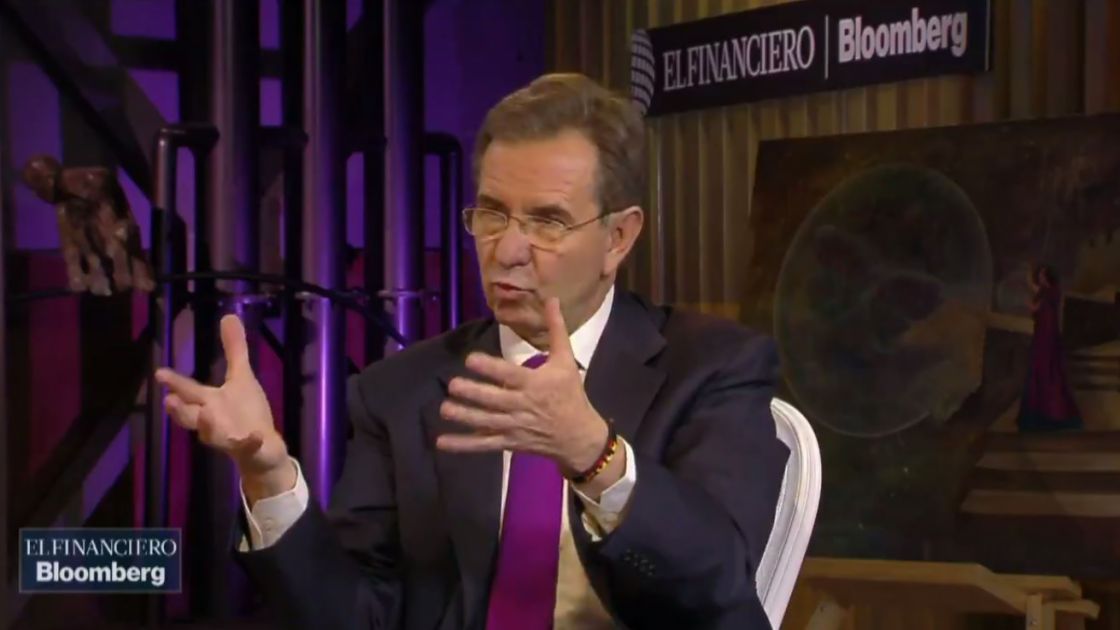
A pocos días de salir electo como nuevo presidente de México, Andrés Manuel López Obrador aseguró que todos los jóvenes de su país tendrán la oportunidad de estudiar, y quienes quieran asistir a la universidad podrán hacerlo.
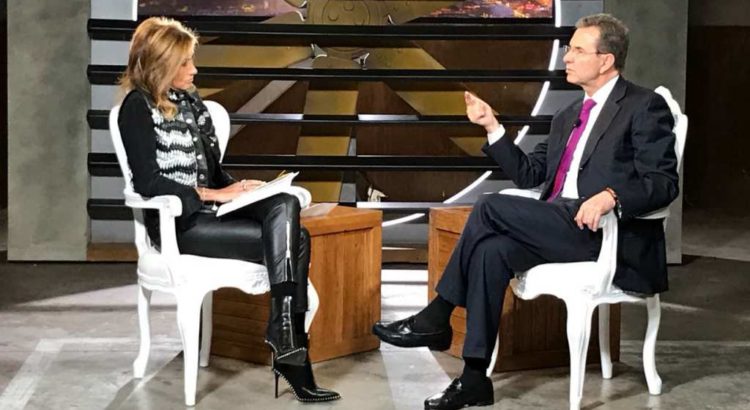
Así también lo confirmó el futuro secretario de Educación, Esteban Moctezuma, indicando que el gobierno destinará el equivalente a 126 dólares en becas mensuales a los estudiantes que necesiten ayuda financiera para terminar sus estudios preuniversitarios o la universidad, si el presupuesto lo permite.
De todos modos, señaló que el nuevo gobierno no planea aumentar los impuestos para cubrir esos gastos, pese a que López Obrador dijo que para cumplir, se podría requerir laconstrucción de nuevas escuelas secundarias y universidades.
El Presidente electo ha dicho en varias oportunidades que la educación es la herramienta para darle trabajo a los jóvenes desempleados y con ello reducir la delincuencia.
A inicios de la semana pasada, se comprometió a pagar los salarios de los pasantes que trabajen en empresas mexicanas como parte de un paquete de becas y capacitación de 5.000 millones de dólares.
Fuente de la noticia: https://www.eldinamo.cl/educacion/2018/07/09/nuevo-presidente-de-mexico-asegura-que-todo-aquel-que-quiera-estudiar-podra-hacerlo/
OtrasVocesenEducacion.org existe gracias al esfuerzo voluntario e independiente de un pequeño grupo de docentes que decidimos soñar con un espacio abierto de intercambio y debate.
¡Ayúdanos a mantener abiertas las puertas de esta aula!