Page 28 of 73
1 26 27 28 29 30 73

India: Teacher in sexual harassment row a repeat offender

Asia/India/20.06.18/Por Payal Dhawan/Source: timesofindia.indiatimes.com

LUDHIANA : A day after Raikotpolice booked a government school teacher for allegedly sexually harassing a Class VIII school, the education department suspended him on Monday. In the suspension notice, director of public instructions (secondary) Paramjit Singh said the teacher was accused of sexual harassment by another girl student in 2016.

The official said the teacher had at that time given an apology for the incident. In the suspension notice, a copy of which is with TOI, the department has given 15 days to the teacher to give an explanation on the accusation against him.

The notice has stated that this was the second time the teacher had been accused of sexually harassing a student, so he was being suspended by the school. The education department’s action came a day after Raikot police registered a case against the teacher for allegedly sexually harassing a Class VIII student of his school.

The FIR was lodged after the school’s head had filed a police complaint against him, on the direction of Punjab State Commission for the Protection of Child Rights. Following the complaint, police had booked the teacher under Section 354A (sexual harassment) of the Indian Penal Code and under sections of Prevention of Children from Sexual Offences (POCSO) Act.

It has been alleged that the schoolgirl had to stay back at school because of bad weather, while most student had left for home, on May 2. The girl and the teacher were alone when he saw the girl, grabbed her and harassed her, it has been alleged.

The girl escaped from there and informed her family about the incident on reaching home. Her family had complained to the school against the teacher on May 4. An internal probe by the school had indicted the teacher. However, he was let-off after the matter was resolved by the village’s panchayat, and no one approached the police.

However, some village residents reported the incident to Punjab secretary (education) Krishan Kumar, who ordered local education officials to submit a report after inquiry. The report of district education officer also indicted the teacher. Taking suo-motu notice of the matter, the Punjab State Commission for the Protection of Child Rights summoned the school head and district education officer (secondary) Swaranjit Kaur.

The DEO presented a report which indicted the teacher. After this, the commission directed DPI (secondary) Paramjit Singh to suspend the teacher and the education department to lodge a police complaint.

Source of the notice: https://timesofindia.indiatimes.com/city/ludhiana/teacher-in-sexual-harassment-row-a-repeat-offender/articleshow/64547454.cms

Comparte este contenido:

India: Plans for free education from KG to PG by Adityanath

Asia/India/asianage.com

Resumen: El gobierno de Yogi Adityanath en Uttar Pradesh está planeando una educación gratuita de «KG a PG» a partir del próximo año. El viceprimer ministro Dinesh Sharma, quien también es el ministro de educación secundaria y superior, ha establecido un comité para determinar las modalidades. «Queremos que un niño que ingresa en KG (jardín de infantes) debe recibir educación hasta el nivel de PG (postgrado) sin ningún cargo. Una gran cantidad de estudiantes se retiran debido a consideraciones monetarias «, dijo el diputado CM. El Dr. Sharma dijo que esto sería aplicable para todas las escuelas y facultades del gobierno. «Esto también atraerá a más estudiantes a las escuelas del gobierno y automáticamente conducirá a una mejora en los estándares de las escuelas», dijo.

Luego, el viceprimer ministro también está tomando medidas para regularizar la sesión académica en todas las escuelas, institutos y universidades del gobierno.


The Yogi Adityanath government in Uttar Pradesh is planning free education from “KG to PG” from next year.

Deputy chief minister Dinesh Sharma, who is also the secondary and higher education minister, has set up a committee to work out the modalities.

“We want that a child who takes admission in KG (kindergarten) should get education up to the PG (post-graduate) level without any charges. A large number of students drop out because of monetary considerations,” the deputy CM said.

Dr Sharma said that this would be applicable for all government schools and colleges. “This will also attract more students to government schools and will automatically lead to an improvement in the standards of the schools”, he said.

Then deputy chief minister is also taking steps to regularise the academic session in all government schools, colleges and universities.

Fuente: http://www.asianage.com/india/all-india/160618/plans-for-free-education-from-kg-to-pg-by-adityanath.html

Comparte este contenido:

Unicef valora proyecto de ley en India sobre licencia de paternidad

India/16 de Junio de 2018/Prensa Latina

La Unicef valoró un proyecto de ley de Beneficios de Paternidad que será considerado en la próxima sesión del Parlamento de la India, y otorga hasta tres meses de licencia de paternidad con sueldo, destacó hoy la prensa local.
La India es uno de los más de 90 países en el mundo que aún no cuenta con políticas nacionales que aseguren a los nuevos padres un tiempo libre remunerado adecuado con sus bebés recién nacidos, señaló el Fondo de las Naciones Unidas para la infancia (Unicef), según un artículo reseñado por la agencia Press Trust of India.

Casi dos tercios de los niños menores de un año del planeta -cerca de 90 millones- viven en países donde sus padres no tienen derecho por ley a un solo día de licencia paternal, indicó esa agencia de la ONU.

Tras apuntar que aún queda mucho trabajo por hacer, Unicef indicó que en ocho países, incluidos los Estados Unidos, donde viven casi cuatro millones de niños, no existe una política de licencia por maternidad o de paternidad remunerada.

Otras naciones con altas poblaciones infantiles, como Brasil y el Congo, tienen políticas nacionales de licencia de paternidad remunerada, aunque de relativamente corto plazo.

‘La interacción con las madres y los padres desde el principio ayuda a dar forma al crecimiento y desarrollo del cerebro de los niños para la vida, haciéndolos más saludables y felices, y aumentando su capacidad de aprender’, dijo la directora ejecutiva de Unicef, Henrietta Fore.

También, la evidencia sugiere que cuando los padres se unen con sus bebés desde el comienzo de la vida es más probable que desempeñen un papel más activo en el desarrollo del niño.

La investigación igualmente explica que cuando los infantes interactúan positivamente con sus padres tienen mejor salud psicológica, autoestima y satisfacción con la vida a largo plazo.

Asimismo, la Unicef instó a los gobiernos a implementar políticas nacionales favorables a la familia que apoyen el desarrollo de la primera infancia, incluida la licencia de paternidad, para proporcionar a los padres el tiempo, los recursos y la información que necesitan para cuidar a sus hijos.

Fuente: http://www.prensa-latina.cu/index.php?o=rn&id=187187&SEO=unicef-valora-proyecto-de-ley-en-india-sobre-licencia-de-paternidad
Comparte este contenido:

Taking SDG 4.2 from Policy to Action: Nepal hosts 3rd Asia-Pacific Regional Policy Forum on Early Childhood Care and Education (ECCE)

BANGKOK, 30 de mayo de 2018 –

Resumen: Tomando el ODS 4.2 de la Política a la Acción: Nepal acoge el 3er Foro de Política Regional de Asia y el Pacífico sobre Atención y Educación de la Primera Infancia (AEPI).  Desde el primer día de clases, un niño ya podría enfrentar desafíos serios e incluso insuperables para acceder a una educación de calidad. A medida que se abre el 3er Foro de Política Regional de Asia y el Pacífico sobre Atención y Educación de la Primera Infancia (AEPI) y la Conferencia Regional de Desarrollo de la Primera Infancia de Asia y el Pacífico (2018) se abre en Katmandú el 5 de junio de 2018, hay una comprensión creciente de un enfoque multisectorial es esencial para nivelar el campo de juego para los niños, incluso antes de su inscripción en la escuela primaria. El concepto de ‘preparación para la escuela’ es un elemento fundamental de los Objetivos de Desarrollo Sostenible (ODS). Meta 4.2 – ‘Para 2030, garantizar que todas las niñas y niños tengan acceso a un desarrollo, atención y educación preescolar de calidad para que estén listos para la educación primaria. ‘ Cuando los niños no están listos para la escuela para la edad de ingreso primaria, los impactos negativos a largo plazo en los resultados del desarrollo, particularmente para los niños más vulnerables, están bien documentados. Hay teorías bien establecidas y evidencia de investigación que destaca la importancia crítica del desarrollo de la primera infancia, pero 250 millones de niños menores de 5 años en países de ingresos bajos y medios corren el riesgo de no alcanzar su potencial debido al retraso en el crecimiento, la pobreza y la desventaja . Ese potencial abarca el bienestar cognitivo, emocional, social y físico. Esto exige medidas urgentes para aumentar la cobertura de los programas de AEPI de calidad multisectorial que incorporan salud, nutrición, seguridad y protección, atención receptiva y aprendizaje temprano. En el marco del ODS 4.2, se requiere que el Ministerio de Educación (MOE) de cada país desempeñe un papel central en un enfoque multisectorial implementando y monitoreando programas de AEPI de calidad, llegando a otros ministerios y agencias responsables del DIT y coordinando sus esfuerzos. Este enfoque holístico y multisectorial de la AEPI es en realidad un interés fundamental de cada Ministerio de Educación responsable de los resultados educativos de los niños inscritos en el sistema escolar, porque la participación de AEPI está significativamente relacionada con el desarrollo cognitivo y la preparación escolar desde el nacimiento hasta los 8 . Como anfitrión del foro de políticas de ECCE y de la conferencia ECD, Nepal está bien preparado para adoptar este enfoque holístico del desarrollo temprano y la educación. El Primer Ministro de Nepal, Sr. KP Sharma Oli, ha destacado que el desarrollo de la primera infancia está consagrado en la Constitución del país y es esencial para lograr los ambiciosos planes de desarrollo sostenible del país. En ausencia de estos programas ECCE multisectoriales dirigidos por el MOE, los resultados de aprendizaje de los niños sufren, pero también los propios sistemas escolares, ya que pagan el precio si los niños no están bien cuidados con esfuerzos enfocados en su desarrollo antes de llegar a la escuela primaria.


On the very first day of school, a child could already face serious, even insurmountable, challenges to access quality education. As the 3rd Asia-Pacific Regional Policy Forum on Early Childhood Care and Education (ECCE) and 2018 Asia-Pacific Regional Early Childhood Development (ECD) Conference opens in Kathmandu on 5 June 2018, there is a growing understanding that a multi-sectoral approach is essential to level the playing field for children, even prior to their enrolment in primary school.

The concept of ‘school readiness’ is a critical element of Sustainable Development Goal (SDG) Target 4.2 – ‘By 2030, ensure that all girls and boys have access to quality early childhood development, care and pre-primary education so that they are ready for primary education.’ When children are not ready for school by the primary entry age, the long-term negative impacts on developmental outcomes, particularly for the most vulnerable children, are well-documented.

There are well-established theories and research evidence highlighting the critical importance of early childhood development, yet 250 million children younger than 5 years of age in low and middle-income countries are at risk of not reaching their potential due to stunting, poverty and disadvantage. That potential encompasses cognitive, emotional, social and physical welfare. This calls for urgent action to increase coverage of multi-sectoral quality ECCE programmes that incorporate health, nutrition, security and safety, responsive caregiving and early learning.

Under the framework of SDG 4.2, each country’s Ministry of Education (MOE) is required to play a pivotal role in a multi-sectoral approach implementing and monitoring quality ECCE programmes by reaching out to other ministries and agencies responsible for ECD and coordinating their efforts. This holistic, multi-sectoral approach to ECCE is actually a fundamental interest of each Ministry of Education responsible for educational outcomes of children enrolled in the school system, because ECCE participation is significantly linked to cognitive development and school readiness from birth to the age of 8.

As the host of the ECCE policy forum and ECD conference, Nepal is well-prepared to adopt this holistic approach to early development and education. Prime Minister of Nepal Mr K.P. Sharma Oli has emphasized that early childhood development is enshrined in the country’s constitution and essential to achieve the country’s ambitious sustainable development plans.

In the absence of these MOE-led, multi-sectoral ECCE programmes, children’s learning outcomes suffer, but so too do school systems themselves as they pay the price if children are not well cared for with focused efforts on their development before they reach primary school.

In addition, there is also an increasing recognition of the importance of systematic monitoring of ECCE efforts, not only to track progress relative to the SDG4.2 indicators – but also because the entire ECCE programme must be seen as a continuum of development.

Since 2013, the UNESCO Asia and Pacific Regional Bureau for Education, UNICEF and ARNEC, with other key partners, have been organizing the Asia-Pacific Regional Policy Forum on ECCE to provide a platform for high-level policy-makers of Asia-Pacific countries to share knowledge and discuss strategies to expand access to, and improve the quality of, comprehensive, integrated and holistic ECCE. The forum will result the Regional Strategy to improve the equity and quality of ECCE.

The 3rd Asia-Pacific Regional Policy Forum on Early Childhood Care and Education (ECCE) is led by UNESCO. The Regional ECD Conference is organized by the Asia-Pacific Regional Network for Early Childhood (ARNEC) www.arnec.net including its core partners United Nations Children’s Fund (UNICEF) Regional Office for East Asia and the Pacific http://www.unicef.org/eapro/ and Regional Office for South Asia andhttp://www.unicef.org/rosa/; United Nations Educational, Scientific and Cultural Organization (UNESCO) http://bangkok.unesco.org/; Plan International www.plan-international.org/; Open Society Foundations https://www.opensocietyfoundations.org/; Save the Children www.savethechildren.org and ChildFund Internationalhttps://www.childfund.org/.

The three-day event, being hosted by Nepal Government’s Ministry of Education, Science and Technology, includes the participation of about 700 high-level government officials, development professionals, researchers as well as representatives from organizations working in early childhood development, care and education from 40 countries in the Asia-Pacific region.

For more information, please contact:

Mr Baikuntha Prasad Aryal, Joint Secretary/Spokesperson, Ministry of Education, Science and Technology Email: baikunthaparyal@gmail.com

Ms Kyungah Bang, Programme Officer, UNESCO Bangkok Email: k.bang@unesco.org

Ms Silke Friesendorf, Communication Manager, ARNEC. Email: silke.f@arnec.net www.arnec.net

Fuente: https://bangkok.unesco.org/content/taking-sdg-42-policy-action-nepal-hosts-3rd-asia-pacific-regional-policy-forum-early

Comparte este contenido:

India: Indian govt may soon turn to private sector to boost higher education system

Asia/India/5.06.2018/By: Elton Gomes/ Fuente: qrius.com.

Higher education in India might receive a significant monetary boost as the government is planning to rope in private companies and high-net individuals (HNIs) to finance and promote higher education across the country. The ministry of human resource development has prepared a draft of the plan and will present it before the Union cabinet for consideration.

Two government officials have stated the plan will be implemented through the higher education funding agency (HEFA), a non-banking financial company, under the human resource ministry, as reported by Live Mint. According to Swarajya Mag, the plan is to raise Rs 1 lakh crore from the market, and spend it on funds for ‘infrastructure requirements of educational institutions.’

Roping in HNIs and private companies might lead to improvements in higher education in India, and government officials seemed optimistic. “Bringing in industries or industrialists or high net-worth individuals for HEFA equity will have three benefits. One, structured and clean private funding. Two, outside experience of managing higher education funding. And three, curb chances of manipulation at the institutional level,” a government official told Live Mint.

In February 2018, Union Finance Minister Arun Jaitley said that the education sector was a priority for the Indian government.

Why does this matter

In 2014, the Times of India reported that a mere 10% of students have access to higher education in the country. The article cited a report by a development economist Abusaleh Shariff, and mentioned that residents of Bihar, Uttar Pradesh, and West Bengal have the worst access to higher education.

A report in Live Mint details that lax quality and a lack of accountability and widespread innovation is what ails higher education in India. Indian higher education seems to be suffering from a two-fold problem of quality and quantity. The Indian government seems to think that privatising education is the only solution. However, along with private investment, the government also should look to invest more in education.

In 2016, China spent roughly $565 billion on education – more than 60% of which came from the government. In the same year, India spent approximately $4.5 billion on higher education, as per the Quint. India’s spending on education is much lower than that of other countries.

Mumbai’s apex varsity – the University of Mumbai – has been in shambles despite having a highly conducive environment for studies. Further weakening the reputation of the university is the incessant delays in results.

Perhaps some degree of privatisation is the only way out for better higher education in India. However, along with adequate funds, the government must ensure the funds are being allocated to improve the quality of teaching offered to Indian students, thereby, improving accountability of the system.

Fuente de la noticia: https://qrius.com/higher-education-in-india-to-get-boost-as-government-mulls-huge-investment-private-funding/

Comparte este contenido:

India: Extramarks Education Foundation ties up with Power Grid to offer digital solutions at Army-run schools in J&K

Asia/India/June 04, 2018/By: PTI/Source: indianexpress.com.

EEF and PGCIL will equip all the army classrooms with digital hardware, provide state-of-the-art digital solutions, and train faculty.

Terrorism deprives thousands of children of education in Jammu and Kashmir and the Indian Army has set up special schools to address this problem. Now, the quality of education at these institutions in J&K is all set for a digital leap with the introduction of a digital solutions learning programme.

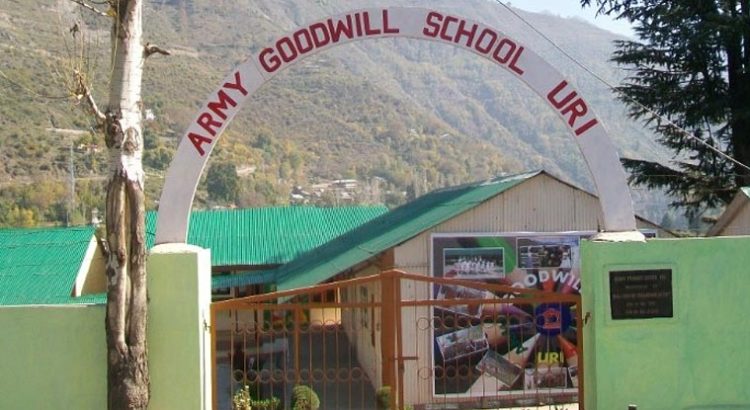
The programme was inaugurated by Chief of Army Staff General Bipin Rawat at Army Goodwill Schools, Pahalgam, at a function held late Friday evening, and attended by GOC Northern Command Lt. General Anil Bhatt with senior officials from the State Education Department, civil administration and other senior police functionaries. At least 1,600 students and hundreds of staff at Army Goodwill Schools (AGS) will benefit from Phase I of the programme, facilitated by a non-profit NGO ‘Extramarks Education Foundation (EEF)’ headed by founder Atul Kulshreshtha and Power Grid Corporation of India Ltd (PGCIL), according to a release issued by organisers. EEF and PGCIL will equip all the army classrooms with digital hardware, provide state-of-the-art digital solutions, and train faculty.

In subsequent phases, a balance of 46 Army Goodwill Schools will also be brought in to the programme. The programme will run in AGS Pahalgam, Ziran, Uri, Margund and at AGS Pinewood School, Hamirpur in Poonch. Army Goodwill Schools were established by the Indian Army in all the three regions, Ladakh, Kashmir and Jammu where children did not have access to education or the schools were dysfunctional.

“The credit for augmenting education in areas affected by turbulence goes to the Indian Army for their inclusive approach,” said Atul Kulshreshtha, Founder and Chairman of Extramarks.

Source:

http://indianexpress.com/article/education/extramarks-education-foundation-ties-up-with-power-grid-to-offer-digital-solutions-at-army-run-schools-in-jk-5193356/

Comparte este contenido:

India: Tripura to adopt NCERT curriculum: Education Minister

Asia/India/timesofindia.indiatimes

Resumen: El gobierno de BJP-IPFT en Tripura ha decidido adoptar el plan de estudios NCERT para las escuelas del estado en lugar del plan de estudios prescrito por el Consejo Estatal de Investigación Educativa (SCERT), dijo el miércoles el ministro de Educación, Ratan Lal Nath . La Junta de Educación Secundaria de Tripura (TBSE) está siguiendo los libros de SCERT a nivel escolar, hasta el momento no ha producido resultados deseados, lo que ha llevado al estado a cambiar al plan de estudios de NCERT para impulsar el sistema educativo estatal, dijo Nath. «Es más probable que se siga el plan de estudios del patrón CBSE y el sistema de tabulación a nivel escolar para obtener mejores resultados», dijo. «Se formó un comité de expertos de seis miembros encabezado por el ex vicerrector de la Universidad Central de Tripura, el profesor Arunoday Saha, para preparar una hoja de ruta para adoptar el plan de estudios NCERT. Una vez que el comité presente su hallazgo, el gobierno tomará una decisión adecuada», dijo Nath. El Ministro de Educación dijo que dos funcionarios de SCERT fueron a NCERT en Delhi para discutir sobre cómo adoptar su plan de estudios a nivel escolar. Se supone que deben presentar un informe ante el gobierno. Nath dijo que el gobierno estatal quiere introducir el plan de estudios NCERT lo antes posible.
Esto será beneficioso para los estudiantes de Tripura que no pudieron competir con estudiantes de fuera del estado en un examen competitivo, agregó. El BJP-Frente Indígena de Tripura (IPFT) ganó las elecciones de la Asamblea de Tripura en marzo de este año, poniendo fin a 25 años de gobierno ininterrumpido del Frente de Izquierda (CPI) en el estado.


The BJP-IPFT government in Tripura has decided to adopt NCERT curriculum for schools in the state instead of the State Council of Educational Research and Training (SCERT) prescribed curriculum, Education Minister Ratan Lal Nath said here on Wednesday.

Tripura Board of Secondary Education (TBSE) is following the SCERT books at the school level, it has not yielded desire results so far prompting the state to switch over to NCERT curriculum in order to boost the states education system, Nath said.

«It is more likely that CBSE pattern syllabus and tabulation system will be followed at the school level for better outputs,» he said.

«A six-member expert committee headed by former Vice Chancellor of Tripura Central University Prof Arunoday Saha has been constituted to prepare a roadmap for adopting NCERT curriculum. Once the committee submits its finding, the government will take an appropriate decision,» Nath said.

The Education Minister said two officials of SCERT went to NCERT in Delhi to discuss on how to adopt its curriculum at the school level. They are supposed to submit a report before the government.

Nath said the state government wants to introduce NCERT curriculum at the earliest.

This will be beneficial for the students of Tripura who could not compete with students from outside the state in competitive examination, he added.

The BJP-Indigenous People’s Front of Tripura (IPFT) won the Tripura Assemblyelections in March this year, ending 25 years of uninterrupted rule of the CPI(M)-ledLeft Front in the state.

Fuente: https://timesofindia.indiatimes.com/home/education/news/tripura-to-adopt-ncert-curriculum-education-minister/articleshow/64388965.cms

Comparte este contenido:
Page 28 of 73
1 26 27 28 29 30 73