Page 747 of 772
1 745 746 747 748 749 772

Avanza empoderamiento de la mujer en Vietnam

La hasta entonces vicepresidenta del órgano legislativo sucede a Nguyen Sinh Hung, liberado de esos car­gos, y fue electa también titular del Consejo Electoral Nacional en el último periodo de sesiones de la XIII Legislatura, informó PL.

Según se conoció, de los 484 diputados que asistieron a la se­sión, el 96,15 %, aprobaron por unanimidad y mediante voto  secre­to la resolución al respecto, tras lo cual Kim Ngan prestó juramento ante la AN.

La líder parlamentaria nació el 12 de abril de 1954 en la Comuna de Chau Hoa, distrito de Giong Tom, del territorio norteño de Ben Tre, donde desempeñó distintas posiciones en los órganos estatales de 1975 a 1995 y fue representante del Consejo Popular Pro­­vincial de 1991 a 1995, según un reporte de la Agencia Vietnamita de Noticias.

Kim Ngan integra la AN desde el 2007 y fue secretaria del comité Par­tidista en la provincia norteña de Hai Duong desde septiembre del 2002 a febrero del 2006.

Según trascendió en la misma sesión, el Comité Permanente de la AN presentó a los diputados la propuesta de liberar a Truong Tan Sang del cargo de presidente del país, a quien se le reconoció que cumplió eficientemente sus deberes, agrega PL.

Ese paso responde a la necesidad de satisfacer la demanda del personal del Partido Comunista de Vietnam y el Estado tras el XII Congreso de la organización, realizado en enero de este año, según se explicó.

Fuente de la noticia: http://www.granma.cu/mundo/2016-03-31/avanza-empoderamiento-de-la-mujer-en-vietnam-31-03-2016-23-03-22

Comparte este contenido:

Jubilados japoneses roban en tiendas para ir a la cárcel

Japón/28 marzo 2016/Fuente: https://actualidad.rt.com

Las cárceles de Japón se llenan de jubilados que se convierten en ladrones reincidentes, al no poder permitirse vivir solos en libertad.

Alrededor de un 35% de los hurtos en tiendas de Japón corre a cargo de personas mayores de 60 años de edad, muchos de los cuales son reincidentes. De estos reincidentes, según las cifras de 2013, un 40% cometieron este crimen más de seis veces, un 460% más que en 1991, informa ‘The Financial Times‘.

Expertos sugieren que es muy probable que las personas de la  tercera edad cometan estos crímenes buscando terminar en las cárceles y, de esta manera, mejorar sus condiciones de vida. “La situación social en Japón ha empujado a las personas de avanzada edad a la necesidad de cometer crímenes”, explica el investigador Akio Doteuchi.

Según la tendencia demográfica, hasta 2060 el 40% de la población japonesa tendrá más de 65 años. Asimismo, el gasto promedio de un jubilado es un 25% mayor que la pensión básica, que es de 780.000 yenes anuales (casi 7.000 dólares), calcula Michael Newman de la empresa de investigaciones independiente Custom Products. Ahora un 40% de las personas de avanzada edad vive solo.

Los expertos predicen que esta ola de crímenes irá en aumento porque los ancianos buscan acabar en cárceles que proveen comida y asistencia sanitaria gratuitos, lo que amenaza con desatar una crisis presupuestaria en el sistema penitenciario de Japón.

Información de la Foto: 

pixabay.com

Fuente de la Noticia:

https://actualidad.rt.com/sociedad/203198-jubilados-japon-roban-tiendas-terminar-carcel

Comparte este contenido:

“When to Intervene Forcibly in Interstate Relations”, a Conversation with Prof. Michael Doyle

On 12 May 2016, UNU will host “When to Intervene Forcibly in Interstate Relations”, a conversation with Prof. Michael Doyle, Director of the Columbia Global Policy Initiative and University Professor of Columbia University. This event will start at 6:30 p.m. on 12 May 2016 at UNU Headquarters in Tokyo.

What should our rules for international non-intervention and intervention be to adhere to three (potentially contradictory) principles? The first is the commitment to humanitarian assistance, irrespective of international borders; the second is respect for the significance of communitarian, national self-determination; and, the third is accommodation to the reality of international anarchy — the absence of reliable world government — that puts a premium on self-help national security.

Prof. Michael Doyle will join UNU Rector David M. Malone for a conversation exploring these questions in relation to John Stuart Mill’s classic (1859) attempt to outline an ethical doctrine of non-intervention and intervention. He intends to raise contemporary examples (including Libya 2011) of the theoretical arguments he discusses.

The UNU Conversation Series aims to foster audience participation: you are encouraged to engage with the speakers during the conversation and at the reception that will follow, where all audience members are invited to enjoy the food and drinks that will be served while exchanging ideas and making new contacts.

Please note that this event will be in English only; Japanese interpretation will not be provided. Advance registration (by 11 May) is required. Please click on the REGISTER button above to access the online registration page.

About the Speaker

Michael W. Doyle is the Director of the Columbia Global Policy Initiative and University Professor of Columbia University where he is affiliated with the School of International and Public Affairs, the Department of Political Science, and the Law School. His research interests include international relations theory, international law, international peace-building and the United Nations. From 2006 to 2013, Doyle was an individual member and the chair of the UN Democracy Fund, a fund established in 2005 by the UN General Assembly to promote grass-roots democratisation around the world.

Prof. Doyle previously served as assistant secretary-general and special adviser for policy planning to United Nations Secretary-General Kofi Annan. He has received two career awards from the American Political Science Association for his scholarship and has been elected to the American Academy of Arts and Sciences and the American Philosophical Society. He has an AB and PhD from Harvard University.

For his brilliant, youthful engagement with Immanuel Kant’s ideas, among other achievements, Michael Doyle has long been considered one of the US’s leading political scientists.


Comparte este contenido:

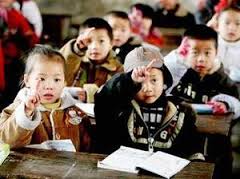
China promete ampliar cobertura de educación preescolar

Fuente Globalasia

El Gobierno chino ha anunciado que tiene por objetivo que alrededor del 75 % de los niños de preescolar reciban tres años de educación en China antes de llegar al nivel de escuela primaria para el año 2016, 7,5 % por encima de la tasa actual, informa Xinhua. La educación preescolar de tres años debe popularizarse en las ciudades, poblados y áreas rurales desarrolladas económicamente, de acuerdo con un plan de tres años de educación preescolar publicado de manera conjunta por los ministerios de Educación y de Finanzas, así como por la Comisión Nacional de Desarrollo y Reforma de China. La tasa de matrícula en las áreas rurales menos desarrolladas debe ser incrementada en los próximos tres años, indica el plan.

Alrededor de 198.600 jardines de niños de China inscribieron a más de 38,95 millones de niños para fines de 2013, con la tasa de matrícula alcanzando el 67,5 %, de acuerdo con las cifras oficiales. Se trata de 10,9 % más que la cifra de hace tres años como resultado del plan previo de tres años. De acuerdo con el plan, un mayor apoyo en los próximos tres años se enfocará en ofrecer educación preescolar para los niños de las regiones en desventaja y de familias empobrecidas.

Se deben hacer esfuerzos para aliviar la escasez de jardines de niños en los poblados y áreas semiurbanas e incrementar la matrícula de los niños discapacitados, añade el plan. El Gobierno chino planea establecer una red de educación preescolar de jardines de niños patrocinados por el gobierno y jardines de niños de caridad privados como las principales fuerzas para el año 2016, indica el plan que añade que políticas preferenciales deben llevarse a cabo para atraer capital privado al sector.

Comparte este contenido:

Valuing care work

15 de de marzo de el año 2016 / HDRO Research Team

Resumen: El  siguiente texto presenta un análisis del Informe sobre Desarrollo Humano de 2015 en el que se pone de manifiesto una contradicción sobre el trabajo de cuidador /cuidadora, esencial para el avance de las capacidades humanas, sin embargo, tiende a ser remunerado, a menudo infravalorado, sobre todo el trabajo de cuidado realizado por las mujeres.

The Human Development Report, 2015 highlights a contradiction: it is care work mostly undertaken by women – that makes possible much of the paid work that drives the market economy. Care work is also essential for advancing human capabilities yet, because it tends to be unpaid, it is undervalued and often taken for granted.

Estimating the market value of care work can highlight the critical contribution care workers make, and help ensure policies recognise this, as illustrated through the background research of Prof. Nancy Folbre at the University of Massachusetts Amherst (1).

Attempts to do so have occurred sporadically. For example, recognizing a housewife’s “round-the-clock” work in the household, The Supreme Court of India, recently trebled the compensation owed to the family of Mrs. Jayavantiben Trivedi roughly 25 years after she died in a road accident. A lower court had awarded Rs. 224000 (about USD 3,300) to the family, following the vehicle insurer’s argument that as a homemaker, Jayvantiben would not have earned much in her lifetime. The family’s lawyers successfully argued that the value of her work in the family should be recognised, and the Supreme Court agreed and raised the compensation to Rs. 647000 (about USD 9,500) (2).

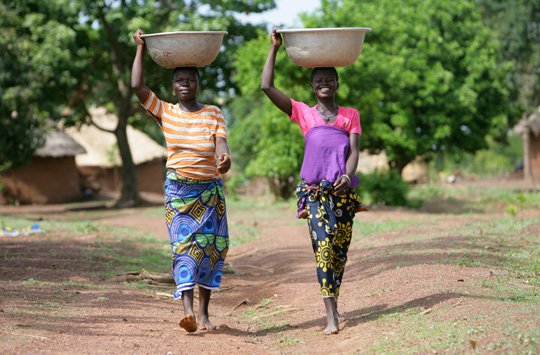
Putting a monetary value on someone’s life is almost impossible of course. Yet, the case serves to remind us that the unpaid care work, such as meal preparation, housecleaning, laundry, the care of children and the elderly, clearly contributes to economic living standards, social well-being, and the development of human capabilities. At the same time it enables individuals to engage in paid work. Yet while paid work is assigned a monetary value and features in the national accounts, care work remains largely unmeasured and consequently invisible in economic policy discussions.

Things are changing. Due at least partly to UN resolutions insisting on improving the visibility of women’s unpaid work, many countries now administer time-use surveys asking individuals to recall their activities during the previous day. In the first decade of this century, more than 87 such surveys were conducted, more than during the entire 20th Century. Estimates of the hours worked in providing various household services provide a basis for valuing unpaid work: essentially economists can calculate how much it would cost to purchase an equivalent amount of similar work if you had to employ a cook or a nanny, for instance. This is valuation by a ‘replacement wage’. Although other approaches are possible, this is the most widely applied. It is important to note, however, that the value of unpaid work contributions cannot always – or fully – be captured in market terms. However, estimates of its monetary value, like efforts to estimate the value of environmental assets and services, can provide important insights.

Unpaid household work that leads to the production of goods (such as food for own consumption, or collection of firewood or water necessary for the household) is considered part of “production” by the System of National Accounts, and most estimates of Gross Domestic Product include approximations of the value of this work. However, the unpaid time people devote to the care of family, friends and neighbours are explicitly excluded. Although not all forms of care work are captured by time-use surveys, they do provide a useful tool for providing better estimates of hours devoted to these undervalued forms of work.
Valuation efforts, have gradually been gaining ground in national income accounting and are illuminating. Estimates differ among countries that are attempting to measure the value of unpaid care work, from 20 percent to 60 percent of GDP (3). In India unpaid care is estimated at 39 percent of GDP, in South Africa 15 percent (4). Among Latin American countries, the value for Guatemala is estimated at between 26 percent and 34 percent of official GDP, and 32 percent for El Salvador (5).

In 2008, the Organization for Economic Cooperation and Development published estimates of household production in 27 countries and highlighted that the value of household production as a share of GDP varies considerably. It is above 35% in several countries generally considered affluent—Australia, New Zealand and Japan and below 20% in Mexico and Korea (6).

Paying attention to these valuations can affect policy making. For example, in developing countries women spend a significant amount of time tending to basic family needs, and access to clean water and modern energy services would greatly improve their productivity. However, estimates of the return on public investments typically do not take the value of such non-market work into account. Doing so could change the way resources are allocated and projects prioritised for implementation.

This blog entry was drawn from the 2015 Human Development Report “Work for Human Development” think piece written by Nancy Folbre entitled Valuing Non-market Work

The HDialogue blog is a platform for debate and discussion. Posts reflect the views of respective authors in their individual capacities and not the views of UNDP/HDRO.

HDRO encourages reflections on the HDialogue contributions. The office posts comments that supports a constructive dialogue on policy options for advancing human development and are formulated respectful of other, potentially differing views. The office reserves the right to contain contributions that appear divisive.

Photo credit: UNDP Benin

References
(1) Folbre N. 2015. Valuing Non Market Work. Background think piece for Human Development Report 2015. UNDP
(2) Woman’s Worth. The Telegraph February 25th 2015
(3) Antonopoulos R. 2009. The Unpaid Care Work-Paid Work Connection. Working paper 86. ILO
(4) Budlender D. 2010. What Do Time Use Studies Tell Us About Unpaid Care Work? In Time Use Studies and Unpaid Care Work. UNRISD
(5) Durán, M. A., and V. Milosavlejevic. 2012. Unpaid Work, Time Use Surveys, and Care Demand Forecasting in Latin America. Working Paper 7. Fundacion BBA
(6) Ahmad, N., and S. H. Koh. 2011. Incorporating Estimates of Household Production of Non-Market Services into International Comparisons of Material Well-Being. OECD Statistics Directorate Working Paper No. 42

Fuente de la noticia: http://hdr.undp.org/en/content/valuing-care-work&prev=search

Comparte este contenido:

Las escuelas primarias y secundarias de China tendrán internet en 2015

 Fuente Globalasia / 2 de Abril de 2016/

China quiere utilizar internet como instrumento de educación.  Por ese motivo, el Ministerio de Educación de China ha informado que todas las escuelas primarias y secundarias de China estarán conectadas a internet antes de finales de 2015. Según responsables del ministerio, cada escuela contará al menos con un centro de ordenadroes moderno, de acuerdo con el plan de 2015 sobre la educación digitalizada.

Escuelas primarias en China

Para lograr este ambicioso objetivo en 205, el ministerio ha pedido la colaboración entre los diversos departamentos y el apoyo de las empresas para garantizar que las escuelas primarias y secundarias en las zonas remotas y rurales menos desarrolladas económicamente tengan acceso a internet. Esta medida, supone en datos, que en 2015 se formará y evaluará a unos 2,6 millones de maestros de guardería y escuelas primarias y secundarias en tecnología informática, así como a 50.000 directores de escuelas primarias y secundarias.

Comparte este contenido:
Page 747 of 772
1 745 746 747 748 749 772