Page 1012 of 6822
1 1.010 1.011 1.012 1.013 1.014 6.822

Why Opening Windows Is a Key to Reopening Schools

Why Opening Windows Is a Key to Reopening Schools

The C.D.C. is urging communities to reopen schools as quickly as possible, but parents and teachers have raised questions about the quality of ventilation available in public school classrooms to protect against the coronavirus.

We worked with a leading engineering firm and experts specializing in buildings systems to better understand the simple steps schools can take to reduce exposure in the classroom.

Here’s a typical classroom from the pre-Covid era with about 30 students. This scene is based on a real public school classroom in New York City.

New York City put strict protocols in place for reopening schools, and in-school transmission of the virus has been very low. Students must practice social distancing and wear masks, and classrooms must have windows that open.

This classroom seats just nine students, all wearing typical cloth face masks, facing forward and sitting six feet apart. With all of the windows closed, the room would lack sufficient ventilation. That’s a problem with an airborne virus.

The students are wearing masks, but their breath still circulates and mixes around the room. About 3 percent of the air each person in this room breathes was exhaled by other people.

Even students who look healthy may be asymptomatic carriers who can transmit the virus. Let’s see what happens when we introduce an infected student to the mix.

These lines trace the student’s warm breath as it rises and begins to disperse contaminated respiratory aerosols throughout the room. The contaminants are most concentrated where the lines are darkest.

While we still do not know exactly what level of contamination presents the greatest risk of infection, “exposure is a function of concentration and time,” said Joseph G. Allen, the director of the Harvard Healthy Buildings program and an environmental health expert.

Within a short time, the room approaches its peak level of contamination. With little fresh air coming into the space, the contaminants continue to circulate throughout the room.

Experts agree that good ventilation is the most effective and practical way to rid a space of contaminants. The Healthy Buildings program recommends four to six air exchanges per hour in classrooms, through any combination of ventilation and filtration.

New York City mandated every classroom have at least one operable window to help with ventilation, even in the winter. So let’s see what happens when we open a window.

The fresh air dilutes the contaminants as they move around the room. “Simple and inexpensive measures can make schools much safer,” said Scott E. Frank, whose engineering firm JB&B assisted with these simulations

We managed to achieve four total air exchanges by opening just one window in this simulation, which was dependent on specific weather conditions. To get to six air exchanges, we will have to do more.

Let’s try adding a simple air cleaner with a HEPA filter and a box fan blowing fresh air into the room, both practical and low-cost options.

The increased fresh air blowing into the room and the filtered air coming from the air cleaner help to further dilute the contaminants as they spread in the space.

Airflow is one way to understand the importance of ventilation, but we can also look at the data another way.

Here’s a view of the same classroom with the window closed again. Each layer shows a full cross-section of the space once the room has reached a peak level of contamination.

With the window closed, the contaminants accumulate in high concentrations because they have nowhere to go.

The concentration is highest where the warm air rises, but contaminants are also spreading at the level where the students are breathing.

The dense reddish fog shows a high concentration of contaminants spreading far beyond six feet from the infected student. If the student were sitting elsewhere, the pattern would be different but the buildup in the room would be similar.

With the window open, the concentration remains densest near the infected student, but the contaminants are diluted in the rest of the room. Exposure for the other students is reduced.

And with an air cleaner and a fan, the overall concentration levels are at their lowest. The contaminants are concentrated at the front of the room where the fan is blowing, and diluted everywhere else.

Though we achieved six air exchanges with these measures, there are ways we could further improve ventilation in this space.

The Healthy Buildings guidelines call for a fan blowing out the window, not in. “We don’t want to ever blow air across anyone’s face, not knowing who’s infected,” Dr. Allen said.

And since our open window and fan were in the front of the room, we placed our air cleaner in the back for balance. When you don’t know the airflow patterns, it’s generally best to put it in the center of the room.

These simulations offer examples based on specific inputs, but they show how ventilation and filtration can work alongside other precautions like masking and social distancing.

“Improving ventilation is only one part,” said Mark Thaler, who is an expert in school spaces with the design firm Gensler. “It has to stand with all the other C.D.C. guidelines in order to really safely reopen.”

Fuente de la Información: https://www.nytimes.com/interactive/2021/02/26/science/reopen-schools-safety-ventilation.html
Comparte este contenido:

Malasia: Abandoned By Family In A Pandemic

Abandoned By Family In A Pandemic


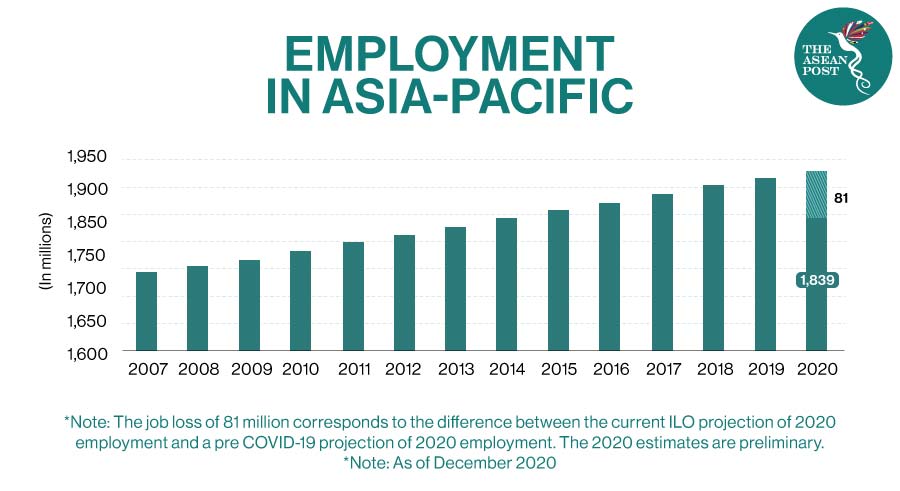
According to the International Labour Organization (ILO), the economic backlash of the COVID-19 pandemic wiped out some 81 million jobs in Asia-Pacific last year. Moreover, millions of other workers were also asked to reduce their work hours. In a report titled, “Asia-Pacific Employment and Social Outlook 2020,” working hours in the region decreased by an estimated 15.2 percent in the second quarter and by 10.7 percent in the third quarter of 2020, relative to pre-crisis levels.

Back in October, the World Bank estimated that between 88 and 115 million people worldwide would be pushed into extreme poverty in 2020. In a more recent forecast, the organisation now expects the COVID-19-induced new poor in 2020 to rise between 119 and 124 million.

The ASEAN Post has published a number of articles about the repercussions of COVID-19, poverty and unemployment. In a desperate bid to earn a quick buck during these difficult times, some have even resorted to selling their bodies, or borrowing money from loan sharks. Others have asked their children to take a leave of absence from school to join the harsh labour force.

Global media have also reported incidences of child marriages, as impoverished parents are unable to take care of their children.

Other than that, some experiencing immense financial difficulties have also taken another extreme step to alleviate their burden, that is, by abandoning those under their care.

employment in asia pacific

The Young

A few months ago, a heart-breaking story was picked up by Malaysian media which went viral across the country. Images of an abandoned baby boy, fast asleep inside a cardboard box were circulated on social media. A note was also attached to the baby, asking the public to take good care of the child.

“We apologise for not being able to care for Muhammad Arif due to financial constraints,” the note read. “We seek assistance from anyone who can care and look after him.” Baby diapers, talc and wet tissues were also found in the box, next to the infant. He was found in front of a local surau.

Malaysia is notorious for baby-dumping cases with a baby dumped every three to four days, as reported by local media. OrphanCare Foundation, a Malaysian non-profit organisation reported that 45 babies were rescued nationwide between March and December last year during the country’s partial lockdown.

This social problem is not exclusive to Malaysia, but is happening all over the world as well. In India where millions of children are left each year by their parents, the pandemic has led to this phenomenon of abandoning children to rise dramatically.

Give India, India’s largest charity group, said that “a large number of young and older children from marginalised sections of society have been collateral victims of the pandemic. This includes child labourers, abandoned children, those living in child care institutions (CCIs), orphanages, as well as street children. Many among these vulnerable children are malnourished which makes them highly susceptible to the virus.”

The group also added that while the number of abandoned children has increased during the pandemic, adoption activities were also disrupted due to COVID-19.

The Old

Unfortunately, it’s not just babies and children being abandoned during the health crisis, but the elderly too. Some would leave their older and ill parents in nursing homes, while some, would cruelly leave them in public areas, never to be seen again.

Back in March 2020, soldiers in Spain made a shocking discovery while disinfecting a nursing home – elderly people were abandoned and some were even dead in their beds. This came as Spain was experiencing its first wave of COVID-19 cases.

Unfortunately, abandonment of the elderly has also been reported in ASEAN member states.

In February alone, Malaysia highlighted two cases of abandoned senior citizens. Earlier this month, a man in his 60s was abandoned by his family members at a surau located in the outskirts in the country’s capital city of Kuala Lumpur. Local media reported that his family had brought him to the surau for a congregational prayer only as a ploy to drive him out of the house.

In a separate incident reported days after, an elderly Malaysian woman in a wheelchair was found alone by the road with diapers and a bag of clothes. Officials said that “efforts to contact her family were made but we did not get them to cooperate when not a single family member was willing to take her home and gave many excuses.”

The woman also has an amputated leg, as well as bad memory. Despite it all, the woman still wished the best for her child.

In the Philippines, the number of abandoned elderly people has been increasing every year.

“Imagine being abandoned by your own daughter. That’s very painful. I have many relatives but no one is willing to take care of me,” 73-year-old Timoteo told local media. He is currently under the care of the House of the Lord, a foster home for abandoned elderly in Talisay City.

“When my daughter was a baby, I made sure not one fly would touch her. I don’t know why she has become this way,” he added.

Fr. Rowell Gumalay, head of the House of the Lord, said that some families find it a burden to care for the elderly. Timoteo’s story was reported back in March 2020. Perhaps in recent months, as things get tougher due to the pandemic, more senior citizens will face similar experiences as their children can no longer afford to take care of them.


Fuente de la Información: https://theaseanpost.com/article/abandoned-family-pandemicn


Comparte este contenido:

‘If This Task Was Urgent Before, It’s Crucial Now.’ U.N. Says World Has 10 Months to Get Serious on Climate Goals

‘If This Task Was Urgent Before, It’s Crucial Now.’ U.N. Says World Has 10 Months to Get Serious on Climate Goals

The language of diplomacy rarely allows for a true sense of emotion or urgency. But reading between the lines of the latest report commissioned by the United Nations Framework Convention on Climate Change (UNFCCC)—the body representing the 197 member nations of the Paris Agreement to minimize a global average temperature rise this century—the message is clear. The world has precisely ten months to get our act together if there is to be any hope of staving off a climate catastrophe by the end of the century.

If member nations are to achieve the Paris Agreement target of limiting global temperature rise above preindustrial levels by 2°C—ideally 1.5°C—by 2100, they must redouble efforts and submit stronger, more ambitious goals to reduce carbon emissions, according to the report. The document tabulates the national climate action plans [NDCs], of each member nation. The NDCs, which were due at the end of 2020, are essentially blueprints laying out emission reduction targets for each country along with plans detailing how they will meet those stated goals.

So far, the plans all coming up short. The report shows that while the majority of the 75 nations that have submitted NDCs increased their individual commitments, their combined impact puts them on a path to achieve only a 1% reduction in global emissions by 2030, compared to the 45% reduction needed to hit the 1.5°C temperature goal. “This report shows that current levels of climate ambition are very far from putting us on a pathway that will meet our Paris Agreement goals,” said Patricia Espinosa, Executive Secretary of UN Climate Change. “While we acknowledge the recent political shift in momentum towards stronger climate action throughout the world, decisions to accelerate and broaden climate action everywhere must be taken now.”

Another report will be released prior to COP 26, the global meeting on Climate Change, currently scheduled for November in the U.K., giving stragglers time to catch up, says Espinosa. “It’s time for all remaining parties to step up, fulfill what they promised to do under the Paris Agreement and submit their NDCs as soon as possible. If this task was urgent before, it’s crucial now.”

The former President of Ireland, Mary Robinson, who also served as United Nations High Commissioner for Human Rights and is now Chair of The Elders, was scathing in her assessment of the commitments made by some of the world’s biggest polluters and did not hesitate to single out countries by name. “Major economies need to ramp up their ambition – starting with the U.S., where expectations are high for an emissions and finance pledge to make up for lost time. Others like Japan, Canada, Korea, New Zealand and China, have committed to net zero goals by mid-century, but we are still missing their promised new near-term plans to get there,” she said in a statement released ahead of the report.

Robinson was particularly withering when it came to Australia’s commitments, noting that it was not enough for the country to “repackage a plan that was already inadequate five years ago. The good news is there is still time for radical improvement if Australia wants to keep pace with their major allies and trading partners.”

The clock is ticking for Australia, as well as everyone else.


Fuente de la Información: https://time.com/5942546/un-emissions-targets-climate-change/

Comparte este contenido:

Corruption and child labour have no place in the energy transition

Corruption and child labour have no place in the energy transition

Richard Kent, Researcher on Business and Human Rights at Amnesty International

The European Commission is currently wrapping up consultations on a new law that could shape the future of green energy. If adopted, the EU Battery Regulation would require all businesses in the battery industry to report on the social and environmental impact of their operations. It would ensure that batteries entering the EU market – for use in electric cars, smartphones, solar panels, and much more – are responsibly sourced and sustainable. Businesses would have to show, for example, that the minerals in their batteries do not indirectly finance armed groups or child labour, and that their supply chains are free of corruption.

The law would be a pillar of Europe’s Green New Deal, and it is long overdue. The World Bank found that production of some battery metals could increase by up to 500 percent by 2050, to meet the growing demand for electric vehicles – essential for reducing carbon emissions. Never before has mineral extraction sought to mitigate climate change on such a scale. But there are currently no laws in place to ensure green technologies do not themselves cause harm – and cause harm they do.

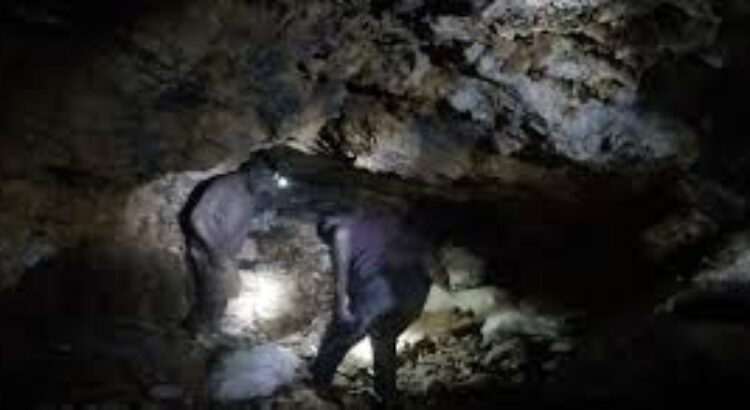
The real frontier of the battery revolution is not in the corridors of Brussels. It is in the unregulated cobalt mines of the DRC, where children as young as seven work in perilous conditions. It is in the vast frozen expanses of Siberia’s Taimyr Peninsula, where a nickel mining company spilled thousands of tonnes of diesel fuel into the Arctic; and in the salt flats of Latin America, where lithium extraction is threatening livelihoods. Cobalt, nickel and lithium are key components of rechargeable batteries, and we are sliding towards a situation where we have replaced one type of environmental injustice with another.

The grim irony is that these abuses are being perpetrated against the people least responsible for the climate catastrophe. Indigenous fishing communities in Papua New Guinea’s Basamuk Bay aren’t the ones pumping CO2 into the atmosphere. Yet it’s their water that was poisoned when a nickel mine dumped 23 tonnes of toxic waste into the ocean, while sourcing the minerals necessary to get drivers in Paris, Beijing and New York into electric cars. The need for regulation has never been so urgent.

Last month, Amnesty International and 66 other human rights and environmental organizations published a set of principles for businesses and governments to adopt in order to clean up battery supply chains. Many of the organizations who signed up to Powering Change represent the frontline communities most affected by the energy transition.

In Powering Change, we call on manufacturers to work towards maximum recycled content in batteries, minimize the use of hazardous materials, and manage battery waste responsibly. We call on businesses and governments alike to ensure environmental defenders and Indigenous communities are consulted and properly informed about planned operations and potential risks.

The EU Battery Regulation proposal contains several articles to improve transparency in supply chains, which is also one of our coalition’s crucial principles. In 2017, Amnesty researchers found that companies including Microsoft, Renault and Volkswagen were failing to ask basic questions about where the cobalt in their batteries came from. More than half the world’s cobalt comes from the DRC, where Amnesty has documented children and adults mining in perilous conditions, earning a couple of dollars a day to work in narrow tunnels at risk of collapse. In light of this, it’s unacceptable for businesses to shrug their shoulders about their supply chains – consumers deserve to know that their cars are not powered by human rights abuses.

This is why the European Battery Regulation could be one of the most important pieces of industry legislation ever. It would be the first legally binding initiative to clean up battery supply chains, and would force businesses to do more to protect workers, Indigenous communities and the environment.

Europe is the epicentre of the push towards a battery-powered future. Governments including the UK, Poland and Sweden are scrambling to construct multi-billion dollar battery “gigafactories”, and the European Investment Bank pledged €1 billion investment to the battery manufacturing industry in 2020. Many of the corporations that led the Second Industrial Revolution – the invention of the internal combustion engine, the mass growth of the car industry, and concurrent demand for oil – are now taking the reins of what they pledge will be a “Green Industrial Revolution.” It is imperative that this time, corporations recognize their impact on the planet and human rights, and factor this into their business models.

If the Battery Regulation is adopted, Europe would also be the epicentre of an energy transition that is genuinely clean and fair.

This article was originally published in EU Observer


Fuente de la Información: https://www.amnesty.org/en/latest/news/2021/02/corruption-and-child-labour-have-no-place-in-the-energy-transition/

Comparte este contenido:

Bangladesh: Anger Brews Over Bangladesh Writer’s Prison Death

Anger Brews Over Bangladesh Writer’s Prison Death

DHAKA, BANGLADESH – Hundreds of people in Bangladesh took part Saturday in a second day of demonstrations sparked by the death of a writer at a high-security prison in a case that has drawn international concern.

Protesters marched at the University of Dhaka chanting slogans condemning the government’s treatment of Mushtaq Ahmed as well as other dissident writers, journalists and activists.

Another protest was staged at the National Press Club.

Demonstrators demanded the scrapping of Bangladesh’s hardline Digital Security Act (DSA) under which Ahmed was imprisoned. The law has been used to crack down on dissent since it was enacted in 2018.

Security forces clashed with students in Dhaka on Friday night. Police said six people were arrested while activists said at least 30 were injured.

Ahmed collapsed and died at Kashimpur High Security Prison late Thursday. He was first detained in May after criticizing on Facebook the government’s handling of the coronavirus pandemic.

The 53-year-old, a crocodile farmer and a writer known for his satirical style, was charged with spreading rumors and conducting «anti-state activities.»

Protesters have called his death a «custodial murder» after he was denied bail six times in 10 months.

«Mushtaq Ahmed’s death was not a normal death. We’ll say it was a murder,» said Manisha Chakraborty, a protester with a left-wing group.

Demonstrators said they would march to the office of Prime Minister Sheikh Hasina carrying a coffin later Saturday.

Facing international questions on the case, authorities have ordered a probe into Ahmed’s death, senior government official S.M. Tarikul Islam told AFP.

«We formed a committee to probe whether there was negligence by jail officials or procedures in his treatment,» Islam said.

Thirteen ambassadors from countries including the United States, France, Britain, Canada and Germany have expressed «grave concern.»

«We call on the government of Bangladesh to conduct a swift, transparent and independent inquiry into the full circumstances of Mr. Mushtaq Ahmed’s death,» the ambassadors said in a statement released late Friday.

They said their countries would be following up over «wider concerns about the provisions and implementation of the DSA, as well as questions about its compatibility with Bangladesh’s obligations under international human rights laws and standards.»

Rights groups have also raised concerns about the case.

The New York-based Committee to Protect Journalists (CPJ) called for «a swift, transparent and independent investigation», while PEN America said authorities should drop charges against Kabir Kishore, a cartoonist who was detained along with Ahmed.

The CPJ said Kishore passed a note to his brother during a hearing this week stating that he had been subjected to severe physical abuse in police custody.

Fuente de la Información: https://www.voanews.com/press-freedom/anger-brews-over-bangladesh-writers-prison-death


Comparte este contenido:

Estados Unidos: Detroit Man Freed From Prison With Help of Student Reporters

Detroit Man Freed From Prison With Help of Student Reporters

On February 18, Kenneth Nixon walked out of a Michigan state prison and into his mother’s arms for the first time in more than 15 years.

The reunion was bittersweet: Sentenced to life without parole at age 19, Nixon spent his twenties fighting to overturn a double-murder conviction for a crime he says he did not commit.

In 2005, he was found guilty of firebombing a house, resulting in the deaths of a 10-year-old boy and 1-year-old girl.

Nixon secured his freedom with the help of the Western Michigan University Cooley Innocence Project, the Wayne County Conviction Integrity Unit — and a group of students studying investigative reporting at Northwestern University’s Medill School of Journalism.

The students at Medill began looking into his case in 2018 as part of an investigative reporting class taught by senior associate dean Tim Franklin, assistant professor Desiree Hanford and adjunct instructor George Papajohn.

Their research and reporting uncovered new evidence and inconsistencies in the original case.

Along with memos, including one in which a prosecutor described the case as having “serious problems,” the Medill students looked into conflicting accounts from the brother of the victims and testimony of a jailhouse informant, and they interviewed three witnesses who provided alibis that accounted for Nixon’s location at the time of the fire.

After months of reporting, the students published their work in the Detroit Free Press in October 2018.

Nixon is the fifth person to be exonerated with the help of the WMU-Cooley Innocence Project, which looked at DNA test results and other new evidence to support his case.

VOA contacted the Wayne County Conviction Integrity Unit on Friday to ask whether it will reopen the investigation into the deadly fire. No one immediately responded to the inquiry.

Pursuit of truth

When his class began looking into Nixon’s case, Franklin said, he “wasn’t hoping for or expecting a dismissal.” Instead, the journalism professor said he told his students “our only fidelity was to the truth, and that we’d follow it wherever it took us.”

“Our mission was not to be advocates, but to be investigators,” Franklin told VOA via email.

The 10-week course provided a hands-on, real-world journalistic experience for the students.

Kenneth Nixon hugs his mother after being released from prison with the help of the WMU-Cooley Innocence Project and students at the Medill School of Journalism. (Courtesy of WMU-Cooley Law School)

Franklin said his class “read hundreds of pages of court documents and police reports, obtained internal records and interviewed witnesses, experts and law enforcement authorities,” and also interviewed Nixon and his relatives.

«I’m sure many of the students woke up in the morning and went to bed at night thinking about this case,” Franklin said. “They became emotionally invested in getting to the truth.”

One student, Ashley Graham, described the many road trips her class took to Michigan to interview Nixon’s friends and family, and the “long nights” spent “reading or writing drafts.”

“It’s still sinking in for me,” Graham said of Nixon’s release. “Part of me didn’t want to believe it until I heard the judge say it.”

The result in Nixon’s case from their reporting felt surreal, Graham said, telling VOA, “It makes my stomach kind of like drop a little bit in a good way.”

“The impact is clear,” she said, adding that Nixon’s lawyers “have told him that they paid more attention once they read our story.”

Impact of local journalism

The case shows the impact that local investigative journalism can have on communities, said Kim Kleman, senior vice president of Report for America, an organization dedicated to strengthening communities and democracy through local journalism.

“Kenneth Nixon wouldn’t have been freed from prison if it weren’t for these reporters,” Kleman said. “Every community, we believe, needs robust, investigative and accountable local journalism.”

When it comes to powerful structures such as the criminal justice system, high-quality reporting provides an important level of accountability. “When it’s apparent that somebody’s watching,” Kleman said, “[it] makes for better government all around.”

For Nixon, the impact of that journalism meant his charges were dismissed and he was able to reunite with his family.

“Local journalism has perhaps never been more important than in these times,” journalism professor Franklin told VOA. “And, it can have real-world impact. It certainly did in this case.”


Fuente de la Información: https://www.voanews.com/press-freedom/detroit-man-freed-prison-help-student-reporters

Comparte este contenido:

Huelga general: Miles de manifestantes paralizan Birmania pese a las amenazas de la junta militar

Son las protestas más masivas desde que el ejército dio un golpe de Estado hace tres semanas.

Miles de sanitarios, profesores, estudiantes, empleados de banca, ingenieros, operarios de fábrica, cocineros o dependientes -entre muchos otros gremios- respondieron este lunes en masa al llamamiento a una huega general para protestar contra el golpe de Estado perpetrado por el ejército birmano hace tres semanas.

Las protestas, que consiguieron paralizar el país, son las más numerosas desde la asonada, y se produjeron tras un fin de semana en el que murieron dos manifestantes por los disparos de la policía. La tercera fallecida hasta la fecha durante las movilizaciones es una joven de 20 años cuyo funeral congregó a miles de personas este domingo en Rangún para rendirle homenaje.

Los activistas calificaron a la jornada de hoy como la “revolución de los cinco doses”. Es una referencia a la fecha (22-2-2021), que compararon con la del 8 de agosto de 1988 (8-8-88), día en el que los militares respondieron al levantamiento de los estudiantes a favor de la democracia con una brutal represión que dejó decenas de muertos y heridos.

Desde primera hora de la mañana, grandes multitudes se dieron cita en las principales arterias de Rangún (capital económica), Naypyidaw (capital política), Mandalay y otras muchas localidades, en las que sus comercios y otros negocios amanecieron cerrados. Entre sus principales reclamos, la liberación de los presos políticos, incluida la Nobel de la Paz Aung San Suu Kyi, y el restablecimiento del sistema democrático alterado de golpe por la asonada.

“Salimos hoy a la calle para unirnos a las protestas y luchar hasta lograr la victoria. Estamos preocupados por la represión, pero seguiremos adelante. Estamos muy enfadados”, relató uno de los presentes a la agencia France Press. A media tarde, tan solo se tenía noticia de una veintena de arrestos en las inmediaciones de la capital, Naypyidaw.

Los manifestantes tomaron las calles pese a la violencia policial el sábado y la advertencia lanzada anoche por la junta militar para evitar que la gente saliera en masa.

“Los manifestantes están ahora incitando a la gente, especialmente a adolescentes y jóvenes emocionados, a un camino de confrontación en el que sufrirán la pérdida de la vida”, decía su comunicado, emitido por la televisión estatal birmana.

In this image taken from MRTV video, part of a public announcement from the State Administration Council warning against the general strike planned Feb. 22 appears on screen in English text during the MRTV evening news bulletin that aired late Sunday, Feb. 21, 2021 in Myanmar. A call for a Monday general strike by demonstrators in Myanmar protesting the militaryâ#{emoji}128;#{emoji}153;s Feb. 1 seizure of power has been met by the ruling junta with a thinly veiled threat to use lethal force, raising the possibility of major clashes. (MRTV video via AP)

Imagen de la advertencia emitida el domingo por los militares

/ AP

El relator especial de la ONU en Birmania, Tom Andrews, se mostró preocupado por este mensaje “amenazante” y advirtió a la junta militar de que, a diferencia de lo que pasó durante las sangrientas revueltas de 1988, las acciones de las fuerzas de seguridad ahora están siendo grabadas y registradas, por lo que tendrán que asumir su responsabilidad por lo que suceda.

Pese a que por ahora los militares han gestionado con más tacto del habitual las protestas, historiadores como Thant Myint-U creen que el espacio para resolver el conflicto de forma pacífica se está cerrando. “El resultado de las próximas semanas estará determinado por solo dos cosas: la voluntad de un ejército que ha aplastado muchas protestas antes y el coraje, la habilidad y la determinación de los manifestantes”, reflexionó en Twitter.

Presión internacional

La Unión Europea anuncia que también impondrá sanciones a los golpistas

Mientras, la presión contra los golpistas sigue creciendo en el extranjero. Tras las sanciones anunciadas en días previos por Estados Unidos, Canadá o Reino Unido contra los generales responsables del levantamiento militar, este lunes fue la Unión Europea la que dijo estar lista para imponer sus propias sanciones a la cúpula golpista.

Además, pidieron que rebajen la crispación mediante “la restauración del gobierno civil legítimo y la apertura del parlamento recién elegido”. Sin embargo, no parece que los militares estén por la labor de seguir sus mandatos, y siguen justificando que la asonada era necesaria para corregir el pucherazo que dicen que hubo -sin presentar pruebas- en los comicios celebrados en noviembre, en el que arrasó el partido de Suu Kyi.

Fuente: https://www.lavanguardia.com/internacional/20210222/6257759/manifestantes-birmania-huelga-general-protestas-junta-militar.html
Comparte este contenido:
Page 1012 of 6822
1 1.010 1.011 1.012 1.013 1.014 6.822