Page 1953 of 6735
1 1.951 1.952 1.953 1.954 1.955 6.735

Australia must fix school inequity to create a top education system

Oceania/Australia/ 20.08.2019/ Source: www.abc.net.au.

About a year ago my life turned upside down, literally.

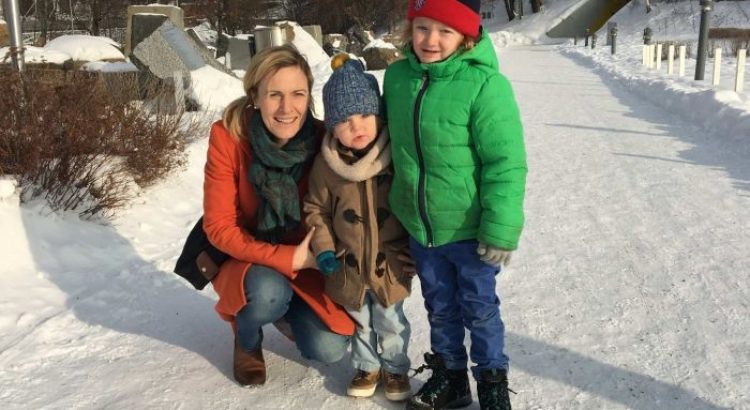
My wife and I, with our two school-aged children, moved to Sydney from Helsinki.

We soon realised that Australians do not walk upside down. But there were some things that we were not prepared for.

Ever since we arrived in our new hometown, people were curious to know how we chose a school for our sons.

For us it was no-brainer — the neighbourhood public school.

But most parents in our shoes, we’ve been told, would explore the vast school market in Sydney to find the best available school, and the best value for money, for their children.

Education is a human right

Where to find the best school for your children sounded like a strange question to us.

Back in our old home, just like most other Nordic countries, the best school for our children and everyone else’s is the local public school.

This privilege is not a lucky coincidence but the result of deliberate public policies that view education as a human right rather than a commodity.

Interestingly, in some countries parents can be quite confident that any public school is a good school. At the same time, in some other places finding a school for your child can be a major headache.

It doesn’t have to be this way.

It all starts from an understanding that the importance of education to a society can be judged not just by how much is spent on education but by how public money is invested to serve everyone’s individual needs and desires in as fair way as possible.

Rich countries vary greatly regarding how much of their national wealth is invested in schools.

Nordic countries typically cover about 99 per cent of their total education expenditure from taxpayers compared with 81 per cent in Australia.

Furthermore, in OECD countries, on average, four out of five children attend public schools.

In Australia it is three out of five children.

The relationship between funding and excellence

Again, this is not by accident. It is a result of the public view about the importance of education as a common good.

During my work for and with a number of senior politicians, I have learnt that a government’s budget is not just a financial document, it is also a moral one.

What policy-makers need to understand better is this: How schools are funded is a fundamental question for those wishing to achieve educational excellence in schools. Here is why.

About a decade ago the Organisation for Economic Cooperation and Development (OECD) discovered that the most successful school systems are those that combine excellence and equity in their education priorities.

Equity in education, as defined by David Gonski’s Review panel, is to «ensure that differences in educational outcomes are not the result of differences in wealth, income, power or possessions».

The OECD’s data from its PISA (Programme for International Student Assessment) studies since 2000 suggested that, indeed, those education systems that had established systematic mechanisms to finance schools based on schools’ socio-economic makeup and children’s educational needs tend to do better overall.

The OECD went even further in its policy advice to governments.

In its 2012 publication titled Quality and Equity in Education: Supporting disadvantaged students and schools, it stated:

«School choice advocates often argue that the introduction of market mechanisms in education allows equal access to high-quality schooling for all. Expanding school choice opportunities, it is said, would allow all students — including disadvantaged ones and the ones attending low performing schools — to opt for higher quality schools, as the introduction of choice in education can foster efficiency, spur innovation and raise quality overall. However, evidence does not support these perceptions, as choice and associated market mechanisms can enhance segregation.» (p64)

Instead of increasing school choice, the OECD suggests that governments should invest more systematically in equity in education.

For many OECD countries that has meant a faster, smarter, and fairer way to achieve educational excellence.

The OECD suggests that school choice should be managed to balance parental choice while limiting its negative impact on equity.

Competition between schools delivers bad outcomes

In this subject Australia has not been a very good pupil in the class of OECD countries.

And we should know better.

Parental choice is an idea that became commonly known as a consequence of Milton Friedman’s economic theories in the 1950s. Friedman stated that parents must be given the freedom to choose their children’s education and encourage competition among schools to better serve families’ diverse needs.

Friedman’s school choice theory has been tested in large- and small-scale settings around the world since then.

School voucher systems in Chile and Sweden, charter schools in the US, and academies in England, are examples of mechanisms to advance parental choice and private schools.

Results over the past half a century have not been what Friedman expected.

In 2013 the Grattan Institute in Australia concluded:

«By increasing competition, government policies have increased the effectiveness of many sectors of the economy. But school education is not one of them.» (p35)

Instead of asking schools to race against one another for better outcomes, state and federal strategies should introduce incentives that would encourage collaboration between schools and guarantee that all schools have sufficient resources to cope with inequalities that children bring with them to school every day.

So what do I think of Australian schools?

Now, after almost a year here, friends overseas ask my opinion about Australian schools.

I tell them that based on what I have seen here, we have one of the best education systems anywhere. World class.

Then, I pause and say: But only for some children.

I believe I am right.

Some of the most interesting and innovative schools I have ever visited are right here, throughout this magnificent land.

Teachers and principals are advanced professionals akin to their peers in Finland, Singapore, or any other country.

But, as I have noticed, and what was well reported in recent ABC reportage, this world-class educational excellence is very unevenly distributed around this country and its communities.

Frankly speaking, «Rich school, poor school: Australia’s great education divide» is a depressing read.

Having world-class schools is not the same as having a high-performing school system.

David Gonski’s Review Panel in its 2011 report got it to the point:

«Funding for schooling must not be seen simply as a financial matter. Rather, it is about investing to strengthen and secure Australia’s future. Investment and high expectations must go hand in hand. Every school must be appropriately resourced to support every child and every teacher must expect the most from every child.»

In other words, we need to fix current inequalities in and out of schools before educational excellence can truly be achieved.

It is that simple. The evidence is clear and so should be the road ahead.

Source of the notice: https://www.abc.net.au/news/2019-08-14/australia-must-fix-school-inequity-for-top-education-system/11412438


Comparte este contenido:

India orders schools to reopen, but Kashmiri parents keep kids at home: ‘Education is less important than our children’s lives’

Asia/ India/ 20.08.2019/ Source: www.independent.co.uk.

Authorities criticised for move as situation remains volatile in disputed region

Parents across Kashmir kept their children at home, despite an order from Indian authorities for schools to reopen, fearing the youngsters could get caught in clashes between civilian protesters and armed personnel.

Authorities closed schools and colleges on 5 August after India revoked the special status of Kashmir, which is divided between India and Pakistan and claimed in entirety by both.

Kashmiris have criticised the authorities for reopening the schools when the situation remains volatile and clashes continue.

The ongoing internet and communications blockade also contributed to the fears of parents who had no means of contacting the school authorities.

“If normality has returned to that extent that schools can be reopened, then why don’t authorities lift the ban on phone connectivity and public movement?” said Showkat Nabi, whose son is in nursery at Tyndale Biscoe School, a Christian missionary institution in Srinagar.

“The kids are too young to understand what has happened… If we send them to schools, they will go – but we fear for their safety,” he continued.

At Burn Hall School, one of the oldest Christian missionary educational institutions in Srinagar, gates have been locked for the past two weeks.

The security personnel guarding the school told The Independent no student attended today’s classes and few teachers had turned up.

“Who would risk sending a 5-year-old kid to school in the present situation in Kashmir?” said the guard, who asked to be identified as Sagar.

Mohammad Younis Malik, director of school education in Kashmir, said 166 of Srinagar’s 196 primary schools were open, but admitted that 72 of them had “thin” attendance.

Tariq Aziz, whose son studies at a private school in Srinagar, argued that not sending children to school was a form of protest by the parents.

“I want my son to know that India is trying to grab our land. Our future is at risk in Kashmir now. I want to make him conscious that he has to fight for it in future,” Mr Aziz said.

“Education is less important than the lives and safety of our children. We have seen the closure of schools for months in the past and if it continues our teachers will volunteer to open community schools,” he said.

Government employees were also ordered to attend their offices today, but it is unclear how many exactly followed the order.

Sehrish Asghar, an official spokesperson of the government, described the numbers of those heading back to work as “encouraging”.

“It is difficult to reach the office amid strict restrictions on public movement, but we have to take a risk to save our jobs,” engineer Aftab Ahmad told The Independent.

Across Kashmir, most shops and businesses remained closed, and the streets remained largely deserted.

But in a several locations, small-scale protests were seen as people clashed with the heavy contingents of armed forces deployed across towns and villages of the disputed region

Deputy Inspector General VK Birdi, who briefed media about the situation in Kashmir, said there was no major law-and-order incident reported in the region.

“Some minor incidents of stone pelting were reported at some localities and were dealt with as per norm. The culprits were dispersed,” Mr Birdi said.

He said authorities are closely monitoring the situation, which is “slowly returning to normality”.

Source of the notice: https://www.independent.co.uk/news/world/asia/kashmir-schools-open-india-pakistan-crisis-a9070431.html


Comparte este contenido:

170,536 hawkers, almajiri get free education in Oyo

Africa/ Nigeria/ 20.08.2019/ Source: guardian.ng.


Oho State Government has expressed its readiness to deploy the World Bank-assisted Better Education Service Delivery (BESDA) takeoff grant in educating about 170, 536 out-of-school children in 23 councils of the state and ensure their retention in schools.

Chairman of the State Universal Basic Education Board (SUBEB), Dr. Nureni Adeniran, said this yesterday after a two-day interactive session in Ibadan on the implementation of the project.

Adeniran reiterated the state government’s resolve to rid the streets of all out-of-school children and put them in public schools, saying the programme would cater for even hawkers and the almajiri in the state.

Source of the notice: https://guardian.ng/news/nigeria/170536-hawkers-almajiri-get-free-education-in-oyo/

Comparte este contenido:

Clases de civismo: una oportunidad para enseñar habilidades del siglo 21

América del Norte/ México/ 19.08.2019/ Fuente: observatorio.tec.mx.

Aunque no ha sido aceptada aún, la nueva Ley de Educación en México ha generado mucho nerviosismo en el país. Lo que busca es rescatar valores éticos y morales por medio de clases de civismo para ofrecer a los alumnos una preparación más integral.

El civismo es importante porque ayuda a fortalecer los valores y cultura cívica a las nuevas generaciones. Es una clase que permite a los niños practicar varias de las habilidades poderosas que desarrollan su pensamiento crítico. En este tema, los alumnos aprenden a discernir entre buenas y malas conductas en la sociedad, así como a estar informados y conscientes sobre sus derechos y deberes en la sociedad.

Según un estudio del 2016, realizado por la Asociación Internacional para la Evaluación del Logro Educativo (IEA por sus siglas en inglés), aquellos países con un buen programa de educación cívica son los que mejor salieron evaluados. Esos programas que ellos ofrecen están bien consolidados y enfocados en formación de estudiantes de kínder hasta educación superior, así como preparación de docentes especializados.

Entre los países con mayor desempeño se encuentran Suecia, China, Dinamarca, Noruega y Finlandia. En América Latina de los países que les fue mejor fueron Chile y Colombia, seguidos por México, aunque se encuentran por debajo de la media.

La educación cívica en las distintas etapas

La educación cívica debería de iniciar desde el kínder ya que ayudaría al estudiante a entender los conceptos de civismo, dignidad, responsabilidad, tolerancia y ética. Se inicia enseñando sus deberes ciudadanos y la importancia de cumplirlos. Además, entre más aprenda el estudiante sobre el tema, más oportunidad tendrá de “vivir” el significado del civismo, derechos humanos y de conocer su rol en su comunidad.

Conforme el estudiante vaya avanzando en su educación, y quede asentado lo básico sobre civismo, se volverá más sencillo ir enseñando conceptos más complejos. Esos temas pueden abarcar desde ciudadanía, justicia, equidad, legalidad, e institucionalidad.

Al llegar a secundaria los jóvenes deberían tener la capacidad de aprender y entender sobre el orden y funcionamiento de la sociedad y el rol que desempeñan dentro de la misma.

 Ya en bachillerato y educación superior el estudiante debe dominar los temas de democracia, estado de derecho, equidad social, resolución de conflictos y derechos humanos.

En la clase de civismo se deben abordar los temas con una metodología adaptada a cada etapa estudiantil y verla como una materia transversal ya que cualquier otra materia puede ser compatible.

El juntar diversas clases con civismo también ayuda a ofrecer distintas oportunidades para enseñar sobre valores y ciudadanía, siempre y cuando vaya de la mano de un programa de formación cívica.

Con el gran auge de las habilidades poderosas, las asignaturas como civismo deberían de ser imprescindibles en la educación de los alumnos de cualquier etapa. No sólo porque los ayudará a desarrollar habilidades como el pensamiento crítico sino porque ayuda a formar ciudadanos modelo en la sociedad.

El Observatorio quisiera saber: ¿De qué manera se aplica las clases de ética en su escuela? ¿Existe algún programa o ley que busque enseñar cívica en los salones de clase?

Comparte este contenido:

Un 47% de los jóvenes está dispuesto a trabajar fuera de España

Europa/ España/ 20.08.2019/ Fuente: www.abc.es.

El 27% afirma que le es indiferente dónde trabajar, se trasladará donde encuentre empleo; mientras que un 20% lo buscará directamente fuera de España. El año pasado, el 52% de los consultados afirmaba que podría trabajar fuera del país

Cada vez menos jóvenes están dispuestos a trabajar fuera de España, según señala un estudio realizado al término del salón de Orientación Universitaria Unitour 2018-2019 que ha recorrido en su XIII edición 24 ciudades españolas, cinco italianas y Andorra, y que revela que el 47% de los estudiantes de bachillerato españoles podría trabajar fuera del país.

En concreto, para el estudio se utilizó una muestra de más de 17.000 jóvenes entre los más de 29.000 bachilleres que acudieron a la edición española de la feria, que tuvo lugar entre los meses de octubre de 2018 y febrero de 2019. De estos, el 74% se encontraba realizando segundo de bachillerato, y un 26%, primero de bachillerato, según recoge Ep.

Según el informe, cuando se pregunta a los estudiantes españoles dónde les gustaría trabajar en el futuro, el 27% afirma que le es indiferente dónde trabajar, se trasladaría donde encontrase empleo; mientras que un 20% lo buscará directamente fuera de España. El año pasado, el 52% de los consultados afirmaba que podría trabajar fuera de España, mientras que en la edición 2013-2014 esta cifra era del 58%.

De esta forma, más de la mitad de los encuestados (53%) prefiere trabajar en el país: al 27% le gustaría quedarse en su provincia o comunidad, y un 26%, en cualquier parte de España.

Asimismo, en el estudio nacional destaca que los estudiantes de Málaga son los más dispuestos a trabajar fuera del país, es decir, 27% quiere ejercer su profesión fuera de España, seguidos por los jóvenes tenerifeños, con un 26%. En el otro extremo se encuentran los estudiantes donostiarras de los que un 39% quiere trabajar en su comunidad o provincia.

Aumentan los aspirantes a funcionario

El estudio de Unitour también revela que la mayor parte de los jóvenes de bachillerato se ve desarrollando su carrera profesional en una empresa privada (38%), pero en los últimos años, cada vez toma más fuerza la opción de opositar para hacer carrera en la administración pública.

Así, según el informe, el 27% de los encuestados piensa prepararse una oposición para ser funcionario, mientras que el año pasado esta cifra era el 26%, y el anterior, un 24%. Otro 25% afirma querer montar su propio negocio cuando finalice sus estudios, y un 10% quiere desarrollar su carrera en el ámbito de una ONG.

Por provincias, los alumnos leoneses son los más interesados en trabajar para la administración, ya que un 36% afirma que estudiaría una oposición después de su grado, seguidos de los vallisoletanos (32%), los logroñeses (31%), y los vigueses, murcianos y cordobeses (30%).

Por el contrario, los jóvenes malagueños destacan, un año más, como los más emprendedores de España, ya que un 32% quiere montar su propia empresa. Le siguen los estudiantes de Valencia (29%), los de Logroño, Madrid y Castellón (28%), Gran Canaria y Murcia (27%), y Tenerife, Santander y Sevilla (26%).

En cuanto a los motivos por los que elegirán una carrera, el 52% de los estudiantes encuestados antepone su vocación, mientras que el 35% tendrá en cuenta las salidas profesionales que le ofrezca su futuro grado.

En este sentido, la mayoría de los estudiantes de Sevilla, un 56%, afirma que escogerá carrera porque es «lo que le gusta desde siempre»; mientras que los estudiantes que otorgan más peso a las salidas profesionales son los donostiarras, ya que 38% se fijará en que su carrera tenga alta empleabilidad. Le siguen los madrileños (37%), y los ovetenses, vitorianos, bilbaínos y gaditanos (36%).

Por otra parte, el 12% de los estudiantes españoles encuestados dice que escogerá su carrera porque «se gana mucho dinero», y solo un 1% porque «sus padres quieren que la estudie».

Fuente de la noticia: https://www.abc.es/familia/educacion/abci-47-por-ciento-jovenes-esta-dispuesto-trabajar-fuera-espana-201908170207_noticia.html

Comparte este contenido:

Learning for empathy: A world effort to build peace through education

Asia/ Japan/ 19.08.2019/ Source: www.japantimes.co.jp.

In a classroom on a recent Saturday, junior high school students were gathered in small groups discussing death, specifically whether they would consent for their organs to be harvested after they passed away. “I am willing to donate my organs because at that time I will no longer care what happens to my body,” one student told the class. “I will be glad if my body can be useful to others in need after my death.” Many students shared similar viewpoints.

The topic came up during moral education classes in mid-July during an open day at Funabashi Kibou Junior High School in Tokyo’s Setagaya Ward, where parents had been invited to observe special classes addressing life values. Moral education classes are not meant to judge if students’ opinions are right or wrong, or instruct them how they should think. Instead, the classes aim to encourage reflection and listening to others’ viewpoints to promote critical thinking and empathy — the ability to understand other people’s feelings and the basis for living together in peace.

“To survive in the world peacefully, we must show empathy to others. We must understand feelings of others,” said Mamtaz Jahan, an assistant English teacher from Tejgaon Government Girls High School in Dhaka, who observed the classes with a group of teachers, school leaders and officials from Bangladesh, Indonesia and Pakistan. After the session, parents were also invited to speak with teachers about morals and ethics in daily life and how to address these topics with children.

The visit was part of the UNESCO project “Learning for Empathy: A teacher exchange and support programme,” sponsored by the Japanese government. The project targets teachers as key influencers in social transformation linked to the sustainable development goals, particularly SDG4.7 highlighting the appreciation of cultural diversity and promotion of a culture of peace and non-violence.

Teachers can have a direct impact on strengthening students’ resilience to discriminatory and violent narratives as well as model values of respect and trust. In many countries, school leaders and teachers share similar concerns and challenges in terms of the quality and relevance of learning in the 21st century, when societies are rapidly changing in terms of technology, human relationships and how we relate with the natural environment.

The empathy project offers education professionals from different countries opportunities to learn from each other, find inspiration and generate changes in mind-set. The group visited schools and community learning centers in Tokyo to learn what Japan does to make learning meaningful, motivating and empowering, and exchange ideas with Japanese teachers and students.

“We come here from Bangladesh, Pakistan and Indonesia to learn about how the education system is running in Japan,” Jahan said, adding that she wanted to know how Japan had incorporated SDGs in education, particularly SDG4.7 promoting a holistic view of learning based on the three pillars of cognitive, socio-emotional and behavioral dimensions.

The global indicator established for Target 4.7 measures the extent to which Education for Sustainable Development (ESD) and Global Citizenship Education (GCED) are mainstreamed in national education policies, curricula, teacher education and student assessments. Japan has long-standing experiences in inclusive quality education with many schools, including those visited, promoting topics such as sustainable development and peace.

Omori Dairoku Junior High School in Ota Ward is one of the most active UNESCO Associated Schools in Japan, actively promoting ESD through a whole school approach. School teachers collaborated to develop the SDGs Calendar as part of the school curriculum, integrating learning of and for SDGs in all teaching subjects throughout the school year. For example, ninth grade social studies focused in April on protecting democracy (SDG17: Partnership for the Goals) and in May on protecting human rights (SDG17 and SDG10: Reduced Inequalities).

“Learning for empathy is a universal value, but nowadays I think we have to think more about how to integrate it into the field of education, not only in the school, but also at home and in the community,” said Gilang Asri Devianty, a teacher from State Junior High School 2 in Cileunyi, West Java.

Education, including learning for empathy, involves three levels of learners, teachers and the broader education community, which also covers parents and community members.

For example, in addition to the usual parent-teacher association, Hasune Daini Elementary School in Itabashi Ward runs learning-support sessions led by volunteers in the community, many of whom are parents, helping students who cannot keep up with classes.

“We cannot live by our own. We are social beings, so we have to work with the others. To do so, we have to know and understand the others so we can coordinate, cooperate and collaborate,” Gilang said. “I think the very basic thing as a teacher, when we try to educate the students to have empathy toward each other, is to teach them how to accept differences, meaning not judging.”

The world is experiencing a rise of intolerance and conflict despite growing interconnectedness and interdependency among people and nations. Education can help to prepare learners to be active and responsible contributors to sustainable development and world peace. In the Asia-Pacific, an immensely culturally and linguistically diverse region, this is a particularly vital role.

Part of that mission is deconstructing prejudices about “others,” help to instill healthy self-esteem, and raise awareness about basic human rights and values. Education has a role to play in creating a strong sense of belongingness for people who feel excluded or marginalized as well as give them opportunities to develop skills for non-violent expression, communication and action through collaboration.

“I think one of the immediate problems is clashes of identities,” said Muhammad Israr Madani, an Islamic scholar and madrassa teacher at the International Research Council for Religious Affairs in Pakistan. “There are a lot of conflicts between different identities based on their ethnicity, religion, sectarian[ism] and language. Sometimes, identity crisis can create extremism.”

During the visit, participants also went to Mita High School in Minato Ward, to talk with about 30 students who are members of the school’s UNESCO Committee. Each country and the UNESCO Committee made presentations and discussed how empathy was taught in their countries, including challenges and what young people are most passionate about.

Madani said he believed that Pakistan needed to participate in such exchange programs, which would help people with different identities understand each other better. “We need to promote empathy through teacher training,” he said, emphasizing the need for proper teacher training on peace-building and conflict-resolution skills.

The visit ended with participants presenting plans that they would implement respectively in Bangladesh, Indonesia and Pakistan, taking into account challenges identified in their local contexts. Despite the differences in language, ethnicity and other factors, empathy — a key to learn to live together — is a thread that unites us all together.

Source of the notice: https://www.japantimes.co.jp/opinion/2019/08/19/commentary/japan-commentary/learning-empathy-world-effort-build-peace-education/#.XVqVjugzbIV

Comparte este contenido:
Page 1953 of 6735
1 1.951 1.952 1.953 1.954 1.955 6.735