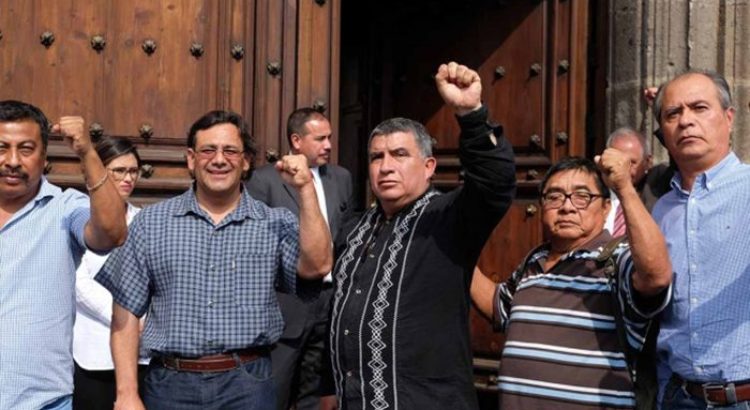
Los integrantes de la Coordinadora Nacional de Trabajadores de la Educación (CNTE) dieron su voto de confianza a Melitón Lozano como próximo titular de la Secretaría de Educación Pública (SEP) y solicitaron que se atiendan todas las demandas de las corrientes del magisterio.
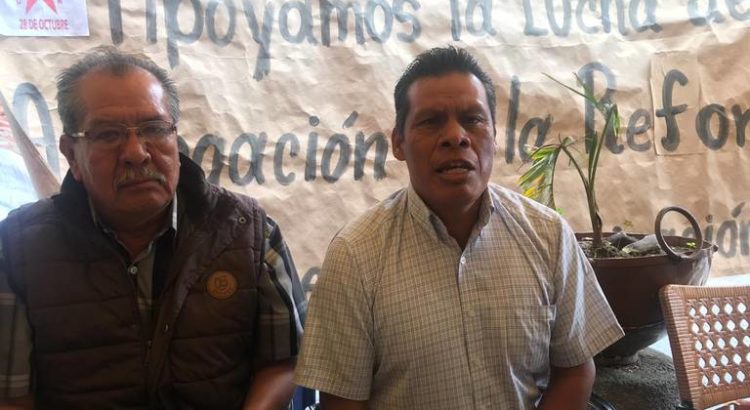
En conferencia de prensa, donde denunciaron amenazas para que no se sumen a proyectos de la CNTE, Juan Durán y Jorge Cabrera, representantes del grupo disidente, informaron que es la primera vez en Puebla que un normalista ostentará este cargo.
Asimismo, comentaron que es la oportunidad de revisar estructuras, las plazas, las instalaciones de las escuelas, e incluso la revisión de los cargos medios y administrativos, que se han dado en los últimos 7 años.
“Los funcionarios que puso el exgobernador Rafael Moreno Valle no sabían nada de educación, siempre lo dijimos, incluso cuando él estaba (…) el nuevo gobernador no se sometió a las presiones de grupos de maestros. Teníamos la preocupación que se inclinara por un político, no por un normalista”, declaró Durán.
Juan Durán, comentó que “ellos siempre solicitaron” que la SEP estuviera a cargo de un maestro. No obstante, cuando se cuestionó su opinión sobre que Melitón Lozano abandonará su cargo como alcalde de Izúcar de Matamoros para ascender al gabinete del gobernador electo Luis Miguel Barbosa, respondió que “nunca dijimos que estuviera libre, nosotros queríamos que fuera un maestro”.
Por otra parte, Jorge Cabrera, indicó que de entrada el nuevo titular tiene que buscar el acercamiento directo con los diferentes grupos del magisterio estatal y escuchar las demandas individuales, además de evitar las negociaciones “en lo oscurito”.
“Si Melitón llega hacer un trabajo verdaderamente a favor de las comunidades educativas, entonces, le pediríamos que se dejen de trabajar. Pedimos que sea una persona, que sea sensible a las demandas que se van a plantear, en el caso del CNTE, serán cosas justas. Pedimos que no caiga en la tentación de hacer acuerdos oscuros y convertir a la SEP en un botín político”, concluyó Durán.
Fuente de la Información: https://www.elsoldepuebla.com.mx/local/por-primera-vez-un-normalista-ocupara-la-sep-en-puebla-cnte-coordinadora-nacional-de-trabajadores-de-la-educacion-meliton-lozano-rafael-moreno-valle-educacion-izucar-de-matamoros-luis-miguel-barbosa-3771930.html
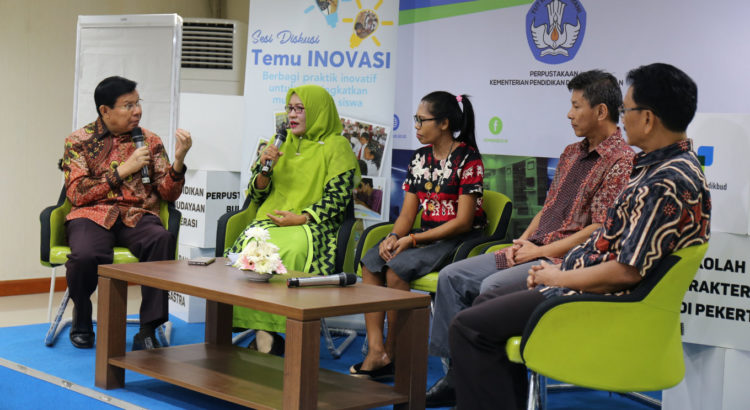
Ideas of teaching: Former Education and Culture Ministry undersecretary Fasli Jalal discusses the use of local languange in educating children with teachers (left to right): Nurdiana of Bima, West Nusa Tenggara Susana; Santi of East Sumba, East Nusa Tenggara; Johnny Tjia from Yayasan Sulinama, and Petrus Lambe from the Suluh Insan Lestari (SIL). (INOVASI/-)
There is a quiet revolution going on in Indonesia’s education system and it is happening across the nation, in classrooms, in schools, on remote islands, in jungle river communities and in big cities. The revolution has the potential to dramatically improve Indonesia’s human resource capabilities, which is a major priority for the economy. Since Indonesia gained independence in Aug. 17, 1945, education has focused on a one-size-fits-all approach. The aim was to ensure that every Indonesian citizen could speak the national language, that every citizen understood the national ideology of Pancasila and that every citizen could meet the standard requirements of literacy and numeracy. Now there is a new agenda for education. The 21st Century demands not just uniformity, but creativity, problem solving and creativity, problem solving and critical thinking.
Fuente de la información: https://www.thejakartapost.com/life/2019/06/17/transforming-indonesias-education-system-one-classroom-at-a-time.html
This essay is part of a series of articles on the future of education.
For much of human history, education has served an important purpose, ensuring we have the tools to survive. People need jobs to eat and to have jobs, they need to learn how to work.
Education has been an essential part of every society. But our world is changing and we’re being forced to change with it. So what is the point of education today?
The ancient Greek model
Some of our oldest accounts of education come from Ancient Greece. In many ways the Greeks modelled a form of education that would endure for thousands of years. It was an incredibly focused system designed for developing statesmen, soldiers and well-informed citizens.
Most boys would have gone to a learning environment similar to a school, although this would have been a place to learn basic literacy until adolescence. At this point, a child would embark on one of two career paths: apprentice or “citizen”.
On the apprentice path, the child would be put under the informal wing of an adult who would teach them a craft. This might be farming, potting or smithing – any career that required training or physical labour.
In Ancient Greece, boys would become either apprentices or citizens. Women and slaves didn’t get any education.Wikimedia Commons, CC BY-SA
The path of the full citizen was one of intellectual development. Boys on the path to more academic careers would have private tutors who would foster their knowledge of arts and sciences, as well as develop their thinking skills.
The private tutor-student model of learning would endure for many hundreds of years after this. All male children were expected to go to state-sponsored places called gymnasiums (“school for naked exercise”) with those on a military-citizen career path training in martial arts.
Those on vocational pathways would be strongly encouraged to exercise too, but their training would be simply for good health.
Until this point, there had been little in the way of education for women, the poor and slaves. Women made up half of the population, the poor made up 90% of citizens, and slaves outnumbered citizens 10 or 20 times over.
These marginalised groups would have undergone some education but likely only physical – strong bodies were important for childbearing and manual labour. So, we can safely say education in civilisations like Ancient Greece or Rome was only for rich men.
While we’ve taken a lot from this model, and evolved along the way, we live in a peaceful time compared to the Greeks. So what is it that we want from education today?
We learn to work – the ‘pragmatic purpose’
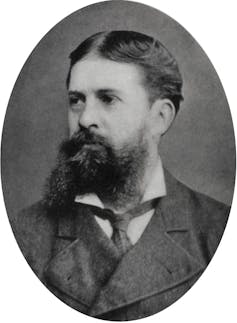
Today we largely view education as being there to give us knowledge of our place in the world, and the skills to work in it. This view is underpinned by a specific philosophical framework known as pragmatism. Philosopher Charles Peirce – sometimes known as the “father of pragmatism” – developed this theory in the late 1800s.
There has been a long history of philosophies of knowledge and understanding (also known as epistemology). Many early philosophies were based on the idea of an objective, universal truth. For example, the ancient Greeks believed the world was made of only five elements: earth, water, fire, air and aether.
Peirce, on the other hand, was concerned with understanding the world as a dynamic place. He viewed all knowledge as fallible. He argued we should reject any ideas about an inherent humanity or metaphysical reality.
Pragmatism sees any concept – belief, science, language, people – as mere components in a set of real-world problems.
Charles Peirce is sometimes known as the ‘father of pragmatism’.
In other words, we should believe only what helps us learn about the world and require reasonable justification for our actions. A person might think a ceremony is sacred or has spiritual significance, but the pragmatist would ask: “What effects does this have on the world?”
Education has always served a pragmatic purpose. It is a tool to be used to bring about a specific outcome (or set of outcomes). For the most part, this purpose is economic.
Why go to school? So you can get a job.
Education benefits you personally because you get to have a job, and it benefits society because you contribute to the overall productivity of the country, as well as paying taxes.
But for the economics-based pragmatist, not everyone needs to have the same access to educational opportunities. Societies generally need more farmers than lawyers, or more labourers than politicians, so it’s not important everyone goes to university.
You can, of course, have a pragmatic purpose in solving injustice or creating equality or protecting the environment – but most of these are of secondary importance to making sure we have a strong workforce.
Pragmatism, as a concept, isn’t too difficult to understand, but thinking pragmatically can be tricky. It’s challenging to imagine external perspectives, particularly on problems we deal with ourselves.
How to problem-solve (especially when we are part of the problem) is the purpose of a variant of pragmatism called instrumentalism.
Contemporary society and education
In the early part of the 20th century, John Dewey (a pragmatist philosopher) created a new educational framework. Dewey didn’t believe education was to serve an economic goal. Instead, Dewey argued education should serve an intrinsic purpose: education was a good in itself and children became fully developed as people because of it.
Much of the philosophy of the preceding century – as in the works of Kant, Hegel and Mill – was focused on the duties a person had to themselves and their society. The onus of learning, and fulfilling a citizen’s moral and legal obligations, was on the citizens themselves.
But in his most famous work, Democracy and Education, Dewey argued our development and citizenship depended on our social environment. This meant a society was responsible for fostering the mental attitudes it wished to see in its citizens.
Dewey’s view was that learning doesn’t just occur with textbooks and timetables. He believed learning happens through interactions with parents, teachers and peers. Learning happens when we talk about movies and discuss our ideas, or when we feel bad for succumbing to peer pressure and reflect on our moral failure.
Learning would still help people get jobs, but this was an incidental outcome in the development of a child’s personhood. So the pragmatic outcome of schools would be to fully develop citizens.
Today’s educational environment is somewhat mixed. One of the two goals of the 2008 Melbourne Declaration on Educational Goals for Young Australians is that:
All young Australians become successful learners, confident and creative individuals, and active and informed citizens.
By lifting outcomes, the government helps to secure Australia’s economic and social prosperity.
A charitable reading of this is that we still have the economic goal as the pragmatic outcome, but we also want our children to have engaging and meaningful careers. We don’t just want them to work for money but to enjoy what they do. We want them to be fulfilled.
And this means the educational philosophy of Dewey is becoming more important for contemporary society.
Part of being pragmatic is recognising facts and changes in circumstance. Generally, these facts indicate we should change the way we do things.
On a personal scale, that might be recognising we have poor nutrition and may have to change our diet. On a wider scale, it might require us to recognise our conception of the world is incorrect, that the Earth is round instead of flat.
When this change occurs on a huge scale, it’s called a paradigm shift.
The paradigm shift
Our world may not be as clean-cut as we previously thought. We may choose to be vegetarian to lessen our impact on the environment. But this means we buy quinoa sourced from countries where people can no longer afford to buy a staple, because it’s become a “superfood” in Western kitchens.
If you’re a fan of the show The Good Place, you may remember how this is the exact reason the points system in the afterlife is broken – because life is too complicated for any person to have the perfect score of being good.
Michael explains to the judge how life is so complicated, people can never really be good enough.
All of this is not only confronting to us in a moral sense but also seems to demand we fundamentally alter the way we consume goods.
And climate change is forcing us to reassess how we have lived on this planet for the last hundred years, because it’s clear that way of life isn’t sustainable.
Contemporary ethicist Peter Singer has argued that, given the current political climate, we would only be capable of radically altering our collective behaviour when there has been a massive disruption to our way of life.
If a supply chain is broken by a climate-change-induced disaster, there is no choice but to deal with the new reality. But we shouldn’t be waiting for a disaster to kick us into gear.
Making changes includes seeing ourselves as citizens not only of a community or a country, but also of the world.
As US philosopher Martha Nussbaum argues, many issues need international cooperation to address. Trade, environment, law and conflict require creative thinking and pragmatism, and we need a different focus in our education systems to bring these about.
If you’re taking a certain subject at school or university, have you ever been asked: “But how will that get you a job?” If so, the questioner sees economic goals as the most important outcomes for education.
They’re not necessarily wrong, but it’s also clear that jobs are no longer the only (or most important) reason we learn.
Fuente de la Información: http://theconversation.com/whats-the-point-of-education-its-no-longer-just-about-getting-a-job-117897
Easier-to-read entrance tests among proposals for more inclusive schools
Japan will provide more support for educating children of foreign nationals from early childhood through high school, including by increasing Japanese-language classes, under a plan released Monday.
The education ministry’s proposals follow changes in April to immigration law that allow certain foreign workers to bring family with them to Japan. Schools had already been facing a rise in students learning Japanese as a second language, prompting criticism that efforts on this front were lagging.
Monday’s plan, which calls for working «to ensure that all children of foreign nationals have educational opportunities,» seeks to provide seamless support to learners from preschoolers to job-seeking international students.
It proposes multi-language guides to ensure parents have information on how to enroll students at kindergartens and elementary schools.
Public schools are to receive more teachers for Japanese as a second language as well as aides who speak the languages of foreign students. Some schools currently have no such staff. Regions with a shortage of human resources will use translation and distance-learning systems.
Public high schools will be asked to give special considerations for Japanese-language learners when taking admissions tests, such as making it easier to read kanji characters and allowing the children to bring dictionaries into the exam rooms.
The ministry proposes creating an evening middle school program in every prefecture and major city for those who could not receive compulsory education in their home countries.
The initiative also will help international students in higher education find jobs in Japan, proposing the certification of collaboration programs between universities and businesses.
The plan covers Japanese-language learners of all ages.A 14-language online curriculum for self-study will be developed for residents of areas that lack easy access to Japanese-language classes.
Source of the notice: https://asia.nikkei.com/Spotlight/Japan-immigration/Japan-to-boost-education-support-for-non-native-children2
América del Sur/ Colombia/ 18.06.2019/ Fuente: www.gacetacartagonova.com.
Los centros educativos y profesionales participantes en el Programa de Educación Intercultural ‘Una escuela abierta a otras culturas’ han valorado positivamente las actividades realizadas durante el curso académico 2018/19. El pasado jueves 13 de junio, los profesionales que trabajan en el programa, tanto por parte de las concejalías de Educación y de Servicios Sociales del Ayuntamiento de Cartagena, como por parte de las entidades de acción social que participan en el desarrollo de las actividades: Murcia Acoge, Rascasa, Alraso, Accem, Columbares, Comunidad Bahai, Cepaim y los Centros Interculturales para Jóvenes, pertenecientes a la Unidad de Inmigración de la Concejalía de Servicios Sociales, se reunieron para valorar el desarrollo del programa en el curso que finaliza.
Este curso se han desarrollado actividades en 13 centros educativos, ofertando 24 unidades didácticas que contemplaban actividades para realizar con grupos determinados dentro de las aulas, así como acciones que buscaban la implicación de toda la comunidad educativa.
El Programa «Una Escuela Abiera a Otras Culturas», es uno de los más veteranos del Ayuntamiento de Cartagena, iniciándose en el año 1992. Su finalidad es la realización de actividades en los centros de educación Primaria y Secundaria del municipio con el objetivo de fomentar en los mismos la convivencia intercultural, mediante el conocimiento de las diferentes culturas, el acercamiento a la realidad migratoria y la promoción de valores tales como la el respeto, la empatía y la solidaridad.
Los miembros del Programa de Educación Intercultural ‘Una escuela abierta a otras culturas’ ya están trabajando en las actividades para el próximo curso escolar
Fuente de la noticia: http://www.gacetacartagonova.com/valoracion-positiva-del-programa-de-educacion-intercultural-una-escuela-abierta-a-otras-culturas-de-sus-integrantes/
América del Sur/ Venezuela/ 18.06.2019/ Fuente:www.minci.gob.ve.
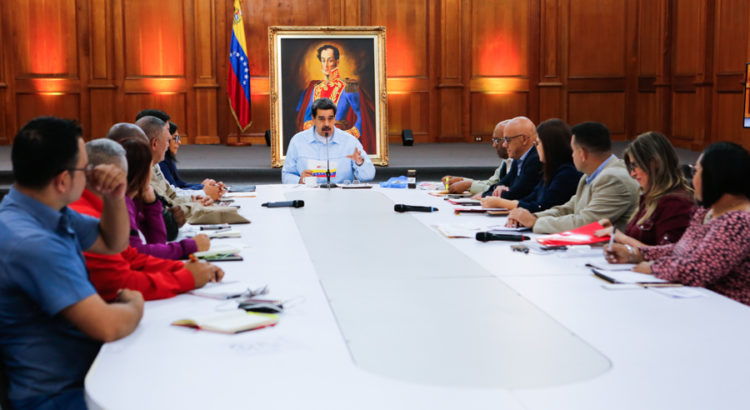
El jefe de Estado y de Gobierno de la República Bolivariana de Venezuela, Nicolás Maduro Moros, aprobó recursos para dar atención primaria a favor de los venezolanos más vulnerables de la Guerra Económica.
Durante una reunión de trabajo desde el salón Ayacucho en el Palacio de Gobierno, la máxima autoridad del país aprobó el punto de cuenta que contempla planes y programas para proteger a la población más vulnerable que sufre directamente los desmanes provocados por las sanciones unilaterales y coercitivas que ha impuesto el gobierno de Estados Unidos.
En primer lugar, con su firma acreditó 94 mil 77 millones de bolívares a favor de los programa de atención nutricional, casas de alimentación, comedores escuelas “Mamá Rosa” y Centros para la Recuperación y Educación Nutricional (CAREN).
“Dinero para nuestro pueblo, dinero directo, para el abastecimiento de víveres, proteína animal, hortalizas, raíces, tubérculos (…) para la logística de de trasporte, almacenamiento, acopios, y el plan de la sustentabilidad productiva de la proteína animal alternativa”, señaló el Mandatario.
Por otra parte, informó que abonó 69 mil 992 millones de bolívares para la Misión Negra Hipólita, para “incrementar su acción a nivel nacional y por la atención profunda de los más golpeados por la vida”.
Se trata de un plan de relanzamiento, reimpulso y fortalecimiento de la Misión Negra Hipólita. “¡Gobierno del pueblo, con el pueblo y para el pueblo!”, exclamó el Presidente.
También reiteró la orden de reparación de 200 Bases de Misiones Socialistas, tarea que ha sido asumida por la Gran Misión Barrio Nuevo Barrio Tricolor, misión a la que felicitó además por su extraordinario trabajo al frente de los programa de rehabilitación de espacios públicos.
Fuente de la noticia: http://www.minci.gob.ve/ejecutivo-aprobo-recursos-para-brindar-atencion-primaria-a-venezolanos-vulnerables-de-la-guerra-economica/
La Coordinadora Nacional de Trabajadores de la Educación (CNTE) informó que se tiene previsto iniciar en la Ciudad de México el proceso de reinstalación de maestros cesados a partir del próximo lunes, por lo que acordamos con la Secretaría de Educación Pública (SEP) poner nuevamente la mesa de trabajo ese día y definir claramente la hora y lugar donde los profesores recibirán sus documentos, con pleno apego a sus derechos y con pago de salarios caídos.
En sesión de su Asamblea Nacional Representativa (ANR) también se acordó demandar al gobierno federal que exista un reconocimiento a las representaciones de la CNTE en todos los estados donde tenemos presencia, a fin de abordar asuntos laborales, de gestoria y de defensa de nuestros compañeros, en donde exista representación de voceros de gobiernos locales, pero también de salud, trabajo y educación.
Chiapas, riesgo de paro indefinido
En cuanto al incumplimiento de los acuerdos bilaterales suscritos con los gobiernos estatales, integrantes del Comité Ejecutivo de la sección 7 de Chiapas, asistentes a la ANR, denunciaron que pese a las muestras de apoyo del presidente Andrés Manuel López Obrador para establecer relaciones bilaterales con el magisterio disidente en todo el país, en nuestra entidad nos topamos nuevamente con la cerrazón del gobernador Rutilio Escandón Cadenas, quien pretende imponer de forma unilateral la cadena de cambios y promociones del magisterio estatal, lo que nos conducirá, si no se corrige el camino, al estallido de un paro indefinido de labores.
José Luis Escobar, representante de la comisión de educación de la sección 7 de Chiapas, destacó que si se aplican los cambios administrativos sin la participación de una representación de los trabajadores, estarán condenados al fracaso, porque la relación de bilateralidad en el estado no fue un obsequio de los ejecutivos estatales, sino resultado de una larga lucha social que demanda transparencia y certidumbre en los cambios de centro de trabajo y promociones.
Integrantes de la ANR agregaron que seguirán avanzando en las seis mesas de trabajo instaladas con la SEP y acordaron emitir su posicionamiento político en torno a la elaboración de las leyes secundarias de la nueva reforma educativa, así como detallar los acuerdos alcanzados hasta la fecha en las negociaciones con el gobierno federal.
La reinstalación de profesores cesados por negarse a implementar la reforma educativa, declararon, es prioritaria, porque la promesa fue que para el 12 de junio estarían reinstalados, pero no ocurrió así. Ahora se nos dijo que sin demora iniciaremos el lunes y debe concluir el proceso para el próximo 26 de junio.
Señalaron que también se aprobó hacer un balance sobre las agendas que hay que profundizar y en cuáles dar mayor velocidad para atender las demandas, como es el caso de la atención médica, el abasto de medicinas y la mejora en la infraestructura de salud, que permita que los maestros tengan mejores condiciones en su atención médica, a lo que suma cuestiones como el acceso a los préstamos que por ley les corresponden.
Además, indicaron, ya tenemos lista nuestra comisión para formular criterios transparentes para la basificación de maestros, a fin de garantizar que no sea nuevamente controlada por el charrismo sindical y trabajar en ello con la SEP.
Los dirigentes sindicales señalaron que vamos a establecer la agenda de temas que se deben resolver a corto plazo, como son los maestros cesados, aquellos que irán avanzando, pero que sus conclusión será a mediano y largo plazos, como resarcir los daños e incidencias ocasionados por la implementación de la mal llamada reforma educativa.
Los acuerdos aprobados en la ANR, que sesionó ayer por la tarde en la capital del país, incluyen la exigencia de abrogación total de la reforma educativa del sexenio pasado, así como la convocatoria a una marcha nacional cuya fecha y formato aún está por definirse, pero que deberá realizarse antes del cierre del actual ciclo escolar 2018-2019, que concluye el próximo 8 de julio.
Fuente del artículo: https://jornada.com.mx/2019/06/16/politica/012n1pol#.XQcLZFnVg7Q.facebook[17/6
OtrasVocesenEducacion.org existe gracias al esfuerzo voluntario e independiente de un pequeño grupo de docentes que decidimos soñar con un espacio abierto de intercambio y debate.
¡Ayúdanos a mantener abiertas las puertas de esta aula!

FT企画・インターナショナルスクール20190617201451744_Datare-750x410.jpg)


 Users Today : 187
 Total Users : 35493215
 Views Today : 200
 Total views : 3612020