Page 4251 of 6820
1 4.249 4.250 4.251 4.252 4.253 6.820

Africa: Make Girls’ Access to Education a Reality

Africa/HRW

Resumen: (Dakar) – Millones de niñas adolescentes embarazadas y casadas a través de muchos países africanos se les niega su educación debido a las políticas y prácticas discriminatorias, dijo Human Rights Watch hoy en día, en el Día del Niño Africano . Más de 49 millones de niñas van a la escuela primaria y secundaria en el África subsahariana , con 31 millones de ellos fuera de la educación secundaria, lo que socava sus derechos y limitar sus oportunidades.

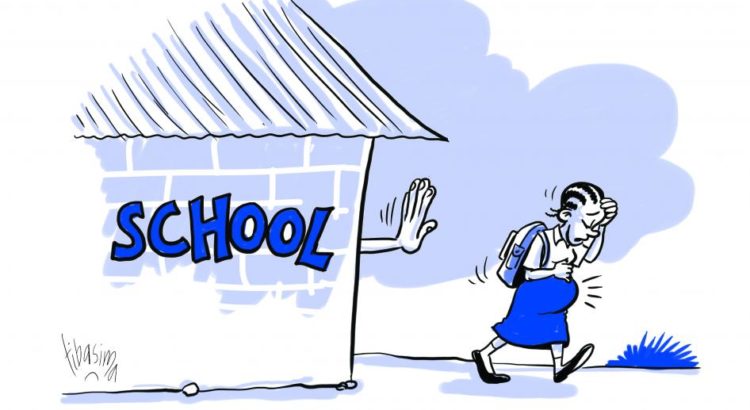
(Dakar) – Millions of pregnant and married adolescent girls across many African countries are being denied their education because of discriminatory policies and practices, Human Rights Watch said today, on the Day of the African Child. More than 49 million girls are out of primary and secondary school in sub-Saharan Africa, with 31 million of them out of secondary education, undermining their rights and limiting their opportunities.

Early marriage and teenage pregnancy are significant factors. In sub-Saharan Africa, 40 percent of girls marry before age 18, and African countries account for 15 of the 20 countries with the highest rates of child marriage globally. The region also has the world’s highest prevalence of adolescent pregnancies. In 14 sub-Saharan countries, between 30 and 51 percent of girls give birth before they are 18. Cultural or religious beliefs often stigmatize unmarried, pregnant girls, with the result that many pregnant girls are forced into early marriages.

“The African continent has one of the world’s highest rates of adolescent pregnancy, but many governments insist on tackling this social and public health challenge by punishing girls and jeopardizing their future,” said Elin Martínez, children’s rights researcher at Human Rights Watch. “Governments should focus on helping girls prevent unintended pregnancies and support their efforts to stay in school.”

Although most sub-Saharan African countries have made commitments to guarantee compulsory primary and lower-secondary education for all children, many exclude or expel pregnant girls and young mothers from school.

Tanzania and Sierra Leone are among the sub-Saharan African countries that have harmful policies and practices that discriminate against pregnant and married girls, Human Rights Watch research shows. In Tanzania, Human Rights Watch found that school officials conduct pregnancy tests and expel pregnant students. Nineteen-year-old Rita, from northern Tanzania, said she was expelled when she became pregnant at age 17. “Teachers found out I was pregnant,” she said. “I found out that no student is allowed to stay in school if they are pregnant … I didn’t have the information [sexual education] about pregnancies and what would happen.”

Some countries, including Cameroon, South Africa, and Zambia, have adopted “re-entry” policies so that adolescent mothers can return to school after giving birth. However, even if governments have these policies, school officials often fail to carry them out adequately or at all. Young mothers frequently lack support to re-enroll due to school fees and related costs, limited support from their families, stigma in school, and a lack of affordable childcare and related early childhood services.

Many adolescent girls become pregnant because they lack the information needed to make informed decisions about their sexuality, family planning, and their reproductive health, while others are coerced into sex and require protection and access to health services and support. According to the United Nations, 80 percent of women ages 15 to 24 who have HIV globally live in sub-Saharan Africa and across the continent, and girls aged 15 to 19 are five times more likely to be infected with HIV than boys.

Sexuality and reproduction are often not included in the national school curricula. In a handful of countries where they are included in HIV awareness or “life skills” programs or subjects, teachers are frequently unwilling to teach these subjects because of the sexual and reproductive health content, or due to constraints on teaching time and resources.

All African governments have made a commitment to the UN Sustainable Development Goals to guarantee gender equality and universal access to free primary and secondary education for all children by 2030. The African Union has recognized the importance of ending child marriage, understanding that it is a major impediment to regional development and prosperity, and of eliminating all forms of gender-based violence and discrimination.

African governments should guarantee that girls have equal access to free quality primary and secondary education and support to stay in school, Human Rights Watch said. Governments should reverse harmful policies and practices that stigmatize girls, including forced pregnancy testing and regulations that allow for the expulsion of pregnant or married girls. Governments should also adopt laws that clearly set 18 as the minimum marriage age for boys and girls.

They should also adopt clear guidelines that instruct schools to re-enroll young mothers, provide support services in schools, and ensure that young mothers have access to early childhood services. Governments should also ensure that all children have access to age-appropriate, comprehensive sexuality, and reproductive education. Where possible, school-based services should be connected to youth-friendly health services to ensure that adolescents receive impartial, nonjudgmental information.

“Governments have the prime responsibility to ensure that girls access free primary and secondary education, without facing stigma and discrimination,” said Martínez. “All governments should scrap policies that exclude pregnant or married girls, and put in place special measures to ensure that all adolescent girls can go to school.”

In Girls’ Own Words

Malawi
In Malawi, roughly half of all girls marry before age 18. Between 2010 and 2013, 27,612 girls in primary and 4,053 girls in secondary schools dropped out due to marriage. During the same period, another 14,051 primary school girls and 5,597 secondary school girls dropped out because they were pregnant.

Girls told Human Rights Watch that marriage interrupted or ended their education, and with it their dreams to be doctors, teachers, or lawyers. Many said that they could not return to school after marriage because of lack of money to pay school fees, childcare, flexible school programs or adult classes, and the need to do household chores. Others said that their husbands or in-laws would not allow them to stay in school.

Kabwila N., 17, said she left school in standard eight at age 15 because of poverty. She said she could not go back to school because she felt ashamed about her pregnancy: “I would not want to go back to school because I started having sex with my boyfriend while at school. I am not fit to go back.”

South Sudan
In South Sudan, 52 percent of girls marry before their 18th birthday. According to UNESCO, over 1.3 million primary-school-age children are out of school, and the country has the world’s lowest secondary school enrollment rate, at four percent.

Mary K., of Yambio County, said: “My father refused me to go to school. He said it is a waste of money to educate a girl. He said marriage will bring me respect in the community. Now I have grown up and I know that this is not true. I cannot get work to support my children and I see girls who have some education can get jobs.”

Anyier D., 18, said that her uncles forced her to leave school at 14 in 2008 to marry an old man she did not know: “I would wish to return to school even if I have children. People think that I am happy but I am not because I don’t have an education. I don’t have something of my own and I am only cleaning offices. If I had gone to secondary school, I would get a good job.”

Tanzania
In Tanzania, fewer than a third of girls who complete primary schooling complete lower-secondary school, and over 15,000 girls drop out annually due to pregnancy. Human Rights Watch found that in some cases adolescent girls dropped out of lower-secondary school due to sexual exploitation and violence by teachers.

Joyce, 17, from Shinyanga, said: “There are teachers who engage in sexual affairs with students – I know many [girls] it has happened to … If a student refuses, she is punished … I feel bad … even if you report the matter it won’t be taken seriously. It makes us feel unsafe. Three girls dropped out because of teachers and sex in 2015.”

Fuente: https://www.hrw.org/news/2017/06/16/africa-make-girls-access-education-reality
Comparte este contenido:

EEUU: Landmark Law on Higher Education Should Be Scrapped, DeVos Suggests

América del Norte/EEUU/chronicle.com/Adam Harris

Resumen: Por segunda vez en dos meses, la secretaria de Educación Betsy DeVos ha sugerido que es el momento de desechar la legislación que rige la política federal de educación superior y empezar una nueva. Durante un discurso realizado el martes en la Asociación de Fomento y Land-Grant Universities, la Sra DeVos dijo que la Ley de Educación Superior de 1965 pudo haber sobrevivido a su utilidad.

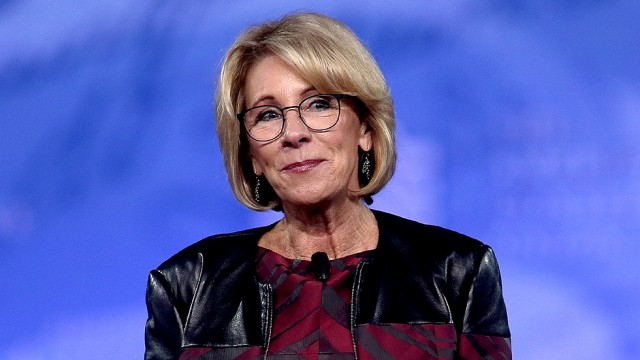
For the second time in as many months, Education Secretary Betsy DeVos has suggested that it’s time to scrap the legislation that governs federal higher-education policy and to start afresh. During a speech on Tuesday to the Association of Public and Land-Grant Universities, Ms. DeVos said the Higher Education Act of 1965 may have outlived its usefulness.

«We are advancing and growing as a people at an unbelievable rate. But the public policy that guides education has only inched along,» Ms. DeVos told the audience of university leaders. «Consider the Higher Education Act, or HEA. This 50-year-old law still governs and defines much of what you can — and cannot — do to educate the students you serve.»

«For me, and I suspect for most Americans, it doesn’t make a lot of sense to simply amend a 50-year-old law,» she continued. «Adding to a half-century patchwork will not lead to meaningful reform. Real change is needed.»

“Why would we reauthorize an act that is like 50 or 60 years old?”

Her remarks echoed what she said last month during an appearance at the ASU+GSV conference, in Salt Lake City. «Why would we reauthorize an act that is like 50 or 60 years old and has continued to be amended?» she said. «Why wouldn’t we start fresh and talk about what we need in this century and beyond for educating and helping our young people?»

The legislation has been reauthorized several times since it was first passed. Its most recent iteration was set to expire in 2013, but was extended to allow legislators more time to work on a new version.

Sen. Lamar Alexander of Tennessee, chair of the Senate education committee, has told The Chronicle that reauthorizing the Higher Education Act is his top education priority during this Congress.

Clare McCann, a senior policy analyst at New America, a think tank in Washington, said Ms. DeVos’s continued suggestion of a replacement for the landmark law shows how the Trump administration misunderstands higher education.

“We can reimagine higher ed without starting from scratch on the entire concept of it.”

«There’s a lot of room in higher education for significant improvement, that needs overhaul, but the basics of the Higher Education Act are not likely going to change — and I’m not sure that they should,» Ms. McCann said. «We can reimagine higher ed without starting from scratch on the entire concept of it.»

If the Education Department were to seek a brand-new piece of governing legislation for federal higher-education policy, and get the requisite support from Congress, it would be a heavy — though not impossible — lift, said Dan Madzelan, vice president for government relations at the American Council on Education.

The point of reauthorizing the act is for legislators to have a starting point, said Mr. Madzelan, who previously worked in the department for more than 30 years. «You have knowledge of the existing programs: what is working, what can work better, and what should just be eliminated.»

«Contrast that with not reauthorizing it and starting with something new,» he said. «You would have to begin from a blank sheet of paper.»

Adam Harris is a breaking-news reporter. Follow him on Twitter @AdamHSays or email him at adam.harris@chronicle.com.

Fuente; http://www.chronicle.com/article/Landmark-Law-on-Higher/240412

Imagen de archivo de OVE

Comparte este contenido:

Docentes en Argentina: «El reclamo es justo y debe resolverlo el gobierno»

America del Sur/Argentina/Cba24n
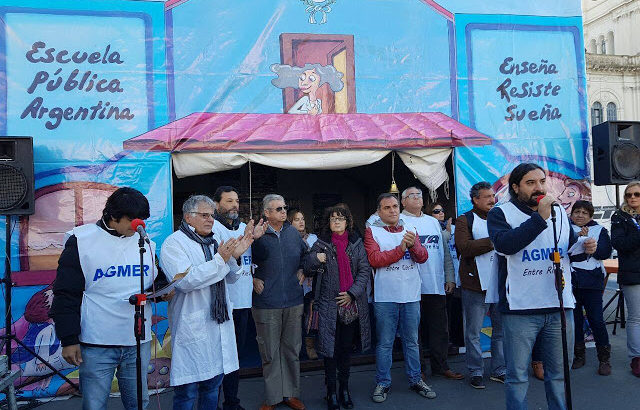
El pedido por la paritaria nacional de la Escuela Pública Itinerante llegó a Córdoba. Baradel habló de una gestión “incapaz”.

Después de la jornada inaugural, la Escuela Pública Itinerante que se instaló en la plaza Agustín Tosco de pleno centro de la ciudad de Córdoba, este jueves continúan las actividades, bajo el lema de una “defensa de la educación pública”.

En su primer día entre talleres y conferencias, hubo un reconocimiento a los organismos de Derechos Humanos, cuya tarea en tierras cordobesas fue central, por haber gestado por caso que el primer juicio por crímenes de lesa humanidad sea en territorio provincial.

La presencia de referentes, entre ellos Sonia Torres de Abuelas de Plaza de Mayo, llevó a un emotivo momento al primer día del espacio gestado por los docentes públicos de todo el país, quienes reclaman al gobierno por el cumplimiento de la Ley de Financiamiento y la convocatoria a una paritaria nacional.

“La educación es un derecho y nadie puede quedar excluido. Acá le decimos no a la mercantilización. Le pedimos al Estado nacional un involucramiento en la suerte de la escuela pública” lanzó el secretario general de la Central de Trabajadores Argentinos (CTA), Hugo Yasky, además de advertir que habría consecuencias por una reciente denuncia a la Organización Internacional del Trabajo (OIT).

La imagen puede contener: 3 personas, personas de pie y personas en el escenario

A su vez, Roberto Baradel, quien desde el Sindicato Único de Trabajadores de la Educación de Buenos Aires (SUTEBA) encabeza la oposición a la gestión nacional con una paritaria aún no resuelta con María Eugenia Vidal, indicó a Canal 10: “La sociedad sabe que nuestro reclamo es justo y que debe resolverlo el gobierno. Y esa sociedad le demostrará en las urnas el resultado si esa incapacidad sigue”.

Para hoy, además de actividades para niños, se tocarán con invitados temáticas que van desde las implicancias de la nueva ley de ART, las neurociencias y la educación y jubilados.

Fuente: http://www.cba24n.com.ar/content/docentes-el-reclamo-es-justo-y-debe-resolverlo-el-gobierno

Imagen tomada de: https://3.bp.blogspot.com/-KPsu3jjuC_M/WUng9jPITnI/AAAAAAAALAI/es5AnAzKf3oAhwf0TnUanALF6w-9kXEFgCLcBGAs/s640/Escuela%2BItinerante.jpg

Comparte este contenido:

#OMEP: Words from the World President

May 2017

Palabras de la Dra. Dr. Eunhye Park presidenta de OMEP Mundial

May the lovely blossoms fill your heart with joy and happiness! There has been a lot going on at OMEP in the past four months that I think you will be interested to know.

A.  Executive Committee Meeting

An Executive Committee meeting was held in Seoul on Feb 17-18, 2017 at Ewha Womans University. All of the executive committee members were in attendance, along with several of my colleagues from Ewha University who assisted us. The purpose of the meeting was to develop the 2017 Action Plan, review and update various organizational policies and procedures, discuss our vision for the next three years, and distribute tasks and responsibilities among committee members. Please note that travel and accommodation costs were covered by outside funding, not by the World OMEP budget.

B. OMEP’s Work at the United Nations

Side Events at the United Nations are selected by a competitive proposal process for presentation during meetings of the UN General Assembly and major UN commissions.  As an organization with Special Consultative Status at the UN, OMEP is entitled to submit proposals to organize, sponsor, or co-sponsor Side Events (sometimes now called “parallel events”. This is one way for our organization to gain credibility and visibility as an important voice for the world’s youngest children.  In addition, hosting Side Events also enables us to strengthen our networks and to get our messages to decision makers at the UN.

a. OMEP Side Event at UN on February 9, 201
With leadership by Maria Pia Belloni, OMEP’s main representative at United Nations, and the rest of OMEP’s New York team, OMEP organized an important Side Event at the United Nations on Feb 9, 2017, entitled Early Childhood Development as Strategy to Eradicate Poverty and Reduce Inequalities in a Migration and Refugee Context. Side Events are selected by a competitive proposal process for presentation during meetings of the UN General Assembly and major UN commissions. This Side Event was held in conjunction with the UN Commission on Social Development.

b. OMEP Side Event at UN on March 13, 2017
On March 13 OMEP organized another Side Event entitled Empowerment of Women in Migration: Impact on Their Children’s Educational Outcomes and Resilience.  Although the session was held on a cold, snowy day at 8:30 in the morning, the auditorium was nearly full. It was held by OMEP representatives to  UN in New York and Others interested in advocacy for the world’s youngest children, on March 13. After this successful Side Event, there was an orientation meeting for OMEP’s 2017 representatives to the UN and others interested in working together with them on the New York Team.


0102

c. Appointments to Several Important Committees at the UN
Maria Pia Belloni, OMEP’s main representative at UN and chair of NGO Committee on Migration, is also on the steering committee for the Child Rights in the Global Compacts Initiative and has been asked to be part of the draft group for the working document. This provides OMEP with an opportunity to support ECD/ ECE in the development of initiatives that will be widely circulated and influential around the world.

C. 8th Global Meeting of the CCNGO/EFA

On May 9 in Siem Reap, Cambodia, OMEP was elected once again as an International Focal Points of Collective Consultation of NGOs(CCNGO) Coordination Group for 2017-2019 This time Maggie Koong, Immediate Past World President, will serve as OMEP’s representative to tis prestigious group, succeeding Ingrid Samuelsson Pramling. Nwe Nwe Aung, OMEP Myanmar President, also attended the 8th CCNGO meeting to support Dr. Koong’s nomination.

The Collective Consultation of NGOs on Education For All (CCNGO/EFA) is UNESCO’s key mechanism for dialogue, reflection and partnerships with NGOs in the framework of the EFA movement. By acting and participating as OMEP Representative within the CCNGO/EFA Coordination Group, OMEP will have opportunity to contribute significantly to EFAs overarching goals.

During the meeting, Maggie presented on OMEP’s strategies and actions in the implementation of SDG4-Education 2030 on May 8. In following day, OMEP’s ECE Resource Bank website was introduced in a way of contributing raise awareness of SDG 4.2. during Open Space/ Marekt Place Programme.

03 04

D. Regional Conferences

a. 9th Africa Regional Conference in Ghana, April 19-21, 2017.
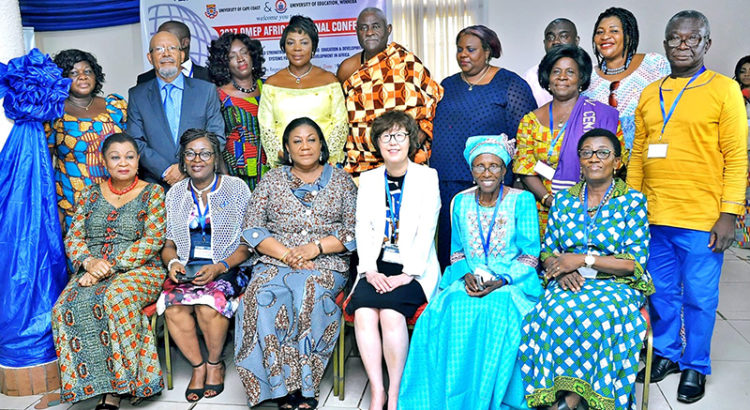
The 9th Africa Regional Conference was held in Accra-Ghana during April 19-21 hosted by OMEP Ghana Committee. The number of delegates from Africa Region have attended the conference including the first lady of Ghana, myself and Are Abimbola, the Vice President for Africa Region. The conference theme was ‘Transforming and Strengthening ECED Systems for Sustainable Development in Africa’.

b. 2017 Asia Pacific Regional Conference in Hong Kong, May 17-18, 2017
2017 Asia Pacific Regional Conference was held in Hong Kong during May 17-18 hosted by OMEP Hong Kong Committee. Many participants from the Asia Pacific Region have attended and participated in the conference including myself, Dr. Maggie Koong, the Immediate Past President and Dr. Udomluck Kulapitchtr, the Vice President of Asia Pacific Region. The conference theme is ‘Enhancing the Quality of Early Childhood Education: Policies, Pedagogies and Parent Engagement’.


05 06


Last but certainly not least, don’t forget our World Assembly and Conference 2017 will be held in Opatija, Croatia. Our Executive Committee is currently working hard for the World Assmebly(June 19, 20).

See you all in Opatija!

Fuente: http://www.worldomep.org/index.php?page=view&pg=1&idx=150&hCode=BOARD&bo_idx=1&sfl=&stx=&cate=

Comparte este contenido:

10 recursos para entender la situación de los refugiados en el mundo

Europa/España/elsalmoncontracorriente.es

Una selección de recursos que ofrecen datos sobre la situación de los refugiados tras el acuerdo suscrito por la Unión Europea y Turquía, tras la construcción de la Europa fortaleza y los efectos de las nuevas políticas migratorias de Donald Trump.

Según los últimos datos del Alto Comisionado de las Naciones Unidas para los Refugiados (ACNUR) hay en torno a 68.5 millones de personas refugiadas o desplazadas internamente, que han tenido que abandonar sus hogares debido a los conflictos, la violencia y la persecución.

Un panorama que no deja de empeorar ya que las políticas que pretenden cerrar las fronteras europeas a las personas refugiadas y migrantes, han convertido el Mediterráneo en la ruta más peligrosa del planeta, siendo responsables de la muerte de más de cinco mil personas, en 2016, a los que hay que añadir las 1.828 muertes en el Mediterráneo en 2017, según datos de la Organización Internacional de la Migraciones.

Ofrecemos a continuación una selección de recursos que ofrecen datos sobre la situación de los refugiados tras el acuerdo suscrito por la Unión Europea y Turquía, tras la construcción de la Europa fortaleza y los efectos de las nuevas políticas migratorias de Donald Trump.

Documentos que denuncian las condiciones extremas en las que se producen los desplazamientos, los abusos que sufren los menores y, por ello, la urgente necesidad de proteger a los niños de esta violencia y explotación.

Tremendos testimonios sobre la brutalidad y el trato vejatorio que sufren los refugiados en su camino y las enormes dificultades para su reasentamiento.

Las personas refugiadas en España y Europa Informe 2017. CEAR


Analiza la situación de las personas refugiadas en el mundo, en la Unión Europea y, principalmente, en España a lo largo de 2016. Asimismo, tal y como ha anunciado la Comisión Europea, muestra como los Estados incumplirán los compromisos de reubicar y reasentar a 182.504 personas refugiadas antes de la finalización del plazo en septiembre de 2017. Solo se acogerá al 25% de las 160.000 personas que se comprometieron a reubicar. Se trata de un fracaso en toda regla que desnuda la falta de voluntad política y la claudicación ante los sectores xenófobos, que están protagonizando un avance electoral muy preocupante en la mayor parte de la UE.


Enfrentando muros. Amnistía Internacional

Cientos de miles de personas huyen cada año de la violencia extrema en El Salvador, Honduras y Guatemala y piden asilo en México y Estados Unidos. Este informeanaliza el duro efecto que la orden ejecutiva de seguridad fronteriza dictada por el presidente Donald Trump tendrá sobre estas personas, así como la complicidad del gobierno mexicano a la hora de devolver a esta gente al peligro del que huyeron.


Migregroup

Migregroup es una red europea y africana de investigadores y activistas que trabajan para denunciar las condiciones de detención y poner fin a los centros de internamiento de extranjeros y hacer un seguimiento de la política de externalización de fronteras de la Unión Europea. Su página web ofrece mapas actualizados con las localizaciones de los diferentes centros de internamiento, experiencias, análisis de políticas migratorias, etc.


Disparen a los refugiados: la construcción de la Europa Fortaleza. Miguel Urban y Gonzalo Donaire

Disparen a los refugiados, claman los líderes de las nuevas formaciones xenófobas ante la llegada creciente de demandantes de asilo a Europa. Y las mismas élites que se escandalizan levantan muros, externalizan fronteras y militarizan el Mediterráneo, convertido hoy en la ruta migratoria más mortífera del mundo. La UE y sus Estados miembros han declarado la guerra a las personas migrantes, abrazando una xenofobia institucional y construyendo una Europa Fortaleza que provoca miles de muertes y conlleva recortes de derechos y libertades generalizados.


Infancias invisibles: menores extranjeros no acompañados víctimas de trata y refugiados en España. Save the Children

En el mundo de hoy, aumenta el número de niños y niñas que migra, y se hacen más complejos los flujos migratorios: en ellos se mezclan migrantes, víctimas de trata con fines de explotación y aquellos que escapan de guerras y persecuciones. Además,son niños y niñas cada vez más jóvenes: del 2000 al 2015, los migrantes menores de 4 años aumentaron en un 41%.


Reasentamiento, Revista Migraciones Forzadas

Examina algunas de las modalidades y retos del reasentamiento con el fin de arrojar luz sobre los debates sobre cómo y cuán bien se gestiona el reasentamiento, si es un buen uso de los fondos y la energía que utiliza, y si es una buena solución para los refugiados. Contiene 33 artículos sobre el Reasentamiento, además de una minisección sobre Los riesgos tras la deportación y su seguimiento y cuatro artículos sobre otros temas relacionados con la migración forzada.


Welcome Refugees. Revista Por la Paz

Mientras la Unión Europea (UE) llega a acuerdos para retornar personas refugiadas con países tan poco seguros en materia de derechos humanos como Turquía o Afganistán; mientras la gran mayoría de los países europeos muestran un vergonzoso pesar a la hora de acoger personas en necesidad de protección; mientras parece que los discursos de los partidos xenófobos van teniendo cada vez mayor respaldo; mientras que, en definitiva, muchas instituciones nos están fallando como acreedoras de los derechos y libertades fundamentales; una parte de la ciudadanía se está moviendo para hacer valer por encima de todo los principios de solidaridad. Este monográfico da visibilidad a este activismo solidario y a las protestas sociales pacíficas que quieren contrarrestar el discurso del miedo y hacer frente a unas decisiones políticas que ponen límites inaceptables a las garantías legales y éticas en materia de derechos humanos

Ante todo son niños: Proteger a los niños y las niñas en tránsito contra la violencia, el abuso y la explotación. UNICEF

Millones de niños y niñas están cruzando las fronteras internacionales. Estos niños huyen de la violencia y los conflictos armados, los desastres y la pobreza, en busca de una vida mejor Cientos de miles se están desplazando en solitario. Ante la imposibilidad de hacerlo legalmente, utilizan rutas peligrosas y recurren a contrabandistas para ayudarles a cruzar las fronteras . Graves lagunas en la legislación, las políticas y los servicios con los que se pretendía proteger a los niños en tránsito dejan a los niños refugiados y migrantes desprovistos de protección y atención. En medio de privaciones, desprotegidos y a menudo solos, los niños en tránsito pueden convertirse en presas fáciles de traficantes y otros individuos que los someten a abusos y explotación.


A dangerous game: The pushback of migrants, including refugees, at Europe’s borders. Oxfam Intermon

Testimonios de la violencia, la brutalidad y el trato vejatorio que a menudo sufren los refugiados y migrantes que atraviesan la ruta de los Balcanes occidentales por parte de las autoridades policiales. Estas personas que huyen de la guerra, la persecución y la pobreza denuncian palizas, robos y un trato inhumano a manos de la policía, la guardia fronteriza y otras fuerzas de seguridad.

Realizado por Belgrade Centre for Human Rights (BCHR) y la Macedonian Young Lawyers Association (MYLA) con el apoyo de Oxfam. El informe incluye testimonios de víctimas de estos abusos en Serbia, Hungría, Croacia, Bulgaria y la Antigua República Yugoslava de Macedonia.

Nacido en Siria

Es un documental dirigido en 2016 por Hernán Zin (85 minutos), rodado en 11 países, que narra el periplo de los refugiados sirios que huyen del horror de la violencia, pero desde la mirada de siete niños: los abusos de las mafias, las inclemencias del mar, la incertidumbre sobre un futuro al que la gran mayoría se enfrenta apenas con lo puesto, y los problemas de integración que surgen al llegar a una tierra, que es hostil.

El mayor éxodo de refugiados desde la Segunda Guerra Mundial visto a un metro y medio de altura a través de siete historias de guerra, sufrimiento y desesperación… pero también de superación, inocencia, valor y esperanza, que nos permitirán entender qué significa haber nacido en Siria.

Fuente: http://www.elsalmoncontracorriente.es/?10-recursos-para-entender-la
Comparte este contenido:

Hunger strike over Canada’s treatment of Indigenous peoples proves valuable education for Queen’s Park visitors

Canadá/Junio de 2017/Fuente: Now

Resumen:  El miércoles, 14 de junio, el jefe hereditario de los Pies Negros Davyn Calfchild deja que el fuego ceremonial en frente de su campamento se consuma, poniendo fin a su ayuno de 13 días. Durante casi dos semanas, Calfchild ha acampado a la sombra de la Legislatura de Ontario para llamar la atención sobre las condiciones devastadoras que enfrentan las comunidades indígenas. Apoyado bajo las banderas, junto a la senda, hay una señal hecha a mano que enumera los problemas que el ayuno de Calfchild busca destacar: mujeres y hombres asesinados y desaparecidos, suicidios juveniles en las reservas, víctimas indígenas de la violencia en Thunder Bay y genocidio. Enmarcado en las grietas en la parte superior de una mesa de picnic cerca, uno de los signos de la pizarra dice: «20.000 años en la ‘capilla.»

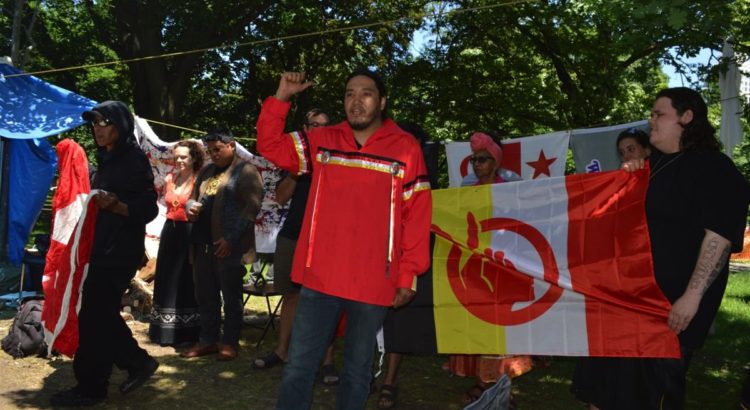
Under the nose of Edward VII’s horse at Queen’s Park, an array of colourful First Nations flags ripple in the morning breeze.

Swaying among the banners is an upside-down Canada 150 flag and trademark Hudson’s Bay sweater. Neatly printed in thick marker between the trademark horizontal stripes: #Shame150.

On Wednesday, June 14, hereditary Blackfoot Chief Davyn Calfchild lets the ceremonial fire in front of his encampment burn out, ending his 13-day fast. For nearly two weeks, Calfchild has camped in the shadow of the Ontario Legislature to draw attention to the devastating conditions facing Indigenous communities.

Propped up under the flags, next to the footpath, is a handmade sign listing the issues Calfchild’s fast seeks to highlight: murdered and missing women (and men), youth suicides on reserves, Indigenous victims of violence in Thunder Bay and #genocide150. Wedged into the cracks on top of a nearby picnic table, one of the whiteboard signs reads: “20,000 years in the ’hood.”


Calfchild wants it known that the cultural genocide continues in Canada. “Children’s Aid Society has replaced residential schools in taking away Native children and assimilating them,” he says.

Calfchild’s wife, Anishinabe song keeper Cathy Tsong Deh Kwe, has been by her husband’s side throughout the fast.

“In order for us to become more visible, people have to learn more about us. One of the things we have been doing here is educating the public.”

A helmeted cyclist arrives on his bike and empties a bag of firewood onto the pile donated by supporters. He’s told that the fire is burning down but the wood won’t go to waste – one of the fire keepers will take it home. Miigwetch.

John Scully has cycled past Calfchild’s camp every day on his way to work.

Scully, who has worked with Indigenous artists and students, says, “We need to support Indigenous people in their autonomy. They’ve been making decisions for 20,000 years, and we need to stop being the colonizers. We need to stop telling them what to do.

“As Canadians, we are so ignorant of Indigenous issues,” says Scully. “Events like this will help make people aware. I’ve learned a little bit about the process of colonization and about the Two-Row Wampum treaty Davyn was talking about.”

The Two-Row Wampum is a belt made from white and purple beads, the preferred way for First Nations to mark treaties and covenants at the time of first contact.

The treaty, made in 1613 between Dutch settlers and the five nations of the Haudenosaunee (Iroquois), was later extended to include American, British and French settlers and other First Nations. The white beads represent truth, and the two rows of purple beads represent two vessels travelling in parallel: a canoe for the Onkweh:onwhe (original people) and a sailboat for the settlers.

Onondaga Nation Chief Irving Powless Jr. puts the significance of the Two-Row Wampum in context in his 1994 essay:

“As we travel down the road of life together not only with each other, but with the whole circle of life – the animals, the birds, the fish, the water, the plants, the grass, the trees, the stars, the moon and the thunder – we shall live together in peace and harmony, respecting all those elements.

“We shall not pass laws telling you what to do. You shall not pass a law telling me and my people what to do. The Haudenosaunee have never violated this treaty. We have never passed a law telling you how to live. You and your ancestors, on the other hand, have passed laws that continually try to change who I am, what I am and how I shall conduct my spiritual, political and everyday life.”

Calfchild promotes the Two-Row to campsite visitors every chance he gets.

“It’s the key to the future,” he says. “The two nations have to work together side by side, not one dictating to the other.”

John Croutch is an Anishinabe educator who specializes in cultural identity and culinary practices. He’s come down to the park to check in on Calfchild’s fast. He points to the symbols of colonialism all around us.

“This is the original territory of the Wendat and later the Haudenosaunee people,” says Croutch. “What’s been happening here for the last 13 days speaks to the fact that laws were passed to prevent us from living on our land.”

A tour group from the Ministry of Education makes its way to the campsite and stops in front of the flags. Calfchild, surrounded by supporters, welcomes the visitors before he launches into a lecture.

“When it comes to the education in this country – what happened in the residential schools, the 60s scoop, the colonization of our territories, the dishonouring of the treaties, things that need to be renegotiated – it’s the responsibility of Canadian citizens to understand what truly happened to our people and not cover it up.”

The visitors listen quietly, some with their heads bowed.

“We’re not here as enemies; we’re here as your friends. We’re here to help you if you want that help,” Calfchild finishes up. “We have to think about the children and the world we want to leave them. If you can’t be honest in the education system, how can they trust you? How can they trust us? So it’s time for our people and your people to start educating the people properly and start being honest.”

Calfchild thanks the group, and Tsong Deh Kwe announces the protocol for the potlatch celebration that will break the fast. Three community members have joined the fast in solidarity over the last few days.

Before the feasting begins, 81-year-old urban elder and Cree spiritual leader Vern Harper has a few encouraging words for the gathering.


Harper, who experienced a cycle of residential schools and foster homes as a boy, remembers having his mouth washed out with soap as a five-year-old for speaking Cree.

“When we say we’re going to do something, sometimes people will say, ‘I’ll be there in spirit.’ My uncle used to say, ‘Get your ass over there.’  Here I am.” Laughter all around what’s left of the fire.

Harper is the sixth-generation grandson of Big Bear, who fought the last battle between the Cree and the Canadian government in 1885.

“We need to take care of our families and take care of Mother Earth. When we have food, be thankful. I love all of you, and we got to keep struggling, never give up. Don’t be a worrier – be a warrior. Miigwetch.”

Cheers and whoops ring across the park.

Comparte este contenido:

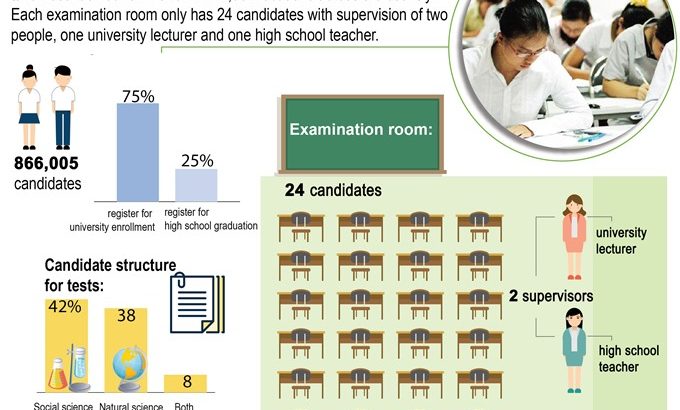
Vietnan: Over 866,000 students take HS Exam

Vietnan/Junio de 2017/Fuente: Vietnan News

Resumen: Más de 866,000 estudiantes de todo el país se reunieron en 2.364 lugares de prueba ayer por la tarde para completar todos los procedimientos de registro para el Examen Nacional de la Escuela Preparatoria de tres días, los estudiantes de examen importante que pasan 12 años preparándose. El examen está programado para correr desde hoy hasta el 24 de junio. Los candidatos tomarán cinco pruebas: matemáticas, literatura, lengua extranjera, ciencias naturales (incluyendo física, química, biología) y ciencias sociales (incluyendo historia, geografía y educación ciudadana). El profesor asociado Mai Văn Trinh, jefe del Departamento de Pruebas y Aseguramiento de la Calidad de la Educación, dijo que las pruebas incluyen un 60 por ciento de conocimientos básicos.

Over 866,000 students across the country gathered at 2,364 testing locations yesterday afternoon to complete all registering procedures for the three-day National High School Exam, the all-important exam students spend 12 years preparing for.

The exam is scheduled to run from today through June 24.

Candidates will take five tests: math, literature, foreign language, natural science (including physics, chemistry, biology) and social science (including history, geography and citizen education).

Associate Professor Mai Văn Trinh, head of the Department of Testing and Education Quality Assurance, said the tests include 60 per cent basic knowledge.

The 40 per cent ‘knowledge’ portion of the tests will be used to classify the levels of candidates. It goes toward university admissions, Trinh said.

As of 2015, high school graduation and university entrance exams have been mixed into one national exam called the national high school exam.

The results of the national high school exam are considered for both high school graduation and university admissions.

New changes made

Deputy Minister of Education and Training Bùi Văn Ga said this is the first year the ministry assigned each locality to chair the exam under instructions from the ministry.

Ga said the ministry has sent representatives to co-operate with localities to organise and ensure a smooth exam for candidates.

This year, all supervisors will take lucky draws before a test to choose their testing room. The move is expected to ensure a transparent exam, he said.

Each testing room only has 24 candidates. In previous years, the number was 30-40 candidates, he said.

Trinh said the ministry has also published sample tests before the real tests so that candidates could prepare more fully.

“This is the first time the ministry has done this,” he added

Candidates are allowed to bring recorders and video cameras into the testing rooms with the conditions that the recorders do not transmit information and receive audio signals, he said.

The purpose of the movement was to allow candidates to record violations in the testing rooms and send to authorised agencies, he added.

Everything ready

Ga said the ministry’s inspection teams has visited localities to check their preparedness for the exam.

Nguyễn Huy Bằng, chief inspector of the Ministry of Education and Training’s Office, said two hotlines will receive complaints and feedback from candidates, parents and others. People can contact 04 3623 1285 and 0923 006 757. Faxes can be sent to 04 3869 3145. Inspectors will verify and deal with violations based on the complaints and feedback.

The hotlines will be operated 24 per hours daily until July 06 when the test-marking activities finish, he said.

Ten inspection teams will randomly visit testing locations, he added.

This year, the Department of High-Tech Crime Prevention under the Ministry of Public Security also participated in the national high school steering committee.

The police force worked with the department of education and training to prepare for incidents related to hi-tech violations during the exam.

In Hà Nội, the city administration has even planned for incidents of flood, thunderstorms, food poisoning.

The health sector has conducted more inspections to ensure on food hygiene and safety. It arranged medical staff and medicines to be ready at testing locations in case of food poisoning and emergencies. Additionally, mobilised medical teams stand at the ready.

The Hà Nội Youth Union made plans to deal flooding during the exam. The voluntary team of up to 10,000 members was tasked to provide assistance if necessary.

According to the National Centre for Hydro-meteorological Forecasting, Vietnamese temperatures will range from 23-35 degrees Celsius during the next three days.

Hà Nội and HCM City are the two localities with the highest number of candidates. The number is 72,939 in Hà Nội and 71,469 in HCM City.

In a related movement, the Hà Nội’s Education and Training Department yesterday announced results of the high school entrance exam.

Candidates can access hanoi.edu.vn to search the results. Around 76,000 students in Hà Nội attended the high school entrance exam last Friday.—

Fuente: http://vietnamnews.vn/society/education/378760/over-866000-students-take-hs-exam.html#ohdQWLEjGehP0ahc.97

Comparte este contenido:
Page 4251 of 6820
1 4.249 4.250 4.251 4.252 4.253 6.820