Page 6338 of 6792
1 6.336 6.337 6.338 6.339 6.340 6.792

México:Convoca Sección 22 a la sociedad a sumarse a su huelga nacional

América del Norte/México/Mayo 2016/Fuente:Quadratín/Autor:Luis Jerónimo

La Sección 22 de SNTE convocó a ciudadanos,  padres de familia, estudiantes, autoridades municipales, sectores organizados y pueblo en general a que se unan a la huelga nacional que iniciará la gremial este 15 de mayo en demanda del respeto a sus derechos humanos, laborales y sindicales.

A través de spots que se difunden en Radio Plantón, emisora del magisterio que opera desde el 2005 con algunas suspensiones temporales por el bloqueo a la señal que utiliza, los trabajadores de la educación hacen un llamado a que unidos y organizados, pueblo y maestros, “luchen por la defensa de la educación”. Oaxaca está viviendo uno de los peores embates en contra de los sectores que se han atrevido a encarar las reformas que a fuego, sangre y cárcel quiere imponer Enrique Peña Nieto y sus aliados en los estados.

En Oaxaca, Gabino Cué está utilizando además de la fuerza policiaca la persecución, la retención de salarios y el encarcelamiento de maestros e integrantes de organizaciones sociales, el hostigamiento y la amenaza hacia los maestros que han decidido iniciar una lucha en defensa de la educación pública y gratuita, señala una voz femenina en uno de los spots que también fueron grabados con la participación de niños.

Este domingo 15 de mayo, la Sección 22 tiene programada una marcha, que partirá de la agencia de Trinidad de Viguera con destino al Zócalo, donde se instalará el plantón indefinido. Otro grupo de maestros participará en las actividades organizadas en la Ciudad de México por la  Coordinadora Nacional de Trabajadores de la Educación (CNTE). En tanto, el gobierno de Oaxaca convocó a la ceremonia oficial conmemorativa por el Día del Maestro a efectuarse en un centro social de Tlalixtac de Cabrera

Fuente de la noticia: https://oaxaca.quadratin.com.mx/Convoca-Seccion-22-a-la-sociedad-a-sumarse-a-su-huelga-nacional/
Fuente de la imagen:https://oaxaca.quadratin.com.mx/www/wp-content/uploads/2016/05/huelga-450×300.jpg

Comparte este contenido:

Reino Unido: Invitan a Trump a recibir educación sobre el Islam en Londres

Europa/Reino Unido/Mayo 2016/Fuente y Autor:Telesur
El primer alcalde musulmán de Londres invitó a Donald Trump a recibir educación en esa ciudad sobre el Islam para que entienda que sus valores son compatibles con Occidente.

El alcalde musulmán de Londres, capital de Inglaterra, Sabiq Jan, invitó al precandidato republicano a la Presidencia de Estados Unidos Donald Trump a recibir una formación adecuada sobre el Islam.

“Quiero educar a Donald Trump. Quiero mostrarle que se puede ser a la vez musulmán y occidental”, afirmó el burgomaestre en relación con declaraciones del precandidato presidencial estadounidense que abogó en diciembre pasado por un bloqueo “completo y total” de musulmanes en la nación norteamericana.

Asimismo, el primer alcalde musulmán de Londres manifestó su deseo de que el empresario multimillonario visite la capital británica para que conozca “a cientos de miles” de musulmanes, que “aman ser británicos, aman ser occidentales”.

Asimismo, advirtió que las declaraciones de Trump, ignorante en cuanto al Islam, benefician a los “extremistas” y que la visión del magnate pone en peligro tanto la seguridad de EE.UU. como la del Reino Unido.

En contexto

Donald Trumpo anunció su candidatura presidencial en la torre que lleva su nombre, ubicada en Manhattan, Nueva York, donde dijo: “Estoy compitiendo oficialmente para ser presidente de Estados Unidos y haré de nuestro país el más grande, de nuevo».

El magnate estadounidense de 69 años compite en las presidenciales por el Partido Republicano. Con su anuncio suman 12 los miembros de esa formación que compiten por llegar a la Casa Blanca.

Desde el momento de lanzar su candidatura, el multimillonario comenzó a levantar polémica, por sus comentarios despectivos. «México manda a su gente, pero no manda lo mejor. Está enviando a gente con un montón de problemas (…). Están trayendo drogas, el crimen, a los violadores. Asumo que hay algunos que son buenos», afirmó Trump, quien también alardeó de su fortuna personal, dejando entrever su poca preocupación por la igualdad social, que tanto necesita Norteamérica y el mundo.

Fuente de la noticia: http://www.telesurtv.net/news/Invitan-a-Trump-a-recibir-educacion-sobre-el-Islam-en-Londres-20160514-0021.html

Fuente de la imagen: http://www.telesurtv.net/__export/1462535423210/sites/telesur/img/news/2016/05/06/trump_ee.uu..jpg_1718483346.jpg

Comparte este contenido:

Uganda: Luyanzi College starts teaching chinese language, culture

África/Uganda/Mayo 2016/Fuente:TheObserver /Autor:James Ssekandi

Resumen: La enseñanza de la lengua y la cultura china se está extendiendo a más instituciones. El Colegio Luyanzi se convirtió en la primera escuela secundaria en el país para enseñar el idioma y la cultura china. China es el último idioma extranjero introducido en los programas escolares de Uganda.

The teaching of the Chinese language and culture is spreading out, with more institutions adopting the subject.

Last week, Luyanzi College, formerly Progressive SS, became the first secondary school in the country to teach Chinese language and culture. Chinese is the latest foreign language to be introduced in Ugandan school curriculum.

Started by Makerere’s Confucius institute (CI@MAK) last year, the subject is now available to secondary schools. Last week, CI@MAK signed a memorandum of understanding with Luyanzi College, Bweyogerere to teach the subject and form a base for Uganda’s relations with China in education, economy and trade relations.

«It’s no longer a secret, China offers a great ideal of human resource in terms of technology and trade, there is need we interest ourselves in their culture,» said Professor Oswald Ndoleriire, the director of CI@MAK.

He was speaking during a cultural festival at Luyanzi College. Prof Ndoleriire added that these agreements would facilitate the teaching of the Chinese language (Mandarin) in several secondary schools before students are able to join Makerere.

Luyanzi College principal Wang Li Hong said the move would make it possible to focus on research and outreach to help Chinese language students.

«This college has created a history of testing and evaluation, and now, to sign a pact with the CI@MAK in the Chinese domain makes us very, very proud,» she said.

«We are very glad to have become a member of the global Confucius Institute.»

Wang added that Luyanzi and CI@MAK will continue to conduct research on the profits of the Chinese language on the international stage, and collaborate with local schools to develop Chinese-English bilingual education programmes.

For his part, Chinese ambassador to Uganda, Zhao Yali, observed that learning Chinese would help students compete in the global market, with China’s rising economic and social influence.

«It’s important a student or society remains ardent with language; for example, many Chinese investors coming into the region will need Chinese language speakers,» Zhao said.

Earlier, the ambassador excited the gathering by first greeting them in Luganda. So far there are over 200 Chinese firms in Uganda, employing over 30,000 Ugandans.

Edaa Karungi a third-year student at CI@MAK offering bachelors BASS sang the Chinese’s anthem before the festival.

«With Chinese education, the foundation for modernization and development will be boosted further; that’s why there is need of more secondary schools like Luyanzi teaching Chinese,» noted Karungi, a guild president at CI@MAK.

In 2013, Makerere University partnered with Xiangtan University in China to start a Confucius Institute, which offers degree and certificate short courses in the Chinese language and culture.

Fuente de la noticia: http://www.observer.ug/education/43998-luyanzi-college-starts-teaching-chinese-language-culture

Fuente de la imagen: http://www.observer.ug/images/Confucius-Institute-at-Makerere-University-students-demonstrating-some-Chinese-culture.jpg

Comparte este contenido:

México: Seminario internacional «Las corporaciones transnacionales en el capitalismo del siglo XXI»

América del Norte/México/Mayo 2016/Fuente: Omal.info

Del martes 17 al jueves 19 de mayo en Ciudad de México

La vuelta de siglo (XX a XXI) marcó profundas transformaciones en el funcionamiento y dinámica del capitalismo. Uno de los rasgos más relevantes de estos cambios se relaciona con un proceso de pase de mandos en el que las empresas toman cada vez más el protagonismo. Estados, organismos internacionales y demás instituciones de representación del capital han sido rebasadas, en la práctica, por las fuerzas activas y directas que suelen representar. Las empresas transnacionales están tomando el liderazgo de los procesos mundiales, cambiando las reglas de funcionamiento, las dinámicas, las fronteras y los límites. Está en proceso de diseño una nueva configuración territorial y política del o de los sistema mundo.

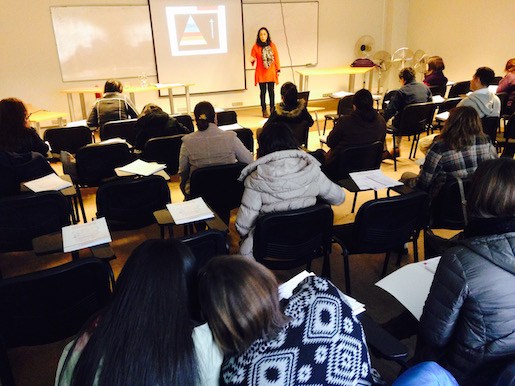
El Seminario Internacional tendrá lugar del martes 17 de mayo al jueves 19 de mayo en el Auditorio Mtro. Ricardo Torres Gaitán del Instituto de Investigaciones Económicas de la Universidad Nacional Autónoma de México (Circuito Mario de la Cueva s/n, Ciudad Universitaria – Ciudad de México).

El evento no tienen coste y se otorgará constancia con el 100% de la asistencia. Ha sido organizado por el Instituto de Investigaciones Económicas, el Observatorio Latinoamericano de Geopolítica (OLAG), el Observatorio de Multinacionales para América Latina (OMAL) – Paz con Dignidad y el Posgrado de Estudios Latinoamericanos.

Fuente: http://omal.info/spip.php?article7890&utm_medium=twitter&utm_source=twitterfeed

Comparte este contenido:

EE.UU: Hispano consigue su título universitario a los 96 años

América del Norte/EE.UU/Mayo 2016/Fuente y Autor: Univision

LOS ÁNGELES, California.- A sus 96 años, Alfonso Gonzáles, un veterano de la Segunda Guerra Mundial, consiguió su título en Zoología y se convirtió en la persona más vieja en graduarse en la historia de laUniversidad del Sur de California (USC).

Gonzáles recibió su título casi 70 años después de pisar por primera vez el campus troyano. El reto era complicado no solo por su edad, si no porque la carrera que cursó en aquel tiempo ya no existía en la USC y las autoridades educativas tuvieronque desarrollar un programa de estudios especial para él.

De acuerdo con la universidad, Gonzáles –la primera persona en su familia que intentaba ir a college- empezó a estudiar en la USC y pensó que hacía mucho tiempo se había graduado y no pudo acudir a su ceremonia de graduación en 1953 debido a que estaba trabajando.

En fechas recientes, familiares fueron a la universidad para conseguir una copia del diploma de Gonzáles, pero descrubrieron que estaba a una unidad de poder graduarse.

“Lo que está haciendo es dar un increíble y positivo ejemplo a otros adultos en el mundo. Demuestra el hecho de que aprender nunca termina, la gente puede generar nuevas habilidades a cualquier edad”, celebró el decano de Gerontología en Davis School de la USC, Pinchas Cohen.

Después de pelear por Estados Unidos en el cuerpo de marines en la Segunda Guerra Mundial, Gonzáles inició su propio negocio en 1953.

Encabezó la compañía por 55 años. En 2008 se retiró a los 88 años.

Además de ser un ejemplo por su desempeño para concluir sus estudios, Gonzáles tomaba tiempo para hablar con los jóvenes sobre los peligros de fumar, un mal hábito que dejó en 1980.

“No se olviden que ustedes serán nuestros futuros líderes. Son necesarios en nuestra sociedad. Ustedes van a cambiar a América… pero no la cambien mucho, tenemos muchas cosas buenas aquí”, refiere Gonzáles a los estudiantes.


Fuente de la noticia: http://www.univision.com/noticias/educacion/hispano-consigue-su-titulo-universitario-a-los-96-anos

Fuente de la imagen: http://cdn2.uvnimg.com/dims4/default/4f09727/2147483647/crop/1200×675%2B0%2B118/resize/1240×698/quality/75/?url=http%3A%2F%2Fcdn2.uvnimg.com%2F32%2F97%2F0783f5fc4206a5b15011e5370ac8%2FAlfonso_GR42721-1-1200×800.jpg

Comparte este contenido:

Mauritius: PM emphasises the importance of values in the education system

África/Mauricio/Mayo 2016/Fuente y Autor: Government of Mauritius

Resumen: El primer ministro, Sir Anerood Jugnauth, hace hincapié en la importancia de integrar los valores modernos y contemporáneos en el actual sistema educativo, así como la forma de restaurar el mejor fuera de él. Estas cuestiones se suscitaron durante una visita de cortesía por el profesor Debashis Chatterjee, del Instituto Indio de Gestión de Lucknow, en el primer ministro en el edificio del Tesoro en Port Louis

The Prime Minister, Sir Anerood Jugnauth, emphasises the importance of integrating both modern and contemporary values in the current education system as well as how to restore the best out of it.

These issues were raised yesterday during a courtesy call by Professor Debashis Chatterjee, of the Indian Institute of Management Lucknow, on the Prime Minister at the Treasury Building in Port Louis.

Discussions also focused on encouraging further the promotion of values and principles in the younger generations and bring back the best of human kind in the modern world.

It will be recalled that Professor Debashis Chatterjee is currently on his first visit to Mauritius and will be the guest speaker at a workshop on the theme: Timeless Leadership organised by the National Productivity and Competitiveness Council for academics, students as well as both the Public and Private sector and the Civil society.

Fuente de la noticia: http://www.govmu.org/English/News/Pages/PM-emphasises-the-importance-of-values-in-the-education-system-.aspx

Fuente de la imagen: http://www.govmu.org/English/News/PublishingImages/Year%202016/May%202016/Lucknow.JPG

Comparte este contenido:

Proof That Koch-Backed Professors Are Using Universities to Spread Right-Wing Policies

América del Norte/EEUU/Mayo 2016/Autor: Casey Quinlan/ Fuente: ThinkProgress

Resumen: «Centros de libertad económica» -o institutos que están respaldados por la Fundación Charles Koch- están estrechamente controlados por los intereses de la base conservadora, de acuerdo con las observaciones de los profesores y ejecutivos apoyados por Koch, en la reunión anual, en Las Vegas, de la Asociación de la Empresa Privada de Educación.

Economic freedom centers” — or institutes with conservative, libertarian missions that are backed by the Charles Koch Foundation — are tightly controlled by the interests of the conservative foundation, according to remarks from Koch-backed professors and executives at the Association of Private Enterprise Education’s annual meeting in Las Vegas.

The remarks were recorded by UnKoch My Campus, a group that focuses on the influence of powerful donors on research and coursework in universities, and shared by Greenpeace staff. At the event, Koch-backed professors and Charles Koch Foundation executives said that students act as “foot soldiers” for free enterprise ideals, deans will take money from anyone, and the slightest mention of the foundation’s legal team can bring universities back in line.

Koch-backed institutes made their way back into the news lately after recent reports that $5 million was earmarked for these centers at Arizona public universities. The American Association of University Professors is also unhappy about George Mason University’s relationship with Koch-backed academics. AAUP Associate Secretary Anita Levy recently sent a letter to the president of George Mason University and the chair of State Council of Higher Education for Virginia to express concern over renaming GMU’s law school the “Antonin Scalia Law School” after having received $30 million from the Charles Koch Foundation and an anonymous donor. GMU has received a lot of money from the Kochs over the years. Between 2011-2014, the university received almost $48 million from the Koch Foundation, according to the Associated Press.

The remarks at the annual meeting reveal some of the top strategies employed by Koch-backed institutes to wield political influence through the university system.

1. Rely on government funding.

According to George Mason University economics and philosophy professor Peter Boettke, who serves as director of the F.A. Hayek Program for Advanced Study in Philosophy, Politics, and Economics, these institutes care about being accredited because otherwise they wouldn’t receive government funding.

“The third party payer is government. Right?” Boettke said. “So this is the economics of the university. Not saying, by the way, from a Libertarian point of view that it’s the best thing in the world, but, you have to recognize and take advantage of it in building programs.”

2. Use the threat of foundation lawyers to ensure money is spent your way.

Lindenwood University professor Howard Wall, who is the director of the Hammond Institute and the Center for Economics and the Environment and serves as the chair of economics at the university, said it’s a good idea to reference the foundation’s legal team when dealing with challenges from administrators.

“It’s mostly inside the university where you get some resistance from administrators getting the power to decide how money is spent, and they say ‘Oh, you have to do this,’” Wall said. “And then I’ve used the phrase, ‘Are you sure that the Koch Foundation’s lawyers will read that the same way you are?’ And then they figure, ‘Well they must have pretty good lawyers.’”

3. Use the university’s intellectual credibility as way to gain access to media.

Boettke explained how having a communications team helps the center have political “impact.” He also explained how, given universities’ role in public policy, working inside one offers political advantages.

“When we think about a university center there’s all this intellectual activity happening and there’s an opportunity to leverage it over and over and over again,” he said. “These media people are able to book radio, television, different sorts of appearances … They can also play an interesting role in engaging with different kinds of stakeholders in these social institutions. That can mean arranging state legislative testimony to make sure that, you know, these kinds of ideas have a seat on the table in public policy.”

4. Make it a 5-year agreement, not an endowment.

University of Louisville endowed professor of economics Stephan Gohmann, who supports right-to-work laws, explained the thought process behind getting a 5-year funding agreement — an explanation repeated by Charlie Ruger, director of university investments for the Charles Koch Foundation.

“This is why it’s a 5-year agreement instead of an endowment. If it’s an endowment, as soon as we leave as the directors, they’ll say ‘Oh, we got $10 million dollars, let’s go spend it on political science or something else…sociology,’” Gohmann said. “But if the money’s just coming in annually, either the money is spend how it’s supposed to be spent or it isn’t coming in.”

5. Fight FOIA requests from groups or publications you disagree with.

Ruger said the foundation is all for transparency, but that they won’t freely give information to a “bully.”

“We’re all for the idea of transparency, we’ve got nothing to hide, there’s nothing untoward happening. All of our philanthropy is based on faculty governance, academic freedom and donor intent, and those things aren’t in conflict,” Ruger said.

Then he later added, “Our position on that is, no, don’t give them anything they ask for, till they go through that process. It makes them look foolish that they file lawsuits, they hire attorneys, and then they get nothing. Over time, I think they’re gonna learn, this is an overuse of open records laws.”

6. Use affirmative action to get conservative students inside the university.

One of the most interesting comments on recruitment came from University of New Orleans associate professor and founding director of the Alexis de Tocqueville Project, Chris Surprenant. He described a program run by the Tocqueville Project where high achieving students can take classes for college credit in areas such as history, political, economy, law, and philosophy. Surprenant mentioned the importance of students being exposed to texts other than Howard Zinn’s A People’s History of the United States. The program prepares students to embrace many of the ideals that Koch-backed professors support.

Ralph Wilson, a senior researcher with UnKoch My Campus who attended the event, told ThinkProgress that Surprenant was talking of local high schools in New Orleans that had a low-income population of mostly black and Hispanic students.

“And you know, I think we’ve made these lives better. We’ve given them an opportunity to be incredibly successful coming from families where, say single mother, didn’t go to college, being raised by their grandparents who both didn’t go to college,” Surprenant said.

The cost of participating in the program is $120 for each three-credit course, which doesn’t include the cost of textbooks. He added that affirmative action, or “prejudices” as he puts it, can be used to the advantage of the foundation, Wilson explained.

“So, there are certain prejudices that college admissions committees operate on, in terms of people that have a leg up over others,” Surprenant said. “We’ve been very successful at finding ways to use those prejudices to our advantage, and to get students into universities who, if they were rich, white, middle class students, maybe they don’t get into Stanford or Harvard, but we provide these students with an opportunity that gets them up to the level where they can get in, and then the admissions commission prejudices sort of kick them, kick them over.”

Fuente de la noticia: http://readersupportednews.org/news-section2/318-66/36864-proof-that-koch-backed-professors-are-using-universities-to-spread-right-wing-policies

Fuente de la imagen: http://readersupportednews.org/images/stories/article_imgs19/019484-charles-koch-010916.jpg

Comparte este contenido:
Page 6338 of 6792
1 6.336 6.337 6.338 6.339 6.340 6.792