Page 1374 of 2546
1 1.372 1.373 1.374 1.375 1.376 2.546

India: Delhi govt to inspect private schools seeking fee hike

Asia/India/16 de Julio de 2016/Fuente: The Indian Express

RESUMEN: El Gobierno de Delhi ha decidido inspeccionar las escuelas privadas en la capital del país que han presentado propuestas que buscan sanción por subida de la tarifa,
luego que los padres en dificultades  se acercaron al  Ministro Principal Adjunto Manish Sisodia quejándose por la  subida de la tarifa en las escuelas privadas que van del 20 al 55 por ciento.»En el escrutinio, las discrepancias se han encontrado en las propuestas subidas por los colegios. Algunos de los documentos estaban incompletos, ilegibles o no en el formato especificado «, dijo el Departamento de Energía en una comunicación a las escuelas. «La dirección ha decidido que un equipo de AC llevaría a cabo una inspección de estas escuelas y verificar sus registros contables y otros registros mantenidos por ellos», agregó. Las escuelas han sido advertidos de medidas estrictas en caso de no cooperación con el equipo de inspección.

Delhi government has decided to inspect those private schools in the national capital which have submitted proposals seeking sanction for fee hike.

After distressed parents approached Deputy Chief Minister Manish Sisodia complaining about fee hike by private schools ranging from 20 to 55 per cent, the government had in April asked the institutes to seek prior sanction from the Directorate of Education (DoE) before increasing student fee and submit detailed proposals in this regard.

“On scrutiny, discrepancies have been found in the proposals uploaded by the schools. Some of the documents were incomplete, illegible or not in specified format,” DoE said in a communication to schools.

“The directorate has decided that a team of empanelled CAs would carry out an inspection of these schools and verify their accounts books and other records maintained by them,” it added.

The schools have been warned of strict action in case of non-cooperation with the inspection team.

Fuente: http://indianexpress.com/article/education/2917429delhi-govt-to-inspect-private-schools-seeking-fee-hike/


Comparte este contenido:

Estados Unidos: More than 260m children not in school

América del Norte/Estados Unidos/16 de Julio de 2016/Fuente: The Straits Times

RESUMEN: Algunas de 263 millones de niños en todo el mundo, casi uno de cada 10, no ir a la escuela, lo que representa un obstáculo desalentador para las Naciones Unidas (ONU) esfuerzos para educar a todos los niños para el año 2030, la agencia cultural de la ONU informó ayer la Unesco. El número es «asombrosa», sin embargo, constituye una mejora desde 2000, cuando algunos 374 millones los niños no asistían a la escuela, dijo la Unesco.
Muchos niños van a la escuela viven en zonas de conflicto, muchos de ellos son niñas que viven en las sociedades que no abogan por la educación de las mujeres y otros viven en países que no tienen la escuela secundaria obligatoria, según el informe.
Los niños en sus últimos años de adolescencia son cuatro veces más probabilidades de estar fuera de la escuela que los niños más pequeños, se dijo. «Nuestra atención debe centrarse en la inclusión desde la más temprana edad y la derecha a través del ciclo de aprendizaje, sobre las políticas que abordan las barreras en cada etapa, con especial atención a las niñas que todavía se enfrentan a la mayor desventaja», dijo el director general de UNESCO, Irina Bokova, en una declaración.

NEW YORK • Some 263 million children worldwide, nearly one in 10, do not go to school, posing a daunting hurdle to the United Nations’ (UN) efforts to educate all children by 2030, the UN’s cultural agency Unesco reported yesterday.

The number is «staggering», yet marks an improvement from 2000 when some 374 million children did not attend school, Unesco said.

Many children out of school live in areas of conflict, many are girls living in societies that do not advocate educating females and others live in countries that do not make secondary school compulsory, the report said.

Children in their late teens are four times more likely to be out of school than younger children, it said.

«Our focus must be on inclusion from the earliest age and right through the learning cycle, on policies that address the barriers at every stage, with special attention to girls who still face the greatest disadvantage,» said Unesco director-general Irina Bokova in a statement.

In South Asia and sub-Saharan Africa, at least half of all those aged 15 to 17 are not in school. In South Asia, these teenagers of upper secondary school age are eight times as likely to not be in school as children of primary school age.

TOP PRIORITY

Education must be seen as part of the first response when crisis hits. Returning to school may be the only flicker of hope and normality for many children and youth in countries engulfed in crises.

UNESCO DIRECTOR-GENERAL IRINA BOKOVA, on the need to fund education.

UN member nations last year adopted a set of global goals for 2030 that included a call for children around the world to complete primary and secondary school.

«These new findings show the hard work ahead if we are to reach this goal,» Ms Bokova said.

Armed conflict poses a major barrier to education, Unesco said. Around the world, 22 million out-of-school children of primary education age live in conflict areas.

Last month, Unesco said children who are out of school in conflict- affected countries need US$2.3 billion (S$3.09 billion) to get them all schooling – 10 times the amount of aid that is currently directed towards education.

«Present targets are hugely insufficient and diverting attention from the true needs of children and youth on the ground,» said Mr Aaron Benavot, director of Unesco’s Education for All Global Monitoring Report.

In some places, refugees are integrated into national education systems, but in others they are excluded, depending on their nationality.

Ms Bokova said funding for education is crucial in these areas.

«Education must be seen as part of the first response when crisis hits. Returning to school may be the only flicker of hope and normality for many children and youth in countries engulfed in crises,» she said.

While primary and lower secondary education are compulsory in nearly every country, upper secondary school is not, Unesco noted. Also, it said older children are often of legal working age.

Globally, 15 million girls of primary school age will never attend classes compared with about 10 million boys. More than half of those girls live in sub-Saharan Africa, it said.

The gender gap is also wide in South Asia, added Unesco. Four out of five out-of-school girls will never enter the formal education system, compared to two out of five out-of-school boys, it said.

Fuente: http://www.straitstimes.com/world/united-states/more-than-260m-children-not-in-school


Comparte este contenido:

Revista Latinoamericana de Investigación Crítica

Revista latinoamericana de investigación crítica
(Año III No. 4 Enero-Junio de 2016)

Carlos Fidel. Maylin Cabrera Agudo. Luis Fernando Trejos Rosero. Rafael Molina Gabriel. María Soledad Sánchez. Andrés Pérez Esquivel. John Antón Sánchez. Yunier Rojas Bazail. Norma Giarracca. Fortunato Mallimaci. Enrique Valencia Lomelí. Martín Granovsky. Marcelo Sain. PUE (Programa Universitario de Estudios sobre Ciudad) UNAM. [Autores de Artículo]

Revista Latinoamericana de Investigación Crítica. Revista.
ISSN 2409-1308
CLACSO.
Buenos Aires.
Junio de 2016

Introducción.Carlos Fidel

Tema central: Cuestiones y Políticas de Resguardo Democrático en América Latina

Las políticas de seguridad de CARICOM en torno al crimen trasnacional organizado: incidencia de los intereses estadounidenses de seguridad nacional (2001-2011). Maylin Cabrera Agudo

FARC-EP: ¿Actores políticos no estatales con inserción internacional o delincuentes organizados? Luis Fernando Trejos Rosero

Una evaluación al estado de las instituciones de seguridad pública: una comparación entre el Triángulo Norte de Centroamérica. y Nicaragua. ¿Alguna diferencia Rafael Molina Gabriel

Finanzas, ilegalismos y sociedad en la Argentina reciente: Una aproximación al mercado financiero por sus fugas. María Soledad Sánchez

Luz, cámara, policía. La institucionalización de una nueva fuerza policial. Andrés Pérez Esquivel

Otras temáticas

Evaluación del Plan Plurinacional contra la Discriminación Racial y la Exclusión Étnica y Cultural en Ecuador: la política de inclusión de los pueblos y nacionalidades del Ecuador (Decreto 60 de 2009). Jhon Antón Sánchez

Reestratificación y política social en Cuba contemporánea. Yunier Rojas Bazail

Prologo a Nosotros los indios. Norma Giarracca

Aportes de coyuntura

Los derechos humanos como paradigma de una sociedad de iguales y diferentes. Fortunato Mallimaci

La desigualdad, tarea pendiente y posible en América Latina. Enrique Valencia Lomelí

Entrevistas

Marcelo Sain: “Si acá se politiza el ejército se hace por derecha, nunca por izquierda”. Martin Granovsky

Sociedad y Artes

Fotos centros históricos. PUE (Programa Universitario de Estudios sobre Ciudad), UNAM

Fuente: http://www.clacso.org.ar/libreria-latinoamericana/libro_detalle.php?id_libro=1118&pageNum_rs_libros=0&totalRows_rs_libros=1090

Descargar aquí: http://biblioteca.clacso.edu.ar/clacso/se/20160706040132/ImasCN4.pdf

Comparte este contenido:

México: Concluye ciclo escolar 2015 – 2016

América del Norte/México/15 de Julio de 2016/Fuente: Puebla Noticias

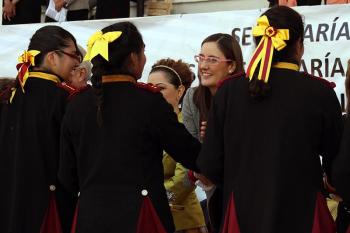
Puebla, Pue.- La Secretaría de Educación Pública informa que este viernes 15 de julio concluye el ciclo escolar 2015-2016 para más de 1 millón 800 mil alumnos de Educación Básica y Media Superior; y para cerca de 300 mil estudiantes de Educación Superior, según lo establecido en el Calendario Oficial.

En este marco la Secretaria de Educación Pública, Patricia Vázquez del Mercado, asistió a la ceremonia de fin de cursos del Centro Escolar Niños Héroes de Chapultepec (CENHCH) en donde, tras la entrega de documentos a los alumnos egresados, clausuró oficialmente este ciclo escolar.

En representación de Rafael Moreno Valle, Gobernador del Estado, Vázquez del Mercado reconoció el esfuerzo de los padres de familia, quienes con su acompañamiento han impulsado a sus hijos a cumplir cada uno de sus logros, y a las autoridades educativas por el trabajo realizado.

El regreso a las aulas será el día 22 de agosto, fecha en la que además entrará en vigor el Calendario Escolar Flexible de 200 y 185 días, según el que haya elegido cada escuela.

La SEP Puebla celebra los grandes logros y avances obtenidos en este ciclo escolar para la educación en el estado, el cual se posicionó en primer lugar a nivel nacional en Aprendizaje según un estudio presentado el mes pasado por Mexicanos Primero.

Asimismo,  desea a la comunidad docente y estudiantil un excelente periodo vacacional, les invita a realizar alguna actividad deportiva, así como a visitar los diferentes museos y atracciones turísticas que ofrece la entidad.

Además reitera la disposición del número de EDUCATEL, 01 800 714 7108, para cualquier duda o reporte.

Fuente: http://pueblanoticias.com.mx/noticia/concluye-ciclo-escolar-2015—2016-88532/


Comparte este contenido:

Educación y salud

Europa/España/16 de Julio de 2016/Autor: Fernando Ayala Vicente/Fuente: El Periódico Extremadura

La actividad física, el deporte y el ocio activo ha cogido tal importancia que la Consejería de Educación y Empleo, en una acertada decisión, ha decidido incluir, en el recién publicado decreto de currículo, una nueva asignatura en Segundo de Bachillerato con esa denominación.

De esta forma, no sólo se atiende a las reivindicaciones del colectivo de profesionales del sector, dotando de un mayor peso a las enseñanzas deportivas, sino que, desde mi punto de vista, (y este es el objetivo del artículo de hoy) entramos de lleno en la relación entre educación y salud.

Existen numerosos estudios científicos que demuestran la efectividad, incluso económica, de invertir en políticas destinadas a fomentar los hábitos saludables y las prevención de prácticas insalubres y nocivas (como el consumo de sustancias adictivas).

Asimismo, resulta fundamental la inclusión en la práctica educativa de este tipo de enseñanzas que persiguen convertir en rutina la lucha contra la obesidad y el sedentarismo. Empezando con edades tempranas para consolidarlas en las etapas adultas de la vida.

Una dieta equilibrada junto con la práctica diaria de actividad física es un auténtico seguro para mejorar el rendimiento en todos los niveles: escolar, profesional… así como contribuye a mejorar la autoestima, la socialización o la salud a cualquier edad.

Finalmente, y ya que estamos hablando de educación y salud, nos parecen muy recomendable las actuaciones que se realizan desde las Asociaciones de Padres y Madres donde se implican en acciones conjuntas, en la línea que venimos hablando, a los progenitores, junto con sus hijos y cerrando el círculo con la participación de los docentes. Son actividades en horario extraescolar que además aúnan la efectividad pedagógica con la resolución de conflictos, tanto intergeneracionales como de relaciones personales. Son momentos para la amistad, el compañerismo, la ayuda, el aprendizaje… y, todo ello, encima realizando acciones que, en términos generales, son muy satisfactorias en su ejecución. Sigamos.

Fuente: http://www.elperiodicoextremadura.com/noticias/opinion/educacion-salud_950104.html#


Comparte este contenido:

50% Indian graduates unemployable: Education minister

Asia/India/15 de Julio de 2016/autor: Mandam Kumar/Fuente: The Times of India

RESUMEN:  El Ministro de Educación Ashok Choudhary dijo el viernes que la India está produciendo un ejército de jóvenes «empleables» de sus instituciones educativas y 50% de los graduados no tienen la habilidad necesaria para hacer cualquier trabajo profesional. «India tiene un problema único. En un lado, las industrias no reciben las personas expertas en particular y por el otro, el país tiene un enorme desempleo. «De acuerdo con los datos, el 50% graduados no tienen la habilidad o la elegibilidad para hacer cualquier trabajo profesional. Por otra parte, los expertos de la industria creen que el 80% de los graduados de ingeniería no son aptos para cualquier tipo de trabajo en el sector industrial. Incluso los estudiantes de ingeniería no son conscientes de los fundamentos de  su comercio.

Patna: Bihar education minister Ashok Choudhary on Friday said India is producing army of «unemployable youths» from its educational institutions and 50% graduates do not have the required skill to do any professional job. «India has a unique problem. At one hand, industries do not get skilled persons for particular work and on the other, the country has huge unemployment. It seems we are producing ‘unemployable youths’ from our educational institutions,» Choudhary said while addressing a programme organised by the Bihar government on the occasion of World Youth Skills Day here on Friday. CM Nitish Kumar and three other cabinet ministers were on the dais when Choudhary was making a «frank assessment» about the country’s education system.

Referring to a last year’s incident of Uttar Pradesh, Choudhary said altogether 23 lakh educated people applied when a neighbouring state advertised for 368 posts of fourth-grade in its secretariat. Of the 23 lakh who applied for the posts of peon, 250 candidates were PhD holders, 25,000 post-graduates and 1.5 lakh graduates. «Our situation is not too much different from the neighbouring state. The question arises as to why so many highly educated people applied for the post of peon? Simple fact is that our youths are not skilled enough to engage themselves in productive works,» Choudhary said amid clapping from the audience.

«As per data, 50% graduates do not hold skill or eligibility to do any professional job. Moreover, the industry experts believe 80% engineering graduates are not fit for any job in industrial sector. Even engineering students are not aware about the basics of their trade. Whenever they go to seek job with their certificates, the companies put them on one to two years of job training,» Choudhary said.

He added that as per 2011 census, 58% population in Bihar is below the age of 25 years. «The average age of Bihar is around 30 years,» Choudhary said. He called upon the youths to get proper training to ensure their employability in job market.

Earlier, the state’s labour resources department signed a memorandum of understanding (MoU) with the Maharashtra Knowledge Corporation Ltd (MKCL) to run skill development training centres across Bihar. The MoU, which was signed by state’s labour resources department’s principal secretary Dipak Kumar Singh and MKCL’s chief executive office Vivek Sawant, aims to carry out skill development of the youths.

Fuente: http://timesofindia.indiatimes.com/city/patna/50-Indian-graduates-unemployable-Education-minister/articleshow/53232738.cms


Comparte este contenido:

Nueva Zelanda: Digital technology in schools ‘as important’ as English and maths

Oceanía/Nueva Zelanda/17 de Julio de 2016/Autor: Te Ahua Maitland/Fuente: Stuff

RESUMEN: Codificación, Depuración de Errores, HTML, algoritmos y programación pueden sonar como una lengua extranjera a la generación más antigua de Nueva Zelanda.
Pero para los niños de hoy dia , no tanto. Y llegado el año 2018, los niños de la edad de cinco años serán aún más diestros en la tecnología digital si el tema  se añade al plan de estudios nacional. El Ministerio de Educación anunció el 7 de julio que se cubrirá seis temas, con el diseño aún no se ha finalizado. Mateo Walmsley, 13, es un buen ejemplo de los niños conozcan  codificación a una edad temprana. El interés del estudiante Tai Wananga Ruakura en la codificación se despertó cuando tenía sólo ocho través  de “Vengadores” un código de negocio de su hermano en Hamilton. «Hice la codificación, por lo que implica HTML, CSS, diseño y ese tipo de cosas.»
También ha ayudado a los maestros con problemas de tecnología y piensa que es una gran ventaja para empezar a enseñar la tecnología digital desde el primer año.
«Creo que todas las cosas de la tecnología digital ayuda a los niños con la resolución de problemas y el pensamiento de nuevas maneras», dijo.

Coding, de-bugging, HTML, algorithms and programming may sound like a foreign language to the older generation of New Zealand.

But for children, not so much. And come 2018, children from the age of five will be even more drilled on digital technology with the subject being added to the national school curriculum.

The Ministry of Education announced on July 7 the subject will cover six themes, with the layout still to be finalised.

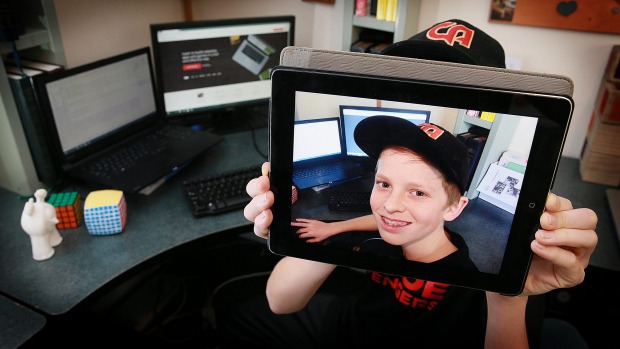
Matthew Walmsley, 13, is a prime example of kids getting into coding at a young age.

The Tai Wananga Ruakura student’s interest in coding was piqued when he was just eight through his brother’s business Code Avengers in Hamilton.

He sometimes works for the company in the school holidays; validating courses, writing code, and setting up web pages.

«I’ve always really liked math and numbers, and creating things and Lego and Connect,» he said.

«So you put those two together, I enjoy creating things involving lots of numbers and on computers.»

Last year, while he was still at intermediate, Walmsley and his group gave a presentation on artificial intelligence, and he made a website.

«I did the coding, so that involves HTML, CSS, design and that kind of thing.»

He’s also helped teachers with tech problems and thinks it is a great advantage to start teaching digital technology from Year One.

«I think all the digital technology stuff helps kids with problem solving and thinking of new ways,» he said.

«It will help a lot, especially now things are becoming more online.»

Chief executive of Orion Health, Ian McCrae, said in order for the subject to work in schools, it needs to be taken seriously.

He said it is positioned in the «less academic» subjects, such as food technology, fabric technology, wood and metal work.

«It needs to be placed in the same category as your historically academic subjects such as maths, English, chemistry, physics,» he said.

«Look at the Year 13 curriculum, you can get six credits for making a cream puff for food technology.»

He believes the sector is generating about 3000 jobs a year, and only 1500 are coming out of the education system.

«To be successful in life we have to be fluent in English, or have good English skills. But being tech literate is increasingly becoming important. You cannot succeed today if you’re not technologically literate. In any field.

«We’re directing our kids into areas where there are far less job opportunities. The digital technology sectors are heading towards being the second largest exporter after dairy.»

But if teachers do not get the resourcing and training they need, they will end up being in a «big puddle», New Zealand Association for Computing, Digital and Information Technology Teachers member, Gerard MacManus said.

He said a third of New Zealand students are not taught by a qualified maths teacher in their first year of high school.

«Are we going to see the same thing happen with digital technologies? Because at the moment we don’t have the teachers.»

The secondary school teacher said he knows of technology teaching jobs that have been advertised for a year at least.

But his main concern was for the primary and intermediate school teachers.

«Who is going to help them to teach digital technology from Year One?

«We need to make a meaningful context from when it is integrated at the lower levels, for kids to fin interesting, creative ways to use it.»

Fuente: http://www.stuff.co.nz/national/education/82069579/Digital-technology-in-schools-as-important-as-English-and-maths
 

Comparte este contenido:
Page 1374 of 2546
1 1.372 1.373 1.374 1.375 1.376 2.546