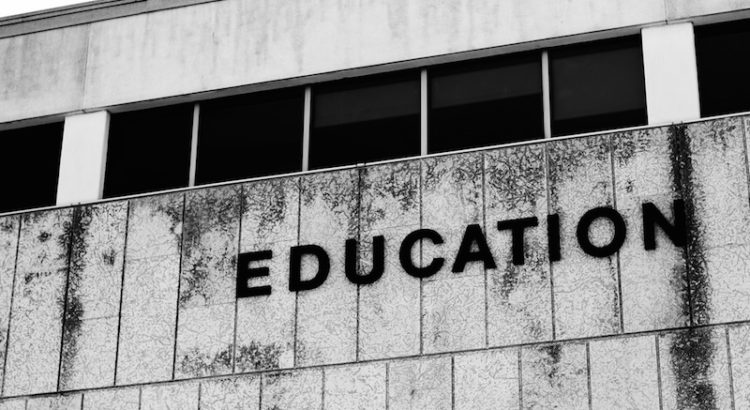
EEUU/ Author: Andrew Sunghyun Yoon / Source: Carnegie Council
Andrew Sunghyun Yoon, Third Prize High School Category, Essay Contest 2017
«I am a 15-year-old sophomore attending Seoul International School in South Korea. Born in the United States and raised in Asia, I feel my diverse experiences around the world have shaped and concretized my beliefs. I am extremely passionate about public speaking, international relations, and the humanities as a whole. I hope to use my voice and the power of the pen to advocate social causes particularly pertaining to the disenfranchised.»–Andrew Yoon
ESSAY TOPIC: In your opinion, what is the greatest ethical challenge facing the world today?
There is a girl in the rural areas of Western China, wiping crystal beads of sweat off her forehead as she cooks whatever’s left in the house for her siblings. She is cradled within the silence created by her parent’s absence, counting how many days remain until they return from their minimum-wage jobs in Beijing. Amidst the endless financial troubles and the fragmentation of her family, school simply was not an option. If destiny really did exist, hers didn’t include an education. There are hundreds of thousands more like her. A few hundred miles away in the sun-scorched outskirts of Kabul, a girl is reprimanded for resisting when she is told that she cannot go to school like her brother. There are hundreds of thousands more like her. Halfway across the globe in Baltimore, a city entangled in poverty and violence, there is a boy whose family’s survival hinges on food stamps and is forced to relinquish his dream of being the first in his family to attend college. There are, once again, hundreds of thousands more like him. These are all characters within the same story: a story about individuals who are stripped of the chance at a bigger and better future through education.
Without a doubt, countless other stories deserve to be heard as well: the one about devastated refugees fleeing decimated homes, the one about the unspeakable horrors of religious and ethnic persecution, the one about families subsisting on one meal a day as they cope with the dire truth of poverty, and just about a million more. Yet the issue of education resonates especially clearly as the most pressing ethical challenge of today’s generation because time and time again, governments and citizens alike are failing to address education systems that leave millions in the dark. Although education is perhaps the most substantial step toward addressing and eventually tackling the aforementioned global issues, it is perhaps one of the most overshadowed challenges of the century, burrowed beneath more immediate concerns stemming from political turmoil or economic advancements.
Today, governments have become complacent with flawed education systems, and citizens have subconsciously learned to coexist with a reality in which millions of children and young adults across the globe are forced to give up the chance to go to school. We continue to fail to recognize that education is not a privilege. It is a right. And it is an unforgettable ethical failure on our part for allowing this issue to be perpetuated.
The cause, details, and experiences of individuals barred from equal education may all be vastly different, but there exists a common thread intertwined among all who are a part of this narrative of injustice: education is and has always been the key to escaping a vicious cycle of inequality or poverty. On the racial and socioeconomic front, conspicuous gaps in access to education exist among the urban and rural, rich and poor, and along the spectrum of race or ethnicity. In the United States, despite institutional initiatives such as Affirmative Action, which aims to promote college admission among underprivileged minorities, many of these underprivileged individuals do not end up escaping the chains of racial and wealth inequality. Due to the intertwined nature of race and poverty in the United States, poverty is often concentrated in areas with higher percentages of racial minorities, which inevitably leads directly to a dead end. As part of a public education system dependent on local funding and support, such communities will consistently lack the teachers or resources that can sufficiently piece together a high-quality education for its children. Countries with a vast urban-rural divide, including China and India, experience this issue to an even greater extent because rural regions themselves are not equipped with the necessary human capital, technology, facilities, or apparatus.
On the gender front, the chasm is just as substantial. A single glance at relevant statistics is enough to illustrate the disproportionate number of women whose window to higher education is perpetually closed. According to the United Nations, 16 million girls—significantly higher than the number of boys—will never attend school in their lifetime, and girls comprise two-thirds of the 750 million adults who lack basic literacy skills. The root cause of gender discrimination in an educational context varies from country to country. In some, it has emerged out of deeply-rooted religious or cultural ideology, whereby it may be deemed unorthodox or unfitting for women to pursue high levels of education. In others, it is the inevitable result of issues such as early pregnancy or other social pressures that put girls at a disadvantage. In either scenario, however, the numerous barriers obstructing women’s access to education have created a stigmatized perception of women that feeds into gender inequality as a whole. Women’s rights movements that have emerged in developed nations indicate an increasingly progressive social atmosphere, but many of such movements have been unable to translate into direct and practical results in terms of access to education.
The reality of this pressing issue is ubiquitous; it’s plastered across news headlines, emphasized and re-emphasized by international organizations. Yet, the question at the crux of this issue is: Who should be accountable?
The first response should be the government. In 2006, in response to the alarming number of children without access to schools, the Chinese government revised its education law to especially accommodate the needs of children from rural areas. This reform included abolished tuition and other fees—e.g. textbooks or room and board—that rural students usually cannot afford. This legislation reform was an evident attempt to increase access to educational resources, especially in poor or rural regions, where such resources are often nonexistent to begin with. China’s leadership actively addressed the nation’s vast wealth and gender gaps, and took accountability for the situation of its citizens. But not all governments have made similar efforts, even in the presence of abundant resources. In order to address this ethical challenge, the most influential source of change stems from the government, who should work—through new legislation or reforms to the old—to ensure that children are bolstered by an educational system that is open and fair.
The other answer as to who should be accountable for ensuring education is a little less clear. There is no doubt that in the status quo, there are a number of countries whose first priority cannot be equal education. But if the government is too unstable at the present moment to secure an effective and fair education system due to more immediate concerns, who is accountable? It could be the United Nations, similar international organizations, smaller nongovernmental organizations, citizens, or a combination of all of the above. In any case, those outside of the government are also ethically responsible to respond to the government’s inability to install reforms or work among themselves through grassroots projects on local or national levels in order to initiate a change.
When individuals are barred from attending school due to social and economic pressure, they are closing perhaps the one and only door out of their current situation; they are being forced to let go of a fundamental right. Education is not a privilege. It is a right, and for many more individuals, it is a last chance at change and progress.
Source of the News:
https://www.carnegiecouncil.org/publications/articles_papers_reports/education-a-last-chance





 Las guerras en general pueden representar muchos escenarios terribles, pero uno de los más recordados por cruel y absolutamente fuera de los límites morales, es el asalto de Nanjing por parte de las fuerzas japonesas. Esta película se centra en este momento. Adaptación de la novela de Yan Geling, Las flores de guerra (2012), está basada en la historia real relatada per la maestra misionera americana Minnie Vautrin (1886-1941). Yan Geling explica la barbarie de la batalla de Nanjing (octubre-diciembre 1937) des del punto de vista de dos grupos de mujeres, unas estudiantes y unas prostitutas, todas ellas recluidas por las circunstancias en una iglesia durante la batalla. La trama se centra en estos dos grupos así como en el sacerdote responsable de la iglesia, Padre Englemen, transformado en manos de Zhang del hombre piadoso y con profundos dilemas morales que encarna la novela, al personaje representado por Christian Bale, un sinvergüenza oportunista que irá evolucionando hasta desarrollar una fuerte moral que finalmente le hará ayudar a estas mujeres perdidas y salvarlas.
 mostrándose mucho más occidentalizada que sus primeros films. Posterior a la trilogía fantástica iniciada con Hero, denota una evidente evolución del lenguaje cinematográfico más ambicioso y con más recursos. No abandona su realismo característico, pero sí que adopta una trama más trepidante y veloz, con recursos como la cámara lenta, el uso de la luz, los contrapicados, las distorsiones con las vidrieras de colores, recursos no usados en sus primeras películas siempre de corte más preciosista y tranquilo. Aún con los cambios des de la historia original o la novela, Zhang consigue lo que siempre pretende, contar una historia que conecte con los sentimientos que son universales, y en este caso en concreto, una historia donde al final, desaparecen las barreras sociales y culturales y en donde se impone el sacrificio y la humanidad de unas mujeres respecto a las otras.
 Respecto al retrato que realiza de la mujer, a través de la novela de Yan y su adaptación, nos encontramos con la representación de los contrastes en le género femenino de los años treinta: las estudiantes y las prostitutas. Caracterizadas con el pelo corto, símbolo de la ruptura con la mujer del pasado de trenza y moño, y el vestido largo de color azul marino o changpao copiado del atuendo de los intelectuales barones, las estudiantes del convento son la encarnación de las hijas de una nueva élite con poder económico que quería educar a sus hijas como muestra de modernidad. Alumnas, además, de una escuela extranjera, representan la antítesis de la educación tradicional donde las niñas eran solamente educadas para encontrar marido y poder gestionar un hogar. Las prostitutas son, por el contrario, herederas de la profesión más antigua del mundo, caracterizadas con los vestidos de moda de Shanghai, el qipao, desarrollado a partir del changpao, pero erotizados y modernizados (Bailey, 2012), símbolo de la mujer moderna y urbana, dotadas con la libertad propia de las mujeres que se dedicaban a esta profesión. Aún con la diferencia de procedencia, de creencias y e
 xpectativas, al final todas ellas son mujeres que sufren de igual manera el terror de la invasión japonesa, en donde unas tomarán el papel de las otras en un momento de entendimiento y aceptación del destino, donde el futuro, el progreso y con ello la vida de las estudiantes, tomará más valor que la tradición. El sacrificio forma parte de la historia de la mujer china, en una historia donde no se tenía el poder de decidir y donde el sacrificio y la sumisión eran la tónica dominante. Aquí, en un momento en donde la mujer es dueña de sus propias decisiones, optará también por este sacrificio por el bien y la salvaguarda de un futuro mejor de estas jóvenes que todavía tienen una vida por vivir. La tragedia de Nanjing sigue presente en las mentes y vidas millares de mujeres secuestradas y violadas por los japoneses, y es una herida abierta en muchas de ellas que a menudo evitan incluso hablar de este periodo. El sentimiento anti japonés que despierta se deja entrever en la película donde los japoneses son presentados en su peor versión como seres crueles y sin piedad, en imágenes recogidas de la realidad como las violaciones y vejaciones de las mujeres, actos terribles y numerosos en esta masacre, unos hechos que más allá de 1937, sesgó las vidas de
  Minnie Vautrin que se suicidó después del trauma sufrido o de la periodista Iris Chang (1968-2004), la primera escritora que investigó y relató los hechos a occidente con su libro The Rape of Nanking. La película de Zhang dice mucho de aquello que se sabe pero que no sale como son las violaciones en masa que se produjeron durante la invasión. La historia no solamente habla de la protección de unas mujeres bajo un techo religioso, sino que continuamente permanece implícito lo que pasará si las mujeres llegan a salir o a caer en manos de los japoneses, hechos que toman más relevancia y profundidad y dotan de mayor significado el sacrificio de las cortesanas, conociendo como conocemos la historia.


 Users Today : 14
 Total Users : 35460397
 Views Today : 29
 Total views : 3419192