Page 25 of 30
1 23 24 25 26 27 30

Fiji: The Magic Of Education

Oceanía/Fiji/12 de Agosto de 2016/Autor: Nemani Delaibatiki/Fuente: Fiji Sun

RESUMEN: Cuando se tiene en cuenta que más de 10.000 personas se han graduado con certificados en varias disciplinas, las implicaciones son significativas. Significa que tenemos una fuerza cada vez mayor de personas cualificadas que serán útiles en cualquier desarrollo. FTP (Técnico de Formación Profesional de Educación) para FNU ha aumentado en popularidad debido a que está haciendo una diferencia en la vida de muchas personas. Se elimina el factor de los viajes y el costo que ha sido un obstáculo para acceder a la formación antes sólo estaban disponibles en ciudades y pueblos. Ahora FNU ha tomado el programa a las zonas habitadas. Los beneficios para las personas y el impacto económico son mayores que el costo de FNU y de Gobierno.Cuando las vidas se transforman y las personas están facultadas para obtener puestos de trabajo y participar en las actividades económicas, sabemos que el programa es eficaz. Ahora que tienen los certificados de la responsabilidad está en los graduados para utilizarlos. Eso significa que van a ser proactivo en busca de trabajo o para continuar su educación.

You have to see it to believe it. The facial expressions, the smiles, the hugs, kisses and high fives say it all. The euphoria was electrifying.

In two weeks more than 500 people between 15 years of age and 85 years  went through an extraordinary transformation from no qualification to a certificate holder.

This is the magic of education. It’s empowering impact is life-changing.

A  20-year-old  who dropped out of secondary school has found a new lease of life in a certificate in basic carpentry.

He believes the certificate is a passport to getting a job in the building industry. He is even contemplating further education towards a diploma. Why not, he is still young and he now has a clear pathway and options to go with it.

He was one of the more than 500 students who graduated with certificates in vocational subjects after a two-week training organised by the Fiji National University at Vutia, Rewa. The students came from the Rewa delta and outside of Rewa from as far as Nadroga. The unprecedented interest in this programme is evidence of its success as it snakes its way into rural areas. More graduates are finding jobs, starting their own business, and becoming more productive citizens.

The unmistakable sparkle in the eyes of many graduates on Friday spoke volumes of the sensational feelings going through them.

A father of three young children in his 30s who has hardly had any formal education now has a certificate to repair an outboard engine. He could not contain his joy. He feels proud and empowered knowing that he has a qualification that can provide opportunities for him to earn money for his young family.

And then you have this 85-year-old woman, the oldest graduate, who is an inspiration to everyone. She enrolled because she wanted to learn bread-making skills before she dies. Her message to all: “You are never too old to learn. You keep learning until your time is up on this earth.”

In a rural setting a variety of skills is needed to survive whether it is for home needs or commercial purposes.

After the graduation, Vutia, for example would have no problems finding qualified people to repair outboard engines, carry out fiberglass boat maintenance, bake bread, buns, pies and a wide range of cakes and pastries, fix electricity faults, repair water pipes, build houses, make coffins, do screen printing, sew clothes and a host of other vocational work.

When you consider that more than 10,000 people have graduated with certificates in several disciplines, the implications are significant. It means we have a growing force of skilled people who will be useful in any development.

TVET (Technical Vocational Education Training) for FNU has risen in popularity because it is making a difference in the lives of many people. It eliminates the travel and cost factor which has been a hindrance to accessing training previously available only in cities and towns.

Now FNU has taken the programme to where people live.  The  benefits to the people and the economic impact outweigh the cost to FNU and Government.

When lives are transformed and people are empowered to get jobs and participate in economic activities, we know that the programme is effective.

Now that they have the certificates the onus is on the graduates to use them. That means they will be proactive to look for work or to further their education.

Fuente: http://fijisun.com.fj/2016/08/08/the-magic-of-education/

Fuente de la imagen: http://mapasandmaps.blogspot.com/2014/06/bandera-de-fiyi.html

Comparte este contenido:

Ecuador: Comunidades rurales del sur de Ecuador se benefician de proyectos estratégicos de minería responsable

América del Sur/Ecuador/12 de Agosto de 2016/Autor: Jorge Barona/Fuente: Andes

Los días de padecimiento para María Elena Álvarez quedaron en el pasado. En sus recuerdos están presentes esos episodios cuando ella y sus vecinos tenían que sacar a sus enfermos en medio de caminos polvorientos hasta un centro de salud lejano en la capital provincial.

En la actualidad, en su parroquia San Gerardo, ubicada a unos 40 kilómetros al este de Cuenca, capital de la provincia de Azuay (sur andino) las calles de tierra se convirtieron en avenidas adoquinadas, con señalización y bordillos.

Las viviendas dejaron de utilizar agua que conseguían de pozos para dotarse de agua potable y sus descargas domiciliarias cuentan con un debido tratamiento gracias a las redes de alcantarillado instaladas en la localidad.

“Estamos agradecidos con el cambio que tiene nuestra comunidad, tenemos servicios y dejamos de ser olvidados por décadas y ahora vivimos dignamente”, expresa con alegría Álvarez, madre de familia y habitante de esta apacible localidad de 1.300 habitantes, que en su gran mayoría se dedican a la agricultura y ganadería.

Esta transformación se produjo como resultado de la política del gobierno ecuatoriano que beneficia con atención prioritaria a las zonas de influencia de proyectos estratégicos como hidroeléctricas, explotación petrolera, extracción minera, entre otros de aprovechamiento responsable de recursos naturales.

La localidad, que es tomada como modelo de desarrollo integral, cuenta con un moderno y equipado centro de salud que acabó con los inconvenientes que debían soportar los lugareños en busca de atención primera de salud.

Este compendio de obras es apenas una parte de los 107 proyectos de desarrollo social que ha desarrollado el gobierno en la provincia del Azuay, a través de la empresa pública Ecuador Estratégico, como regalías anticipadas por dos importantes proyectos de minería que se emprenden en esta provincia.

Uno de los proyectos mineros es Río Blanco, cuya fase de explotación se inicia al mediodía de este jueves con características de mediana minería y a cuyo acto inaugural acudirá el vicepresidente de la República, Jorge Glas.

El otro proyecto, que aún está en etapa de exploración, es Loma Larga, ubicado cerca de la comunidad de San Gerardo.

Byron Pinos, administrador en Azuay de la empresa Ecuador Estratégico, explica que la inversión, solo en Azuay, producto de los beneficios anticipados por la minería es de 30,5 millones de dólares en obras como salud, educación, servicios básicos, saneamiento ambiental, telecomunicaciones y electrificación.

Esta Agencia visitó algunas obras emblemáticas que corresponden al centenar de proyectos de Ecuador Estratégico en Azuay. Una de ellas es el moderno centro de salud tipo B ubicado en la parroquia Molleturo, ubicada a 67 kilómetros al noroeste de Cuenca.

Este centro, inaugurado por el presidente Rafael Correa en octubre de 2015, atiende a un promedio diario de 80 pacientes, quienes antes debían viajar a lejanas localidades como Cuenca, Guayaquil o Machala para recibir atención médica.

Hoy pueden acceder gratuitamente a servicios sanitarios a través de cuatro consultorios de medicina general, otro de medicina familiar y otros dos de obstetricia. Así también se benefician de odontología, vacunación, laboratorio, farmacia, áreas de emergencia, sicología, ecografía, entre otras especialidades, reseña América Yunga, coordinadora del centro.

La trabajadora de salud comenta que si antes los habitantes de Molleturo tenían que salir de su comunidad en busca de salud ahora más bien esta parroquia recibe a decenas de personas de localidades cercanas de otras provincias como El Oro y Guayas.

Esto lo corrobora Lauro Galarza, morador del recinto Aguas Calientes. “La atención es de primer nivel, a este centro de salud acudimos personas de 72 comunidades”, expresa y confiesa que antes viajaba a Naranjal (Guayas), pero ahora los doctores de ese cantón los derivan a Molleturo por la calidad de atención que se brinda en esta nueva unidad del servicio de salud pública.

“Trabajar en minería, petróleo, con recursos estratégicos es beneficioso para el país porque las actuales técnicas garantizan que sea mínima la afectación ambiental, pero si contrastamos con el enorme beneficio para poblaciones como Molleturo, abandonadas por décadas, son evidentes los resultados”, manifiesta Pablo Bustamante, vocero de Ecuador Estratégico.

La obra del centro de Salud de Molleturo, que es uno de los 19 proyectos ejecutados en la zona, representó una inversión de 2 millones de dólares y beneficia a 12.000 habitantes del sector, que es un área de influencia del proyecto minero Río Blanco.

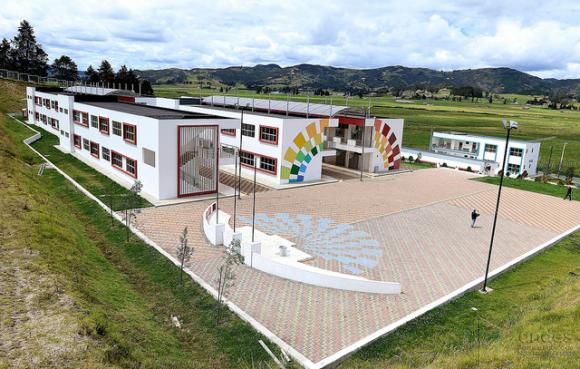
Molleturo queda atrás y el recorrido continúa hacia la comunidad de Victoria del Portete, parroquia rural situada a 30 kilómetros al sur de Cuenca. Allí, en medio de los verdes pastizales, tradicionales casas de campo, y las empinadas montañas andinas, sobresale la Unidad Educativa del Milenio que lleva el mismo nombre de la comunidad.

Este centro educativo, que alberga a más de 1.200 estudiantes pero tiene capacidad para acoger a otro número similar en jornada vespertina, se constituye en uno de los principales centros del austro ecuatoriano.

Nelly Jadán, rectora, explica que esta unidad educativa, que se inauguró a fines de 2015, ofrece a sus alumnos un bachillerato general unificado pero también uno técnico en la especialidad de elaborados en lácteos. Esto debido a que las comunidades beneficiadas con esta obra se dedican en su mayoría a la ganadería.

Al momento el colegio tiene una planta donde se enseña a los jóvenes a hacer productos saborizados que se comercializan en la zona, pero la proyección es incrementar la producción para que llegue a otros planteles de la provincia y del país, expresa la titular del colegio que cuenta con una planta docente de 60 maestros.

La comunidad Victoria del Portete es otra de las beneficiadas del proyecto de explotación minera Loma Larga. Los habitantes en su gran mayoría dicen estar satisfechos con los adelantos que experimentan las comunidades aledañas, que ahora cuentan con infocentros, que son espacios donde se accede gratuitamente a internet.

“Antes era impensable tener internet por aquí”, dice Fausto Tacuri, morador del sector, al señalar que ahora él y muchos de sus vecinos de este sector, que tiene una alta incidencia de migración, se puede comunicar con sus familiares que viven en el extranjero.

“Las políticas públicas en cuanto a manejo de la responsabilidad social de los sectores estratégicos son inéditas y han sido reconocidas por organismos internacionales”, expresa Pinos, al recordar que hace 10 años las poblaciones cercanas a los proyectos petroleros, mineros, hídricos o eléctricos solo se quedaban con la contaminación, pobreza y problemas sociales.

Inauguración de proyecto de mediana minería en Ecuador

Con la construcción de la mina del proyecto Río Blanco, en el sector de Molleturo, Ecuador inaugura este jueves la mediana minería.

El proyecto está a cargo de la empresa de capital chino Junefield Resources Ecuador y se estima que en el interior de este yacimiento existen unas 605.000 onzas de oro y 4.307 millones de onzas de plata con una producción estimada de 240.000 toneladas de mineral al año.

Las autoridades del Ministerio de Minas han realizado exhaustivos estudios que han determinado que no existe impacto en los acuíferos de la zona. Allí se mantendrán estrictos controles que permitan ejecutar la explotación con responsabilidad social y ambiental.

Se prevé que la mina genere alrededor de 400 fuentes de empleo directo y otras 1.100 indirectos y se estima una inversión en los 11 años de operación de 90 millones de dólares.

El yacimiento de Río Blanco es uno de los cinco proyectos mineros estratégicos del país. Los otros son Mirador, Fruta del Norte, Loma Larga y Panantza San Carlos, todos en la zona austral de Ecuador.

 Fuente: http://www.andes.info.ec/es/noticias/comunidades-rurales-sur-ecuador-benefician-proyectos-estrategicos-mineria-responsable.html

Comparte este contenido:

EL Salvador: CCSA apuesta por la formación de jóvenes emprendedores

Centroamérica/El Salvador/12 de Agosto de 2016/Autor: Omar Martínez/Fuente: El Salvador.com

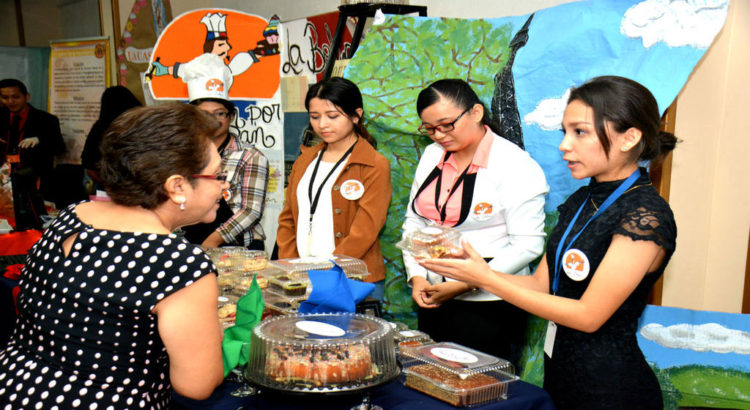
El Centro Cultural Salvadoreño Americano (CCSA), ubicado en la ciudad de San Salvador, realizó la feria empresarial 2016, en la cual estudiantes de los terceros años de bachillerato demostraron sus conocimientos aprendidos en la asignatura de Principios de Administración de Empresas; este año los futuros bachilleres montaron empresas panificadoras.

La feria empresarial tiene como propósito que los estudiantes adquieran un valor agregado en la parte de administración de empresas y fomentar el emprendedurismo entre los jóvenes.

Los estudiantes que se graduarán este año, aprenden sobre cómo se estructura una empresa, aspectos legales, investigaciones de mercado, administración, contaduría, funciones del personal, elección de productos y comercialización; llevando la teoría a la práctica después de seis meses de preparación.

“Como institución educativa estamos enfocados en darle al país profesionales de calidad; al estudiante no solo se le prepara de forma académica sino que se le orienta a modo que pueda ser un emprendedor, eso es justamente a lo que le estamos apostando en El Salvador”, Magdalena de Avilés, directora de bachillerato del CCSA.

Este año optaron por la industria panificadora. Todos los estudiantes aprendieron a preparar diferentes derivados de la harina con la ayuda de sus padres y sus orientadoras Ana Montenegro, Morena Belloso y el docente René Núñez, además los emprendedores dedicaron tiempo los fines de semana para prepararse de forma óptima.

Un total de 16 empresas fueron presentadas en la feria después de hacer evaluaciones preliminares y elegir las mejores propuestas.

Según Ana Montenegro, docente de Principios de Administración de Empresas, esta asignatura busca fomentar en emprendedurismo y descubrir talentos estudiantiles en los negocios.

“Al principio es difícil, pero al final cuando ellos forman las empresas se dan cuenta de sus grandes habilidades, se sientes felices y capaces de enfrentar al mundo”, expresó la docente.

La feria empresarial es parte de la estrategia del CCSA, para que los estudiantes aprendan a desenvolverse en el mundo académico y laboral, a partir de julio pasado los jóvenes de terceros años ponen en práctica sus conocimientos en diferentes empresas con el objetivo de pulir lo aprendido en las aulas.

Fuente: http://www.elsalvador.com/articulo/comunidades/ccsa-apuesta-por-formacion-jovenes-emprendedores-121524

Comparte este contenido:

Canadá: Provincial government increases funding for school buses

América del Norte/Canadá/12 de Agosto de 2016/Autor: Richard Zussman/Fuente: CBC News

RESUMEN: Después de años de frustración de los distritos escolares rurales, el gobierno provincial ha comprometido $ 14.7 millones para hacer el autobús escolar más asequible y accesible para los estudiantes. La financiación está disponible sólo para los distritos escolares que no cobran a los padres o que excluya a los actuales a  cuyos hijos viajan en el autobús a las escuelas públicas.«Los estudiantes, puedan vivir 10, 15, 20 millas de distancia de la escuela, y pueden ahora tener una cuota en algunos distritos,  dijo El ministro de educación Mike Bernier.

After years of frustration from rural school districts, the provincial government has committed $14.7 million to make riding the school bus more affordable and accessible for students.

The funding is only available to school districts that don’t charge parents or which waive existing charges to parents whose children ride the bus to public schools in B.C.

«Students, they might live 10, 15, 20 miles away from the school, and they may right now have a fee in some districts. Those fees for those students to get to school … we will now be offsetting those,» said Education Minister Mike Bernier.

Refund coming

School districts will still be able to charge for students at independent schools who ride on public school buses. According to Bernier parents that have prepaid for this school year’s bus service will get the money refunded.

Funding is distributed by school districts, with the most funding going to rural communities, including Cariboo-Chilcotin, Prince George and Central Okanagan.

The province will not dictate how the money is spent but has suggested it could be used for reduce ride times, improving service and accessibility, along with waiving the additional fees parents pay in eight districts across the province now.

«For instance in very remote, rural areas, we have students who ride the bus for a long time. They may use these funds to enhance the routes so students don’t have to be on the bus for as long,» said Bernier.

«They could also use these funds to maybe help students with disabilities get to school a little easier.»

Rural communities in need

The province is giving school districts until Sept. 30 to submit a plan to the Ministry of Education in order to be eligible for funding. The deadline will allow districts to understand bus system needs for the 2016-17 school year.

Both the Peace River North and South school districts have been leading the charge for improved service and reduced fees for school buses, especially in more rural areas.

«We’ve been working on this issue for a long time and this is great news for parents. Transportation is vitally important in a rural area like ours, and we are excited to be able to eliminate fees for busing thanks to this money from the provincial government,» said Ida Campbell, the chair of the Peace River North School Board, in a statement.

Fuente: http://www.cbc.ca/news/canada/british-columbia/provincial-government-increases-funding-for-school-buses-1.3715615

Comparte este contenido:

España: El programa de “Voluntariado universitario en proyectos de intervención social» ampliará el de “Refuerzo educativo” para el próximo curso escolar

Europa/España/06 de Agosto de 2016/Fuente: Totana.com

El programa de “Voluntariado universitario en proyectos de intervención social con personas mayores dependientes, discapacidad intelectual y enfermos mentales” completará el de “Refuerzo educativo” el próximo curso escolar 2016/17 en el municipio de Totana.

Esta iniciativa se desarrollará junto con el Servicio de Proyección Social y Voluntariado de la Universidad de Murcia (UMU), como ya viene ocurriendo desde hace varios años con el proyecto de “Refuerzo Educativo” que tiene lugar en este municipio.

Esta acción se pondrá en marcha, a petición de los propios universitarios, por las concejalías de Voluntariado y Participación Ciudadana del Ayuntamiento de Totana.

Tras la puesta en marcha en Totana del proyecto de “Refuerzo Educativo”, en el que colaboran como voluntarios estudiantes universitarios, a través de un convenio suscrito entre este Ayuntamiento y el Servicio de Proyección Social y Voluntariado de la UMU, varios estudiantes totaneros manifestaron su interés hace meses en colaborar en otro tipo de proyectos sociales.

El programa se realizará en coordinación con el Servicio de Proyección Social y Voluntariado de la Universidad de Murcia en virtud de la ampliación del convenio de colaboración que ya está suscrito para el desarrollo del de “Refuerzo educativo”.

De ahí surge, por tanto, esta iniciativa de dar respuesta a una demanda existente, ampliando así las posibilidades para los estudiantes que deseen realizar tareas de voluntariado en otros proyectos relacionados con el ámbito social, que se vienen desarrollando en Totana e impulsados desde el Consistorio.

En este sentido, desde las Concejalías de Voluntariado y Participación Ciudadana se ha diseñado un programa que incluye la posible participación de los voluntarios en estos ámbitos de actuación, sobre todo, en programas y servicios dirigidos a personas mayores dependientes, personas con discapacidad intelectual y con enfermedad mental.

Con la puesta en marcha de este programa se ofrece la posibilidad de que universitarios participen en actividades que aunque puedan estar o no relacionadas con sus estudios universitarios, en cualquier caso les va a suponer una experiencia sumamente enriquecedora, tanto a nivel personal como de cara a un futuro profesional.

Cada joven contribuirá con sus tareas de voluntariado aportando su formación y capacidad, sus habilidades y destrezas, su creatividad, sus actitudes, su implicación y motivación, entre otras.

Según fuentes de la Concejalía de Voluntariado, se trata de promover, dinamizar y fomentar el voluntariado en el municipio de Totana, especialmente entre los jóvenes, para reforzar la solidaridad y su compromiso social como ciudadanos.

También se pretende facilitar la formación dentro de la educación no reglada sobre temas de interés social, y atendiendo a las necesidades y demandas de los diferentes sectores de población; y con esta acción voluntaria los jóvenes pueden además obtener un reconocimiento de sus competencias personales.

Fuente: http://www.totana.com/noticias/2016/08/01-rograma-de-voluntariado-universitario-en-proyectos-de-intervencion-social.asp

Fuente: http://www.conocimiento.gob.ec/personas-con-discapacidad-visual-deben-tener-acceso-a-textos-impresos/

Comparte este contenido:

Higher Education in Africa: Who is Going to Pay?

Africa/31 de Julio de 2016/Autor: /Fuente: All Africa

RESUMEN: Los últimos 18 meses han sido turbulentos para muchas universidades de todo el continente africano. De Ciudad del Cabo a Ibadan a Nairobi, los campus se han convertido en sitios de protesta y debate acerca de las tarifas, la igualdad de acceso a la educación, el carácter colonial de los planes de estudios, la desigualdad social, y muchos otros temas. El centro de atención ha sido la cuestión de cómo hacer la educación accesible a millones de jóvenes estudiantes, en un continente con el más rápido crecimiento de la población juvenil en el mundo. Al mismo tiempo, las universidades e institutos de investigación de África tienen el mandato de producir una investigación independiente, socialmente relevante dentro de un sector de la educación superior en forma global cada vez más por la privatización, la competencia, la comercialización de la investigación académica y la inseguridad laboral. La cuestión de cómo garantizar el acceso de estudiantes a la educación e invertir en investigación, en un contexto de estancamiento económico, el aumento de los costos de vida, y la amenaza de recesión mundial, es una controvertida.

The past 18 months have been turbulent for many universities across the African continent. From Cape Town to Ibadan to Nairobi, campuses have become sites of protest and debate about fees, equal access to education, the colonial character of curriculums, social inequality, and many other issues.

Under the spotlight has been the question of how to make education accessible to millions of young students, in a continent with the fastest growing youth population in the world. At the same time, Africa’s universities and research institutes are mandated to produce independent, socially relevant research within a global higher education sector increasingly shaped by privatisation, competition, the commercialisation of research and academic job insecurity. The question of how to ensure student access to education and invest in research, against a backdrop of economic stagnation, rising living costs, and the threat of global recession, is a vexed one.

Today, SciDev.Net is holding an online debate to discuss these issues with academics, students and education specialists from across Africa and its diaspora. In this feature, we set out some of the main issues and what to do about them.

What are the challenges?

Universities face myriad funding problems. In a continent of 54 countries, with different economic policies, political structures and histories, it’s obviously problematic to generalise. But there are some features more widely found.

Often, the histories of universities have loosely mirrored those of the state: the university as site of anticolonial struggle; the idealism and intellectual exuberance of the post-independence years; the growing poverty and damage of 1970s and 1980s structural adjustment policies; and the lingering effect of underinvestment and neglect.

Many universities are still reeling from the effects of the policies imposed by the World Bank and International Monetary Fund from the 1970s in return for loans. These institutions framed Africa’s universities not as the backbone of development, but as a misuse of resources. [1] Money for education was channelled away from universities and into primary and secondary schools. «To this day, many countries have not been able to recover from that onslaught on African higher education,» wrote Ann Therese Ndong-Jatta in 2002, when she was Gambia’s education minister. [1]

Underinvestment in infrastructure, staff salaries that have failed to keep pace with inflation and living costs, and inadequate research funding have poleaxed many universities. Universities that were once beacons of intellectual vigour and research excellence are struggling. Faced with economic stagnation and poor tax revenues, many governments claim their tax base is too small to prop up a free higher education system, while their critics argue that corruption and bulging public sector salaries must be rapidly reined in and the money raised directed towards education.

All this means that in many places, the dream of free higher education is fading fast. Rather than improving accessibility, education is instead growing increasingly elitist.

Students in the firing line

For students, the situation can be dire. In South Africa, the average annual cost of fees and board exceeds the average household income. While the poorest students are supposed to get government assistance, «there are a group of people caught in between» who neither qualify for assistance nor can afford to pay fees, explains Lesley Le Grange, higher education professor at Stellenbosch University. This means universities not only perpetuate, but also actively widen South Africa’s social inequalities, say both Le Grange and Kealeboga Mase Ramaru of campaigning organisation Equal Education.

For those students who do get in, university can involve a struggle to balance studying with paying the bills. Underinvestment in labs, teaching and basic infrastructure also undermines learning. Poor salaries among staff mean strikes are frequent in many African countries, which can extend the time it takes to complete a degree by years. And then many graduates who can afford to leave do so, worsening Africa’s infamous ‘brain drain’ problem.

Things can be particularly acute for female students. In many countries, female students find it harder than men to gain access to university, or can encounter serious issues once there, from teaching methods that favour men, to sexism, discrimination and rape.

Staff struggles

For staff, academic careers are increasingly becoming the preserve of those who can afford them. Salaries can fail to match rising living costs. Many in the state tertiary sector now top up low salaries with consultancy fees or jobs at the many private colleges proliferating in countries such as Uganda.

Academics often find themselves struggling to meet the demands of unreasonable teaching loads, including vast undergraduate classes, unwieldy responsibilities for PhD supervision and enormous amounts of administration. This can harm research, says Goolam Mohamedbhai, former secretary-general of the Association of African Universities.

Impact on research

Heavy work burdens and underinvestment in research also starves many African countries of the knowledge they need to meet certain twenty-first century challenges.

On paper, the continent’s 54 countries have noble research goals. Spurred on by the African Union, many governments have said they intend to spend one per cent of GDP (gross domestic product) on research, as laid out in the Lagos Plan of 1980 and reaffirmed in the Science, technology and innovation strategy for Africa. This ambitious strategy aims to put science «at the epicentre of Africa’s socio-economic development».

But few countries look close to meeting this target, and the strategy has been criticised for failing to match rhetoric with action or to commit governments to spending targets. Furthermore, funding and research policy experts decry the lack of efficiency in grant management systems – one they say hampers science across the continent.

Clearly something has to change if African countries are to fund the kind of research they need. The Ebola crisis in West Africa is just one example of a poor research landscape preventing local researchers from taking the lead on vaccine research or the public health response.

Education is also considered a buffer against extremism – both because it can bring jobs and because it opens students to the value of cultural diversity and bridges divides in an increasingly fractured world, and a continent plagued by militant groups from Boko Haram in Nigeria and Chad to Al-Shabaab in Kenya and Somalia.

Other challenges include the growing pressure neoliberalism places on universities. Universities are increasingly expected to compete with each other for students, monetise research and audit research outputs, within a highly competitive, global higher education sector. The growing power of league tables to compare and rate universities, not just on research but also on other assessments such as ‘student experience’, adds to the pressure.

What are the solutions?

Many of those in government and university management claim that introducing fees is now the best way to fund universities. But others argue that fees will always be inadequate and that a diversified funding structure is required.

Beyond fees, there are many examples of universities cutting costs while ensuring quality research. Collaboration is one option. In Ghana, the Kwame Nkrumah University of Science and Technology has opened a US$6.5 million ‘superlab’ that is available for use by students across West Africa. The idea is to reduce costs by sharing equipment.

Cross-disciplinarity is another route. This aims to bring together different disciplines and sectors to tackle the complex, intertwined challenges of modern life. But it can have economic benefits too. Rather than duplicating research in different labs and departments, academics can pool resources and streamline research.

Another route includes South-South partnerships, or North-South partnerships. The latter have underpinned scientific research in Africa for decades. But here again the charge of postcolonial legacies and unequal power balances are hard to shake off. African researchers complain of being treated as secondary partners, the poor cousins to the wealthy research institutes of the North. Others complain Africa is seen as a ‘petri dish’ where Northern scientists test out new ideas.

These criticisms also extend to the many aid programmes focused on higher education partnerships. Many are of value, from the British Council’s long history of investing in education, to the new SPHEIR programme launched by the UK Department for International Development and partners. But these also need interrogation. What model of higher education are rich nations exporting? Where does power reside and who designs courses and management structures? How are privatised models for education reshaping universities across the world?

Centres of excellence

Academics across Africa and its diaspora often advocate turning certain institutions into centres of excellence for particular science and innovation subjects, rather than spreading resources thinly across many universities. For example, Calestous Juma debates the merits of innovation universities, a new kind of institute that combines research, teaching, community service and commercialisation.

Digital futures

Digital technology also offers rich opportunities for delivering better education at a fraction of the cost of conventional teaching. The internet and mobile tech can link academics, students and staff as never before, building pan-African networks, while also bringing education to those in volatile or war-torn regions. One example is online training programmes for Somali medics. Digital tech enables MOOCs (massive open online courses), distance learning and blended courses that combine classroom and online learning. Tunisian digital education expert Houda Bouslama describes this as a powerful force for change in Tunisia: through information and communications technologies, universities can support far more students, far more cheaply.

Growing university-industry links

The call for closer links between industry and universities is getting louder. Higher education specialist Beatrice Muganda argues that universities need to position themselves far more clearly as part and parcel of the societies they supposedly serve, and to nurture research landscapes where innovations can thrive and reap dividends for universities. Ghanaian-British politician Paul Boateng says that intellectual property systems must drastically improve if African countries are ever to become knowledge economies – a view echoed by Nigerian intellectual property specialist Umar Bindir among others.

There is also a growing call for universities to team up with local innovation sectors, such as the tech hubs flourishing in towns and cities across the continent. Technology businesswoman Mariéme Jamme has long campaigned for better regulatory frameworks and government investment to help pioneering African technologists and coders turn creative projects into viable, sustainable businesses.

Many also call for closer links between African universities and big business. Mauritian President Ameenah Gurib-Fakim argues that African universities must work more closely with industry – whether local businesses or multinationals – and that this should include industry directly funding courses.

This obviously poses a risk. Industry-sponsored PhDs for specific research outcomes are one thing, but what happens when industry funds an institute: what might the compromises be then? UCT engineering student, activist and writer Brian Kamanzi says «one of the hugest battles that we have is to protect our public institutions from interference» from industry, particularly when so many businesses in South Africa, as in other African countries, are foreign owned or controlled.

Meanwhile many other avenues for funding higher education in Africa are opening up – not least the growth of Chinese investment in the continent’s universities.

Taxing the wealthy

The small tax base of many African countries is often held up as a reason why governments can’t invest enough in education and in other services. «Someone has to pay,» says Le Grange. «But we have a responsibility to students who are unable to afford higher education, but have the ability to study and perform.» One route to bridging the impasse is a wealth tax, he says. «I think a lot of people would agree to that as long as that money is ring-fenced and channelled to higher education, because people are concerned about corruption within the government.»

Others suggest a graduate tax could be the best way forward, while still others say the tax base is already overburdened, and that the focus instead should be on higher corporation tax, reining in corruption and reducing the salaries of senior ministers.

The future

Worldwide, the higher education sector is undergoing radical change. Globalisation and privatisation are reshaping universities, while mechanisation and the internet are altering industry and employment in ways that we are only just beginning to grasp. While access to university in Africa and across the world remains beset by challenges, having a degree no longer guarantees work.

In a continent where over 200 million people are under 24 years old, wider changes are needed to provide jobs. Shaking up how universities are funded, and laying the foundations for a more robust public and higher education funding landscape, are good steps to making universities accessible and sustainable. But there are enormous challenges ahead.

These need scrutiny and debate – something we hope today’s online discussion, from 1-3pm BST (GMT+1) will provide. Do join us.

References

[1] Joel Samoff and Bidemi Carrol Conditions, coalitions, and influence: the World Bank and higher education in Africa (Annual Conference of the Comparative and International Education Society Salt Lake City, 7 February 2004)

Fuente: http://allafrica.com/stories/201607300146.html

Fuente de la imagen: http://blogs.elpais.com/africa-no-es-un-pais/2013/08/volver.html

Comparte este contenido:

Australia, Gilgit Baltistan’s joint education initiative launched

Oceania/Australia/31 de Julio de 2016/Fuente: Daily Times

RESUMEN: La Alta Comisión Australiana en Islamabad y el gobierno local de Gilgit Baltistán puso en marcha la «Estrategia de Educación Gilgit-Baltistán 2016-203o, que tiene como objetivo proporcionar igualdad de oportunidades para niños y niñas con respecto a la educación. El gobierno australiano a través de su programa de ayuda ha llevado a cabo una inversión sustancial en el fortalecimiento de la educación básica en Pakistán. Durante la última década, Australia ha invertido MXN 128 millones en el fortalecimiento de los sistemas de educación en Balochistan, Khyber Pakhtunkhwa y Gilgit-Baltistan. La asistencia a la educación de Australia se centra en la promoción de la igualdad, la mejora de la calidad de la educación y el fortalecimiento de los sistemas educativos.

The Australian High Commission in Islamabad and the local government of Gilgit Baltistan launched the ‘Gilgit-Baltistan Education Strategy 2016-2030’, which aims to provide equal opportunities to boys and girls regarding education.

Australian High Commissioner Margaret Adamson, Gilgit-Baltistan Governor Mir Ghazanfar and Gilgit-Baltistan Education Minister Muhammad Ibrahim Sanai launched the project at the 8th meeting of Inter-Provincial Education Ministers Conference. The education strategy was revised as part of the Australian government-funded Gilgit Baltistan Education Development and Improvement Program (EDIP) 2010-2015, Australian High Commission official said.

High Commissioner Adamson said the Australian government was pleased to assist in improving the accessibility and quality of education in the most remote and marginalised communities of Gilgit Baltistan. “Providing equal opportunity for girls and boys to access quality education is critical,” she said.

Adamson said Australia was proud to support Pakistan on the path to building high-performing and inclusive education systems. She said education helps individuals, families, communities and nations in achieving their aspirations. Australia has demonstrated global leadership on education equality, particularly for girls and children with disabilities, she added. High Commissioner Adamson recently visited three schools supported through EDIP, as well as a teacher training facility. Over 100 schools across Gilgit-Baltistan are supported as part of EDIP. The Australian government through its aid program has undertaken substantial investment in strengthening basic education in Pakistan. Over the last decade, Australia has invested AUD 128 million in strengthening education systems in Balochistan, Khyber Pakhtunkhwa and Gilgit-Baltistan. Australia’s education assistance focuses on promoting equality, improving quality of education and strengthening education systems. Australia is currently supporting the Government of Khyber Pakhtunkhwa’s education reform agenda through the Khyber Pakhtunkhwa Education Sector Program (KESP), in partnership with Department for International Development (DFID).

Fuente: http://dailytimes.com.pk/islamabad/30-Jul-16/australia-gilgit-baltistans-joint-education-initiative-launched

Fuente de la imagen: http://www.sbs.com.au/news/article/2014/12/01/should-learning-second-language-be-compulsory-australian-schools

Comparte este contenido:
Page 25 of 30
1 23 24 25 26 27 30