Page 231 of 342
1 229 230 231 232 233 342

Colombia: ¿Qué opina el sindicalismo sobre la realidad nacional?

Fuente FECODE / 9 de junio de 2016

Docentes y comunidad educativa han desarrollado varias marchas para denunciar lo que está ocurriendo y exigir soluciones inmediatas. La administración ha hecho caso omiso a sus necesidades.

La tercera Encuesta de Opinión Sindical, contratada por la Escuela Nacional Sindical, evidenció el reconocimiento del gremio con el trabajo de Fecode y su gestión en defensa de los derechos del magisterio, así como el acompañamiento al proceso de paz y las precarias condiciones del derecho a la sindicalización en un estado de derecho como Colombia.

Los sindicalistas del país consideran que los tres temas en los que el gobierno debe centrar su atención son: a) generación de trabajo decente, b) disminución del desempleo y c) las libertades sindicales. La encuesta destacó el trabajo de fecode con un 86.5% por su liderazgo social, político y de restitución de derechos.

Este es un documento visibiliza la opinión de los sindicatos y trabajadores, su quehacer para incidir en la agenda nacional sobre temas estructurales como el trabajo decente, el proceso de paz y la violación al derecho a la sindicalización.

“Nos encontramos que instituciones relacionadas con el mundo laboral, como el caso de los jueces laborales, la Corte Constitucional y la Contraloría General de la Nación, entre otras, tuvieron un porcentaje de desconfianza bastante alto, lo que evidencia que la desconfianza en este tipo de instituciones aumentó. Sin embargo, permanece la percepción que tienen los líderes y lideresas sindicales sobre el maltrato que reciben de instituciones como la ANDI, Fedesarrollo, etc., y el poco reconocimiento que estas mismas les dan a ellos como representantes de organizaciones de los trabajadores”, precisó Carmen Lucía Tangarife, responsable de la temática Trabajo Decente y Mundo Laboral en la ENS.

Un dato tremendamente relevante es que tan solo el 1% de los líderes encuestados tiene entre 25 y 35 años. De ahí la importancia de insistir en la vinculación de jóvenes a las organizaciones, de motivar el derecho a la sindicalización y la reivindicación laboral, que garantice el relevo generacional. La encuesta es una muestra contundente de la importancia del liderazgo sindical y su incidencia real en el diseño y aplicación de políticas públicas y sociales en el país.

Comparte este contenido:

Simposio sobre derechos humanos y valores en la educación: Los valores universales son el objetivo de la educación sobre derechos humanos

Fuente: Internacional de la educación / 9 de mayo de 2016

El mensaje de hoy en Riga, Letonia, se ha centrado en los cimientos de una educación con un enfoque inspirado en los derechos humanos, que incluya valores universales como la comprensión y la tolerancia, y que entienda las diferencias culturales como una oportunidad en lugar de como una amenaza.

Hoy se ha alcanzado un consenso sobre la importancia de una educación que fomente la aceptación por encima del odio en un simposio sobre derechos humanos y valores en la educación organizado por la Internacional de la Educación y LIZDA, el Sindicato de docentes de Letonia.
El Secretario General de la Internacional de la Educación (IE), Fred van Leeuwen, inauguró este simposio de dos días de duración con una defensa apasionada de un enfoque holístico sobre un sistema educativo que permita la convivencia de sociedades democráticas diversas.
«En nuestras sociedades multiculturales, la identidad es un aspecto crucial. El orgullo de la identidad propia debería complementarse con el respeto por la identidad de los demás», afirmó. «Nuestros centros escolares deberían reconocer las identidades de cada alumno, con independencia de su origen o procedencia. Las escuelas deberían ser lugares donde los niños y jóvenes aprendieran a convivir y entender la riqueza de la diversidad, porque todas las sociedades en las que les tocará vivir en el futuro serán democracias diversas y multiculturales».
También recogió esta visión la ponente Sneh Aurora, que realizó un repaso general de los instrumentos internacionales que abordan las cuestiones de la educación sobre derechos humanos y ciudadanía global, debatidas y definidas por la comunidad internacional y cuyo resultado han sido declaraciones y documentos sobre política adoptados por organizaciones intergubernamentales como la UNESCO y la ONU. La amplia investigación de Aurora incluye un documento de referencia sobre Educación en derechos humanos publicado por el propio simposio. Puede descargarse aquí.
El día se cerró con debates del panel y talleres en los que los participantes pudieron compartir experiencias y prácticas recomendadas de sus países, así como aprender de otros colegas.
Haldis Holst, Vicesecretaria General de la IE, resumió el éxito de la convocatoria. «Los docentes son piezas clave en el fomento de valores sociales: democracia, igualdad, comprensión cultural, respeto por los derechos…», declaró. «El objetivo último de la profesión docente es el deseo de conseguir la igualdad en el aula, en el colegio y en la sociedad. Los sindicatos de docentes ponen soluciones sobre la mesa y muestran el camino hacia la democracia, los derechos humanos y el futuro sostenible».
Comparte este contenido:

Se necesita una escuela entera, si no toda la sociedad, para enseñar sobre derechos humanos

Fuente: Internacional de la educación / 9 de Junio de 2016

Preparar a los estudiantes de hoy en día para su realidad multicultural va más allá de la enseñanza de los derechos humanos como lección independiente de una clase; al contrario, requiere la creación de un entorno donde todos comprendan, valoren y protejan los derechos humanos.

Eleanor Roosevelt, Presidenta de la Comisión de Derechos Humanos de Naciones Unidas entre 1946 y 1952, fue una de las primeras defensoras de la educación en los derechos humanos y definió el enfoque necesario para transmitir estos conocimientos al destacar que «los derechos humanos no tienen ningún valor si la gente no los conoce, los comprende y exige que se respeten».
Para consolidar los progresos en este ámbito, el Consejo de Europa, que ha desarrollado y publicado una Carta sobre educación para la ciudadanía democrática y educación en derechos humanos completa, puso en marcha el Centro Wergeland de Europa. Ana Perona-Fjeldstad, Directora del Centro, explica cómo los objetivos más amplios de la educación implican preparar a los alumnos a través de una base de conocimiento profunda y avanzada para la vida y el empleo sostenible, pero también como ciudadanos de sociedades democráticas.
«En numerosos sistemas educativos europeos, desarrollar la capacidad de comportarse como un ciudadano tiene una prioridad menor que adquirir las destrezas y conocimientos necesarios en el mercado laboral», declaró. «Por este motivo, el Consejo de Europa ha desarrollado un marco que describe las competencias principales que permiten a los ciudadanos participar de forma efectiva en una sociedad democrática. Esto no se puede conseguir con la enseñanza de una única lección en clase, sino que requiere que toda la comunidad escolar y la sociedad en su conjunto adopten los valores representados por los Derechos Humanos».
Sneh Aurora, asesora sobre educación en derechos humanos, incide en la idea de que la educación sobre derechos humanos es clave para desarrollar una cultura sobre ellos y una sociedad que promulgue la dignidad, la inclusión y la igualdad.
«La educación sobre derechos humanos es un proceso de aprendizaje de por vida que intenta fomentar el conocimiento, por una parte, y los valores, actitudes, comportamientos y actos por la otra», reflexionó.
Guntars Catlaks, Director del Centro Nacional para la Educación de la República de Letonia, destaca otro aspecto importante.
«El aprendizaje sobre derechos humanos conforma el primer paso fundamental hacia el respeto, el fomento y la defensa de dichos derechos. El conocimiento y la comprensión de los derechos humanos puede aportar a los jóvenes las competencias necesarias para conseguir una sociedad más pacífica y justa», afirma. «Para tratar estos aspectos, los docentes requieren apoyo y formación con el fin de desarrollar las destrezas necesarias».
Perona-Fjeldstad, Catlaks y Aurora fueron los principales ponentes en el Simposio sobre derechos humanos y valores en la educación de la Internacional de la Educación (IE) que se celebró en Riga (Letonia) el 7 y 8 de junio de 2016.
Haga clic aquí para descargar un documento de referencia sobre los enfoques de la educación en derechos humanos redactado por Sneh Aurora. Su presentación de Powerpoint está disponible aquí.
La presentación de Ana Perona-Fjeldstad está disponible aquí.
Fred van Leeuwen, Secretario General de la Internacional de la Educación, inauguró el simposio. Su intervención está disponible aquí.


Comparte este contenido:

Anti-Politics and the Plague of Disorientation: Welcome to the Age of Trump

«Ignorance, allied with power, is the most ferocious enemy justice can have.»
— James Baldwin

The Greek chorus has finally been heard in that both the left and right are now calling Donald Trump a fascist or neo-fascist. Pundits and journals across the ideological spectrum now compare Trump to Hitler and Mussolini or state he is an unbridled tyrant. For example, the liberal magazine Slate finds common ground with the conservative journal National Review in denouncing Trump as a tyrant, while liberals such as former US Secretary of Labor Robert Reich and the actor George Clooney join hands with conservatives such as Andrew Sullivan and Robert Kagan in arguing that Trump represents a loud echo if not a strong register of a fascist past, updated to correlate with the age of reality TV and a fatuous celebrity culture. While such condemnations contain a shred of truth, they only scratch the surface of the conditions that have produced the existing political landscape. Such arguments too often ignore the latent authoritarian and anti-democratic forces that have a long legacy in US politics and society.

For more original Truthout election coverage, check out our election section, «Beyond the Sound Bites: Election 2016.»

Unfortunately, recognizing that the United States is about to tip over the edge into the abyss of authoritarianism is not enough. There is a need to understand the context — historical, cultural, political and economic — that has created this moment in US society in which fascism becomes an endpoint. Trump is only symptomatic of the problem, and condemning him exclusively does nothing to contain it. Moreover, such arguments often ignore the fact that Hillary Clinton is the underside of the new neoliberal oligarchy, which indulges some progressive issues but is indebted ideologically and politically to a criminogenic culture of finance, racism and war. Put differently, she represents a less obscene, less in-your-face form of authoritarianism — hardly a viable alternative to Trump.

Capitalism, racism, consumerism and patriarchy feed off each other and are mobilized largely through a notion of common sense.

Maybe this is all understandable in a corporate-controlled neoliberal society that uses new communication technologies that erase history by producing a notion of time wedded to a culture of immediacy, speed, simultaneity and endless flows of fragmented knowledge. As Manuel Castells writes in Communication Power, this is a form of «digital-time» in which everything that happens only takes place in the present, a time that «has no past and no future.» Time is accelerated in this new information-saturated culture, and it also flattens out «experience, competence, and knowledge,» and the capacity for informed judgment. Time has thus been transformed to provide the ideological support that neoliberal values and a fast-food, temp-worker economy require to survive.

A Culture of Forgetting and Lies

Language has also been transformed to produce and legitimate a culture of forgetting that relishes in a flight from responsibility. Capitalism, racism, consumerism and patriarchy feed off each other and are mobilized largely through a notion of common sense, which while being contested as a site of ideological struggle shows little sign of losing its power as a pedagogical force. As a result, we are living through an ongoing crisis of democracy in which both the agents and institutions necessary for such social order are being dismantled at an accelerating rate in the face of a massive assault by predatory capitalism, even while there is growing resistance to the impending authoritarianism. It gets worse.

We live in a moment of political change in which democratic public spheres are disappearing before our eyes.

We live in a moment of political change in which democratic public spheres are disappearing before our eyes, language is turned into a weapon and ideology is transformed into an act of hate, fear, racism and destruction — all of which is informed by a dark history of political intolerance and ethnic cleansing. The war on democracy has produced both widespread misery and suffering and finds its ideological counterpart in a culture of cruelty that has become normalized.

To read more articles by Henry A. Giroux and other authors in the Public Intellectual Project, click here.

The bankers, hedge fund managers, financial elite and CEOs who rule the United States’ commanding institutions have become the modern version of Mr. Kurtz in Joseph Conrad’s Heart of Darkness. As Hannah Arendt describes them in The Origins of Totalitarianism, citing Conrad: «‘these men were hollow to the core, reckless without hardihood, greedy without audacity and cruel without courage …’ the only talent that could possibly burgeon in their hollow souls was the gift of fascination which makes a splendid leader of an extreme party.»

In the age of Trump, anticipation no longer imagines a better world but seems mired in a dystopian dread, mimicking the restlessness, chaos and uncertainty that precedes a historical moment no longer able to deal with its horrors and on the verge of a terrible catastrophe. We now live in a time in which mainstream politics sheds its ideals and falls prey to choices that resemble a stacked deck of cards and mimic the values of an authoritarian society. All the while politics is being hollowed out as lawlessness and misdirected rage, while a loss of faith in electoral politics has given rise to a right-wing populism that is more than willing to dispense with democracy itself.

Demands to support Hillary Clinton as a lesser evil compared to Trump refuse to acknowledge that such mandates keep existing relations of power intact. Such actions represent more than a hollowing out of politics — they represent a refusal of the affirmative nature of political struggle. They also represent the surrender of any hope of moving beyond the enveloping fog of authoritarianism and a broken political system. Put bluntly, such choices sabotage any real hope for developing a new politics and a radical democracy. These limited choices also undermine the need to develop a broader vision of struggle, a comprehensive politics and the need to engage multiple publics in the quest to rethink the political terrain outside of a neoliberal notion of the future. At issue here is the moral blight that permeates the United States: a politics of the lowest expectations, one saturated in lies, deceptions and acts of bad faith.

Historical memory is saturated with the lies of mainstream politicians. The list is too lengthy to develop but extends from the Gulf of Tonkin falsehoods that led to the Vietnam War to the lies that produced the wars in Iraq, Afghanistan and Pakistan, which have left 1.3 million dead. As documented by Elizabeth Hinton in From the War on Poverty to the War on Crime: The Making of Mass Incarceration in America, the politics of lying by politicians and their intellectual collaborators fueled a regressive neoliberal war on poverty and crime that morphed into a racist war on the poor and helped produce the carceral state under Nixon, Reagan, Bush and Clinton.

We now are approaching a moment in US history in which truth is either viewed as a liability or ignored.

In addition, during the Obama administration, the politics of hope quickly became a politics without hope, functioning to legitimate and accelerate a flight from social responsibility that provided a blank check for Obama’s refusal to prosecute government officials who engaged in egregious acts of torture, to conduct immoral drone attacks, to expand the nuclear arsenal and to display a cold indifference to the criminal environment of Wall Street. All of this adds up to a notion of politics partly driven by a culture of ignorance and lying that has surpassed previous historical eras, marking an entry into what Toronto Star reporter Olivia Ward calls a «post-truth universe.» In this instance, the politics of performance denigrates language and shamelessly indulges a culture in which the truth is sacrificed to shouting, dirty tricks and spin doctors.

We now are approaching a moment in US history in which truth is either viewed as a liability or ignored; at the same time, lies become more plausible, because as Hannah Arendt argued in Crises of the Republic, «the liar has the great advantage of knowing beforehand what the audience wishes or expects to hear.» Lying is now the currency of mainstream politicians and finds its counterpart in the Wild West of talk radio, cable television and the mainstream media. Under such conditions, referentiality and truth disappear along with contexts, causes, evidence and informed judgment. A manufactured ignorance and the terrifying power and infusion of money in politics and society have corrupted democratic principles and civic life. A combination of arrogance, power and deceit among the financial elite is exemplified by Donald Trump, who has repeatedly lied about his business transactions, his former misdeeds with the media, the number of Latinos who support him and the claim he personally hired instructors for Trump University.

Desperation among many segments of the American public has become personal, furthering a generalized anger ripe for right-wing populism or worse. One consequence is that xenophobia and economic insecurity couple with ignorance and a collective rage to breed the conditions for symbolic and real violence, as we have seen at many Trump rallies. When language is emptied of any substance and politics loses its ability to hold power accountable, the stage is set for a social order that allows poor Black and Brown youth to continue to be objects of domestic terrorism, and provides a cover for corporate and political criminals to ravage the earth and loot the public treasury. In the age of Trump, truth becomes the enemy of governance and politics tips over into a deadly malignancy.

One thing about the political impasse facing the American public is that it finds itself in a historical moment in which language is losing its potential for imagining the unimaginable, confronting words, images and power relations that are in the service of violence, hatred and racism — this is the moment in which meaning slips into slogans, thought is emptied of substance and ideas descend into platitudes and sound bites. This is an instant in which the only choices are between political narratives that represent the hard and soft versions of authoritarianism — narratives that embrace neo-fascism on the one side and a warmongering neoliberal worldview on the other.

This is the age of a savage capitalism, one that the director Ken Loach insists produces a «conscious cruelty.» The evidence is everywhere, not only in the vulgar blustering of Donald Trump and Fox News, but also in the language of the corporate-controlled media apparatuses that demonize and prey on the vulnerable and proclaim the primacy of self-interest over the common good, reinforce a pathological individualism, enrich themselves in ratings rooted in a never-ending spectacle of violence and legitimate a notion of freedom that collapses into the scourge of privatization and atomization.

A New Language of Liberation

The left and other progressives need a new language to enable us to rethink politics, develop a militant sense of hope, embrace an empowering sense of solidarity and engage a willingness to think outside of established political orthodoxies that serve the global financial elite. We need a new vocabulary that refuses to be commodified, and declines to look away — a language that as the brilliant writer Maaza Mengiste argues «will take us from shock and stunned silence toward a coherent, visceral speech, one as strong as the force that is charging at us.»

In the age of Trump, truth becomes the enemy of governance and politics tips over into a deadly malignancy.

Progressives need a vocabulary that moves people, allows them to feel compassion for the other and gives them the courage to talk back. We need a vocabulary that enables us to confront a sense of responsibility in the face of the unspeakable, and do so with a sense of dignity, self-reflection and the courage to act in the service of a radical democracy. We need a vocabulary that allows us to recognize ourselves as agents, not victims, in the discourse of radical democratic politics. Of course, there is more at stake here than a struggle over meaning; there is also the struggle over power, over the need to create a formative culture that will produce new modes of critical agency and contribute to a broad social movement that will translate meaning into a fierce struggle for economic, political and social justice.

What happens to language when it is reduced to a vehicle for violence? What does it take for a society to strip language of its emancipatory power and reduce it, as Mengiste states, to «a rhetoric of desperation and devastation molded into the incomprehensible, then vomited out in images and words that we cannot ignore though we have tried»? What does it mean to define language as a tool — rather than a weapon of domination — in the service of economic and political justice? What institutions do we need to sustain and create to make sure that in the face of the unspeakable we can resist and hold power accountable? Language is part of public memory, informed, in part, by «traces» that allow oppressed people to narrate themselves as part of a broad collective struggle, as we see happening with the Black Lives Matter movement, among other emerging social movements. That is, suppressed histories of violence become visible in such stories and form part of a genealogy that puts current acts of violence in perspective. For instance, capital punishment is framed within the historical context of slavery, lynchings and the emerging violence of a police state.

Domination in the Age of Trump

The hate-filled, xenophobic and racist dialectic among language, images and the stories produced in the age of Trump constitutes one of the most pernicious forms of domination because it takes as its object subjectivity itself: This dialectic empties subjectivity of any sense of critical agency, turning people into spectators, customers and consumers. Identities have become commodities, and agency an object of struggle by the advertising and the corporate elite. After 50 years of a neoliberal culture of taking, unbridled individualism, militaristic violence and a self-righteous indifference to the common good, the demands of citizenship have not merely weakened, but they have been practically obliterated. In their book Babel, Zygmunt Bauman and Ezio Mauro speak to the denigration of politics and citizen rights in an age of generalized rage and emerging right-wing populism. They write:

The «culture of taking,» divorced from all rights-duties of giving and of contributing positively, is not merely a reduction of citizenship relations to a bare minimum: it is actually perfectly instrumental to a populist and charismatic simplification of politics and leadership, or rather a post-modern interpretation of a right-wing tradition, in which the leader is the demiurge who can work out public issues by himself, freeing citi­zens from the burden of their general civic duties, and leaving them to the solitary sovereignty of their privacy, spurring them to participate not in national political events but in single outbursts of collective emotional reaction, triggered by the oversimplification of love and hate on which populism feeds.

The fusion of culture, power and politics has produced a society marked by a flight from political and social responsibility. In an age in which five or six corporations dominate the media landscape and produce the stories that shape our lives, the democratic fabric of trust evaporates, public virtues give way to a predatory form of casino capitalism and thought is limited to a culture of the immediate. Politics is now performance, a kind of anti-politics wedded to the spectacle.

As Mark Danner points out in The New York Review of Books, much of Trump’s success and image stems from his highly successful role on The Apprentice as «the business magus, the grand vizier of capitalism, the wise man of the boardroom, a living confection whose every step and word bespoke gravitas and experience and power and authority and … money. Endless amounts of money.» Not only did The Apprentice at its height in 2004 have an audience of 20.7 million, catapulting Trump into reality TV stardom, but Trump’s fame played a large role in attracting 24 million people to tune in and watch him in his initial debate with a host of largely unheard of Republican politicians.

Corporate media love Donald Trump. He is the perfect embodiment of the spectacle that drives up their ratings. Danner observes that Trump is «a ratings extravaganza» capable of delivering «audiences as no other candidate ever has or could.» A point that is well taken given «that the networks have lavished upon him $2 billion worth of airtime.» According to Danner, Trump’s willingness to embrace ignorance over critical reasoning offers him an opportunity not to «let ‘political correctness’ prevent him [from] making sexist and bigoted remarks, … [while reveling in and reinforcing] his fans’ euphoric enjoyment of their hero’s reveling in the pleasures of free speech,» and his addiction to lying as an established part of the anti-politics of performance and showmanship.

Beyond a «Lesser of Two Evils» Political Framework

The American left and progressives have no future if they cannot imagine a new language that moves beyond the dead-end politics of the two-party system and explores how to build a broad-based social movement to challenge it. One fruitful beginning would be to confront the fact that our society is burdened not only by the violence of neoliberalism but also by the myth that capitalism and democracy are the same thing. Capitalism cannot rectify wage stagnation among large segments of the population, the growing destruction of the ecosystem, the defunding of public and higher education, the decline in life expectancy among the poor and middle classes, police violence against Black youth, the rise of the punishing state, the role of money in corrupting politics, and the widening gap in income and wealth between the very rich and everyone else.

If some elements of the left and progressives are to shift the terms of the debate that shape US politics, they will also have to challenge much of what passes for neoliberal common sense. That means challenging the anti-government rhetoric and the notion that citizens are simply consumers, that freedom is largely defined through self-interest and that the market should govern all of social life. It means challenging the celebration of the possessive individual and atomized self, and debunking the claim that inequality is intrinsic to society, among others. And this is just a beginning.

Politics is now performance, a kind of anti-politics wedded to the spectacle.

When the discourse of politics amounts to a choice between Donald Trump and Hillary Clinton, we enter a world in which the language of fundamental, radical, democratic, social and economic change disappears. What liberals and others trapped in a lesser-of-two-evils politics forget is that elections no longer capture the popular imagination, because they are rigged and driven by the wealth of the financial elite. Elections bear no relationship to real change and offer instead the mirage or swindle of real choice. Moreover, changing governments results in very little real change when it comes to the concentration of power and the decimation of the commons and public good. At the same time, politicians in the age of reality TV embody Neil Postman’s statement inAmusing Ourselves to Death that «cosmetics has replaced ideology» and has helped to usher in the age of authoritarianism. Power hides in the dictates of common sense and wields destruction and misery through the «innocent criminals» who produce austerity policies and delight in a global social order dominated by precarity, fear, anxiety and isolation.

What happens when politics turns into a form of entertainment that washes out all that matters? What happens to mainstream society when the dominant and more visible avenues of communication encourage and legitimate a mode of infantilism that becomes the modus operandi of newscasters, and trivia becomes the only acceptable mode of narration? What happens when compassion is treated as a pathology and the culture of cruelty becomes a source of humor and an object of veneration? What happens to a democracy when it loses all semblance of public memory and the welfare state and social contract are abandoned in order to fill the coffers of bankers, hedge fund managers and the corporate elite? What are the consequences of turning higher education into an «assets to debt swapping regime» that will burden students with paying back loans in many cases until they are in their 40s and 50s? What happens when disposable populations are brushed clean from our collective conscience, and are the object of unchecked humiliation and disdain by the financial elite? As Zygmunt Bauman points out in Babel: «How much capitalism can a democracy endure?»

What language and public spheres do we need to make hope realistic and a new politics possible? What will it take for progressives to move beyond a deep sense of political disorientation? What does politics mean in the face of an impending authoritarianism when the conversation among many liberals and some conservatives is dominated by a call to avoid electing an upfront demagogue by voting instead for Hillary Clinton, a warmonger and neoliberal hawk who denounces political authoritarianism while supporting a regime of financial tyranny? What does resistance mean when it is reduced to a call to participate in rigged elections that reproduce a descent into an updated form of oligarchy, and condemns millions to misery and no future, all the while emptying out politics of any substance?

Instead of tying the fortunes of democracy to rigged elections we need nonviolent, massive forms of civil disobedience. We need to read Howard Zinn, among others, once again to remind ourselves where change comes from, making clear that it does not come from the top but from organized social formations and collective struggles. It emerges out of an outrage that is organized, collective, fierce, embattled and willing to fight for a society that is never just enough. The established financial elites who control both parties have been exposed and the biggest problem Americans face is that the crisis of ideas needs to be matched by an informed politics that refuses the old orthodoxies, thinks outside of the box, and learns to act individually and collectively in ways that address the unthinkable, the improbable, the impossible — a new future.

As politics is reduced to a carnival of unbridled narcissism, deception, spectacle and overloaded sensation, an anti-politics emerges that unburdens people of any responsibility to challenge the fundamental precepts of a society drenched in corruption, inequality, racism and violence. This anti-politics also removes many individuals from the most relevant social, moral and political bonds. This is especially tragic at a historical moment marked by an endless chain of horrors and a kind of rootlessness that undermines all foundations and creates an uncertainty of unprecedented scale. Fear, insecurity and precarity now govern our lives, rendering even more widespread feelings of loneliness, powerlessness and existential dread.

Instead of tying the fortunes of democracy to rigged elections we need nonviolent, massive forms of civil disobedience.

Under such circumstances, established politics offers nothing but scorn, if not an immense disregard for the destruction of all viable bonds of solidarity, and the misery that accompanies such devastation. Zygmunt Bauman and Ezio Mauro are right in arguing, in their book Babel, that we live at a time in which feeling no responsibility means rejecting any sense of critical agency and refusing to recognize the bonds we have with others. Time is running out, and more progressives and people on the left need to wake up to the discourse of refusal, and join those who are advocating for radical social and structural transformation. This is not merely an empty abstraction, because it means thinking politics anew with young people, diverse social movements, unions, educators, environmentalists and others concerned about the fate of humanity.

It is crucial to acknowledge that we live in a historical conjuncture in which the present obliterates the past and can only think about the future in dystopian terms. It is time to unpack the ideological and structural mechanisms that keep the war machine of capitalism functioning. It is also time to recognize that there are no shortcuts to addressing the anti-democratic forces now wrecking havoc on US society. The ideologies, grammar and structures of domination can only be addressed as part of a long-term collective struggle.

The good news is that the contradictions and brutality of casino capitalism are no longer invisible, a new language about inequality is being popularized, poor Black and Brown youth are battling against state violence, and people are waking up to the danger of ecological devastation and the increased potential for a nuclear apocalypse. What is needed is a new democratic vision, a radical imaginary, short-term and long-term strategies, and a broad-based social movement to act on such a vision.

Such a vision is already being articulated in a variety of ways: Michael Lerner’s call for a new Marshall Plan; Stanley Aronowitz’s call for reviving a radical labor movement; my call for making education central to politics and the development of a broad-based social movement; Angela Davis’ call for abolishing capital punishment and the mass incarceration system; Nancy Fraser and Wendy Brown’s important work on dismantling neoliberalism; the ongoing work of Alicia Garza, Patrisse Cullors and Opal Tometi of the Black Lives Matter movement to develop a comprehensive politics that connects police violence with other forms of state violence; Gene Sharp’s strategies for civil disobedience against authoritarian states; and the progressive agendas for a radical democracy developed by Salvatore Babones are just a few of the theoretical and practical resources available to galvanize a new understanding of politics and collective resistance.

In light of the terror looming on the political horizon, let’s hope that radical thought and action will live up to their potential and not be reduced to a regressive and pale debate over electoral politics. Hope means living without illusions and being fully aware of the practical difficulties and risks involved in meaningful struggles for real change, while at the same time being radically optimistic.

Copyright, Truthout. May not be reprinted without permission.

HENRY A. GIROUX

Henry A. Giroux currently is the McMaster University Professor for Scholarship in the Public Interest and The Paulo Freire Distinguished Scholar in Critical Pedagogy. He also is a Distinguished Visiting Professor at Ryerson University. His most recent books include The Violence of Organized Forgetting (City Lights, 2014), Dangerous Thinking in the Age of the New Authoritarianism (Routledge, 2015) and  coauthored with Brad Evans, Disposable Futures: The Seduction of Violence in the Age of Spectacle (City Lights, 2015). Giroux is also a member of Truthout’s Board of Directors. His website is www.henryagiroux.com.

Comparte este contenido:

México: Miles de feligreses apoyan a maestros en Chiapas y exigen diálogo con Nuño

Fuente: revoluciontrespuntocero / 9 de junio de 2016

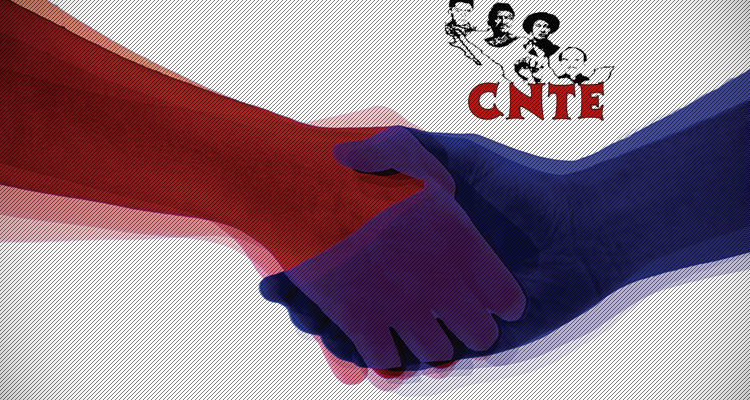
En muchas ocasiones el contexto político permea en el religioso como pasó en Tuxtla Gutiérrez, Chiapas donde feligreses de varios municipios se unieron en apoyo al movimiento magisterial que encabeza la CNTE contra la reforma educativa.

Se reporta que agrupados en el denominado Pueblo Creyente de Simojovel, perteneciente a la diócesis de San Cristóbal de las Casas, los feligreses planean el apoyo político que representa tal grupo religioso a la causa y pretenden la apertura de una mesa de diálogo con el Gobierno federal.

Encabezados por el clérigo Marcelo Pérez Pérez, los católicos plantearon que en el diálogo participen representantes de la sociedad civil aunque el principal inconveniente es que las autoridades federales no han querido dialogar con los representantes de la CNTE.

El grupo católico se mostraron inconformes con la negativa del secretario de Educación, Aurelio Nuño de no dialogar y responsabilizaron al Gobierno Federal de la violencia que se ha desatado en la entidad.

“Exigimos no al despido masivo de los maestros y maestras, porque esto es violentar sus derechos laborales que por tantos años han venido luchando”, señalaron.


Enlace original: http://revoluciontrespuntocero.com/miles-de-feligreses-apoyan-a-maestros-en-chiapas-y-exigen-dialogo-con-nuno/

Comparte este contenido:

¿Cuánto y cómo ha avanzado la reforma educacional?

Chile/06 junion 2016/ Autor: José Joaquín Brunner/Fuente: El Mercurio

«Ni los éxitos proclamados por la reforma educacional son tales, encontrándose pendiente aún la implementación de casi todas las iniciativas, ni las expectativas sembradas -entre utópicas e ingenuas- podrían satisfacerse….».

Nuestro debate sobre políticas educacionales sufre de una progresiva distorsión. Por un lado, el Mineduc proclama como éxitos de la reforma cosas tales como: «Se terminó la educación de mercado», «pasó a ser un bien público», «la educación ha dejado de gravitar en torno al dinero» o «la ley establecerá un sistema de educación superior inclusivo, pertinente y de calidad». Por otro lado, la autoridad declara que el sistema escolar estaría enfilado hacia un nuevo rumbo, dirigido hacia una mayor igualdad en la sociedad chilena.

En ambos lados, hay un conjunto de mistificaciones que conviene aclarar.

Por lo pronto, hasta ahora los avances de la reforma son leyes aprobadas o proyectos en tramitación o preparación. La Presidenta así lo reconoce. Dijo el 21 de mayo: «La tarea principal para los próximos años es implementar esta gran reforma educacional: pasar de las leyes a las acciones concretas que impactan positivamente en las familias». Es decir, sabe que las reformas no existen ni producen efectos antes de haberse aplicado. Allí reside la diferencia entre un cambio de papel y uno de verdad.

En esto debemos aprender de los estudios llevados a cabo por la OCDE.

Por ejemplo, insisten que una implementación efectiva supone aumentar las capacidades en la base, a nivel de aulas y colegios. Recomiendan contar con directores que sean verdaderos líderes pedagógicos capaces de «dar vuelta» colegios fallidos. Subrayan la necesidad de crear o fortalecer comunidades profesionales que puedan llevar las innovaciones hasta el interior de las salas de clase. Asimismo, se recomienda evitar iniciativas que desestabilicen a los colegios o que desconozcan el contexto dentro del cual se desenvuelven.

La mayoría de los proyectos de reforma impulsados por la administración Bachelet en este sector no ha considerado estas elementales lecciones. Su diseño fue improvisado, no se incluyeron dispositivos de evaluación, se puso énfasis solo en los aspectos legislativos, se dejó a un lado la articulación de acuerdos, se pasó por alto el conocimiento existente y se hostilizó a los sostenedores, las comunidades escolares y las instituciones de educación superior.

La sala de clase, las prácticas pedagógicas, la calidad de los aprendizajes, el cierre de brechas sociales, una mayor equidad, la capacitación de los docentes en ejercicio, una educación superior dinámica y vinculada con el desarrollo del país y las regiones, todo eso se halla lejos del corazón de la reforma.

Con todo, las principales mistificaciones se ubican en otro lado: el del (supuesto) poder que se atribuye a la educación para producir -como una nueva «mano invisible»- una sociedad más equitativa, movilidad social, igualdad de estatus y una mejor distribución del ingreso.

Originalmente, esta tesis fue planteada por la teoría del capital humano y acompañó a la visión neoliberal del mundo. Se postuló (y creyó) que la educación contribuía significativamente a todos esos fines sociales. Además, a crear empleo, aumentar la productividad, ensanchar el emprendimiento, facilitar la difusión de innovaciones tecnológicas e incrementar la competitividad de las empresas y la economía nacional.

Tan expectante tesis llegó a ser adoptada de manera casi uniforme, e igualmente acrítica, por economistas convencionales, organismos internacionales y fervorosos creyentes en el mejoramiento automático de las oportunidades de vida.

Por el contrario, la sociología, más realista -y más escéptica también cuando no se deja llevar por los vientos de alguna utopía- postula que la educación, entregada a los mecanismos espontáneos de transmisión de la familia, la escuela y la sociedad, termina reproduciendo las desigualdades de la cuna y sirviendo como un dispositivo de selección, clasificación, estratificación y jerarquización de las personas. No osaría, por lo mismo, prometer la igualdad en la tierra o la movilidad ascendente hacia el cielo. Pues sabe -desde hace más de un siglo- que para emparejar oportunidades, compensar diferencias, reconocer méritos y cerrar brechas de aprendizaje y bienestar, la educación necesita domesticarse, civilizarse, cultivarse y transformarse.

La distorsión óptica bajo la que hemos vivido estos últimos años se genera por ese enfoque economicista y por la idea de que las reformas impulsadas por la actual administración estarían operando como un interruptor de la reproducción educacional de las desigualdades.

Para llegar a ese punto habríamos requerido un programa de reformas muy distinto. Debimos partir por la gestión, el liderazgo y la profesionalización docente de los colegios subvencionados que atienden a los niños y jóvenes que no alcanzan el umbral mínimo de habilidades en los dominios cognitivos centrales. Esas escuelas deberían tener, adicionalmente, menos alumnos por profesor, redes de apoyo para sus docentes y estudiantes (de salud, psicológica, de orientación vocacional, asistencia social, etc.), y un currículum reforzado para ofrecer una formación humana más completa (física, ciudadana, de medios y redes, para el consumo, la convivencia y la autorregulación personal). Por último, debimos atender prioritariamente las carencias de los hogares de esos alumnos, pues allí comienza a gestarse la brecha de oportunidades que luego se va ensanchando a lo largo de la vida.

En fin, ni los éxitos proclamados por la reforma educacional son tales, encontrándose pendiente aún la implementación de casi todas las iniciativas, ni las expectativas sembradas -entre utópicas e ingenuas- podrían satisfacerse.

Para retomar la senda del esfuerzo compartido, necesitaríamos liberarnos primero de estas ilusiones y enseguida enfrentar los verdaderos retos.

Cómo tuvo que ser la sorpresa de 300 estudiantes de la Universidad Tecnológica de Georgia (EE UU) al conocer que una de sus profesoras era una máquina. Ocurrió hace tres semanas, cuando, tras más de seis meses atendiendo a un curso online de desarrollo tecnológico, supieron que la tutora que les asistía a través de la pantalla, llamada Jill Watson, no era más que un programa informático del superordenador Watson, desarrollado por la compañía IBM. “Es una prueba más de las capacidades que están adquiriendo los sistemas cognitivos. Si tras tantos meses dando clases con la herramienta, no supieron que Jill Watson era una máquina, es que las posibilidades de estos avances tecnológicos son enormes”, explica el director de soluciones cognitivas de IBM para España, Javier González.

Jill Watson estaba diseñada para solventar todas las dudas posibles acerca del curso, además de responder con expresiones coloquiales dependiendo del tipo de consulta de los estudiantes. Pero más allá de esta anecdótica prueba, lo que parece confirmarse es la tendencia de la entrada de todas estas herramientas en los sistemas docentes. “Siempre con la intención de mejorarlos, para que sean mucho más eficientes”, recalca González, que añade cómo estos avances tienen mucho más potencial de crecimiento en el ámbito educativo que en otros. Al menos de momento.

“En la educación tiene mucha importancia la interacción entre los humanos”, prosigue González. Por eso, la inteligencia artificial, por un lado, que intenta asemejar el comportamiento humano en una máquina; y por el otro los sistemas cognitivos, que tratan de ir mucho más allá de la mentalidad humana, tienen múltiples posibilidades.

Una de ellas es conseguir entender el lenguaje a la perfección. Tanto oral como escrito. “Estas herramientas pueden utilizarse, por lo tanto, para corregir los ejercicios y los exámenes de los estudiantes, incluso los que no sean de tipo test o de respuestas cortas, permitiendo a los alumnos expresarse como mejor consideren”, explica el científico e investigador en el Instituto de Investigación en Inteligencia Artificial del CSIC, Pere Garcia. Sin embargo, no todo se reduce al momento de la evaluación. “La verdadera revolución de estos métodos es que identifican cómo se debe trabajar con cada estudiante”, comenta el directivo de IBM.

La inteligencia artificial y, sobre todo, los sistemas cognitivos, tienen muchísimo más alcance en la transmisión de conocimiento y de contenido. “Cada alumno es un mundo, y gracias a la tecnología, cada estudiante puede tener su propio profesor, sus propios libros de texto y unos itinerarios totalmente personalizados”, recalca el investigador del CSIC. El resultado no es más que una educación adaptada de forma milimétrica a las necesidades y los objetivos de cada uno. “Aplicando los algoritmos adecuados, se pueden desarrollar herramientas que se ajusten a cada objetivo”, explica Garcia. Así, por ejemplo, la máquina dicta a cada estudiante un ejercicio u otro dependiendo de sus capacidades, “para que los más avanzados no se estanquen, y aquellos a los que más les cuesta vayan evolucionando”, señala.

De la misma forma que se pueden desarrollar libros de texto inteligentes para que cada estudiante avance en sus contenidos a su ritmo, o modificar el itinerario de un curso en función de cada uno de los matriculados y de sus necesidades, “ya que hoy en día los cursos suelen tener sus contenidos totalmente cerrados”, añade Garcia.

Se trata de democratizar la educación, ya que estas herramientas, al fin y al cabo, frenan muchas de las trabas del sistema educativo. “Cualquier profesor, a grandes rasgos, es capaz de llevar a cabo cualquier tarea. Pero en la docencia, el factor tiempo o el volumen de alumnos determinan todos los resultados”, afirma Javier González. De la misma forma que las aspiraciones profesionales dentro de un aula no tienen que ser las mismas.

La inteligencia artificial y el resto de herramientas, sin embargo, no amenazan la función del profesor. Más bien, la fortalecen. Garcia insiste en que no todo puede sustituirse por máquinas y robots. Por su parte, González recalca que mientras los docentes dejen de tener tanto peso en la transmisión del conocimiento, comenzarán a ganar más importancia en la experiencia educativa, convirtiéndose su figura en un auténtico facilitador que saca lo mejor de cada uno de sus alumnos. “Con estas herramientas, el profesor tiene el control de su aula, dirige teniendo más información y puede sacar el máximo rendimiento”, señala Garcia.

Un cambio de paradigma

El profesional del siglo XXI debe ser una mezcla de persona y de ordenador. Así lo cree, al menos, el filósofo, escritor y pedagogo, José Antonio Marina. Sin embargo, todos estos cambios, que también afectan al mundo de la educación, no tienen que ser percibidos con ningún miedo. “Simplemente, nos enfrentamos a un cambio de los ecosistemas de aprendizaje, en los que habrá que redefinir las escuelas, sumar a ellas todos los agentes que participarán en el proceso educativo y modificar las funciones del profesorado”, explica Marina. Una figura que, en su opinión, continuará siendo necesaria.

La inmersión de la inteligencia artificial en el ámbito docente, además de democratizar la educación si su gestión es correcta, también servirá para adaptar a los estudiantes a las necesidades del futuro. La entrada de la robótica y de otras máquinas y herramientas tecnológicas en el mundo de la empresa es ya una realidad, y cuanto antes se empiece a normalizar la relación directa con todos estos elementos, más satisfactoria será su acogida en el futuro.

Fuente:

http://www.elmercurio.com/blogs/2016/06/05/42313/Cuanto-y-como-ha-avanzado-la-reforma-educacional.aspx

Comparte este contenido:

¿Educación para todos?

España/08 junio 2016/ Autor: Sonia Sierra/Fuente: Economía Digital

En los países desarrollados de nuestro entorno, las diferentes fuerzas políticas consensuan acuerdos para no cambiar el sistema educativo cada legislatura lo que aporta la estabilidad necesaria para mantener lo que funciona y cambiar lo que sea susceptible de mejora.

En España, sin embargo, tenemos la educación como arma ideológica arrojadiza y los partidos que se han alternado el poder hasta ahora, lejos de llegar a un acuerdo en el que la mayoría se pueda sentir cómodo, imponen su modelo en cuanto llegan al poder e intentan derogar el anterior.

El resultado de esto es bien conocido: cifras de fracaso y abandono escolar temprano por encima de la media europea en la mayoría de las CCAA, comunidad educativa en pie de guerra constantemente y profesores que tienen que gastar gran parte de su energía en adaptarse a los cambios constantes del sistema. Por eso es tan importante lograr un Pacto Nacional por la Educación que dé estabilidad a toda una generación.

En España, el presupuesto en Educación está por debajo de la media europea y este aspecto, pese ser muy importante, no es el único que explica  el fracaso de nuestro sistema educativo.

Para empezar, cualquier modelo educativo de éxito considera clave la figura del profesor. Para ello se necesita una buena formación inicial y continuada y la valoración social de esta profesión y nada de esto sucede en nuestro país. Es por eso que necesitamos el equivalente al MIR para la formación del profesorado, con prácticas remuneradas para que los nuevos docentes entren en las aulas con la preparación necesaria.

Otro de los aspectos importantes que fallan en nuestro sistema educativo es la falta de equidad. Todos los estudios al respecto nos muestran que la situación socioeconómica de las familias es el factor determinante en el éxito o fracaso escolar. Este se comienza a detectar ya en la Educación Inicial y es precisamente ahí cuando se tiene que empezar a actuar.

Cuando un alumno se empieza a quedar atrás, se ha de iniciar un acompañamiento para que pueda seguir el ritmo de sus compañeros. Si no lo hacemos, ese alumno irá sumando retrasos y eso hará muy difícil que pueda seguir el ritmo escolar.

Por ese motivo, se necesitan más profesores de apoyo para ayudar a aquellos que más lo necesitan y ha de ser el sistema el que los proporcione de forma gratuita porque si no, las familias que no puedan hacerse cargo dejarán a sus hijos en desventaja frente a las que si puedan y la escuela debe de ofrecer igualdad de oportunidades a todo el mundo si de verdad queremos construir una sociedad justa.

Otro de los aspectos que dificulta la igualdad de oportunidades de nuestro sistema educativo es el exceso de deberes. Los informes tanto de la OCDE como de la OMS nos alertan sobre el exceso de tareas extraescolares en nuestro país y la poca efectividad de las mismas. Mientras que en Finlandia tienen una media de 2,8 horas de deberes a la semana y Corea del sur 2,9 –por citar dos países con excelentes resultados en PISA-, en España tenemos 6,5.

El exceso de deberes van en contra de la equidad porque las familias de nivel socioeconómico medio y alto pueden ayudar a sus hijos a hacerlo mientras que las familias con un nivel más bajo, no, lo que tiene como resultado una mayor diferencia en la brecha entre clases sociales. Eso sin contar que también perjudica la salud de los pequeños y la conciliación familiar.

Y, finalmente, tenemos el tema del acceso a los libros de texto. Cada septiembre, las familias se deben enfrentar al enorme coste de los libros de texto. Muchas familias no pueden hacerse cargo del gasto que supone unos 300 euros por hijo lo que tiene como resultado que muchos alumnos empiezan el curso sin el material adecuado, lo cual resulta especialmente perjudicial para el rendimiento académico. Además, esto provoca diferencias entre comunidades autónomas pues ya hay algunas que contemplan el uso de libros socializados y otras, no.

Es imprescindible que todos los niños, hayan nacido donde hayan nacido, tengan las mismas posibilidades de acceso a los estudios. No podemos seguir permitiendo que en España suceda que casi la mitad de los universitarios provengan de clase alta porque el talento no entiende de clases sociales y debemos fomentarlo allá donde esté.

Las personas que creemos en la educación como elemento transformador clave de nuestra sociedad hemos de apostar por una mayor inversión, una mejor formación y consideración del profesorado y por la equidad del sistema educativo para garantizar la igualdad de oportunidades. Nos jugamos nuestro presente y nuestro futuro.

Fuente noticias:

http://www.economiadigital.es/es/notices/2016/06/-educacion-para-todos-84221.php

Fuente imagen:

http://interculturalidadenlaeducacininfantil.blogspot.com/2010/11/fichas-interculturales-para-colorear.html

Comparte este contenido:
Page 231 of 342
1 229 230 231 232 233 342