
Entrevista a Peter McLaren
Hablando en términos generales, ¿cómo la teoría marxista ha influenciado en su trabajo?
Como marxista, veo los escritos de Marx y de otros especialistas marxistas contemporáneos, para ayudarme a analizar la actual crisis del capitalismo. Y en ese contexto trato de comprender la historia de la educación, particularmente en los Estados Unidos y en mi Canadá natal, pero también intento entender las tendencias educativas a nivel mundial, como parte de la formación de la clase capitalista transnacional y del estado capitalista transnacional. Desde 1987 he tenido la oportunidad de hablar en aproximadamente 30 países (muchos de los cuales continuo visitando, y algunos de los cuales visito regularmente como Méjico y Venezuela) a académicos, profesores y activistas sociales, y en muchos de esos casos he tenido también la posibilidad de formar alianzas activas.
Uno de mis proyectos ha sido ampliar el alcance de la pedagogía crítica hacia la formación de un movimiento social, movimiento que yo llamo pedagogía crítica revolucionaria (siguiendo lo propuesto por la marxista británica Paula Allman) de modo de subrayar su propósito central de trabajar para un universo social por fuera del modo de producción capitalista. Trabajo en el área de lucha anti-capitalista y en el terreno de la epistemología, educando en contra del colonialismo del poder y tratando de crear un enfoque pluriversal en torno a los saberes indigenistas, a través de una crítica de la producción del conocimiento eurocéntrico y a través del trabajo con grupos subalternos quienes han sido víctimas del imperialismo estadounidense. Entonces, comienzo con una crítica a la globalización neoliberal, financiamiento, el funcionamiento autónomo de la economía monetaria, los estándares de vida de la clase trabajadora han sido sacrificados en pos del enriquecimiento del capital financiero, la tasa descendente de ganancias (una gran cantidad de mis estudiantes de la UCLA tomaron clases con Robert Brenner), la sobre-acumulación de capital y el concepto de acumulación por desposeimiento, tal como lo desarrolla David Harvey. Pero también trabajo con el análisis de la clase capitalista transnacional y el desarrollo de un bloque histórico, capitalista y global compuesto de empresas transnacionales e instituciones financieras, las elites que administran las agencias de planificación económica supranacionales, las fuerzas más importantes en los partidos políticos dominantes, los conglomerados de medios de comunicación, y las elites tecnocráticas, tal como lo desarrolla William I. Robinson en la UC (1), sede Santa Bárbara. Lo que me interesa de ésto es ver cómo las prácticas de clase de una nueva clase gobernante global se están comenzando a condensarse en un estado transnacional emergente en el que los miembros de la clase capitalista transnacional tienen una existencia objetiva por encima de cualquier políticas o territorios locales.
Epistemológico, estoy muy interesado en la pedagogía de la decolonización, y aquí estoy comenzando a trabajar con un marco desarrollado por la escuela de de-colonización entre cuyos exponentes se encuentran Enrique Dussel, Ramon Grosfoguel, Walter Mignolo, Catherine Walsh, Nelson Maldonado-Torres, y otros. Aquí amplío la idea de lo que ocurrió cuando las Américas fueron transformadas por el capital. Trato de pensar en el capital como en algo que está más allá del sentido limitado de una lógica económica; como una red integrada de procesos culturales, políticos y económicos, que se encuentran interrelacionados entre sí. Debemos dar cuenta del complejo entrecruzamiento de jerarquías de género, raza, sexo y clase dentro de los procesos globales geopolíticos, geo-culturales y geo-económicos del sistema mundo moderno/colonial.
Debemos tener en cuenta la jerarquía racial, de género, y sexual global que surgió de la expansión colonial europea y continúa siendo reproducida por el sistema capitalista mundial, moderno/colonial. Estamos tratando de acercar esta perspectiva a la izquierda marxista en Venezuela, y este verano comenzaremos a entrenar cuadros en las zonas rurales dentro de esta perspectiva decolonialista como parte de un proyecto que organizamos con el Ministerio de Educación. Estas multiples jerarquías o “heterarquías” no son epifenómenos del capitalismo, pero son constitutivas del mismo, cuando miramos las formaciones históricas que el capitalismo ha desarrollado, especialmente desde el comienzo de la conquista de las Américas hasta el presente funcionamiento del colonialismo del poder, o la persistencia del pensamiento dentro de perspectivas eurocéntricas, ausente en las administraciones coloniales reales.
Ahora, al hacer esta tarea, es importante advertir el costo de la abolición del capitalismo. Y aquí intento ser fiel a los propios escritos de Marx, a su crítica de los presupuestos y premisas de la economía política clásica, y esto me hace ser muy crítico de cierta constitución de organizaciones revolucionarias tanto del pasado como del presente. Como expresan Peter Hudis, Kevin Anderson y otros especialistas y activistas marxistas de las ciencias humanas, y puedo también sustentarlo en mis propias lecturas de Marx, Marx no estaba de acuerdo con el control de la sociedad por parte de un sólo partido estatal, no apoyaba regímenes autoritarios ni tampoco el control estatal de la economía. Por supuesto que él criticaba la propiedad privada, pero también se oponía a la noción de que la vida económica debía ser controlada por el estado como plan centralizado, economía estatal que supuestamente contrarrestara la anarquía del mercado desregulado. Estas dos posiciones eran totalmente rechazadas por Marx como expresiones de relaciones sociales alienadas. Marx identificó el problema central del capitalismo como la producción de valor.
¿Qué es la producción de valor? Bueno, ciertamente es diferente a la producción de riqueza. Como lo señala Peter Hudis, el valor es la riqueza computada en términos monetarios. Es la reducción de la mano de obra viviente concreta–o el hacer dirigido a la satisfacción de las necesidades humanas– a la mano de obra alienada abstracta que opera para aumetra el valor como un fin en sí mismo, como en el impulso por aumentar el valor mediante la creación del valor de cambio (es decir el intercambio de bienes como medio universal de interacción social en la plusvalía). Las relaciones sociales capitalistas toman una cierta forma de valor en las que las relaciones humanas adoptan la misma relación que entre objetos. Esa es la forma que debe abolirse y eso sólo se logrará mediante la abolición de la producción de valor.
La mano de obra, para Marx, tiene una naturaleza dual –la mano de obra útil o concreta (el hacer con un propósito o la actividad de vida consciente) y la mano de obra alienada o abstracta (lo que Marx sostenía era el valor y la plusvalía). Estas modalidades de mano de obra están en una relación viva, dinámica y antagonista debido al hecho de que el capitalismo exige que el trabajador venda su capacidad de trabajo al capitalista a cambio de un salario. John Holloway identifica aquí dos formas de lucha –la lucha de hacer con un propósito (mano de obra concreta) en contra de la mano de obra abstracta (la lucha de hacer en contra de la mano de obra, o la lucha de los trabajadores en contra de su propia existencia como clase trabajadora), y la lucha de la mano de obra en contra del capital (como ocurre en la lucha del movimiento obrero en contra de la explotación capitalista, es decir, mano de obra asalariada y capital). Necesitamos ver estas dos luchas como algo que está relacionado. Por ejemplo, yo soy crítico de los movimientos trabajadores y de los gremios docentes por muchas razones. Pero principalmente porque ellos definen la lucha como la de mano de obra en contra del capital, cuando en realidad, ellos verdaderamente sustentan la mano de obra abstracta o producción de valor. Ellos consideran que la producción de valor puede realizarse con menor explotación o que la mano de obra abstracta puede reconfigurarse en formas menos alienantes. Si bien esto puede ser cierto en el corto plazo, con la redistribución del capital a la mano de obra, esto exacerbará, en realidad, la crisis del capitalismo a largo plazo.
Estoy en contra de la producción de valor y considero que la única forma de crear una nueva sociedad es mediante la abolición de la producción de valor. No podemos jugar con las relaciones de distribución y circulación colocándolas bajo el control del estado y creer que podemos crear una sociedad socialista. Necesitamos abolir la relación de producción misma, porque sino crearemos un despotismo aún mayor que el que existe bajo el sistema de libre mercado capitalista. No podemos abolir la producción de valor alternando los mecanismos por los que se extrae el valor excedente del trabajador. La verdadera libertad no se puede alcanzar en una sociedad gobernada por el valor de cambio y la producción de valor. Aún las formas de producción cooperativas, no estatistas, no conducirán a la libertad si éstas permanecen atadas al valor de cambio, al dinero y a la producción de valor. En ese contexto, los trabajadores se convierten en sus propios explotadores. Como señala Peter Hudis, esas cooperativas eliminaron la necesidad de lo capitalista pero no se han eliminado a sí mismas de la relación capitalista per se, mensaje que traté de transmitir de manera convincente a los trabajadores fabriles en Argentina, que pertenecían al movimiento de fabricas ocupadas, y que me invitaron a hablar en una fábrica recuperada en Buenos Aires porque estaban instalando escuelas en esas “fabricas recuperadas”.
Como marxista, ¿cómo explicaría el estado actual de la educación pública y como caracterizaría los últimos intentos de reforma escolar?
La educación es en la actualidad un sub-sector de la economía. La educación pública va en rápido camino hacia la privatización, es parte de la tendencia generalizada de la globalización neoliberal, siendo los dos ejes centrales la privatización y la desregulación, la que, dicho sea de paso, se ha impuesto a los estados nación, especialmente luego de la abrumadora derrota de los controladores de tráfico aéreo durante la administración Reagan y la derrota por parte de Thatcher de los mineros que fueron a la huelga en el Reino Unido en la década de 1980. Esto ha conducido a la actual crisis del capitalismo mundial, y sin embargo, sus políticas y prácticas son precisamente aquellas que suscriben, hoy, en gran medida los Republicanos (y en una versión más moderada los Demócratas). Todo esto es parte del esquema general de globalización neo-liberal dentro del que el Banco Mundial (controlado por los EE.UU.) y el Fondo Monetario Internacional han forzado a los gobiernos nacionales a desarrollar políticas económicas que enfaticen el crecimiento económico y los derechos de propiedad por sobre el bienestar social y los derechos personales. La educación dirigida por el mercado (la “voucherización de la educación”) condujo a la corporativización de la educación con fines de lucro y al movimiento de escuelas charter. La educación es una de las más grandes industrias del mercado y se encuentra en la actualidad controlada por administradores de fondos de riesgo, banqueros y especuladores que cuentan con el apoyo de la Fundación Walton (Walmart dona 50 millones al año al movimiento de escuelas “charter”(2)). La fundación Bill y Melinda Gates quiere cerrar miles de escuelas en estado de destrucción ubicadas en zonas urbanas marginales y reemplazarlas por escuelas charter. Y en algunos casos las empresas con fines de lucro crearon fundaciones sin fines de lucro para obtener subsidios y luego postularse para administrar escuelas charter. Los administradores de fondos de riesgo y los directores ejecutivos se convierten en defensores acérrimos de las reformas del mercado, generadas en el deseo de crear una fuerza de trabajadores de la educación más económica, la que está limitada por medidas contables más intolerantes, basadas en el resultado de exámenes básicos, y que cuente con menor poder gremial para luchar. Los mandatos de la educación federal ya no se interesan por su apoyo a la igualdad de acceso y de resultados para centrarse en cambio en la reducción del presupuesto para fondos escolares, la promoción de políticas para encontrar culpables, el pago por méritos o las políticas para reducción o despido del personal escolar, o el apoyo a evaluaciones estandarizadas basadas en un núcleo común de conocimientos –que tienen muy poco que ver con la producción de conocimiento significativo y crítico– y la resolución de problemas, y con otorgar créditos a los “ganadores” escolares en lugar de a aquellos estudiantes con mayor necesidad de asistencia financiera, y al control empresarial del currículum. Como ha señalado Stan Karp, el estudio más completo del desempeño de las escuelas charter, realizado por la Universidad de Stanford encontró que sólo el 17% de las mismas tenía mejores resultados que otras escuelas públicas con las que se podían comparar, y más del doble obtuvo peores resultados. Las escuelas públicas tradicionales aceptan a todos los niños, inclusive cifras mayores de estudiantes con grandes necesidades, mientras que las escuelas charter son muy selectivas respecto de quiénes admiten.
Las escuelas charter –avaladas con entusiasmo por Arnie Duncan– se han convertido en la nueva opción con sentido común para los pobres y para la clase media venida a menos que quieren escapar de la decadencia representada por las escuelas urbanas marginales con poco presupuesto, fracaso en los niveles de logro y en los exámenes estandarizados, y para aquellos que no pueden acceder a las escuelas privadas auténticas (al menos para los que pueden completar los requisitos de admisión y tienen dinero para pagarlas ya que los estipendios para las charter no pagarán todo). Para aquellos que tratan desesperadamente de escapar del desastre de las escuelas públicas, especialmente en los centros urbanos en decadencia, el mundo de las escuelas charter ha sido presentado por Duncan y su gente como la única opción posible. Pero la misma gente que impulsa estas escuelas son los mismos que han pasado años transitando por la enseñanza pública. Si uno examina la enseñanza pública como parte de la lógica de la globalización neo-liberal, se puede notar que el ataque a la educación pública es sólo una parte de la última frontera, en una movida por parte de la América corporativa y la clase capitalista transnacional para privatizar todos los recursos públicos, al menos tantos como lo público permita.
El movimiento privatista en la educación quiere acabar con el poder de los gremios docentes y destruir los salarios decentes de los trabajadores, ya sean éstos maestros u otros empleados públicos. Esto hay que verlo en el contexto de la lógica más amplia del capitalismo neo-liberal. No son sólo los Republicanos, sino los Demócratas también, quienes apoyan la candidatura de aquellos a favor de las escuelas charter, aún cuando saben muy bien que su apoyo selectivo evita el hecho de que haya dos veces más escuelas charter que fracasen que escuelas charter exitosas y que una gran cantidad de sus directores han sido acusados de malversación de fondos.
El Estado nos dice que hay escasez de profesionales en los EE.UU. en el área de tecnología,matemática, ingeniería y ciencias. Pero en realidad no hay escasez de profesionales en esas áreas en los EE.UU. De acuerdo a los datos del Foro Económico Mundial, EE.UU. se ubica primero en el mundo en competitividad global y alrededor de sexto entre134 países, en todas las categorías relacionadas a esas profesiones, y en cuanto a disponibilidad de conocimiento y experiencia. Por lo tanto si ese es el caso, ¿por qué la Carrera a la Cima de Obama justifica su programa alegando que EE.UU. necesita ponerse a la altura del resto del mundo? Nosotros ya estamos a la altura del resto del mundo. Sabemos que los estudiantes en aquellas escuelas que cuentan con un buen presupuesto se ubican tan bien o mejor que algunos estudiantes de otros países en los exámenes internacionales. Pero todo esto disfraza el hecho de que EE.UU. tiene el más alto porcentaje de niños en estado de pobreza en países industrializados, y nosotros sabemos que los niños de familias pobres que asisten a escuelas de bajo presupuesto se ubican por debajo del promedio internacional. Por lo tanto resulta claro que el problema es la pobreza. Y éste es un problema que no está siendo atendido debido a que ignoramos el hecho de que vivimos en una sociedad basada en la división de clases. ¡Utilizamos el término “en desventaja económica” o “estatus socioeconómico bajo” cuando deberíamos decir “clase trabajadora”! Cuando utilizamos el término estatus socioeconómico bajo, estamos naturalizando y legitimizando la desigualdad y al mismo tiempo tratando de racionalizarla. En nuestros estudios de la sociología de la educación no recurrimos a Marx para que nos provea de un marco explicativo de la pobreza, sino que nos referimos a Max Weber que describe a la clase, más en términos de hábitos de consumo y estilos de vida que en términos de condiciones objetivas de explotación. Cuando Weber escribió acerca de la lógica irracional del capital, las paradojas de la racionalidad capitalista y las ilusiones de progreso, no mostró mucha preocupación por los trabajadores y hasta defendió aspectos del capitalismo como parte de la ética del trabajo protestante. Por lo tanto, ¿nos sorprende que cuando se proponen “vouchers (3)” o escuelas charter los maestros puedan fácilmente encontrar una manera de racionalizarlos también, cuando la única lengua que ellos conocen acerca del concepto de clase a partir de sus estudios de educación, proviene de Weber?
Cuando el comisionado del estado de Nueva York en el Ministerio de Educación, David Steiner, le dijo al educador crítico, Henry Giroux en el congreso de Nexus en Ámsterdam en 2007 que “la justicia social promueve el odio. Odio al orden establecido”, se puso de manifiesto que el motivo de ataque de muchos líderes de la educación del sistema es el pensamiento crítico mismo. Estos pensadores entre los que se incluye Arnie Duncan, apoyan lo que Giroux llama metodologías prácticas e instrumentales de aula que, especialmente en el caso de los afro-americanos, funciona como parte de un circuito de poder que produce la conexión escuela-“prisión”. Los valores políticos reaccionarios se disimulan bajo el disfraz de razonamiento técnico y permanecen inmunes a la crítica de que la educación ha sucumbido al lenguaje de la empresa, a la ética de negocios del interés propio, al concepto de conocimiento como un bien pre-empaquetado, a la ilimitada búsqueda de la acumulación de capital, a la noción de que el progreso se mide por el crecimiento cuantitativo del consumo.
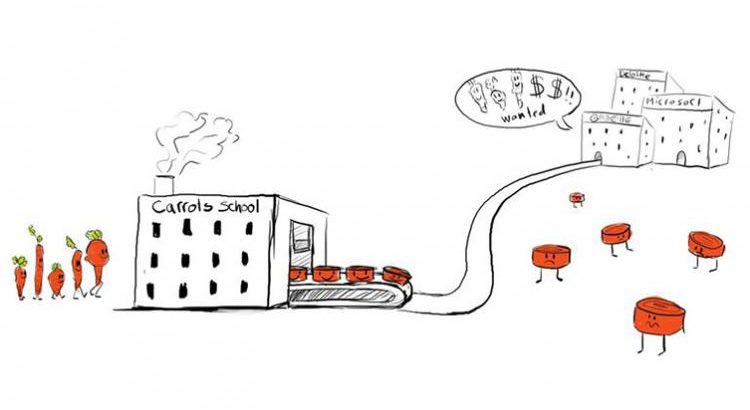
En algún momento, alrededor de finales de la década de 1980 el producto de las filiales de las empresas transnacionales fuera de sus países de origen sobrepasó el volumen de exportaciones de manufacturas a nivel mundial –y se produjo un cambio muy dramático en la habilidad de trasladar el capital fuera del control gubernamental. Esto también refleja el cambio en la naturaleza de la relación de poder entre el estado nación y las empresas transnacionales. El rol de las escuelas públicas ha cambiado también en concordancia con lo anterior. Las escuelas ya no se preocupan por cultivar ciudadanos democráticos para el estado nación (creando los códigos de ciudadanía y transmitiendo el carácter profundo del estado nacional a través de legitimizar la superioridad de la cultura burguesa de elite) sino que ayudan al estado nación a servir a las corporaciones trasnacionales. Las escuelas mismas se están convirtiendo en empresas corporativas. Estamos entrenando a nuestros estudiantes para que se conviertan en ciudadanos consumidores y no en ciudadanos democráticos. El futuro de la educación está ahora en manos de la ley corporativa representado por los fondos de riesgo, el capital financiero y las apuestas en el mercado de divisas, los que claramente determinan el destino de la enseñanza pública.
Con toda la discusión acerca de la reforma educativa, parece que la conversación ha sido algo limitada en su alcance. ¿Qué le gustaría ver que se agregue a ésta conversación y cuál sería el efecto que esto tendría?
Me gustaría ver un énfasis renovado en la lucha contra la pobreza como un medio para crear más igualdad, para crear mayor igualdad de oportunidad educativa. La lógica de los críticos de la educación conservadores ha sido por años, que las escuelas públicas gastaban de más, que tenían estudiantes urbanos pobres y fracasados, y que los gremios docentes no permitirían que se despidiera a los malos maestros, y que hasta que se despidiera el último 10% de los maestros con peor desempeño (algunas juntas escolares están solicitando que se agreguen medidas de valor agregado a los exámenes en un 30% de las evaluaciones a los maestros y en algunos en un 50%) nuestra nación no saldrá de su economía deprimida y no estará en condiciones de competir económicamente con otras naciones. Pero no es la falta de educación lo que genera pobreza y desigualdad económica sino la falta de empleo. Es la naturaleza misma del sistema capitalista. Una reforma educativa exitosa puede cerrar la brecha de niveles de logro incrementando la cantidad de estudiantes de clase trabajadora y de minorías que se desempeñan bien en la escuela, pero una buena educación no puede rescatar a la mayoría de los niños de la pobreza ya que hay demasiados empleos que pagan salarios mínimos.
Las clases gobernantes quieren culpar a la pobreza por el fracaso de nuestro sistema educativo porque es la comunidad la que asume el costo de pagar a las escuelas, mientras que les costaría más a los capitalistas pagar salarios decentes a los trabajadores. Estoy de acuerdo con John Marsh quien, en su libro a punto de salir, llamado Class Divided sostiene que la educación debería ser tratada como un fenómeno político –no de mercado. Necesitamos programas sociales e intervenciones no educativas en el mercado, ya sea a través de tasas impositivas re-distributivas, proyectos de obras públicas masivos, una ley de salario vital o el renacimiento de los gremios. Más trabajadores con títulos universitarios no producirán el aumento de los salarios mínimos ni tampoco reducirán la desigualdad. Necesitamos disminuir la cantidad total de gente que vive en estado de pobreza. No podemos usar los programas educativos para reducir la desigualdad ya que esto no funciona en una economía capitalista y entonces cuando la educación no funciona, el desempleo es abrumador y los puestos de trabajo escasos, ahí es cuando se puede culpar al sistema educativo público.
Parte de la razón por la cual los EE.UU. es uno de los países con mayor desigualdad en el mundo radica en el hecho de que nosotros hemos limitados nuestros derechos económicos. Nuestro principal vehículo de éxito económico se vincula a nuestro derecho a una educación decente. No podemos usar simplemente a la educación como nuestro principal derecho económico. Como sostiene Marsh, necesitamos más derechos económicos y es importante que estos no estén relacionados con la educación. Cada derecho que tenemos debe tener un estatus independiente, tal como el derecho a un empleo útil y remunerativo, el derecho a alimentos y vestimenta adecuados, el derecho a una educación decente, etc. Se ve a la educación como un requisito para todos los otros derechos, y se supone que una vez que a uno se le otorga el derecho a una buena educación todos los demás derechos se resolverán por sí mismos. Pero no se puede hacer que estos derechos dependan entre sí o de un derivado de algún otro. Deben permanecer separados. El único derecho económico que podemos ejercer en los EE.UU. es el derecho a una buena educación y este derecho se ha transformado en el derecho a una buena educación corporativa.
Aún en el año 2000 cuando la tasa de desempleo en los EE.UU. cayó a los 3,9 y la tasa de pobreza cayó a 11,3 teníamos 30 millones de personas viviendo en condiciones de pobreza en este país –y ésta es aproximadamente la población de Canadá–. Pero como informa Marsh los EE.UU. no generan mucha más gente pobre que otros países. Los países europeos alcanzan niveles de pobreza más bajos porque ellos ofrecen más programas sociales dirigidos a los pobres y a los desempleados. Si no existieran estos programas gubernamentales, Suecia tendría 26,7 de su población viviendo en estado de pobreza, pero con sus programas sociales el índice de pobreza es de 5,3 %. Seguramente, la educación ayuda a algunas personas a ingresar en el mercado laboral, e indirectamente puede crear unos pocos empleos más, pero lo que se necesita son empleos, salarios más altos y mejores programas de redistribución. Marsh cita a Douglass Willms, un profesor canadiense, que descubrió que entre los niños cuyos padres tienen niveles idénticos de educación, aquellos niños que vivían en países con desigualdades tenían peores rendimientos en las pruebas de alfabetización para adultos. Los niños de padres con títulos universitarios se desempeñan por lo general de la misma manera, ya sea que estos vivan en Finlandia, uno de los países con mayor nivel de igualdad, o los EE.UU., uno de los países con mayor desigualdad. Pero los niños en los EE.UU. cuyos padres sólo alcanzaron a completar su escuela secundaria tendrán peores resultados en las pruebas de alfabetización que niños en las mismas condiciones en Finlandia. Esto es así porque la desigualdad económica afecta la calidad de la vida familiar en áreas de salud, seguridad, niveles de consumo de drogas, etc. Entonces sí, necesitamos reformas educativas pero necesitamos reducir la desigualdad y la pobreza en la misma proporción, si lo que queremos es incrementar la calidad de la oportunidad educativa.
Ahora, por supuesto no nos detenemos aquí –hacemos lo que podemos para reducir la pobreza y la desigualdad, pero necesitamos luchar a nivel internacional para crear un universo social fuera de la forma de valor del trabajo– es decir, fuera de la producción de valor en su totalidad. Al menos, ese debería ser nuestro objetivo a largo plazo.
¿Qué rol, si le cabe alguno, le asignaría usted a la izquierda en el futuro de la reforma educativa?
Bueno, creo que la izquierda no puede aislar la actual crisis de la educación de la crisis global del capitalismo y la lucha más amplia en la lucha contra el capitalismo y la necesidad estructural de una transición equiparable hacia una economía de crecimiento cero. Es necesario que nos tomemos el trabajo de definir de qué manera sería posible otro socialismo o comunismo y cómo podría hacerse la transición hacia éstas posibles alternativas. ¿Cómo se verá un universo social por fuera de la forma de valor del capital, por fuera de la producción de valor? ¿Y cómo llegamos hasta ahí? David Harvey llama a esto organizarse para la transición anticapitalista. Sabemos que el capitalismo puede sobrevivir a esta crisis presente y que el costo para las mayorías populares será catastrófico, en tanto que seremos testigos de un aumento de represión política, militarización y violencia de estado.
¿Cómo puede la izquierda crear una nueva política revolucionaria que nos conduzca a organizar la vida social de modo tal que el hecho de aumentar el valor –mediante la adquisición de dinero –ya no sea considerado el bien más codiciado? En realidad, esto no se sostiene por sí solo. Harvey plantea que necesitamos una teoría corevolucionaria derivada del análisis realizado por Marx de cómo el capitalismo surgió del feudalismo. Él señala que el cambio social surge mediante el desdoblamiento dialéctico de las relaciones, desdoblamiento en el que se dan esencialmente 7 momentos –considerados como ensamblajes o conjuntos de actividades y prácticas– que tienen lugar dentro del cuerpo político del capitalismo y estos incluyen: las formas tecnológicas y organizativas de producción, intercambio y consumo; las relaciones con la naturaleza; las relaciones sociales entre personas; las concepciones mentales acerca del mundo, el conocimiento integral y los acuerdos y creencias culturales, los procesos laborales y la producción de bienes específicos, geografías, servicios; los acuerdos institucionales, legales y gubernamentales; y las conductas de la vida diaria que subyacen a la reproducción social. Harvey sostiene que cada uno de estos momentos, aún cuando esté marcado por tensiones y contradicciones es co-dependiente y co-evoluciona en relación con el otro.
La izquierda tiene una tendencia a mirar estos momentos aisladamente y focalizarse en sólo uno de ellos; considerándolo como el camino mágico hacia la transformación social. Pero cuando el capitalismo se renueva a sí mismo, lo hace coevolucionando todos esos momentos (hay que reconocer que hay muchos más que siete). Así es como el capitalismo surgió del feudalismo. De la misma manera, entonces, es que deberá producirse la transición del capitalismo al socialismo o comunismo. Nuestras intervenciones políticas estratégicas deben moverse dentro y a través de estos diferentes momentos. Así, los educadores necesitamos ver más allá de la crítica epistemológica en el aula. Es por esto que he intentado tratar a la pedagogía crítica revolucionaria como un movimiento social. La mayoría de las reformas educativas nunca cuestionan al capital como una relación social. Cuando esto ocurra, es posible que se pueda progresar algo realizando esfuerzos reformistas dentro del marco capitalista, pero probablemente eso tendrá corta vida. Esto no significa que no debamos intentarlo –debemos hacerlo. Sí, no deberíamos abandonar al socialismo re-distributivo pero siempre teniendo en mente la lucha mayor para desarrollar una vía hacia un universo social sin producción de valor.
Reforma y revolución no son mutuamente excluyentes. La dialéctica trata acerca de la mediación no de la yuxtaposición, así, la lucha no se da entre reforma y revolución sino trabajando para reformar el sistema dentro de la óptica política mayor de la lucha anti-capitalista. Pero tampoco podemos ver al capitalismo como algo aislado de otras jerarquías dependientes que, históricamente son co-constitutivas del capitalismo. Otra forma de mirar esto es desde lo que yo denomino la perspectiva decolonizadora marxista, utilizando algunas ideas de los teóricos sociales latinoamericanos, incluyendo el trabajo de Aníbal Quijano, Enrique Dussel, Gloria Anzaldúa, Walter Mignolo y Ramon Grosfoguel. Cuando nosotros, los que estamos en la izquierda, intentamos desafiar al capitalismo, necesitamos imaginarnos qué significaba el capitalismo para una mujer indígena de las Américas, en el siglo XV, cuando el capitalismo llegó. Debemos, en otras palabras, cambiar nuestra geo-política del conocimiento. Lo que llegó no fue sólo un sistema económico de capital y trabajo para la producción de bienes que serían vendidos para obtener una ganancia en el mercado mundial. Lo que llegó, fue un conjunto de jerarquías globales entrecruzadas a las que Grosfoguel denomina matriz de poder europeo/capitalista/militar/cristiana/patriarcal/blanca/heterosexual/masculina.
En otras palabras, llegó una formación de clase global pero otras jerarquías también, entre las que se incluía la división internacional del trabajo entre países centrales y periféricos, un sistema interestatal de organización político-militar controlada por hombres europeos e institucionalizada en las administraciones coloniales, una jerarquía global racial/étnica que privilegiaba a los europeos por sobre aquellos que no lo eran, una jerarquía global de género que privilegiaba lo masculino por sobre lo femenino y el patriarcado europeo por sobre otras formas de relaciones de género, una jerarquía sexual que privilegiaba a los heterosexuales por sobre los homosexuales, una jerarquía espiritual que privilegiaba a los cristianos por sobre los no cristianos/las espiritualidades no occidentales, una jerarquía epistémica que privilegiaba el conocimiento y la cosmología occidental por encima de las cosmologías no occidentales y que institucionalizó esta jerarquía en el sistema universitario global, y una jerarquía lingüística entre lenguas europeas y no europeas que privilegiaba las tecnologías europeas de comunicación como teoría y reducía las formas de comunicación no europeas al estatus de folclore o cultura, pero nunca conocimiento/teoría. Por lo tanto al adoptar una perspectiva anticapitalista, los docentes necesitamos prestar atención a cada momento como una parte de esta matriz de poder entrecruzado global. Estos momentos están internamente o co-constituyen “heterarquías”. Así, la izquierda puede participar de la reforma educativa, pero yo sostengo que necesita prestar atención a todos esos momentos –pero en términos de transición hacia un futuro anticapitalista y con vistas a crear un enfoque decolonial de producción del conocimiento. Y la izquierda necesita darse cuenta de que los problemas globales no pueden tener soluciones nacionales. Si vamos a participar de la reforma escolar, esto tiene que estar vinculado a las luchas anticapitalistas, a las luchas decolonizadoras, al pensamiento crítico de frontera que puede ayudarnos a repensar nuestro socialismo pensando con, y no acerca de, los conocimientos indígenas y epistemologías de los grupos subalternos. Necesitamos una alternativa posible a las formas existentes de organización social que reproducen la forma de valor del trabajo. Y esto requerirá educadores que puedan trabajar con economistas, filósofos, planificadores rurales y urbanos, geógrafos críticos, antropólogos, sociólogos, especialistas en tecnología, expertos en comunicación, teóricos sociales y activistas de la comunidad que quieran trabajar juntos con este objetivo en mente.
Al estudiar ciencias de la educación a muchos de nosotros se nos enseñan métodos y pedagogía crítica pero parece que eso no se traslada a la práctica cuando ingresamos a las aulas. ¿Cuál es su consejo para esos maestros que están trabajando con las restricciones impuestas por el programa de Obama Carrera a la Cima, que quieren implementar una pedagogía crítica sus las aulas?
Lo que está haciendo esencialmente el programa de Obama Carrera a la Cima, es incrementar la privatización y corporatización de la educación de tal manera que tiene como resultado la re-socialización de las percepciones de las mayorías populares dentro de los mitos legitimadores dominantes del capitalismo en EE.UU. La NEA y la AFT (4) asombrosamente aceptan el capitalismo neo-liberal y no están interesadas en una transformación estructural a largo plazo ni en el reordenamiento del poder de la burguesía y la elite empresarial privada. El sistema escolar no tiene obligación de preparar a los estudiantes para algo más que empleos de los niveles más bajos. Nuestra estructura impositiva regresiva jamás se ve desafiada. La democracia representativa estadounidense no es cuestionada, y ni siquiera comparada o contrastada con la democracia participativa, que enfatiza los aspectos sociales, políticos, económicos y culturales del accionar humano, basándose en los derechos humanos, o con la democracia directa que se centra en el control popular de los medios de producción y organización mediante consejos de trabajadores. El foco está puesto en enseñar para el examen, que se ocupa del conocimiento tecnocrático de resolución de problemas o conocimiento tecnocrático por sí mismo, pero no produce conocimiento significativo, conocimiento basado en los contextos que requieren análisis crítico y en una filosofía de la praxis, y en la ética de la justicia social.
Lo que se enseña en las escuelas de hoy es el conocimiento tecnocrático o la resolución de problemas técnicos –el pensamiento de mediosfines. Lo que está faltando es el conocimiento significativo, es decir, la habilidad para realizar elecciones morales y éticas, y para interpretar y criticar. Lo que está faltando es compromiso intelectual. Las escuelas entrenan a los estudiantes para convertirse en consumidores. En un mundo que enfrenta un colapso del ecosistema, lo que claramente necesitamos es abordar la enseñanza a través de la óptica de una pedagogía eco-socialista basada en la noción de sustentabilidad, y como socialistas, necesitamos reconocer que el desarrollismo socialista muchas veces ha involucrado a movimientos indígenas. Está claro que lo que necesitamos es traer a nuestras prácticas docentes una pedagogía que mire más allá de las formas occidentales/euro/estadounidense céntricas de conocer el mundo que se basan en la capacidad capitalista de desechar y una falta de consideración por el planeta, de modo de considerar formas alternativas y opuestas de pensamiento acerca de/ y en contra del imperialismo del capital neo-liberal de libre mercado.
Me refiero a buscar solidaridad con grupos no dominantes –en particular los grupos silenciados, grupos marginalizados, grupos indígenas– para reunir los imaginarios colectivos de todos los pueblos que buscan libertad dentro de la necesidad y dignidad para ellos mismos y sus comunidades, negando las epistemologías del imperio y las prácticas destructivas y genocidas de los regímenes imperiales y occidentales y sus relatos fraudulentos de inocencia histórica. Necesitamos diferentes perspectivas de justicia, derechos y cambio social y podemos adoptar perspectivas indígenas pero de maneras que no exploten a los pueblos indígenas en el proceso. En otras palabras, estoy hablando de desafiar nuestras concepciones acerca de la modernidad, y nuestras epistemologías basadas en el pensamiento europeo, para poder afirmar, los derechos epistémicos de los racialmente devaluados. Esto significa desafiar la matriz colonial de poder sustentada por teorías filogenéticas y ontogenéticas occidentales. La pedagogía crítica nos ofrece una distancia crítica que nos permite examinar nuestra propia formación epistemológica y ontológica, pero no la suficiente como para no poder matar a la bestia multicéfala que representa el capital y a sus compañeros de afilados dientes –el racismo, el sexismo, el imperialismo, el colonialismo.
Pero ¿cómo luchamos contra la opresión en el aula cuando maestros y alumnos son ambos evaluados en exámenes estandarizados que están haciendo mucho dinero para la compañías que están produciendo y desarrollando esos exámenes? Los exámenes estandarizados son una forma de control social que evita que los estudiantes exploren sus propias experiencias mediante enfoques epistemológicos basados en la reflexión crítica. La educación debería estar sustentada en un diálogo intercultural decolonizador, no capitalista. El motor para este cambio es el compromiso con los oprimidos, los marginalizados y los grupos subalternos. Este compromiso no viene junto con una conciencia crítica. En otras palabras, la conciencia crítica no es ni la raíz ni la condición previa de compromiso con la lucha revolucionaria sino el producto de dicho compromiso.
Un individuo no necesita ser críticamente auto-reflexivo para poder luchar. Es en el acto mismo de lucha que los individuos se transforman en seres críticamente auto-reflexivos y conscientes. Las identidades políticas con basamento crítico no son motivadoras de la acción revolucionaria sino que más bien se desarrollan como consecuencia lógica de dicha acción. Es por eso que, frecuentemente, les pido a mis estudiantes que se unan a un grupo comunitario, o movimiento social, y en su acto de lucha junto con esos grupos ellos desarrollarán una conciencia crítica que puede ser aumentada mediante la lectura y examen de textos. Pero ¿cómo pueden los maestros usar este enfoque en el ámbito de las escuelas públicas? Los maestros necesitarán educar a sus comunidades respecto de la crisis de la educación, para hacer que los padres estén de su lado. Los maestros necesitarán a los padres como aliados en contra de las administraciones represivas. Necesitarán educar a sus comunidades acerca de los peligros de las escuelas charter, y cómo sus promotores derivan dinero hacia esas escuelas para probar que son mejores que las escuelas públicas; también cómo las escuelas charter socavan el poder de los gremios docentes y la calidad de la educación y cómo las escuelas públicas con escasos fondos a menudo tienen como resultado una educación de baja calidad y cómo esto es utilizado luego como otra excusa para reducir el financiamiento de las escuelas públicas.
Sarah Knopp, una docente de Los Ángeles, habla de la práctica de desmantelar que tiene que ver con el proceso de destruir los gremios mediante la subcontratación para crear muchos lugares de trabajo pequeños –en lugar de otros grandes y con alto nivel de agremiación– de modo que cuando los trabajadores en esos pequeños negocios firman contratos de inferiores condiciones, se usan esos contratos para presionar a los trabajadores en plantas mayores a fin de que acepten concesiones similares. Debemos mostrarle a la comunidad que las escuelas charter son el paso inicial hacia la privatización y que el financiamiento corporativo reduce los fondos estatales y que, por otra parte, las escuelas con fondos públicos constituyen un derecho básico. Los docentes necesitan crear organizaciones dedicadas a luchar en contra de la evaluación estandarizada. Esto no lo pueden hacer solos, trabajando desde sus respectivas escuelas. Necesitan formar comunidades de lucha. Y necesitan educar a sus comunidades acerca del socialismo como alternativa para la sociedad y para las escuelas capitalistas.
La entidad de los docentes surge como algo en contra de las limitaciones de la desigualdad estructural. ¿Cuáles son los límites respecto de lo que un docente puede hacer? ¿Qué puede hacer un docente para ir más allá de esos límites?
Acá me voy a referir a mi trabajo en Venezuela en apoyo a la revolución bolivariana. Estoy trabajando en la actualidad con el Ministerio de Educación para el entrenamiento de cuadros de marxistas con una visión decolonizadora. La idea es que necesitamos una revolución en nuestras estructuras de conocimiento y en nuestros roles políticos, como educadores. Por ejemplo, podríamos aprender muchísimo del término buen vivir (sumac kawsay) un término que viene de los pueblos indígenas de la región andina, y de los Aymará en particular, que refiere a la armonía y el equilibrio entre hombres y mujeres, entre diferentes comunidades y entre los seres humanos y el medio ambiente natural. También necesitamos nuevos saberes tecnológicos y científicos para desarrollar alternativas al capitalismo neo-liberal, y para resistir la represión académica que estamos experimentando en nuestras escuelas y universidades cuando llevamos el lenguaje de Marx para ayudarnos a solucionar la actual crisis del capitalismo.
Mientras que la transformación educativa es una lucha necesaria aunque no suficiente para crear un nuevo universo social por fuera de la forma de valor del trabajo, necesitamos también una nueva geo-política del conocimiento, guiada por un imperativo anti-capitalista a fin de poder desempeñar nuestro rol como docentes y trabajadores culturales. El desafío para nosotros es encontrar la manera de recrear el estado de abajo hacia arriba a la par que trabajamos el objetivo de largo plazo de la transformación socialista. Los debates que encontramos son por lo general entre quienes creen que hay que tomar el poder del estado, tales como los chavistas y los autonomistas antiestado y anarquistas, y a menudo se cita a los zapatistas en estos debates como alternativa a seguir. Nuevamente, no creo que esto se trate de una opción “esto o aquello”. Me gusta el “andar preguntando” (caminamos y preguntamos) de los zapatistas en comparación con el “andar predicando” (caminamos y decimos) del enfoque estándar de repetición y recitado, propio de la pedagogía convencional. Pero también creo que hay que luchar para reconstruir el estado de abajo hacia arriba como un paso hacia una construcción colectiva.
Ciertamente necesitamos control del estado sobre la distribución del excedente para disminuir las desigualdades, pero el viejo modelo Keynesiano ya no basta en este tiempo de capitalismo neo-liberal y necesitamos nuevas formas de estatismo de izquierda, creado de abajo hacia arriba, utilizando la democracia participativa y la democracia directa como modelos potenciales. Estoy de acuerdo con John Holloway en cuanto que la revolución no se trata de destruir el capitalismo sino en rechazar crearlo. Hay maneras en las que ahora, podemos dejar de producir capitalismo, tales como la creación de jardines públicos, la lucha en contra del control corporativo de las escuelas, el protestar en contra del G8, etc. Diciendo “Ya Basta” a los recortes a la educación. Luchando en contra de los charteres con fines de lucro –¡“Que se vayan todos”! Pero también creo que necesitamos una filosofía coherente de una praxis ligada a una revolución epistemológicaque pueda incorporar y negociar tanto los conocimientos indígenas como el occidental y que desafíe los “paradogmas” de la racionalidad colonial occidental (lo que Aníbal Quijano llama “la colonialidad del poder” o “patrón de poder colonial”) y que abran espacios estratégicos que nos permitan conectarnos con nuevas conceptualizaciones de vivir en la Pachamama.
Mi postura es que necesitamos una praxis subjetivaconectada con una filosofía de liberación capaz de iluminar el contenido de la sociedad post-capitalista y de proyectar un camino hacia una sociedad totalmente nueva, presentando argumentos convincentes que planteen que es posible resolver la contradicción entre alienación y libertad. La clave, acá, está en que nuestras formas de organizar la sociedad deben ser coherentes con nuestra filosofía de la liberación. Necesitamos, por supuesto, priorizar el desarrollo humano y buscar nuevos marcos epistemológicos, rechazando participar del epistemicidio, o el silenciamiento y destrucción de las formas indígenas de entender y negociar el mundo. No todos nosotros podemos usar el lenguaje político del socialismo. Hablando en una escuela secundaria en las afueras de Medellín, Colombia, hace unos años, supe que los militares habían atacado unos años atrás, la comunidad con helicópteros, un tanque, artillería y tropas, y las fuerzas paramilitares, […] y si bien los docentes me habían pedido que hablara en su escuela, rechazaban mi lenguaje de lucha socialista porque los ponía a ellos y a sus alumnos en riesgo de vida. Ellos crearon su propio lenguaje de pedagogía crítica. Necesitamos un enfoque pluriversal para la pedagogía crítica –no hay un enfoque universal. Los docentes desarrollarán esos enfoques en sus comunidades de acuerdo a la especificidad contextual de sus luchas, su compromiso con los oprimidos y su compromiso de crear un futuro post-capitalista.
Muchos padres, particularmente padres de clase trabajadora, parecen haber adquirido la retórica de “elección y competencia”, “rigor académico” y “logro” y la idea de que la escuela debería ser más académica antes. ¿Qué ideas le ofrecería a los padres al momento de pensar acerca de la calidad de la educación de sus hijos que pudieran contrarrestar aquellas ideas que se ofrecen dentro del debate corriente?
Si, los padres de clase trabajadora, por lo general, quieren para sus hijos el tipo de educación que tienen los niños de Beverly Hills. No se los puede culpar por eso. Ellos creen que la educación es el único vehículo disponible para ellos y que todo es, en verdad, una cuestión del tipo de maestros que pueden contratar en la escuela pública de su barrio. Han adquirido la noción de meritocracia y la propaganda capitalista de que las escuelas charter son la mejor opción para sus hijos. A menudo ellos no se dan cuenta que las escuelas charter con fines de lucro tienen menores requisitos respecto del control público y requerimientos de transparencia que las escuelas públicas. Los defensores de las escuelas charter son aquellos que están detrás de las políticas para encontrar culpables de la administración Obama, detrás del debilitamiento de la negociación de los derechos de los docentes, detrás de darle subsidios a los “ganadores” en lugar de dárselos a aquellos estudiantes con mayor cantidad de necesidades y especialmente a aquellos que necesitan ayuda financiera. Conozco algunas escuelas charter barriales muy exitosas, pero este movimiento de escuelas charter es, en general destructivo, respecto de lo que queda de la educación pública.
Las escuelas públicas aceptan a todos los niños, incluso cupos mucho más grandes de estudiantes con alto grado de necesidad. El movimiento hacia la privatización de la educación puede rastrearse hasta los confines del Banco Mundial y los esfuerzos transnacionales para debilitar a los gremios docentes y crear estándares internacionales para colocar a todos los estudiantes del mundo codo a codo con las necesidades del capitalismo transnacional y de las directivas de la clase capitalista transnacional. Pero al mismo tiempo, necesitamos enfrentar la espantosa realidad de que, como las ciudades se están convirtiendo en lugares más segregados, las escuelas están volviendo a segregar y diferenciar racialmente a los estudiantes, denegando el acceso igualitario a los recursos educativos, a los ambientes escolares saludables y a la educación superior, a estudiantes de color. Los padres pueden convertirse en aliados en la lucha en contra de los embates actuales a la educación, que tienen sus raíces en las políticas desreguladoras del libre mercado, la religiosidad neo-liberal de las interrelaciones corporativas y el asalto administrativo y corporativo al estado de bienestar que tuvieron lugar durante las décadas de 1980 y 1990 y que trajeron como colación la reducción del gasto público y la provisión de subsidios estatales y de apoyo al capital. Fui parte de la nueva izquierda en la década de 1960, y parte del problema es que, en ese momento nos dejamos estar en lo que hace a las cuestiones laborales, ya que nos enfocamos con mayor interés en las cuestiones de derechos civiles. Necesitamos retomar, nuevamente ese camino y recorrerlo, manteniendo siempre nuestra defensa de los derechos civiles, muchos de los cuales están en proceso de ser reducidos a un nivel asombroso. Hay que invitar a los padres a nuestras reuniones, a nuestras luchas comunitarias, a nuestras alianzas más grandes en las que la política unilateral da paso a comprender cómo las luchas principales de nuestros días son luchas que están “interconectadas” y tienen un alcance transnacional.
El rigor académico es por supuesto una cuestión importante, pero el rigor puede conducir a rigor mortis. La cuestión central es el pensamiento crítico con intención revolucionaria. Hay que presentarles a los estudiantes varios lenguajes mediante los que ellos pueden ayudar a elaborar una idea crítica acerca de sus propias experiencias. Esos lenguajes son restrictivos y pasivos. Se encuentran también en las universidades. El enseñar economía clásica y teoría de la selección racional, dejando nuestra crítica marxista de la economía política, no nos va a sacar de la actual crisis del capitalismo. Las ideas tienen efecto y las pedagogías también lo tienen. Una pedagogía verdaderamente transformadora toma las experiencias de los estudiantes seriamente, y las desafía sin quitar la voz o entidad del estudiante, y se lleva adelante con el propósito general de transformar el mundo con el fin de hacerlo menos opresivo, menos explotador. Los enfoques académicos al conocimiento se basan por lo general en un enfoque pasivo respecto del aprendizaje. Lo que necesitamos es una teoría de producción del conocimiento activa y pedagogías que puedan producir el conocimiento/acción necesarios para crear futuros alternativos para nosotros y para el mundo en el que vivimos y trabajamos.
Notas
* Traducido por Maria Graciela Eliggi. Servicio de Traducción de la Facultad de Ciencias Humanas-UNLPam-2013.
1 N.del T.: UC: Universidad de California.
2 N.del T.: escuelas charter: financiadas con fondos públicos y mediante donaciones de personas públicas o privadas.
3 N. del T.: vales o cupones para obtener un descuento o un servicio.
4 N. del T.: NEA: Asociación Nacional de Educación; AFT: Federación
Estadounidense de Docentes
Tomado de:
- Revista Praxis Educativa Vol XVII Nº 2, pp. 79-90. Julio – Diciembre 2013. Universidad Nacional de La Pampa, Argentina.
- http://ojs.fchst.unlpam.edu.ar/ojs/index.php/praxis/article/view/781
- http://iberoamericasocial.com/la-educacion-como-una-cuestion-de-clase-entrevista-peter-mclaren/
- https://www.google.com/search?q=Peter+McLaren&espv=2&biw=1366&bih=623&source=lnms&tbm=isch&sa=X&ved=0ahUKEwi6ifiIgpzNAhVEHx4KHaYuAjIQ_AUIBigB#imgrc=h4DGByJPWkI4iM%3A













 Users Today : 54
 Total Users : 35504904
 Views Today : 64
 Total views : 3631403